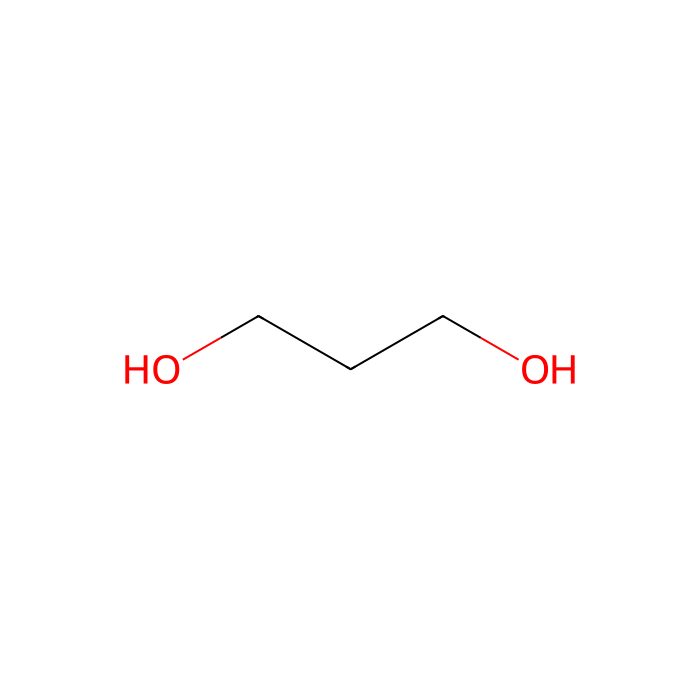
Determine the necessary mass, volume, or concentration for preparing a solution.
analytical standard Padrão analítico para fluxos de trabalho cromatográficos e analíticos sensíveis que exigem interferência mínima da linha de base.
Desiccated,Room temperature Envio Normal. Consulte o COA específico do lote para obter as especificações exatas.
SDS, COA, ficha técnica e folha de especificações disponíveis para download. COA específico do lote acessível por meio de pesquisa por número de lote.
Citado em 179 publicações revisadas por pares nas áreas de cromatografia, síntese orgânica e reações de acoplamento cruzado.
Documento abrangente sobre perigos, manuseamento, armazenamento e conformidade regulamentar.
<<<<<<< HEAD Baixar SDS → ======= Baixar SDS → >>>>>>> release248-p3Dados de qualidade específicos do lote. Introduza o número de lote para obter o COA exato.
Consultar COA →Resumo de referência rápida das especificações e aplicações do produto.
Ver ficha técnica →Atributos de qualidade completos e critérios de aceitação para este grau.
Ver folha de especificações →Taxonomy Tree
| Kingdom | Organic compounds |
|---|---|
| Superclass | Organic oxygen compounds |
| Classe | Organooxygen compounds |
| Subclass | Alcohols and polyols |
| Intermediate Tree Nodes | Not available |
| Direct Parent | Primary alcohols |
| Alternative Parents | Hydrocarbon derivatives |
| Molecular Framework | Aliphatic acyclic compounds |
| Substituents | Hydrocarbon derivative - Primary alcohol - Aliphatic acyclic compound |
| Descrição | This compound belongs to the class of organic compounds known as primary alcohols. These are compounds comprising the primary alcohol functional group, with the general structure RCOH (R=alkyl, aryl). |
| External Descriptors | a small molecule |
Find and download the COA for your product by matching the lot number on the packaging.
| Lot Number | Certificate Type | Data | Item |
|---|---|---|---|
| Certificate of Analysis | Mar 13, 2026 | P108207 | |
| Certificate of Analysis | Jun 30, 2025 | P108207 | |
| Certificate of Analysis | Mar 28, 2024 | P108207 | |
| Certificate of Analysis | Nov 24, 2022 | P108207 | |
| Certificate of Analysis | Aug 08, 2022 | P108207 |
| Índice de refração | 1.44 |
|---|---|
| Ponto de inflamação (°F) | 165 °F |
| Ponto de inflamação (°C) | 74 °C |
| Ponto de ebulição (°C) | 214°C |
| Ponto de fusão (°C) | -27°C |
| Peso molecular | 76.090 g/mol |
| XLogP3 | -1.000 |
| Hydrogen Bond Donor Count | 2 |
| Hydrogen Bond Acceptor Count | 2 |
| Rotatable Bond Count | 2 |
| Exact Mass | 76.0524 Da |
| Monoisotopic Mass | 76.0524 Da |
| Topological Polar Surface Area | 40.500 Ų |
| Heavy Atom Count | 5 |
| Formal Charge | 0 |
| Complexity | 12.400 |
| Isotope Atom Count | 0 |
| Defined Atom Stereocenter Count | 0 |
| Undefined Atom Stereocenter Count | 0 |
| Defined Bond Stereocenter Count | 0 |
| Undefined Bond Stereocenter Count | 0 |
| The total count of all stereochemical bonds | 0 |
| Covalently-Bonded Unit Count | 1 |
No assay-specific protocols are provided for this small-molecule reagent.
General guidance for analytical standard use (not item-specific; follow your method SOPs):
Item-specific tested applications, recommended dilutions, and positive controls: Not specified for this item; refer to CoA/Spec Sheet.
Item-specific biological information: Not specified for this item; refer to CoA/Spec Sheet. The following is general background (literature; not item-specific):
Note: No medical, diagnostic, or therapeutic use is intended or implied for this product. For any biological experiments, determine suitable concentrations empirically and verify interference with assays (e.g., effects on enzyme-coupled reactions or spectrophotometric baselines).
1,3-Propanediol is not a buffering agent and does not provide a defined pH range or pKa couple suitable for classical buffer systems. Therefore, it is not typically used to prepare biological or analytical buffers.
Potential ancillary uses (general; not item-specific):
If a true buffer is needed, select a conventional buffering system (e.g., phosphate, Tris, HEPES, MOPS) with an appropriate pKa near the target pH. Validate compatibility if 1,3-propanediol is included as a cosolvent.
Context: 1,3-Propanediol (PDO) is increasingly available via bio-based fermentation routes (e.g., from glycerol or sugars), which can reduce greenhouse gas intensity and fossil resource use relative to petrochemical diols. The Product Data do not specify the production route or sustainability attributes for this item.
Green chemistry considerations (literature; not item-specific):
Illustrative comparison (literature attributes):
Greener practice tips:
Item-specific pharmacopeial status and excipient specifications: Not specified for this item; refer to CoA/Spec Sheet.
General formulation roles (literature; not item-specific):
Regulatory note:
Item-specific physicochemical specifications (appearance, exact purity assay, water content, metals, stabilizers, etc.): Not specified for this item; refer to CoA/Spec Sheet.
General/literature properties for 1,3-propanediol (for reference; not item-specific):
Notes for laboratory use:
Interpretation and implications:
What is not specified for this item:
Practical tip:
Key roles (general; expand based on literature and common practice):
Practical tips:
General/literature guidance for common transformations of 1,3-propanediol (not item-specific; optimize per substrate and scale):
Drying and handling:
Workup/purification:
These are general ranges; consult primary literature and scale-appropriate safety assessments.
Item-specific hazard classifications (GHS, signal word, H/P statements, pictograms): Not specified for this item; refer to the SDS for authoritative safety information.
General safety profile for 1,3-propanediol (literature; not item-specific):
PPE and handling practices:
Always consult and follow the product-specific SDS and institutional safety protocols.
Applicability: 1,3-Propanediol is primarily a reagent/monomer rather than a general-purpose chromatographic solvent. It can function as a high-boiling, highly polar protic medium but is seldom chosen as the primary solvent for routine synthesis or separations.
General solvent characteristics (literature; not item-specific):
When to consider 1,3-propanediol as a medium:
Alternatives for common laboratory tasks:
Notes:
For any specific shelf-life, assay, or impurity limits: Not specified for this item; refer to CoA/Spec Sheet and the product SDS.
A small, linear aliphatic diol featuring two primary alcohol groups at the 1- and 3-positions.
Functional handles and transformations (general; literature-based):
Strategic value in retrosynthesis:
Practical notes:
Not applicable. This product is a small-molecule chemical (1,3-propanediol) and not a biological affinity reagent. No antigen/epitope, species reactivity, clone, or isotype information applies.
Item-specific target data: Not specified for this item; refer to CoA/Spec Sheet if any application-specific validation is provided.
O nosso guia de seleção de graus abrange pureza, estado do estabilizador e adequação à aplicação para todas as variantes do nosso catálogo.
Ver o guia de graus Analytical standard →