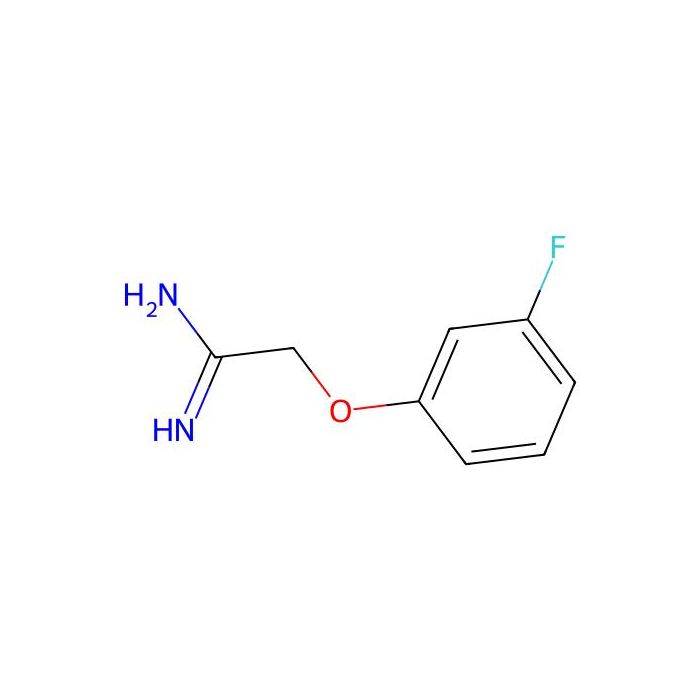
This compound belongs to the class of organic compounds known as phenol ethers. These are aromatic compounds containing an ether group substituted with a benzene ring.
External Descriptors
Not available
1. Djoumbou Feunang Y, Eisner R, Knox C, Chepelev L, Hastings J, Owen G, Fahy E, Steinbeck C, Subramanian S, Bolton E, Greiner R, and Wishart DS. ClassyFire: Automated Chemical Classification With A Comprehensive, Computable Taxonomy. Journal of Cheminformatics, 2016, 8:61.
Determine the necessary mass, volume, or concentration for preparing a solution.
Dilution Calculator
Determine the dilution needed to prepare a stock solution.
Reconstitution Calculator
Revisões
Avaliações dos Clientes
Application Protocols
Not applicable. No tested biological assay protocols (e.g., WB, IHC, IF, FC) or recommended dilutions are provided for this small‑molecule building block. For synthetic or analytical use:
Prepare stock solutions in DMSO, MeOH, or dilute aqueous acid as required by your workflow.
For analytical HPLC, a typical starting method is reverse‑phase C18 with water/acetonitrile and 0.1% formic acid or ammonium formate buffer; adjust gradient and detection wavelength based on your detector and sample behavior.
Refer to the CoA/SDS for any item‑specific handling instructions.
Biological Roles
General biochemical context (informational; no therapeutic claims)
Amidine functionality mimics guanidinium/primary amine cations and engages in strong electrostatic and hydrogen‑bond interactions with acidic residues (Asp/Glu) and phosphate groups. Such interactions are frequently leveraged in the design of biochemical probes, affinity ligands, and enzyme substrate analogs.
The 3‑fluorophenoxy aryl group contributes to π–π and edge‑to‑face interactions while modulating basicity and lipophilicity. Fluorine at the meta position can adjust pKa, dipole, and metabolic stability of derived analogs.
In fragment‑based discovery, cationic amidines often exhibit high ligand efficiency toward acidic binding sites; the ether linkage provides conformational flexibility for positioning the cationic center relative to the arene.
Protonation state: at neutral pH, amidines are largely protonated (conjugate acid pKa typically ~11–13, literature), enhancing aqueous solubility but possibly reducing passive membrane permeability; salt pairing can modulate these properties in biophysical assays.
Use cases in research workflows
Component in the synthesis of molecular probes (e.g., photoaffinity or biotinylated constructs) where the amidine serves as a capture handle via salt bridges.
Precursor for cationic heterocycles (e.g., imidazolinium motifs) explored as DNA/RNA binders or catalysts in non‑biological contexts.
Note: No specific biological targets or activities are provided in the Product Data. Any biological role discussion here is general and for research planning only.
Buffer Applications
Not typically applicable. 2-(3‑Fluorophenoxy)ethanimidamide is a small‑molecule building block rather than a buffering agent. While amidines are basic and can be protonated, this compound is not used to establish defined buffer systems or pH standards.
Practical notes (general)
For preparing assay solutions, dissolve in a suitable solvent (e.g., DMSO or aqueous acid) and dilute into the desired buffer (PBS, HEPES, acetate) while monitoring pH, as protonated amidines can slightly shift buffer pH.
If maximizing aqueous solubility is required, prepare as a dilute acid salt in the target buffer (e.g., add minimal 0.1 M HCl or AcOH) and confirm compatibility with assay components.
Green Alternatives
Context
This product is a nitrogen‑rich building block, not a process solvent. Green considerations therefore focus on solvent/reagent choices and salt selection during its synthesis, derivatization, and purification.
Greener practice suggestions (general; literature guidance)
Solvent selection: prioritize low‑toxicity, biorenewable, or lower‑impact solvents where feasible.
Replace DMF/NMP with MeCN, MeOH/EtOH, 2‑MeTHF, CPME, or propylene carbonate when reaction compatibility allows.
For recrystallization or salt formation, use ethanol, isopropanol, or ethyl acetate instead of chlorinated solvents.
Coupling/activation: prefer carbodiimide couplings with green additives (e.g., EDC•HCl in aqueous ethanol) over acid chlorides when selectivity allows; consider organocatalytic or enzyme‑mediated amidine formations in water/ethanol.
Workup: employ aqueous salt formation and filtration to avoid large solvent volumes from chromatographic purification; recover the free base by basification if needed.
Energy: conduct reactions at ambient temperature or under microwave assistance to reduce time and energy input.
Illustrative comparison (informational)
Traditional: N‑acylation in DCM/DMF with DMAP and acid chlorides; silica chromatography; chlorinated waste.
Greener: EDCI‑mediated acylation in EtOAc/EtOH or MeCN with catalytic HOAt alternatives or additive‑free, followed by salt crystallization; minimized chlorinated solvent use.
Trade‑offs
Greener solvents may reduce solubility of highly polar amidines; modest acidification (AcOH) can help. Always confirm reaction rate/chemo‑selectivity before scale‑up.
Pharmaceutical Uses
No clinical or therapeutic uses are claimed or supported for this catalog item. Information below addresses formulation/manufacturing context only (general; not product‑specific specifications).
Formulation and processing roles (general)
As a discovery chemistry intermediate, amidine‑containing molecules are often supplied and handled as salts (e.g., HCl) to improve crystallinity, hygroscopicity, and dissolution characteristics during preformulation studies.
The aryl‑oxyalkyl motif provides an opportunity to tune solid‑state properties via counterion selection (chloride, mesylate, sulfate, fumarate). Salt screening can identify forms suitable for solid dosing in research settings.
In analytical development, strong UV activity from the aryl ring enables straightforward HPLC/UPLC detection (typically at 210–280 nm), though method parameters must be validated for the specific impurity profile.
Regulatory/pharmacopeia
No pharmacopeial monograph is indicated. If cGMP or specific regulatory compliance is required, a custom manufacturing route and full quality agreement are typically necessary.
Note: This product is supplied for research use only, as stated in the Product Data. It is not intended for human or veterinary use, drug substance, or excipient applications without additional qualification.
Physical Properties
Item-specific specifications
Appearance: Not specified for this item; refer to CoA/Spec Sheet.
Grade/Purity: Not specified for this item; refer to CoA/Spec Sheet.
Molecular Formula / Molecular Weight: Not specified for this item; refer to CoA/Spec Sheet.
Literature/general property expectations for aryl‑oxyalkyl amidines (informational; not product specifications)
Ionization: amidines are strongly basic (conjugate acid pKa typically ~11–13, literature), leading to high water solubility in acidic media.
Solubility profile: free‑base amidines are often moderately polar; expected good solubility in polar organics (MeOH, EtOH, DMSO) and in aqueous buffers when protonated; limited solubility in nonpolar solvents (hexanes, toluene).
Hydrogen bonding: di‑protic donor capacity (two NH) and one strong acceptor (imino N) facilitate salt formation and crystallinity.
Volatility: negligible; solid state likely at ambient conditions for many analogous structures (informational).
Do not treat the above as guaranteed specifications. For authoritative values (mp/bp, density, refractive index, logP, water/peroxide/metal limits, UV cutoff), consult the product CoA/SDS. Where exact numeric data are critical to your process design or analytical method development, we recommend confirming via in‑house measurement or requesting a current specification sheet.
Quality and Grades
Item-specific quality information
Grade/Purity: Not specified for this item; refer to CoA/Spec Sheet.
Stabilizers/Antioxidants/Salts: Not specified for this item; refer to CoA/Spec Sheet.
Guidance on interpreting grade for this compound class (general info)
Research‑grade small molecules are typically supplied with assay purity by HPLC or NMR, and may include limits on residual solvents and inorganic residues. For amidines, verification of identity often includes 1H/13C NMR with characteristic amidine NH signals, HRMS, and, if relevant, chloride content for salt forms.
If labeled as “≥98%” or “HPLC grade” (not specified here), such grades imply low levels of UV‑active impurities, enabling use in medicinal chemistry SAR studies and analytical reference work.
Salt form considerations: amidines are frequently isolated as hydrochloride salts to improve handling and stability. If this product is a free base or a specific salt, that should be stated on the CoA; salt form impacts solubility, melting point, and assay methodology (e.g., KF moisture vs. LOQ for water).
Batch‑to‑batch control: look for consistent polymorphic form (PXRD), water content (KF), and residual mineral acid/base where applicable. For rigorous applications (e.g., quantitative bioassays), request a current CoA and, if needed, a detailed specification sheet including impurity profile and residual solvent data.
Reaction and Applications
Use context
2-(3‑Fluorophenoxy)ethanimidamide is a heteroatom‑rich, basic building block combining an aryl ether, an aryl fluoride, and an amidine. Such motifs are widely used in discovery chemistry for preparing cationic probes, ion‑pairing ligands, and analogs of arginine‑mimetic fragments.
Representative transformations (general literature guidance)
N‑Acylation/carbamoylation: amidines act as nucleophiles at the exocyclic amino nitrogen. Reaction with acyl chlorides, anhydrides, or activated carbonates affords N‑acyl amidines or urea‑like derivatives (control chemoselectivity to avoid over‑acylation).
Salt formation: protonation with mineral or organic acids furnishes crystalline salts (e.g., HCl, HBr, mesylate, p‑TsOH) useful for purification and improving aqueous solubility.
Cyclizations: condensation with α‑halo carbonyls or diesters can generate imidazoline or dihydroimidazole scaffolds. The adjacent ether/aryl substituent can modulate electronics and intramolecular H‑bonding.
Alkylation: careful N‑alkylation with alkyl halides or sulfonates under basic conditions provides tertiary amidines; control competing O‑alkylation or elimination by solvent/base choice.
Hydrolysis/transformations: under strong acidic or basic conditions, amidines can hydrolyze toward amides or nitriles (substrate‑dependent). Amidines can also be converted to guanidines via appropriate electrophiles (e.g., O‑methylisourea or carbodiimides).
Application domains (non‑clinical)
Structure–activity library enrichment with cationic headgroups.
Tether for assembling bidentate ligands or affinity tags via the ether linker.
Intermediate for preparing aryl‑O‑alkylated heterocycles where an amidine participates in ring closure.
Practical tips
Control water content; amidine salts are hygroscopic. Use dry solvents and monitor by TLC/HPLC. Where possible, isolate as a salt to aid handling.
Reaction Conditions
General conditions reported for amidine functionalization (informational; not product‑specific specifications)
N‑Acylation: acyl chloride (1.0–1.5 eq) in DCM, THF, or MeCN with DIPEA or Et3N (2–3 eq) at 0–25 °C, 0.5–4 h. Monitor to avoid over‑acylation. Typical isolated yields for analogous substrates: 60–90% depending on sterics.
Carbamate/urea formation: chloroformate or CDI activation in DCM/MeCN; 0–25 °C to reflux, catalytic DMAP where compatible.
Alkylation: alkyl halide (1.2–1.5 eq) with K2CO3 or Cs2CO3 in MeCN/DMF, 25–60 °C, 2–16 h. Control for O‑ vs N‑alkylation; polar aprotic solvents favor N‑alkylation in many cases.
Cyclizations to imidazolines: condense with α‑halo carbonyls in EtOH or toluene with base (NaOEt/KOtBu) or under Lewis acid catalysis; 60–110 °C, 2–12 h. Subsequent oxidation (e.g., DDQ or chloranil) can afford imidazoles.
Salt formation/crystallization: dissolve in minimum EtOH/IPA, add ethanolic HCl to pH ~2–3, cool to precipitate salt; filter and dry under vacuum. Conditions depend strongly on counterion and concentration.
Workup/purification tips
For silica chromatography, add volatile base (0.1–1% Et3N) to eluents (hexanes/EtOAc or DCM/MeOH). Reverse‑phase (C18, water/MeCN + 0.1% formic acid) is effective for highly polar species.
Avoid strong aqueous base/acids for extended times to minimize hydrolysis of the amidine.
These conditions are general literature practices for amidines and should be optimized for this specific substrate through small‑scale trials.
Safety and Handling
Item-specific hazard information
Signal Word: Not specified for this item; refer to SDS.
GHS Classification: Not specified for this item; refer to SDS.
Pictograms: Not specified for this item; refer to SDS.
H‑Statements: Not specified for this item; refer to SDS.
General safety guidance for aryl‑oxyalkyl amidines (informational; defer to SDS)
Likely hazards: amidines are strongly basic and can be irritating to skin, eyes, and respiratory tract. Dust or aerosol may cause irritation. Avoid inhalation and contact.
PPE: wear lab coat, safety glasses or splash goggles, and appropriate chemical‑resistant gloves (e.g., nitrile). Use in a fume hood to control vapors/particles.
Handling: minimize exposure to moisture and CO2 if the free base is sensitive (amidine bases can absorb CO2 and moisture). Keep containers tightly closed.
Incompatibilities: strong oxidizers; strong acids/bases may lead to decomposition or hydrolysis over time. Avoid reactive acylating agents unless intended for derivatization.
First aid (overview): in case of skin/eye contact, rinse with water for at least 15 minutes; remove contaminated clothing. If inhaled, move to fresh air. If ingested, rinse mouth. Seek medical attention as appropriate.
Fire safety: organic solids may burn; use CO2, dry chemical, or foam. Thermal decomposition may release nitrogen oxides, HF (from aryl fluoride) and other irritating fumes.
Always consult the current SDS for authoritative and product‑specific safety, spill, and disposal instructions.
Solvent Selection
Applicability
This product is a functionalized amidine building block, not a bulk solvent. Solvent selection guidance below is intended for dissolving the compound and for conducting typical transformations/derivatizations.
Dissolution and workup
Preferred solvents: DMSO, DMF, methanol, ethanol, and acetonitrile generally dissolve amidines well. Protonated forms dissolve readily in water or aqueous alcohols under mildly acidic conditions (e.g., 0.1–1% AcOH or HCl).
Limited solubility expected in nonpolar solvents (toluene, hexanes). For biphasic workups, convert to a salt (acidify) to drive partitioning into the aqueous phase; basify to recover the free base.
Reaction media (general guidance)
For N‑acylation or carbamate formation: use polar aprotic media (DCM, MeCN, THF, DMF) with base scavengers (DIPEA, Et3N). For coupling to acid derivatives, DCM/DMF mixtures provide a balance of solubility and volatility.
For cyclizations (e.g., imidazoline formation), higher‑boiling polar solvents (toluene, xylene, NMP) or ethanol under reflux are common.
Small comparison (general)
DMSO vs DMF: DMSO offers superior solubility and is less volatile but harder to remove; DMF is easier to strip but more moisture‑sensitive in some couplings.
MeOH/EtOH: green, protic, and often adequate for salt formation and recrystallization; may participate in transesterification if acyl species are present.
Always perform a microscale solubility screen and confirm compatibility of chosen solvent with your reagents and downstream purification.
Storage and Reconstitution
Item-specific storage conditions
Storage Conditions: Room temperature (per Product Data).
Shipped In: Not specified for this item; refer to CoA/Spec Sheet.
Appearance: Not specified for this item; refer to CoA/Spec Sheet.
General guidance (informational)
Protection: keep tightly closed in a dry environment. Amidine salts may be hygroscopic; include desiccant if long‑term storage is anticipated. Protect from prolonged exposure to air and moisture to limit hydrolysis or CO2 uptake (for free bases).
Reconstitution: for stock solutions, dissolve in DMSO, methanol, ethanol, or acetonitrile. For aqueous use, prepare a protonated salt by adding a minimal amount of dilute acid (e.g., 0.1–1 M HCl or AcOH) to aid dissolution, then dilute with buffer. Filter through 0.2 µm if particulate is present.
Concentration ranges: 10–100 mM stocks in DMSO are common for small molecules; adjust based on solubility and assay needs. Validate stability of solutions at room temperature vs. refrigerated conditions.
Freeze–thaw: if storing solutions, aliquot to avoid repeated freeze–thaw cycles. Store DMSO stocks at −20 °C for extended periods when compatible with your workflow.
Disposal: follow institutional guidelines and SDS recommendations. Avoid discharge to drains; collect organic and aqueous waste streams separately.
Note: Research use only, as stated in the Product Data. Always consult the item’s CoA and SDS for authoritative instructions.
Structure and Identity
Item-specific identifiers (from Product Data)
SKU: F1020822
Product Name: 2-(3-Fluorophenoxy)ethanimidamide
CAS: 17818614 (as provided)
CID: 17818614 (as provided)
InChIKey: 298206 (as provided)
SMILES: Not specified for this item; refer to CoA/Spec Sheet.
Molecular Formula: Not specified for this item; refer to CoA/Spec Sheet.
Molecular Weight: Not specified for this item; refer to CoA/Spec Sheet.
Structural description (general chemistry, inferred from the name; not item-specific specifications)
Core motif: an amidine functionality (–C(=NH)–NH2) attached to a two‑carbon linker (–CH2–) bearing an ether oxygen (–O–) that connects to a substituted phenyl ring.
Aromatic ring: monosubstituted phenyl with a fluorine at the meta (3‑) position relative to the ether linkage (3‑fluorophenyl–O–).
Functional groups: basic cationic amidine (strong H‑bond donor/acceptor), aryl ether, aryl fluoride. No stereocenters expected; molecule is achiral.
2D topology (verbal): 3‑fluorophenyl ring —O—CH2—C(=NH)NH2, where the amidine carbon is alpha to the ether methylene.
Notes
The exact tautomeric state of the amidine (–C(=NH)–NH2 vs. –C(–NH2)=NH+) depends on pH; amidines are typically protonated under physiological or mildly acidic conditions.
If a specific salt form (e.g., hydrochloride) applies, it is not stated in the provided Product Data; consult the product label/CoA.
Synthetic Utility
Retrosynthetic value
The scaffold offers an electron‑poor aryl fluoride (meta) married to an aryl ether and a terminal amidine. This combination allows orthogonal diversification at nitrogen (N‑acylation/alkylation), at the benzylic/ether side chain (oxidation, elongation), and on the aryl ring (electrophilic aromatic substitutions are limited; metalation or cross‑coupling may be explored if a leaving group is introduced).
Transformations (general literature guidance)
N‑functionalization: controlled mono‑ vs. bis‑acylation with acyl chlorides or activated esters; urea/carbamate formation via chloroformates.
Conversion to guanidine: nucleophilic attack on a suitable guanylating agent (e.g., N,N′‑bis(tert‑butoxycarbonyl)thiourea with activation) furnishes aryl‑oxyalkyl guanidines.
Imidazoline formation: condensation with α‑haloesters/ketones to yield imidazoline/dihydroimidazole heterocycles; subsequent oxidation can access imidazoles.
Salt toggling: free base ↔ acid salt interconversion for purification, crystallization, and property modulation; counterion screening can improve handling.
Side‑chain editing: O‑alkyl linker can be elongated or modified by Williamson ether approaches upstream; downstream, oxidative cleavage of the –CH2– next to the amidine is substrate‑dependent and generally avoided unless protected.
Analytical and purification
Strong basic NHs can tail on silica; add 0.1–1% Et3N in eluent or use reverse‑phase chromatography. Alternatively, isolate as a crystalline salt (e.g., HCl) and free‑base as needed.
Characterization typically includes 1H/13C NMR (diagnostic amidine NH doublets/broad singlets), IR (C=N stretch ~1650–1680 cm⁻¹), and HRMS.
Target Specificity
Not applicable. This product is a small‑molecule building block and is not an antibody, enzyme, or targeted biologic. No antigen, epitope, clone, isotype, or species reactivity information is associated with this item in the provided Product Data.
We use cookies to ensure the website functions properly and, where permitted, to improve your experience. You can manage your preferences at any time in Settings. Learn more in our Cookie Policy.
Shall we send you a message when we have discounts available?
Remind me later
Thank you! Please check your email inbox to confirm.
Products are supplied to verified businesses, institutions, and qualified professionals for research and development use only. Not for use in humans, animals, diagnosis, or therapy.