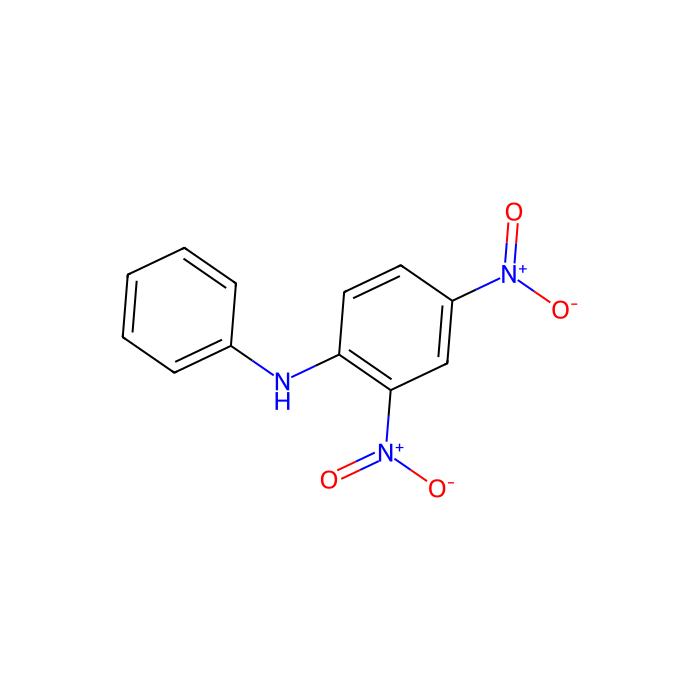
2,4-Dinitrodiphenylamine - ≥98% , CAS No.961-68-2

CAS: 961-68-2 Cat. No.: D154907 Fórmula: C12H9N3O4 Peso molecular: 259.22 Beilstein Registry Number: 12(3)1683 Número CE: 213-508-4
Disponível para encomenda
GRADE & PURITY ≥98%
Synonyms
A845554 | ?2,4-Dinitrodiphenylamine | InChI=1/C12H9N3O4/c16-14(17)10-6-7-11(12(8-10)15(18)19)13-9-4-2-1-3-5-9/h1-8,13 | 2,4-Dinitrodiphenylamine, 98% | D0278 | Diphenylamine, 2,4-dinitro- | D89621 | AKOS000286101 | 2,4-Dinitro-N-phenylaniline | 2,4-dinitr
Storage
Room temperature
Shipped In
FedEx DG Service
★
Size
USA
Alemanha (EU)*
Price
Qty
25g
D154907-25g
4 Em stock
—
72,90US$
100g
D154907-100g
4 Em stock
—
179,90US$
500g
D154907-500g
1 Em stock
—
599,90US$
Enter a quantity for the sizes you want to add.
🧪
Why this grade

≥98% for sensitive chromatographic and analytical workflows requiring minimal baseline interference.

🌡

Storage & shipping

Room temperature Ships FedEx DG Service Check lot-specific COA for exact specifications.

📋

Quality documents

SDS, COA, datasheet, and spec sheet available for download. Lot-specific COA accessible via lot number lookup.

📚

Literature proof

Cited in 1 peer-reviewed publications across chromatography, organic synthesis, and cross-coupling reactions.

Visão geral

2,4-Dinitrodiphenylamine forms an efficient anionic chromogenic chemosensor. It was anaerobically metabolized in sediment-water batch enrichments inoculated with mud from the German North Sea coast.

Specifications

Sinónimos
A845554 | ?2,4-Dinitrodiphenylamine | InChI=1/C12H9N3O4/c16-14(17)10-6-7-11(12(8-10)15(18)19)13-9-4-2-1-3-5-9/h1-8,13 | 2,4-Dinitrodiphenylamine, 98% | D0278 | Diphenylamine, 2,4-dinitro- | D89621 | AKOS000286101 | 2,4-Dinitro-N-phenylaniline | 2,4-dinitr
Especificações e pureza
≥98%
Condições de armazenamento de armazenamento
Room temperature
Enviado em
FedEx DG Service
Pureza
≥98%
Nomes e identificadores
Pubchem Sid
Pubchem Sid Url
https://pubchem.ncbi.nlm.nih.gov/substance/488181902
Sorrisos canónicos
C1=CC=C(C=C1)NC2=C(C=C(C=C2)[N+](=O)[O-])[N+](=O)[O-]
IUPAC Name
2,4-dinitro-N-phenylaniline
InChIKey
RHTVQEPJVKUMPI-UHFFFAOYSA-N
INCHI
1S/C12H9N3O4/c16-14(17)10-6-7-11(12(8-10)15(18)19)13-9-4-2-1-3-5-9/h1-8,13H
SMILES isoméricas
C1=CC=C(C=C1)NC2=C(C=C(C=C2)[N+](=O)[O-])[N+](=O)[O-]
RTECS
JJ8825000
Peso molecular
259.22
Beilstein
12(3)1683
Reaxy-Rn
1996954
Reaxys-RN_link_address
https://www.reaxys.com/reaxys/secured/hopinto.do?context=S&query=IDE.XRN=1996954&ln=

Documentation

📋 Safety Data Sheet (SDS)

Comprehensive hazard, handling, storage, and regulatory compliance document.

Download SDS →

✅ Certificate of Analysis (COA)

Lot-specific quality data. Enter your lot number to retrieve the exact COA.

Look up COA →

📊 Datasheet

Quick-reference summary of product specifications and applications.

View datasheet →

🔬 Specification Sheet

Full quality attributes and acceptance criteria for this grade.

View spec sheet →

Advanced Data

Taxonomic Classification

Taxonomy Tree

KingdomOrganic compounds
SuperclassBenzenoids
ClasseBenzene and substituted derivatives
SubclassAniline and substituted anilines
Intermediate Tree Nodes Not available
Direct ParentDinitroanilines
Alternative Parents Nitrobenzenes  Nitroaromatic compounds  Secondary amines  Propargyl-type 1,3-dipolar organic compounds  Organic oxoazanium compounds  Organopnictogen compounds  Organic oxides  Hydrocarbon derivatives  
Molecular FrameworkAromatic homomonocyclic compounds
Substituents Dinitroaniline - Nitrobenzene - Nitroaromatic compound - C-nitro compound - Organic nitro compound - Organic oxoazanium - Secondary amine - Allyl-type 1,3-dipolar organic compound - Propargyl-type 1,3-dipolar organic compound - Organic 1,3-dipolar compound - Organic nitrogen compound - Organonitrogen compound - Organic oxygen compound - Amine - Organopnictogen compound - Organic oxide - Hydrocarbon derivative - Aromatic homomonocyclic compound
DescriçãoThis compound belongs to the class of organic compounds known as dinitroanilines. These are organic compounds containing an aniline moiety, which is substituted at 2 positions by a nitro group.
External Descriptors Not available
Estrutura 3D
Modelo de Estrutura Química Interativa


Alvos associados (humanos)
PC-3 (62116 Activities)
Activity TypeRelationActivity valueUnitsAction TypeJournalPubMed IddoiAssay Aladdin ID
HUVEC (11049 Activities)
Activity TypeRelationActivity valueUnitsAction TypeJournalPubMed IddoiAssay Aladdin ID
Hep 3B2 (2332 Activities)
Activity TypeRelationActivity valueUnitsAction TypeJournalPubMed IddoiAssay Aladdin ID
Mecanismos de ação
Certificados(CoA,COO,BSE/TSE e Mapa de Análise)
C of A & Other Certificates(BSE/TSE, COO):
Analytical Chart:

Find and download the COA for your product by matching the lot number on the packaging.

9 results found

Lot NumberCertificate TypeDataItem
D2601346Certificate of AnalysisMar 23, 2026 D154907
D2601377Certificate of AnalysisMar 23, 2026 D154907
D2607617Certificate of AnalysisMar 23, 2026 D154907
G2606126Certificate of AnalysisMar 23, 2026 D154907
B2208221Certificate of AnalysisOct 30, 2025 D154907
B2208224Certificate of AnalysisOct 30, 2025 D154907
B2208278Certificate of AnalysisOct 30, 2025 D154907
H2512164Certificate of AnalysisAug 20, 2025 D154907
F2328172Certificate of AnalysisDec 24, 2021 D154907
Propriedades químicas e físicas
Ponto de fusão (°C)159-161°C
Peso molecular259.220 g/mol
XLogP33.500
Hydrogen Bond Donor Count1
Hydrogen Bond Acceptor Count5
Rotatable Bond Count2
Exact Mass259.059 Da
Monoisotopic Mass259.059 Da
Topological Polar Surface Area104.000 Ų
Heavy Atom Count19
Formal Charge0
Complexity333.000
Isotope Atom Count0
Defined Atom Stereocenter Count0
Undefined Atom Stereocenter Count0
Defined Bond Stereocenter Count0
Undefined Bond Stereocenter Count0
The total count of all stereochemical bonds0
Covalently-Bonded Unit Count1
Citations of This Product
Calculadoras de soluções
Revisões

Avaliações dos Clientes

Application Protocols

No vendor-validated biological application protocols are provided for this small-molecule reagent. Usage will depend on your synthetic or analytical goals.

  • General laboratory guidance:
    • Preparing stock solutions: Dissolve in DMSO or DMF to a convenient concentration (e.g., 10–100 mM depending on solubility). Filter if necessary. Record solvent and concentration on the container.
    • Reaction setup: Dry glassware and anhydrous solvents improve reproducibility for moisture-sensitive steps (e.g., N-arylations). Employ inert atmosphere when using air-sensitive catalysts or bases.
    • Monitoring: TLC with UV/vis detection often suffices; for nitro reductions, LC-MS is recommended to track intermediates (hydroxylamines/anilines).

For detailed, stepwise procedures, consult the literature relevant to your specific transformation (reduction, acylation, coupling), and tailor conditions to substrate and scale.

Biological Roles

This product is intended for research use only. No biological role is assigned in the Product Data.

  • General note on nitroaromatic diarylamines (informational):

    • Nitroaromatic compounds can interact with biological systems through redox processes and may undergo metabolic reduction to anilines; however, such behaviors are highly context-dependent and can be associated with toxicity concerns.
    • 2,4-Dinitrodiphenylamine is not a natural metabolite or cofactor and does not have a defined physiological role.
  • Practical guidance:

    • If used as a probe precursor or intermediate in chemical biology, perform independent cytotoxicity and stability assessments under your specific conditions.
    • Avoid extrapolating any biological activity; use under appropriate containment and dispose of according to hazardous chemical waste procedures.

For any bioassay-related handling, consult your institutional safety office and the SDS; do not use in diagnostics, foods, drugs, or clinical applications.

Buffer Applications

Not typically applicable. 2,4-Dinitrodiphenylamine is a hydrophobic nitroaromatic solid and is not used to prepare aqueous buffer systems.

  • Practical note: If stock solutions are required for assays, prepare in water-miscible organic cosolvents (e.g., DMSO, DMF) and dilute into the assay medium with attention to final organic percentage and potential precipitation. Filter stocks if needed.

For true buffering needs, select standard biological buffers (phosphate, HEPES, Tris, etc.) appropriate to your system.

Green Alternatives

While the molecule itself is a nitroaromatic (inherently carrying certain EHS burdens), process greening can focus on solvent choices, reduction methods, and waste minimization.

  • Greener solvent options (general guidance):

    • Replace chlorinated solvents with ethyl acetate, 2-MeTHF, or CPME when solubility and selectivity permit.
    • For polar aprotic needs, consider propylene carbonate or Cyrene in place of DMF/DMAc/NMP where compatible.
  • Nitro reduction strategies (comparison):

    • Catalytic hydrogenation (H2/Pd-C) in ethanol or 2-propanol: High atom economy; minimize metal usage and ensure effective Pd recovery/filtration.
    • Transfer hydrogenation (e.g., ammonium formate/Pd-C) avoids compressed gas but generates salts.
    • Iron powder/acid (Bechamp) or SnCl2/HCl: Robust but generate substantial metal salt waste; less green.
  • Example solvent comparison (general, literature-based):

    • DCM vs EtOAc: EtOAc offers lower toxicity and better environmental profile; works for extractions and chromatography in many cases.
    • THF vs 2-MeTHF: 2-MeTHF has renewable origins, better phase behavior in aqueous workups, and lower peroxide tendencies than THF, with similar solvency for aromatics.
  • Operational greening:

    • Employ telescoped sequences (e.g., in situ reduction then acylation) to reduce isolations.
    • Use minimal excess reagents; apply in-line scavengers and solid-supported catalysts to simplify workup.

Always verify that green substitutions meet your reaction’s selectivity and yield targets.

Pharmaceutical Uses

No pharmacopeial or excipient status is provided in the Product Data, and this product is supplied strictly for research use only.

  • General context (informational, non-clinical):
    • Nitroaromatic diarylamines may serve as synthetic intermediates in discovery chemistry or materials science; however, nitro functionalities are often de-risked or transformed during lead optimization due to safety and ADME considerations.
    • If used in process development as an intermediate, implement appropriate controls for nitro reduction exotherms and impurity carryover.

This product is not intended for human or veterinary use, clinical diagnostics, or as a drug substance/excipient.

Physical Properties

Item-specific physical specifications (bp, mp, density, refractive index, residuals) are not provided in the Product Data for SKU D154907.

  • Item-specific values:

    • Appearance: Not specified for this item; refer to CoA/Spec Sheet.
    • Molecular Formula: Not specified for this item; refer to CoA/Spec Sheet.
    • Molecular Weight: Not specified for this item; refer to CoA/Spec Sheet.
  • Literature/general expectations for 2,4-dinitrodiphenylamine (informational):

    • Physical state: Typically a crystalline nitroaromatic solid.
    • Solubility: Expected to be sparingly soluble in water; soluble in common organic solvents such as acetone, acetonitrile, dichloromethane, ethyl acetate, and dimethylformamide; good solubility in DMSO. Actual solubility will depend on temperature and solvent purity.
    • Polarity/logP: Nitroaromatic diarylamines generally exhibit moderate hydrophobicity with limited aqueous solubility; logP in the low-to-mid single digits is typical for analogous structures (literature trends).
    • Acid–base: The aniline N–H is weakly basic and can hydrogen bond; nitro groups are strongly deactivating/electron-withdrawing, reducing basicity relative to unsubstituted diphenylamine (qualitative literature guidance).
    • Thermal behavior: Nitroaromatics typically have defined melting points and decompose upon excessive heating; avoid strong heating without ventilation (general handling wisdom).

For experimental planning, determine solvent choice and loading by a small-scale solubility screen. For authoritative numeric specifications, consult the item’s CoA/SDS.

Quality and Grades

The Product Data do not specify an assay grade, purity, stabilizer, or analytical limits for SKU D154907.

  • Item-specific notes:

    • Grade/Purity: Not specified for this item; refer to CoA/Spec Sheet.
    • Stabilizer/Inhibitor: Not specified for this item; refer to CoA/Spec Sheet.
    • UV cutoff/trace metal content/peroxide content: Not specified for this item; refer to CoA/Spec Sheet.
  • General guidance on grades (informational):

    • Research grade: Suitable for most synthetic and analytical research. If HPLC/LC-MS is planned, verify low UV background and impurity profile on the CoA.
    • High-purity (>98–99%) materials: Preferred for quantitative synthesis, mechanistic studies, and materials applications, especially when nitro-group reductions or cross-couplings are sensitive to impurities.
    • Stabilizers: Nitroaromatic solids typically do not require stabilizers, but confirm absence/presence on the CoA if your application is inhibitor-sensitive (e.g., polymerizations or photophysics measurements).
  • Practical QC tips:

    • Verify identity by NMR (1H/13C), IR (strong NO2 asymmetric/symmetric stretches), and HRMS. Nitro groups give characteristic IR bands near ~1520–1550 and ~1340–1370 cm−1 (literature ranges).
    • Check for residual nitration byproducts or isomeric impurities by HPLC/UPLC.
    • For reactions sensitive to trace acids/bases, consider recrystallization to remove adventitious contaminants.

Always consult the item’s CoA for the definitive grade and acceptance criteria.

Reaction and Applications

As a nitro-substituted diarylamine, 2,4-dinitrodiphenylamine is a versatile intermediate for constructing donor–acceptor scaffolds, dye/pigment precursors, and poly(arylamine) motifs.

  • Transformations of the nitro groups (literature/general):

    • Reductions to the corresponding o,p-diamino derivative using catalytic hydrogenation (H2/Pd-C, H2/Pt) or classical methods (Fe/HCl, SnCl2/HCl, Zn/NH4Cl). Selectivity can be tuned by catalyst, pressure, and temperature.
    • Partial reduction to hydroxylamine/anilide states enabling further acylation or cyclization.
    • Nucleophilic aromatic substitution (SNAr) becomes feasible on the nitro-substituted ring if a leaving group is introduced ortho/para to NO2; 2,4-dinitro activation is commonly exploited in stepwise functionalization sequences.
  • Transformations at nitrogen (general):

    • N-Acylation/sulfonylation to prepare amide/sulfonamide derivatives for materials or medicinal chemistry screening.
    • N-Arylation (Ullmann-type Cu catalysis or Pd-catalyzed Buchwald–Hartwig amination) on complementary aryl halides to elaborate triarylamine frameworks.
  • Electrophilic substitution patterns:

    • The nitro-bearing ring is strongly deactivated; electrophilic substitution predominantly occurs on the unsubstituted pendant phenyl. This enables regioselective halogenation, sulfonation, or Friedel–Crafts acylation on that ring.
  • Applications context:

    • Donor–acceptor chromophores: The anilide nitrogen donates into the nitro-activated ring, supporting push–pull electronics for optoelectronic materials.
    • Dye/azo chemistry: After reduction to diamine, diazotization/azo coupling yields intense chromophores.

Note: Optimize conditions for scale and safety, particularly when reducing nitro groups; conduct calorimetry for scale-up.

Reaction Conditions

General literature guidance for common transformations of 2,4-dinitrodiphenylamine and closely related substrates (informational; optimize per your system):

  • Nitro reductions:

    • Catalytic hydrogenation: H2 (1–5 bar typical lab scale) with 5–10 wt% Pd/C in EtOH or MeOH at ambient to moderate temperatures. Monitor for over-reduction or hydrogenolysis; add acid (e.g., HCl) to capture diamine as a salt if needed.
    • Metal/acid reductions: Fe powder (3–5 eq) in EtOH/H2O with catalytic acid; or SnCl2·2H2O (2–3 eq) in EtOH/HCl. Work up by basification and extraction; expect metal salt wastes.
  • N-functionalization:

    • N-Acylation: Acyl chlorides or anhydrides, base (Et3N, pyridine) in DCM or THF, 0 °C to rt. Quench cautiously; purify by crystallization or chromatography.
    • Buchwald–Hartwig N-arylation: Pd2(dba)3 or Pd(OAc)2 (1–3 mol%), ligands (e.g., BINAP, XPhos), base (NaOtBu, Cs2CO3), toluene/dioxane/DMF, 80–120 °C. Air/moisture exclusion recommended.
  • Electrophilic substitution on the unsubstituted ring:

    • Halogenation: Br2 or NBS in AcOH/DMF, monitoring for mono-substitution. Nitro groups suppress polysubstitution on the other ring.
    • Friedel–Crafts acylation: Acyl chloride, AlCl3, DCM or nitrobenzene, low to moderate temperature; ensure compatibility with nitro groups (avoid over-activation and exotherms).
  • Purification/workup tips:

    • Nitroaromatics can be colored; use decolorizing carbon sparingly if needed.
    • For hydrogenations, thoroughly filter through celite to remove catalyst; confirm absence of Pd by ICP if required.

These are general ranges; consult primary literature and perform small-scale optimization before scale-up.

Safety and Handling

Authoritative hazards and classifications (GHS, pictograms, H-statements) are not specified in the Product Data for this item. Always consult the product-specific SDS before use.

  • Item-specific safety data:

    • GHS Classification: Not specified for this item; refer to SDS.
    • Signal Word / Pictograms / H-statements: Not specified for this item; refer to SDS.
    • Storage conditions: Room temperature (per Product Data).
    • Shipping: FedEx DG Service (handled as dangerous goods during transport).
  • General safety considerations for nitroaromatic diarylamines (literature/general):

    • Hazards: Nitroaromatics may cause irritation to skin, eyes, and respiratory tract; some nitroaromatics can cause methemoglobinemia upon significant exposure. Avoid inhalation of dust and skin contact.
    • PPE: Use lab coat, appropriate chemical-resistant gloves (e.g., nitrile), and splash goggles. Handle powders in a fume hood to minimize dust inhalation.
    • Incompatibilities: Strong reducing agents, strong bases or acids (may promote decomposition or undesired reactions); strong oxidizers (risk of exotherm). Avoid contact with nitrosating agents and reactive metals.
    • Thermal/processing: Avoid grinding that generates dust; minimize heat and friction. Do not scale thermal operations without hazard evaluation.
    • First aid (overview; defer to SDS): Move to fresh air if inhaled; rinse skin/eyes with water for 15 minutes upon contact; seek medical attention if symptoms persist. If swallowed, rinse mouth and seek medical advice—do not induce vomiting unless directed.

Dispose of waste as hazardous organic waste in accordance with institutional and local regulations.

Solvent Selection

2,4-Dinitrodiphenylamine is an aromatic nitro compound with limited water solubility and good solvency in polar aprotic and chlorinated organic solvents.

  • Polarity/miscibility (general expectations):

    • Poorly soluble in water; miscible or highly soluble in DMSO, DMF, DMAc, NMP.
    • Good solubility in dichloromethane, chloroform, THF, acetone, ethyl acetate; variable solubility in toluene and MeCN (evaluate experimentally).
  • Choosing a solvent by use case:

    • Spectroscopy/stock solutions: DMSO or DMF for concentrated stocks; filter through 0.2 µm to remove particulates.
    • Reductions of nitro groups: Ethanol/MeOH with catalytic hydrogenation; or EtOH/AcOH/THF blends for metal-acid reductions (Fe, SnCl2) depending on workup preference.
    • N-acylation/N-arylation: Polar aprotic media (DMF, NMP, dioxane, toluene) with appropriate bases and catalysts.
    • Crystallization/purification: Ethyl acetate/hexanes or toluene/EtOAc gradients; hot filtration may be helpful due to colored nitroaromatic impurities.
  • Small comparison (general):

    • DMSO vs DMF: DMSO offers higher solvency and is easier to remove water by azeotrope (with toluene) but is higher boiling; DMF is more volatile but can decompose under strong base/heat.
    • DCM vs EtOAc: DCM dissolves faster and is denser (useful for liquid–liquid extraction), while EtOAc is greener and often sufficient for chromatography.

Always perform a quick solubility test and select solvents compatibly with downstream processing and EHS requirements.

Storage and Reconstitution
  • Item-specific storage:

    • Storage Conditions: Room temperature (per Product Data). Store tightly closed in a dry, well-ventilated place, away from heat and direct sunlight.
    • Shipping: FedEx DG Service (handled as dangerous goods for transport).
  • Stability and handling (general):

    • Keep container tightly sealed to limit moisture uptake and contamination. Nitroaromatics are generally stable under ambient conditions but avoid prolonged heating.
    • Segregate from strong oxidizers/reducers and strong acids/bases.
  • Reconstitution/preparation of solutions:

    • Solvents: DMSO, DMF, acetone, dichloromethane, or ethyl acetate are commonly effective. Water solubility is low; use cosolvent strategies if aqueous media are required.
    • Procedure: Weigh quickly to minimize airborne dust. Add solvent gradually with stirring; warm gently if needed (avoid excessive heat). Filter solutions through 0.2 µm PTFE to remove undissolved particulates or catalyst residues from prior steps.
    • Storage of solutions: For short term, refrigerate light-protected amber vials if compatible with solvent. For longer term, prepare fresh as needed to avoid potential degradation.
  • Specifications note:

    • Any item-specific limits (water content, residual solvents, assay) are not specified for this item; refer to the CoA/Spec Sheet and SDS for definitive guidance.
Structure and Identity

A nitroaromatic diarylamine: 2,4-Dinitrodiphenylamine is an N-phenyl aniline bearing two nitro groups on the aniline ring at the 2- and 4-positions, giving a donor–acceptor motif (anilide nitrogen donor, nitro acceptors).

  • Item-specific identifiers (from Product Data):

    • SKU: D154907
    • CAS: 961-68-2
    • PubChem CID: 13748
    • InChIKey: 316688 (as provided)
    • Storage: Room temperature
    • Shipped: FedEx DG Service
    • Category: 化学和生化试剂
  • Literature/typical identifiers (not item-specific):

    • Molecular formula (literature): C12H9N3O4
    • Molecular weight (literature): ~259.22 g/mol
    • SMILES (literature): O=N+c1ccc(Nc2ccccc2)c(N+[O-])c1
  • Structural features (general description):

    • Core: Diphenylamine (N-phenyl aniline) framework with one ring substituted.
    • Functional groups: One secondary aniline nitrogen (–NH–) connecting two phenyls; two strongly electron-withdrawing nitro substituents (–NO2) at ortho (2-) and para (4-) positions to the nitrogen on one ring.
    • Conjugation: Extended aromatic conjugation; nitro groups withdraw electron density, imparting a push–pull character between the anilide nitrogen and the nitro-substituted ring.
    • 2D structure description: Two phenyl rings linked by an –NH– bridge. On the “aniline” ring, nitro groups occupy positions ortho and para relative to the –NH–. The other phenyl ring is unsubstituted.

Note: Structural and formula data above are literature/general identifiers and not item-specific specifications.

Synthetic Utility

2,4-Dinitrodiphenylamine offers multiple strategic handles that enable orthogonal functionalization and divergent synthesis.

  • Functional group leverage:

    • Nitro groups: Platforms for reduction to amines, enabling subsequent acylation, diazotization/azo coupling, or intramolecular cyclizations to benzazoles under suitable conditions.
    • Anilide N–H: Amenable to deprotonation and N-functionalization (alkylation/acylation/arylation), giving access to triarylamines and donor units for organic electronics.
  • Regiocontrol:

    • Strong deactivation on the nitro-bearing ring favors electrophilic substitution on the unsubstituted phenyl, simplifying halogenation or acylation patterns without protecting groups.
  • Named reaction connectivity (literature/general):

    • Buchwald–Hartwig amination: Using 2,4-dinitrodiphenylamine as nucleophile to form triarylamines with aryl halides.
    • Sandmeyer/azo chemistry: After nitro-to-amino reduction, diazotization allows coupling to phenols/anilines for dyes/pigments.
    • SNAr enabling: Installing a leaving group on the nitro-activated ring (e.g., 1-fluoro-2,4-dinitrobenzene precursors) allows subsequent amination; the present compound can serve in sequence planning toward such targets.
  • Materials relevance:

    • Donor–acceptor scaffolds built from diarylamines and nitro/amine toggling are useful in tuning HOMO–LUMO gaps for optoelectronic applications.

Overall, it is a practical intermediate where both the nitrogen and nitro substituents can be exploited in orthogonal synthetic maneuvers.

Target Specificity

Not applicable. This product is a small-molecule reagent, not a biological macromolecule or affinity reagent. No antigen/epitope or species reactivity is relevant.

Perguntas frequentes

What is the purity of this product?
This product is supplied at ≥98% purity (chemical assay). Lot-specific values are stated on the Certificate of Analysis.
How should this product be stored?
Store at room temperature.
How is this product shipped?
This product is classified as dangerous goods and ships via FedEx DG Service. Ground and other economy services are not available, and delivery to some destinations or address types may be restricted.
What are the CAS number, molecular formula and molecular weight?
The CAS Number is 961-68-2, the molecular formula is C12H9N3O4, and the molecular weight is 259.22 g/mol. InChIKey RHTVQEPJVKUMPI-UHFFFAOYSA-N.
What documentation is provided?
Available product documentation, including Certificates of Analysis (COA), Safety Data Sheets (SDS), and specification sheets, is shown in the product document area. Document availability and access follow the current site policy.

Deseja que lhe enviemos uma mensagem quando tivermos descontos disponíveis?

Lembrar-me mais tarde

Obrigado! Por favor, verifique a sua caixa de entrada de e-mail para confirmar.

Ops! As notificações estão desativadas.