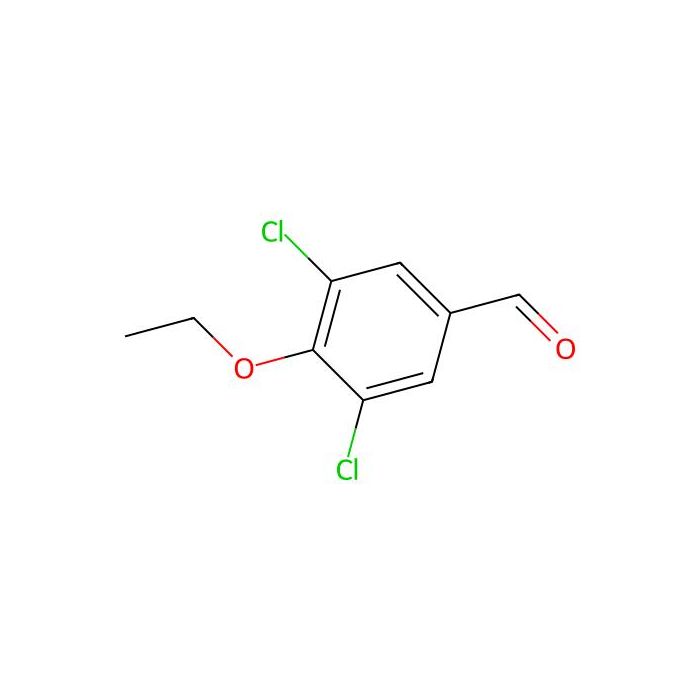
This compound belongs to the class of organic compounds known as dichlorobenzenes. These are compounds containing a benzene with exactly two chlorine atoms attached to it.
External Descriptors
Not available
1. Djoumbou Feunang Y, Eisner R, Knox C, Chepelev L, Hastings J, Owen G, Fahy E, Steinbeck C, Subramanian S, Bolton E, Greiner R, and Wishart DS. ClassyFire: Automated Chemical Classification With A Comprehensive, Computable Taxonomy. Journal of Cheminformatics, 2016, 8:61.
Formation of a cinnamate derivative: Treat with triethyl phosphonoacetate/NaH in THF (HWE) at 0 °C→rt; work up and purify by column chromatography using EtOAc/hexanes.
Benzylic alcohol preparation: Add MeMgBr (1.2–1.5 equiv) to a solution in dry THF at −10 °C; quench, extract, and purify.
Imine formation: Stir with an aniline derivative and catalytic p-TsOH in toluene under Dean–Stark to remove water, then reduce in situ with NaBH3CN in MeOH at pH ~6.
These are illustrative, literature-style procedures and not product-specific methods. Adjust stoichiometry, temperature, and solvent based on your substrate and safety assessments.
Biological Roles
This compound is a synthetic aromatic aldehyde and is not a known endogenous metabolite or biochemical cofactor.
General context (literature):
Aromatic aldehydes can act as electrophiles toward biological nucleophiles (amines, thiols) and may show nonspecific protein reactivity; handle in a fume hood and avoid exposure.
Halogenated aromatics often display increased hydrophobicity and potential aquatic toxicity; waste should be collected appropriately.
No specific biological pathway, receptor interaction, or enzymatic role is attributed to 3,5-dichloro-4-ethoxybenzaldehyde. All uses are intended for research and laboratory applications; no clinical or in vivo claims are made.
Buffer Applications
Not typically applicable. 3,5-Dichloro-4-ethoxybenzaldehyde is a hydrophobic aromatic aldehyde used as a synthetic intermediate and does not serve as a buffering agent.
For practical use in aqueous contexts (e.g., oxime formation), reactions are usually conducted in biphasic or alcoholic media with added buffers, but the compound itself does not define a buffer system.
Green Alternatives
Greener choices focus on solvent and reagent selection, as the substrate is fixed.
Replace dichloromethane with ethyl acetate or 2-MeTHF when feasible (similar solvency for many condensations and Wittig variants).
Use 2-MeTHF or CPME instead of THF for moisture-sensitive additions (bio-based, easier phase separation); verify rates/selectivity.
Prefer ethanol or isopropanol as reaction media for imine/oxime formation; enable benign workups.
Workup and purification:
Minimize halogenated waste; choose heptane/EtOAc gradients over hexanes/DCM in chromatography when possible.
Employ crystallization or trituration to avoid silica usage when downstream properties allow.
Reagent choices:
For oxidation to acids/esters, consider TEMPO/bleach or O2/Cu catalysts rather than chromium(VI) reagents.
For reductions, switch from borohydrides in protic media to catalytic hydrogenation with recyclable Pd/C when chemoselectivity allows.
Comparison snapshot (qualitative):
DCM vs EtOAc: EtOAc is biodegradable, lower toxicity; may require longer times but often acceptable yields.
THF vs 2-MeTHF: 2-MeTHF is bio-derived and less miscible with water, simplifying separations; slightly different polarity can impact rates.
Chromium oxidants vs TEMPO/NaOCl: TEMPO systems reduce hazardous waste; require pH control and careful quench.
Balance green metrics (E-factor, safety, regulatory) with chemoselectivity specific to your transformation.
Pharmaceutical Uses
No pharmacopeial monograph or excipient role is specified for this item.
Potential roles in a research/manufacturing context (literature, no clinical claims):
Intermediate for synthesis of halogenated aromatic scaffolds used in discovery chemistry.
Precursor to substituted benzylic alcohols, stilbenes, or cinnamates that may be evaluated as leads.
Aryl chloride sites permit late-stage diversification via cross-coupling.
Item-specific pharmacopeial status, residual solvent limits, or GMP applicability: Not specified for this item; refer to CoA/Spec Sheet. For any use beyond research, appropriate qualification and regulatory assessments would be required.
Physical Properties
Item-specific (Product Data):
Appearance: Not specified for this item; refer to CoA/Spec Sheet.
Grade/Purity: Not specified for this item; refer to CoA/Spec Sheet.
Molecular Formula: Not specified for this item; refer to CoA/Spec Sheet.
Molecular Weight: Not specified for this item; refer to CoA/Spec Sheet.
Literature/computed (general reference; not item-specific specifications):
Empirical formula (computed from name): C9H8Cl2O2
Formula weight (computed): ~219.06 g/mol
Expected physical state: low–moderate melting aromatic aldehyde; typically crystalline solid or viscous oil depending on purity/form (literature, qualitative)
Solubility profile: sparingly soluble in water; soluble in common organic solvents (e.g., dichloromethane, chloroform, ethyl acetate, toluene, THF) (literature, qualitative)
Polarity/logP: increased lipophilicity due to two chlorines and an ethoxy substituent; behaves as a moderately nonpolar aromatic with a polar formyl handle (literature, qualitative)
Spectral handles: strong aldehydic C=O stretch in IR near ~1680–1720 cm−1; aldehydic proton ~9.7–10.2 ppm in 1H NMR; formyl carbon ~190–195 ppm in 13C NMR (literature, typical ranges)
Numerical values such as melting/boiling points, density, refractive index, UV cutoff, water or peroxide content: Not specified for this item; refer to CoA/Spec Sheet.
Quality and Grades
Item-specific (Product Data):
Grade/Purity: Not specified for this item; refer to CoA/Spec Sheet.
Stabilizers/Inhibitors: Not specified for this item; refer to CoA/Spec Sheet.
General guidance:
Aldehyde quality considerations: trace acids and peroxides can catalyze self-condensation or oxidation; water content can impact condensation reactions (e.g., Wittig, Knoevenagel). Review CoA for assay (%), residual solvents, and spectral identity (1H/13C NMR, IR).
Chromatography-grade vs synthetic grade: if using in photophysical studies or analytical method development, low-UV-absorbance solvents/impurities may be necessary. For general synthesis, assay and impurity profile typically govern suitability.
Metals and halides: for downstream cross-couplings, background halide content is inherent; however, trace metal impurities may affect catalyst performance—consult Spec Sheet.
Batch-to-batch: verify aldehyde content by quantitative NMR or HPLC per your internal method if reaction stoichiometry is critical.
If specific numeric limits (e.g., water ppm, residual solvents, assay) are required for your application, please request the lot-specific CoA.
Reaction and Applications
As an electron-modulated benzaldehyde (EWG chloros at 3,5; EDG ethoxy at 4), this substrate is a versatile electrophile and aryl building block.
Carbon–carbon bond formation:
Wittig/Horner–Wadsworth–Emmons olefinations to styrenes or cinnamates; ring substituents tune E/Z selectivity and rate (literature).
Knoevenagel condensations with active methylenes (malonates, cyanoacetates, Meldrum’s acid) under basic or amine catalysis.
Aldol-type condensations (via enolizable partners) and benzoin-type couplings (with NHC catalysis, typically with more activated partners).
Nucleophilic additions to the carbonyl:
Grignard/organolithium additions give secondary/tertiary benzylic alcohols; ensure compatibility with aryl chlorides (can remain intact under many conditions).
Reductive amination via imine formation then reduction (NaBH3CN, NaBH(OAc)3).
Functional group interconversions:
Reduction of –CHO to benzyl alcohols (NaBH4, catalytic hydrogenation) or to methyl group (Wolff–Kishner/Clemmensen where compatible).
Oxidation to the corresponding benzoic acid or ester (e.g., Pinnick, TEMPO/bleach; or Jones if compatible).
Oxime/semicarbazone derivatives for characterization or protection.
Aryl–Cl handles:
Enable cross-coupling (Suzuki, Buchwald–Hartwig, Heck) with Pd/NHC or Pd–phosphine catalysts; electron-withdrawing dichloro pattern generally enhances oxidative addition compared with unactivated chlorobenzenes (literature trend).
Practical tips:
Limit oxygen/moisture to suppress over-oxidation to acids.
For condensations, remove water (molecular sieves or Dean–Stark) to drive equilibrium.
Monitor aldehyde consumption by TLC (UV-active, anisaldehyde stain) or in situ IR (C=O band).
Reaction Conditions
General literature guidance for reactions of substituted benzaldehydes (adjust to your system; not item-specific specifications):
Wittig olefination:
Solvent: THF, toluene, or DCM
Base: BuLi or NaHMDS to generate ylide (for unstabilized); preformed ylides for stabilized systems
Temperature: −78 °C to rt; 1–12 h; typical good to excellent yields with appropriate stoichiometry and dryness
HWE (phosphonate) olefination:
Solvent: THF or MeCN; Base: NaH, t-BuOK, or DBU
Temperature: 0 °C to rt; E-selective with stabilized anions
Knoevenagel condensation:
Solvent: EtOH, toluene, or AcOEt; Catalyst: piperidine, pyridine, ammonium acetate, or L-proline
Water removal (molecular sieves or Dean–Stark) improves conversion; typically rt to reflux, 1–24 h
Grignard addition:
Solvent: anhydrous THF or 2-MeTHF; Temperature: −20 °C to 0 °C for addition, then warm to rt; quench carefully
Reductive amination:
Solvent: MeOH, EtOH, or DCE; Reductant: NaBH3CN (pH 5–6) or NaBH(OAc)3 (AcOH present);
Temperature: rt; 2–16 h
Oxidation to acid:
Pinnick: NaClO2 (with NaH2PO4 and scavenger like 2-methyl-2-butene) in t-BuOH/H2O; 0 °C to rt
Monitor by TLC, GC, or HPLC. Control moisture and oxygen to limit over-oxidation and side reactions. Catalytic cross-couplings on the aryl chlorides typically require Pd(0/II) catalysts (e.g., Pd2(dba)3/XPhos) at 80–120 °C in toluene/1,4-dioxane with base (K3PO4, Cs2CO3).
Safety and Handling
Item-specific (Product Data):
GHS Classification: Not specified for this item; refer to SDS.
Signal Word / H-Statements / Pictograms: Not specified for this item; refer to SDS.
General safety guidance for halogenated aromatic aldehydes (literature-based; consult SDS for authoritative information):
Likely hazards: irritant to skin/eyes/respiratory tract; harmful if swallowed; aldehydes may be sensitizers; chlorinated aromatics may show aquatic toxicity. Avoid inhalation of vapors and dust.
PPE: lab coat, safety glasses or splash goggles, appropriate chemical-resistant gloves (e.g., nitrile), and work in a fume hood. Use secondary containment for weighing/transfers.
Handling: minimize exposure to air and moisture to limit oxidation of the aldehyde to the corresponding acid. Keep containers tightly closed. Use inert gas blanket for long-term storage or frequent opening.
Wittig/olefinations: THF, toluene, or DCM depending on ylide/basicity; temperature control from −78 °C to rt.
Condensations (Knoevenagel/Schiff base): ethanol, i-PrOH, toluene with azeotropic water removal (Dean–Stark) as needed.
Reductions (NaBH4, DIBAL, catalytic hydrogenation): alcohols or THF/MeOH mixtures for hydride donors; aprotic solvents for selective reductions.
Oxime/semicarbazone formation: ethanol or aqueous alcohols with buffering.
Brief comparison (literature, qualitative):
DCM: excellent solubility and fast kinetics; higher environmental burden.
Ethyl acetate: greener alternative with good solvency; may require warming.
2-MeTHF: bio-based, water-immiscible, good for moisture-sensitive additions; can simplify workups.
Toluene: high-boiling, suitable for azeotropic water removal; slower at room temperature.
Dry solvent quality can be critical; employ molecular sieves or solvent purification for moisture-sensitive transformations.
Storage and Reconstitution
Item-specific (Product Data):
Storage Conditions: Room temperature
General guidance for aldehydes (literature; supplement to Product Data):
Store in a tightly sealed amber container under dry, inert atmosphere (N2 or Ar) to limit oxidation to the corresponding benzoic acid.
Avoid prolonged exposure to air, heat, and light. For long-term storage, consider refrigeration (2–8 °C) under inert gas if compatible with your workflow.
If solidifies or shows crystallization/oiling upon storage, gently warm to dissolve before use; confirm identity/purity by NMR or HPLC.
Prepare reaction solutions in anhydrous solvents immediately before use. Aldehyde stock solutions are best made fresh; if necessary, store short-term at 2–8 °C in dry solvent under inert gas.
Do not freeze/thaw repeatedly if formulated in solution; aliquot as needed.
Shipping container type and stabilizers: Not specified for this item; refer to CoA/Spec Sheet. Always consult the SDS for handling and storage incompatibilities.
Structure and Identity
A halogenated aromatic aldehyde bearing an ethoxy substituent; useful as an electrophilic building block for condensation and carbon–carbon bond-forming reactions.
Item-specific (Product Data):
CAS: 43171-37-5
CID: 880269
InChIKey: 323832 (as provided)
Storage conditions: Room temperature
Research use note: For research use only
Literature/computed (for reference; not item-specific specifications):
Molecular formula: C9H8Cl2O2 (computed from structure)
Molecular weight: ~219.06 g/mol (computed)
SMILES (literature): CCOc1cc(Cl)cc(Cl)c1C=O
Functional groups and features:
Aromatic ring para-substituted with an ethoxy group (–OCH2CH3)
Aldehyde (–CHO) at the benzylic position (benzaldehyde core)
Two meta-position chlorines (3,5-dichloro), increasing ring electron withdrawal and lipophilicity
2D description: A substituted benzaldehyde ring bearing an aldehyde at C1; ethoxy at C4 para to the formyl; chlorines at C3 and C5 meta to the aldehyde. Planar aromatic core with a short formyl substituent and a rotatable ethoxy substituent. No stereocenters.
Note: Structural identifiers not provided in Product Data are cited as literature/computed values for general reference only.
Electrophilic center for carbon–carbon bond formation (Wittig, HWE, Julia–Kocienski, Knoevenagel).
Reversible condensation with amines to imines (gateway to reductive amination) and with hydroxylamine/semicarbazide to oximes/semicarbazones.
Redox interconversions to alcohols (NaBH4, catalytic hydrogenation), acids (Pinnick), or methyl groups (Wolff–Kishner/Clemmensen).
Aryl chlorides (3,5-positions):
Enable Pd-catalyzed cross-couplings (Suzuki–Miyaura, Buchwald–Hartwig, Sonogashira, Heck). The 3,5-dichloro pattern often allows sequential or double coupling strategies.
Nucleophilic aromatic substitution (SNAr) may be feasible with strong nucleophiles due to cumulative deactivation by –CHO and –Cl substituents (substrate- and condition-dependent).
Ethoxy substituent (para-EDG):
Modulates electronics; can be leveraged to tune reactivity and regioselectivity in electrophilic aromatic substitutions on less-deactivated positions, though the ring is overall deactivated by –Cl and –CHO.
Strategic use: The molecule serves as a convergent node—forge the side chain via the –CHO, then diversify the aryl chlorides, or vice versa. Protecting-group strategies are rarely required as –CHO is directly convertible under mild conditions.
Target Specificity
Not applicable. This product is a small-molecule chemical building block and is not an antibody, enzyme, or biological targeting reagent. No antigen/epitope or species reactivity applies.
We use cookies to ensure the website functions properly and, where permitted, to improve your experience. You can manage your preferences at any time in Settings. Learn more in our Cookie Policy.
Shall we send you a message when we have discounts available?
Remind me later
Thank you! Please check your email inbox to confirm.
Products are supplied to verified businesses, institutions, and qualified professionals for research and development use only. Not for use in humans, animals, diagnosis, or therapy.