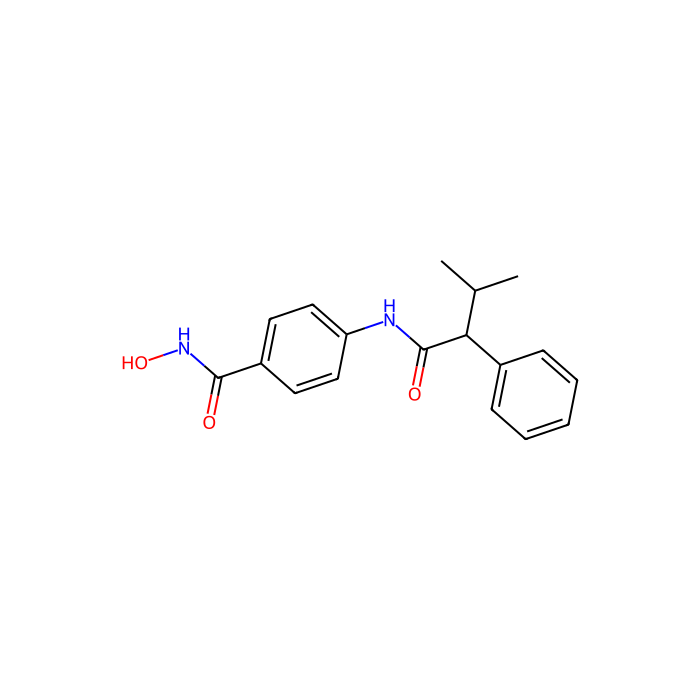
This compound belongs to the class of organic compounds known as acylaminobenzoic acid and derivatives. These are derivatives of amino benzoic acid derivatives where the amine group is N-acylated.
External Descriptors
Not available
1. Djoumbou Feunang Y, Eisner R, Knox C, Chepelev L, Hastings J, Owen G, Fahy E, Steinbeck C, Subramanian S, Bolton E, Greiner R, and Wishart DS. ClassyFire: Automated Chemical Classification With A Comprehensive, Computable Taxonomy. Journal of Cheminformatics, 2016, 8:61.
Determine the necessary mass, volume, or concentration for preparing a solution.
Dilution Calculator
Determine the dilution needed to prepare a stock solution.
Reconstitution Calculator
Revisões
Avaliações dos Clientes
Application Protocols
No tested applications, recommended dilutions, or control suggestions are provided in the Product Data for this item.
General guidance (process-oriented; not item-specific instructions):
Establish internal SOPs for compound handling, plating, and dosing that define vehicle percentages, mixing, and timing.
Implement a plate map with vehicle controls, serial dilutions, and at least one orthogonal readout to confirm on-target effects.
Verify identity and purity of the working stock via LC-MS where feasible before committing to large screens.
For assay-specific protocols (WB, IF, IHC, enzymatic HDAC assays), consult methodological literature and optimize empirically. Do not substitute this guidance for item-specific directions; refer to the CoA/SDS and your internal validation.
Biological Roles
General biology context (literature-based; not item-specific claims):
Histone deacetylases (HDACs) regulate chromatin structure by removing acetyl groups from lysine residues on histones, typically leading to chromatin compaction and transcriptional repression. Inhibiting HDAC activity generally increases histone acetylation and can modulate gene expression programs.
In cell biology research, small-molecule HDAC inhibitors are used to probe epigenetic mechanisms, examine links between acetylation status and cell-cycle control, and study non-histone protein acetylation (e.g., transcription factors, chaperones).
AR-42 is widely referenced in the open literature as a member of the HDAC-inhibitor tool-compound class employed in cell-based and biochemical assays to study acetylation-dependent signaling. Specific isoform selectivity, potency values, and off-target profiles should be confirmed from primary sources for your application; no item-specific target profile is provided here.
Experimental considerations (good practice):
Include orthogonal readouts to verify on-target engagement (e.g., immunoblot for acetyl-H3/H4, enzymatic HDAC assays).
Time- and dose-dependence can vary greatly by cell type and culture conditions; perform pilot studies.
Consider the impact of serum proteins, efflux transporters, and cell permeability on observed activity; matched controls are essential.
All uses are for research purposes only; no clinical or diagnostic use is intended or implied.
Buffer Applications
This item is a bioactive small molecule rather than a buffering agent. It is not typically used to prepare buffer systems or to control pH.
Practical guidance:
When dosing into aqueous buffers (assay media), prepare concentrated DMSO stocks and dilute into the target buffer immediately before use to minimize precipitation. Maintain consistent vehicle percentages across controls and treatments.
If precipitation or adsorption to plastics is observed, evaluate alternative dilution protocols, carrier proteins, or low-binding labware.
For buffer preparation (pH control), use established buffering agents (e.g., PBS, HEPES, Tris) appropriate to your assay.
Green Alternatives
Context: As a defined bioactive screening compound, AR-42 itself is not amenable to substitution by a “greener solvent” or common reagent alternative without changing the biological hypothesis. However, you can improve the environmental footprint of your workflow surrounding its use.
Greener practice suggestions (general):
Solvent minimization: Prepare the highest practical DMSO stock concentration supported by solubility to reduce total DMSO usage across assays.
Aqueous buffers: Employ buffered saline or culture media for final dilutions to minimize organic content in assay plates.
Waste reduction: Consolidate DMSO and organic rinses for centralized disposal; use micro-volume dispensing to cut consumables and solvent waste.
Procurement: Align order sizes with experimental scope to avoid material expiration and disposal of unused stock.
Storage efficiency: Shared working aliquots (under strict contamination controls) can reduce repeated freeze–thaw cycles and waste.
Illustrative comparison (workflow-level, not item substitution):
DMSO vs DMF for stock preparation: DMSO is generally preferred due to lower volatility/odor and broader biological acceptance, reducing repeat experiments and waste. DMF may be avoided unless specifically required.
Note: Because biological activity is compound-specific, “green alternatives” here focus on process improvements rather than substituting AR-42 with a different chemical entity.
Pharmaceutical Uses
No pharmacopeial or excipient roles are specified for this item; AR-42 is supplied strictly for research use only (per Product Data: Research Use Note). Do not use in humans or for diagnostic/therapeutic applications.
General formulation context for research studies (not item-specific specifications):
For in vitro work, DMSO stock solutions are commonly diluted into culture media immediately before use.
For preclinical research workflows (non-clinical), solubilization strategies may include co-solvents, surfactants, or complexation agents (e.g., PEG400, polysorbates, cyclodextrins). Any in vivo formulation must be developed and reviewed under appropriate institutional approvals; Aladdin provides no guidance for clinical/formulation use of this item.
Regulatory note:
This product is not supplied with pharmacopeial certification (USP/EP/JP) and carries no claims of GMP manufacture. Refer to the CoA for available analytical data and use only in research settings.
Physical Properties
Item-specific specifications:
Appearance: Not specified for this item; refer to CoA/Spec Sheet.
Molecular weight: Not specified for this item; refer to CoA/Spec Sheet.
Molecular formula: Not specified for this item; refer to CoA/Spec Sheet.
Boiling point, melting point, density, refractive index, UV cutoff, logP, pKa: Not specified for this item; refer to CoA/Spec Sheet.
General/literature guidance for similar small-molecule screening compounds (not item-specific):
Many bioactive HDAC-inhibitor–class molecules are solids at room temperature and are often handled as DMSO stock solutions due to limited aqueous solubility.
Stock preparation commonly employs anhydrous DMSO at 10–50 mM, then dilution into assay buffer immediately before use to mitigate precipitation. Actual solubility and stability must be verified experimentally for this lot.
Hygroscopicity and light sensitivity can vary; protect from moisture and light until item-specific data are confirmed.
Practical notes:
If precise thermal transitions (mp) or solubility limits are required for your process design or QC, obtain the current Certificate of Analysis (CoA) or specification sheet for this SKU and lot.
Quality and Grades
Item-specific quality information:
Grade/purity: Not specified for this item; refer to CoA/Spec Sheet.
How to interpret common grades for small-molecule screening compounds (general guidance):
Screening/Library grade typically indicates purity suitable for biological screening (often ≥95% by HPLC/LC-MS). Verify the exact purity test, analytical method, and residual solvents on the CoA.
Where applicable, chiral purity/enantiomeric excess may be reported for stereodefined compounds. If biological activity is stereosensitive, confirm the isomeric composition.
Residual solvent limits, water content (Karl Fischer), and inorganic residues are sometimes reported; if not, request them if your application is sensitive.
UV/Vis background and fluorescence artifacts may affect high-content assays; if this is a concern, ask for spectral scans or choose high-purity, low-fluorescence lots.
Stabilizers and form:
Stabilizer/additives: Not specified for this item; refer to CoA/Spec Sheet.
Physical form and counter-ion (if any) can influence solubility and bioassay results; confirm the form supplied for SKU A127913.
Recommendation: Use the lot-specific CoA as the authoritative document for purity, identity testing (HPLC/LC-MS, NMR), and any applicable limits.
Reaction and Applications
This product is offered as a bioactive small molecule for research screening rather than as a synthetic reagent.
Research applications (general, literature-based for the AR-42 chemotype):
Epigenetics studies: AR-42 is referenced in the literature as an HDAC-inhibitor–class tool compound used to probe histone acetylation status and chromatin remodeling in cells and lysates. Use is restricted to research; verify target engagement in your system.
Chemical biology: Useful in mechanism-of-action studies, time-course acetylation profiling, and synergy mapping with other pathway modulators. Incorporate orthogonal readouts (e.g., histone H3/H4 acetylation by Western blot) to confirm on-target effects.
Screening workflows: Often included in focused epigenetic libraries for assay validation (positive control) or for comparative potency profiling. Always include DMSO vehicle controls and, where possible, inactive analogs.
Not typically applicable as a reagent:
AR-42 is not commonly used as a stoichiometric reagent, ligand, or catalyst in synthetic transformations. If you require an HDAC-ligand motif as a synthetic handle, consider building-block hydroxamates or other zinc-binding fragments with documented reactivity.
Practical tips:
Confirm compound identity/purity for critical studies via in-house LC-MS before initiating large screens.
Titrate dose ranges empirically; avoid assuming activity ranges from external sources without local verification.
Reaction Conditions
Not typically applicable. AR-42 is supplied as a research-use screening compound, not as a reagent for synthetic transformations. Consequently, there are no recommended reaction conditions (solvents, catalysts, temperatures) for using AR-42 as a chemical reactant.
General handling conditions for assay use (practice-based, not item-specific specifications):
Prepare concentrated stock solutions in DMSO under dry, clean conditions.
Dilute into assay buffers or media immediately before use; mix thoroughly to avoid local supersaturation.
Maintain consistent vehicle concentrations across all wells/samples to ensure comparability.
For synthetic chemistry applications, select reagents with well-documented reactivity profiles and consult reaction-specific literature.
Safety and Handling
Hazard and GHS classification (Product Data):
Signal word: Not specified for this item; refer to SDS.
H-statements: Not specified for this item; refer to SDS.
GHS classification/pictograms: Not specified for this item; refer to SDS.
General laboratory safety (applicable good practice; defer to SDS for authority):
Handle in a chemical fume hood. Avoid inhalation of dust/aerosols and contact with skin/eyes.
Recommended PPE: lab coat, nitrile gloves, safety glasses or splash goggles. Use a respirator only if risk assessment warrants and in compliance with institutional policy.
Storage incompatibilities: Keep away from strong oxidizers and bases/acids unless compatibility is known. Avoid moisture ingress for bioactive small molecules lacking stability data.
First aid overview: In case of skin/eye contact, rinse with water for at least 15 minutes; remove contaminated clothing. If inhaled, move to fresh air. If ingested, rinse mouth; do not induce vomiting; seek medical attention. Always follow the SDS for this specific product.
Spill/accidental release: Avoid dust formation; absorb small spills on inert material; collect in suitable container for disposal per local regulations.
Waste: Dispose as organic laboratory waste in accordance with institutional and regulatory requirements.
Note: No item-specific toxicological data are provided here; consult the product SDS for definitive guidance.
Solvent Selection
Item-specific solubility data are not provided; refer to the CoA/Spec Sheet.
General guidance for bioactive small molecules in screening workflows (literature/practice-based):
Primary solvent: DMSO is typically preferred for preparing concentrated stocks due to broad solvating power for aromatic/heteroaromatic scaffolds.
Secondary options: DMF or ethanol can be considered if DMSO is incompatible with your assay, but verify solubility and assay tolerance.
Aqueous use: Dilute DMSO stocks into buffered media immediately prior to use, keeping final DMSO typically ≤0.1–0.5% v/v as tolerated by cells/enzymes. Include vehicle controls.
Polarity/miscibility considerations: DMSO is fully miscible with water; precipitation risk increases upon aqueous dilution if kinetic solubilization outpaces equilibrium solubility. Employ gentle mixing and staged dilution.
Surfactants/cyclodextrins: For especially hydrophobic compounds, non-ionic surfactants (e.g., 0.01–0.05% Tween-20) or cyclodextrins may help, but evaluate biological impacts.
Comparison (general):
DMSO vs DMF: DMSO is more commonly accepted in bioassays; DMF can be harsher and less tolerated by cells.
DMSO vs ethanol: Ethanol is volatile and can alter membrane properties; keep ≤0.1% if used.
Note: Without item-specific data for AR-42, pilot solubility tests and small-scale assay compatibility checks are strongly recommended.
Storage and Reconstitution
Item-specific instructions (Product Data):
Storage conditions: Store at -20°C.
Shipped in: Ice chest + ice pads.
Additional notes:
Reconstitution solvent, concentration, and aliquoting guidance: Not specified for this item; refer to CoA/Spec Sheet.
Shelf life/expiry and stability after reconstitution: Not specified for this item; refer to CoA/Spec Sheet.
Good practice (general):
Upon receipt, return to the recommended storage temperature. If you prepare stock solutions, consider single-use aliquots to avoid repeated freeze–thaw cycles. Protect from moisture and light unless item-specific data indicate otherwise.
Always consult the lot-specific CoA and SDS for authoritative storage and handling information.
Structure and Identity
Brief description: AR-42 (also referenced in the literature as a small-molecule epigenetic tool compound) is supplied as a research-use-only screening molecule in Aladdin’s small-molecule library.
SKU: A127913
Product name: AR-42
CAS: 935881-37-1 (Product Data)
PubChem CID: 6918848 (Product Data)
InChIKey: 194464 (Product Data; note this is not a standard-length InChIKey; consult CoA/SDS for definitive identifier)
SMILES: Not specified for this item; refer to CoA/Spec Sheet.
Molecular formula: Not specified for this item; refer to CoA/Spec Sheet.
Molecular weight: Not specified for this item; refer to CoA/Spec Sheet.
Category path: 全部 / 可售 / 小分子和化合物库 (Product Data)
Structural features (general literature context):
AR-42 is widely discussed in the literature as a histone deacetylase (HDAC) inhibitor–class small molecule. Specific ring systems and functional groups are not provided in this item’s Product Data; consult primary references or the CoA for exact connectivity and stereochemistry.
2D structure (verbal description): Not specified for this item; refer to CoA/Spec Sheet. In general, HDAC inhibitors often contain a zinc-binding motif and an aromatic cap region, but this is general information and not item-specific.
Synthetic Utility
AR-42 is offered as a finished bioactive small molecule for screening and chemical biology; it is not typically employed as a reagent, building block, or catalyst in synthetic organic chemistry.
If derivatization is of interest (general considerations):
Without item-specific structural details in this listing, prospective semisynthetic modification strategies (e.g., prodrug formation, linker installation for affinity probes) cannot be advised here. Consult the primary literature for the AR-42 scaffold to identify modifiable positions that preserve activity.
For probe development (e.g., biotinylated or fluorescent conjugates), ensure that modifications do not eliminate key pharmacophore features presumed to be responsible for target engagement.
Recommendation:
If you need a synthetic handle or a defined functional group, consider ordering appropriate building blocks with documented reactivity and protection strategies rather than repurposing this screening compound.
Target Specificity
Item-specific target information is not provided in the Product Data for SKU A127913.
General context (literature-based, not a claim for this item):
AR-42 is discussed in the literature as belonging to the HDAC-inhibitor tool compound class. However, isoform selectivity, potency values (e.g., IC50/Ki), and off-target activity can vary by source and assay system.
Guidance:
For definitive target specificity, consult the lot-specific CoA/technical sheet and primary references. Validate target engagement in your own system using orthogonal assays (biochemical inhibition, histone acetylation readouts, or chemoproteomics if available).
Usamos cookies para garantir o funcionamento adequado do site e, quando permitido, para melhorar a sua experiência. Você pode gerenciar suas preferências a qualquer momento nas Configurações. Saiba mais em nossa Política de Cookies.
Deseja que lhe enviemos uma mensagem quando tivermos descontos disponíveis?
Lembrar-me mais tarde
Obrigado! Por favor, verifique a sua caixa de entrada de e-mail para confirmar.
Products are supplied to verified businesses, institutions, and qualified professionals for research and development use only. Not for use in humans, animals, diagnosis, or therapy.

 C2620069