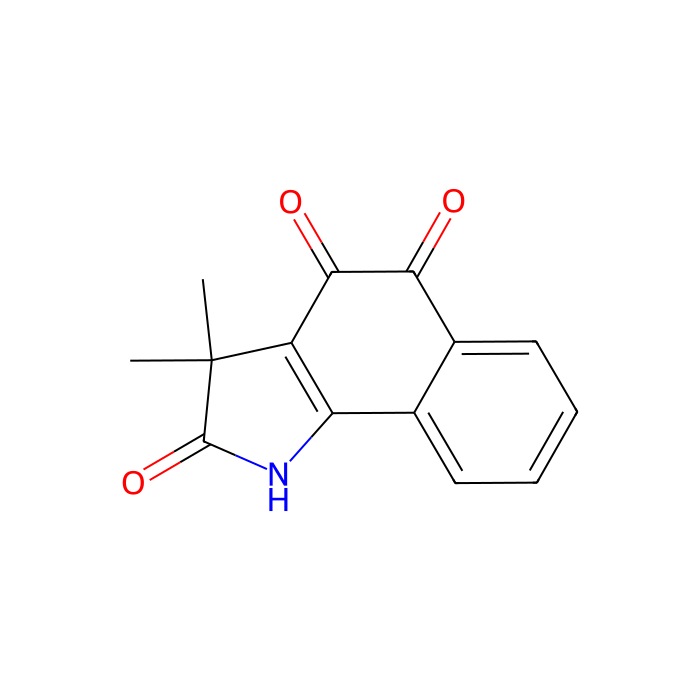
BVT 948 - ≥99% , CAS No.39674-97-0

CAS: 39674-97-0 Cat. No.: B274957 Fórmula: C14H11NO3 Peso molecular: 241.25 Número CE: 637-051-9
Disponível para encomenda
GRAU & PUREZA ≥99%
Synonyms
malonic acid mono ethyl ester|3,3-dimethyl-1H-benzo[g]indole-2,4,5-trione|BVT 948|4-Hydroxy-3,3-dimethyl-2H-benzo[g]indole-2,5(3H)-dione|BVT.948|4-Hydroxy-3,3-dimethyl-2H-benz[g]indole-2,5(3H)-dione|BVT948|BVT-948
Storage
Protected from light,Store at -20°C,Argon charged,Desiccated
Shipped In
Ice chest + Ice pads
★
Tamanho
USA
Alemanha (EU)*
Preço
Qtd
10mg
B274957-10mg
3 Em stock
—
162,90US$
50mg
B274957-50mg
3 Em stock
—
681,90US$
Enter a quantity for the sizes you want to add.

Visão geral

Store at -20°C. It is important to note that this product is reported to be light sensitive. Store In the Dark. Store under desiccating conditions.

Especificações

Sinónimos
malonic acid mono ethyl ester | 3,3-dimethyl-1H-benzo[g]indole-2,4,5-trione | BVT 948 | 4-Hydroxy-3,3-dimethyl-2H-benzo[g]indole-2,5(3H)-dione | BVT.948 | 4-Hydroxy-3,3-dimethyl-2H-benz[g]indole-2,5(3H)-dione | BVT948 | BVT-948
Especificações e pureza
≥99%
Mecanismos bioquímicos e fisiológicos
Non-competitive, irreversible protein tyrosine phosphatase (PTP) inhibitor (IC 50 values are 0.9 (PTP1B), 1.7 (TCPTP), 0.09 (SHP-2), 1.5 (LAR) and 0.7 (YopH) μM). Active in vivo and cell-permeable.
Condições de armazenamento de armazenamento
Protected from light,Store at -20°C,Argon charged,Desiccated
Enviado em
Ice chest + Ice pads
Este produto requer transporte de cadeia fria. Serviços terrestres e outros serviços econômicos não estão disponíveis.
Tipo de ação
INHIBITOR
Nota
Wherever possible, you should prepare and use solutions on the same day. However, if you need to make up stock solutions in advance, we recommend that you store the solution as aliquots in tightly sealed vials at -20°C. Generally, these will be useable for up to one month. Before use, and prior to opening the vial we recommend that you allow your product to equilibrate to room temperature for at least 1 hour. Need more advice on solubility, usage and handling? Please visit our frequently asked questions (FAQ) page for more details.
Pureza
≥99%
Nomes e identificadores
Pubchem Sid
Pubchem Sid Url
https://pubchem.ncbi.nlm.nih.gov/substance/504764298
SMILES
CC1(C2=C(C3=CC=CC=C3C(=O)C2=O)NC1=O)C
IUPAC Name
3,3-dimethyl-1H-benzo[g]indole-2,4,5-trione
InChIKey
LLPBUXODFQZPFH-UHFFFAOYSA-N
InChI
1S/C14H11NO3/c1-14(2)9-10(15-13(14)18)7-5-3-4-6-8(7)11(16)12(9)17/h3-6H,1-2H3,(H,15,18)
SMILES isoméricas
CC1(C2=C(C3=CC=CC=C3C(=O)C2=O)NC1=O)C
Peso molecular
241.25
Reaxys
1469254
Reaxys-RN_link_address
https://www.reaxys.com/reaxys/secured/hopinto.do?context=S&query=IDE.XRN=1469254&ln=

Dados avançados

Taxonomic Classification

Taxonomy Tree

KingdomOrganic compounds
SuperclassBenzenoids
ClasseNaphthalenes
SubclassNaphthoquinones
Intermediate Tree Nodes Not available
Direct ParentNaphthoquinones
Alternative Parents Indoles and derivatives  Quinones  Aryl ketones  Vinylogous amides  Pyrrolines  Secondary carboxylic acid amides  Lactams  Azacyclic compounds  Organonitrogen compounds  Organic oxides  Hydrocarbon derivatives  
Molecular FrameworkAromatic heteropolycyclic compounds
Substituents Naphthoquinone - Indole or derivatives - Quinone - Aryl ketone - Pyrroline - Vinylogous amide - Carboxamide group - Ketone - Lactam - Secondary carboxylic acid amide - Carboxylic acid derivative - Azacycle - Organoheterocyclic compound - Organic oxide - Organooxygen compound - Organonitrogen compound - Organic oxygen compound - Carbonyl group - Organic nitrogen compound - Hydrocarbon derivative - Aromatic heteropolycyclic compound
DescriçãoThis compound belongs to the class of organic compounds known as naphthoquinones. These are compounds containing a naphthohydroquinone moiety, which consists of a benzene ring linearly fused to a bezene-1,4-dione (quinone).
External Descriptors Not available
Estrutura 3D
Modelo de Estrutura Química Interativa


Alvos associados (humanos)
VDR Tclin Vitamin D receptor (26531 Activities)
Activity TypeRelationActivity valueUnitsAction TypeJournalPubMed IddoiAssay Aladdin ID
THRB Tclin Thyroid hormone receptor beta-1 (7926 Activities)
Activity TypeRelationActivity valueUnitsAction TypeJournalPubMed IddoiAssay Aladdin ID
ALDOA Tbio Fructose-bisphosphate aldolase A (1 Activities)
Activity TypeRelationActivity valueUnitsAction TypeJournalPubMed IddoiAssay Aladdin ID
ALDH1A1 Tchem Aldehyde dehydrogenase 1A1 (77053 Activities)
Activity TypeRelationActivity valueUnitsAction TypeJournalPubMed IddoiAssay Aladdin ID
CYP2D6 Tclin Cytochrome P450 2D6 (33882 Activities)
Activity TypeRelationActivity valueUnitsAction TypeJournalPubMed IddoiAssay Aladdin ID
CASP1 Tchem Caspase-1 (6235 Activities)
Activity TypeRelationActivity valueUnitsAction TypeJournalPubMed IddoiAssay Aladdin ID
GAPDH Tchem Glyceraldehyde-3-phosphate dehydrogenase liver (1284 Activities)
Activity TypeRelationActivity valueUnitsAction TypeJournalPubMed IddoiAssay Aladdin ID
ALOX15 Tchem Arachidonate 15-lipoxygenase (7108 Activities)
Activity TypeRelationActivity valueUnitsAction TypeJournalPubMed IddoiAssay Aladdin ID
CASP7 Tchem Caspase-7 (3146 Activities)
Activity TypeRelationActivity valueUnitsAction TypeJournalPubMed IddoiAssay Aladdin ID
CYP1A2 Tchem Cytochrome P450 1A2 (26471 Activities)
Activity TypeRelationActivity valueUnitsAction TypeJournalPubMed IddoiAssay Aladdin ID
CYP2C9 Tchem Cytochrome P450 2C9 (32119 Activities)
Activity TypeRelationActivity valueUnitsAction TypeJournalPubMed IddoiAssay Aladdin ID
CYP2C19 Tchem Cytochrome P450 2C19 (29246 Activities)
Activity TypeRelationActivity valueUnitsAction TypeJournalPubMed IddoiAssay Aladdin ID
CYP3A4 Tclin Cytochrome P450 3A4 (53859 Activities)
Activity TypeRelationActivity valueUnitsAction TypeJournalPubMed IddoiAssay Aladdin ID
TP53 Tchem Cellular tumor antigen p53 (48468 Activities)
Activity TypeRelationActivity valueUnitsAction TypeJournalPubMed IddoiAssay Aladdin ID
HepG2 (196354 Activities)
Activity TypeRelationActivity valueUnitsAction TypeJournalPubMed IddoiAssay Aladdin ID
APEX1 Tchem DNA-(apurinic or apyrimidinic site) lyase (38016 Activities)
Activity TypeRelationActivity valueUnitsAction TypeJournalPubMed IddoiAssay Aladdin ID
TDP1 Tchem Tyrosyl-DNA phosphodiesterase 1 (345557 Activities)
Activity TypeRelationActivity valueUnitsAction TypeJournalPubMed IddoiAssay Aladdin ID
KDM4E Tchem Lysine-specific demethylase 4D-like (40243 Activities)
Activity TypeRelationActivity valueUnitsAction TypeJournalPubMed IddoiAssay Aladdin ID
RECQL Tbio ATP-dependent DNA helicase Q1 (5575 Activities)
Activity TypeRelationActivity valueUnitsAction TypeJournalPubMed IddoiAssay Aladdin ID
BLM Tchem Bloom syndrome protein (4248 Activities)
Activity TypeRelationActivity valueUnitsAction TypeJournalPubMed IddoiAssay Aladdin ID
USP1 Tchem Ubiquitin carboxyl-terminal hydrolase 1 (22556 Activities)
Activity TypeRelationActivity valueUnitsAction TypeJournalPubMed IddoiAssay Aladdin ID
KMT5A Tchem N-lysine methyltransferase SETD8 (202 Activities)
Activity TypeRelationActivity valueUnitsAction TypeJournalPubMed IddoiAssay Aladdin ID
MEN1 Tchem Menin/Histone-lysine N-methyltransferase MLL (48157 Activities)
Activity TypeRelationActivity valueUnitsAction TypeJournalPubMed IddoiAssay Aladdin ID
Alvos associados (não humanos)
Cruzipain (33337 Activities)
Activity TypeRelationActivity valueUnitsAction TypeJournalPubMed IddoiAssay Aladdin ID
Hdac6 Histone deacetylase 6 (222 Activities)
Activity TypeRelationActivity valueUnitsAction TypeJournalPubMed IddoiAssay Aladdin ID
Plasmodium falciparum (966862 Activities)
Activity TypeRelationActivity valueUnitsAction TypeJournalPubMed IddoiAssay Aladdin ID
CHO (4503 Activities)
Activity TypeRelationActivity valueUnitsAction TypeJournalPubMed IddoiAssay Aladdin ID
lef Anthrax lethal factor (7585 Activities)
Activity TypeRelationActivity valueUnitsAction TypeJournalPubMed IddoiAssay Aladdin ID
rep Replicase polyprotein 1ab (378 Activities)
Activity TypeRelationActivity valueUnitsAction TypeJournalPubMed IddoiAssay Aladdin ID
Mapt Microtubule-associated protein tau (6 Activities)
Activity TypeRelationActivity valueUnitsAction TypeJournalPubMed IddoiAssay Aladdin ID
Rorc Nuclear receptor ROR-gamma (89407 Activities)
Activity TypeRelationActivity valueUnitsAction TypeJournalPubMed IddoiAssay Aladdin ID
fba Putative fructose-1,6-bisphosphate aldolase (15559 Activities)
Activity TypeRelationActivity valueUnitsAction TypeJournalPubMed IddoiAssay Aladdin ID
Impa1 Inositol monophosphatase 1 (16203 Activities)
Activity TypeRelationActivity valueUnitsAction TypeJournalPubMed IddoiAssay Aladdin ID
ffp 4'-phosphopantetheinyl transferase ffp (24982 Activities)
Activity TypeRelationActivity valueUnitsAction TypeJournalPubMed IddoiAssay Aladdin ID
Mecanismos de ação
Certificados(CoA,COO,BSE/TSE e Mapa de Análise)
C of A & Other Certificates(BSE/TSE, COO):
Analytical Chart:

Find and download the COA for your product by matching the lot number on the packaging.

2 results found

Lot NumberCertificate TypeDataItem
J2217111J2217111Certificate of AnalysisAug 04, 2026 B274957
J2217118J2217118Certificate of AnalysisAug 04, 2026 B274957
Propriedades químicas e físicas
SolubilidadeSoluble in DMSO to 50 mM and in ethanol to 20 mM
Sensibilidadelight & moisture sensitive
Peso molecular241.24
XLogP31.000
Hydrogen Bond Donor Count1
Hydrogen Bond Acceptor Count3
Rotatable Bond Count0
Exact Mass241.074 Da
Monoisotopic Mass241.074 Da
Topological Polar Surface Area63.200 Ų
Heavy Atom Count18
Formal Charge0
Complexity501.000
Isotope Atom Count0
Defined Atom Stereocenter Count0
Undefined Atom Stereocenter Count0
Defined Bond Stereocenter Count0
Undefined Bond Stereocenter Count0
The total count of all stereochemical bonds0
Covalently-Bonded Unit Count1
Segurança e perigos (GHS)
Pictograma(s)
Sinal
Warning
Declarações de perigo

H317:May cause an allergic skin reaction

Declarações de precaução

P261:Avoid breathing dust/fume/gas/mist/vapors/spray.

P272:Contaminated work clothing should not be allowed out of the workplace.

P280:Wear protective gloves/protective clothing/eye protection/face protection.

P321:Specific treatment (see ... on this label).

P302+P352:IF ON SKIN: wash with plenty of water.

P333+P313:IF SKIN irritation or rash occurs: Get medical advice/attention.

P362+P364:Take off contaminated clothing and wash it before reuse.

P501:Dispose of contents/container to an approved waste disposal plant.

Reaxys
1469254
Reaxys-RN_link_address
https://www.reaxys.com/reaxys/secured/hopinto.do?context=S&query=IDE.XRN=1469254&ln=
FAQs e artigos
Calculadoras de soluções
Revisões

Avaliações dos Clientes

Application Protocols

Tested applications, recommended dilutions/concentrations, and positive controls are not provided for this item in the listing.

  • Item-specific guidance
    • Not specified for this item; refer to CoA/Spec Sheet.

Please design and validate protocols according to your assay requirements, and consult the SDS/CoA for any handling constraints.

Biological Roles

Item-specific biological function or target information for BVT 948 is not provided in the listing.

  • Item-specific details

    • Target, pathway, and mechanism: Not specified for this item; refer to CoA/Spec Sheet or primary literature associated with the CAS/CID.
  • General considerations for small-molecule research tools (non-clinical)

    • Library compounds may be evaluated as chemical probes in biochemical or cell-based systems to interrogate pathways or phenotypes. Prior to biological use, confirm identity/purity and establish solubility/stability in the intended assay medium.
    • Assess nonspecific liabilities (aggregation, redox cycling, fluorescence interference) with appropriate counter-screens (e.g., detergent sensitivity, light/dark controls) when mechanism is unknown.
    • Determine cytotoxicity/background effects independently before use as a probe in cellular contexts to avoid misattribution of activity.
  • Documentation and provenance

    • Record lot numbers and storage history; degradation or polymorph changes can alter apparent biological activity.

Research use only: No medical, diagnostic, or therapeutic claims are made for this product. Any biological roles must be established by the end user through appropriate validation experiments.

Buffer Applications

No buffer system recommendations are provided for this item, and the compound’s acid/base properties and water solubility are not specified.

  • Applicability

    • Without pKa and solubility data, buffer formulation guidance is not typically applicable. If aqueous use is intended, determine solubility and stability in your target buffer (pH range, ionic strength) using small-scale tests.
  • General practice (not item-specific)

    • Dissolve in an appropriate organic solvent (commonly anhydrous DMSO) to prepare a concentrated stock; then perform controlled dilution into the buffer while monitoring for precipitation. Keep final organic co‑solvent at the lowest effective level.
    • If ionizable groups are identified from structural data, choose buffers that avoid strong salt/ligand interactions and maintain compound in the desired ionization state.

Please consult the CoA and, if necessary, conduct empirical solubility and stability checks to establish suitability in specific buffer systems.

Green Alternatives

Because no specific application or solvent system is defined for BVT 948, green chemistry considerations should focus on solvent choice and handling practices common to small-molecule research.

  • Prefer greener dissolution and processing solvents when compatible with solubility and stability

    • Replace DMF/NMP with ethanol, isopropanol, ethyl acetate, or 2‑MeTHF where feasible.
    • For aqueous assays, minimize DMSO carryover (≤0.1–0.5% v/v) and consider ethanol as a co‑solvent if compatible.
  • Small comparison (general; literature-based)

    • DMSO: high solvency; low volatility; moderate environmental footprint; hygroscopic and may complicate waste streams.
    • Ethanol/Isopropanol: renewable routes available; low toxicity; good for moderately polar solutes but limited for highly lipophilic molecules.
    • 2‑MeTHF/CPME: bio-derived options for nonpolar solubilization; lower peroxide tendency than ethers like THF (CPME particularly); water immiscible.
    • Ethyl acetate: relatively benign, biodegradable; good for workups and some dissolutions; limited polarity range.
  • Operational best practices

    • Right-size experiments and aliquots to reduce waste and repeated freeze–thaw losses.
    • Use amber vials and low headspace under inert gas to extend solution lifetime, decreasing remake frequency.
    • Segregate halogenated vs non-halogenated organic waste; consider solvent recovery where institutional infrastructure permits.

Note: Always balance green substitutions against compound stability and assay performance; validate any solvent change with a brief compatibility study.

Pharmaceutical Uses

The listing provides no information on pharmacopeial status, excipient roles, or manufacturing uses for BVT 948.

  • Item-specific status

    • Regulatory/pharmacopeial designation: Not specified for this item; refer to CoA/Spec Sheet.
    • Intended use: For research use only (as provided). Not for human or veterinary use, and not for diagnostic or therapeutic applications.
  • General context (not item-specific)

    • Small-molecule research compounds may be used in pre-formulation experiments or as reference materials in analytical method development within R&D settings. Any such uses require internal qualification of purity, stability, and reference traceability.
    • If formulation screening is pursued for in vitro studies, establish solvent/vehicle compatibility (e.g., DMSO, PEG400, cyclodextrins) and confirm stability under storage and experimental conditions.

No claims are made regarding clinical efficacy, safety, or suitability for pharmaceutical manufacturing. Consult institutional quality systems before employing this material in GMP-adjacent workflows.

Physical Properties

Item-specific property data are not included in the current listing.

  • Appearance: Not specified for this item; refer to CoA/Spec Sheet.
  • Melting point (MP): Not specified for this item; refer to CoA/Spec Sheet.
  • Boiling point (BP): Not specified for this item; refer to CoA/Spec Sheet.
  • Density: Not specified for this item; refer to CoA/Spec Sheet.
  • Refractive index: Not specified for this item; refer to CoA/Spec Sheet.
  • Solubility: Not specified for this item; refer to CoA/Spec Sheet.
  • LogP/logD: Not specified for this item; refer to CoA/Spec Sheet.
  • pKa: Not specified for this item; refer to CoA/Spec Sheet.

General laboratory guidance (literature/practice):

  • Solubility screening for unknown small molecules often starts with anhydrous DMSO (10–50 mM stock), followed by miscible dilutions into aqueous buffers with co‑solvent (commonly 0.1–1% DMSO v/v final). If water-insoluble, consider MeOH, EtOH, DMF, or 1:1 co‑solvent:buffer. Filter or centrifuge to remove particulates before assays.
  • Hygroscopic, air‑sensitive, or photosensitive materials may exhibit property drift upon exposure; follow the item-specific storage guidance to preserve integrity.
  • Thermal behavior can be assessed by DSC/TGA when MP/BP are unknown, which is useful for formulation and processing decisions.

Note: Use batch CoA/SDS for authoritative property and hazard data. Do not substitute general guidance for item-specific specifications.

Quality and Grades
  • Item-specific quality declarations

    • Grade/Purity: Not specified for this item; refer to CoA/Spec Sheet.
    • Appearance: Not specified for this item; refer to CoA/Spec Sheet.
  • Packaging/handling cues (from Product Data)

    • Argon-charged and desiccated packaging suggests sensitivity to oxygen and/or moisture, and light-protective storage implies photolability. These are frequently employed for small molecules prone to oxidation, hydrolysis, or photoisomerization.
  • What “library/screening compound” typically implies (general guidance; not a specification)

    • Identity confirmation: LC–MS (exact mass, purity), 1H NMR (structure), sometimes 13C NMR; HRMS and elemental analysis as needed.
    • Typical purity bands for screening sets are ≥90–98% by LC; however, exact minimum acceptance criteria vary by supplier and batch. For this item, purity is not specified—obtain the batch CoA.
    • Residual solvent/volatile content, water (KF), and salt form can impact solubility and assay behavior; check the CoA.
  • UV/LC suitability

    • If intended for analytical use (reference/standard), ensure the grade meets your application’s UV background and impurity thresholds. HPLC/LC–MS suitability is best confirmed from the CoA (e.g., single major peak, low UV baseline noise). Not specified for this item; refer to CoA/Spec Sheet.
  • Recommendation

    • Request the latest CoA/SDS for the purchased lot, and, where critical, independently verify purity and identity upon receipt (quick LC–MS check) before screening or synthesis.
Reaction and Applications

Item-specific reactivity or functional-group data are not provided. As supplied, BVT 948 is categorized as a small-molecule/library compound with research use only. The following points outline common applications for such materials; adapt to your program needs.

  • Typical research applications (general)

    • As a screening/tool compound in biochemical or cell-based assays after preparation of well-characterized DMSO stocks under inert, dry, and light-protected conditions.
    • As a medicinal chemistry starting point or reference in SAR campaigns, profiling across panels (e.g., enzymatic assays, receptor binding), subject to target relevance established by the user.
    • As an analytical reference or spike standard in LC–MS method development and stability studies.
  • Practical handling

    • Follow the provided storage conditions strictly (−20 °C, desiccated, inert gas, light-protected). Minimize headspace O2/H2O exposure by purging vials with argon/N2 after each use and employing crimp/septum caps when feasible.
    • Prepare fresh working solutions immediately before use; avoid repeated freeze–thaw by aliquoting concentrated stocks.
    • If stability is uncertain, perform a small forced-degradation panel (light, heat, oxidative, hydrolytic) to inform handling windows and assay timelines.
  • Documentation

    • Track lot numbers and solution genealogy (concentration, solvent, preparation date, storage conditions) to support reproducibility and data integrity.

Note: No target, mechanism, or reaction chemistry is specified for this item in the listing.

Reaction Conditions

No reaction condition guidance can be provided for BVT 948 because the listing does not disclose its structure, functional groups, or target transformations.

  • Item-specific data

    • Catalyst/solvent/temperature ranges: Not specified for this item; refer to CoA/Spec Sheet and any associated literature for CAS 39674-97-0.
  • General guidance if using as a reagent/building block (not item-specific)

    • Begin with micro-scale scouting experiments to map stability vs. base/acid, oxidants/reductants, and heat/light exposure.
    • For air/moisture sensitive materials, employ dry solvents, inert atmosphere (argon/nitrogen), and anhydrous techniques (oven-dried glassware, septum transfers).
    • If photolabile, use amberware and minimized light exposure during reactions and workups.

In the absence of structure and reactivity information, any reaction planning should be preceded by a brief stability and compatibility screen tailored to your intended conditions.

Safety and Handling

Safety information in the item listing is incomplete; no GHS classification or H-statements are provided. Treat BVT 948 as a research chemical of unknown hazard profile.

  • Item-specific storage directives (from Product Data)

    • Store at −20 °C
    • Protected from light
    • Argon charged (store under inert gas)
    • Desiccated (keep dry)
    • Shipped in ice chest with ice pads
  • GHS/SDS

    • Signal word: Not specified for this item; refer to CoA/Spec Sheet/SDS.
    • H-statements/Pictograms: Not specified for this item; refer to SDS.
  • General laboratory precautions (not item-specific; follow institutional EHS policies)

    • Use in a fume hood with appropriate PPE: lab coat, safety glasses, and chemically resistant gloves (e.g., nitrile). Avoid inhalation of dust/aerosols and skin/eye contact.
    • Because the item is stored under inert gas and desiccation, avoid exposure to moisture and air; promptly re-seal under inert atmosphere after use.
    • Light sensitivity: work under subdued light or amber shielding when handling open containers or solutions.
    • Avoid incompatible conditions typical for many organic small molecules: strong oxidizers, strong acids/bases (unless stability is known), and prolonged elevated temperatures.
  • First-aid overview (general)

    • Skin/eye contact: Rinse with water for ≥15 minutes; remove contaminated clothing; seek medical attention.
    • Inhalation: Move to fresh air; seek medical attention if symptoms persist.
    • Ingestion: Rinse mouth; do not induce vomiting; seek medical attention.

Always consult the product SDS for authoritative hazard, exposure, and disposal guidance.

Solvent Selection

No item-specific solubility profile is provided. The following is general, literature-based guidance for small organic molecules, to be adapted after performing a quick solubility screen.

  • Primary stock solvent considerations

    • DMSO (anhydrous) is the default for screening stocks (e.g., 10–50 mM), owing to broad solvency and assay compatibility at ≤0.1–1% v/v final.
    • If hydrophobic and DMSO-insoluble, try DMF, NMP, or co‑solvent systems with gentle warming and sonication. For more polar molecules, MeOH or EtOH often suffice.
  • Aqueous work

    • Use buffer with minimal DMSO carryover. Pre-dilute DMSO stocks into an intermediate organic:buffer mix (e.g., 1:3) to reduce precipitation. Filter (0.2 μm PTFE/nylon) when compatible.
  • Solvent compatibility and materials

    • Verify container compatibility (DMSO can extract plasticizers; use glass or high-grade PP). For air/moisture sensitive compounds, pre‑dry solvents and work under inert atmosphere.
  • Quick solubility screen (practical steps)

    • Test serial solvents at small scale: DMSO → DMF → MeOH/EtOH → ACN → IPA → EtOAc/THF to gauge polarity response. Note clarity at room temp and after 24 h at 4 °C.
  • Comparison (general)

    • DMSO: broad solvency, biological assay friendly at low %, but hygroscopic.
    • DMF/NMP: strong donors, good for stubborn solutes; higher toxicity—limit in bioassays.
    • MeOH/EtOH: greener, volatile; limited solvency for very lipophilic structures.

Always verify with the item’s CoA and a bench-top solubility test before scale-up or screening.

Storage and Reconstitution

Item-specific storage directives are provided and should be followed strictly to maintain compound integrity.

  • Storage (from Product Data)

    • Temperature: Store at −20 °C
    • Atmosphere: Argon charged (maintain under inert gas)
    • Humidity: Desiccated (keep dry)
    • Light: Protect from light (use amber vials/foil wrap; work under subdued light)
    • Shipping: Ice chest with ice pads (keep cold during transit)
  • Reconstitution (general best practices; not item-specific specifications)

    • Allow vial to equilibrate to room temperature in the dark before opening to prevent condensation. If possible, purge the headspace with inert gas before and after opening.
    • Prepare concentrated stocks in anhydrous solvent (commonly DMSO) at a convenient concentration (e.g., 10–50 mM), based on confirmed solubility. Filter through 0.2 μm (PTFE) if particulates are present and compatible.
    • Aliquot stocks into inert-gas–flushed, amber microvials to avoid repeated freeze–thaw cycles. Store aliquots at −20 °C or below, desiccated, and protected from light.
    • Record preparation details (solvent, concentration, date, lot number) and assign an internal retest date. Discard stocks showing precipitation, discoloration, or unexpected LC–MS profiles.
  • Stability

    • Stability data are not specified for this item; refer to CoA/Spec Sheet. When uncertain, use fresh solutions and limit bench-top exposure time to minutes rather than hours.
Structure and Identity

Brief overview: BVT 948 is listed as a small-molecule/library compound. The supplier record does not include a structural definition on this item page.

  • Item-specific identifiers (from Product Data)

    • SKU: B274957
    • Product Name: BVT 948
    • CAS: 39674-97-0
    • PubChem CID: 6604934 (cross-reference only; consult external databases for structure details)
    • InChIKey: 202812 (as provided; note this is not a standard 27-character InChIKey format)
    • SMILES: Not specified for this item; refer to CoA/Spec Sheet.
    • Molecular Formula: Not specified for this item; refer to CoA/Spec Sheet.
    • Molecular Weight: Not specified for this item; refer to CoA/Spec Sheet.
  • Structural features (item-specific):

    • Not specified for this item; refer to CoA/Spec Sheet.
  • 2D structure description (general note):

    • Not available in the current listing. If structure confirmation is required, please consult the CoA/SDS or authoritative databases using the CAS or CID above. Once known, typical descriptors to capture include ring systems (aromatic/heteroaromatic), functional groups (e.g., amide, sulfonamide, nitrile), and stereochemistry/tautomerism if applicable.
  • Identity confirmation best practices (general guidance):

    • For small-molecule library members, verification commonly uses LC–MS for accurate mass and purity profiling, 1H/13C NMR for connectivity, and, where relevant, chiral HPLC or polarimetry for enantiopurity. IR can assist in functional-group confirmation. Request the latest CoA for batch-specific data.
Synthetic Utility

No functional group information or reactivity data are provided for BVT 948 in the listing; therefore, specific synthetic transformations cannot be recommended.

  • Item-specific notes

    • Structural class and reactive handles: Not specified for this item; refer to CoA/Spec Sheet.
  • General roles for library compounds in synthesis (not item-specific)

    • Reference/benchmark materials for analytical method validation (e.g., LC–MS retention markers) when structural information is available.
    • Occasionally, library compounds with suitable handles (e.g., halides, boronates, amines, acids) can serve as building blocks in diversification chemistry; confirmation of functionality and stability is required before use.
  • Due diligence before synthetic use

    • Verify identity (NMR/HRMS) and purity; determine moisture/air sensitivity consistent with the storage guidance (argon, desiccated, light-protected).
    • Assess stability under common reaction conditions (base/acid sensitivity, redox lability) on milligram scale before committing valuable reagents.

Given the absence of structural data here, treat BVT 948 primarily as a research probe candidate or reference until structure/functional groups are confirmed from the CoA or literature.

Target Specificity

No target or specificity data are provided for this item.

  • Item-specific details
    • Molecular target(s), binding site/epitope, selectivity profile, and potency: Not specified for this item; refer to CoA/Spec Sheet or primary literature linked to the CAS/CID.

Given the lack of provided information, users should establish target engagement and selectivity empirically using validated assays and appropriate controls.

Deseja que lhe enviemos uma mensagem quando tivermos descontos disponíveis?

Lembrar-me mais tarde

Obrigado! Por favor, verifique a sua caixa de entrada de e-mail para confirmar.

Ops! As notificações estão desativadas.