GRAU & PUREZAMoligand™?Moligand™ — Aladdin's line of ligands and bioactive small molecules. Use for receptor, pathway, and binding studies needing defined small-molecule tools.10 mM in DMSO
CFL-137 is a potent KRas G12C inhibitor. CFL-137 shows an antiproliferative effect. CFL-137 shows anticancer activity. CFL-137 has the potential for the research of lung cancer.
Especificações
Especificações e pureza
Moligand™, 10 mM in DMSO
Condições de armazenamento de armazenamento
Argon charged,Store at -80°C
Enviado em
Dry ice packs + Cold packs
Este produto requer transporte de cadeia fria. Serviços terrestres e outros serviços econômicos não estão disponíveis.
Determine the necessary mass, volume, or concentration for preparing a solution.
Dilution Calculator
Determine the dilution needed to prepare a stock solution.
Reconstitution Calculator
Revisões
Avaliações dos Clientes
Application Protocols
No application protocols are provided for CFL-137 in the Product Data. The following outlines general, non-validated procedures for handling small-molecule screening compounds; adapt to your assay and institutional SOPs.
DMSO stock preparation (example):
Equilibrate sealed vial to room temperature in a desiccator.
In a dry box or fume hood, weigh the required amount rapidly.
Add anhydrous DMSO to achieve 10–50 mM; vortex, sonicate briefly, and filter (0.2 µm PTFE) if needed.
Aliquot into inerted, low-bind microtubes; store at -80 °C.
Plate dispensing (example):
Thaw an aliquot on ice; keep capped. Dispense with acoustic or positive-displacement systems into assay plates. Maintain final DMSO ≤1–2% v/v unless otherwise validated.
Orthogonal confirmation (outline):
Repeat primary assay with fresh solution and an independent analytical confirmation (LC–MS of well contents post-assay).
Analytical QC (suggested):
LC–MS purity and exact mass check pre- and post-storage; 1H NMR spot-check for degradation.
Item-specific validated conditions (e.g., WB, IHC, IF, FC; recommended dilutions; positive controls): Not applicable/not specified for this item.
Biological Roles
No target, pathway, or mechanistic information is provided for CFL-137. Accordingly, no specific biological role can be ascribed. The notes below outline how to establish biological context for a small-molecule screening hit.
Determine mechanism-of-action (general workflow):
Primary activity: Quantify potency in a concentration–response format across orthogonal assay modalities.
Specificity: Profile against related enzymes/receptors; conduct counter-screens to detect assay interference (fluorescence quenchers, redox cyclers, aggregators).
Binding characterization: Use biophysical tools (SPR, ITC, DSF, MST, ligand-observed NMR) to assess direct target engagement.
ADME-related characterization (discovery stage):
Solubility, permeability (PAMPA/MDCK), microsomal stability, and basic plasma protein binding; all values are experiment- and structure-dependent (not specified for this item).
Chemical liability checks:
PAINS/REOS filters; photoreactivity, redox activity, and metal-chelation propensity.
Selectivity expansion:
If a target class is implicated, run panel screens (kinase, GPCR, ion channels, etc.) to understand off-target risks.
Important: Any biomedical or therapeutic claims are out of scope. CFL-137 is supplied strictly for research use only, and biological roles—if any—must be established experimentally after consulting the CoA/SDS for structure-specific precautions.
Buffer Applications
CFL-137 is a small-molecule screening compound, not a buffering reagent. Therefore, it is not typically used to establish or control pH. However, buffer choice can strongly influence assay performance with small molecules.
Buffer selection (general guidance):
Enzymology: HEPES, Tris, or phosphate (pH 6.5–8.0) with low ionic strength to balance enzyme stability and small-molecule solubility.
Metal-dependent assays: Use defined metal content and chelator-free buffers; avoid phosphate if it complexes with metal cofactors.
Additives: 0.01–0.05% nonionic surfactant (Tween-20, Pluronic F-127) can mitigate aggregation; confirm no assay interference.
Organic cosolvent: Keep DMSO ≤1–2% v/v where possible; include solvent-matched controls.
Practical notes:
Pre-screen solubility of CFL-137 stock upon dilution into your chosen buffer. Inspect for haze/precipitation and verify by light scattering or analytical filtration.
Maintain constant pH and ionic strength across controls and test wells to avoid artifactual readouts.
Item-specific buffer properties (pKa, buffering range, salt effects): Not applicable/not specified for this item; refer to CoA/SDS only for compatibility or stability warnings.
Green Alternatives
Green chemistry considerations primarily concern solvent usage, energy input, and waste handling during screening, dissolution, and any follow-up synthesis involving CFL-137. With no structure-specific hazards disclosed, adopt general greener practices.
Solvent selection (greener hierarchy):
Prefer water and bio-based solvents where compatible with solubility and assay biology.
Among dipolar aprotics, consider Cyrene, propylene carbonate, or ethyl lactate as method-development surrogates for DMF/NMP/MeCN where feasible (literature guidance). Validate assay compatibility first.
Use ethanol or isopropanol instead of methanol where UV detection allows and biology tolerates.
Operational improvements:
Minimize DMSO volumes via higher-concentration master stocks and accurate low-volume dispensing to reduce waste.
Employ sealed, inerted microplates to limit volatility and emissions; keep cold to reduce degradation without constant dry-ice transport.
Energy and storage:
Consolidate shipments and use phase-change materials to maintain cold chain efficiently (already shipped on dry + cold packs per item data).
Store at -80 °C as specified; utilize inventory management to avoid unnecessary long-term ultra-cold storage of excess aliquots.
Example tradeoffs (general):
DMSO (benchmark) vs Cyrene: DMSO has excellent solvency and biocompatibility; Cyrene is bio-derived with different polarity/viscosity and limited biocompatibility data—pilot testing required.
MeCN vs EtOH: MeCN offers low UV cut-off but is more problematic environmentally; EtOH is greener but may impact protein integrity and UV detection limits.
Pharmaceutical Uses
CFL-137 is provided for research use only and carries no pharmacopeial status or clinical/formulation claims. Without structure-specific data, the compound should not be used in human or veterinary applications. The following points are general considerations for discovery-stage compounds.
Regulatory status: Not intended for drug substance or excipient use. No USP/EP/JP monographs or GMP attributes are claimed for this item.
Possible roles in R&D (non-clinical):
Tool compound for target validation, mechanism studies, or assay development once identity and properties are confirmed via CoA.
Reference material in analytical method development (e.g., LC–MS system suitability for a structural class) after confirming stability and UV characteristics.
Formulation screening (preclinical lab only):
If solubility-limited, explore enabling vehicles (Captisol, micelles, nanoemulsions) solely for in vitro/in vivo research; ensure IACUC/IBC approval for animal studies and generate a dedicated formulation SDS.
Documentation:
For any regulated research setting, capture full traceability (CoA lot, purity, storage, handling) and maintain SDS on file.
Item-specific excipient functions, dosage forms, or clinical applications: Not applicable/not specified for this item. No medical or therapeutic usage is implied or supported.
Physical Properties
Item-specific physicochemical constants are not disclosed in the Product Data for CFL-137. Use the points below as guidance and consult the CoA/SDS for definitive values.
Appearance: Not specified for this item; refer to CoA/Spec Sheet.
Molecular weight: Not specified for this item; refer to CoA/Spec Sheet.
Molecular formula: Not specified for this item; refer to CoA/Spec Sheet.
Melting point: Not specified for this item; refer to CoA/Spec Sheet (determine by DSC or capillary MP if required for QC).
Boiling point: Not typically relevant for library solids; Not specified for this item; refer to CoA/Spec Sheet.
Density: Not specified for this item; refer to CoA/Spec Sheet.
LogP/logD, pKa, refractive index: Not specified for this item; refer to CoA/Spec Sheet. If needed, estimate logP with computational tools (literature/computed) and measure pKa by potentiometric titration or UV–vis.
Solubility guidance (general):
For small-molecule libraries, initial dissolution is commonly in anhydrous DMSO (10–50 mM stocks). If insoluble, try DMF, MeCN, MeOH, or co-solvent mixtures (e.g., DMSO:H2O 1:1 with gentle warming).
Avoid prolonged heating; use brief sonication. Filter (0.2 µm PTFE) to remove particulates before plate dispensing.
Hygroscopicity/volatility: Not specified; keep containers tightly sealed under inert gas as provided.
Note: All numeric specifications, if required for method validation (chromatography, biophysics), must be taken from the current lot CoA or experimentally determined.
Quality and Grades
Grade/Purity: Moligand™ (item-specific)
Moligand™ indicates suitability for discovery chemistry, target/ligand screening, and method development. This grade emphasizes identity verification and screening-compatible purity rather than low-UV, ultra-trace metal, or clinical/pharmacopeial specifications.
What Moligand™ typically entails (general guidance; verify lot-specific CoA):
Identity: Confirmed by LC–MS (and/or NMR) suitable for screening and hit validation workflows.
Purity: Provided as an assay by HPLC/UPLC or LC–MS area% adequate for biochemical/biophysical assays. Exact purity value: Not specified for this item; refer to CoA/Spec Sheet.
Residual solvents/inorganics: Not specified for this item; refer to CoA/Spec Sheet.
Stabilizers/inhibitors: Not specified for this item; refer to CoA/Spec Sheet. If present, they will be disclosed on the CoA/SDS.
How to use this grade effectively:
For biochemical assays, prepare fresh DMSO stocks, verify purity by quick LC–MS prior to screening plates if the assay is sensitive to impurities.
For synthetic follow-up, re-assay (1H NMR, LC–MS) and, if needed, repurify by flash/semiprep to >95–98% before SAR or scale-up.
Notes on documentation:
This product is for research use only. Specifications that are critical for regulated workflows (e.g., GMP, pharmacopeial) are not claimed for this item.
Reaction and Applications
CFL-137 is positioned as a Moligand™ screening compound for discovery workflows. Without disclosed structure, the following guidance focuses on typical applications of small-molecule ligands and fragments in research settings.
Screening use cases:
Biochemical/biophysical assays (e.g., enzyme inhibition, binding by DSF/Tm shift, SPR, MST, NMR). Optimize DMSO concentration and include vehicle controls.
Cell-based phenotypic screens (pilot): Validate solubility, cytotoxicity windows, and stability in culture media before large-scale campaigns.
Analytical applications:
Serve as a test article for LC–MS method development, retention scouting (reverse-phase gradients), and sample preparation optimization when structural class is known from CoA.
If CFL-137 is a putative metal-binding ligand (consistent with “Moligand” branding):
Explore coordination in test reactions (UV–vis titration, Job plot) to assess complex formation with 3d metals (literature principle). Confirm stoichiometry by ESI–MS.
Practical tips:
Verify identity/purity by LC–MS prior to screening. If light/air sensitive (not specified), keep solutions protected and under inert gas.
Check stability in assay buffer (time-course LC–MS) to rule out hydrolysis/oxidation artifacts.
Data integrity:
Include PAINS and aggregator filters post-hit (computational triage), then retest with orthogonal readouts and fresh solids.
Note: Named reaction utility or catalytic roles cannot be asserted without structural information; consult the CoA and primary literature if the scaffold is identified.
Reaction Conditions
Item-specific reaction conditions (solvents, temperatures, catalysts) cannot be provided without the disclosed structure of CFL-137. The following are general guidelines for handling small molecules in discovery and early synthetic contexts.
Solution preparation:
Prepare concentrated stocks in anhydrous DMSO or DMF; typical screening stocks: 10–50 mM. Filter through 0.2 µm PTFE before dispensing.
Stability checks:
Perform a 24–72 h stability test at room temperature and 4 °C in the chosen medium (LC–MS monitoring). Protect from light if chromophores are suspected.
If derivatization is attempted (general literature ranges):
Amide couplings: DMF/DMF alternatives, RT–40 °C, 0.5–4 h, EDCI/HATU; base DIPEA. Expected yields and exact times are substrate-dependent.
Suzuki couplings: Aryl boronate + aryl halide, Pd catalyst (1–2 mol%), 60–100 °C in 1,4-dioxane/H2O or green alternatives; yields vary widely by substrate.
Reductive amination: MeOH/EtOH, NaBH3CN or H2/Pd, RT–50 °C, 1–16 h.
Biophysical assays (binding conditions general):
DSF: 1–2% DMSO, 2–10 µM compound, protein at 2–10 µM, measure ΔTm.
SPR: 0.5–5% DMSO in HEPES-buffered saline; calibrate DMSO for refractive index matching.
All numeric ranges above are literature guidance only and must be optimized empirically after obtaining the compound’s structural information from the CoA.
Safety and Handling
Safety information is not itemized in the Product Data. The following are general best practices for small-molecule screening compounds; always consult the SDS for CFL-137 for authoritative guidance.
GHS/SDS: Signal word, hazard classes, H/P statements, and pictograms: Not specified for this item; refer to SDS.
Personal protective equipment: Use lab coat, safety glasses, and appropriate chemical-resistant gloves (e.g., nitrile). Handle in a fume hood to avoid inhalation of dust/aerosols.
Storage and atmosphere: Store at -80 °C in argon-charged vials as supplied. Minimize freeze–thaw cycles and moisture/air exposure.
Incompatibilities: Without structural details, avoid contact with strong oxidizers or reducers, acids/bases, and ignition sources. Segregate from peroxidizing agents and reactive metals as a precaution.
Handling tips:
Allow vials to warm in a desiccator or inert box before opening to prevent moisture condensation.
Weigh rapidly on antistatic paper or in pre-tared vials; immediately reseal and re-purge with inert gas if available.
First aid (overview; follow SDS/medical guidance):
Inhalation: Move to fresh air; seek medical attention if symptoms persist.
Skin/eye contact: Rinse with water for 15 minutes; remove contaminated clothing; obtain medical advice.
Ingestion: Rinse mouth; do not induce vomiting; seek medical attention.
Waste: Collect in labeled organic waste per institutional and local regulations; incinerate or dispose via approved chemical waste contractor.
Solvent Selection
Because CFL-137 is supplied as a Moligand™ screening compound with undisclosed physicochemical constants, solvent choice should follow a tiered approach based on general small-molecule behavior.
Polarity class: Not specified for this item; assess experimentally.
Primary dissolution strategy:
Start with anhydrous DMSO (10–50 mM). Vortex and sonicate briefly. If hazy, warm gently (≤40 °C) and filter (0.2 µm PTFE).
If DMSO-insoluble, test DMF and MeCN, followed by MeOH or EtOH for less lipophilic scaffolds.
Aqueous delivery:
Prepare concentrated organic stock, then dilute into assay buffer to final DMSO ≤1–2% v/v where compatible with the biology.
Use co-solvent systems (e.g., DMSO:buffer 1:9) or add cyclodextrin/surfactant only if assay-tolerant.
Comparative notes (general):
DMSO vs DMF: DMSO is broadly tolerated biologically; DMF is more cytotoxic—prefer DMSO for biological assays.
MeCN vs MeOH: MeCN offers lower viscosity and UV cut-off but may denature proteins more; MeOH can be preferable for analytical sample prep.
Water miscibility and pH effects: Unknown for this item; if ionizable groups are suspected, adjust pH away from the pKa to enhance solubility (literature principle) while verifying assay compatibility.
Plate handling:
Use low-binding tips/plates for sticky or lipophilic molecules.
Avoid repeated freeze–thaw; aliquot master stocks and maintain inert gas headspace.
Storage and Reconstitution
Storage conditions (item-specific): Argon charged, store at -80 °C. Maintain inert headspace and keep tightly sealed. Minimize light exposure if chromophores are suspected (not specified); store in amber vials where possible.
Shipping: Supplied on dry ice packs + cold packs to preserve ultra-cold chain.
Reconstitution and handling (general best practice):
Allow vial to warm in a desiccator or inert atmosphere to near room temperature before opening to prevent condensation.
Prepare concentrated stocks in anhydrous DMSO (typical 10–50 mM) unless the CoA specifies preferred solvents. If insoluble, trial DMF, MeCN, or alcohols. Record exact solvent lot and water content when critical.
Aliquot immediately after dissolution into low-bind, inerted tubes to avoid repeated freeze–thaw.
Freeze–thaw guidance:
Avoid multiple cycles. Thaw only the required aliquot on ice; refreeze unused portion promptly if permitted by your SOP.
Stability notes:
Long-term stability, solution stability, and degradation pathways: Not specified for this item; refer to CoA/Spec Sheet and SDS. Verify by LC–MS/NMR after prolonged storage.
Disposal:
Dispose of solutions and solids as organic chemical waste per institutional and local regulations. Clean tools/glassware promptly to prevent residues from hardening or adsorbing.
Structure and Identity
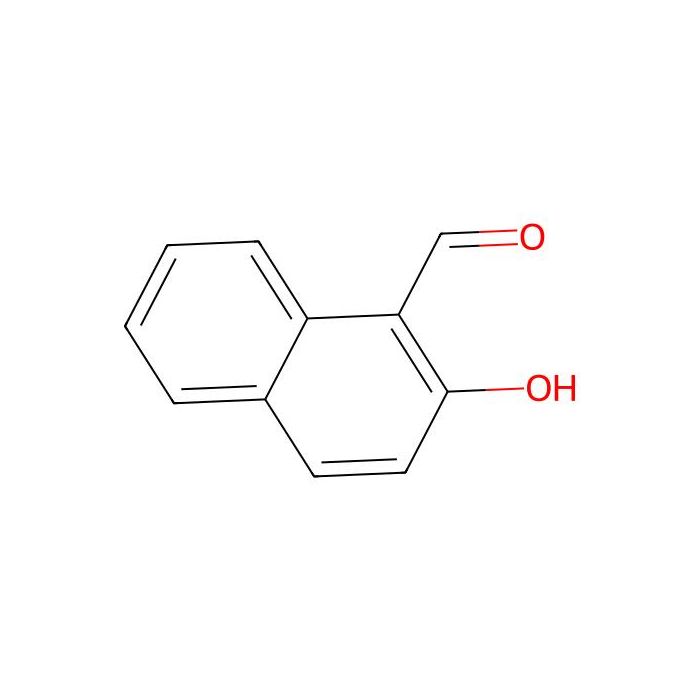
Brief description: CFL-137 (SKU C1500591) is a Moligand-grade small molecule entry from Aladdin’s screening collection. Item-specific structural identifiers are intentionally minimized for library workflows.
CAS: 708-06-5 (literature identifier for this entry)
PubChem CID: 12819 (literature)
Molecular formula: Not specified for this item; refer to CoA/Spec Sheet.
Molecular weight: Not specified for this item; refer to CoA/Spec Sheet.
InChIKey: Not specified for this item; refer to CoA/Spec Sheet.
SMILES: Not specified for this item; refer to CoA/Spec Sheet.
Structural features (general guidance):
Functional groups, stereochemistry, and ring systems are not disclosed here; consult the compound-specific CoA/SDS for definitive structural information.
For library compounds, a 2D depiction and annotated functional groups should be retrieved from the accompanying digital data package or from PubChem using the provided CAS/CID, where applicable.
How to describe the 2D structure in records (practical note):
Record a line-notation (SMILES/InChI) and any chiral centers as supplied in the CoA.
Note heteroatoms, H-bond donors/acceptors (HBD/HBA), rotatable bonds, and aromatic systems to anticipate solubility and handling behavior in screening assays.
Identity controls (best practice):
Verify by LC–MS (exact mass/retention) and, where needed, 1H/13C NMR against literature values.
Confirm purity and identity after any repackaging or long-term storage (-80 °C) prior to critical experiments.
Synthetic Utility
The specific functional groups and reactivity of CFL-137 are not disclosed in the Product Data. Consequently, concrete synthetic roles cannot be assigned. The guidance below outlines how to evaluate and use a library compound in synthetic or coordination contexts after structure confirmation from the CoA.
Cross-couplings (Suzuki–Miyaura, Buchwald–Hartwig, Sonogashira) for aryl/hetaryl elaboration if suitable handles exist.
Carbonyl chemistry (reductive amination, amide coupling, acylations) for rapid analog generation.
Heterocycle functionalizations (Minisci, C–H activation) if electron density and directing groups permit.
Coordination chemistry (if the scaffold bears donor atoms):
Screen complexation with transition metals; characterize by UV–vis, NMR (paramagnetic shifts), HRMS, and X-ray where possible.
Practical tips:
Validate purity and identity before derivatization; trace impurities can derail catalysis and SAR.
If scale-up is planned, develop a crystallization/purification route; flash/semiprep conditions should be recorded against analytical retention times.
Item-specific reactivity, yields, or selectivity data: Not specified for this item; consult the CoA and primary literature once the exact structure is confirmed.
Target Specificity
No target, binding partner, or selectivity profile is provided for CFL-137. As a Moligand™ screening compound, any target specificity must be established experimentally.
Item-specific data: Not specified for this item; refer to CoA/Spec Sheet and any in-house screening results.
Recommended approach to determine specificity (general):
Start with a well-controlled primary assay; establish IC50/EC50 with full concentration–response.
Confirm activity via orthogonal assays to rule out reporter interference or assay artifacts.
Map selectivity across close homologs and broader panels appropriate to the target class (e.g., kinases, GPCRs, proteases, epigenetic enzymes).
Use counterscreens for redox cycling, aggregation (detergent sensitivity), fluorescence interference, or reactivity (thiol trapping, GSH adduct LC–MS).
Quantify binding kinetics/thermodynamics (SPR/ITC) if direct interaction is implicated.
Note: Report and archive raw data, assay conditions, and lot identifiers to ensure reproducibility and traceability for this compound.
Usamos cookies para garantir o funcionamento adequado do site e, quando permitido, para melhorar a sua experiência. Você pode gerenciar suas preferências a qualquer momento nas Configurações. Saiba mais em nossa Política de Cookies.
Deseja que lhe enviemos uma mensagem quando tivermos descontos disponíveis?
Lembrar-me mais tarde
Obrigado! Por favor, verifique a sua caixa de entrada de e-mail para confirmar.
Products are supplied to verified businesses, institutions, and qualified professionals for research and development use only. Not for use in humans, animals, diagnosis, or therapy.