≥98% for sensitive chromatographic and analytical workflows requiring minimal baseline interference.
🌡
Storage & shipping
Protected from light,Store at -20°C,Desiccated Ships Ice chest + Ice pads Check lot-specific COA for exact specifications.
📋
Quality documents
SDS, COA, datasheet, and spec sheet available for download. Lot-specific COA accessible via lot number lookup.
📚
Literature proof
Cited in 2 peer-reviewed publications across chromatography, organic synthesis, and cross-coupling reactions.
Visão geral
Store at +4°C. Store under desiccating conditions. The product can be stored for up to 12 months.
product description:
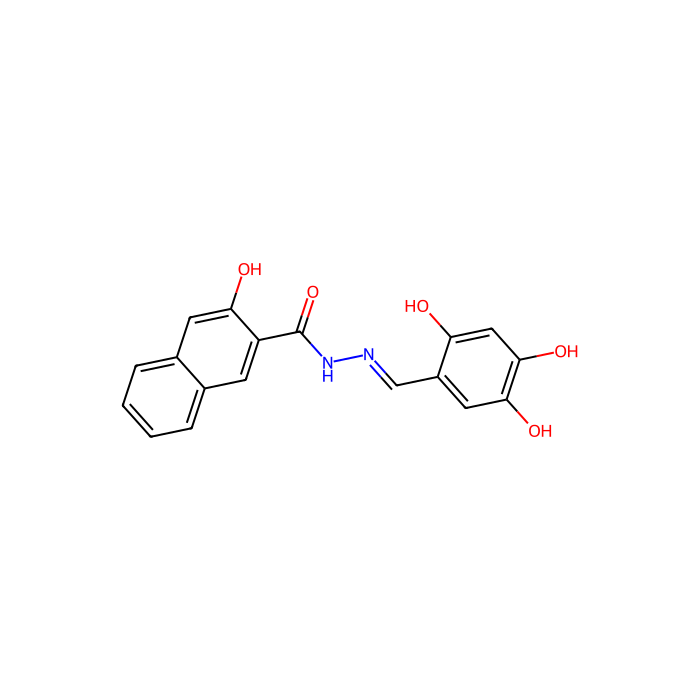
Hydroxy Dynasore (Dyngo-4a), a structural analog of Dynasore (HY-15304), is an potency improved, low cytotoxicity and non‐specific binding dynamin inhibitor with IC50 values of 0.38 μM and 2.3 μM for brain dynamin I and recombinant rat dynamin II, respectively. Hydroxy Dynasore inhibits dynamin‐dependent endocytosis of transferrin with an IC50 of 5.7 μM in vitro.
Novel, highly potent dynamin inhibitor (IC 50 values are 400 nM and 200 nM at dynamin I and II human-recombinant, respectively). Inhibits clathrin-mediated endocytosis (IC 50 = 5.5 µM). Dynasore analog.
Condições de armazenamento de armazenamento
Protected from light,Store at -20°C,Desiccated
Enviado em
Ice chest + Ice pads
Este produto requer transporte de cadeia fria. Serviços terrestres e outros serviços econômicos não estão disponíveis.
Nota
Wherever possible, you should prepare and use solutions on the same day. However, if you need to make up stock solutions in advance, we recommend that you store the solution as aliquots in tightly sealed vials at -20°C. Generally, these will be useable for up to one month. Before use, and prior to opening the vial we recommend that you allow your product to equilibrate to room temperature for at least 1 hour. Refer to SDS for further information. Need more advice on solubility, usage and handling? Please visit our frequently asked questions (FAQ) page for more details.
This compound belongs to the class of organic compounds known as naphthalenecarboxamides. These are compounds containing a naphthalene moiety, which bears a carboxylic acid amide group at one or more positions. Naphthalene is a bicyclic compound that is made up of two fused benzene rings.
External Descriptors
Not available
1. Djoumbou Feunang Y, Eisner R, Knox C, Chepelev L, Hastings J, Owen G, Fahy E, Steinbeck C, Subramanian S, Bolton E, Greiner R, and Wishart DS. ClassyFire: Automated Chemical Classification With A Comprehensive, Computable Taxonomy. Journal of Cheminformatics, 2016, 8:61.
Determine the necessary mass, volume, or concentration for preparing a solution.
Dilution Calculator
Determine the dilution needed to prepare a stock solution.
Reconstitution Calculator
Revisões
Avaliações dos Clientes
Application Protocols
No vendor-validated application protocols are provided for this catalog item.
General guidance (literature-based; for orientation only—optimize in your lab)
Stock solution: Dissolve Dyngo-4a in anhydrous DMSO to prepare a concentrated stock; aliquot, protect from light, and freeze to minimize freeze–thaw.
Cell treatment: Dilute stock into pre-equilibrated media/buffer immediately before use. Maintain a constant vehicle percentage for control groups.
Controls: Include vehicle-only controls and, when possible, orthogonal perturbations (e.g., genetic knockdown) to confirm on-target effects.
Because applications vary widely by cell system and endpoint, users should develop SOPs tailored to their model, supported by pilot titrations and stability checks.
Biological Roles
Literature context (for research use only; no clinical claims)
Mechanistic role: Dyngo-4a is reported as a potent, cell-permeable inhibitor of dynamin GTPases, which catalyze membrane scission in endocytosis. By modulating dynamin activity, Dyngo-4a can acutely suppress dynamin-dependent internalization pathways (notably clathrin-mediated endocytosis) in cultured cells.
Utility: Provides temporal control over endocytic flux, enabling cause–effect studies on receptor trafficking, ligand uptake, synaptic vesicle cycling models, and downstream signaling that depends on internalization.
Specificity considerations: As with many small-molecule tools, off-target interactions may occur at higher concentrations or extended exposures. Orthogonal validation (e.g., genetic perturbation, independent inhibitors) is recommended to confirm mechanistic conclusions.
Reversibility: Many dynamin inhibitors exhibit reversible effects upon washout; assay-dependent characterization is advised to quantify recovery kinetics in your system.
Good practices
Include proper vehicle controls (DMSO) and time-matched controls.
Confirm that observed phenotypes are dynamin-dependent by testing cargo known to use dynamin-independent uptake routes.
Monitor cell viability and membrane integrity to distinguish on-target trafficking effects from generalized stress responses.
Buffer Applications
This product is not a buffering agent and is not used to prepare defined pH buffer systems. For biological experiments, Dyngo-4a is typically delivered in cell culture media or physiological buffers as a DMSO-diluted working solution. Select the buffer appropriate to your assay (e.g., HBSS, PBS, or complete culture medium) and confirm compound stability and solubility upon dilution.
Green Alternatives
This product is a specialized bioactive inhibitor, not a process solvent or bulk reagent, so green substitution principles are not typically applied in the same way as for commodity chemicals.
Considerations (general)
Solvent selection for stocks: Prefer DMSO over DMF where feasible due to better biocompatibility and common institutional acceptance. Minimize solvent volumes and use closed handling to reduce emissions.
Experimental design: Use miniaturized assay formats (e.g., 96–384 well plates) to reduce chemical use and waste.
Waste management: Segregate halogen-free organic waste and aqueous waste; avoid unnecessary chlorinated solvents during ancillary steps (extractions, cleaning).
If your workflows can be adapted
Evaluate alternative, less hazardous cosolvents (e.g., ethanol at low v/v%) for final working solutions if assay performance allows.
Implement amber, reusable glassware and light-efficient storage to extend solution lifetime and reduce re-preparation frequency.
Pharmaceutical Uses
This material is supplied strictly for research use only. It is not formulated as an excipient and has no pharmacopeial monograph in this context.
Research/manufacturing context (general)
Tool compound: Employed in discovery-stage biology to interrogate endocytic processes; not intended for human or veterinary use, diagnostic procedures, or as a drug substance/product component.
Handling in formulation labs: If used in preclinical assays, standard small-molecule handling and documentation practices apply (traceability of lot numbers, chain of custody, and storage history). Any formulation studies should remain non-clinical and exploratory.
Physical Properties
Item-specific physicochemical data
Appearance: Not specified for this item; refer to CoA/Spec Sheet.
Grade/Purity: Not specified for this item; refer to CoA/Spec Sheet.
Molecular weight: Not specified for this item; refer to CoA/Spec Sheet.
Literature/general expectations for Dyngo-4a (for context only; not product specifications)
State: Typically supplied as a solid small molecule.
Solubility: Commonly prepared as concentrated DMSO stock solutions for cell-based assays; aqueous solubility is generally limited without cosolvent.
Partitioning: Bioactive endocytosis inhibitors often show moderate hydrophobicity to ensure cell permeability; exact logP/logD for this item is not provided here.
Thermal transitions (mp/bp), density, refractive index: Not specified for this item; refer to CoA/Spec Sheet.
Notes
Do not treat the above as specifications. For exact values required for QC or method development, use the Certificate of Analysis (CoA) and product Specification Sheet available for the specific lot.
Quality and Grades
Grade/Purity: Not specified for this item; refer to CoA/Spec Sheet.
Interpretation and implications
Inhibitor-grade small molecules are typically assessed by NMR and HPLC/UPLC purity, with identity confirmation (e.g., HRMS). If your application is sensitivity-critical (cell imaging, quantitative endocytosis assays), verify the lot-specific purity and residual solvent profile on the CoA.
UV/fluorescence background: For optical assays, low impurity fluorescence/UV background is important; consult the CoA chromatogram to ensure a clean baseline near your detection wavelengths.
Stabilizers: None are listed for this item; if stabilizers are present in a particular lot, they will be stated explicitly on the CoA/SDS since they may affect certain bioassays.
Recommendations
For quantitative studies, document lot number and retain chromatograms/spectra from the CoA for method files.
If you require additional tests (water content, residual solvents, metal screening), contact Aladdin Scientific to inquire about custom QC. Absent explicit values here, treat such parameters as: Not specified for this item; refer to CoA/Spec Sheet.
Reaction and Applications
Focus and scope
Dyngo-4a is a bioactive small molecule primarily used as a tool compound in cell biology and chemical biology rather than as a synthetic reagent.
Research applications (literature, for context)
Endocytosis studies: Employed to acutely inhibit dynamin-dependent endocytic pathways (e.g., clathrin-mediated endocytosis), enabling temporal dissection of uptake mechanisms and receptor internalization.
Trafficking and signaling: Used to probe internalization-dependent signaling of membrane receptors by modulating vesicle scission steps.
Comparative profiling: Often studied alongside dynasore and other dynamin inhibitors to differentiate on-target versus off-target effects and to optimize assay windows.
Assay design considerations
Include vehicle controls (DMSO) and, where possible, orthogonal perturbations (genetic knockdown/knockout) to confirm on-target effects.
Titrate to identify minimally effective concentrations in your system; monitor cell health to avoid confounding cytotoxicity at higher exposures.
Consider washout experiments to assess reversibility and kinetics of pathway recovery.
Not a general reagent
Dyngo-4a is not typically used as a building block, catalyst, or solvent. For synthetic chemistry content, see sections labeled as not applicable.
Reaction Conditions
Not typically applicable. Dyngo-4a is a finished small-molecule tool compound and is not commonly employed as a reagent, catalyst, or substrate in synthetic transformations.
For biological assay conditions (general, literature-based; not product specifications)
Stock handling: Prepare concentrated stocks in anhydrous DMSO; protect from light and moisture.
Working solutions: Dilute into pre-warmed culture media or buffer with rapid mixing to avoid precipitation; maintain consistent vehicle concentration across treatments.
Exposure parameters: Optimize concentration and incubation time empirically for your cell type and endpoint; include washout controls to assess reversibility.
Safety and Handling
GHS/SDS
Signal word, hazard statements (H-phrases), pictograms, and GHS classification: Not specified for this item; refer to the SDS for authoritative safety information.
General laboratory precautions (good practice for small-molecule research inhibitors)
PPE: Wear lab coat, safety glasses, and appropriate chemical-resistant gloves. Handle powders in a fume hood to avoid inhalation/ingestion.
Avoid exposure: Prevent skin/eye contact and minimize aerosol formation. Wash thoroughly after handling.
Fire/thermal: Treat as an organic solid; keep away from ignition sources. Use CO2, dry chemical, or foam for small fires per SDS guidance.
Incompatibilities: Avoid strong oxidizers and strong acids/bases unless compatibility is known from the SDS.
Light/moisture sensitivity: Product data indicate protection from light and desiccation are required; minimize exposure to ambient humidity.
First-aid overview (consult SDS for details)
Inhalation: Move to fresh air; seek medical attention if symptoms persist.
Skin/eye: Rinse with water for at least 15 minutes; remove contaminated clothing; seek medical advice as needed.
Ingestion: Rinse mouth; do not induce vomiting; obtain medical attention.
Waste
Collect and dispose of according to institutional and local regulations for organic laboratory chemicals. Avoid release to the environment.
Solvent Selection
Context
Dyngo-4a is a hydrophobic, cell-permeable research inhibitor. Stock solutions are commonly prepared in high-boiling polar aprotic solvents for biological assays.
General, literature-based guidance (not item specifications)
Primary solvent: Anhydrous DMSO is widely used to prepare concentrated stocks for cell studies due to excellent solvency and biocompatibility at low v/v% in media.
Alternative cosolvents: DMF or ethanol may dissolve the solid but can be less compatible at comparable final concentrations in cell systems. If aqueous delivery is needed, dissolve in DMSO first, then dilute into buffer/media with vigorous mixing to avoid precipitation.
Aqueous buffers: Direct dissolution into water or PBS is typically poor for this class of inhibitors; use a cosolvent strategy.
Practical tips
Filter sterilization of final working solutions (e.g., 0.22 µm) can remove particulates introduced during dilution.
Limit final DMSO concentration in biological assays per your cell model’s tolerance (commonly ≤0.1–0.5% v/v; follow your lab’s validated limits).
Protect solutions from light and moisture; prepare aliquots to minimize freeze–thaw cycles.
Solvent compatibility notes
Avoid strong acids/bases unless chemical stability is verified.
For long-term frozen stocks, amber vials or foil wrapping help maintain integrity given light sensitivity.
Storage and Reconstitution
Storage (from product data)
Store at −20°C.
Protect from light.
Desiccated storage recommended to limit moisture uptake.
Shipping: Ice chest with ice pads.
Stability notes
Keep container tightly closed under inert, dry atmosphere when possible. Allow vials to warm to room temperature in a desiccator before opening to minimize condensation.
Avoid repeated freeze–thaw cycles by preparing single-use aliquots upon first opening.
Reconstitution
Not specified for this item; refer to CoA/Spec Sheet.
Documentation
For lot-specific stability/retest intervals and any additional handling instructions, consult the CoA and SDS supplied with the product.
Structure and Identity
Item name: Dyngo-4a (SKU: D275401)
CAS: 1256493-34-1
CID: 136227923
InChIKey: Not specified for this item; refer to CoA/Spec Sheet.
SMILES: Not specified for this item; refer to CoA/Spec Sheet.
Molecular formula: Not specified for this item; refer to CoA/Spec Sheet.
Molecular weight: Not specified for this item; refer to CoA/Spec Sheet.
Structural features (general, literature):
Dyngo-4a is a small-molecule inhibitor developed as an optimized analogue within the “Dyngo” series designed to inhibit dynamin GTPases.
Literature reports describe an aromatic, polyheteroatom-bearing scaffold typical of dynamin inhibitors, engineered for cell permeability and potency against dynamin-dependent endocytosis.
2D structure description (general):
Expected to comprise fused/aromatic rings bearing polar substituents that engage dynamin’s allosteric site; exact atom connectivity for this product is not provided here. Please consult the product CoA/SDS for definitive structure and identifiers.
Synthetic Utility
Dyngo-4a is not typically used as a synthetic building block or reagent. It serves as a bioactive probe molecule.
If chemical modification is intended (medchem exploration)
Derivatization strategies may target peripheral substituents (as allowed by the scaffold) to explore SAR for dynamin inhibition, solubility, or permeability. However, no specific functional group information is provided for this item here; consult primary literature and the CoA/SDS for structural details.
For bioconjugation (e.g., probe development), confirm the presence and accessibility of a handle suitable for linker installation and assess retention of activity after modification.
Target Specificity
Item-specific, validated target data are not provided in the product record.
General literature context (for orientation only; not a product claim)
Reported primary target: Dynamin family GTPases (inhibitory activity affecting dynamin-dependent endocytosis). Selectivity and off-target profile can vary with concentration and assay design.
For definitive, product-linked specificity (e.g., Ki, IC50, selectivity panels), please consult the CoA, any accompanying technical note, or primary literature associated with Dyngo-4a.
Perguntas frequentes
What is the purity of this product?
This product is supplied at ≥98% purity (chemical assay). Lot-specific values are stated on the Certificate of Analysis.
How should this product be stored?
Store at ?20 °C, protected from light, desiccated. Keep the container tightly closed with desiccant — the material is moisture-sensitive.
How is this product shipped?
This product ships in an insulated container with ice pads. Unpack on arrival and transfer it to the storage condition stated above.
What are the CAS number, molecular formula and molecular weight?
The CAS Number is 1256493-34-1, the molecular formula is C18H14N2O5, and the molecular weight is 338.31 g/mol. InChIKey UAXHPUSKEWEOAP-DJKKODMXSA-N.
What documentation is provided?
Available product documentation, including Certificates of Analysis (COA), Safety Data Sheets (SDS), and specification sheets, is shown in the product document area. Document availability and access follow the current site policy.
Usamos cookies para garantir o funcionamento adequado do site e, quando permitido, para melhorar a sua experiência. Você pode gerenciar suas preferências a qualquer momento nas Configurações. Saiba mais em nossa Política de Cookies.
Deseja que lhe enviemos uma mensagem quando tivermos descontos disponíveis?
Lembrar-me mais tarde
Obrigado! Por favor, verifique a sua caixa de entrada de e-mail para confirmar.
Products are supplied to verified businesses, institutions, and qualified professionals for research and development use only. Not for use in humans, animals, diagnosis, or therapy.

 J2214521