GRAU & PUREZAMoligand™?Moligand™ — Aladdin's line of ligands and bioactive small molecules. Use for receptor, pathway, and binding studies needing defined small-molecule tools.10mM in DMSO
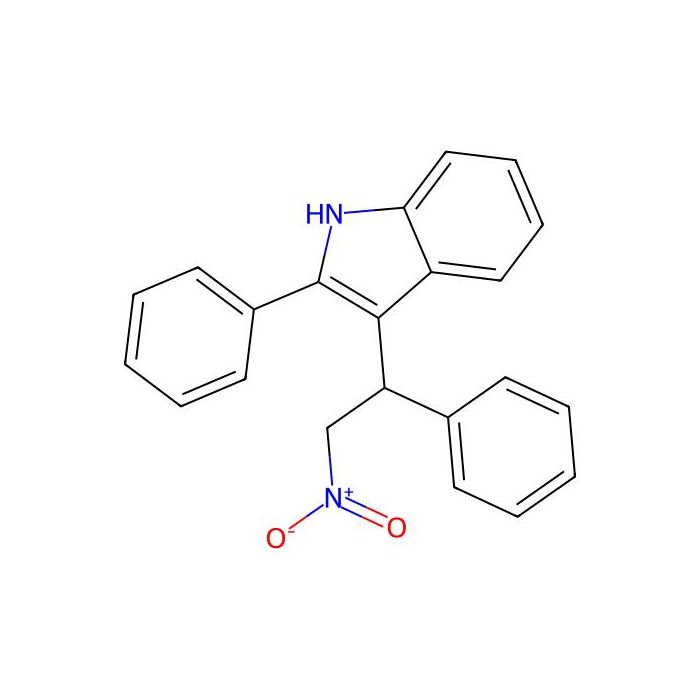
GAT211 is a cannabinoid 1 receptor (CB1R) positive allosteric modulator (PAM). GAT211 activates cAMP and β-arrestin2 with EC 50 values of 260 nM and 650 nM, respectively. GAT211 inhibits GAT211 can be used for neuropathic and/or inflammatory pain research
In Vitro
GAT211 is stable in both human- and rat-liver microsomal incubations, with t 1/2 of 28.4 min and 8.67 min, repsectively. GAT211 limits dopamine D2 receptor-mediated extracellular regulated kinase (ERK) phosphorylation in Neuro2a cells. MCE has not independently confirmed the accuracy of these methods. They are for reference only.
In Vivo
GAT211 potentiates the inhibition of electrically evoked vas deferens contraction in the same system (EC 50 =11 nM, E max =70). GAT211 (0.3 mg/kg, 1 mg/kg, 3 mg/kg; 5 mL/kg; ip; 2 doses with 5 min interval) dose-dependently reduced locomotor activity and the acoustic startle response.GAT211 is dissolved in a vehicle of ethanol, kolliphor, and saline at a ratio of 1:1:6 and injected at a volume of 5 mL/kg. MCE has not independently confirmed the accuracy of these methods. They are for reference only.
IC50& Target:CB1
Especificações
Especificações e pureza
Moligand™,10mM in DMSO
Mecanismos bioquímicos e fisiológicos
GAT211 is a cannabinoid 1 receptor (CB1R) positive allosteric modulator (PAM). GAT211 activates cAMP and β-arrestin2 with EC 50 values of 260 nM and 650 nM, respectively. GAT211 inhibits GAT211 can be used for neuropathic and/or inflammatory pain research
Condições de armazenamento de armazenamento
Store at -80°C
Enviado em
Dry ice packs + Cold packs
Este produto requer transporte de cadeia fria. Serviços terrestres e outros serviços econômicos não estão disponíveis.
Determine the necessary mass, volume, or concentration for preparing a solution.
Dilution Calculator
Determine the dilution needed to prepare a stock solution.
Reconstitution Calculator
Revisões
Avaliações dos Clientes
Application Protocols
The current Product Data do not include validated application protocols for GAT211. The following outlines general, field-tested procedures for small-molecule ligands in discovery workflows.
Stock solution preparation (general)
Equilibrate vial to room temperature in a desiccator before opening. Accurately weigh the desired amount and dissolve in anhydrous DMSO to 10–50 mM. Vortex and sonicate briefly if needed. Filter through 0.22 μm PTFE for particulate removal if required by your assay.
Aliquot into amber glass vials or polypropylene screw-cap tubes; flush with inert gas if sensitivity is suspected; store per guidance in the Storage tab.
In vitro assay setup
Prepare an 8–12 point serial dilution (half-log spacing) in assay buffer maintaining constant vehicle (typically 0.1–1% DMSO). Include vehicle-only and positive control wells.
Pre-read plates for background, add reagents, incubate per assay kinetics, and readout using validated endpoints (fluorescence/luminescence/absorbance).
Target engagement/biophysics
For SPR/BLI, remove aggregates by centrifugation (≥14,000 g, 10 min) and filter stocks. Confirm absence of refractive index artifacts at chosen DMSO levels.
For DSF/CETSA, confirm stability of the compound across the temperature ramp and check for intrinsic fluorescence interference.
Document all conditions alongside the batch/lot number for reproducibility. Adapt specifics to your assay platform and SOPs.
Biological Roles
Item-specific biological targets or pathways for GAT211 are not provided in the current Product Data. The following guidance outlines how small-molecule ligands are typically contextualized in biological research.
General roles of small-molecule ligands
Chemical probes to perturb or report on protein function (enzymes, GPCRs, ion channels, transporters) in cell-free or cellular systems.
Tools to explore structure–activity relationships (SAR), allosteric versus orthosteric binding, and mechanistic pharmacology (agonism, antagonism, partial agonism, PAM/NAM modulation), depending on the scaffold.
Standards for validating assay responsiveness and dynamic range.
Experimental considerations (non-item-specific)
Confirm target engagement using orthogonal readouts (biochemical plus cellular) to avoid artifact signals (fluorescence interference, redox cycling, aggregation). Include controls such as detergent challenge (e.g., 0.01–0.05% Triton X-100) to detect colloidal aggregation.
Characterize basic PK/PD-relevant properties in vitro (solubility, stability in buffer/sera, microsomal stability) if translational biology is planned.
Cautions
Do not ascribe a biological role without validating identity, purity, and absence of reactive impurities.
All uses are for research only; no clinical or diagnostic applications are supported.
For target-specific information, consult peer-reviewed literature indexed to CAS 102704-40-5 or PubChem CID 4402318.
Buffer Applications
This product is a small-molecule ligand, not a buffering agent. It is not typically used to control pH or ionic strength.
Practical guidance (general)
Prepare assay buffers appropriate to your biological system (e.g., PBS, HEPES, Tris) and add the compound from a concentrated stock in DMSO or ethanol to achieve the desired final concentration while keeping vehicle ≤1% v/v.
For water-insoluble compounds, consider inclusion of acceptable solubilizers (e.g., 0.5–2% PEG400 or 1–10 mM HP-β-CD) after verifying compatibility with the assay.
Maintain constant vehicle controls and, when applicable, surfactant at low levels (0.01–0.05% Tween 20) to reduce nonspecific adsorption.
Not provided for this item
pKa, buffer capacity, and aqueous solubility profile are not specified; tailor buffer composition empirically.
Refer to the CoA/SDS for any item-specific constraints affecting buffer choice (e.g., light sensitivity or reactivity).
Green Alternatives
While this item is a small-molecule ligand rather than a process solvent or bulk reagent, greener choices can still be considered for dissolution and handling.
Greener dissolution vehicles (general)
Prefer ethanol or water-based buffers with minimal DMSO where solubility permits; evaluate hydroxypropyl-β-cyclodextrin to enhance aqueous solubility and reduce organic solvent use.
If high solvency is required, DMSO remains common; minimize final assay % and recover/segregate DMSO waste for proper disposal.
Comparative considerations (general)
DMSO vs ethanol: DMSO offers broader solvency but higher environmental persistence; ethanol is renewable and lower-toxicity but may not dissolve hydrophobic compounds effectively.
DMF/NMP: Avoid where possible due to reproductive toxicity concerns; if used, confine to small volumes and closed systems.
Operational greening
Use miniaturized assays (384/1536-well) to reduce solvent consumption.
Adopt sealed, low-dead-volume storage (e.g., glass vials with PTFE-lined caps) to extend stock life and reduce waste.
Implement analytical-first workflows (LC-MS check) to avoid repeating assays due to compound instability.
Item-specific environmental metrics (biodegradability, E-factors, solvent selection guides) are not available for this product.
Pharmaceutical Uses
No pharmacopeial status, excipient role, or formulation use is provided for this item. GAT211 (Moligand™) is supplied strictly for research use only.
Research formulation context (general)
For in vitro assays, deliver via DMSO or ethanol stocks diluted into physiological buffers; confirm solubility and lack of precipitation at working concentrations.
For preclinical research formulations (if pursued under appropriate approvals), typical vehicles include: 10–20% PEG400 in saline, 10% Captisol, or 0.5% methylcellulose with 0.1% Tween 80. These are general examples; compatibility is compound-dependent and not validated for this item.
Compliance notes
Not intended for human or veterinary use; not GMP-grade; not formulated to any pharmacopeial monograph.
Do not incorporate into clinical products or diagnostic kits.
Item-specific excipient compatibility, stability-indicating methods, and dosage-form data are not available; consult internal development SOPs and perform formulation screening if needed.
Physical Properties
Item-specific (from Product Data)
Appearance: Not specified for this item; refer to CoA/Spec Sheet.
Molecular weight: Not specified for this item; refer to CoA/Spec Sheet.
Literature/computed (not item-specific; verify against primary sources before use)
Boiling point, melting point, density, logP, pKa, refractive index, UV/Vis characteristics: Not provided here. Retrieve from curated databases or measure experimentally for your application.
General guidance for small-molecule ligands (applicability depends on actual structure)
Solubility hierarchy often observed: DMSO > DMF ≈ NMP > ethanol > methanol > aqueous buffers (with cosolvent or cyclodextrin). Start with an anhydrous polar aprotic solvent for stock preparation.
If aromatic/heteroaromatic content is high, anticipate moderate-to-high logP; consider using 0.5–2% DMSO in assay buffers to maintain solubilization while minimizing vehicle effects.
Light/air/moisture sensitivity: Unknown for this item. As a precaution, minimize exposure to light and ambient humidity during handling and store under recommended conditions.
Measurement tips (general)
Determine stock concentration via quantitative NMR (qNMR) or UV-Vis if an extinction coefficient is known. Absent that, gravimetric preparation with Class A glassware and confirmatory HPLC area% is recommended.
For hygroscopic or amorphous materials, Karl Fischer moisture and DSC/TGA can improve understanding of solid-state behavior.
Quality and Grades
Item-specific grade
Grade/Purity: Moligand™ (from Product Data)
What Moligand™ implies (general description)
Moligand™ denotes a screening-grade small-molecule ligand suitable for discovery research, assay development, and library applications. Typical expectations include:
High chemical purity suitable for biological screening (exact assay purity threshold not specified for this item; refer to CoA/Spec Sheet).
Identity verified by orthogonal analytical methods (e.g., NMR, MS; specifics not provided here).
Packaged to support microplate-compatible workflows and low-volume dispensing.
Analytical considerations
Item-specific specifications such as water content, residual solvents, inorganic residues, peroxide levels, and UV cutoffs are Not specified for this item; refer to CoA/Spec Sheet.
For data-critical applications (biophysics, SAR), users may wish to confirm: HPLC area% at multiple wavelengths, qNMR purity, and exact counter-ion/salt form (if applicable).
Batch documentation
Request and retain the Certificate of Analysis (CoA) for batch number traceability, test methods employed, and acceptance criteria. Where available, a spectral pack (1H/13C NMR, HRMS, LC chromatogram) is recommended for internal QA archiving.
Practical tips
Upon receipt, inspect packaging integrity (especially when shipped on dry ice/cold packs). Equilibrate briefly to avoid condensation before opening. Aliquot immediately to minimize freeze–thaw cycles.
Reaction and Applications
Scope for this product
This item is supplied as a research ligand (Moligand™). It is typically used in biochemical/biophysical assays, target screening, or as a reference compound in medicinal chemistry. It is not primarily intended as a synthetic reagent or building block.
Research applications (general, non-item-specific)
High-throughput screening (HTS) and focused panel assays as a test article.
Target engagement studies (e.g., SPR, MST, CETSA, DSF) after confirming solubility and stability in the assay matrix.
Functional assays (enzymatic or receptor-based) with vehicle control matching the final cosolvent concentration.
Physicochemical profiling (shake-flask logD, PAMPA, microsomal stability) for ADME characterization in discovery settings.
Experimental tips
Validate compound integrity pre- and post-assay by LC-MS to rule out degradation or adsorption losses.
Include a dilution series spanning at least 8 half-log steps for potency estimation; maintain constant vehicle across wells.
Where photosensitivity is possible, shield plates from light; use amber reservoirs for liquid handling.
Not provided for this item
Specific biological target, mechanism of action, or recommended concentration ranges are not provided in the current Product Data. Consult primary literature using CAS 102704-40-5 or CID 4402318 for target-specific applications.
Reaction Conditions
Not primarily applicable: this product is supplied as a finished small-molecule ligand rather than a reagent for running chemical reactions.
If derivatization is pursued (general, non-item-specific):
Solvents: Dry DMA, DMF, DCM, THF, or toluene chosen based on functional group compatibility; for couplings, DMF/DMA with DIPEA/DBU bases are common.
Temperatures: 0–25°C for sensitive couplings; 60–120°C for cross-couplings under Pd catalysis (microwave or sealed-vessel heating as needed).
Catalysts/Reagents: Pd(PPh3)4 or Pd-PEPPSI for C–C/C–N couplings; HATU/EDC for amide formation; mild hydrogenation (Pd/C) for deprotection/reduction when compatible.
Times/Yields: Highly substrate-dependent; screen conditions using small-scale DoE. Verify product integrity by LC-MS and NMR.
These are generic conditions intended for experienced synthetic chemists; no item-specific reaction parameters are supplied.
Safety and Handling
GHS/SDS status (item-specific)
Signal word: Not specified for this item; refer to SDS.
Hazard statements (H-codes): Not specified for this item; refer to SDS.
GHS classification & pictograms: Not specified for this item; refer to SDS.
General laboratory precautions (non-item-specific)
Handle in a chemical fume hood with appropriate PPE: lab coat, safety glasses, and nitrile gloves. Escalate to splash goggles and double-gloving for larger scales or unknown hazard profiles.
Avoid inhalation of dust/aerosols and contact with skin/eyes. Prevent release to the environment until ecotoxicological data are reviewed.
Incompatibilities are structure-dependent; as a default, segregate from strong oxidizers and acids/bases until stability is known.
First-aid overview (consult SDS for definitive guidance)
Inhalation: Move to fresh air; seek medical attention if symptoms persist.
Skin/eye contact: Rinse with water for ≥15 minutes; remove contaminated clothing; obtain medical advice.
Ingestion: Rinse mouth; do not induce vomiting; seek medical attention.
Good practices for small-molecule ligands
Weigh inside a balance enclosure or hood to minimize particulate exposure.
Use amber vials and limit freeze–thaw cycles to preserve integrity.
Decontaminate surfaces with suitable organic solvent followed by detergent/water; collect organic waste per institutional guidelines.
Always defer to the item-specific SDS for authoritative safety, toxicity, and disposal information.
Solvent Selection
Item-specific solubility: Not specified for this item; refer to CoA/Spec Sheet.
General solvent strategy for small-molecule ligands
Primary stock solvent: DMSO (anhydrous) is typically preferred for preparing 10–50 mM stocks due to broad solvency and biological compatibility at ≤1–2% v/v in assays.
Secondary options: DMF or NMP for challenging hydrophobes; ethanol or methanol for moderately lipophilic molecules; aqueous buffers with co-solvent (0.5–5% DMSO) or with carriers (e.g., 2–10% PEG400, 1–5% Tween 80, or 1–10 mM hydroxypropyl-β-cyclodextrin) when water delivery is required.
pH adjustment: If an ionizable functional group is present (unknown here), solubility may improve by forming a salt (for bases, use dilute HCl; for acids, use dilute NaOH) followed by dilution into buffer.
Miscibility and compatibility (general)
DMSO is miscible with water and common organics, but limit final assay DMSO to ≤1% v/v unless validated.
Avoid plasticizers/leachables: Use glass vials for concentrated stocks; confirm compatibility of assay plastics with chosen solvents (COC/COC plates are more solvent-tolerant than polystyrene).
Comparison snapshot (general)
DMSO: maximal solvency, biological tolerance at low %, hygroscopic.
Ethanol: greener, volatile, lower solvency for very hydrophobic scaffolds.
DMF/NMP: high solvency; consider toxicity and extractables; less desirable for live-cell assays without thorough validation.
Storage and Reconstitution
Item-specific storage and shipping (from Product Data)
Storage: Store at -80°C.
Shipped in: Dry ice packs + Cold packs.
General best practices for this class of materials
Upon receipt: Inspect packaging; allow to equilibrate in a desiccator to prevent condensation before opening. If shipped frozen, keep at -80°C until ready to aliquot.
Aliquoting: Prepare small, single-use aliquots in amber vials/tubes to avoid repeated freeze–thaw cycles. Label with compound ID, concentration (if in solution), solvent, date, and lot.
Solid vs solution storage: If supplied as a solid, store dry at -80°C in airtight container with desiccant. If preparing DMSO stocks, common practice is storage at -20 to -80°C; however, item-specific solution stability is Not specified for this item; refer to CoA/Spec Sheet.
Thawing and handling: Thaw on ice or at room temperature as appropriate, minimize time at ambient conditions, and promptly return unused aliquots to cold storage.
Light and moisture: Protect from light and humidity in all stages unless data indicate insensitivity.
Reconstitution (general)
Preferred solvent: Anhydrous DMSO for concentrated stocks; ethanol as secondary option where compatible. Final assay vehicle typically ≤1% v/v.
If precipitation occurs upon dilution, increase dilution steps, adjust temperature slightly, or incorporate acceptable solubilizers (e.g., HP-β-CD) after verifying assay compatibility.
For any stability-in-solution claims or re-test intervals, rely on the item-specific CoA/SDS.
Structure and Identity
Summary: GAT211 is supplied as a research-use small molecule (Moligand™ grade). Limited structural identifiers are provided in the current product data.
Item-specific (from Product Data)
Product name: GAT211 (SKU: G654663)
CAS: 102704-40-5
PubChem CID: 4402318
InChIKey: Not specified for this item; refer to CoA/Spec Sheet.
SMILES: Not specified for this item; refer to CoA/Spec Sheet.
Molecular formula: Not specified for this item; refer to CoA/Spec Sheet.
Molecular weight: Not specified for this item; refer to CoA/Spec Sheet.
Structural features (general guidance)
No item-specific 2D structure is provided here. When available, review the CoA/SDS for the exact functional groups and stereochemical information.
For experimental planning, consult authoritative databases using the provided CAS or CID to retrieve confirmed structure (e.g., ring systems, heteroatoms, stereocenters) and to generate canonical SMILES/InChI.
Practical notes for identity confirmation (general)
Orthogonal ID tests recommended: 1H/13C NMR in a deuterated solvent appropriate for the compound’s polarity, HRMS (ESI/APCI as relevant), and HPLC/UPLC purity profiling with dual-wavelength UV detection.
If chirality is expected, consider chiral HPLC or VCD/ORD where applicable.
Record melting behavior (if solid) or refractive index (if liquid) for batch-to-batch verification as supplementary, non-primary identifiers.
Synthetic Utility
This product is offered as a ready-to-use research ligand and is not positioned as a synthetic building block.
General chemist-to-chemist guidance (non-item-specific)
If synthetic modification is desired (e.g., for SAR or probe derivatization), first establish the precise structure (from literature/CoA) and identify diversification handles (e.g., anilides, amides, aryl halides, heteroatoms amenable to coupling).
Typical transformations for complex ligands may include cross-couplings (Suzuki–Miyaura, Buchwald–Hartwig), amide couplings (EDC/HOBt, HATU, CDI), heteroaryl functionalizations (direct C–H activation), or protection/deprotection sequences.
For bioconjugation, introduce linkers (PEGylated amines/azides/alkynes) onto peripheral positions shown to tolerate substitution; validate activity post-modification.
Analytical control
Use LC-MS and 2D NMR to confirm regio-/chemoselectivity after late-stage functionalization; monitor potential atropisomerism or stereochemical integrity if relevant to the scaffold.
As no item-specific functional groups or reactivity are provided in the Product Data, treat the above as general guidance only.
Target Specificity
No target specificity or biological binding data are provided for this item in the current Product Data.
Item-specific status
Antigen/epitope, species reactivity, clone/isotype: Not applicable; this is a small molecule, not an antibody or biologic.
General guidance
Determine target specificity experimentally using binding assays (SPR, BLI, ITC), competition experiments with known ligands, or chemoproteomic pull-downs if a covalent/photoreactive analog is available.
Evaluate off-target activity through panel screens (kinases, GPCRs, ion channels) as relevant to the research context.
For any claims of specificity, corroborate with orthogonal methods and adequate controls. Consult primary literature using CAS 102704-40-5 or CID 4402318 for target-relevant studies.
Perguntas frequentes
What is Moligand??
Moligand? is one of Aladdin Scientific's premium product lines, formulated for high-purity applications across multiple workflows. Compared to standard grades in the same workflow, Moligand? products typically offer tighter specifications, more rigorous QC, and stronger lot-to-lot consistency.
How should this product be stored?
Store at ?80 °C. Ultra-low temperature storage is required to maintain the specified shelf life.
How is this product shipped?
This product ships frozen with dry ice and cold packs. Unpack on arrival and transfer it to the storage condition stated above; handle dry ice with insulated gloves in a ventilated area.
What are the CAS number, molecular formula and molecular weight?
The CAS Number is 102704-40-5, the molecular formula is C22H18N2O2, and the molecular weight is 342.39 g/mol.
What documentation is provided?
Available product documentation, including Certificates of Analysis (COA), Safety Data Sheets (SDS), and specification sheets, is shown in the product document area. Document availability and access follow the current site policy.
Precisa de ajuda para escolher o grau?
O nosso guia de seleção de graus abrange pureza, estado do estabilizador e adequação à aplicação para todas as variantes do nosso catálogo.
Usamos cookies para garantir o funcionamento adequado do site e, quando permitido, para melhorar a sua experiência. Você pode gerenciar suas preferências a qualquer momento nas Configurações. Saiba mais em nossa Política de Cookies.
Deseja que lhe enviemos uma mensagem quando tivermos descontos disponíveis?
Lembrar-me mais tarde
Obrigado! Por favor, verifique a sua caixa de entrada de e-mail para confirmar.
Products are supplied to verified businesses, institutions, and qualified professionals for research and development use only. Not for use in humans, animals, diagnosis, or therapy.