≥94% for sensitive chromatographic and analytical workflows requiring minimal baseline interference.
🌡
Storage & shipping
Store at -20°C Ships Ice chest + Ice pads Check lot-specific COA for exact specifications.
📋
Quality documents
SDS, COA, datasheet, and spec sheet available for download. Lot-specific COA accessible via lot number lookup.
📚
Literature proof
Cited in 1 peer-reviewed publications across chromatography, organic synthesis, and cross-coupling reactions.
Visão geral
Information
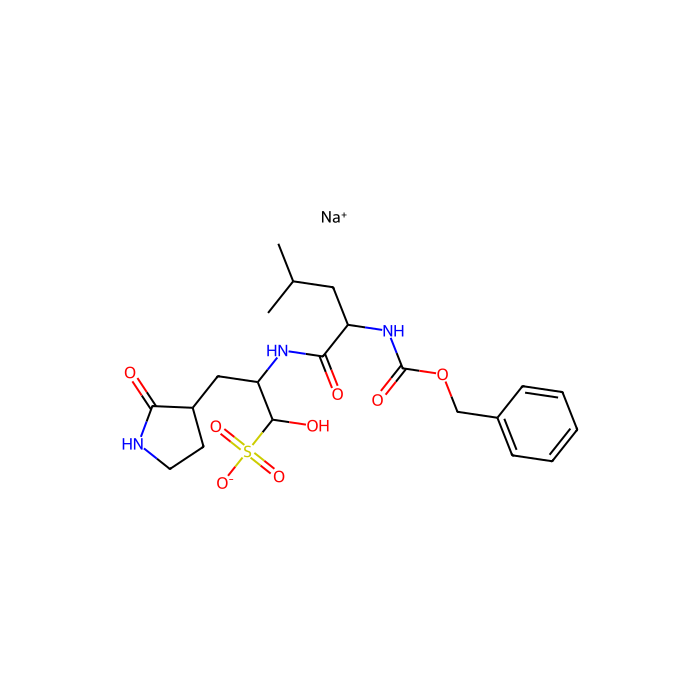
GC376 GC376 is a 3CLpro (3C-like protease) inhibitor with IC50 of ~ 1.11 μM for the PEDV 3CLpro. GC376 is active against the 3CLpro of multiple coronaviruses, including SARS-CoV.
GC376 is a 3CLpro (3C-like protease) inhibitor with IC50 of ~ 1.11 μM for the PEDV 3CLpro. GC376 is active against the 3CLpro of multiple coronaviruses, including SARS-CoV.
Condições de armazenamento de armazenamento
Store at -20°C
Enviado em
Ice chest + Ice pads
Este produto requer transporte de cadeia fria. Serviços terrestres e outros serviços econômicos não estão disponíveis.
This compound belongs to the class of organic compounds known as leucine and derivatives. These are compounds containing leucine or a derivative thereof resulting from reaction of leucine at the amino group or the carboxy group, or from the replacement of any hydrogen of glycine by a heteroatom.
External Descriptors
Not available
1. Djoumbou Feunang Y, Eisner R, Knox C, Chepelev L, Hastings J, Owen G, Fahy E, Steinbeck C, Subramanian S, Bolton E, Greiner R, and Wishart DS. ClassyFire: Automated Chemical Classification With A Comprehensive, Computable Taxonomy. Journal of Cheminformatics, 2016, 8:61.
1.Yan Feng, Xiaoyan Wu, Ruiting Chen, Yao Fan, Changping Xu, Chenjie Fang, Huimin Sun, Shuling Jian, Jiasheng Song, Beibei Wu. (2025) Development of a Cell-Based Recombinant Green Fluorescent Protein Assay System for Generalized Discovery of Viral Protease Inhibitors. ACS Pharmacology & Translational Science, [PMID:41262580][10.1021/acsptsci.5c00262]
Calculadoras de soluções
Molarity Calculator
Determine the necessary mass, volume, or concentration for preparing a solution.
Dilution Calculator
Determine the dilution needed to prepare a stock solution.
Reconstitution Calculator
Revisões
Avaliações dos Clientes
Application Protocols
Validated, item-specific protocols are not provided in the current Product Data.
General literature-style guidance (to be adapted and validated by the user)
Preparation of stock: Dissolve GC376 in anhydrous DMSO to 10–50 mM. Vortex gently until fully dissolved. Alternatively, dissolve in water or assay buffer if solubility/stability permit. Filter-sterilize (0.22 μm) if needed.
Enzyme inhibition assay (96-well example):
Buffer: 50 mM HEPES, pH 7.5; 150 mM NaCl; 0.5 mM TCEP; 0.01% Tween-20.
Preincubate enzyme with serially diluted GC376 for 15 min at 25 °C (final DMSO ≤1%).
Initiate with fluorogenic peptide substrate; monitor fluorescence kinetically for 10–30 min.
Analyze initial rates to determine IC50; for mechanism-based analysis, perform time-course to extract kobs and fit to reversible covalent models.
Crystallography: Mix purified protease with GC376 at molar excess (e.g., 2–5×) and incubate prior to crystallization; optimize pH/precipitants as per protein requirements.
Important
These are general, literature-inspired steps provided for convenience. Optimize and validate for your specific enzyme, substrate, and instrumentation. Consult the CoA/SDS for any handling constraints.
Biological Roles
Scope: Research-use context only; no medical or clinical claims.
Literature overview
Target class: cysteine proteases of the 3C/3CL family (chymotrypsin-like fold) that use a catalytic cysteine for peptide bond hydrolysis.
Mechanism: GC376 acts as a reversible covalent inhibitor. The bisulfite adduct can liberate the corresponding aldehyde (GC373) under assay conditions, which forms a thiohemiacetal with the catalytic Cys, stabilizing an inactive enzyme–inhibitor complex.
Selectivity considerations: Designed to mimic peptide substrates at positions P2–P1, enhancing complementarity to the S2/S1 subsites of 3C/3CL proteases. Off-target activity toward other cysteine proteases is possible at higher concentrations and should be evaluated experimentally.
Use cases in biology: Tool compound for dissecting protease function, validating targets, and correlating enzymatic inhibition with phenotypic outcomes in cell-free systems or biochemical cascades. Commonly used as a positive control in protease-focused libraries.
Experimental notes
Buffer composition (HEPES or Tris, pH ~7–8) and ionic strength influence enzyme activity and inhibitor binding kinetics; include detergent (e.g., 0.01% Tween-20) if nonspecific adsorption is suspected.
Time dependence: Reversible covalent inhibitors may show time-dependent inhibition; preincubation with enzyme is often employed to reach steady-state inhibition prior to substrate addition.
Buffer Applications
Not typically applicable as a buffering agent. GC376 is an active small-molecule inhibitor, not a buffer component.
Practical notes for assay buffers (literature)
Common buffers: HEPES (pH 7.0–7.8) or Tris (pH 7.5–8.0) for cysteine protease assays; include NaCl (e.g., 100–200 mM) to stabilize enzyme; add DTT or TCEP at low millimolar concentrations if required by the enzyme to maintain the catalytic cysteine in a reduced state (verify compatibility with aldehyde warheads in pilot tests).
Organic cosolvent: Keep DMSO at ≤1% v/v when possible to preserve enzyme activity.
Filtration: 0.22 μm filtration of assay buffers and compound solutions can improve reproducibility by removing particulates and reducing background fluorescence.
Green Alternatives
Context: GC376 is an active research compound, not a process solvent. “Green alternatives” considerations therefore apply mainly to solvent choices and assay formats rather than the compound itself.
Greener handling strategies (literature)
Solvent minimization: Use aqueous buffers where feasible. Maintain low DMSO percentages (≤0.5–1% v/v) in assays to reduce organic solvent use.
Microplate formats: Miniaturize assays (e.g., 384- or 1536-well) to reduce total chemical consumption and waste.
Aqueous stocks: Where solubility permits, prepare buffered aqueous stocks to avoid aprotic polar solvents altogether; validate stability.
Water/Buffer (HEPES/Tris/Phosphate): preferred for green chemistry; verify solubility and stability; may alter aldehyde/bisulfite equilibrium.
Waste reduction tips
Prepare small, single-use aliquots to prevent degradation and disposal of unused material.
Employ stability-indicating analytics (e.g., HPLC) to extend confidence in shelf life, reducing re-synthesis and re-purchase footprint.
Pharmaceutical Uses
This product is supplied strictly for research use only.
Context (non-clinical, literature-based)
Role in discovery: GC376 is widely used as a reference inhibitor and tool compound in early-stage drug discovery targeting cysteine proteases (3C/3CL). It supports structure–activity relationship (SAR) studies, enzyme kinetic profiling, and crystallographic validation of binding modes.
Formulation research: For in vitro assays, GC376 is typically formulated as DMSO or aqueous buffer stocks; excipient selection is driven by solubility, stability, and compatibility with the biological system under study. No pharmacopeial monograph is associated with GC376.
Restrictions
No therapeutic claims are made. Not for human or veterinary use, diagnostic procedures, or clinical applications.
Best practices
Document lot-specific quality attributes via the CoA.
Validate solution stability and potency under your exact experimental conditions before using in critical screening or pre-formulation research.
Physical Properties
Item-specific specs
Molecular Weight: Not specified for this item; refer to CoA/Spec Sheet.
Molecular Formula: Not specified for this item; refer to CoA/Spec Sheet.
Appearance: Not specified for this item; refer to CoA/Spec Sheet.
Storage/Shipping (from Product Data)
Storage: Store at −20 °C.
Shipped in: Ice chest + ice pads.
General/literature characteristics (informational; not product specifications)
Physical state: typically a solid peptidomimetic salt/bisulfite adduct.
Solubility profile: high aqueous compatibility due to the bisulfite adduct; commonly prepared as concentrated DMSO stocks (e.g., 10–50 mM) and also soluble in water or assay buffers upon gentle mixing; exact solubility depends on salt form and counterions. Verify on your CoA for this lot.
pH behavior: the bisulfite adduct is favored in aqueous media; under certain conditions it can release the free aldehyde (active form) in situ, particularly near neutral pH used in protease assays (literature).
Partitioning: peptidomimetic with multiple polar functionalities; expected low volatility and low vapor pressure.
Important note
No authoritative values for mp/bp/density, logP, pKa, or refractive index are provided for this specific item. If such parameters are critical for your workflow, consult the CoA/Spec Sheet or measure under your conditions.
Quality and Grades
Item-specific
Grade/Purity: Not specified for this item; refer to CoA/Spec Sheet.
Category: 小分子和化合物库 (small molecules and compound libraries) — supplied for research use only.
Context and guidance
Research-use chemicals like GC376 are typically QC-verified by identity (e.g., NMR, MS, HPLC) and purity. In the absence of an explicit grade on this page, consult the CoA for the tested methods and acceptance criteria (e.g., HPLC area %, residual solvents, water content), which can vary between lots.
HPLC/Chromatography considerations: If your application is biochemical screening or structural biology, low non-volatile impurities and low UV baseline drift are often preferred. If an “HPLC grade” solvent is required for dissolution, ensure your diluent quality matches your analytical method.
Stereochemical integrity: For peptidomimetic inhibitors, enantiopurity/diastreomeric purity can impact potency. If stereochemical specifications are critical (e.g., for crystallography or SAR), verify the stereochemical designation and assay potency on the CoA.
Stabilizer: None indicated. If stabilizers or counterions are present in your lot (e.g., bisulfite, sodium), these should be listed on the CoA. Their presence influences solubility and pH behavior.
Recommendation
Prior to scale-up or critical screening, perform a small pre-qualification: confirm purity by your analytical method, prepare a stability-indicating assay, and document solution stability under your storage/assay conditions.
Reaction and Applications
Applicability note: GC376 is a finished small-molecule inhibitor used as a biochemical probe; it is not typically employed as a reagent or solvent in synthetic transformations. The following focuses on research applications and practical use in assays.
Biochemical/structural applications (literature)
Protease inhibition studies: Widely used as a reversible covalent inhibitor standard for cysteine proteases of the 3C/3CL family in enzymology assays, kinetics (IC50/Ki determination), and mechanistic studies.
Structural biology: Employed to obtain co-crystal structures with target proteases to map binding interactions and confirm warhead engagement with catalytic cysteine.
Screening control: Serves as a positive control in high-throughput screening cascades investigating 3C/3CL protease inhibition.
Practical considerations
Stock preparation: Prepare in dry DMSO or water/buffer; filter if needed. Keep final DMSO concentration in assays minimal (commonly ≤1%).
Kinetic assays: Use a fluorogenic peptide substrate matched to the target protease; include time-based readouts to dissect reversible covalent kinetics (kobs, kinact/Ki) if applicable.
Counter-screening: Include assays for unrelated cysteine enzymes (e.g., papain-like proteases) to evaluate selectivity and off-target reactivity.
Stability: Monitor potency over time to detect solution degradation. Use fresh aliquots and avoid repeated freeze–thaw cycles.
Note
No therapeutic or clinical applications are claimed or supported here; GC376 is for laboratory research only.
Reaction Conditions
As GC376 is a bioactive small molecule rather than a reagent, “reaction conditions” here refer to typical assay and handling conditions in biochemical experiments (literature guidance; not product specifications).
Enzymology assay conditions (typical ranges)
Buffer: HEPES (20–50 mM) or Tris (20–50 mM), pH 7.0–8.0; NaCl 100–200 mM; optional 0.5–2 mM TCEP/DTT if required by enzyme.
Temperature: 20–25 °C for kinetic measurements; 30–37 °C for activity comparisons, depending on enzyme stability.
Cosolvent: DMSO ≤1% v/v in final assay to maintain solubility while preserving enzyme function.
Preincubation: 5–30 min preincubation of enzyme with GC376 may be used to reach time-dependent equilibrium for reversible covalent inhibitors.
Readouts: Fluorogenic peptide substrates with excitation/emission appropriate to the reporter (e.g., AMC/EDANS-Dabcyl systems); monitor initial velocities and/or progress curves to extract IC50, Ki, or kinact/Ki.
Stability/compatibility notes
Reducing agents can influence aldehyde–bisulfite equilibrium and covalent adduct stability; run controls with and without reductant.
High pH or prolonged heating may degrade peptide bonds or the bisulfite adduct; avoid autoclaving.
Data quality tips
Include inner-filter or solvent controls if using fluorescent substrates.
Confirm absence of assay interference (e.g., compound autofluorescence/absorbance) at working concentrations.
Safety and Handling
Authoritative safety data are provided in the Safety Data Sheet (SDS). The following guidance is general and non-exhaustive.
Item-specific (from Product Data)
GHS classification: Not specified for this item; refer to SDS.
Signal word / H-statements / pictograms: Not specified for this item; refer to SDS.
Research Use: For research use only.
Storage: Store at −20 °C; ship cold (ice chest + ice pads).
General laboratory precautions (for peptide-like aldehyde/bisulfite adduct inhibitors)
Handling: Use in a fume hood or well-ventilated area. Avoid inhalation of dust and contact with skin/eyes. Wear appropriate PPE: lab coat, nitrile gloves, and safety glasses.
Incompatibilities: Strong oxidizers and strong acids/bases may degrade peptide linkages or the bisulfite adduct. Avoid prolonged exposure to moisture if preparing anhydrous DMSO stocks; minimize repeated freeze–thaw cycles.
First aid overview: If inhaled—move to fresh air. Skin/eye contact—rinse with water for at least 15 minutes; remove contaminated clothing. If ingested—rinse mouth, do not induce vomiting; seek medical attention. Always follow your institution’s protocols.
Waste: Dispose of solutions and solids as organic laboratory waste per local regulations. Decontaminate surfaces with appropriate solvent and detergent.
Special risks: Aldehyde-releasing inhibitors can covalently react with nucleophiles (e.g., thiols/primary amines). Avoid contact with free thiol-containing reagents unless intended by the experiment.
Solvent Selection
Use case: GC376 is a peptide-like small molecule typically used in biochemical assays. Solvent choice focuses on stock preparation, assay compatibility, and maintaining the bisulfite adduct integrity.
General guidance (literature; not product specifications)
Primary stock solvents: DMSO is commonly used to prepare concentrated stocks (e.g., 10–50 mM) due to excellent solvating power for peptidomimetics and compatibility with screening assays at ≤1–2% v/v final.
Aqueous solutions: The bisulfite adduct confers good water compatibility; dissolution in water or assay buffers (e.g., HEPES, Tris) is generally feasible with gentle mixing. Filter-sterilize through 0.22 μm if needed for cell-free enzymology.
pH considerations: Near-neutral buffers (pH ~7–8) are commonly used to maintain enzyme activity; the aldehyde/bisulfite equilibrium will be influenced by pH and ionic strength.
Avoid: Strongly basic or oxidizing media that can degrade peptide bonds or the adduct; high temperatures that may accelerate decomposition.
Quick comparison (literature)
DMSO: maximal solubilization; may affect some enzymes at >1% v/v.
Water/Buffer: high compatibility; ensure isotonicity and proper pH for enzymatic assays.
DMF/MeCN: can dissolve peptidomimetics but are less favored in biochemical assays due to enzyme sensitivity.
Tip
Prepare small aliquots at a convenient stock concentration; equilibrate to room temperature before opening to minimize moisture condensation, then reseal promptly.
Storage and Reconstitution
Item-specific (from Product Data)
Storage conditions: Store at −20 °C.
Shipping: Ice chest + ice pads.
General best practices
Solid material: Keep tightly sealed under dry, inert atmosphere if possible. Allow vial to warm to room temperature before opening to prevent moisture condensation.
Reconstitution: Prepare concentrated stocks in anhydrous DMSO or, if compatible, in sterile water or assay buffer. Mix gently until fully dissolved. Record the exact solvent and concentration on the vial.
Aliquoting: Dispense into small, single-use aliquots to avoid repeated freeze–thaw cycles and headspace moisture uptake. Store aliquots at −20 °C (short-to-medium term). For longer-term storage, consider −80 °C based on your stability data.
Freeze–thaw: Avoid multiple cycles; thaw on ice or at room temperature, use immediately, and refreeze remaining aliquots promptly.
Light/temperature: Protect from excessive heat and direct light during handling.
Not specified for this item; refer to CoA/Spec Sheet
Appearance, exact solubility limits, stabilizers/counterions, and solution stability window. If your application is sensitive, generate a stability-indicating HPLC assay to confirm integrity over the intended storage/use period.
Structure and Identity
Brief overview: GC376 is a dipeptidyl aldehyde bisulfite adduct widely used as a research-grade covalent inhibitor probe for cysteine proteases (notably 3C/3CL proteases) in biochemical and structural studies.
Item-specific (from Product Data)
SKU: G412410
Product Name: GC376
CAS: 1416992-39-6
PubChem CID: 71481119
InChIKey: 33227 (as provided)
SMILES: Not specified for this item; refer to CoA/Spec Sheet.
Molecular Formula: Not specified for this item; refer to CoA/Spec Sheet.
Molecular Weight: Not specified for this item; refer to CoA/Spec Sheet.
General structural features (literature)
Functional groups: dipeptidyl backbone with a C-terminal aldehyde masked as a bisulfite adduct; carbamate/urethane and amide linkages; thio-bisulfite adduct counterion; neutral/zwitterionic forms may exist depending on pH.
Warhead/chemotype: reversible covalent aldehyde (released from the bisulfite adduct under assay conditions) targeting active-site cysteine residues.
Stereochemistry: contains defined amino-acid–derived stereocenters; commercial materials are typically supplied as single main stereochemical configurations for the peptide backbone (literature), but consult CoA for stereochemical specification of this item.
2D structural description (literature)
Peptidomimetic scaffold with an N-terminal cap, dipeptide core (P2–P1 positions), and a C-terminal aldehyde masked as a bisulfite adduct; overall elongated molecular shape with multiple H-bond donors/acceptors and a latent electrophile at the C-terminus.
Synthetic Utility
Applicability note: GC376 is an end-use bioactive compound rather than a general synthetic reagent. Nonetheless, understanding its functional groups is valuable for analog design and derivatization in medicinal chemistry.
Functional group reactivity (literature)
Aldehyde (as bisulfite adduct): reversible release of the free aldehyde enables covalent reversible binding to cysteine thiols; in synthesis, the aldehyde can participate in imine formation or reductive amination during analog elaboration.
Peptide backbone: amide bonds are stable under neutral conditions; selective deprotection/acylation strategies can modify N-terminus or side chains if protecting groups are present in intermediates.
Carbamate/urethane: offers points for modulation of polarity and metabolic stability via substituent changes.
Analogue development
Warhead swaps: aldehyde → ketoamide, nitrile, or boronic acid warheads to tune covalency and selectivity.
P2/P1 optimization: varies side-chain stereochemistry and bulk to engage S2/S1 subsites of target proteases.
Use in synthesis
While GC376 itself is not a building block, its chemotype informs retrosynthetic planning of dipeptidyl warhead-bearing inhibitors, guiding coupling order, protecting group strategy, and late-stage installation of the aldehyde and bisulfite adduct formation.
Target Specificity
Item-specific target information has not been provided for this product listing.
Target, epitope, clone, isotype, and species reactivity: Not specified for this item; refer to CoA/Spec Sheet or supporting technical notes if available.
General literature context (for orientation only; not product specifications)
GC376 is widely used as a reference tool compound against cysteine proteases of the 3C/3CL family. Actual potency and selectivity are enzyme- and assay-dependent and must be determined empirically in your system.
We use cookies to ensure the website functions properly and, where permitted, to improve your experience. You can manage your preferences at any time in Settings. Learn more in our Cookie Policy.
Shall we send you a message when we have discounts available?
Remind me later
Thank you! Please check your email inbox to confirm.
Products are supplied to verified businesses, institutions, and qualified professionals for research and development use only. Not for use in humans, animals, diagnosis, or therapy.

 A2309610