≥98% for sensitive chromatographic and analytical workflows requiring minimal baseline interference.
🌡
Storage & shipping
Store at -20°C Ships Ice chest + Ice pads Check lot-specific COA for exact specifications.
📋
Quality documents
SDS, COA, datasheet, and spec sheet available for download. Lot-specific COA accessible via lot number lookup.
📚
Literature proof
Cited in 0 peer-reviewed publications across chromatography, organic synthesis, and cross-coupling reactions.
Visão geral
Information
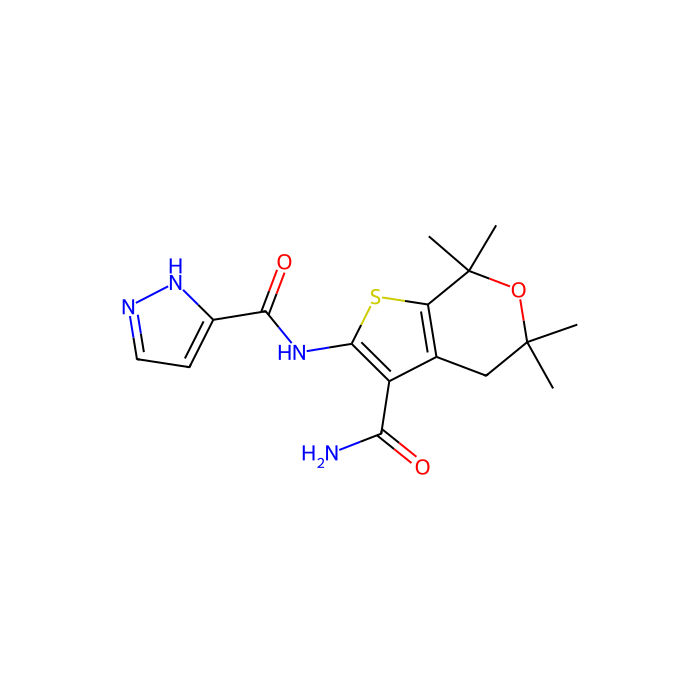
GLPG1837 GLPG1837 (ABBV-974) is a novel CFTR potentiator with an EC50 value of 3 nM for F508del, showing enhanced efficacy on CFTR mutants harboring class III mutations compared to Ivacaftor.
GLPG1837 has an attractive in vitro ADME profile, showing low Clint,unb in both microsomal and hepatocytes stability assays, good permeability, and no off-target inhibition of CYPs and the hERG channel.
In vivo
The pharmacokinetic profile of GLPG1837 is attractive, showing a low Cl,unb and good F% in both rat and dog. The CL (L/h/kg) of GLPG1837 after intravenous injection of 1 mg/kg dose are 1.92 and 0.32 in rats and dogs, respectively. T1/2 is 1.84 h in rats while 3 h in dogs. After 5 mg/kg p.o, the oral availability of GLPG1837 in rat is 67%. In dogs, F%>100.
GLPG1837 (ABBV-974) is a novel CFTR potentiator with an EC50 value of 3 nM for F508del, showing enhanced efficacy on CFTR mutants harboring class III mutations compared to Ivacaftor.
Condições de armazenamento de armazenamento
Store at -20°C
Enviado em
Ice chest + Ice pads
Este produto requer transporte de cadeia fria. Serviços terrestres e outros serviços econômicos não estão disponíveis.
This compound belongs to the class of organic compounds known as thienopyrans. These are heterocyclic compounds containing a thiophene ring fused to a pyran ring. Thiophene is 5-membered ring consisting of four carbon atoms and one sulfur atom. Pyran a six-membered heterocyclic, non-aromatic ring, made up of five carbon atoms and one oxygen atom and containing two double bonds.
External Descriptors
Not available
1. Djoumbou Feunang Y, Eisner R, Knox C, Chepelev L, Hastings J, Owen G, Fahy E, Steinbeck C, Subramanian S, Bolton E, Greiner R, and Wishart DS. ClassyFire: Automated Chemical Classification With A Comprehensive, Computable Taxonomy. Journal of Cheminformatics, 2016, 8:61.
Determine the necessary mass, volume, or concentration for preparing a solution.
Dilution Calculator
Determine the dilution needed to prepare a stock solution.
Reconstitution Calculator
Revisões
Avaliações dos Clientes
Application Protocols
No vendor-validated application protocols are provided for this item.
General guidance for small-molecule tool compounds in cell-based functional assays (example framework; adapt to your assay):
Stock: Prepare 10–50 mM in DMSO; store aliquots at −20 °C.
Plate preparation: Seed cells expressing the target (e.g., CFTR-expressing epithelial lines) to confluence suitable for the readout (YFP-halide assay, TEER/Ussing chamber, or patch clamp).
Dosing: Create serial dilutions in assay buffer maintaining constant DMSO (e.g., 0.1–0.5% v/v final). Include vehicle control and reference standards as available.
Stimulation: Apply pathway activators (e.g., forskolin/IBMX) where gating requires intracellular signaling; then add test article.
Readout: Record fluorescence quench, short-circuit current, or ionic currents over time; fit concentration–response to obtain EC50 and Emax.
Data quality: Use technical replicates (n≥3), include time-matched controls, and monitor precipitation or cytotoxicity.
Please adapt parameters (cell density, incubation times, temperatures) to your specific platform and validate with pilot experiments.
Biological Roles
Context (general literature; not item-specific claims):
GLPG1837 is known in the literature as a small-molecule modulator studied in the context of ion-channel function, specifically as a CFTR (cystic fibrosis transmembrane conductance regulator) potentiator. Potentiators typically increase the open probability (Po) of the channel, enhancing chloride conductance under gating-permissive conditions.
Research utility:
Mechanistic interrogation: Useful as a tool to dissect gating vs. processing defects in CFTR variants when combined with correctors or other modulators in cell systems expressing CFTR.
Assay platforms: Ussing chamber measurements, patch clamp (whole-cell and single-channel), membrane potential dyes, halide-sensitive YFP assays, and transepithelial current measurements can quantify functional effects.
Selectivity profiling: Comparative studies across ABC transporters or ion channels help define on-target vs. off-target actions. Profiling may include hERG, Nav, and other panels to establish safety pharmacology margins in research contexts.
Good practices:
Standardize vehicle concentration, temperature, and stimulation protocols (e.g., forskolin/IBMX for cAMP-mediated CFTR activation) to ensure reproducibility.
Implement time-matched controls and run concentration–response curves to derive EC50/efficacy parameters.
Important note: Aladdin Scientific supplies this compound strictly for research use only. No medical, diagnostic, or therapeutic use is implied.
Buffer Applications
This product is not a buffering agent and is not typically used to formulate buffer systems. For experiments involving this compound:
Prepare assay buffers according to your biological platform (e.g., HEPES- or bicarbonate-buffered solutions for electrophysiology), and introduce GLPG1837 via a concentrated stock in DMSO to achieve the desired final concentration without perturbing buffer capacity or osmolarity.
Verify DMSO tolerance of the system and maintain equal vehicle percentages across controls and treatments.
For specific buffer recipes and pH ranges, refer to standard biological buffers (HEPES pH 6.8–8.2, PBS pH ~7.4, bicarbonate-buffered Ringer’s) as appropriate to the assay; GLPG1837 itself does not define a buffer range.
Green Alternatives
As GLPG1837 is supplied as a discrete small-molecule research compound (not a solvent or commonly used reagent), the “green alternatives” paradigm applies primarily to solvent choices and handling practices in assays rather than substitution of the molecule itself.
Greener lab practices (general):
Prefer DMSO or ethanol over chlorinated solvents for stock solutions when biologically compatible.
Minimize solvent volumes by preparing higher-concentration stocks and diluting immediately before use.
Use micro-scale assays (384- or 1536-well plates) to reduce waste.
Implement closed, low-evaporation formats (cap mats, adhesive seals) to limit emissions and exposure.
Dispose of DMSO mixtures and organic waste via approved hazardous-waste streams; segregate halogenated solvents if used.
Illustrative comparison (general solvent choice; not item-specific values):
DMSO: High bp, low volatility, broad solvency, generally preferred for bioassays; waste manageable.
Acetonitrile: Useful for analytical work; higher volatility; ensure capture and proper disposal.
Chlorinated solvents (e.g., DCM): Avoid for routine handling of assay compounds; use only when strictly necessary for sample prep, with appropriate engineering controls.
Where feasible, consolidate analytical runs (UPLC) and adopt doe-based experimental designs to reduce replicates and solvent consumption.
Pharmaceutical Uses
This compound is provided strictly for research use only. No clinical, diagnostic, or therapeutic claims are made.
Formulation relevance in research (general, not item-specific):
In preclinical research settings, small-molecule tool compounds are often formulated for in vitro or ex vivo use as DMSO stocks and, when necessary, diluted into assay-compatible buffers or media.
For exploratory in vivo research (if applicable under institutional approvals), vehicles may include aqueous co-solvent systems (e.g., PEG400/saline, Captisol, or Tween-based vehicles). Any such usage requires independent assessment of stability, compatibility, and regulatory compliance; consult primary literature for this CAS if planning such studies.
Pharmacopeia status and excipient roles:
There is no pharmacopeial monograph associated with this research compound (not specified for this item). It is not supplied as an excipient and should not be incorporated into products intended for human or veterinary administration.
Documentation:
If your lab requires formulation development information (pH stability, osmolality, filter compatibility), these parameters must be generated in-house or obtained from the literature for the exact structure corresponding to CAS 1654725-02-6.
Physical Properties
Item-specific measured properties:
Appearance: Not specified for this item; refer to CoA/Spec Sheet.
Molecular Weight: Not specified for this item; refer to CoA/Spec Sheet.
Molecular Formula: Not specified for this item; refer to CoA/Spec Sheet.
Melting point / Boiling point / Density / Refractive index: Not specified for this item; refer to CoA/Spec Sheet.
Solubility: Not specified for this item; refer to CoA/Spec Sheet.
LogP / pKa: Not specified for this item; refer to CoA/Spec Sheet.
General guidance for small-molecule screening compounds (literature/practice, not item-specific):
Many drug-like ion-channel modulators are moderately to highly lipophilic and are typically prepared as 10–50 mM DMSO stocks for assay use.
If aqueous work is required, use co-solvents (DMSO, ethanol) and surfactants (e.g., 0.01–0.05% polysorbate 80) or cyclodextrins to aid dissolution. Confirm compatibility with the biological assay.
For solubility screening, a tiered approach (DMSO → 1:1 DMSO:buffer → buffered media) with visual inspection and analytical confirmation (HPLC/UPLC) is recommended.
Note: Where exact numerical values are needed for method validation or regulatory documentation, obtain them from the specific batch CoA or characterize in-house (DSC for melting point, Karl Fischer for water, and HPLC purity/assay).
Quality and Grades
Item-specific grade/purity information:
Grade/Purity: Not specified for this item; refer to CoA/Spec Sheet.
How to interpret grades (general guidance):
Screening compound/library grade: Typically focused on identity and purity suitable for biochemical/cellular assays (commonly ≥95% by HPLC/UPLC), with documentation of structure confirmation (NMR/MS). UV cutoffs, trace metals, water, and stabilizers are usually not specified unless the compound is a solvent or reagent sensitive to such parameters.
Analytical data package: For small-molecule tool compounds, a complete data set often includes 1H NMR, LC/UPLC trace with purity, HRMS, and sometimes 13C NMR. If not present on the label, request the CoA or data pack for your lot.
Stabilizers and special controls:
Stabilizer: Not specified for this item; refer to CoA/Spec Sheet.
If the compound is light- or air-sensitive (unknown here), suppliers may package under inert gas or amber vials. Inspect the container and CoA for any such notes.
Recommendations for QC on receipt (best practice):
Verify identity (LC–MS) and purity (HPLC/UPLC with UV and/or MS detection) against your method.
Document storage, thaw/refreeze cycles for assay reproducibility.
If performing quantitative biology, determine extinction coefficients or use gravimetrically traced DMSO stocks.
Reaction and Applications
This product is sold as a finalized small-molecule research compound rather than a synthetic reagent. As such, it is typically not used as a coupling partner or building block in preparative chemistry.
Common research applications (general, not item-specific):
Biological screening: Employed as a reference or test article in biochemical and cell-based assays, high-content imaging, and electrophysiology platforms.
Mechanistic studies: Dose–response profiling, time-course experiments, and combination studies with other modulators to probe pathway interactions.
ADME/PK assays (in vitro): Solubility, stability (chemical, metabolic microsomes/S9), and permeability assessments to benchmark compound-like behavior.
Practical tips:
Prepare accurate DMSO stocks using analytical balance and volumetric addition; document concentration and lot number for data traceability.
Use serial dilutions to generate reliable concentration–response curves; include vehicle and positive/negative controls.
For electrophysiology or functional assays, pre-validate vehicle tolerance and ensure final solvent concentration is consistent across wells.
Note: If you intend to derivatize or conjugate this molecule, obtain the full structural details from the CoA or databases to identify functional handles (if any) and assess chemical stability under proposed reaction conditions.
Reaction Conditions
Not typically applicable. GLPG1837 is not supplied as a synthetic reagent, and standardized reaction conditions (solvent/base/catalyst/temperature) are not relevant to its intended use.
Stock preparation: Dissolve in anhydrous DMSO to a verified concentration (e.g., 10–50 mM). Vortex and, if needed, brief sonication.
Working solutions: Dilute into assay buffer or media immediately prior to use to minimize precipitation and degradation. Maintain constant vehicle percentage in all samples.
Temperature/light: Handle at room temperature during dispensing; minimize light exposure if the compound is light-sensitive (status not specified—use amberware as a precaution).
Stability checks: For longer incubations, verify stability by re-injecting samples onto UPLC after the assay window.
For any chemical transformations you may explore independently, first obtain definitive structural information and perform micro-scale scouting with rigorous analytical monitoring.
Safety and Handling
Safety data provided for this item:
GHS Classification / Signal Word / Pictograms / H-Statements: Not specified for this item; refer to SDS.
Storage Conditions: Store at −20 °C.
Shipping: Shipped in ice chest with ice pads (protect from heat during transit).
General laboratory safety guidance (consult SDS for authoritative details):
PPE: Lab coat, gloves (nitrile), safety glasses or goggles. Handle powders/solids in a fume hood to avoid dust or aerosol exposure.
Avoid: Inhalation, ingestion, and skin/eye contact. Wash thoroughly after handling. Prevent environmental release.
Incompatibilities: Unknown for this specific item; as a precaution, avoid strong oxidizers/acids/bases until compatibility is confirmed.
Hygroscopicity/photolability: Not specified. Store tightly closed; protect from light as a conservative practice for small-molecule research compounds.
Spill response: Absorb with inert material (e.g., vermiculite), collect for disposal, decontaminate surface, and ventilate area.
First aid (overview):
Skin/eye contact: Rinse with water for at least 15 minutes; remove contaminated clothing; seek medical attention per SDS.
Inhalation: Move to fresh air, monitor breathing; seek medical attention if symptoms occur.
Ingestion: Rinse mouth; do not induce vomiting; seek medical attention.
Always defer to the product’s SDS for specific hazards, exposure limits, and disposal guidance.
Solvent Selection
Item-specific solubility data are not provided for GLPG1837; consult the CoA/Spec Sheet or test in-house. The following are general best practices for small-molecule library compounds:
Primary stock solvent:
DMSO: First-line solvent for hydrophobic research compounds; stable at −20 °C; compatible with many biochemical and cell-based assays up to 0.1–1% v/v in the final well, depending on cell type.
Secondary solvents/co-solvents:
Ethanol or acetonitrile can be used for intermediate concentrates; verify assay compatibility.
For aqueous delivery, prepare serial dilutions using DMSO→buffer to avoid precipitation; consider inclusion of non-ionic surfactants at low levels.
Practical guidance:
Target 10–50 mM DMSO stocks where solubility permits; filter-sterilize through 0.2 µm PTFE if sterility is required and the compound is stable.
Maintain final assay DMSO below the tolerance threshold (often ≤0.5% v/v for many cell lines).
If precipitation is observed, warm gently (no more than ambient to 37 °C), sonicate briefly, or increase DMSO fraction.
Comparison (general):
DMSO vs. DMF: DMSO is more biocompatible for most assays; DMF is less preferred due to cytotoxicity.
DMSO vs. ethanol: Ethanol evaporates readily and can vary concentration; DMSO offers better stock stability.
Always confirm solvent choice with small-scale solubility and assay controls.
Storage and Reconstitution
Item-specific conditions:
Storage Conditions: Store at −20 °C.
Shipped In: Ice chest + ice pads.
Reconstitution (general best practices for small molecules; not item-specific specifications):
Allow vial to equilibrate to room temperature in a desiccated environment before opening to prevent moisture condensation.
Prepare concentrated DMSO stock solutions (e.g., 10–50 mM) using analytical-grade solvent. Record exact concentration and date.
If aqueous solutions are required, perform stepwise dilution from DMSO into buffer/media with mixing to avoid precipitation. Filter if necessary using 0.2 µm PTFE membranes.
Prepare single-use aliquots to minimize freeze–thaw cycles.
Stability considerations:
Protect from repeated freeze–thaw; store aliquots tightly sealed, ideally under inert headspace if long-term storage is planned (precautionary).
Light sensitivity / hygroscopicity: Not specified for this item; store in amber vials and low humidity as a conservative measure.
Disposal: Dispose of solutions and residues according to your institution’s hazardous waste procedures for organic compounds and DMSO-containing waste streams.
For definitive stability, solubility, and concentration limits, consult the lot-specific CoA/Spec Sheet and the SDS.
Structure and Identity
Brief overview: GLPG1837 is a small-molecule research tool compound commonly used in ion-channel biology and screening collections.
Product identifiers (item-specific):
SKU: G414121
Product Name: GLPG1837
CAS: 1654725-02-6
PubChem CID: 117857370 (useful for cross-referencing external databases)
InChIKey (as provided): 102402
SMILES: Not specified for this item; refer to CoA/Spec Sheet.
Composition:
Molecular Formula: Not specified for this item; refer to CoA/Spec Sheet.
Molecular Weight: Not specified for this item; refer to CoA/Spec Sheet.
Structural description:
Item-specific structural details are not provided in the current product data. For precise 2D/3D structure, consult the CoA/Spec Sheet or external databases using the CAS or CID above.
General note (literature): GLPG1837 is reported in the ion-channel modulator class; detailed ring systems and functional groups should be confirmed from primary literature or database records for this CAS.
Stereochemistry:
Not specified for this item; refer to CoA/Spec Sheet.
Recommendation: When structural information is critical (e.g., for docking or SAR comparison), retrieve the definitive structure via CID 117857370 or the compound’s CoA, and record any stereochemical annotations for reproducibility.
Synthetic Utility
GLPG1837 is offered as a discrete, fully formed small molecule. It is not typically used as a building block or synthetic reagent in organic synthesis.
If derivatization is contemplated (general considerations):
Obtain the full structure (via CoA or databases) to identify potential functional handles (e.g., heteroatoms amenable to N-alkylation/acylation, ring positions for electrophilic substitution, or linkers for bioconjugation if present).
Assess chemical stability toward acids/bases, oxidants/reductants, and heat before planning transformations.
Conduct small-scale feasibility with analytical tracking (LC–MS) to avoid degradation of the parent scaffold.
Analytical characterization for any derivatives:
Confirm identity and purity with orthogonal methods (1H/13C NMR, HRMS, UPLC), and document any stereochemical changes if chiral centers exist in the parent.
Bottom line: Treat GLPG1837 as a tool compound for biology rather than a precursor for multistep synthesis, unless you have structure-activity or probe-development objectives that justify modification.
Target Specificity
Item-specific target data are not provided in the current product data.
General literature context (not item-specific claims):
GLPG1837 has been studied as a potentiator of CFTR channels in biochemical and cellular systems, where specificity is assessed by comparing activity on CFTR versus other ion channels/transporters.
For your project:
Confirm target engagement and selectivity experimentally using orthogonal assays (e.g., electrophysiology vs. halide-sensitive fluorescence) and include counter-screens for off-target ion channels as appropriate.
Note: For definitive, item-specific target specificity data, consult the CoA/Spec Sheet or primary literature associated with CAS 1654725-02-6.
We use cookies to ensure the website functions properly and, where permitted, to improve your experience. You can manage your preferences at any time in Settings. Learn more in our Cookie Policy.
Shall we send you a message when we have discounts available?
Remind me later
Thank you! Please check your email inbox to confirm.
Products are supplied to verified businesses, institutions, and qualified professionals for research and development use only. Not for use in humans, animals, diagnosis, or therapy.

 K2219573