Determine the necessary mass, volume, or concentration for preparing a solution.
Dilution Calculator
Determine the dilution needed to prepare a stock solution.
Reconstitution Calculator
Revisões
Avaliações dos Clientes
Application Protocols
No item-specific, validated protocols are provided. The following are general, non-item-specific guidelines for handling small-molecule library compounds in biochemical or cell-based assays.
Stock preparation (general)
Prepare a concentrated stock in anhydrous DMSO (e.g., 10–50 mM) under low light. Vortex and sonicate gently if needed. Record exact concentration.
Filter through 0.2 µm PTFE if particulate persists.
Working solutions
Dilute into assay buffer/media to the desired concentration, keeping final DMSO ≤0.5–1% v/v to minimize vehicle effects.
Include vehicle controls at the same DMSO percentage as treated wells.
Plate handling
Use low-binding tubes/plates to minimize adsorption for hydrophobic analytes.
Store prepared plates shielded from light; limit time at room temperature.
Analytical setup
For LC–MS: Use a scouting gradient (e.g., 5–95% acetonitrile in water with 0.1% formic acid over 10–15 min) to assess retention and ionization. Adjust source polarity based on observed ions.
Always adapt these steps based on the compound’s confirmed structure and the stability/solubility information from the CoA/Spec Sheet.
Biological Roles
No biological role, mechanism of action, or target annotation is provided in the product data. As such, any claims about pathways, targets, or cellular effects would be speculative and are not presented here.
General considerations for small-molecule library members (non-item-specific)
May be used as anonymous test articles in biochemical or cell-based assays to probe pathways or phenotypes.
Baseline controls: Assess assay interference (e.g., fluorescence, redox activity, aggregation) using counterscreens such as detergent-sensitive aggregation assays or redox cycling tests.
Physicochemical properties (pKa/logP/aromaticity) strongly influence permeability and nonspecific binding; obtain these from the structure when available.
Important: This product is for research use only and not intended for any diagnostic, therapeutic, or clinical application.
Buffer Applications
This product is not supplied or described as a buffering reagent. Without structural and pKa information, it is not appropriate to formulate it as a buffer component.
Practical guidance
If the compound is used in biological assays, prepare assay buffers separately (e.g., PBS, HEPES, Tris) and add the compound from a concentrated stock (commonly in DMSO or ethanol) to achieve the desired working concentration while keeping co-solvent ≤0.5–1% v/v.
Validate that the compound does not chelate essential ions or alter buffer pH by running control wells with vehicle only.
For any buffer-related compatibility (precipitation, pH-dependent stability), rely on empirical testing once the structure and pKa are known.
Green Alternatives
Because this listing lacks structure and intended solvent/process details, green chemistry guidance is provided in general terms for handling small organic molecules.
Prefer greener solvents for workup and analysis when compatible:
Water or aqueous buffer (where possible after pre-dissolution in DMSO/EtOH).
Ethanol or isopropanol over methanol or chlorinated solvents.
Ethyl acetate or 2-MeTHF over diethyl ether/THF when extracting.
Cyclopentyl methyl ether (CPME) and dimethyl carbonate (DMC) as lower-impact options relative to many aprotic polar solvents.
Illustrative comparison (general, not item-specific)
DMSO: High boiling, low volatility, broad solvency; challenging recovery/reuse.
Acetonitrile: Good for LC; toxicity and sourcing considerations.
2-MeTHF/CPME: Better EHS profile than THF/Et2O; water immiscible; good for extractions.
Operational tips
Minimize DMSO carryover in biological assays (<0.5% v/v) to limit cytotoxic confounds.
Employ microscale workflows and closed systems to reduce solvent usage and exposure.
Plan for solvent recycling where feasible (e.g., ACN in prep-LC).
Note: Select the greenest option consistent with the compound’s solubility and stability as determined from the CoA/Spec Sheet.
Pharmaceutical Uses
No pharmacopeial status, excipient role, or formulation use is provided for this item. It is sold strictly for research use only.
Context (general, non-item-specific)
Small-molecule library members may be evaluated in pre-formulation research (e.g., solubility screens, salt screening) but are not approved for use as drug substances or excipients.
If formulation-like studies are performed in research settings, document polymorphism, hygroscopicity, and solution stability; none of these parameters are specified for this item.
Compliance note
Do not use in human or veterinary applications. For any regulated studies, obtain appropriate GMP-grade materials and full CMC documentation. This catalog item does not include such guarantees.
Physical Properties
Item-specific physicochemical constants are not provided in the current listing.
Appearance (physical state/color): Not specified for this item; refer to CoA/Spec Sheet.
Melting point / Boiling point: Not specified for this item; refer to CoA/Spec Sheet.
Density, refractive index: Not specified for this item; refer to CoA/Spec Sheet.
Solubility: Not specified for this item; refer to CoA/Spec Sheet.
pKa / logP (literature/computed): Not available without a definitive structure; consult database records tied to the CAS or CID listed.
General guidance (literature-based, non‑item‑specific)
For small-molecule library members with unknown solubility, initial dissolution in anhydrous DMSO (10–50 mM) is commonly successful, followed by dilution into aqueous media containing co-solvent (e.g., 0.1–1% DMSO) as needed.
Protect from light and moisture, as many heteroaromatic and conjugated systems are photosensitive or hygroscopic.
Important: Do not treat any of the above as specifications for this item. For exact values needed for method development (e.g., chromatographic method, formulation, or stability studies), obtain the CoA/Spec Sheet.
Quality and Grades
Grade/Purity: Not specified for this item; refer to CoA/Spec Sheet.
Context and implications
Library/screening compounds are typically supplied at research grade, intended for discovery workflows (assay development, HTS, profiling), not for diagnostic or therapeutic use.
When the grade is unspecified, users should rely on the Certificate of Analysis (CoA) for details such as assay purity (e.g., HPLC/UPLC area%), identity confirmation (NMR/HRMS), and residual solvents.
UV/LC suitability: If chromatographic use (e.g., as a reference standard) is planned, confirm low-UV background, extinction profile, and stabilizers on the CoA, since none are specified here.
What to verify on receipt (recommended)
Identity: NMR, LC–MS against expected mass (consult CoA/CID).
Purity: Orthogonal check (LC with PDA and MS detection) to confirm absence of co-eluting impurities.
Water content and residual solvents: Not specified for this item; refer to CoA/Spec Sheet. Karl Fischer and GC headspace are typical.
Note: Absence of a listed stabilizer suggests none is intentionally added, but this is not a specification—consult the CoA/SDS to confirm.
Reaction and Applications
This product is listed in a small-molecule/compound library category and is primarily intended for discovery research (e.g., assay development, target identification, chemical biology). No specific reactivity profile or synthetic role is provided.
Applicable uses (general, non-item-specific)
Biochemical/phenotypic screening: Preparation of DMSO stocks for HTS or secondary assays.
Analytical method development: Serve as a test article for LC–MS/MS method qualification (retention behavior, ionization).
Reference material in SAR campaigns: Support structure–activity efforts if analog series information is available from the CoA or associated database records.
Not provided for this item
Named reactions, catalytic behavior, or functional-group transformations are not specified. Without structure, guidance on reactivity (e.g., nucleophile/electrophile character, stability to acid/base, redox behavior) cannot be offered.
Recommendations
Obtain structural and purity documentation (CoA/SDS). If synthetic manipulation is desired, confirm functional groups via NMR/IR/MS before planning transformations.
Conduct micro-scale stability tests (pH 2/7/10, 25–40°C, with/without light) to map degradation pathways prior to long assays.
Reaction Conditions
No reaction conditions are specified or inferable without knowledge of the compound’s structure and functional groups.
General, non-item-specific considerations
Stability screens: Assess short-term stability to acid/base (e.g., 0.1 M HCl/NaOH), oxidative/reductive environments (H2O2, NaBH4), and light to inform any downstream use.
Solvent compatibility: Start with DMSO, DMF, or acetonitrile for analytical workflows; switch to greener options where compatible.
Temperature: Keep within ambient to 40°C during solution prep unless stability is demonstrated; protect from light as indicated in storage instructions.
Because no literature pointers or structural data are provided here, no representative yields, catalysts, or temperatures can be responsibly reported. Consult primary literature after identifying the precise structure via the provided CAS or CID.
Safety and Handling
Safety classification and hazard details are not provided in the product data and may depend on the definitive structure.
GHS classification: Not specified for this item; refer to SDS.
Signal word / H-statements / Pictograms: Not specified for this item; refer to SDS.
General laboratory precautions (good practice; defer to SDS for authoritative guidance)
Engineering controls: Work in a chemical fume hood when weighing, dissolving, or transferring powders/solutions of small molecules.
PPE: Laboratory coat, safety glasses, and appropriate chemical-resistant gloves (e.g., nitrile). Change gloves frequently to avoid permeation.
Avoid: Inhalation of dust/aerosols, skin/eye contact, and ingestion. Prevent exposure to light if noted; keep desiccated to avoid hydrolysis.
Incompatibilities: Unknown; as a precaution, segregate from strong oxidizers, strong acids/bases, and reducing agents until incompatibilities are known from the SDS.
First aid (overview; follow SDS/protocols): Eye/skin contact—rinse with water for at least 15 minutes; remove contaminated clothing. Inhalation—move to fresh air. Ingestion—rinse mouth; seek medical attention.
Spill/leak response
Small spills: Absorb with inert material, collect for disposal. Avoid raising dust/aerosols.
Waste: Dispose according to institutional hazardous chemical waste procedures.
Storage from Product Data
Store at 2–8°C, protected from light, desiccated. Shipments are on wet ice to maintain cold-chain integrity.
Solvent Selection
Item-specific solubility is not provided. The following is general, literature-based guidance for small organic molecules and should not be treated as specifications.
Primary stock solvent: Anhydrous DMSO is the default choice for many screening compounds due to broad solvency and compatibility with biochemical assays at 0.1–1% v/v.
Alternative solvents: DMF, ethanol, methanol, or acetonitrile may be used depending on functional groups and assay tolerance.
Aqueous work: Pre-dissolve in DMSO or alcohol, then dilute into buffer with vigorous mixing. Consider adding nonionic surfactant (e.g., 0.01% Tween 80) for hydrophobic analytes.
Avoid precipitation: Prepare intermediate cosolvent blends (e.g., 50% DMSO in water) before final dilution; add slowly with mixing.
Comparison (general)
DMSO vs DMF: DMSO offers better biocompatibility; DMF can be harsher to plastics and enzymes.
Acetonitrile vs methanol (for LC): ACN often yields sharper peaks; MeOH can increase hydrogen-bonding interactions and retention.
Practical tips
Filter 0.2 µm when needed to remove particulates before analytical injections.
Document final cosolvent percentage in biological or analytical protocols to ensure reproducibility.
Reminder: For exact solvent choices and solubility limits of this specific item, consult the CoA/Spec Sheet.
General reconstitution guidance (non-item-specific)
If solid: Equilibrate to room temperature in a desiccator before opening to prevent moisture condensation. Weigh rapidly and reseal under dry, inert atmosphere if possible.
If solution: Inspect for precipitate or discoloration before use; mix gently to re-homogenize.
Common solvent: Prepare a concentrated stock in dry DMSO (e.g., 10–50 mM) unless the CoA specifies an alternative solvent. Record lot-specific concentration.
Aliquoting and stability
Prepare single-use aliquots to avoid freeze–thaw and moisture ingress. Store aliquots at 2–8°C protected from light, or at lower temperature if stability data support it.
Monitor for degradation by LC–MS or HPLC at defined intervals; stability-indicating methods are recommended.
Important notes
Appearance, water content, and exact solubility are not specified for this item; refer to CoA/Spec Sheet.
For any long-term storage beyond the label, perform a small stability study under intended conditions.
Structure and Identity
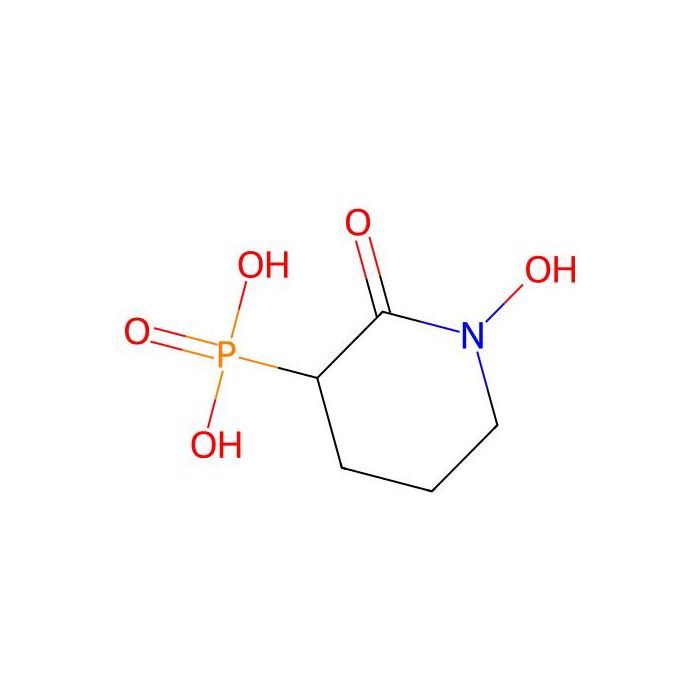
A cataloged small-molecule screening compound supplied for research use; detailed structural identifiers are not provided in the product data.
SKU: H648086
Product name: Hex (catalog name)
CAS: 2004714-32-1
PubChem CID: 122540907
InChIKey: Not specified for this item; refer to CoA/Spec Sheet.
SMILES: Not specified for this item; refer to CoA/Spec Sheet.
Molecular formula: Not specified for this item; refer to CoA/Spec Sheet.
Molecular weight: Not specified for this item; refer to CoA/Spec Sheet.
Structural description
Functional groups, ring systems, and stereochemistry: Not provided in the current listing. Without a SMILES/InChI, detailed structural features cannot be summarized here. Please consult the CoA/Spec Sheet or SDS for a definitive structure rendering and identifiers.
Notes
The catalog name “Hex” is a short descriptor used for internal library organization and should not be interpreted as a formal chemical name. Always reference the CAS or CID above when cross-checking external databases.
Synthetic Utility
Synthetic roles cannot be assigned without a defined structure or functional-group information.
What is not specified for this item
Functional groups (e.g., halide, boronate, azide), reactive handles, or protecting groups.
Participation in named reactions (e.g., Suzuki, Sonogashira, amide couplings) or use as a building block/intermediate.
If you intend to use this material synthetically (general guidance)
Obtain and review the CoA/Spec Sheet to identify reactive motifs.
Confirm identity and purity by NMR (1H/13C), HRMS, and, as applicable, IR.
Run small-scale compatibility tests with common conditions (acid/base, oxidants/reductants) before scale-up.
If chiral, assess enantiopurity and potential racemization under planned conditions.
Until structural details are confirmed, treat the compound as an unknown with respect to reactivity and stability.
Target Specificity
No target, enzyme, receptor, or pathway specificity is provided for this product.
Tested bioassays, binding partners, or selectivity data: Not specified for this item; refer to CoA/Spec Sheet or associated screening data if available from your program.
This product should be treated as an unannotated small molecule for discovery research until target deconvolution or annotation is performed.
Perguntas frequentes
What is the purity of this product?
This product is supplied at ≥99% purity (chemical assay). Lot-specific values are stated on the Certificate of Analysis.
How should this product be stored?
Store at 2–8 °C, protected from light, desiccated. Keep the container tightly closed with desiccant — the material is moisture-sensitive.
How is this product shipped?
This product ships chilled on wet ice. Unpack on arrival and transfer it to the storage condition stated above.
What are the CAS number, molecular formula and molecular weight?
The CAS Number is 2004714-32-1, the molecular formula is C5H10NO5P, and the molecular weight is 195.11 g/mol.
What documentation is provided?
Available product documentation, including Certificates of Analysis (COA), Safety Data Sheets (SDS), and specification sheets, is shown in the product document area. Document availability and access follow the current site policy.
Usamos cookies para garantir o funcionamento adequado do site e, quando permitido, para melhorar a sua experiência. Você pode gerenciar suas preferências a qualquer momento nas Configurações. Saiba mais em nossa Política de Cookies.
Deseja que lhe enviemos uma mensagem quando tivermos descontos disponíveis?
Lembrar-me mais tarde
Obrigado! Por favor, verifique a sua caixa de entrada de e-mail para confirmar.
Products are supplied to verified businesses, institutions, and qualified professionals for research and development use only. Not for use in humans, animals, diagnosis, or therapy.