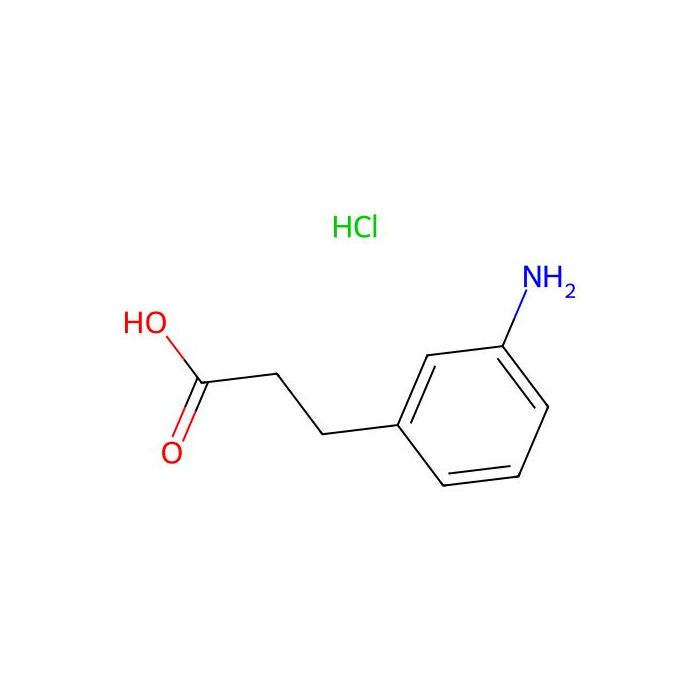
This compound belongs to the class of organic compounds known as phenylpropanoic acids. These are compounds with a structure containing a benzene ring conjugated to a propanoic acid.
External Descriptors
Not available
1. Djoumbou Feunang Y, Eisner R, Knox C, Chepelev L, Hastings J, Owen G, Fahy E, Steinbeck C, Subramanian S, Bolton E, Greiner R, and Wishart DS. ClassyFire: Automated Chemical Classification With A Comprehensive, Computable Taxonomy. Journal of Cheminformatics, 2016, 8:61.
Determine the necessary mass, volume, or concentration for preparing a solution.
Dilution Calculator
Determine the dilution needed to prepare a stock solution.
Reconstitution Calculator
Revisões
Avaliações dos Clientes
Application Protocols
Not applicable. No validated bioassay protocols (e.g., WB, IHC, IF, FC) are associated with this small-molecule reagent.
For synthetic use, follow reaction-specific procedures provided in the Reaction Conditions and Synthetic Utility sections and consult peer-reviewed literature for closely related substrates.
Biological Roles
This product is a synthetic building block rather than a biomolecule; it does not possess inherent biological roles.
General biochemical context (literature/general)
Aromatic amino acid analog: features both an anilinium (protonated aniline) and a carboxylic acid, enabling its use as a spacer or hapten component in conjugation chemistry.
Charge state control: at acidic pH, the aniline is protonated (cationic), while the carboxyl group remains largely neutral; near neutral to basic pH, the carboxyl can deprotonate, affording zwitterionic or anionic species depending on conditions.
Utility in bioconjugation: often incorporated via amide formation to present an aryl handle at a defined distance from an amide linkage; the meta orientation can influence electronic properties of appended chromophores or ligands.
Note: All uses are for research and laboratory purposes only; no clinical or in vivo biological function is claimed.
Buffer Applications
Not typically used as a buffering agent.
Practical note (general)
The compound contains an anilinium and a carboxylic acid, but the pKa values and limited buffering capacity around physiological pH make it unsuitable as a primary buffer. For aqueous reactions, it is commonly used in conjunction with standard buffer systems (e.g., MES, phosphate, HEPES) that control pH during EDC/NHS couplings.
Select buffers that do not contain primary amines when performing carbodiimide-mediated couplings to avoid competitive reactions (e.g., use MES or phosphate rather than Tris).
Green Alternatives
Solvent and reagent choices can significantly reduce environmental footprint when working with this salt.
Greener choices (general guidance)
Prefer water or ethanol–water mixtures for amide couplings (EDC/sulfo-NHS) instead of DMF/DCM when feasible.
Use 2-MeTHF or CPME in place of THF/Et2O for extractions of the free base or for non-aqueous steps.
Replace DCC/HOBt with water-compatible EDC/HOAt or HATU with careful waste management; avoid isolating energetic additives like dry HOBt.
Trade-offs
Water-based couplings may require longer reaction times or careful pH control; solubility of coupling partners can be limiting.
Ethanol and 2-MeTHF can simplify solvent recovery but may change selectivity or require adjusted base stoichiometry.
Mini-comparison (general)
Water/EDC vs. DMF/HATU: water route is greener and safer; DMF/HATU can deliver faster couplings for hindered substrates but at higher EHS cost.
2-MeTHF vs. THF: similar polarity; 2-MeTHF offers better peroxide stability and bio-based sourcing, with slightly different miscibility behavior.
Pharmaceutical Uses
No pharmacopeial or excipient status is provided for this item; it is supplied for research use only.
General, non-clinical context
Can serve as an intermediate in the synthesis of small-molecule leads, linkers, or conjugation handles in medicinal chemistry workflows.
Hydrochloride salt form offers handling benefits (reduced volatility, improved crystallinity) during process development compared with the corresponding free base.
Note: This product is not intended for human or veterinary use, drug formulation, or clinical applications.
Physical Properties
Item-specific (from Product Data)
Appearance: Not specified for this item; refer to CoA/Spec Sheet.
Literature/general expectations (reference only; not specifications)
Physical state: typically a crystalline solid for aromatic amine hydrochlorides.
Ionization: exists predominantly as anilinium chloride; carboxyl group is neutral under acidic conditions.
Solubility: generally high in water and aqueous acids; also soluble in polar organics (e.g., DMSO) due to ionic character (literature/general behavior of anilinium carboxylic acid salts).
pKa values (approx., literature): anilinium conjugate acid pKa ~4.6; benzoic/propanic acid pKa ~4–5 range (contextual; exact values depend on substitution and medium).
Partitioning: ionic salts show low logP and poor solubility in nonpolar solvents; free-base form is less polar and more organic-soluble.
Melting point, boiling point, density, refractive index, UV cutoff: Not specified for this item; refer to CoA/Spec Sheet.
Notes for use
Convert to the free base (by basification) if solubility in aprotic organic solvents is required for non-aqueous coupling or aromatic substitutions.
Hygroscopicity is common for amine hydrochlorides; handle quickly in ambient air to minimize moisture uptake (general practice).
Quality and Grades
Item-specific (from Product Data)
Grade/Purity: Not specified for this item; refer to CoA/Spec Sheet.
How to interpret grades (general guidance)
Research grade: suitable for general laboratory synthesis and development work; may not include low-UV or trace-metal guarantees.
Analytical/HPLC grade (if applicable): emphasizes low non-volatile residue and low UV-absorbing impurities for detection-sensitive workflows.
Salt form considerations: hydrochloride salts provide defined stoichiometry and improved handling vs. free bases, but water content (hydrates) can vary between lots; always confirm by CoA for precise assay and loss-on-drying when needed for stoichiometric reactions.
Recommended practice
Verify assay, water content, and counterion content on the CoA before precise stoichiometric use (amide couplings, quantitative derivatizations).
If UV transparency or trace metal limits are critical, request supporting documentation; otherwise treat as research-grade organic building block.
Reaction and Applications
This bifunctional aromatic salt is a versatile intermediate for constructing amide-linked motifs, conjugates, and aryl-aniline derivatives.
Representative application spaces (literature/general; expand as needed)
Amide bond formation via the carboxylic acid: EDC/NHS (aqueous), EDC/HOAt, DCC/HOBt, HATU or PyBOP in DMF/DIPEA to couple with amines (small molecules, linkers, or protein side chains in bioconjugation workflows).
Esterification/activation: convert to acid chloride (SOCl2, oxalyl chloride) or mixed anhydrides; protect or derivatize the acid for orthogonal chemistry on the aniline.
Aniline transformations (after neutralization): acylation/carbamoylation, sulfonylation to generate amide/sulfonamide derivatives; diazotization to access aryl diazonium chemistry (substitutions, azo coupling) – note the meta relationship to the propionic acid side chain.
Linker/spacer role: the –CH2–CH2– unit offers a defined 3-atom spacer between aryl ring and carboxylate functionality, useful in assembling peptidomimetics and surface-attachment motifs.
Practical tips
Begin by basifying to the free amine for electrophilic aromatic substitutions or aniline acylations; maintain low temperature for diazotization (0–5 °C, aqueous mineral acid + NaNO2).
For aqueous EDC coupling, adjust pH to 4.5–6 to balance carboxylate activation and amine nucleophilicity; include NHS or sulfo-NHS for stable active esters in water.
If salt stoichiometry affects yields, assay and LOD from the CoA should be used to correct charge equivalents.
Reaction Conditions
General literature guidance (not item specifications; optimize per substrate set)
Aqueous amide coupling (EDC/NHS or EDC/sulfo-NHS)
Solvent: water or water/DMF.
pH: 4.5–6.0 (MES or phosphate buffers without primary amines).
Reagents: 1.1–1.5 equiv EDC, 1.1–1.5 equiv NHS (or sulfo-NHS), 2–3 equiv base as needed.
Temperature/time: 20–25 °C, 1–4 h for activation; add amine nucleophile and react 2–16 h.
Non-aqueous amide coupling (HATU/HBTU)
Solvent: DMF or NMP; base: DIPEA (2–3 equiv).
Temperature/time: 0–25 °C, 1–6 h; monitor by LC-MS.
Conditions: 0–5 °C, aqueous HCl (or HBF4) with NaNO2 (1.1 equiv) to generate diazonium, then couple with activated aromatics or capture via Sandmeyer.
Typical outcomes
Amide couplings often furnish 60–95% isolated yields depending on sterics and solubility; diazotization requires careful temperature control to avoid decomposition.
Safety and Handling
Item-specific (from Product Data)
GHS classification / pictograms / signal word / H-statements: Not specified for this item; refer to the SDS.
Storage: Store at 2–8 °C, argon charged (as provided). Shipped on wet ice.
General safety guidance (reference only; always consult SDS)
Likely hazards: irritation to eyes/skin/respiratory tract are common for aromatic amine salts and organic acids; avoid dust formation and inhalation.
PPE: lab coat, safety glasses or face shield, appropriate gloves (e.g., nitrile). Use in a chemical fume hood.
Incompatibilities: strong oxidizers; strong bases will liberate the free aniline base; avoid nitrosating agents unless diazotization is intended.
First aid (overview):
Skin/eye contact: rinse with water for at least 15 minutes; remove contaminated clothing; seek medical attention as needed.
Inhalation: move to fresh air; seek medical attention if symptoms persist.
Ingestion: rinse mouth; do not induce vomiting; get medical attention.
Handling tips: keep container tightly closed under inert gas as provided; minimize exposure to moisture to maintain salt stoichiometry and performance.
Disclaimer: The above general guidance does not replace the SDS. Always follow institutional safety protocols.
Solvent Selection
Polarity and miscibility (general behavior)
The hydrochloride salt is polar/ionic: readily soluble in water and aqueous acids; limited solubility in nonpolar solvents.
Good solubility in polar aprotic solvents that tolerate ionic species (e.g., DMSO, DMF) for stock solutions and coupling chemistry.
Choosing solvent by task (general guidance)
Aqueous-phase bioconjugation or amide coupling: water, buffer (pH control), or water-miscible organics (DMF/DMSO) with carbodiimides (EDC) or uronium reagents (HATU/HBTU) plus base.
Non-aqueous aromatic transformations (e.g., acylation, Sandmeyer after diazotization): first free the base with a stoichiometric amine base (DIPEA, triethylamine) and extract into THF, MeCN, or DCM as appropriate.
Purification: reversed-phase chromatography (water–MeCN) suits the salt; normal-phase often benefits from conversion to free base or ester protection of the acid.
Short comparison (general)
Water vs. DMSO: water is greener and enables EDC chemistry; DMSO offers higher loading for concentrated stocks but may interfere with some couplings.
DMF vs. MeCN: DMF solubilizes salts well for amide couplings; MeCN is preferable for cleaner workups but often requires free-base form.
Storage and Reconstitution
Item-specific storage
Store at 2–8 °C, argon charged (as provided in Product Data).
Shipped on wet ice.
Stability notes (general)
Keep tightly closed under inert gas to limit moisture uptake and oxidative degradation of the aniline functionality (general consideration for amine salts).
Avoid prolonged exposure to air and humidity; hydrochloride salts can be hygroscopic and may form hydrates, affecting mass balance.
Reconstitution guidance (general; not a specification)
Prepare stock solutions in water, aqueous acid, or DMSO depending on downstream application. For non-aqueous reactions, first liberate the free base with a suitable organic base and extract into an aprotic solvent (e.g., THF, MeCN, DCM).
Filter sterilize (0.22 µm) if sterility is required for bioconjugation workflows; store aliquots at 2–8 °C to minimize freeze–thaw where possible.
Research use note
For research use only.
Structure and Identity
Brief overview: 3-Aminobenzenepropanoic acid hydrochloride is the hydrochloride salt of a bifunctional aromatic building block bearing a meta-aniline moiety and a terminal carboxylic acid connected through a two-carbon linker.
InChIKey: Not specified for this item; refer to CoA/Spec Sheet. (Product field shows "292655", which is not a standard InChIKey format.)
SMILES: Not specified for this item; refer to CoA/Spec Sheet.
Molecular formula: Not specified for this item; refer to CoA/Spec Sheet.
Molecular weight: Not specified for this item; refer to CoA/Spec Sheet.
Literature/computed (for reference only; not item specification)
Likely neutral (free-base) formula: C9H11NO2 for 3-aminobenzenepropanoic acid; hydrochloride salt typically C9H12ClNO2.
Approximate formula weight (HCl salt): ~201.65 g/mol (literature calculation).
Functional groups: aromatic amine (anilinium in HCl salt), carboxylic acid; aryl ring with meta relationship between substituents.
2D structure (verbal): a benzene ring bearing an –NH3+ (as HCl salt) at the 1-position and a –CH2–CH2–CO2H substituent at the 3-position; chloride counterion present.
Key reactive motifs and their implications (literature/general)
Carboxylic acid: amenable to amide/ester formation via carbodiimide (EDC/DCC), uronium (HATU/HBTU), acid chloride, or mixed anhydride routes. Temporary protection as methyl/benzyl ester enables orthogonal aryl amine chemistry.
Aromatic amine (as HCl salt): after neutralization, participates in acylation, sulfonylation, urea/carbamate formation, and diazotization (leading to Sandmeyer substitutions or azo coupling). Protonated anilinium is meta-directing and deactivating to electrophilic aromatic substitution; free aniline is ortho/para-directing and more reactive.
Spacer role: the –CH2–CH2– linker provides conformational spacing; useful in generating peptidomimetics, surface modifiers, and polymer–dye conjugates.
Retrosynthetic value
The molecule can be traced back to m-nitrocinnamate reductions/hydrogenations or via Friedel–Crafts acylation followed by homologation and reduction; however, for most labs, direct use as a purchased building block is more efficient.
Protection strategy
Use Boc/CBz on the aniline after basification to the free base; protect the acid as an ester for multi-step sequences, then deprotect under standard conditions (TFA for Boc; hydrogenolysis for CBz/Bn).
Target Specificity
Not applicable. This product is a small-molecule building block and is not an antibody, protein, or targeted biological reagent. No antigen/epitope specificity, clone, isotype, or species reactivity applies.
Perguntas frequentes
What is the purity of this product?
This product is supplied at ≥97% purity (chemical assay). Lot-specific values are stated on the Certificate of Analysis.
How should this product be stored?
Store at 2–8 °C under argon. It is supplied under an argon blanket; reseal under inert gas after each use.
How is this product shipped?
This product ships chilled on wet ice. Unpack on arrival and transfer it to the storage condition stated above.
What are the CAS number, molecular formula and molecular weight?
The CAS Number is 102879-44-7, the molecular formula is C9H12ClNO2, and the molecular weight is 201.65 g/mol. InChIKey QBOBODDISCLHPG-UHFFFAOYSA-N.
What documentation is provided?
Available product documentation, including Certificates of Analysis (COA), Safety Data Sheets (SDS), and specification sheets, is shown in the product document area. Document availability and access follow the current site policy.
Usamos cookies para garantir o funcionamento adequado do site e, quando permitido, para melhorar a sua experiência. Você pode gerenciar suas preferências a qualquer momento nas Configurações. Saiba mais em nossa Política de Cookies.
Deseja que lhe enviemos uma mensagem quando tivermos descontos disponíveis?
Lembrar-me mais tarde
Obrigado! Por favor, verifique a sua caixa de entrada de e-mail para confirmar.
Products are supplied to verified businesses, institutions, and qualified professionals for research and development use only. Not for use in humans, animals, diagnosis, or therapy.