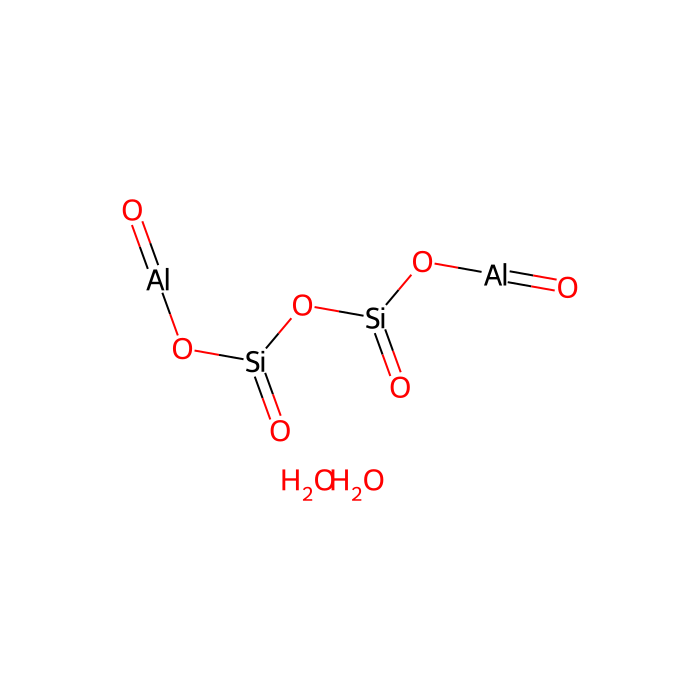
Kaolin(superfine) - 3000 mesh (5um) calcination , CAS No.1332-58-7

CAS: 1332-58-7 Cat. No.: K100132 Fórmula: Al2Si2O5(OH)4 · 2 H2O Peso molecular: 294.19 Número CE: 310-194-1
Disponível para encomenda
GRAU & PUREZA 3000 mesh (5um) calcination
Synonyms
Argilla | Bilt Plate 156 | Glomax | Kaolin colloidal | Kaolin Nanoclay | Montmorillonite Bentonite Clay | beta Coat | Snow tex | Clay 347 | Kaopaous | Langford | Airflo V 8 | Clays, white, acidic | Amazon 88 | J-521617 | Arcilla blanca | CB 2 (clay) | Hal
Storage
Desiccated,Room temperature
Shipped In
Normal
★
Tamanho
USA
Alemanha (EU)*
Preço
Qtd
500g
K100132-500g
2 Em stock
—
16,90US$
Enter a quantity for the sizes you want to add.
🧪
Por que este grau

3000 mesh (5um) calcination para fluxos de trabalho cromatográficos e analíticos sensíveis que exigem interferência mínima da linha de base.

🌡

Armazenamento e envio

Desiccated,Room temperature Envio Normal. Consulte o COA específico do lote para obter as especificações exatas.

📋

Documentos de qualidade

SDS, COA, ficha técnica e folha de especificações disponíveis para download. COA específico do lote acessível por meio de pesquisa por número de lote.

📚

Comprovação documental

Citado em 166 publicações revisadas por pares nas áreas de cromatografia, síntese orgânica e reações de acoplamento cruzado.

Visão geral

A hydrated aluminum silicate.Kaolin has been used:

· For preparing synthetic turbid water that is employed to evaluate the biosorption capacity of Moringa oleifera leaves.

· In combination with carrageenan to induce arthritic inflammation in a rat model for evaluating the activity of JAK3 (janus kinase 3) inhibitors.

· In a study to assess its utility for microparticle-enhanced cultivation (MPEC) of 2-phenylethanol and 6-pentyl-α-pyrone.

Especificações

Sinónimos
Argilla | Bilt Plate 156 | Glomax | Kaolin colloidal | Kaolin Nanoclay | Montmorillonite Bentonite Clay | beta Coat | Snow tex | Clay 347 | Kaopaous | Langford | Airflo V 8 | Clays, white, acidic | Amazon 88 | J-521617 | Arcilla blanca | CB 2 (clay) | Hal
Especificações e pureza
3000 mesh (5um) calcination
Condições de armazenamento de armazenamento
Desiccated,Room temperature
Enviado em
Normal
Nomes e identificadores
Pubchem Sid
Sorrisos canónicos
O.O.O=[Al]O[Si](=O)O[Si](=O)O[Al]=O
IUPAC Name
oxo-oxoalumanyloxy-[oxo(oxoalumanyloxy)silyl]oxysilane;dihydrate
InChIKey
NLYAJNPCOHFWQQ-UHFFFAOYSA-N
INCHI
1S/2Al.O5Si2.2H2O.2O/c;;1-6(2)5-7(3)4;;;;/h;;;2*1H2;;/q2*+1;-2;;;;
SMILES isoméricas
O.O.O=[Al]O[Si](=O)O[Si](=O)O[Al]=O
RTECS
GF1670500
Peso molecular
294.19
Reaxy-Rn
36272658
Reaxys-RN_link_address
https://www.reaxys.com/reaxys/secured/hopinto.do?context=S&query=IDE.XRN=36272658&ln=

Documentação

📋 Ficha de dados de segurança (FDS)

Documento abrangente sobre perigos, manuseamento, armazenamento e conformidade regulamentar.

<<<<<<< HEAD Baixar SDS → ======= Baixar SDS → >>>>>>> release248-p3

✅ Certificado de análise (COA)

Dados de qualidade específicos do lote. Introduza o número de lote para obter o COA exato.

Consultar COA →

📊 Ficha técnica

Resumo de referência rápida das especificações e aplicações do produto.

Ver ficha técnica →

🔬 Folha de especificações

Atributos de qualidade completos e critérios de aceitação para este grau.

Ver folha de especificações →

Dados avançados

Taxonomic Classification

Taxonomy Tree

KingdomInorganic compounds
SuperclassMixed metal/non-metal compounds
ClasseMiscellaneous mixed metal/non-metals
SubclassMiscellaneous metallic oxoanionic compounds
Intermediate Tree Nodes Not available
Direct ParentMiscellaneous silicates
Alternative Parents Miscellaneous aluminates  Metalloid salts  Inorganic oxides  
Molecular FrameworkNot available
Substituents Silicate - Aluminate - Inorganic oxide - Inorganic metalloid salt
DescriçãoThis compound belongs to the class of inorganic compounds known as miscellaneous silicates. These are inorganic compounds in which the largest metallic oxoanion is silicate, to which either no atom or a non metal atom is bonded.
External Descriptors Not available
Estrutura 3D
Modelo de Estrutura Química Interativa


Certificados(CoA,COO,BSE/TSE e Mapa de Análise)
C of A & Other Certificates(BSE/TSE, COO):
Analytical Chart:

Find and download the COA for your product by matching the lot number on the packaging.

13 results found

Lot NumberCertificate TypeDataItem
K2229758K2229758Certificate of AnalysisSep 02, 2026 K100132
G2621290G2621290Certificate of AnalysisJul 09, 2026 K100132
G2621291G2621291Certificate of AnalysisJul 09, 2026 K100132
H2601006H2601006Certificate of AnalysisJul 09, 2026 K100132
D2424099D2424099Certificate of AnalysisApr 29, 2024 K100132
D2424116D2424116Certificate of AnalysisApr 28, 2024 K100132
K2321405K2321405Certificate of AnalysisNov 27, 2023 K100132
K2321406K2321406Certificate of AnalysisNov 27, 2023 K100132
K2303328K2303328Certificate of AnalysisNov 13, 2023 K100132
K2303329K2303329Certificate of AnalysisNov 13, 2023 K100132
K2303330K2303330Certificate of AnalysisNov 13, 2023 K100132
D2306214D2306214Certificate of AnalysisApr 14, 2023 K100132
K2229757K2229757Certificate of AnalysisJul 29, 2022 K100132
Propriedades químicas e físicas
Peso molecular258.160 g/mol
XLogP3
Hydrogen Bond Donor Count2
Hydrogen Bond Acceptor Count9
Rotatable Bond Count4
Exact Mass257.902 Da
Monoisotopic Mass257.902 Da
Topological Polar Surface Area98.000 Ų
Heavy Atom Count13
Formal Charge0
Complexity167.000
Isotope Atom Count0
Defined Atom Stereocenter Count0
Undefined Atom Stereocenter Count0
Defined Bond Stereocenter Count0
Undefined Bond Stereocenter Count0
The total count of all stereochemical bonds0
Covalently-Bonded Unit Count3
FAQs e artigos
Applications of Nanoclay in Materials and Formulations: Dispersion Mechanisms, Performance Enhancement, and Product Selection
Mercapto Silane Coupling Agents: Structural Features, Classification, Applications, and Selection
Titanate Coupling Agents: Structural Features, Classification, Typical Applications, and Differences from Silane Coupling Agents
How Matting Agents in Coatings Build Low-Gloss Coating Surfaces: Mechanisms, Formulation Trade-Offs, and Product Selection
Silicone Resin Coating Formulation Design: From Application Conditions to Matching Resins, Pigments and Fillers, Curing, and Substrates
Vinyl Acetate-Acrylic Emulsion (Vinyl Acrylic Emulsion): A Cost-Performance Balance Solution for Architectural Coatings
PVAc, VAE, and Vinyl Acetate-Based Emulsions: Film-Forming Logic and Performance Boundaries in Architectural Coatings
Application Positioning, Scenario Selection, and Key Use Considerations for Chlorinated Rubber Resin in Coatings
Formulation Design of Chlorinated Rubber Coatings: Component Synergy and Performance Control
What Is Silica Sol: Mechanism of Action, Application Scenarios, and Selection Criteria for Nanosilica Dispersions
Waterborne Resin Application Guide: Formulation Synergy, Troubleshooting, and Technology Development Trends
Resin Polarity in Coating Formulations: From Molecular Structure to Dissolution, Compatibility, Interfacial Interactions, and Formulation Design
Why Do Daily Chemical Products Become Opaque? Formation Mechanisms of Milky Turbidity, Pearlescence, and Coverage, and How to Select the Right Ingredients
Color-Development Mechanisms, Formulation Forms, and Selection/Application Logic of Colorants in Personal Care Products
Analysis of the Production Process of Hydroxypropyl Methylcellulose (HPMC) for Putty: Understanding Differences in Substitution Structure and Gelation Temperature from High-Ratio and Low-Ratio Formulations
Types, Mechanisms of Action, Key Quality Indicators, and Selection and Application of Common Cellulose Ethers in Wall Putty
Influencing Factors and Control Strategies for Blistering in Neutral Wall Putty: An Experimental Analysis Based on HPMC Dosage, Viscosity, and Ground Calcium Carbonate Fineness
How to Select Binding/Gel Materials for Neutral Wall Putty? A Comparison of Pregelatinized Starch, PVA, and Redispersible Polymer Powder Based on Four Application Trials
Causes and Mechanism Analysis of Delamination During Sanding of Water-Resistant Putty
What Are the Differences Between Polyvinyl Alcohol 1788, 2488, and 2699? Understanding Workability, Bonding Strength, and Relative Water Resistance from the Perspective of Degree of Polymerization and Degree of Hydrolysis
Common Problems and Formulation Adjustment Strategies for Neutral Putty Under High Summer Temperatures
Differences and Application Selection of Cassava- and Corn-Based Pregelatinized Starch in Neutral Putty Formulations
The Role, Selection, Cracking Risk Analysis, and Dosage Control of Bentonite in Neutral Putty
Mechanism of Action of Porous Silica in Oil-Control Loose Powder: Pore Structure, Capillary Imbibition, and Surface Modification
Citations of This Product
Calculadoras de soluções
Revisões

Avaliações dos Clientes

Deseja que lhe enviemos uma mensagem quando tivermos descontos disponíveis?

Lembrar-me mais tarde

Obrigado! Por favor, verifique a sua caixa de entrada de e-mail para confirmar.

Ops! As notificações estão desativadas.