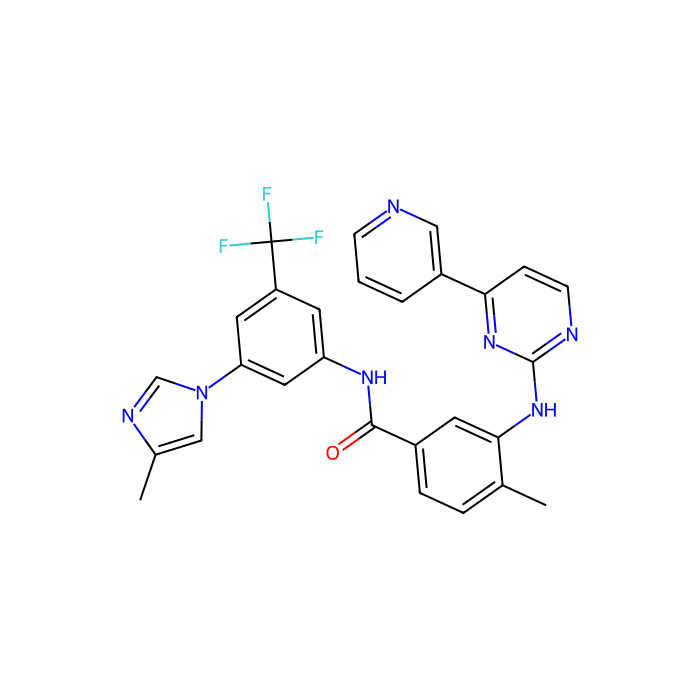
"}

Nilotinib (AMN-107) - Moligand™, 10mM in DMSO , Inhibitor of ABL proto-oncogene 1; non-receptor tyrosine kinase;Inhibitor of discoidin domain receptor tyrosine kinase 1;Inhibitor of discoidin domain receptor tyrosine kinase 2, CAS No.641571-10-0, Inhibitor of ABL proto-oncogene 1; non-receptor tyrosine kinase;Inhibitor of discoidin domain receptor tyrosine kinase 1;Inhibitor of discoidin domain receptor tyrosine kinase 2

Em stock
SKU
N408607
Items de produto agrupado
Nome do produto Qtd
[N408607-1ml] Nilotinib (AMN-107)
47,90 US$

Bcr-Abl Inhibitors

Information

Nilotinib (AMN-107) Nilotinib (AMN-107) is a selective Bcr-Abl inhibitor with IC50 less than 30 nM in Murine myeloid progenitor cells. Nilotinib induces autophagy through AMPK activition.
In vitro

Nilotinib inhibits proliferation, migration, and actin filament formation, as well as the expression of α-SMA and collagen in activated HSCs. Nilotinib induces apoptosis of HSCs, which is correlated with reduced bcl-2 expression, increases p53 expression, cleavage of PARP, as well as increases expression of PPARγ and TRAIL-R. Nilotinib also induces cell cycle arrest, accompanied by increased expression of p27 and downregulation of cyclin D1. Interestingly, Nilotinib not only inhibits activation of PDGFR, but also TGFRII through Src. Nilotinib significantly inhibits PDGF and TGFβ-simulated phosphorylation of ERK and Akt. Furthermore, PDGF- and TGFβ-activated phosphorylated form(s) of Abl in human HSCs are inhibited by Nilotinib. Nilotinib inhibits most imatinib-resistant Bcr-Abl mutations, except for T315I. Nilotinib inhibits PDGF-DD-mediated ERK1/2 activation, basal and PDGF-DD-mediated activation of PDGFRβ and Akt, and schwannoma proliferation. Nilotinib is more potent than imatinib, exerting its maximal inhibitory effect at concentrations lower than steady-state trough plasma levels. Nilotinib also significantly reduces the expression levels of the genes for TGF-β1 and platelet-derived growth factor (PDGF). Nilotinib treatment also significantly inhibits the PDGF-induced proliferation of lung fibroblasts. Nilotinib inhibits the proliferation of Ba/F3 cells expressing p210- and p190-Bcr-Abl, or K562 and Ku-812F cells with IC50 values ≤12 nM.

In vivo

Nilotinib reduces collagen deposition and α-SMA expression in CCl4 and BDL-induced fibrosis. Nilotinib could induce HSC undergoing apoptosis, which is correlated with downregulation of bcl-2. Nilotinib attenuates the extent of lung injury and fibrosis. Nilotinib therapy significantly reduces the levels of hydroxyproline on days 14 and 21, which is accompanied by decreased expression levels of transforming growth factor (TGF)-β1 and PDGFRβ. AMN107 prolongs survival of mice injected with Bcr-Abl-transformed hematopoietic cell lines or primary marrow cells, and prolongs survival in imatinib-resistant CML mouse models.
Cell Data

cell lines:

Concentrations:1-10 μM

Incubation Time:72 hours

Powder Purity:≥99%

Mais informação

Mais informação
CAS641571-10-0
Concentração10mM in DMSO
Sinónimos4-methyl-N-(3-(4-methyl-1H-imidazol-1-yl)-5-(trifluoromethyl)phenyl)-3-(4-(pyridin-3-yl)pyrimidin-2-ylamino)benzamide
Especificações e purezaMoligand™, 10mM in DMSO
Condições de armazenamento de armazenamentoStore at -80°C
Enviado emDry ice packs + Cold packs
Product Description

Information

Nilotinib (AMN-107) Nilotinib (AMN-107) is a selective Bcr-Abl inhibitor with IC50 less than 30 nM in Murine myeloid progenitor cells. Nilotinib induces autophagy through AMPK activition.
In vitro

Nilotinib inhibits proliferation, migration, and actin filament formation, as well as the expression of α-SMA and collagen in activated HSCs. Nilotinib induces apoptosis of HSCs, which is correlated with reduced bcl-2 expression, increases p53 expression, cleavage of PARP, as well as increases expression of PPARγ and TRAIL-R. Nilotinib also induces cell cycle arrest, accompanied by increased expression of p27 and downregulation of cyclin D1. Interestingly, Nilotinib not only inhibits activation of PDGFR, but also TGFRII through Src. Nilotinib significantly inhibits PDGF and TGFβ-simulated phosphorylation of ERK and Akt. Furthermore, PDGF- and TGFβ-activated phosphorylated form(s) of Abl in human HSCs are inhibited by Nilotinib. Nilotinib inhibits most imatinib-resistant Bcr-Abl mutations, except for T315I. Nilotinib inhibits PDGF-DD-mediated ERK1/2 activation, basal and PDGF-DD-mediated activation of PDGFRβ and Akt, and schwannoma proliferation. Nilotinib is more potent than imatinib, exerting its maximal inhibitory effect at concentrations lower than steady-state trough plasma levels. Nilotinib also significantly reduces the expression levels of the genes for TGF-β1 and platelet-derived growth factor (PDGF). Nilotinib treatment also significantly inhibits the PDGF-induced proliferation of lung fibroblasts. Nilotinib inhibits the proliferation of Ba/F3 cells expressing p210- and p190-Bcr-Abl, or K562 and Ku-812F cells with IC50 values ≤12 nM.

In vivo

Nilotinib reduces collagen deposition and α-SMA expression in CCl4 and BDL-induced fibrosis. Nilotinib could induce HSC undergoing apoptosis, which is correlated with downregulation of bcl-2. Nilotinib attenuates the extent of lung injury and fibrosis. Nilotinib therapy significantly reduces the levels of hydroxyproline on days 14 and 21, which is accompanied by decreased expression levels of transforming growth factor (TGF)-β1 and PDGFRβ. AMN107 prolongs survival of mice injected with Bcr-Abl-transformed hematopoietic cell lines or primary marrow cells, and prolongs survival in imatinib-resistant CML mouse models.
Cell Data

cell lines:

Concentrations:1-10 μM

Incubation Time:72 hours

Powder Purity:≥99%

Número CE700-544-5
Fórmula molecularC28H22F3N7O

Revisões

Avaliações dos Clientes

Shall we send you a message when we have discounts available?

Remind me later

Thank you! Please check your email inbox to confirm.

Oops! Notifications are disabled.

Copyright © 2023-present Aladdin Scientific Corp All rights reserved.