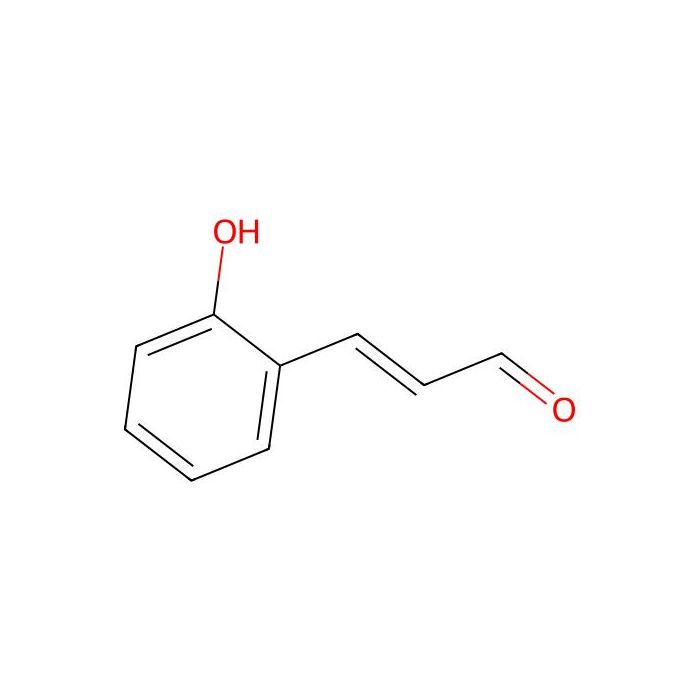
This compound belongs to the class of organic compounds known as cinnamaldehydes. These are organic aromatic compounds containing a cinnamlaldehyde moiety, consisting of a benzene and an aldehyde group to form 3-phenylprop-2-enal.
External Descriptors
Not available
1. Djoumbou Feunang Y, Eisner R, Knox C, Chepelev L, Hastings J, Owen G, Fahy E, Steinbeck C, Subramanian S, Bolton E, Greiner R, and Wishart DS. ClassyFire: Automated Chemical Classification With A Comprehensive, Computable Taxonomy. Journal of Cheminformatics, 2016, 8:61.
Determine the necessary mass, volume, or concentration for preparing a solution.
Dilution Calculator
Determine the dilution needed to prepare a stock solution.
Reconstitution Calculator
Revisões
Avaliações dos Clientes
Application Protocols
No application protocols (e.g., WB, IHC, IF, FC) apply to this small-molecule reagent. For synthetic or analytical uses, refer to the Reaction Conditions and Synthetic Utility sections for generalized procedures. If you require a protocol for a specific transformation (e.g., imine formation, Knoevenagel condensation), adapt the guidance provided there to your scale and setup, and consult primary literature for optimization.
Biological Roles
No biological activity or roles are specified for this catalog item. The following is general, literature-based context for phenolic, α,β-unsaturated aromatic aldehydes and should not be construed as product-specific performance or suitability.
Literature/general context:
Chemical reactivity toward biomolecules: The α,β-unsaturated carbonyl can undergo Michael addition with nucleophilic thiols and amines, forming reversible or irreversible adducts under certain conditions. The ortho phenolic OH can engage in hydrogen bonding and metal chelation when converted to imine/Schiff-base derivatives, commonly used as model ligands in bioinorganic chemistry.
Occurrence: Hydroxy-substituted cinnamaldehyde derivatives are reported as plant secondary metabolites in various species, contributing to aroma and defense chemistry (literature). Specific natural occurrence of the 2-hydroxy isomer varies by source; not specified for this item.
Analytical handles: Conjugation imparts strong UV absorption in the 280–360 nm region (literature), enabling HPLC/UV detection of derivatives and adducts. Phenolic oxidation can yield quinone-like species under oxidative conditions, relevant to redox studies.
Biotransformations: In biochemical systems, aldehydes may be oxidized to corresponding acids by aldehyde dehydrogenases or reduced to alcohols by reductases (general metabolic fates; literature).
Note: This product is for research use only (per Product Data). No claims are made regarding biological efficacy, safety, or suitability for any clinical or diagnostic application.
Buffer Applications
This compound is not a buffering reagent and is not typically used to prepare pH buffer systems. As a moderately hydrophobic phenolic aldehyde, its limited aqueous solubility and reactive aldehyde functionality make it unsuitable as a primary buffer component.
Practical guidance:
If aqueous handling is required (e.g., bioconjugation studies), dissolve first in a miscible organic co-solvent (EtOH, DMSO, MeCN) and add slowly to buffered aqueous media while monitoring for precipitation and hydrolysis.
Select buffer systems that do not contain strong nucleophiles or high basicity that may consume the aldehyde (avoid primary amine-rich buffers for stability studies unless condensation is intended).
For pH control, choose conventional buffers (phosphate, acetate, HEPES, MOPS) appropriate to your application. No buffer recipes are provided for this item.
Green Alternatives
While the compound itself is a substrate/reagent rather than a solvent, greener choices can be implemented in transformations involving o-hydroxycinnamaldehyde. The goals are to minimize hazardous solvents/catalysts, reduce waste, and use benign activation methods.
Greener media and catalysts (literature/general):
Condensations (imine/Knoevenagel): Use ethanol or water–ethanol mixtures with organocatalysts (L-proline, β-alanine) or simple ammonium acetate in lieu of DMF/DMSO. Employ molecular sieves instead of Dean–Stark where feasible.
Base-promoted O-alkylation: Favor acetone or acetonitrile with K2CO3 over DMF/DMSO; alternatively, apply phase-transfer catalysis in toluene or 2-MeTHF to lower polarity requirements.
Oxidations to acid: Choose catalytic TEMPO/bleach or oxygen-mediated systems with NaCl/NaHCO3 buffer in water–acetonitrile over stoichiometric chromium(VI) reagents.
Reductions: Replace metal hydrides where feasible with catalytic hydrogenation at low pressure or transfer hydrogenation (HCO2NH4/Raney Ni or Pd/C) in ethanol/water.
Energy: Conduct reactions at ambient temperature using micellar catalysis (TPGS-750-M in water) or under solvent-free/mechanochemical conditions when compatible.
Illustrative comparison (literature context):
Conventional: Imine formation in toluene with Dean–Stark and TiCl4 promoter.
Greener: Imine formation in EtOH at room temperature with 3–4 Å MS; no metal promoter, simplified workup.
Trade-offs:
Greener solvents may reduce substrate solubility; heating or small co-solvent charges may be required.
Aqueous systems can hydrolyze imines; ensure continuous water removal or use hydrazines/oximes for higher stability.
Pharmaceutical Uses
No pharmacopeial grade, excipient status, or formulation role is specified for this item; refer to the CoA/Spec Sheet for any quality attributes relevant to regulated work. The compound is offered for research use only.
General, literature-based context for related chemistries:
Synthetic intermediate: Phenolic, α,β-unsaturated aldehydes serve as versatile intermediates in the preparation of heterocycles (e.g., coumarins after oxidation–cyclization), imines/Schiff bases employed as ligands, and extended conjugated scaffolds relevant to materials and discovery chemistry.
Derivatization handles: The aldehyde group enables formation of imines/oximes/hydrazones useful for linker chemistry and pro-moiety exploration in medicinal chemistry campaigns (research-stage). The phenolic OH allows further protection (e.g., MOM, Bn) and diversification (O-alkylation/acylation) to tune physicochemical properties.
Analytical considerations: Strong UV absorbance allows monitoring in HPLC/UV and UV–Vis assays; however, excipient or API roles are not implied.
Regulatory note:
No claims are made for clinical use, safety, or efficacy. If considering use in any regulated context, establish full quality attributes (identity, potency, purity, residual solvents, elemental impurities) and consult applicable pharmacopeial and ICH guidelines. For this catalog item, such attributes are Not specified for this item; refer to CoA/Spec Sheet.
Physical Properties
Item-specific physical specifications have not been provided for this SKU. The following values are typical literature data for 2-hydroxycinnamaldehyde and are offered for general reference only. Do not treat as product specifications.
Item-specific statement:
Appearance: Not specified for this item; refer to CoA/Spec Sheet.
Grade/Purity: Not specified for this item; refer to CoA/Spec Sheet.
Literature/general properties for o-hydroxycinnamaldehyde (reference):
Molecular formula: C9H8O2 (literature)
Molecular weight: 148.16 g/mol (literature)
Physical state: often reported as a pale yellow solid or viscous oil depending on purity and isomeric content (literature)
Melting point: commonly reported ca. 70–80 °C (literature; varies by isomer ratio and purity)
Boiling point: aldehydes of this type may decompose or polymerize before boiling at atmospheric pressure; reduced-pressure distillation is typically used (literature)
Density: values near 1.1 g/mL at 20–25 °C have been reported for related phenolic enals; specific value Not specified for this item; refer to CoA/Spec Sheet. (literature/context)
Refractive index: not widely tabulated for the pure compound; Not specified for this item; refer to CoA/Spec Sheet.
Solubility: sparingly soluble in water; soluble in common organic solvents (EtOH, MeOH, acetone, EtOAc, DCM, THF, DMF, DMSO) (literature)
LogP: expected moderate (conjugated aryl enal with phenol); reported values for analogs ~1.5–2.0; specific value Not specified for this item; refer to CoA/Spec Sheet. (literature/context)
Always confirm exact values for your lot on the supplied CoA/Spec Sheet before use in quantitative work.
Quality and Grades
Item-specific grade, purity, and stabilizer information are not provided for this SKU; refer to the product’s CoA/Spec Sheet for definitive specifications.
Context and guidance (general):
Purity considerations: For aldehydes bearing conjugated double bonds, common impurities include geometric isomer mixtures (E/Z), oxidation products (o-hydroxycinnamic acid), and polymeric/aldol condensation byproducts. High chemical purity and low acid content are important for base- or nucleophile-sensitive transformations (e.g., Wittig, reductive amination, imine formation).
Water content: Trace moisture can suppress imine/Knoevenagel condensations and promote aldehyde hydration. If your application is water-sensitive, verify Karl Fischer values on the CoA. If not specified: Not specified for this item; refer to CoA/Spec Sheet.
Stabilizers: Phenolic aldehydes are sometimes supplied without stabilizers; some vendors add small amounts of acid inhibitors. For this item, stabilizer content is Not specified for this item; refer to CoA/Spec Sheet.
Spectral quality: For spectroscopy-critical work, look for low UV–Vis baseline noise in the 220–400 nm region and clean 1H/13C NMR consistent with a single E or predominant E isomer. Any UV cutoff or HPLC absorbance limits are Not specified for this item; refer to CoA/Spec Sheet.
Grade definitions (general):
AR/ACS grade targets defined assay, trace metals, and residue on ignition suitable for analytical work.
Synthesis grade focuses on practical purity for preparative chemistry.
HPLC grade emphasizes low UV background and minimal nonvolatile residue.
Recommendation: Match the grade to your intended reaction sensitivity and consult the CoA for your lot.
Reaction and Applications
o-Hydroxycinnamaldehyde is a versatile electrophilic and nucleophile-tunable building block. Conjugation across Ar–CH=CH–CHO with an ortho phenol enables rich reactivity and intramolecular hydrogen bonding that can modulate selectivity.
Imine/oxime/schiff-base ligand synthesis: Condensation with primary amines or hydrazines affords salicylidene-type imines and azomethines. The ortho-OH supports intramolecular H-bonding, creating stable ONN/ON/O donor ligands for metal complexation, asymmetric catalysis models, and materials precursors.
Knoevenagel/Aldol condensations: As an aldehyde component with active methylenes (malononitrile, ethyl cyanoacetate, Meldrum’s acid) under basic or ammonium acetate catalysis to give extended conjugated systems. The phenolic OH can participate in hydrogen-bond-assisted catalysis.
Michael chemistry and conjugate addition: Though primarily an electrophile at the carbonyl, the α,β-unsaturated system can act as a Michael acceptor toward soft nucleophiles (thiols, amines), useful for probe attachment and polymer modification in materials chemistry.
O-Functionalization: Deprotonation of the phenolic OH (K2CO3, Cs2CO3) enables O-alkylation/acylation to mask the phenol, tune electronics, or install handles for further cross-coupling.
Oxidation to acid and cyclization: Oxidize to o-hydroxycinnamic acid (e.g., TEMPO/NaOCl, KMnO4; literature) followed by dehydrative cyclization (e.g., PPA, SOCl2-mediated pathways) to access coumarin frameworks.
Reductive transformations: Selective reduction of the aldehyde (NaBH4) affords the allylic alcohol; catalytic hydrogenation reduces C=C and/or C=O to give saturated alcohols/aldehydes depending on conditions.
Use cases in synthesis:
Precursor to fluorescent coumarins and chalcone-like scaffolds.
Building block for salen/salophen-type ligand elaboration (after appropriate condensations).
Reaction Conditions
The following are literature-derived, generalized conditions for common transformations involving o-hydroxycinnamaldehyde. They are guidance only and not product specifications.
Imine formation (Schiff base):
Typical: Aldehyde (1.0 eq) + primary amine (1.05–1.2 eq) in EtOH or MeOH (0.1–0.5 M), 3–4 Å molecular sieves, rt to 50 °C, 2–16 h. Catalytic AcOH (0.1 eq) can accelerate. Isolate by filtration or concentration; yields commonly 70–95% (literature).
Oxime/hydrazone:
Hydroxylamine·HCl (1.2 eq) or hydrazine derivative, pyridine or NaOAc buffer (pH ~5–6), EtOH/H2O, rt to 50 °C, 1–6 h; 70–95% (literature).
Knoevenagel condensation:
With malononitrile or ethyl cyanoacetate (1.1–1.5 eq), piperidine (10–20 mol%) or ammonium acetate (1.5 eq) in EtOH or toluene, rt to reflux, 2–12 h; 60–95% typical (literature). Water–EtOH with L-proline (10 mol%) is a greener option.
O-Alkylation (phenoxide formation):
K2CO3 (2–3 eq) in acetone or MeCN (0.1–0.3 M); add alkyl halide (1.2–1.5 eq) at 0–25 °C, then warm to reflux as needed, 2–8 h; 60–90% (literature). For hindered electrophiles, use Cs2CO3/DMF.
Selective reductions:
Luche: NaBH4 (1.2 eq), CeCl3·7H2O (1.5 eq) in MeOH at 0–5 °C to rt, 0.5–2 h → allylic alcohol; 70–90% (literature).
Catalytic hydrogenation: 5–10% Pd/C (5–10 wt%), EtOH/EtOAc, 1–3 atm H2, rt to 40 °C, 1–6 h → saturation of C=C and/or C=O depending on conditions.
Oxidation to acid:
TEMPO (5 mol%), NaCl/NaOCl (pH 9–10, NaHCO3 buffer) in MeCN/H2O, 0–25 °C, 1–3 h → o-hydroxycinnamic acid; 70–90% (literature). Alternative: KMnO4 in acetone/H2O under controlled addition.
Notes:
Maintain inert atmosphere to limit aerial oxidation/polymerization for sensitive steps.
Control base strength to avoid self-condensation or over-reaction at the enal moiety.
Safety and Handling
Hazard Classification (item-specific):
Signal word: Not specified for this item; refer to SDS.
GHS hazard statements/pictograms: Not specified for this item; refer to SDS.
General safety considerations for phenolic, α,β-unsaturated aldehydes (literature/good practice):
Irritation/Sensitization: Aldehydes are typically skin/eye irritants; phenolic OH can increase dermal/ocular irritation. Avoid inhalation of vapors and contact with skin/eyes.
Reactivity: The α,β-unsaturated carbonyl can undergo Michael addition with nucleophiles (e.g., thiols, amines); keep away from strong nucleophiles except as intended. The phenolic OH is weakly acidic and may react with strong bases; aldehydes can oxidize to the corresponding acids on air exposure.
Peroxide formation: Not a peroxide-forming solvent; however, oxidation of aldehyde to acid is a more relevant degradation pathway.
Incompatibilities: Strong bases (can cause aldol/self-condensation/polymerization), strong oxidizers (rapid oxidation), strong reducing agents (can reduce the aldehyde), acid/base catalysts may induce side reactions.
PPE and handling:
Wear safety glasses or face shield, lab coat, and appropriate chemical-resistant gloves (e.g., nitrile). Use in a fume hood to minimize exposure.
First aid (general): In case of skin/eye contact, rinse with water for at least 15 minutes. If inhaled, move to fresh air. If ingested, rinse mouth; do not induce vomiting; seek medical attention. Always follow institutional protocols.
Storage/transport notes:
Store tightly closed at room temperature (per Product Data), preferably under inert gas and away from light to limit oxidation. Consult the product SDS for authoritative safety information.
Solvent Selection
This compound is a moderately polar, conjugated aromatic aldehyde with a phenolic OH. It is not used as a solvent; instead, select appropriate media to dissolve and react it efficiently.
Polarity/solubility profile (literature/general):
Miscibility: Soluble in polar protic and aprotic organic solvents (EtOH, MeOH, acetone, EtOAc, DCM, THF, DMF, DMSO). Sparingly soluble in water due to the hydrophobic aryl backbone.
Acid–base behavior: The phenolic OH (pKa typically ~10 for salicyl-type systems; literature context) is deprotonated by bases (K2CO3, NaH), enabling O-alkylation/acylation in polar aprotic solvents (DMF, DMSO, acetone, MeCN).
Choosing a solvent by application (general guidance):
Imine/oxime formation and reductive amination: Absolute EtOH/MeOH, toluene with Dean–Stark, or MeCN with 3–4 Å molecular sieves to remove water and drive equilibrium.
Knoevenagel/aldol condensations: EtOH, i-PrOH, or toluene with secondary amine base (piperidine) or ammonium acetate; greener alternatives include water–ethanol mixtures with L-proline or ammonium salts (see Green Alternatives).
Wittig/HWE olefinations (when used as electrophile partner or analog development): Dry THF or toluene under inert atmosphere.
O-alkylation/acylation of the phenol: Acetone, MeCN, or DMF with K2CO3 or Cs2CO3; use phase-transfer catalysts for less polar media.
Reductions (NaBH4, catalytic hydrogenation): Alcoholic solvents (MeOH/EtOH) for borohydride; EtOAc/EtOH or THF/EtOH blends for catalytic hydrogenation.
Comparison (literature context):
EtOH vs DMF: EtOH is greener and often sufficient for condensations; DMF provides higher solubility and base compatibility but has disposal concerns.
Toluene vs MeCN: Toluene allows azeotropic water removal; MeCN offers higher polarity for rate acceleration without strong hydrogen-bonding.
Storage and Reconstitution
Storage conditions (item-specific):
Store at room temperature (per Product Data). Keep container tightly closed in a dry, well-ventilated place.
Best practices (general for phenolic aldehydes):
Atmosphere: To minimize oxidation (to o-hydroxycinnamic acid) and polymerization, store under inert gas (N2/Ar) after opening and limit headspace. Consider amber glass to reduce light exposure.
Moisture/light: Protect from moisture; use desiccant. Phenolic aldehydes can hydrate at the carbonyl in the presence of water and can slowly oxidize in air/light.
Stability: Avoid prolonged exposure to strong bases or acids in storage. Check for changes in appearance, odor, or TLC/HPLC profile before critical use.
Reconstitution/handling:
If supplied as a solid, dissolve in an appropriate dry organic solvent (e.g., EtOH, MeCN, THF, DCM, DMF, or DMSO) to prepare stock solutions. For water-incompatible reactions, ensure solvents are anhydrous.
If supplied as a liquid, use dry syringes/pipettes; purge the headspace with inert gas after each use.
Stock solution guidance: Prepare single-use aliquots to minimize repeated air/moisture exposure. Store solutions at 2–8 °C or −20 °C as appropriate for the solvent and application; verify solution stability empirically.
Shipping:
Shipped-in conditions are Not specified for this item; refer to CoA/Spec Sheet.
Research use note:
For research use only (per Product Data). Not for human or veterinary use.
Structure and Identity
o-Hydroxycinnamaldehyde (2-hydroxycinnamaldehyde) is a phenolic, conjugated aromatic aldehyde featuring an ortho-hydroxyl substituent relative to the styryl aldehyde side chain. The molecule consists of a benzene ring bearing an OH group adjacent (ortho) to a trans-α,β-unsaturated aldehyde (–CH=CH–CHO), enabling intramolecular O–H···O═CH hydrogen bonding and pronounced conjugation across the aryl–vinyl–carbonyl framework.
SKU: O709630
CAS: 60125-23-7
PubChem CID: 5318169 (literature identifier)
InChIKey: Not specified for this item; refer to CoA/Spec Sheet.
SMILES: Not specified for this item; refer to CoA/Spec Sheet.
Structural features (general/literature description):
Ring systems: single benzene ring; no heteroaromatic rings.
Stereochemistry: typically the styryl double bond occurs as the E (trans) isomer in literature samples; configurational detail for this item is Not specified for this item; refer to CoA/Spec Sheet.
2D description: a benzene ring with OH at C2 and a –CH=CH–CHO chain at C1; the OH can hydrogen-bond to the aldehyde oxygen, often stabilizing a quasi-planar conformation that enhances conjugation and influences spectroscopy and reactivity.
Compositional identifiers (literature):
Molecular formula (literature): C9H8O2
Molecular weight (literature): 148.16 g/mol
Note: Exact identifiers and any isomeric composition for the supplied item are Not specified for this item; refer to CoA/Spec Sheet.
Synthetic Utility
Key reactive elements and strategic value (literature/general):
Electrophilicity at C=O: Facilitates formation of imines/oximes/hydrazones; compatible with reductive amination for accessing benzylic/allylic amines. The conjugated enal can also engage in 1,2- vs 1,4-addition, tunable by catalyst/conditions.
Conjugated alkene: Allows Michael-type conjugate additions (soft nucleophiles), Diels–Alder (as a dienophile in select cases), and stereoselective reductions (e.g., Luche reduction to allylic alcohol).
Phenolic OH (ortho): Enables directed ortho-metalation of the aryl ring after protection; serves as a handle for O-alkylation/acylation and for intramolecular H-bonding that can control conformation/reactivity; precursor to salicylidene ligands upon imine formation.
Knoevenagel condensations with active methylenes (malononitrile, cyanoacetates) to extend conjugation; often catalyzed by piperidine, ammonium acetate, or L-proline in EtOH.
Wittig/Horner–Wadsworth–Emmons: Although itself an aldehyde, it participates in related sequences where the phenolic aryl unit is preinstalled and the aldehyde is further elaborated.
Oxidation to o-hydroxycinnamic acid followed by dehydrative cyclization to coumarins (e.g., via PPA or SOCl2-mediated steps) for fluorophores and materials science.
Selective reductions: NaBH4 or Luche (NaBH4/CeCl3) to allylic alcohol; catalytic hydrogenation to saturated aldehyde/alcohol.
Protection strategies: Phenol protection (Bn, MOM) to enable base- or metalation-intensive steps; aldehyde protection as acetal for orthogonal multi-step sequences.
Retrosynthetic value:
Serves as a convergent node linking salicyl-derived aryl fragments with enal electrophilicity, enabling rapid access to coumarins, chalcones, and salicylidene-derived ligands.
Target Specificity
Not applicable. This product is a small-molecule chemical reagent, not a biological targeting reagent (e.g., antibody, aptamer, inhibitor with defined target claims). No antigen, epitope, species reactivity, clone, or isotype information applies.
Perguntas frequentes
What is the purity of this product?
This product is supplied at ≥95% purity (chemical assay). Lot-specific values are stated on the Certificate of Analysis.
How should this product be stored?
Store at room temperature.
What are the CAS number, molecular formula and molecular weight?
The CAS Number is 60125-23-7, the molecular formula is C9H8O2, and the molecular weight is 148.16 g/mol. InChIKey BSDNZCQPDVTDET-HWKANZROSA-N.
What documentation is provided?
Available product documentation, including Certificates of Analysis (COA), Safety Data Sheets (SDS), and specification sheets, is shown in the product document area. Document availability and access follow the current site policy.
We use cookies to ensure the website functions properly and, where permitted, to improve your experience. You can manage your preferences at any time in Settings. Learn more in our Cookie Policy.
Shall we send you a message when we have discounts available?
Remind me later
Thank you! Please check your email inbox to confirm.
Products are supplied to verified businesses, institutions, and qualified professionals for research and development use only. Not for use in humans, animals, diagnosis, or therapy.