GRAU & PUREZAMoligand™?Moligand™ — Aladdin's line of ligands and bioactive small molecules. Use for receptor, pathway, and binding studies needing defined small-molecule tools.≥98%
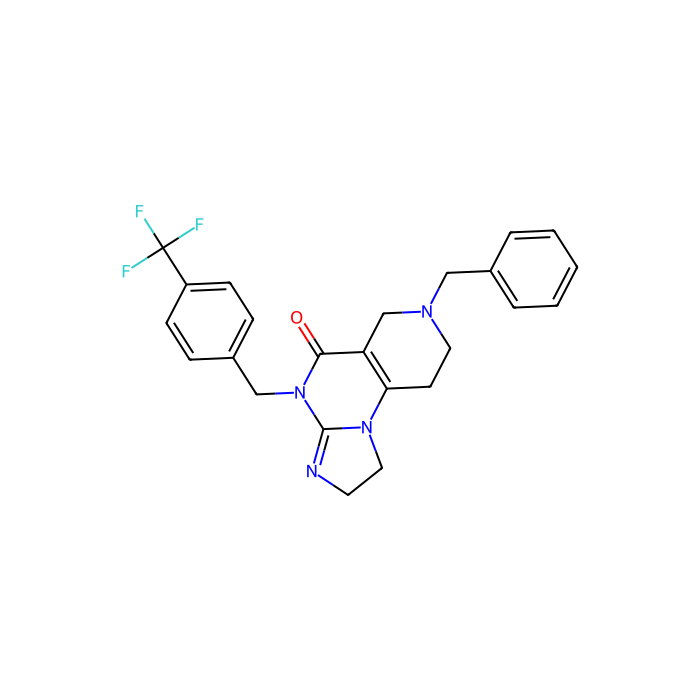
This compound belongs to the class of organic compounds known as trifluoromethylbenzenes. These are organofluorine compounds that contain a benzene ring substituted with one or more trifluoromethyl groups.
External Descriptors
Not available
1. Djoumbou Feunang Y, Eisner R, Knox C, Chepelev L, Hastings J, Owen G, Fahy E, Steinbeck C, Subramanian S, Bolton E, Greiner R, and Wishart DS. ClassyFire: Automated Chemical Classification With A Comprehensive, Computable Taxonomy. Journal of Cheminformatics, 2016, 8:61.
Determine the necessary mass, volume, or concentration for preparing a solution.
Dilution Calculator
Determine the dilution needed to prepare a stock solution.
Reconstitution Calculator
Revisões
Avaliações dos Clientes
Application Protocols
No vendor-validated application protocols are provided for this item. The following are general, non-item-specific practices for small-molecule tool compounds.
Stock solution preparation:
Equilibrate vial to room temperature in a desiccated environment before opening.
Prepare a concentrated stock in dry DMSO (commonly 10–50 mM as solubility allows). Actual solubility for ONC212 is not specified—determine empirically.
Aliquot into low-bind microtubes, flush headspace with inert gas if feasible, and store at −20°C.
Working solution preparation:
Dilute the DMSO stock into assay buffer or media with rapid mixing to avoid precipitation. Keep final DMSO within your assay’s tolerance (often ≤0.1–1% v/v).
For cell assays, pre-warm media and add compound last; include vehicle controls.
Quality controls:
Verify concentration by UV or LC where applicable; confirm integrity by UPLC/LC–MS at initial use and periodically for stored stocks.
Inspect visually for precipitation or color change; discard if instability is detected.
Documentation: Record batch/lot number, preparation date, solvent, and storage conditions to ensure traceability.
These steps are intended as practical handling guidance and are not validated specifically for ONC212 in this listing.
Biological Roles
The product data list ONC212 as a small-molecule library compound for research use. Specific biological targets, pathways, and potencies are not provided in this listing. The following points provide non-item-specific guidance for tool-compound use.
Functional class: Research ligand/tool compound. Exact target profile, binding mode, and selectivity should be confirmed from primary literature or databases using the provided CAS or CID before experimental deployment.
Assay contexts: Common use cases for such compounds include biochemical target engagement assays, cell-based phenotypic screening, and mechanistic pathway studies. Validate identity and purity prior to use.
Controls: Employ positive and negative controls appropriate to the hypothesized pathway. Titrate across a broad concentration range to capture potency and cytotoxicity windows. Record vehicle effects (e.g., DMSO) with matched controls.
Stability and adsorption: Confirm stability in assay media and adsorption to plastics/glass; pre-blocking or using low-bind plastics may be beneficial for hydrophobic compounds.
Data integrity: Correlate nominal concentrations with measured free concentrations where possible (equilibrium dialysis, microscale solubility checks) to avoid misinterpreting activity due to precipitation or binding to serum proteins.
Important: No therapeutic or clinical claims are made for this product. All use is for laboratory research only. Consult the SDS and CoA for safety and identity, and consult primary literature for any target-specific hypotheses prior to experimental work.
Buffer Applications
Not typically applicable. ONC212 is a discrete small-molecule tool compound and is not used as a buffering agent or buffer component.
Practical notes for assay buffers (general):
Prepare working solutions by diluting an organic stock (commonly DMSO) into your assay buffer with vigorous mixing to prevent local supersaturation. Maintain final DMSO within assay tolerance (often ≤0.1–1% v/v).
Choose buffer components (e.g., HEPES, PBS, Tris) that are known to be compatible with your biological system and do not chemically react with the compound (avoid nucleophilic amines or reactive species if the compound is suspected to be labile). These are general considerations and not specific to this item.
Green Alternatives
Green solvent or reagent substitution is not generally applicable because ONC212 is offered as a discrete small-molecule analyte/tool compound rather than as a process solvent or auxiliary. There are no direct “green alternatives” to a specific bioactive structure.
If your goal is to minimize environmental impact in handling ONC212 solutions, consider greener diluents when compatible with your assay (e.g., aqueous buffers with minimal DMSO, ethanol where permissible) and microplate formats that reduce solvent volumes.
For synthetic campaigns involving analog generation, apply green chemistry principles to route design: solvent selection guides (e.g., CHEM21, GSK solvent guide), catalytic vs. stoichiometric methods, solvent recycling, and minimizing protecting groups. These considerations are outside the scope of this specific catalog item.
Bottom line: No structural substitute can replace ONC212’s identity in assays. Focus on greener handling logistics and solvent minimization during preparation and screening.
Pharmaceutical Uses
This product is provided strictly for research use and is not an excipient or an approved pharmaceutical ingredient. No clinical or therapeutic uses are claimed or implied.
Context for discovery workflows (general, non-item-specific):
Screening/Profiling: Suitable for in vitro pharmacology, biochemical screening, and cell-based assays as a reference or exploratory tool compound once identity/purity are confirmed.
Formulation research: For preclinical formulation studies (e.g., solubility enhancement or delivery vehicle comparisons), small-scale vehicles such as DMSO, aqueous cosolvent systems (DMSO/PEG400/saline), or cyclodextrin complexes may be explored—subject to compatibility with the intended biological model. These considerations are generic and must be validated for ONC212 specifically.
Regulatory status: Not pharmacopeial; no GMP/clinical documentation is provided in this listing.
Reminder: For any work beyond bench-scale research (e.g., in vivo animal studies), ensure institutional approvals and use only after confirming detailed analytical quality from the CoA. Do not use in humans.
Physical Properties
Item-specific physicochemical constants are not provided in this listing. Do not assume values—verify against the CoA or primary literature before designing experiments that depend on exact properties.
Appearance: Not specified for this item; refer to CoA/Spec Sheet.
Melting point (MP): Not specified for this item; refer to CoA/Spec Sheet.
Boiling point (BP): Not applicable/undetermined for a non-volatile solid; specific value not specified for this item; refer to CoA/Spec Sheet.
Density: Not specified for this item; refer to CoA/Spec Sheet.
Solubility: Not specified for this item; refer to CoA/Spec Sheet.
LogP / LogD: Not specified for this item; refer to CoA/Spec Sheet.
pKa: Not specified for this item; refer to CoA/Spec Sheet.
Refractive index: Not applicable for solids; not specified for this item.
General guidance for small-molecule library members (non-item-specific):
Many drug-like small molecules are supplied as crystalline or amorphous solids with good solubility in polar aprotic organics (e.g., DMSO) and variable aqueous solubility once diluted into buffered media. However, this is not guaranteed for ONC212; confirm experimentally on receipt.
For assay preparation, determine solubility and stability in intended vehicles (e.g., DMSO, ethanol, aqueous buffers) by small-scale tests and analytical follow-up (HPLC/UPLC).
Quality and Grades
Grade/Purity: Moligand™ (per product data). This designation indicates the item is offered as a small-molecule screening ligand/compound suitable for research discovery workflows. It is not a clinical-grade or GMP material.
What this means in practice:
Produced and packaged for in vitro/in vivo research use only; not for human or veterinary administration.
Typical expectations for Moligand™-type listings include identity confirmation and purity appropriate for screening and lead-profiling work; however, exact minimum purity, residual solvent limits, metals, water, or stabilizer specifications are item-specific and are not listed here.
For chromatography- or bioassay-critical use, request the current CoA and/or analytical package (e.g., HPLC trace, LC–MS, NMR) to confirm suitability.
Item-specific notes:
Purity (%, assay), residual solvents, water content (Karl Fischer), metals, UV cutoff, stabilizers: Not specified for this item; refer to CoA/Spec Sheet.
Recommendations:
For structure-activity relationship (SAR) or screening campaigns, consider qualification upon receipt: orthogonal purity (HPLC/UPLC), identity (HRMS, 1H/13C NMR), and stability in your storage solvent (e.g., DMSO) under intended conditions.
If using in cell-based assays, confirm endotoxin is not a concern for your protocol; endotoxin status is not specified for this item.
Reaction and Applications
This product is supplied as a small-molecule library compound for discovery research and is not positioned as a synthetic reagent. Consequently, classic synthetic “reaction applications” (e.g., as a catalyst, coupling partner, or solvent) are not typically applicable.
If chemical modification or derivatization of ONC212 is envisaged (e.g., for probe development, biotinylation, photoaffinity handles), first obtain a definitive structure and functional group map from the CoA/literature, then develop bespoke routes. No item-specific functional reactivity is provided in this listing.
For assay applications, see “Biological Roles,” “Application Protocols,” and “Storage & Reconstitution” for practical, non-synthetic guidance.
Summary: Use ONC212 primarily as a research ligand or tool compound. For synthetic use, proceed only after confirming full structure and reactivity profile from primary sources.
Reaction Conditions
Not applicable in the conventional sense. This product is not offered as a reagent or catalyst, and no synthetic reaction conditions are specified.
For preparation of assay solutions (general laboratory conditions, not item-specific):
Stock preparation: Weigh quickly, minimize atmospheric moisture exposure, and dissolve in a dry, appropriate solvent (commonly DMSO) to a convenient concentration (e.g., 10 mM). Actual solubility for ONC212 is not specified—verify experimentally.
Dilution: Add the organic stock to aqueous buffer with rapid mixing to reach the desired working concentration while limiting final organic content (e.g., ≤0.1–1% DMSO as assay permits).
Filtration: If particulate matter persists, sterile-filter through a low-protein-binding membrane (e.g., PTFE or PVDF, solvent-compatible) before biological assays.
Stability checks: Confirm concentration and integrity by UPLC/LC–MS after preparation and after storage under intended conditions.
Always adapt to your specific assay and confirm compatibility; these are general handling conditions rather than chemical reaction conditions.
Safety and Handling
Safety data for this specific listing are not provided in the product data. Always consult the SDS for authoritative hazard information before use.
GHS Classification / Pictograms / Signal Word / H-Statements: Not specified for this item; refer to SDS.
Primary hazards: Unknown for this listing; treat as a potentially harmful small molecule. Avoid inhalation, ingestion, skin and eye contact.
PPE: Lab coat, safety glasses or chemical splash goggles, and appropriate chemically resistant gloves (e.g., nitrile). Work in a fume hood to minimize exposure.
Handling: Avoid dust/aerosol generation. Use closed transfer where possible. For solutions in DMSO or other solvents, prevent skin contact—many small molecules are readily absorbed dermally.
Storage incompatibilities: Keep separate from strong oxidizers and strong acids/bases unless known to be compatible. Protect from moisture and light until stability is verified.
First aid (overview): If on skin, wash with soap and water. If in eyes, rinse cautiously with water for several minutes and seek medical attention. If inhaled, move to fresh air; if ingested, seek medical attention. Provide SDS to responders.
Spill response: Absorb small spills with inert absorbent (e.g., vermiculite), collect in suitable waste container, and decontaminate area. Avoid creating dust.
Waste disposal: Collect solid/solution waste as hazardous organic waste per institutional and regulatory guidelines.
Per product data—Storage: Store at −20°C. Shipments are supplied cold (ice chest + ice pads). Allow to equilibrate in a desiccated environment before opening to avoid condensation.
Solvent Selection
No item-specific solubility data are provided. The following guidance is general for drug-like small molecules and should be validated empirically for ONC212.
Stock solutions: Many screening compounds are prepared as concentrated DMSO stocks (e.g., 10–50 mM) due to broad solvating power. For this item, actual solubility is not specified—determine experimentally.
Cosolvents: If aqueous delivery is needed, typical approaches include serial dilution of a DMSO stock into buffered media, maintaining final DMSO at ≤0.1–1% v/v as your assay tolerates. Alternatives: ethanol, PEG400, or aqueous buffer with surfactant (e.g., 0.01–0.1% Tween-20) as compatible with your biology.
pH effects: Without pKa and ionization data, avoid extreme pH until stability/solubility are known. Screen pH 6–8 first for biochemical assays.
Compatibility: Verify no precipitation upon dilution. Use visual inspection and analytical confirmation (UV/Vis, UPLC) after preparing working concentrations.
Drying and water sensitivity: Not specified for this item. If hygroscopicity is unknown, handle quickly at ambient humidity and recap under dry conditions. Consider storing aliquots as anhydrous DMSO solutions at −20°C to minimize freeze–thaw.
When to choose alternative solvents:
If DMSO is incompatible with your assay, evaluate DMF or ethanol for stock preparation, then dilute into aqueous buffer with immediate mixing. Always confirm target and assay component compatibility.
Storage and Reconstitution
Storage conditions (per product data): Store at −20°C. Shipped in an ice chest with ice pads.
Best practices for small-molecule library solids (general, not item-specific):
Keep the container tightly closed in a dry, inert atmosphere. If hygroscopicity is unknown, minimize time at ambient humidity; consider a desiccator or dry cabinet.
Protect from light until photostability is confirmed.
For repeated use, prepare single-use aliquots to limit freeze–thaw and headspace moisture ingress.
Reconstitution guidance (verify experimentally for ONC212):
Allow vial to equilibrate to room temperature before opening to avoid condensation.
Dissolve the required amount in a dry, suitable solvent (commonly anhydrous DMSO) to make a convenient stock (e.g., 10 mM). Actual solubility for this item is not specified; adjust concentration accordingly.
Filter sterilize if required for biological assays using solvent-compatible, low-bind membranes (PTFE/PVDF for organic stocks; PES for aqueous dilutions).
Store aliquoted stocks at −20°C or below. Avoid multiple freeze–thaw cycles. Track cumulative time at room temperature during handling.
Specifications not provided for this item:
Stabilizers, water/peroxide/metal limits, and exact shelf life are not specified for this item; refer to CoA/Spec Sheet and SDS for authoritative guidance.
Structure and Identity
Brief overview: ONC212 is listed as a small-molecule library member (Moligand™). The product data do not include definitive structural descriptors for this specific catalog entry.
Product Name: ONC212 (SKU: O401720)
CAS: 1807861-48-8 (per product data)
PubChem CID: 124085867 (per product data)
InChIKey: 62285 (per product data; note that this is not a full-length InChIKey string)
SMILES: Not specified for this item; refer to CoA/Spec Sheet.
Molecular Formula: Not specified for this item; refer to CoA/Spec Sheet.
Molecular Weight: Not specified for this item; refer to CoA/Spec Sheet.
Structural features (general):
The detailed 2D/3D structure, ring systems, and functional groups for this exact lot/listing are not provided in the product data. For structural confirmation, consult the certificate of analysis or authoritative databases using the CAS or CID above.
Notes:
If using this compound as a screening ligand or reference standard, verify identity (e.g., by NMR, LC–MS) against a trusted structure source prior to critical applications.
All structure-related statements above are constrained to the provided product data to avoid over-specification.
Synthetic Utility
Not typically applicable. ONC212 is supplied as a finished small-molecule library compound for biological evaluation, not as a building block or reagent for routine organic synthesis.
If derivatization is contemplated (general guidance):
Obtain the definitive structure and functional groups from the CoA/literature (the current product data do not list SMILES/InChI). Map potential handles for linker installation or reporter tags.
Evaluate stability toward standard transformations (e.g., amidation, carbamate formation, SNAr) only after confirming the presence/absence of reactive heterocycles or sensitive motifs.
Use analytical checkpoints (LC–MS, NMR) at each step due to potential polyfunctional sensitivity typical of bioactive scaffolds.
Bottom line: Treat ONC212 as an assay ligand. Any synthetic manipulation requires prior structural confirmation from primary sources; no item-specific reactivity is provided here.
Target Specificity
No target, pathway, or binding specificity information is provided in the product data for this listing.
Item-specific target(s): Not specified for this item; consult primary literature using CAS 1807861-48-8 or CID 124085867.
Assay-dependent specificity: If you intend to profile target engagement, use orthogonal readouts (e.g., biochemical binding, thermal shift/DSF, CETSA, target occupancy MS) and appropriate counterscreens to assess selectivity.
Note: This section is limited to the information available for this catalog entry and does not infer unverified biological targets.
Precisa de ajuda para escolher o grau?
O nosso guia de seleção de graus abrange pureza, estado do estabilizador e adequação à aplicação para todas as variantes do nosso catálogo.
Usamos cookies para garantir o funcionamento adequado do site e, quando permitido, para melhorar a sua experiência. Você pode gerenciar suas preferências a qualquer momento nas Configurações. Saiba mais em nossa Política de Cookies.
Deseja que lhe enviemos uma mensagem quando tivermos descontos disponíveis?
Lembrar-me mais tarde
Obrigado! Por favor, verifique a sua caixa de entrada de e-mail para confirmar.
Products are supplied to verified businesses, institutions, and qualified professionals for research and development use only. Not for use in humans, animals, diagnosis, or therapy.

 C2215538