Determine the necessary mass, volume, or concentration for preparing a solution.
Dilution Calculator
Determine the dilution needed to prepare a stock solution.
Reconstitution Calculator
Revisões
Avaliações dos Clientes
Application Protocols
No assay protocols (e.g., WB, IHC, IF, FC) apply to this polymeric material.
Use‑case guidance (literature/practice):
HPLC/UPLC fittings and tubing connections:
Inspect sealing surfaces; cut tubing square; use manufacturer‑specified torque to avoid over‑compression of ferrules.
Preflush new parts with solvent to remove particulates; verify pressure rating for system (PEEK fittings commonly rated up to ~5000 psi; check item documentation).
3D printing (if supplied as filament/rod):
Dry at 120–150 °C before printing; chamber ≥120 °C; nozzle 380–420 °C; bed 130–160 °C; slow cooling or post‑anneal to manage crystallinity and warpage.
Bonding/assembly:
Clean with isopropanol; activate surface (plasma) if adhesive bonding is required; use high‑temperature epoxy or polyimide adhesives; prefer mechanical fastening for structural joints.
These are general recommendations. Follow equipment‑specific manuals and verify ratings on the product CoA/spec sheet.
Biological Roles
Not applicable as a biological molecule. PEEK is a synthetic high‑molecular‑weight engineering thermoplastic with no intrinsic metabolic or signaling role.
Relevant laboratory context (literature/general):
Bioprocess/analytical hardware: PEEK’s low extractables and broad chemical compatibility make it suitable for fluid‑contact components in chromatography and bioanalytical systems.
Sterilization tolerance: Many PEEK grades withstand steam sterilization and EtO; gamma resistance varies by grade and dose (verify per item documentation). These are material properties, not biological functions.
No biological activity or receptor interactions are implied or claimed for this product. Use is limited to research and laboratory hardware applications as appropriate.
Buffer Applications
Not typically applicable. PEEK is a solid polymeric material, not a buffering reagent.
Practical note (literature/practice):
PEEK components are widely used to handle buffer systems in HPLC/UPLC, FPLC, and bioprocess skids due to chemical resistance and low protein binding. Selection of PEEK fittings and tubing helps minimize metal ion leachables that can interfere with phosphate, HEPES, Tris, or acetate buffer systems.
For compatibility with specific buffer additives (e.g., high salt, chaotropes, oxidants), consult chemical compatibility charts and the equipment manufacturer’s recommendations.
Green Alternatives
Context: PEEK is selected for durability, chemical resistance, and long service life, which can reduce replacement frequency and waste. However, production and processing temperatures are high, increasing energy intensity.
Longevity: Extended component lifetimes in aggressive chemistries can decrease overall resource consumption versus lower‑performance plastics or metals requiring frequent replacement.
Recyclability: Thermoplastic; sprues and offcuts are potentially regrindable/reprocessable. Mechanical recycling retains much of performance if thermal history is controlled.
Processing energy: High melt temperature (~360–400 °C) demands energy; minimizing residence time and optimizing tooling reduces footprint.
Alternative materials trade‑offs (illustrative, literature):
PSU/PESU/PPSU: Lower processing temperatures; solution‑processable in NMP/DMF (concern: solvent hazards). Lower Tm/Tg and chemical resistance vs PEEK.
PPS (polyphenylene sulfide): Chemically resistant, lower processing temperature; more brittle and lower continuous use temperature.
PEI (Ultem): Easier processing; good high‑temp performance but inferior chemical resistance to ketones/chlorinated solvents.
Metals (stainless, titanium): High durability and recyclability; heavier and may introduce metal ion leachables in sensitive analyses.
Greener use practices for PEEK components:
Design for disassembly and reuse; standardize fittings to enable redeployment.
Prefer mechanical fastening over adhesives for easier recycling.
Use closed‑loop cleaning (aqueous where feasible) to minimize solvent emissions; leverage PEEK’s compatibility with steam sterilization.
Selection should balance lifetime impacts, chemical compatibility, and processing energy in the target application.
Pharmaceutical Uses
No therapeutic or clinical use is claimed. This product is supplied for research use only.
Equipment and single‑use components: PEEK hardware is employed in analytical instruments (HPLC/UPLC), sample preparation devices, and certain fluid‑contact fixtures where low extractables are essential.
Packaging/contact parts: In formulation labs and manufacturing development, PEEK may serve for wear‑resistant, chemically inert contact parts (e.g., valve seats, pump components) to mitigate metal contamination; qualification must be performed per internal SOPs.
Regulatory note: Any suitability for GMP or pharmacopeial contact applications depends on grade, supplier documentation (e.g., extractables/leachables, elemental impurities), and end‑user validation. This listing does not imply such certifications. Verify with the CoA/spec sheet and SDS.
Physical Properties
Item-specific physical specifications (this lot): Not specified for this item; refer to CoA/Spec Sheet.
Representative properties for PEEK (literature/general ranges; polymer grade, molecular weight, and thermal history dependent):
Thermal transitions (DSC, literature):
Glass transition Tg ≈ 143–150 °C
Melting point Tm ≈ 334–343 °C (commonly cited ~343 °C)
Crystallization temperature Tc ≈ 290–305 °C (on cooling; processing‑dependent)
Thermal stability (TGA, literature):
5% weight loss > 550–600 °C in inert atmosphere; lower in air
Continuous use temperature often cited up to ~250–260 °C (application‑dependent)
Density (literature): 1.30–1.32 g/cm³ (at 23 °C), varies with crystallinity and fillers
Moisture uptake (literature): ~0.1 wt% at saturation (very low)
Optical (literature): Typically beige to tan; semi‑crystalline; amorphous grades more translucent
Solubility (literature):
Insoluble in common organic solvents at ambient conditions (e.g., alcohols, ketones, chlorinated solvents, NMP, DMF)
Dissolves in concentrated sulfuric acid (with risk of sulfonation); swells in certain high‑boiling solvents at elevated temperature
Melt‑processable; common processing window ~360–400 °C
Values above are typical literature ranges and not product specifications.
Actual performance depends strongly on molecular weight, crystallinity, and any reinforcement (glass/carbon filled vs unfilled). Consult the CoA/spec sheet for item‑specific data.
Quality and Grades
Item-specific grade/purity: Not specified for this item; refer to CoA/Spec Sheet.
What “grade” typically means for PEEK (literature/market context):
Virgin/unfilled vs. reinforced (glass fiber, carbon fiber) or filled (PTFE, graphite, wear‑grade) variations significantly affect mechanical, tribological, and thermal profiles.
Color/optical grade (natural/beige vs. black, pigment‑stabilized) for light‑exposed applications.
Extrusion/injection molding/film/filament grades tailored by molecular weight and rheology (melt flow index).
Purity for analytical/bioprocess hardware (e.g., HPLC fittings) emphasizes extractables/leachables, low ionic/metal content, and cleanliness of manufacturing.
Medical/device grades may be tested to certain biocompatibility standards (e.g., ISO 10993); such claims are not implied here and must be verified per item documentation.
Stabilizers/additives:
PEEK is inherently stable; some grades incorporate processing stabilizers or pigments. Unless declared, assume no intentional additives beyond base resin (verify on CoA/SDS).
Melt viscosity or MFR (melt flow rate) at specified temperature/load
DSC for Tg, Tm, and crystallinity
TGA for thermal stability
Mechanical (tensile, impact) on molded specimens
Extractables/TOC and metal ion content when intended for fluid‑contact analytical components
For this catalog item: Please consult the Aladdin CoA/spec sheet for exact resin type (unfilled vs. filled), molecular weight/rheology, and any additives or application qualifications.
Reaction and Applications
This item is a high‑performance polymer primarily used as a chemically inert construction material rather than as a molecular reagent.
Laboratory and engineering applications (literature/practice):
Fluid‑contact components: HPLC/UPLC fittings, ferrules, column hardware, cartridges, valves, and tubing connectors owing to solvent resistance and low extractables.
Tribological parts: bushings, bearings, wear plates (especially in carbon/graphite/PTFE‑modified grades).
Additive manufacturing and microfabrication: high‑temperature FFF 3D‑printing filaments; thermoplastic microfluidic chips with solvent/steam sterilization tolerance.
Electrical: high CTI, stable dielectric properties over temperature; used for insulators and connectors.
Chemical modification/derivatization (literature):
Sulfonation to SPEEK using concentrated H2SO4 or chlorosulfonic acid for proton‑conductive membranes (PEM, fuel cell research).
Surface activation for adhesion/metalization: sodium naphthalenide etching in THF, plasma (O2, Ar), UV‑ozone to introduce polar groups.
Nitration or electrophilic substitution on aromatic rings under strong conditions (less common; can embrittle polymer).
Practical tips:
For machining: use sharp carbide tools, moderate speeds, and cooling air; avoid overheating to prevent heat‑affected zones.
For bonding: surface activation plus high‑temperature adhesives (polyimide/epoxy) or thermal welding; mechanical fastening preferred for structural reliability.
For fluid systems: preflushing to remove particulates; torque ferrules per manufacturer; avoid over‑tightening to prevent stress‑cracking.
Reaction Conditions
Because PEEK is primarily used as a construction material, not a reactant, there are no “standard reaction conditions” for this SKU. For researchers modifying PEEK (literature guidance):
Sulfonation to SPEEK (introduce –SO3H groups):
Reagent/medium: Concentrated H2SO4 (95–98%) at 20–80 °C; alternative: chlorosulfonic acid at lower temperatures.
Time: Minutes to hours depending on desired degree of sulfonation (DoS).
Workup: Quench into ice/water with agitation; repeated washing until neutral; dry under vacuum at ≤80 °C. Higher DoS increases water solubility but can compromise mechanical strength.
Surface activation for adhesion/metalization:
Plasma/UV‑ozone: O2 or air plasma (10–200 W) for 1–10 min introduces polar groups; immediate bonding or priming recommended due to hydrophobic recovery.
Sodium naphthalenide etch: Generate in dry THF under inert atmosphere; brief immersion (seconds–minutes) followed by thorough solvent and aqueous washes; handle with rigorous air/moisture exclusion and quench protocols.
Thermal processing (fabrication):
Drying: 120–150 °C for 2–4 h (vacuum or dry air) before melt processing to avoid voids/splay.
Melt: Barrel/mold temps typically 360–400 °C/160–200 °C; nitrogen purge recommended for long residence.
All parameters above are general literature ranges, not specifications for this product. Validate at small scale with appropriate safety controls.
Safety and Handling
GHS/CLP classification, signal word, H‑statements, and pictograms: Not specified for this item; refer to the SDS for authoritative information.
General safety profile (literature/practice for engineering thermoplastics):
Primary hazards relate to dust generation (nuisance dust; mechanical irritation) and thermal processing (hot melt, fumes, and molten polymer burn hazard).
Thermal decomposition considerations:
Overheating can generate irritating or harmful decomposition products (e.g., CO/CO2, aromatic fragments). Maintain proper temperature control and local exhaust ventilation during melt processing or laser machining.
Handling recommendations:
Avoid generating airborne dust; use dust extraction when cutting/machining.
During melt processing (injection molding/extrusion/3D printing): use temperature‑rated gloves/face shield, long sleeves, and local fume extraction.
Prevent contact with strong oxidizers; avoid prolonged exposure to concentrated strong acids/bases unless intended for chemical modification (e.g., sulfonation).
Storage incompatibilities:
Stable toward most chemicals; however, concentrated sulfuric acid or fuming acids can attack/sulfonate PEEK. Strong oxidizing agents may degrade polymer at elevated temperatures.
First‑aid overview (general):
Inhalation of dust/fume: move to fresh air; seek medical attention if symptoms persist.
Skin (molten polymer): cool rapidly with water; do not attempt to remove solidified polymer; seek medical care.
Eye contact (particulate): rinse with water for several minutes; remove contact lenses if present and easy; obtain medical advice as needed.
Always consult the product SDS for definitive hazard, exposure limits, and emergency measures.
Solvent Selection
PEEK is a solid engineering polymer; classical “solvent selection” for dissolution is generally not applicable. Instead, consider:
Solubility/miscibility profile (literature):
Insoluble in common organic solvents at room temperature (alcohols, ketones, esters, chlorinated hydrocarbons, ethers, NMP, DMF, DMSO).
Dissolves in concentrated sulfuric acid at ambient temperature (with concurrent risk of sulfonation). Fuming sulfuric acid and chlorosulfonic acid rapidly attack.
Swelling can occur in certain high‑boiling aromatic/sulfone solvents at elevated temperatures; complete dissolution typically not achieved for crystalline PEEK.
Processing alternatives:
Melt processing (extrusion, injection molding, compression molding) within ~360–400 °C, under dry nitrogen recommended for long residence times.
Thermoforming of amorphous preforms followed by controlled crystallization (annealing near 200–250 °C) to tune properties.
When a liquid medium is necessary:
For surface modification (e.g., sulfonation): concentrated H2SO4 is the canonical medium (strict safety controls required).
For composite impregnation or solution casting of sulfonated PEEK (SPEEK): concentrated acid solutions or post‑functionalization routes are used.
Comparison to other engineering polymers (literature):
PSU/PESU and PPSU dissolve in aprotic polar solvents (NMP/DMF) enabling solution processing; PEEK generally does not, but offers higher Tm/chemical resistance.
For selecting co‑materials (o‑rings, tubing, fittings): PEEK exhibits broad chemical compatibility; verify with chemical compatibility charts for specific reagents and temperatures.
Reconstitution: Not applicable (solid polymer); no dissolution or reconstitution required.
General storage advice (literature/practice):
Keep in a clean, dry environment; protect from dust/particulate contamination.
Store in original packaging or sealed polyethylene bags with desiccant to maintain low moisture uptake (PEEK absorbs little moisture but drying improves processing consistency).
Avoid prolonged exposure to strong UV or high‑energy radiation unless specified by grade; thermal aging is minimal under ambient lab conditions.
For forms intended for melt processing or 3D printing, dry at 120–150 °C before use to ensure optimal surface finish and mechanical properties.
Shelf life: Thermoplastics are generally stable for years under ambient, dry storage. For item‑specific shelf‑life or preconditioning requirements, consult the CoA/spec sheet.
Research Use Note: For research use only.
Structure and Identity
High‑performance semi‑crystalline thermoplastic polymer in the poly(aryl ether ketone) family.
Item-specific identifiers from Product Data:
CAS: 29658-26-2
SKU: P580732
Category: Materials Science (材料科学)
InChIKey: Not specified for this item; refer to CoA/Spec Sheet.
SMILES: Not applicable for a macromolecule (no single definitive SMILES); see literature repeat unit below.
Repeat unit description: –[–O–(1,4‑phenylene)–O–(1,4‑phenylene)–CO–(1,4‑phenylene)–]–
Repeat unit empirical formula (literature): C19H12O3 per repeat unit.
Architecture: Linear, step‑growth polycondensate; typically high molecular weight; semi‑crystalline with tunable crystallinity via processing.
2D structure in words:
Three para‑phenylene rings connected in sequence; the first–second and second–third rings joined by ether linkages (–O–), and a ketone carbonyl (–CO–) between the second and third rings within the backbone. This aryl–ether/ketone alternation extends along the chain, giving rigid, aromatic segments interrupted by flexible ether linkages.
Stereochemistry: Not applicable (no stereocenters in the repeat unit); crystallinity arises from chain packing, not stereoregularity.
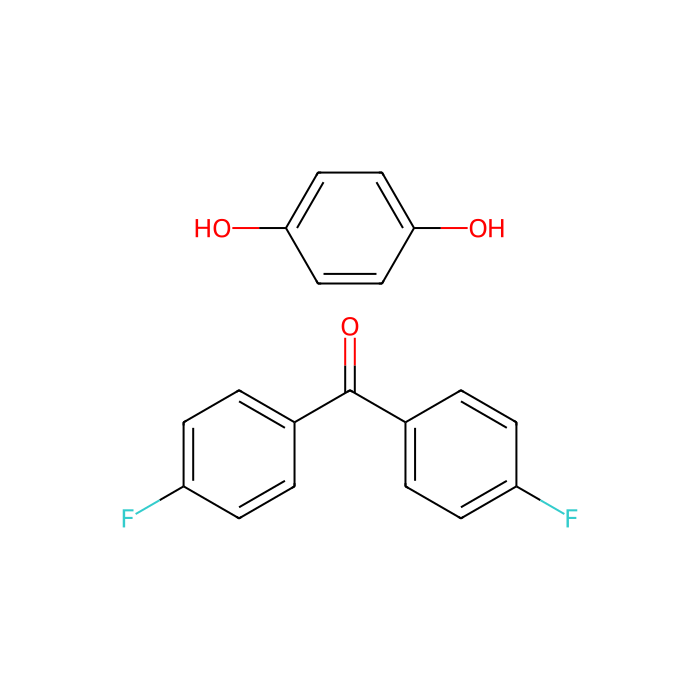
Step‑growth nucleophilic aromatic substitution (SNAr) between hydroquinone and 4,4′‑difluorobenzophenone (or 4,4′‑difluorodiphenyl ketone) using base (e.g., K2CO3) in a high‑boiling sulfone solvent (e.g., diphenyl sulfone) at 250–320 °C affords high‑molecular‑weight PEEK.
Control of stoichiometry, dryness, and removal of byproduct HF/F– capture (via carbonate) are critical to achieve high DP and low defect density.
Note: This catalog item is the polymer product; no claims are made regarding monomer supply or polymerization capability for this specific SKU.
Target Specificity
Not applicable. This product is a polymeric material, not a biological targeting reagent or antibody. No antigen/epitope specificity, clone, or isotype information applies.
Perguntas frequentes
How should this product be stored?
Store at room temperature.
How is this product shipped?
This product ships under standard ambient conditions. No temperature-controlled packaging is required.
What are the CAS number, molecular formula and molecular weight?
The CAS Number is 29658-26-2. InChIKey JUPQTSLXMOCDHR-UHFFFAOYSA-N.
What documentation is provided?
Available product documentation, including Certificates of Analysis (COA), Safety Data Sheets (SDS), and specification sheets, is shown in the product document area. Document availability and access follow the current site policy.
Usamos cookies para garantir o funcionamento adequado do site e, quando permitido, para melhorar a sua experiência. Você pode gerenciar suas preferências a qualquer momento nas Configurações. Saiba mais em nossa Política de Cookies.
Deseja que lhe enviemos uma mensagem quando tivermos descontos disponíveis?
Lembrar-me mais tarde
Obrigado! Por favor, verifique a sua caixa de entrada de e-mail para confirmar.
Products are supplied to verified businesses, institutions, and qualified professionals for research and development use only. Not for use in humans, animals, diagnosis, or therapy.

 K2314222