Recombinant D-Dimer Antibody - Anticorpo primário, for ELISA,CLIA,LF,GICA,FIA,Detetion antibody various applications, from Human, generated in Mouse, specific to FGA, IgG2a

Cat. No.: Ab008172
Disponível para encomenda
GRADE & PURITY Carrier Free ? Carrier-free — supplied without added carrier protein/stabilizer. Use when carriers (e.g. BSA) would interfere with conjugation or sensitive assays. Recombinant ? Recombinant — produced via recombinant expression for defined sequence and consistency. Use for reproducible, animal-free proteins of known origin. ExactAb™ ? ExactAb™ — Aladdin's antibody line emphasizing precision and validated quality. Use for reliable, specificity-validated antibody applications. Azide Free ? Azide-free — without sodium azide preservative. Use in conjugations, cell work, or assays where azide is toxic or inhibitory. Validated ? Validated grade — performance confirmed in defined applications before release. Use when you want documented assurance the reagent works as stated. See COA
Application
CLIA, Detection Antibody, ELISA, FIA, GICA, LF
Host species
Rato
Reactive species
Humano
Isotype
Mouse IgG2a
Clone Number
33A6
Conjugation
Unconjugated
★
Size
USA
Alemanha (EU)*
Price
Qty
10μg
Ab008172-10μg
4 Em stock
—
86,90US$
50μg
Ab008172-50μg
5 Em stock
—
255,90US$
100μg
Ab008172-100μg
4 Em stock
—
415,90US$
1mg
Ab008172-1mg
Fabricado sob encomenda nos EUA · 2–4 semanas ·
—
1199,90US$
Enter a quantity for the sizes you want to add.
🧪
Why this grade

Carrier Free, Recombinant, ExactAb™, Azide Free, Validated, See COA Azide Free,Carrier Free,ExactAb™,Recombinant,Validated for sensitive chromatographic and analytical workflows requiring minimal baseline interference.

🌡

Storage & shipping

Store at -20°C,Avoid repeated freezing and thawing Ships Ice chest + Ice pads Check lot-specific COA for exact specifications.

📋

Quality documents

SDS, COA, datasheet, and spec sheet available for download. Lot-specific COA accessible via lot number lookup.

📚

Literature proof

Cited in 0 peer-reviewed publications across chromatography, organic synthesis, and cross-coupling reactions.

Visão geral

Recombinant D-Dimer Antibody, 33A6, is a Detection antibody could be used for ELISA, CLIA at 1.0µg/mL, LF, GICA, FIA at 0.4-1mg/mL.

Specifications

Product Name
Recombinant D-Dimer Antibody - Anticorpo primário, for ELISA,CLIA,LF,GICA,FIA,Detetion antibody various applications, from Human, generated in Mouse, specific to FGA, IgG2a
Sinónimos
D Dimer | Ddimer | D-dimer | FDP | D Dimer antibody | Ddimer antibody | D-dimer antibody | FDP antibody
Especificações e pureza
Carrier Free, Recombinant, ExactAb™, Azide Free, Validated, See COA
Espécies hospedeiras
Mouse
Espécie hospedeira
Rato
Especificidade
FGA
Aplicação
ELISA,CLIA,LF,GICA,FIA,Detetion antibody
Imunogénio
D-Dimer purifed from Human Plasma
Conjugação
Unconjugated
Grau
Azide Free, Carrier Free, ExactAb™, Recombinant, Validated
Tipo de anticorpo
Primary antibody
Clonalidade
Recombinant
Isótipo
IgG2a
SDS-PAGE
150 kDa
Método de purificação
Protein A purified
Pares emparelhados
[Ab008121] Recombinant D-Dimer Antibody as Capture antibody in ELISA, CLIA, LF, GICA, FIA
Fonte
CHO supernatant
Concentração
See COA
Product Line
Produtos biológicos
Armazenamento e envio
Forma
Liquid
Condições de armazenamento de armazenamento
Store at -20°C,Avoid repeated freezing and thawing
Enviado em
Ice chest + Ice pads
Estabilidade e armazenamento
Store at -20±5℃ for three years. Avoid freeze/thaw
Imagens

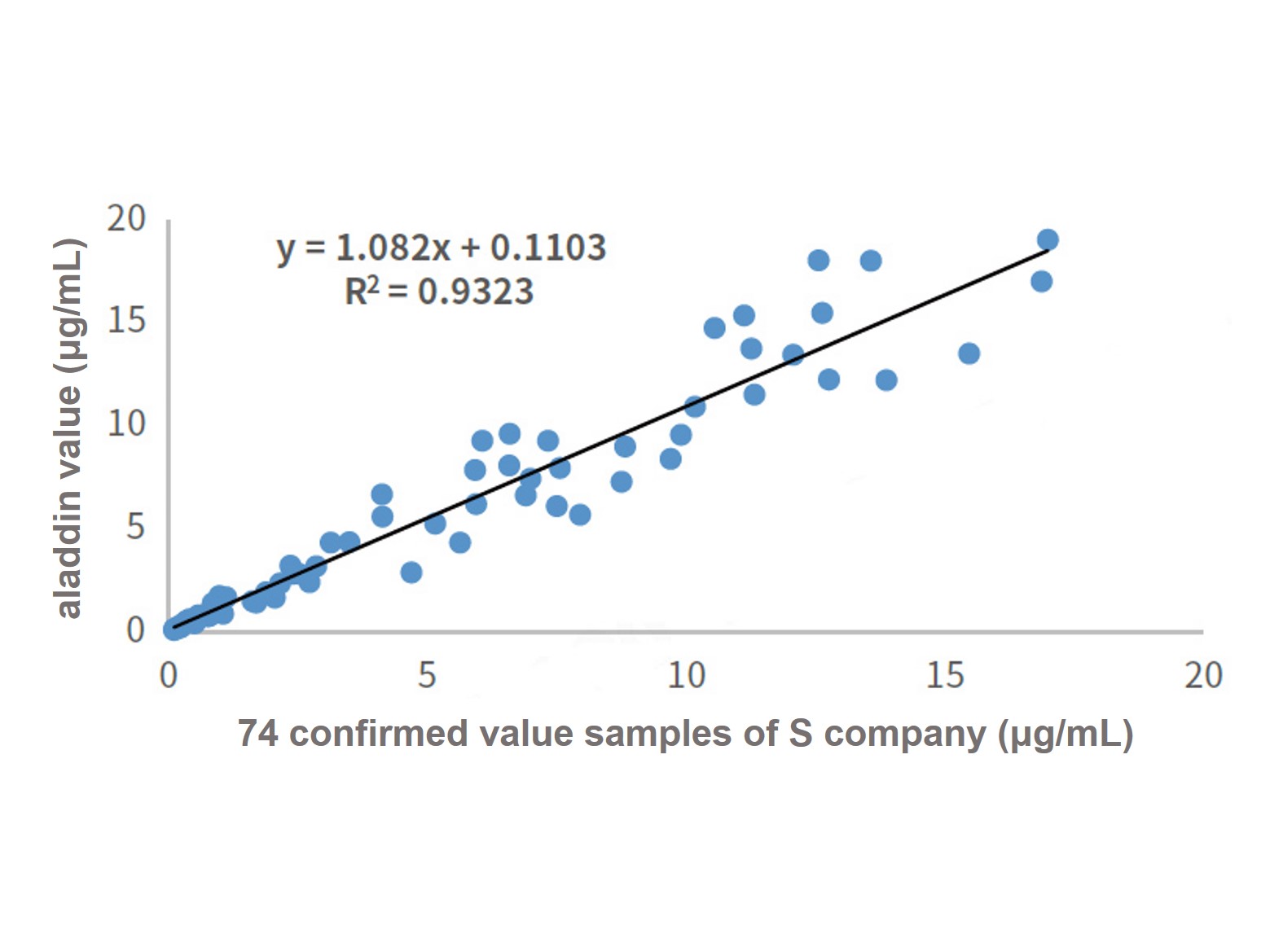
Relevance of detection results between aladdin Antibody Pair (Ab008121 & Ab008172) and S company in CLIA
· Capture antibody: Recombinant D-Dimer Antibody (Ab008121) at 1.0 μg/mL.
· Detection antibody: Recombinant D-Dimer Antibody (Ab008172) at 1.0 μg/mL.
· Linear Range: 0-18 μg/mL, R ≥ 0.9.


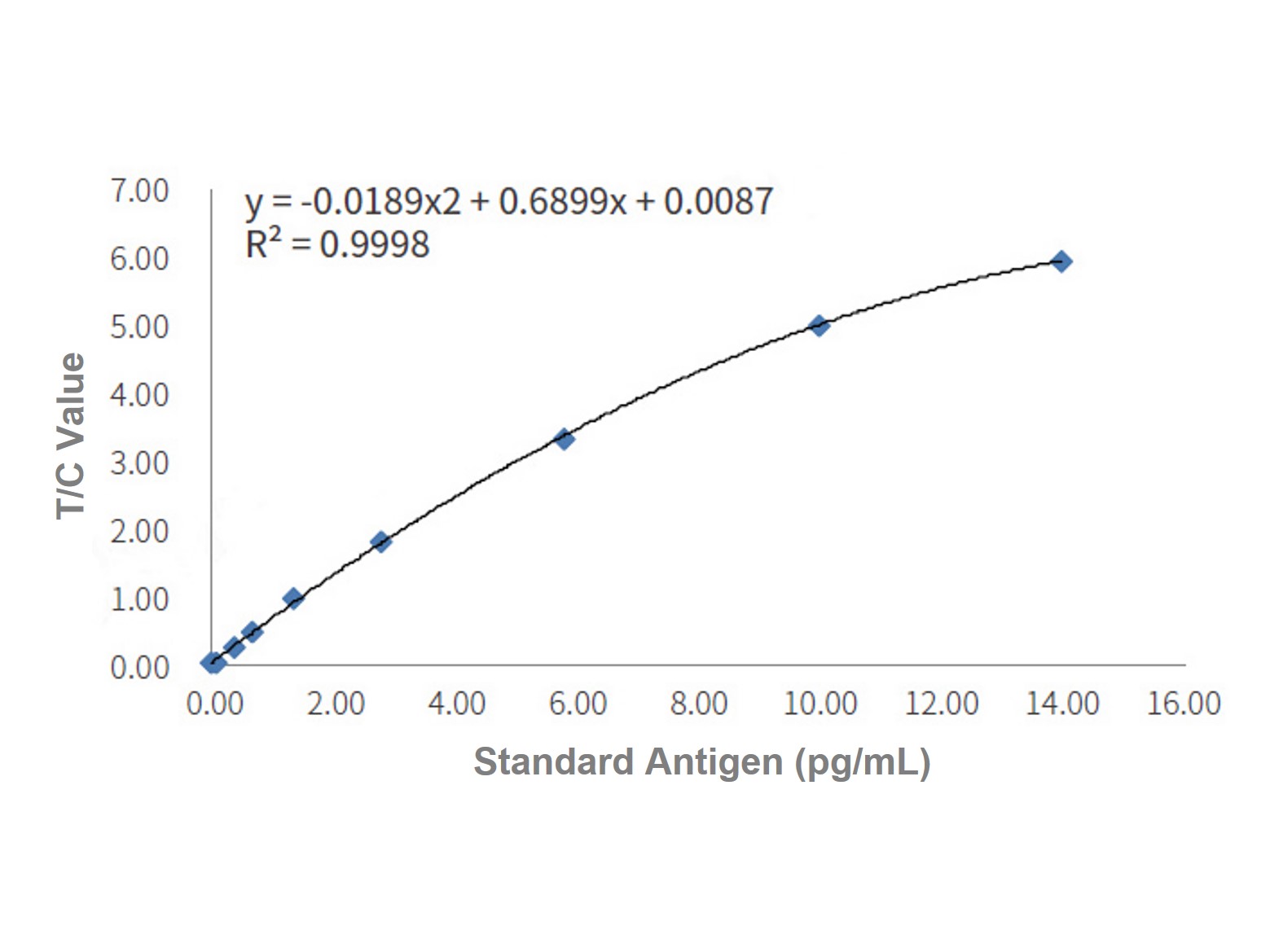
D-Dimer Standard Curve with Antibody Pair (Ab008121 & Ab008172) in GICA
· Capture antibody: Recombinant D-Dimer Antibody (Ab008121) at 1.0 mg/mL.
· Detection antibody: Recombinant D-Dimer Antibody (Ab008172) at 1.0 mg/mL.
· Linear Range: 0-15 pg/mL, LLOD: 0.06 pg/mL.

Aplicação
Aplicação
Dilution info
CLIA

1 μg/mL

GICA

0.4-1mg/mL

FIA

0.4-1 mg/mL

LF

0.4-1mg/mL

Documentation

📋 Safety Data Sheet (SDS)

Comprehensive hazard, handling, storage, and regulatory compliance document.

Download SDS →

✅ Certificate of Analysis (COA)

Lot-specific quality data. Enter your lot number to retrieve the exact COA.

Look up COA →

📊 Datasheet

Quick-reference summary of product specifications and applications.

View datasheet →

🔬 Specification Sheet

Full quality attributes and acceptance criteria for this grade.

View spec sheet →

Advanced Data

Alvos associados (humanos)
FGA Tbio Fibrinogen alpha chain (0 Activities)
Activity TypeActivity Value -log(M)Mechanism of ActionActivity ReferencePublications (PubMed IDs)
Mecanismos de ação
Certificados(CoA,COO,BSE/TSE e Mapa de Análise)
C of A & Other Certificates(BSE/TSE, COO):
Analytical Chart:

Find and download the COA for your product by matching the lot number on the packaging.

2 results found

Lot NumberCertificate TypeDataItem
ZJ23F0500222Certificate of AnalysisMar 13, 2026 Ab008172
ZJ23F0500223Certificate of AnalysisMar 13, 2026 Ab008172
FAQs e artigos
Calculadoras de soluções
Revisões

Avaliações dos Clientes

Application Protocols

Item-specific, tested applications and recommended dilutions are not provided; consult the CoA/Spec Sheet for validated uses. The following protocols are general frameworks for anti–D‑dimer antibodies and should be optimized empirically.

Example ELISA (sandwich) outline (general):

  • Coat capture antibody at 2 μg/mL in carbonate buffer, pH 9.6, overnight at 4°C.
  • Block with 1–5% BSA in PBS, 1 hour at room temperature.
  • Add samples/standards (matrix-matched) for 1–2 hours. Include serial dilutions of D‑dimer calibrator.
  • Add this antibody as detector (biotin- or enzyme-labeled), incubate 1 hour.
  • Develop with appropriate substrate and read absorbance/fluorescence; fit standard curve with 4PL model.

Example bead immunocapture (general):

  • Couple antibody to NHS-activated magnetic beads per manufacturer’s instructions.
  • Incubate with plasma sample (pre-cleared) for 30–60 minutes at 4°C with rotation.
  • Wash in PBS/Tween; elute bound material with mild acidic buffer (e.g., 0.1 M glycine, pH 2.7) and neutralize immediately.

Immunostaining (general):

  • Validate fixation (e.g., paraformaldehyde) and antigen retrieval for fibrin-rich tissues; include isotype and no-primary controls.

Recommended working concentrations/dilutions for this specific item: Not specified; refer to CoA/Spec Sheet.

Biological Roles

Target context (literature): D‑dimer is a fibrin degradation product formed when plasmin cleaves cross‑linked fibrin during fibrinolysis. It contains two D fragments of the fibrin protein connected by a covalent crosslink (via factor XIIIa-mediated ε-(γ‑glutamyl)‑lysine bonds) and is a hallmark of active coagulation followed by fibrin stabilization and subsequent proteolysis.

Key biological features:

  • Origin: Generated from stabilized fibrin clots; not produced from soluble fibrinogen alone.
  • Pathway: Reflects the interplay of coagulation (thrombin activation of fibrinogen to fibrin; crosslinking by factor XIIIa) and fibrinolysis (plasminogen activation to plasmin, clot breakdown).
  • Structure: Heterogeneous mixture of high‑molecular‑weight species containing the “D‑D” dimeric domain; epitope availability may vary with fragment conformation and sample preparation.
  • Matrix considerations: Abundant in plasma during states of increased fibrin turnover; also present in other biological fluids depending on pathology and physiology.

Relevance for antibody work (general):

  • Antibody affinity and specificity can differ markedly among D‑dimer sources and preparations due to heterogeneity; calibrators and controls should match the sample matrix.
  • Epitope preservation can be sensitive to denaturation and fixation; validate assay conditions for native versus denatured targets.

Item-specific biological performance characteristics (affinity constants, epitope class, species cross-reactivity): Not specified for this item; refer to CoA/Spec Sheet.

Buffer Applications

This product is an antibody and not a buffering reagent. However, selecting appropriate buffers is central to its stability and performance.

General buffer guidance for recombinant, carrier‑free, azide‑free antibodies:

  • Storage buffers: Neutral pH (6.8–7.5) systems such as PBS or HEPES with 100–150 mM NaCl help maintain conformational stability. For long-term storage, inclusion of cryoprotectants (e.g., 10–50% glycerol) is common if compatible with downstream use.
  • Working buffers: For ELISA and other immunoassays, use coating buffers (carbonate–bicarbonate, pH ~9.6) for antigen adsorption, blocking buffers (1–5% BSA/casein) to reduce nonspecific binding, and assay buffers (PBS/TBS with 0.05–0.1% Tween‑20) for washing and dilutions. For conjugation steps, use amine‑free buffers (e.g., PBS without Tris) for NHS ester reactions.
  • Protease control: Include protease inhibitors when handling complex biological samples containing D‑dimer to prevent degradation of the target and potential epitope loss.
  • Filtration: Sterile 0.22 μm filtration of buffers minimizes bioburden for azide‑free workflows.

Item-specific buffer composition and recommended diluents: Not specified for this item; refer to CoA/Spec Sheet.

Green Alternatives

As a protein biologic, this antibody is not a solvent or commodity reagent typically targeted by green-chemistry substitution frameworks. Nonetheless, environmentally responsible practices can be applied to its use.

Greener practice considerations (general):

  • Minimize single-use plastics by planning aliquots and using reusable, sterilizable racks and reservoirs where feasible without compromising sterility.
  • Buffer preparation: Use concentrated buffer stocks to reduce packaging waste; prepare only the volume required. Choose Good’s buffers (e.g., HEPES) with favorable environmental profiles when compatible.
  • Cold-chain efficiency: Consolidate shipments to reduce packaging and coolant consumption. This item ships on ice packs; coordinate deliveries to avoid re-shipments.
  • Waste reduction: Avoid repeated freeze–thaw by aliquoting, thereby extending product life and reducing discarded material.
  • Preservative choices: Azide-free formulation avoids disposal of azide-containing solutions; maintain aseptic technique to prevent contamination in lieu of chemical preservatives.

Comparison (contextual, not alternatives to the antibody itself):

  • Detection chemistries: Prefer fluorescent or chemiluminescent systems with lower hazardous-waste footprints over chromogenic substrates requiring heavy metals when performance allows.
  • Immobilization: Use magnetic bead systems that are regenerable to reduce solid waste compared to single-use affinity plates.

Item-specific green certifications or formulations: Not specified for this item; refer to CoA/Spec Sheet.

Pharmaceutical Uses

This reagent is provided for research use only. No clinical, diagnostic, or therapeutic use is claimed or implied.

Context (general, non-clinical):

  • Assay development: Research antibodies against D‑dimer are frequently used to develop and optimize immunoassays (e.g., prototype ELISAs or lateral-flow formats) in pre-commercial R&D environments. Transition to regulated diagnostics requires additional validation, documentation, and manufacturing controls beyond the scope of this product.
  • Process development: Carrier‑free, azide‑free antibodies are suitable for conjugation process development (e.g., biotinylation, fluorophore or enzyme labeling) to explore assay architectures and performance.
  • Reference materials: Antibodies can be employed as in‑house controls for lot qualification and method transfer between laboratories during early-stage research.

Regulatory notes (general):

  • Pharmacopeial monographs typically address excipients and small molecules; there is no pharmacopeial monograph for this specific antibody. Any use in GMP or diagnostic workflows would require independent qualification and vendor audit.

Item-specific regulatory or formulation status: Not specified for this item; refer to CoA/Spec Sheet.

Physical Properties

Item-specific physico-chemical constants for this recombinant antibody are not provided and are typically not defined as for small molecules.

  • Appearance: Not specified for this item; refer to CoA/Spec Sheet.
  • Molecular weight: Not specified for this item; refer to CoA/Spec Sheet. (Literature: IgG ~150 kDa; Fab ~50 kDa; scFv ~25–30 kDa.)
  • Isoelectric point (pI): Not specified for this item; refer to CoA/Spec Sheet. (Literature: IgG pI commonly 6–9 depending on sequence and glycosylation.)
  • Extinction coefficient (A280): Not specified for this item; refer to CoA/Spec Sheet. (Literature: ε280 for IgG ~210,000 M−1 cm−1; 1.0 A280 ≈ 0.73 mg/mL for typical IgG.)
  • Solubility: Antibodies are generally soluble in physiological buffers (e.g., PBS, HEPES) with stabilizers; exact solubility profile not specified for this item.
  • pH range of stability: Not specified for this item; refer to CoA/Spec Sheet. (General: many IgGs are most stable near neutral pH 6.5–7.5.)
  • Storage buffer composition: Not specified for this item; refer to CoA/Spec Sheet.

General notes for recombinant antibodies (literature):

  • Thermal stability often characterized by melting temperature (Tm) determined by DSC or DSF; value is sequence- and buffer-dependent.
  • Aggregation propensity increases at elevated temperature, extremes of pH, low ionic strength, or repeated freeze–thaw cycles.
  • Viscosity can become significant at concentrations >50 mg/mL; avoid high-shear handling if concentrated.
Quality and Grades

Item-specific quality attributes provided:

  • Grade/Purity: Carrier Free, Recombinant, ExactAb™, Azide Free, Validated.

Interpretation (general definitions; consult CoA/Spec Sheet for item-specific acceptance criteria):

  • Carrier Free: Supplied without protein carriers such as BSA or gelatin. Advantages include lower background in conjugations and cell-based assays, and precise mass balance for labeling. Requires careful handling to avoid adsorption losses; pre-block plastics where needed.
  • Recombinant: Produced from a defined expression construct in a recombinant host, enhancing lot-to-lot consistency versus hybridoma-derived materials. Sequence and expression system details are not specified for this item.
  • ExactAb™: Branded designation indicating defined antibody identity/production standardization; refer to vendor documentation for the program’s specific controls and validation framework.
  • Azide Free: No sodium azide preservative, enabling compatibility with live-cell assays and enzyme-based detection (HRP-sensitive to azide). Requires aseptic technique to prevent microbial growth.
  • Validated: Indicates the antibody has undergone functional/analytical assessments; specific validated applications, species reactivity, and performance metrics are not specified for this item and should be confirmed on the CoA/Spec Sheet.

Additional quality notes (general):

  • Typical QC may include purity by SDS-PAGE, residual host cell proteins/DNA, endotoxin by LAL, and binding by ELISA or BLI/SPR. Exact thresholds and results are not specified for this item.
  • Low bioburden and filter-sterile processing are common for carrier-free, azide-free antibodies; verify on documentation.
Reaction and Applications

This product is a recombinant antibody intended for bioanalytical and affinity-based applications rather than chemical synthesis. Classical organic reaction families (e.g., Grignard, cross-coupling) are not applicable.

Relevant research applications for D‑dimer antibodies (general, literature-based; confirm suitability for your workflow):

  • Immunoassays for detection of D‑dimer in biological samples, such as sandwich ELISA formats paired with a complementary capture/detection clone.
  • Affinity capture/purification of D‑dimer or fibrin degradation products from complex matrices using immobilized antibody on agarose or magnetic beads.
  • Surface plasmon resonance (SPR) or bio-layer interferometry (BLI) to quantify binding kinetics to D‑dimer and assess epitope mapping when multiple clones are available.
  • Immunohistochemistry or immunofluorescence on fibrin-rich thrombi or clot models, subject to validation of fixation compatibility and species cross-reactivity.

Practical tips (general):

  • For conjugation (biotin, HRP, fluorophores), carrier-free format is advantageous; perform buffer exchange into amine-free buffer for NHS ester chemistries.
  • Calibrate dynamic range and limit of detection using well-characterized D‑dimer standards; matrix effects can be significant in plasma/serum.
  • Use orthogonal antibody pairs recognizing non-overlapping epitopes for sandwich assays to avoid competitive binding.

Item-specific validated applications: Not specified for this item; refer to CoA/Spec Sheet.

Reaction Conditions

Classical chemical reaction conditions are not applicable to antibody binding. For users performing bioconjugation or assay development with this antibody, the following are general, literature-based guidelines; adjust per your system and consult the CoA/Spec Sheet for any item-specific constraints.

General bioconjugation conditions (examples):

  • NHS–ester labeling (amines): 10–20 molar equivalents of dye/biotin NHS ester in 50–100 mM phosphate or bicarbonate buffer, pH 8.3–8.5, 30–60 minutes at room temperature; quench with Tris or ethanolamine; typical DoL 2–4 per IgG.
  • Maleimide labeling (thiols): Reduce interchain disulfides mildly with TCEP (0.5–2 mM) at pH 7.0–7.5, then react with 3–10 equivalents of maleimide reagent for 1–2 hours at room temperature; remove excess by desalting.
  • Bead immobilization (EDC/NHS): Couple to carboxylated matrices at pH 4.5–5.5 (activation) and pH 7.0–8.0 (coupling) with 5–50 μg antibody per mg of resin, depending on capacity.

Assay development conditions (examples):

  • ELISA coating: 1–5 μg/mL antibody in carbonate buffer, pH 9.6, overnight at 4°C; block with 1–5% BSA.
  • SPR/BLI: Immobilize 200–5000 RU on CM5 via amines; run kinetic assays in PBS/Tween with 0.1% BSA to minimize nonspecific binding.

Item-specific optimal conditions, kinetics, and DoL: Not specified for this item; refer to CoA/Spec Sheet.

Safety and Handling

Hazard classification details are not provided for this item; always consult the SDS for authoritative safety information.

  • GHS classification: Not specified for this item; refer to SDS.
  • Signal word / H-statements / pictograms: Not specified for this item; refer to SDS.
  • Research use: For research use only (not for diagnostic or therapeutic use).

General laboratory handling guidance for recombinant antibodies (literature/practice):

  • PPE: Wear lab coat, gloves, and safety glasses when handling solutions and lyophilized protein.
  • Aseptic technique: Use sterile tips/tubes to prevent microbial contamination, especially for azide‑free materials.
  • Biological origin considerations: Though recombinant and carrier-free, treat as a proteinaceous material; avoid aerosol generation and ingestion. No known infectious risk when produced recombinantly, but follow BSL-1 precautions unless otherwise directed.
  • Incompatibilities: Avoid strong oxidizers, extreme pH (<4 or >9), and organic solvents that may denature protein. Minimize exposure to surfactants not intended for stabilization.
  • Freeze–thaw risk: Repeated freezing and thawing can induce aggregation and activity loss. Aliquot upon first thaw.
  • First aid (general): In case of skin/eye contact, rinse with water. If inhaled, move to fresh air. If ingested, rinse mouth; seek medical advice. Provide SDS to medical personnel.
  • Spills: Absorb with inert material, clean with aqueous buffer, and dispose according to institutional biological waste procedures.
Solvent Selection

For antibodies, “solvent” refers to aqueous buffer systems rather than organic solvents. This item is carrier-free and azide-free, so buffer choice should balance stability and assay compatibility.

General buffer selection guidance (literature/practice):

  • Primary buffers: PBS (10–50 mM phosphate, 150 mM NaCl), HEPES (10–50 mM, pH 7.2–7.6), or Tris (20–50 mM, pH 7.4–8.0). Choose based on downstream assay chemistry (e.g., Tris can interfere with NHS ester conjugations).
  • Ionic strength: 100–200 mM NaCl reduces nonspecific interactions and aggregation.
  • Stabilizers: Carrier-free format lacks BSA/gelatin. To minimize adsorption, consider 0.05–0.1% inert proteins (BSA) or 0.01–0.05% nonionic surfactant (Tween‑20) only if compatible with your application. For conjugation workflows, omit carriers/surfactants.
  • Metal-sensitive chemistries: For His-tag capture or chelation-sensitive assays, avoid EDTA as required. For peroxidase readouts, avoid azide.
  • Organic cosolvents: Avoid; they can denature antibodies. If unavoidable for special formats, keep <10% v/v and validate stability.

Comparison (general):

  • PBS: isotonic, broadly compatible; phosphate can precipitate with divalent cations and can buffer exchange poorly in Ca2+/Mg2+ assays.
  • HEPES: zwitterionic, excellent pH control near neutral, minimal reactivity.
  • Tris: good buffering at pH >7; primary amine interferes with NHS-ester labeling.

Item-specific buffer recommendation: Not specified for this item; refer to CoA/Spec Sheet.
Storage and Reconstitution

Item-specific storage conditions provided:

  • Storage: Store at −20°C. Avoid repeated freezing and thawing.
  • Shipping: Shipped in ice chest with ice pads.

General best practices for recombinant, carrier‑free, azide‑free antibodies:

  • Upon receipt: Inspect for container integrity and any visible particulates. Record lot and date.
  • Aliquoting: To prevent freeze–thaw cycles, aliquot into single‑use volumes in low‑bind, sterile tubes. Flash‑freeze aliquots if appropriate.
  • Short-term storage: 2–8°C for several days may be acceptable for many antibodies if aseptic; confirm on CoA/SDS. For azide‑free materials, maintain sterility rigorously.
  • Long-term storage: −20°C or −80°C depending on formulation stability; the provided guidance specifies −20°C for this item. Avoid frost-free freezers with warm cycles.
  • Cryoprotection (general): If allowed by your application, adding sterile glycerol to 10–50% v/v can enable storage at −20°C without freezing; verify compatibility and item guidance before modifying formulation.

Reconstitution/dilution (if supplied lyophilized or concentrated; item-specific form not specified):

  • Solvent: Sterile, endotoxin-free PBS or HEPES, pH 7.2–7.5. For adsorption minimization, consider 0.1% BSA if compatible with downstream use.
  • Gentle mixing: Do not vortex vigorously; allow to dissolve on ice with slow inversion.
  • Post-reconstitution: Determine concentration via A280 or BCA; filter-sterilize (0.22 μm) if needed under aseptic conditions.

Any item-specific reconstitution volume, buffer composition, and concentration: Not specified for this item; refer to CoA/Spec Sheet.

Structure and Identity

Item-specific structural identifiers are not applicable to protein biologics in the same way as small molecules. For this recombinant antibody, sequence-level details are required for exact identity but are not provided here.

  • Product: Recombinant D-Dimer Antibody (SKU: Ab008172)
  • Type: Recombinant monoclonal/polyclonal antibody (format not specified)
  • Target: D-Dimer (fibrin degradation product from cross-linked fibrin) — target name per product title; epitope not specified.
  • Molecular formula: Not specified for this item; refer to CoA/Spec Sheet.
  • Molecular weight: Not specified for this item; refer to CoA/Spec Sheet. (Literature note: intact IgG is typically ~150 kDa; fragments vary.)
  • SMILES: Not applicable for proteins; not specified for this item.
  • InChIKey: Not applicable for proteins; not specified for this item.
  • Sequence/clone/isotype: Not specified for this item; refer to CoA/Spec Sheet.

General structural features (literature):

  • Immunoglobulins are Y‑shaped heterotetramers comprising two heavy and two light chains stabilized by inter- and intra-chain disulfide bonds.
  • Common constant-region isotypes for research antibodies include human/mouse/rat IgG subclasses (e.g., IgG1, IgG2a), IgM, and engineered formats (scFv, Fab, Fc fusions). Exact format for this item is not stated.
  • Post-translational modifications (e.g., glycosylation at Asn297 for IgG Fc) are typical in recombinant antibodies produced in mammalian systems; specific glycoform is not provided.
Synthetic Utility

Not typically applicable. As a recombinant antibody, this product is not used as a synthetic building block or reagent in organic synthesis. Instead, its value lies in selective recognition and binding of the D‑dimer antigen in biochemical and analytical applications.

For researchers integrating chemistry and antibody use (general guidance):

  • Bioconjugation: Carrier‑free format facilitates controlled chemical modification of lysines (NHS ester), cysteines (maleimide after partial reduction or engineered thiols), or glycan sites (periodate oxidation for oxime ligation on glycan sialic acids). Buffer exchange into amine‑free, metal‑free systems improves reaction specificity.
  • Solid support coupling: Amine coupling to activated carboxyl resins (EDC/NHS) or thiol coupling to maleimide-activated beads enables immobilization for affinity capture of D‑dimer.
  • Site-specific strategies: Enzymatic tags (e.g., sortase, transglutaminase) or Fc glycan remodeling can yield more homogeneous conjugates for analytics.

Item-specific reactive handle counts, sequence tags, or conjugation readiness: Not specified for this item; refer to CoA/Spec Sheet.

Target Specificity

Item-specific targeting details beyond the product name are not provided.

  • Antigen: D‑dimer (fibrin degradation product).
  • Epitope: Not specified for this item; refer to CoA/Spec Sheet.
  • Clone ID: Not specified for this item; refer to CoA/Spec Sheet.
  • Isotype/subclass: Not specified for this item; refer to CoA/Spec Sheet.
  • Species reactivity: Not specified for this item; refer to CoA/Spec Sheet.
  • Cross-reactivity: Not specified for this item; refer to CoA/Spec Sheet.

General notes (literature): D‑dimer comprises heterogeneous cross‑linked fibrin fragments; antibodies may recognize conformational epitopes within the D domains or neoepitopes formed by factor XIIIa crosslinking. Pair selection for sandwich assays should target non-overlapping epitopes to avoid competitive binding.

Perguntas frequentes

What does Carrier Free mean?
Carrier Free indicates that the material has been processed and tested for specialty industrial processing. Specifications focus on the impurities that affect performance in that application — for example, metal content for electronics, particle size for batteries, refractive index for optics, or moisture content for moisture-sensitive processes.
What does Recombinant mean?
Recombinant is a defined analytical purity tier suitable for workflows requiring a specific validated property. It specifies a minimum assay percentage, controlled limits on common impurities (water, heavy metals, residue on ignition), and lot-to-lot consistency. Recombinant is one of several purity tiers — choose based on the sensitivity and regulatory requirements of your method.
How should this product be stored?
Store at ?20 °C. Avoid repeated freeze–thaw cycles. Aliquot into single-use volumes before freezing.
How is this product shipped?
This product ships in an insulated container with ice pads. Unpack on arrival and transfer it to the storage condition stated above.
What documentation is provided?
Available product documentation, including Certificates of Analysis (COA), Safety Data Sheets (SDS), and specification sheets, is shown in the product document area. Document availability and access follow the current site policy.
Which species reactivity has this antibody been validated against?
Validated reactivity is listed on the PDP and on each lot's datasheet. We validate against the most commonly tested species for the target (Recombinant D-Dimer Antibody); cross-reactivity in untested species may exist but is not guaranteed. Contact technical support for specific species inquiries.

Need help choosing the grade?

Our grade selection guide covers purity, stabilizer status, and application suitability for all variants in our catalog.

View Carrier Free grade guide → View Recombinant grade guide → View Validated grade guide → View ExactAb™ grade guide → View Azide Free grade guide →

Produtos Relacionados

Goat Anti-Mouse IgG H&L Antibody - Anticorpo secundário, for ELISA,LF,GICA various applications, from Mouse, generated in Goat
Goat Anti-Mouse IgG H&L (HRP) - Anticorpo secundário, for WB,ELISA,IHC-P various applications, from Mouse, generated in Goat, IgG
Recombinant D-Dimer Antibody - Anticorpo primário, for ELISA,CLIA,LF,GICA,Capture antibody,FIA various applications, from Human, generated in Mouse, specific to FGA, IgG2b
Rabbit Anti-Mouse IgG H&L (HRP) - Anticorpo secundário, IgG
Rabbit Anti-Mouse IgG antibody - Anticorpo secundário
Goat Anti-Mouse IgG H&L (FITC) - Anticorpo secundário
Goat Anti-Mouse IgG H&L (TRITC) - Anticorpo secundário
Goat Anti-Mouse IgG H&L Antibody - Anticorpo secundário, Goat IgG
Goat Anti-Mouse IgG H&L (Cy5) - Anticorpo secundário
Goat Anti-Mouse IgG H&L (HRP) - Anticorpo secundário
Goat Anti-Mouse IgG H&L (Biotin) - Anticorpo secundário
Rabbit Anti-Mouse IgG (HRP) - Anticorpo secundário
Rabbit Anti-Mouse IgG (Biotin) - Anticorpo secundário
Goat Anti-Mouse IgG H&L (HRP) - Anticorpo secundário, Goat IgG
Goat Anti-Mouse IgG H&L (TRITC) - Anticorpo secundário, Goat IgG
Goat Anti-Mouse IgG H&L (Biotin) - Anticorpo secundário, Goat IgG
Goat Anti-Mouse IgG H&L (FITC) - Anticorpo secundário, Goat IgG
Goat Anti-Mouse IgG H&L (Cy5) - Anticorpo secundário, Goat IgG
Goat Anti-Mouse IgG H&L (PE) - Anticorpo secundário, Goat IgG
Goat Anti-Mouse IgG H&L (APC) - Anticorpo secundário, Goat IgG
Goat Anti-Mouse IgG H&L (Alkaline Phosphatase) - Anticorpo secundário, Goat IgG
Goat Anti-Mouse IgG H&L (AF405) - Anticorpo secundário, Goat IgG
Goat Anti-Mouse IgG H&L (AF647) - Anticorpo secundário, Goat IgG
Goat Anti-Mouse IgG H&L (AF555) - Anticorpo secundário, specific to Mouse IgG, Goat IgG
IgG de cabra anti-rato H&L (AF700) - Anticorpo secundário, specific to Mouse IgG, Goat IgG
Goat Anti-Mouse IgG H&L (PE-Cy5) - Anticorpo secundário, specific to Mouse IgG
Centrose patent anti-dysadherin (anti-Dysadherin) - Anticorpo primário, specific to FXYD5
Goat Anti-Mouse IgG H&L (AF488) - Anticorpo secundário
Goat Anti-Mouse IgG H&L (PE-Cy7) - Anticorpo secundário
Goat Anti-Mouse IgG H&L (AF750) - Anticorpo secundário
Goat Anti-Mouse IgG H&L (AF546) - Anticorpo secundário
Goat Anti-Mouse IgG H&L (Oregon Green 488) - Anticorpo secundário
Goat Anti-Mouse IgG H&L (Cy3) - Anticorpo secundário

Deseja que lhe enviemos uma mensagem quando tivermos descontos disponíveis?

Lembrar-me mais tarde

Obrigado! Por favor, verifique a sua caixa de entrada de e-mail para confirmar.

Ops! As notificações estão desativadas.