SQSTM1 Mouse mAb - Anticorpo primário, specific to SQSTM1, Mouse IgG1

Cat. No.: Ab129090
Disponível para encomenda
GRADE & PURITY Carrier Free ? Carrier-free — supplied without added carrier protein/stabilizer. Use when carriers (e.g. BSA) would interfere with conjugation or sensitive assays. ExactAb™ ? ExactAb™ — Aladdin's antibody line emphasizing precision and validated quality. Use for reliable, specificity-validated antibody applications. Validated ? Validated grade — performance confirmed in defined applications before release. Use when you want documented assurance the reagent works as stated. High Performance ? High-performance grade with optimized purity and performance characteristics. Use for sensitive analyses where ordinary grades fall short. See COA
Application
Flow Cytometry, IF/ICC, IHC, WB
Host species
Rato
Reactive species
Humano, Rato
Isotype
Mouse IgG1
Clone Number
C1
Conjugation
Unconjugated
★
Size
USA
Alemanha (EU)*
Price
Qty
10μl
Ab129090-10μl
9 Em stock
—
79,90US$
50μl
Ab129090-50μl
4 Em stock
—
207,90US$
100μl
Ab129090-100μl
2 Em stock
—
335,90US$
1ml
Ab129090-1ml
Fabricado sob encomenda nos EUA · 2–4 semanas ·
—
2799,90US$
Enter a quantity for the sizes you want to add.
🧪
Why this grade

Carrier Free, ExactAb™, Validated, High Performance, See COA Carrier Free,ExactAb™,High Performance,Validated for sensitive chromatographic and analytical workflows requiring minimal baseline interference.

🌡

Storage & shipping

Store at -20°C,Avoid repeated freezing and thawing Ships Ice chest + Ice pads Check lot-specific COA for exact specifications.

📋

Quality documents

SDS, COA, datasheet, and spec sheet available for download. Lot-specific COA accessible via lot number lookup.

📚

Literature proof

Cited in 0 peer-reviewed publications across chromatography, organic synthesis, and cross-coupling reactions.

Visão geral

Mouse anti Human SQSTM1 Antibody, Monoclonal (C1), could be used for WB, IF/ICC, IHC, Flow Cytometry and so on.

Specifications

Product Name
SQSTM1 Mouse mAb - Anticorpo primário, specific to SQSTM1, Mouse IgG1
Sinónimos
A170 | Autophagy Receptor P62 | DMRV | EBI3-associated protein of 60 kDa | EBI3-associated protein p60 | EBIAP | FTDALS3 | NADGP | ORCA | OSIL | oxidative stress induced like | p60PDB3 | p62 | p62B | Paget disease of bone 3 | PDB3 | phosphotyrosine indepe
Especificações e pureza
Carrier Free, ExactAb™, Validated, High Performance, See COA
Mecanismos bioquímicos e fisiológicos
Adapter protein which binds ubiquitin and may regulate the activation of NFKB1 by TNF-alpha, nerve growth factor (NGF) and interleukin-1. May play a role in titin/TTN downstream signaling in muscle cells. May regulate signaling cascades through ubiquitina
Espécie hospedeira
Rato
Especificidade
SQSTM1
Imunogénio
Recombinant SQSTM1 expressed in E.coli (AA 136-400).
Controlo positivo
WB: HeLa and A549 cell lysates. IF/ICC: HeLa cells. IHC: Human breast cancer tissue. Flow Cytometry: A549 cells.
Conjugação
Unconjugated
Grau
Carrier Free, ExactAb™, High Performance, Validated
Isótipo
Mouse IgG1
Tipo de corrente de luz
kappa
SDS-PAGE
150 kDa
Método de purificação
Protein A + Protein G purified
Concentração
See COA
Product Line
Produtos biológicos
Armazenamento e envio
Forma
Liquid
Condições de armazenamento de armazenamento
Store at -20°C,Avoid repeated freezing and thawing
Enviado em
Ice chest + Ice pads
Estabilidade e armazenamento
Store at 4°C short term (1-2 weeks). Store at -20°C long term (24 months). Upon receipt, it is recommended to aliquot. Avoid freeze/thaw cycle.
Imagens

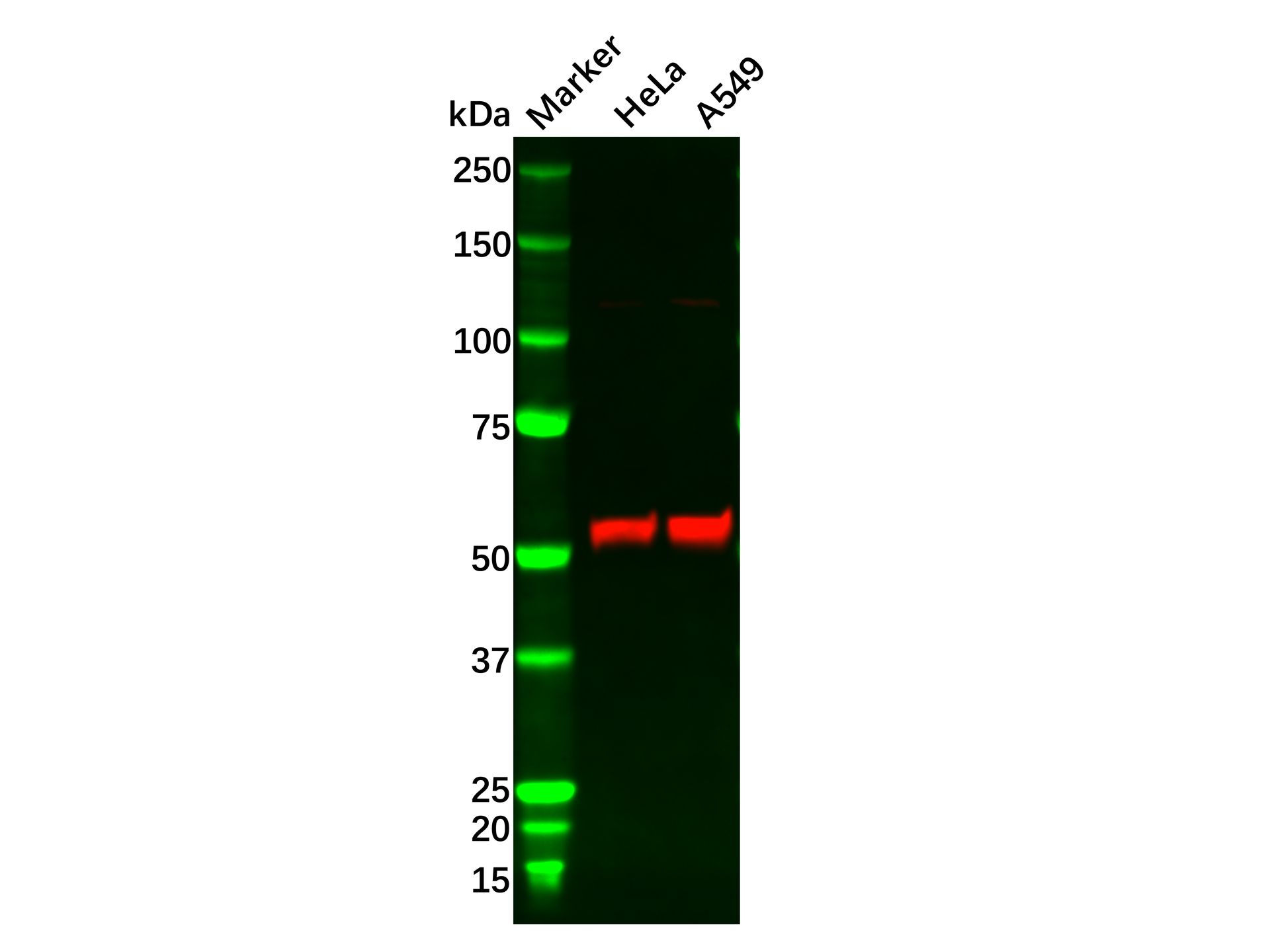
SQSTM1 Mouse mAb (Ab129090) - Western Blot
All lanes: SQSTM1 Mouse mAb (Ab129090) at 1/1000 dilution
Samples: Lysates at 20 µg per lane
Secondary: Goat Anti-Mouse IgG H&L (HRP) (Ab138040) at 1/20000 dilution

Predicted band size: 62 kDa
Observed band size: 54 kDa
Exposure time: 1.5 s

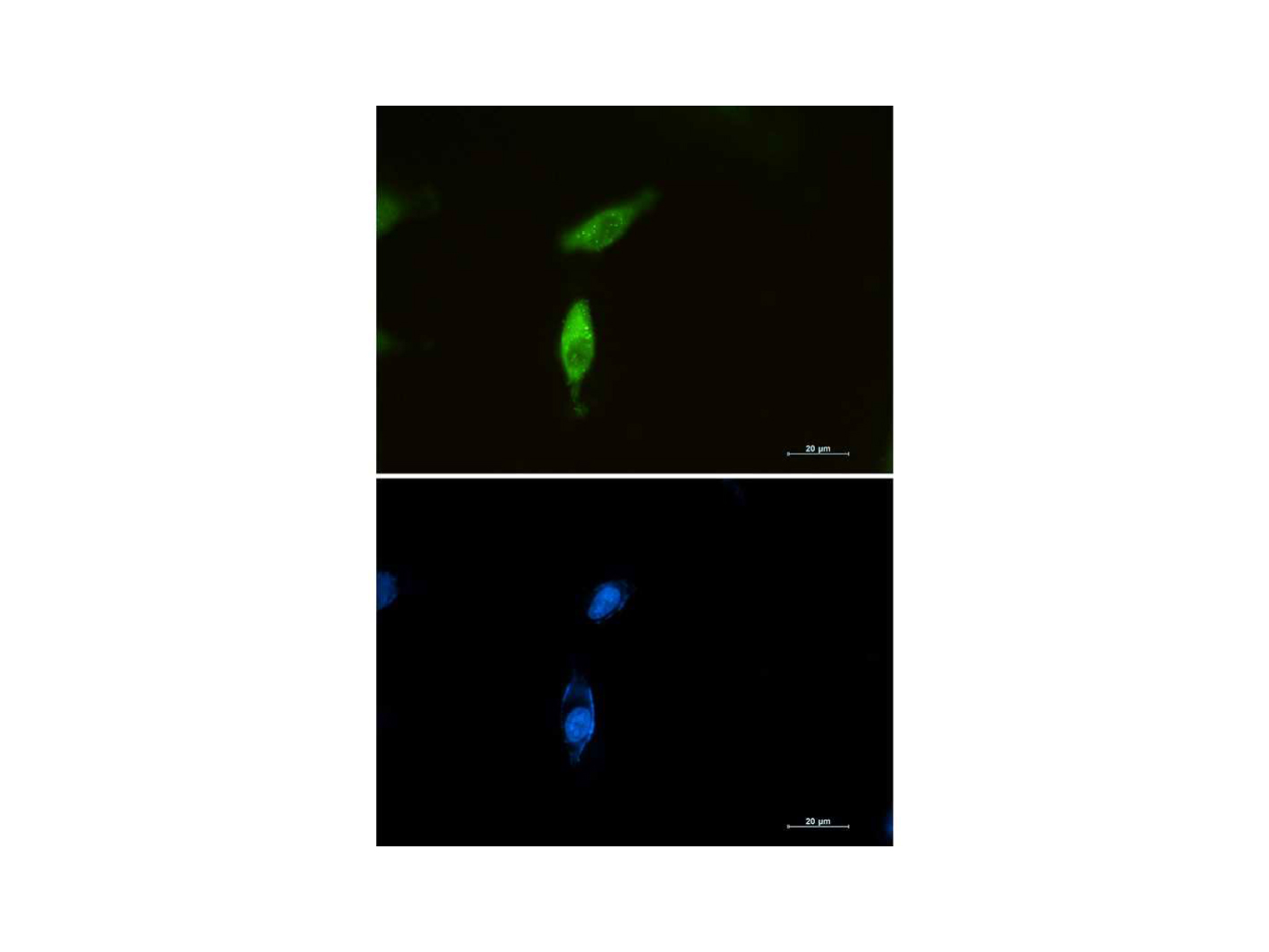
SQSTM1 Mouse mAb (Ab129090) - IF
Immunocytochemistry analysis of SQSTM1/p62 (green) in U87-MG cells using SQSTM1 Mouse mAb (Ab129090), and cells were counterstained with DAPI (blue).

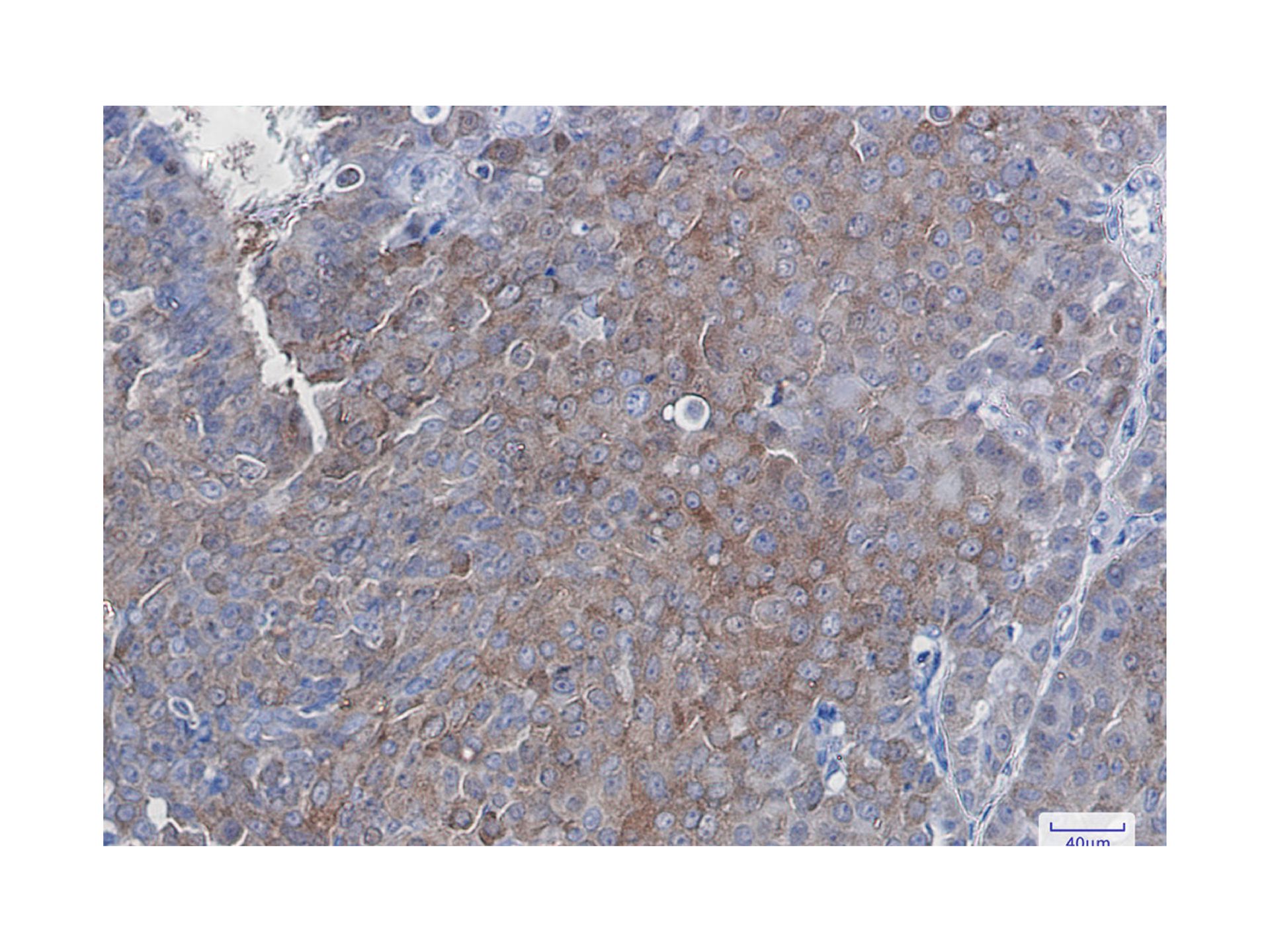
SQSTM1 Mouse mAb (Ab129090) - IHC
Immunohistochemistry analysis of paraffin-embedded Human breast cancer tissue using SQSTM1 Mouse mAb (Ab129090). High-pressure and temperature Sodium Citrate pH 6.0 was used for antigen retrieval.

SQSTM1 Mouse mAb (Ab129090) - Flow Cytometry
Human A549 cell line was fixed with 2% paraformaldehyde (10 min), permeabilised with 0.1% BSA-TritonX-100, then stained with 10 µg/mL SQSTM1 Mouse mAb (Ab129090, red histogram) or Isotype control antibody (green histogram), followed by 1µg/mL FITC conjugated Anti-mouse IgG Secondary Antibody.

Aplicação
Aplicação
Dilution info
WB

0.01-2 µg/mL

IHC

2-20 µg/mL

Flow Cytometry

10µg/mL

Documentation

📋 Safety Data Sheet (SDS)

Comprehensive hazard, handling, storage, and regulatory compliance document.

Download SDS →

✅ Certificate of Analysis (COA)

Lot-specific quality data. Enter your lot number to retrieve the exact COA.

Look up COA →

📊 Datasheet

Quick-reference summary of product specifications and applications.

View datasheet →

🔬 Specification Sheet

Full quality attributes and acceptance criteria for this grade.

View spec sheet →

Advanced Data

Alvos associados (humanos)
SQSTM1 Tbio Sequestosome-1 (0 Activities)
Activity TypeActivity Value -log(M)Mechanism of ActionActivity ReferencePublications (PubMed IDs)
Mecanismos de ação
Certificados(CoA,COO,BSE/TSE e Mapa de Análise)
C of A & Other Certificates(BSE/TSE, COO):
Analytical Chart:

Find and download the COA for your product by matching the lot number on the packaging.

5 results found

Lot NumberCertificate TypeDataItem
ZJ24F0202877Certificate of AnalysisFeb 26, 2024 Ab129090
ZJ24F0202876Certificate of AnalysisFeb 26, 2024 Ab129090
ZJ24F0202875Certificate of AnalysisFeb 26, 2024 Ab129090
ZJ23F0800847Certificate of AnalysisAug 17, 2023 Ab129090
ZJ23F0800848Certificate of AnalysisAug 17, 2023 Ab129090
FAQs e artigos
How to choose and use antibodies-primary antibody?
Immunofluorescence Staining Protocol (Methanol permeabilization)
Flow Cytometry Using Methanol Permeabilization
The Role of Lysosomes in Metabolic and Autoimmune Diseases
From PROTAC to Non-Ubiquitin–Proteasome Degradation: Mechanisms and Selection of LYTAC, ATTEC, AUTAC, and BacPROTAC
Molecular Basis of Cellular Senescence and Anti-Aging Intervention Research
Molecular Mechanisms and Experimental Evaluation of Mitophagy: PINK1–Parkin, Receptor Recognition, and Lysosomal Flux
Molecular Mechanisms, Selective Degradation, and Disease Regulation of Autophagy
Regulation of Aging by Dietary Restriction, Rapamycin, AKG, and Carglumic Acid
Calculadoras de soluções
Revisões

Avaliações dos Clientes

Application Protocols

Tested applications, recommended dilutions, incubation conditions, antigen retrieval, and positive control materials are Not specified for this item; refer to the CoA/Spec Sheet.

No manufacturer application notes are provided in the product data. Users should perform local optimization (titration, control selection, validation) appropriate to their assay platform before experimental use.

Biological Roles

SQSTM1 (sequestosome 1, commonly referred to as p62) is a multifunctional scaffold/adaptor protein involved in selective autophagy and intracellular signaling (literature/general knowledge).

Key biological functions (general):

  • Autophagy cargo receptor: SQSTM1 binds polyubiquitinated proteins via its UBA domain and LC3 family proteins via its LIR motif, linking cargo to the autophagosome for lysosomal degradation.
  • Signal transduction hub: Interacts with TRAF6 and other partners, influencing NF-κB signaling, oxidative stress responses (KEAP1–NRF2 axis), and mTORC1 regulation at the lysosome.
  • Proteostasis and phase separation: Participates in stress-induced condensate formation (aggresomes) that facilitate autophagic clearance of damaged proteins and organelles.
  • Cellular pathways: Implicated in mitophagy, xenophagy, and regulation of inclusion bodies; integrates cues from ubiquitination, phosphorylation, and redox status.

Research relevance (general, non-clinical):

  • A widely used marker of autophagic flux; changes in SQSTM1 levels and puncta formation are monitored to infer autophagy activity in cells and tissues.
  • Cross-talk with ubiquitin–proteasome system makes it a focal point in protein quality control studies.

Note: The antibody in this listing targets SQSTM1 according to the product name. Epitope, clone, isotype, and species reactivity are Not specified for this item; consult the CoA/Spec Sheet for details necessary to map observed staining/banding to specific SQSTM1 isoforms or PTM states.

Buffer Applications

Because this is a protein antibody reagent, buffer choice critically affects stability and assay performance. Item-specific buffer composition and recommended diluents are Not specified for this item; refer to the CoA/Spec Sheet. Below are general, literature-based practices for monoclonal antibodies (for user guidance; not product specifications):

  • Working diluents (general):
    • PBS, pH 7.2–7.6; 150 mM NaCl
    • TBS (20–50 mM Tris, 150 mM NaCl), pH 7.4–8.0
    • Add 0.05–0.1% nonionic surfactant (e.g., Tween-20) for wash buffers in immunoassays to reduce nonspecific binding
    • Since this item is Carrier Free, users may add 0.1–1% BSA or 1–5% serum in assay diluents to minimize background, as appropriate for the application
  • pH and ionic strength (general): Maintain near-neutral pH to preserve binding. High salt (up to 300 mM NaCl) can reduce nonspecific ionic interactions but may impact certain assays.
  • Sterility: Filter-sterilize diluents (0.22 µm) if sterile conditions are required. Avoid sodium azide with peroxidase-based detection due to inhibition.
  • Storage buffers (general): For aliquots, PBS with 5–50% glycerol is commonly used for -20°C storage to prevent freeze–thaw damage; confirm compatibility with downstream assays.

Always verify application-specific compatibility (e.g., avoid amines in NHS-ester conjugations; avoid thiols for maleimide chemistry).

Green Alternatives

Although “green alternatives” typically compare organic solvents or reagents, sustainability can also be considered for antibody reagents.

  • Formulation considerations (general): Carrier-free format reduces extraneous protein mass and downstream waste, especially in conjugation workflows where BSA removal is otherwise required.
  • Process choices: Using room-temperature-stable formats (lyophilized) can reduce cold-chain burden; however, this item’s exact format is not specified. When available, consolidated shipments and appropriate aliquoting reduce waste from product degradation.
  • Buffer systems: Favor phosphate or HEPES buffers prepared from concentrated stocks to minimize plastic consumables; avoid unnecessary azide where local waste rules are restrictive, unless sterility requires it.

Comparison (general; not item-specific specifications)

  • Carrier-free antibody vs. BSA-stabilized:
    • Waste reduction: No carrier removal step, fewer desalting columns/filters
    • Conjugation efficiency: Higher coupling efficiency without carrier competition
    • Trade-off: May require user-added stabilizers and stricter cold handling to prevent adsorption/aggregation

Always align with institutional green chemistry goals while preserving antibody integrity and performance.

Pharmaceutical Uses

This product is provided for research use only and is not intended for diagnostic, clinical, or therapeutic applications.

General, non-clinical context for monoclonal antibodies:

  • Analytical reagent: Used in process development and quality control assays (e.g., ELISA, Western blot) to monitor target proteins in research samples.
  • Conjugation studies: Suitable for generating research-grade immunoconjugates (enzymes, fluorophores, beads) for analytical workflows.

No pharmacopeial status, excipient role, or GMP suitability is specified for this item. For any regulated use, independent qualification and compliance assessment are required. All product-specific pharmaceutical-use details are Not specified for this item; consult CoA/Spec Sheet.

Physical Properties

Item-specific physico-chemical data are not provided for this antibody.

  • Appearance: Not specified for this item; refer to CoA/Spec Sheet
  • Molecular weight (exact): Not specified for this item; refer to CoA/Spec Sheet
  • Molecular formula: Not applicable/variable for proteins
  • Extinction coefficient, pI, aggregation state, concentration: Not specified for this item; refer to CoA/Spec Sheet

Literature/general properties for mouse monoclonal IgG (for context only; not specifications for this product):

  • Approximate mass: ~145–155 kDa for intact IgG; light chain ~23–25 kDa; heavy chain ~50 kDa
  • Isoelectric point (pI): commonly ~6.5–9.0 depending on isotype/clone and glycosylation
  • Solubility: Highly soluble in isotonic aqueous buffers (e.g., PBS, TBS) at neutral pH; sensitive to low pH and extreme ionic strength
  • Stability considerations: Sensitive to repeated freeze–thaw; prone to aggregation at elevated temperature or in presence of interfaces (air, hydrophobic plastics)
  • Typical storage buffers (generic): PBS or Tris-buffered saline with stabilizers such as sugars, amino acids, or carrier proteins; note this item is Carrier Free (no carrier proteins added) per product data, but exact buffer composition is not specified

Always consult the item’s CoA/Spec Sheet for authoritative, lot-specific physical data.

Quality and Grades

Item-specific quality designations (from product data):

  • Carrier Free: No carrier proteins (e.g., BSA) added to the formulation. Advantages include lower background in sensitive assays, cleaner conjugation chemistry, and precise mass balance in biophysical studies. Users may add their own stabilizers if needed.
  • ExactAb™: Proprietary Aladdin Scientific designation indicating consistent lot-to-lot identity and performance tracing. It does not define a pharmacopeial standard; refer to CoA for test parameters.
  • Validated: This indicates the antibody has undergone internal validation against its intended antigen. The exact validation methods, sample types, and acceptance criteria are not specified for this item; consult the CoA/validation report.
  • High Performance: Marketing/quality descriptor signaling robust binding and low background under validated conditions; specific metrics (e.g., KD, affinity, WB/IHC pass criteria) are not specified for this item.

Context and implications (general, for professional users):

  • “Carrier Free” lots are preferred for custom labeling (enzymes/fluorophores) because amine- or sulfhydryl-reactive chemistries proceed without carrier competition. They also minimize extraneous protein in mass spectrometry workflows.
  • Validation scope matters. If your application differs from the validated use cases, perform local qualification (titration series, control tissues/lysates).
  • Documentation: For lot-specific concentration, purity method (e.g., SEC-HPLC), endotoxin/bioburden, and residual stabilizers, see the CoA/Spec Sheet. Where a parameter is not listed above, it is Not specified for this item.
Reaction and Applications

This tab typically addresses chemical reaction roles (reagents, catalysts, solvents). As a monoclonal antibody, this product is not employed as a reagent in organic or organometallic synthesis.

Applicable laboratory uses (general antibody context; not item-specific performance claims):

  • Immunoassays: Frequently used in Western blotting, immunofluorescence, immunohistochemistry, ELISA, and immunoprecipitation when validated for those applications.
  • Affinity capture: Can be immobilized on solid supports (e.g., agarose, magnetic beads, Protein A/G resins) for antigen enrichment if the isotype/Fc properties are compatible.
  • Biophysical studies: Surface plasmon resonance (SPR), biolayer interferometry (BLI), and MST for antigen-binding characterization, contingent on buffer and purity.

Note: Tested/validated applications, recommended dilutions, and positive controls are Not specified for this item; see the Application Protocols section and consult the CoA/Spec Sheet for any lot-specific validations.

Reaction Conditions

Classical reaction condition guidance (solvent, temperature, catalysts) does not apply to this antibody as a research reagent.

General conditions relevant to antibody handling and optional conjugation (literature-based; not product specifications):

  • Temperature: Keep on ice or 2–8°C during short manipulations; avoid >25°C exposure. Long-term storage per product data is -20°C.
  • pH: Maintain near-neutral (pH 7–8) for stability; transient exposure to mildly acidic buffers may be used for elution in affinity workflows but can impact activity if prolonged.
  • Ionic strength: 100–300 mM NaCl commonly stabilizes proteins and reduces nonspecific interactions in assays.
  • Additives: Nonionic detergents (0.01–0.1% Tween-20) in wash buffers can improve assay performance; avoid denaturants unless intentionally performing antigen retrieval or elution.
  • Conjugation buffers (examples):
    • NHS-ester reactions: 50–100 mM phosphate or bicarbonate, pH 7.5–8.5
    • Maleimide reactions: 50–100 mM phosphate or HEPES, pH 6.5–7.5

Note: Tested applications, optimal dilutions, and any binding kinetics for this specific item are Not specified; consult the CoA/Spec Sheet.

Safety and Handling
  • Research use: For research use only (per product data). Not for diagnostic, clinical, or therapeutic use.
  • GHS/Classification: Not specified for this item; consult the SDS for definitive hazard information
  • Signal word, H-statements, pictograms: Not specified for this item; consult the SDS

General laboratory safety for protein antibodies (literature/general guidance):

  • PPE: Lab coat, nitrile gloves, safety glasses. Handle as a biological reagent with standard aseptic practice if sterility is required.
  • Handling: Avoid creating aerosols. Minimize agitation and vortexing to limit denaturation/aggregation. Keep cold during handling.
  • Incompatibilities: Avoid strong oxidizers, extremes of pH, and organic solvents; avoid surfaces that promote adsorption (untreated polystyrene) for prolonged contact.
  • Freeze–thaw: Product data specifies “Avoid repeated freezing and thawing.” Prepare single-use aliquots to preserve activity and binding integrity.
  • First aid (general): If skin/eye contact occurs, rinse with water. If inhaled/ingested, seek medical attention per institutional policy. Provide SDS to responders.
  • Spills and disposal: Absorb with inert material, decontaminate work surface, and dispose according to institutional biosafety and chemical hygiene plans.

Always defer to the product’s SDS and institutional EHS guidance for authoritative safety and waste management instructions.

Solvent Selection

This product is a protein antibody reagent and is not used as an organic solvent. Classical solvent selection guidance does not apply.

Practical guidance (general):

  • Use isotonic, near-neutral aqueous buffers (see Buffer Applications) for dilution and handling.
  • Avoid organic solvents, strong denaturants, and extremes of pH that can disrupt antibody conformation and antigen binding.
  • For conjugation workflows, select buffers devoid of primary amines or thiols as dictated by the coupling chemistry (e.g., use PBS for NHS-ester labeling only if no Tris/glycine is present; use amine-free buffers for optimal control).

For buffer composition recommendations, refer to the Buffer Applications and Storage & Reconstitution sections.

Storage and Reconstitution
  • Storage conditions (from product data): Store at -20°C. Avoid repeated freezing and thawing.
  • Shipping condition (from product data): Shipped in ice chest with ice pads.
  • Appearance and formulation: Not specified for this item; refer to CoA/Spec Sheet.
  • Reconstitution: Not specified for this item; refer to CoA/Spec Sheet for concentration and any lyophilization details if applicable.

General best practices (user guidance; not product specifications):

  • Upon receipt, inspect the container for integrity and, if applicable, gently mix by inversion. If concentration is provided, record it on the vial.
  • Aliquot into single-use volumes to prevent freeze–thaw cycles. Use low-protein-binding tubes and chilled buffers.
  • If dilution is required, use sterile, filtered PBS or TBS at neutral pH. For long-term -20°C storage, aliquots in PBS with cryoprotectant (e.g., glycerol) are commonly used; verify compatibility with your downstream assays.
  • Avoid vigorous vortexing or foaming. Keep on ice during handling and return promptly to recommended storage.

For any lot-specific instructions (stabilizers, preservative content, concentration), consult the CoA/Spec Sheet and SDS.

Structure and Identity

Mouse monoclonal antibody directed against the SQSTM1 antigen (research reagent).

  • Item-specific identifiers
    • SKU: Ab129090
    • Product name: SQSTM1 Mouse mAb
    • CAS, CID, InChIKey, SMILES: Not applicable to protein biologics; not assigned
  • Composition and format
    • Molecule class: Immunoglobulin (mouse monoclonal antibody; exact isotype/clonal ID not specified)
    • Grade/Purity: Carrier Free; ExactAb™; Validated; High Performance (see Quality & Grades)
  • Structural features (general for monoclonal antibodies; literature/general knowledge)
    • Typical architecture: Tetrameric glycoprotein composed of 2 heavy chains (~50 kDa each) and 2 light chains (~25 kDa each) arranged in a Y-shaped structure
    • Domains: Variable regions (VH/VL) forming a paratope that binds an epitope on SQSTM1; constant regions (CH/CL) that determine isotype/effector functions
    • Post-translational features: N-linked glycosylation on Fc (heterogeneous; host- and clone-dependent)
  • Molecular formula and exact molecular weight: Not specified for this item; refer to CoA/Spec Sheet

2D/functional description (general): The antibody contains two antigen-binding fragments (Fabs) linked to an Fc domain. Antigen recognition is driven by complementarity-determining regions (CDRs) within the variable domains that specifically recognize an epitope on SQSTM1.

Synthetic Utility

Not applicable. As a biological antibody reagent, this product is not used as a synthetic building block or reagent in chemical synthesis.

If immobilization or conjugation chemistry is planned (general guidance):

  • NHS-ester labeling targets lysine ε-amines; maintain pH ~7.5–8.5 and avoid competing amines (e.g., Tris, glycine) during coupling.
  • Maleimide labeling targets reduced cysteines; keep pH ~6.5–7.5 and avoid competing thiols (e.g., DTT, β-mercaptoethanol). Partially reducing interchain disulfides must be carefully controlled to preserve antibody integrity.
  • Click chemistry (azide–alkyne) requires prior installation of compatible handles by above methods.

These are general considerations for monoclonal antibodies and are not product specifications.

Target Specificity

Information strictly from product data:

  • Target antigen: SQSTM1
  • Antibody type: Mouse monoclonal antibody (mAb)
  • Clone ID: Not specified for this item; refer to CoA/Spec Sheet
  • Isotype: Not specified for this item; refer to CoA/Spec Sheet
  • Species reactivity: Not specified for this item; refer to CoA/Spec Sheet
  • Epitope/Domain: Not specified for this item; refer to CoA/Spec Sheet
  • Cross-reactivity: Not specified for this item; refer to CoA/Spec Sheet

For any application planning, obtain the lot-specific datasheet to confirm reactivity profile, recommended controls, and epitope information.

Perguntas frequentes

What does ExactAb? mean?
ExactAb? indicates the product has been validated for use in rigorous antibody validation workflows. Validation may include positive/negative control samples, signal-to-noise testing, and protocol-specific QC. Lot-specific test data is published on the Certificate of Analysis where available.
What does Carrier Free mean?
Carrier Free indicates that the material has been processed and tested for specialty industrial processing. Specifications focus on the impurities that affect performance in that application — for example, metal content for electronics, particle size for batteries, refractive index for optics, or moisture content for moisture-sensitive processes.
How should this product be stored?
Store at ?20 °C. Avoid repeated freeze–thaw cycles. Aliquot into single-use volumes before freezing.
How is this product shipped?
This product ships in an insulated container with ice pads. Unpack on arrival and transfer it to the storage condition stated above.
What documentation is provided?
Available product documentation, including Certificates of Analysis (COA), Safety Data Sheets (SDS), and specification sheets, is shown in the product document area. Document availability and access follow the current site policy.
Which species reactivity has this antibody been validated against?
Validated reactivity is listed on the PDP and on each lot's datasheet. We validate against the most commonly tested species for the target (SQSTM1 Mouse mAb); cross-reactivity in untested species may exist but is not guaranteed. Contact technical support for specific species inquiries.

Need help choosing the grade?

Our grade selection guide covers purity, stabilizer status, and application suitability for all variants in our catalog.

View Carrier Free grade guide → View Validated grade guide → View ExactAb™ grade guide → View High Performance grade guide →

Produtos Relacionados

Goat Anti-Mouse IgG H&L Antibody - Anticorpo secundário, for ELISA,LF,GICA various applications, from Mouse, generated in Goat
Goat Anti-Mouse IgG H&L (HRP) - Anticorpo secundário, for WB,ELISA,IHC-P various applications, from Mouse, generated in Goat, IgG
Mouse IgG - Anticorpo de controlo isotípico, generated in Rat, >95%, IgG
Rabbit Anti-Mouse IgG H&L (HRP) - Anticorpo secundário, IgG
BALB/c Mouse IgG - Anticorpo de controlo isotípico, IgG
Rabbit Anti-Mouse IgG antibody - Anticorpo secundário
Goat Anti-Mouse IgG H&L (FITC) - Anticorpo secundário
Goat Anti-Mouse IgG H&L (TRITC) - Anticorpo secundário
Goat Anti-Mouse IgG H&L Antibody - Anticorpo secundário, Goat IgG
Goat Anti-Mouse IgG H&L (Cy5) - Anticorpo secundário
Goat Anti-Mouse IgG H&L (HRP) - Anticorpo secundário
Goat Anti-Mouse IgG H&L (Biotin) - Anticorpo secundário
Rabbit Anti-Mouse IgG (HRP) - Anticorpo secundário
Rabbit Anti-Mouse IgG (Biotin) - Anticorpo secundário
Goat Anti-Mouse IgG H&L (HRP) - Anticorpo secundário, Goat IgG
Goat Anti-Mouse IgG H&L (TRITC) - Anticorpo secundário, Goat IgG
Goat Anti-Mouse IgG H&L (Biotin) - Anticorpo secundário, Goat IgG
Goat Anti-Mouse IgG H&L (FITC) - Anticorpo secundário, Goat IgG
Goat Anti-Mouse IgG H&L (Cy5) - Anticorpo secundário, Goat IgG
Goat Anti-Mouse IgG H&L (PE) - Anticorpo secundário, Goat IgG
Goat Anti-Mouse IgG H&L (APC) - Anticorpo secundário, Goat IgG
Mouse IgG (Biotin) - Anticorpo de controlo isotípico, Mouse IgG
Mouse IgG (PE) - Anticorpo de controlo isotípico, Mouse IgG
Mouse IgG (APC) - Anticorpo de controlo isotípico, Mouse IgG
Mouse IgG (FITC) - Anticorpo de controlo isotípico, Mouse IgG
Mouse IgG2a-Fc - Anticorpo de controlo isotípico, Mouse IgG2a
Goat Anti-Mouse IgG H&L (Alkaline Phosphatase) - Anticorpo secundário, Goat IgG
Goat Anti-Mouse IgG H&L (AF405) - Anticorpo secundário, Goat IgG
Goat Anti-Mouse IgG H&L (AF647) - Anticorpo secundário, Goat IgG
IgG2b-kappa de ratinho, anti-Spike RBD - Anticorpo de controlo isotípico, specific to Spike RBD, Mouse IgG2b
IgG2a-kappa de ratinho, anti-Spike RBD - Anticorpo de controlo isotípico, specific to Spike RBD, Mouse IgG2a
Mouse IgG3-kappa, anti-HEL - Anticorpo de controlo isotípico, specific to HEL, Mouse IgG3
Mouse IgG2c-kappa, anti-HEL - Anticorpo de controlo isotípico, specific to HEL, Mouse IgG2c
Mouse lgG2A(D265A)-kappa, anti-HEL - Anticorpo de controlo isotípico, specific to HEL, Mouse IgG2a(D265A)
Mouse IgG1(D265A)-kappa, anti-HEL - Anticorpo de controlo isotípico, specific to HEL, Mouse IgG1(D265A)
Mouse IgG (AF488) - Anticorpo de controlo isotípico, IgG
Mouse IgG (PerCP) - Anticorpo de controlo isotípico, IgG
Mouse IgG (AF405) - Anticorpo de controlo isotípico, IgG
Mouse IgG (AF647) - Anticorpo de controlo isotípico, IgG
Goat Anti-Mouse IgG H&L (AF555) - Anticorpo secundário, specific to Mouse IgG, Goat IgG
Mouse IgG (AF700) - Anticorpo de controlo isotípico, IgG
IgG de cabra anti-rato H&L (AF700) - Anticorpo secundário, specific to Mouse IgG, Goat IgG
Mouse IgG (PE-Cy5) - Anticorpo de controlo isotípico
Mouse IgG (PE-Cy7) - Anticorpo de controlo isotípico
Mouse IgG2b-kappa, anti-E8L - Anticorpo de controlo isotípico, specific to E8L
Mouse IgG2a-kappa, anti-A29L - Anticorpo de controlo isotípico, specific to A29L
Mouse IgG2c-kappa (AF647), anti-HEL - Anticorpo de controlo isotípico, specific to HEL
Mouse IgG2c-kappa (AF700), anti-HEL - Anticorpo de controlo isotípico, specific to HEL
Mouse IgG2c-kappa (AF405), anti-HEL - Anticorpo de controlo isotípico, specific to HEL
Mouse IgG2c-kappa (Biotin), anti-HEL - Anticorpo de controlo isotípico, specific to HEL
Mouse IgG2a-kappa (APC), anti-Spike RBD - Anticorpo de controlo isotípico, specific to Spike RBD
Mouse IgG2a-kappa (FITC), anti-Spike RBD - Anticorpo de controlo isotípico, specific to Spike RBD
Mouse IgG2a-kappa (AF700), anti-Spike RBD - Anticorpo de controlo isotípico, specific to Spike RBD
Mouse IgG2a-kappa (AF647), anti-Spike RBD - Anticorpo de controlo isotípico, specific to Spike RBD
Mouse IgG2a-kappa (AF555), anti-Spike RBD - Anticorpo de controlo isotípico, specific to Spike RBD
Mouse IgG2a-kappa (AF405), anti-Spike RBD - Anticorpo de controlo isotípico, specific to Spike RBD
Mouse IgG2c-kappa (FITC), anti-HEL - Anticorpo de controlo isotípico, specific to HEL
Mouse IgG2c-kappa (AF555), anti-HEL - Anticorpo de controlo isotípico, specific to HEL
Mouse IgG2c-kappa (APC), anti-HEL - Anticorpo de controlo isotípico, specific to HEL
Mouse IgG2c-kappa (PE), anti-HEL - Anticorpo de controlo isotípico, specific to HEL
Mouse IgG2a-kappa (Biotin), anti-Spike RBD - Anticorpo de controlo isotípico, specific to Spike RBD
Mouse IgG2a-Fc (Biotin) - Anticorpo de controlo isotípico
Mouse IgG2a-Fc (FITC) - Anticorpo de controlo isotípico
Mouse IgG (AF555) - Anticorpo de controlo isotípico
Mouse IgG2b-kappa (Biotin), anti-Spike RBD - Anticorpo de controlo isotípico, specific to Spike RBD
Mouse IgG2b-kappa (FITC), anti-Spike RBD - Anticorpo de controlo isotípico, specific to Spike RBD
Mouse IgG2b-kappa (APC), anti-Spike RBD - Anticorpo de controlo isotípico, specific to Spike RBD
Mouse IgG2b-kappa (APC-Cy7), anti-Spike RBD - Anticorpo de controlo isotípico, specific to Spike RBD
Goat Anti-Mouse IgG H&L (PE-Cy5) - Anticorpo secundário, specific to Mouse IgG
Centrose patent anti-dysadherin (anti-Dysadherin) - Anticorpo primário, specific to FXYD5
Mouse IgG2a-kappa (AF405), anti-A29L - Anticorpo de controlo isotípico, specific to A29L
Mouse IgG2a-kappa (AF488), anti-A29L - Anticorpo de controlo isotípico, specific to A29L
Mouse IgG2a-kappa (AF647), anti-A29L - Anticorpo de controlo isotípico, specific to A29L
Mouse IgG2a-kappa (AF700), anti-A29L - Anticorpo de controlo isotípico, specific to A29L
Mouse IgG2a-kappa (Biotin), anti-A29L - Anticorpo de controlo isotípico, specific to A29L
Mouse IgG2a-kappa (FITC), anti-A29L - Anticorpo de controlo isotípico, specific to A29L
Mouse IgG3-kappa (Biotin), anti-HEL - Anticorpo de controlo isotípico, specific to HEL
Mouse IgG3-kappa (FITC), anti-HEL - Anticorpo de controlo isotípico, specific to HEL
Mouse IgG3-kappa (PE), anti-HEL - Anticorpo de controlo isotípico, specific to HEL
Mouse IgG3-kappa (AF488), anti-HEL - Anticorpo de controlo isotípico, specific to HEL
Mouse IgG3-kappa (APC), anti-HEL - Anticorpo de controlo isotípico, specific to HEL
Mouse IgG3-kappa (AF647), anti-HEL - Anticorpo de controlo isotípico, specific to HEL
Mouse IgG2b-kappa (AF555), anti-Spike RBD - Anticorpo de controlo isotípico, specific to Spike RBD
Goat Anti-Mouse IgG H&L (AF488) - Anticorpo secundário
Goat Anti-Mouse IgG H&L (PE-Cy7) - Anticorpo secundário
Mouse IgG (PE-Cy5.5) - Anticorpo de controlo isotípico
Goat Anti-Mouse IgG H&L (AF750) - Anticorpo secundário
Mouse IgG2a-kappa (AF555), anti-A29L - Anticorpo de controlo isotípico, specific to A29L
Mouse IgG2a-kappa (PE-Cy5.5), anti-A29L - Anticorpo de controlo isotípico, specific to A29L
Goat Anti-Mouse IgG H&L (AF546) - Anticorpo secundário
Goat Anti-Mouse IgG H&L (Oregon Green 488) - Anticorpo secundário
Goat Anti-Mouse IgG H&L (Cy3) - Anticorpo secundário
Mouse IgG2a-kappa (APC), anti-A29L - Anticorpo de controlo isotípico, specific to A29L
Mouse IgG3-kappa (AF555), anti-HEL - Anticorpo de controlo isotípico, specific to HEL
Mouse IgG (PE-AF647) - Anticorpo de controlo isotípico

Deseja que lhe enviemos uma mensagem quando tivermos descontos disponíveis?

Lembrar-me mais tarde

Obrigado! Por favor, verifique a sua caixa de entrada de e-mail para confirmar.

Ops! As notificações estão desativadas.