GRADE & PURITYMoligand™?Moligand™ — Aladdin's line of ligands and bioactive small molecules. Use for receptor, pathway, and binding studies needing defined small-molecule tools.≥95%
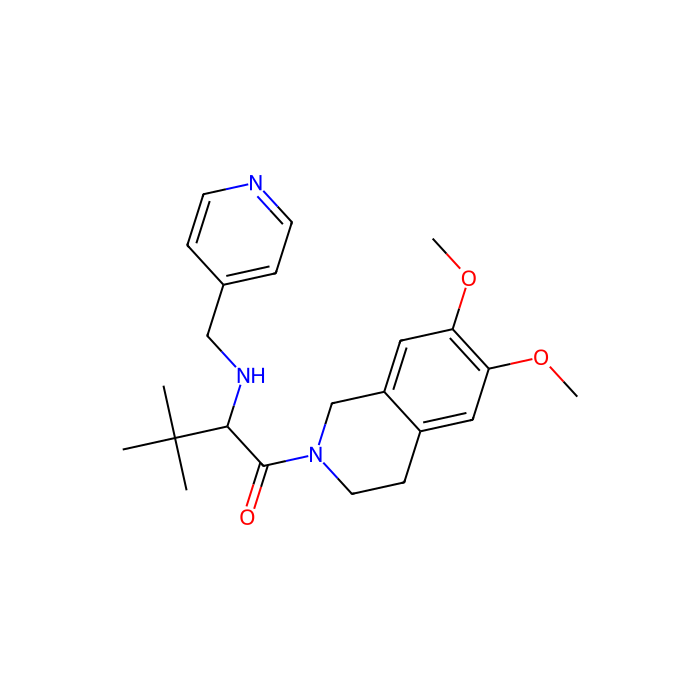
TCS OX2 29 or TCS-OX2-29 is a potent and selective orexin 2 receptor (Ox2R, Ox2-R, Ox-2-R) antagonist (IC50 = 40 nM/Ox2R, >10 μM/Ox1R) with little potency toward 50 other receptors, ion channels, and transporters tested (<30% inhibition at 10 μM). TCS OX2
Fonte
Synthetic
Condições de armazenamento de armazenamento
Store at -20°C,Desiccated
Enviado em
Ice chest + Ice pads
Este produto requer transporte de cadeia fria. Serviços terrestres e outros serviços econômicos não estão disponíveis.
Grau
Moligand™
Tipo de ação
ANTAGONIST
Mecanismo de ação
Antagonist of OX 2 receptor
Nota
Wherever possible, you should prepare and use solutions on the same day. However, if you need to make up stock solutions in advance, we recommend that you store the solution as aliquots in tightly sealed vials at -20°C. Generally, these will be useable for up to one month. Before use, and prior to opening the vial we recommend that you allow your product to equilibrate to room temperature for at least 1 hour. Need more advice on solubility, usage and handling? Please visit our frequently asked questions (FAQ) page for more details.
This compound belongs to the class of organic compounds known as valine and derivatives. These are compounds containing valine or a derivative thereof resulting from reaction of valine at the amino group or the carboxy group, or from the replacement of any hydrogen of glycine by a heteroatom.
External Descriptors
Not available
1. Djoumbou Feunang Y, Eisner R, Knox C, Chepelev L, Hastings J, Owen G, Fahy E, Steinbeck C, Subramanian S, Bolton E, Greiner R, and Wishart DS. ClassyFire: Automated Chemical Classification With A Comprehensive, Computable Taxonomy. Journal of Cheminformatics, 2016, 8:61.
Determine the necessary mass, volume, or concentration for preparing a solution.
Dilution Calculator
Determine the dilution needed to prepare a stock solution.
Reconstitution Calculator
Revisões
Avaliações dos Clientes
Application Protocols
Tested/validated applications and recommended conditions are provided only when specified in the product data.
Tested applications (e.g., receptor binding, functional assays) and recommended working concentrations: Not specified for this item; refer to CoA/Spec Sheet.
Positive controls, negative controls, and assay conditions: Not specified for this item; refer to CoA/Spec Sheet.
General note
If incorporating this ligand into screening or mechanistic studies, establish internal SOPs for stock preparation, vehicle controls, dose–response curve generation, and data QC (Z′-factor, signal windows), and validate conditions in your specific assay system.
Biological Roles
Item-specific biological claims: Not specified for this item; consult the CoA/SDS. This product is supplied strictly for research use only.
Literature/general context about the named compound and pathway
The name “TCS OX2 29” is commonly associated in the literature with a small-molecule orexin system ligand. Orexin (hypocretin) peptides signal through two GPCRs, OX1 and OX2, which modulate arousal, sleep–wake stability, energy homeostasis, and reward pathways (biological background; non-clinical).
In publications, TCS OX2 29 has been described as a selective antagonist tool compound for the OX2 receptor, enabling dissection of OX2-mediated signaling vs OX1 in recombinant and native systems (literature). Such tool compounds are used to benchmark assay performance, probe downstream signaling (e.g., Ca2+ flux, cAMP, ERK phosphorylation), and study receptor pharmacology.
When employing receptor ligands, confirm target engagement by convergent evidence (binding plus function), check species ortholog potency, and assess off-target profiles to avoid misattribution of phenotypes (general best practice).
Important
Do not infer therapeutic properties from research ligands. Any biological use should remain within in vitro or ex vivo research contexts under appropriate approvals and SOPs.
Buffer Applications
Not a conventional buffering agent. This product is a small-molecule research ligand.
General assay-buffer considerations (non-item-specific)
For biochemical/cellular assays, prepare working solutions by diluting DMSO stocks into assay buffer while matching vehicle across conditions. Common buffers include HBSS, PBS, HEPES-buffered saline, or assay-specific media.
Control pH, ionic strength, and divalent cations per receptor/assay requirements; include BSA or surfactants at low levels if nonspecific binding or adsorption is observed.
Filter-sterilize buffers (0.22 μm) for cell-based work and pre-equilibrate to assay temperature to reduce variability.
Item-specific buffer composition or pH ranges: Not specified for this item; refer to CoA/Spec Sheet if applicable.
Green Alternatives
Context
This product functions as a research ligand rather than a process solvent or bulk reagent, so green chemistry considerations mainly concern solvent choice for dissolution and any upstream/downstream synthetic work you may perform.
Greener handling in screening workflows (general)
Prefer aqueous buffers with minimal DMSO where compatible with solubility and assay fidelity. Titrate DMSO to the lowest effective level and standardize across plates to limit vehicle effects.
Use micro-scale assay formats and sealed plates to minimize solvent usage and emissions.
Evaluate alternative co-solvents with improved environmental profiles (e.g., ethanol or propylene glycol) when assay-tolerated and chemically suitable.
If chemical modification/synthesis is planned (general)
Consider greener solvents (2-MeTHF, CPME, EtOAc, IPA, water) in place of chlorinated solvents where feasible.
Replace heavy-metal catalysts with organocatalysts or abundant-metal catalysts when compatible, and implement in-line scavenging to reduce metal residues.
Trade-offs
DMSO remains the most robust solvent for dissolving diverse ligands but carries energy costs in production and challenges in wastewater. Ethanol is greener but may not achieve required solubility or may perturb biological systems at higher percentages.
Note: No item-specific solvent or life-cycle data are provided; the above are general green chemistry considerations to help lower the environmental footprint of your workflows.
Pharmaceutical Uses
This product is provided for research use only and is not intended for human or veterinary use, clinical diagnosis, or therapeutic applications.
General formulation/manufacturing context (non-item-specific)
Small-molecule receptor ligands can serve as reference standards or internal controls during discovery-stage ADME profiling and analytical method development. Any use in regulated environments requires appropriate qualification and traceability.
If used as a reference material, establish an internal standard operating procedure covering identity verification (e.g., LC–MS/NMR), potency assignment, storage conditions, and requalification intervals.
Regulatory status
No pharmacopeial monograph or excipient status is indicated for this item. Pharmacopeial/compendial status: Not specified for this item; refer to CoA/Spec Sheet.
Note: Avoid extrapolating research-grade performance characteristics to clinical or GMP applications without formal comparability and quality assessments.
Physical Properties
Item-specific physical data
Appearance: Not specified for this item; refer to CoA/Spec Sheet.
Melting point: Not specified for this item; refer to CoA/Spec Sheet.
Boiling point: Not specified for this item; refer to CoA/Spec Sheet.
Density: Not specified for this item; refer to CoA/Spec Sheet.
Solubility: Not specified for this item; refer to CoA/Spec Sheet.
LogP, pKa, refractive index: Not specified for this item; refer to CoA/Spec Sheet.
General/literature guidance (non-spec)
Many screening ligands are supplied as solids designed to be reconstituted in anhydrous DMSO for primary stocks, then diluted into assay buffers with attention to final DMSO content (commonly ≤0.5–1% v/v; literature/general practice). This is not item-specific; confirm actual solubility and stability for your lot.
If aqueous solubility is required, co-solvent systems (DMSO→buffer, or DMSO→aqueous with Tween-20 or cyclodextrin) are commonly used in screening labs (literature/general). Validate experimentally for your assay endpoints.
Note: Do not treat the above as specifications. For exact numeric values and acceptance criteria, consult the item’s CoA/SDS and perform fit-for-purpose verification.
Quality and Grades
Item-specific grade
Grade/Purity: Moligand™ (as provided).
What Moligand™ typically implies (general explanation)
Moligand-grade materials are intended as small-molecule ligands for discovery, screening, and target-validation work. Emphasis is placed on identity confirmation and suitability for biochemical/biophysical assays rather than chromatographic solvent performance.
Typical controls for such libraries include identity verification (e.g., LC–MS/HRMS, NMR), and purity screening appropriate for screening campaigns. Exact test methods/spec limits are item-specific and should be confirmed on the CoA.
What is NOT specified here
Water content, residual solvent profile, metal limits, stabilizers, and UV cutoffs: Not specified for this item; refer to CoA/Spec Sheet.
Practical guidance
For HTS/fragment/ligand work, verify purity and identity upon receipt if your workflow requires trace-level impurity control. Where orthogonal readouts are sensitive to impurities (e.g., fluorescence), consider supplemental QC (blank runs, spectral scans) using your internal methods.
If regulatory or GLP/CMC use is envisioned, this research-grade material may not be suitable; confirm requirements and source GMP/pharmacopeial grade materials as needed.
Reaction and Applications
Chemical reaction applications
This product is a small-molecule ligand offered for discovery/screening. It is not typically used as a synthetic reagent or solvent. As such, there are no item-specific recommendations for use in named organic reactions.
Relevant applications (general for ligands)
Target engagement studies: biochemical receptor-binding assays, functional cellular assays, and orthogonal biophysical assays (SPR, BLI, DSF) to confirm binding and mechanism.
Structure–activity exploration: use as a reference/benchmark tool in comparative pharmacology or to validate assay windows.
Probe development workflows: can serve as a starting point for analog synthesis, labeling, or immobilization strategies after independent route design and IP review.
Practical tips (general)
Prepare concentrated, anhydrous DMSO stocks; filter if particulate is present (0.2 μm PTFE) to avoid assay clogging/noise.
Track freeze–thaw cycles and exposure to moisture/air; many ligands show time-dependent potency drift if hydrolyzed/oxidized.
Verify chemical identity and purity by LC–MS against the CoA before critical screens. Use vehicle controls to deconvolute solvent effects.
For named reactions, catalysts, or yields, this section is not applicable to this item.
Reaction Conditions
Not applicable as a reaction reagent. This product is offered as a research ligand rather than a substrate, catalyst, or solvent for named organic reactions.
General handling for solution preparation (non-item-specific)
Dissolution: Prepare concentrated stock solutions in anhydrous DMSO; mix thoroughly and inspect for clarity. Filter through 0.2 μm PTFE if particulates remain.
Dilution: Add DMSO stocks to pre-warmed buffer/media with vigorous mixing to avoid local supersaturation; maintain consistent final vehicle percentage across controls and test wells.
Stability checks: Where assay sensitivity is high, verify short-term stability of working solutions by LC–MS or functional potency drift over the assay timeframe.
Any temperatures, catalysts, or yields associated with chemical reactions are not applicable to this item.
Safety and Handling
GHS/SDS
Signal word: Not specified for this item; refer to SDS.
Hazard statements (H-phrases): Not specified for this item; refer to SDS.
GHS classification and pictograms: Not specified for this item; refer to SDS.
General laboratory precautions (non-SDS, best practice)
Handle in a fume hood or well-ventilated area. Avoid inhalation of dust/aerosols and contact with skin/eyes.
Avoid moisture ingress for desiccated materials; open vials only after equilibrating to room temperature to minimize condensation.
Incompatibilities: Unknown for this specific item; as a general rule, store away from strong oxidizers and acids/bases until compatibility is confirmed from the SDS.
First aid (general): On skin/eye contact, rinse with water for ≥15 minutes and seek medical attention. If inhaled, move to fresh air. If ingested, do not induce vomiting; seek medical attention. Follow institutional SOPs.
Waste & spills
Collect small-molecule organic research wastes in halogenated/non-halogenated solvent streams per local regulations. Absorb spills with inert material; clean area with suitable solvent while wearing PPE.
Always defer to the official SDS for authoritative hazard, exposure controls, and emergency procedures.
Solvent Selection
Item-specific solubility/polarity data are not provided for this product. The following guidance is general and should be validated empirically for your application.
Common dissolution strategy (literature/general)
Primary stock solvent: Anhydrous DMSO is the default for many drug-like ligands due to broad solvency and assay compatibility.
Working solutions: Dilute DMSO stocks into assay buffers or culture media with careful control of final DMSO content (often ≤0.5–1% v/v to limit vehicle effects). Include vehicle controls.
Alternative solvents: DMF or ethanol can be useful co-solvents, but may have greater assay interference or toxicity; validate per system.
Polarity/miscibility considerations
If the compound is hydrophobic (common for GPCR ligands), expect low aqueous solubility; use co-solvents, surfactants (e.g., 0.01–0.1% Tween-20), or complexing agents (e.g., 2-hydroxypropyl-β-cyclodextrin). Titrate minimal excipient levels that preserve biological readouts.
For biophysical assays (SPR, ITC), remove excess DMSO by serial dilution into matched buffer and perform strict buffer/vehicle matching to avoid refractive index artifacts.
Quick comparison (general)
DMSO: highest solvency; assay-compatible at low %; hygroscopic.
2-MeTHF/CPME/EtOAc: greener but typically unsuitable for aqueous assays; may be used for chemical manipulation if needed.
Note: Because item-specific solubility is not specified, always confirm clarity, absence of precipitation, and chemical stability by LC–MS/NMR under your exact conditions.
Storage and Reconstitution
Item-specific storage and shipping (from Product Data)
Storage Conditions: Store at -20°C, desiccated.
Shipped In: Ice chest + ice pads.
Reconstitution and working solution guidance
Reconstitution details (solvent, concentration, buffer composition): Not specified for this item; refer to CoA/Spec Sheet.
Appearance after reconstitution, stability window, and freeze–thaw limits: Not specified for this item; refer to CoA/Spec Sheet.
General best practices (non-spec)
Equilibrate the sealed vial to room temperature before opening to prevent moisture condensation. Reseal promptly under dry conditions (desiccator or inert gas backfill) after aliquoting.
For long-term use, prepare single-use aliquots to minimize freeze–thaw cycles. Record preparation dates and storage history for data integrity.
Research Use Note
For research use only.
Structure and Identity
Item-specific identifiers (from Product Data)
SKU: T275857
Product Name: TCS OX2 29
CAS: 372523-75-6
PubChem CID: 10408514
InChIKey: 49353 (as provided; truncated/not in standard length)
SMILES: Not specified for this item; refer to CoA/Spec Sheet.
Molecular Formula: Not specified for this item; refer to CoA/Spec Sheet.
Molecular Weight: Not specified for this item; refer to CoA/Spec Sheet.
Structural description
Item-specific structural features (rings, heteroatoms, stereochemistry): Not specified for this item; refer to CoA/Spec Sheet.
Literature/context (general)
The compound name “TCS OX2 29” is widely used in the literature for a small-molecule orexin-receptor ligand. When structural details are required for cheminformatics or registry purposes, consult structure-resolved resources (e.g., the PubChem CID above) and verify against the item’s CoA prior to use in regulated workflows.
Synthetic Utility
Not a general-purpose synthetic reagent.
Context
This product is sold as a discrete small-molecule ligand for biological research. It is not typically employed to mediate or catalyze organic reactions, nor is it a common building block in standard synthetic sequences.
If derivatization is contemplated (general)
Researchers sometimes derivatize tool ligands to append reporter tags (fluorophores, biotin) or linkers for immobilization. Such efforts require independent route design, protection/deprotection planning, and SAR awareness to preserve target engagement.
Prior to any synthetic modification, verify the exact structure from the CoA and review IP considerations. Conduct small-scale feasibility studies to confirm stability of key functionalities under proposed conditions.
Item-specific reactive functional groups, protecting-group strategies, and optimal transformations: Not specified for this item; consult the CoA/Spec Sheet and primary literature before planning synthesis.
Target Specificity
Only item-specific, catalog-verified target details may be listed here.
Target, selectivity, species reactivity, and potency values: Not specified for this item; refer to the product CoA and primary literature if needed for study design.
Note: While the literature commonly associates the name “TCS OX2 29” with a particular GPCR target, Aladdin Scientific makes no representation of target specificity beyond what is provided in the official documentation for this catalog item.
Perguntas frequentes
What is the purity of this product?
This product is supplied at ≥95% purity (chemical assay). Lot-specific values are stated on the Certificate of Analysis.
What is Moligand??
Moligand? is one of Aladdin Scientific's premium product lines, formulated for high-purity applications across multiple workflows. Compared to standard grades in the same workflow, Moligand? products typically offer tighter specifications, more rigorous QC, and stronger lot-to-lot consistency.
How should this product be stored?
Store at ?20 °C, desiccated. Keep the container tightly closed with desiccant — the material is moisture-sensitive.
How is this product shipped?
This product ships in an insulated container with ice pads. Unpack on arrival and transfer it to the storage condition stated above.
What are the CAS number, molecular formula and molecular weight?
The CAS Number is 372523-75-6, the molecular formula is C23H31N3O3, and the molecular weight is 397.5 g/mol. InChIKey COFVZFLCAOUMJT-OAQYLSRUSA-N.
What documentation is provided?
Available product documentation, including Certificates of Analysis (COA), Safety Data Sheets (SDS), and specification sheets, is shown in the product document area. Document availability and access follow the current site policy.
Need help choosing the grade?
Our grade selection guide covers purity, stabilizer status, and application suitability for all variants in our catalog.
Usamos cookies para garantir o funcionamento adequado do site e, quando permitido, para melhorar a sua experiência. Você pode gerenciar suas preferências a qualquer momento nas Configurações. Saiba mais em nossa Política de Cookies.
Deseja que lhe enviemos uma mensagem quando tivermos descontos disponíveis?
Lembrar-me mais tarde
Obrigado! Por favor, verifique a sua caixa de entrada de e-mail para confirmar.
Products are supplied to verified businesses, institutions, and qualified professionals for research and development use only. Not for use in humans, animals, diagnosis, or therapy.

 B2225044