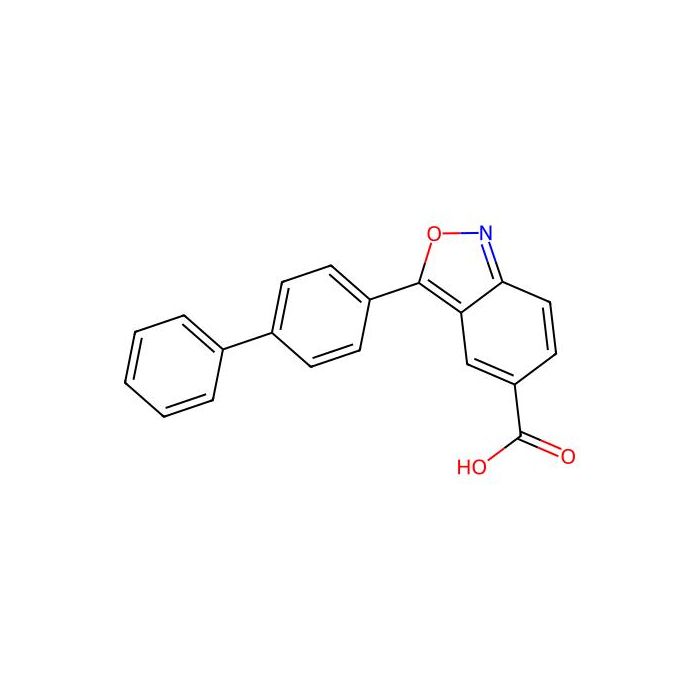
10mM in DMSO for sensitive chromatographic and analytical workflows requiring minimal baseline interference.
🌡
Storage & shipping
Store at -80°C Ships Dry ice packs + Cold packs Check lot-specific COA for exact specifications.
📋
Quality documents
SDS, COA, datasheet, and spec sheet available for download. Lot-specific COA accessible via lot number lookup.
📚
Literature proof
Cited in 0 peer-reviewed publications across chromatography, organic synthesis, and cross-coupling reactions.
Visão geral
UNC7467 is a potent IP6K inhibitor with values of 4.9, 8.9 and 1320 nM for IP6K2, IP6K1 and IP6K6, respectively. UNC7467 reduces levels of inositol pyrophosphates. UNC7467 can be used for obesity research.
In Vitro:UNC7467 (2.5 μM; 3 hours; HCT116 cells) reduces levels of inositol pyrophosphates. UNC7467 reduces 5-InsP 7 levels by 81% and 5-InsP 8 levels by 63%. MCE has not independently confirmed the accuracy of these methods. They are for reference only.
In Vivo:UNC7467 (5mg/kg; i.p.; daily, for 4 weeks; diet-induced obesity mice) ameliorated diet induced obesity, insulin resistance, and hepatic steatosis. UNC7467 (1-5mg/kg; i.v. and i.p.; diet-induced obesity mice) exhibits low clearance (13.7 (mL/min)/kg
Biological Activity:UNC7467 is a potent IP6K inhibitor with values of 4.9, 8.9 and 1320 nM for IP6K2, IP6K1 and IP6K6, respectively. UNC7467 reduces levels of inositol pyrophosphates. UNC7467 can be used for obesity research.
Specifications
Especificações e pureza
10mM in DMSO
Condições de armazenamento de armazenamento
Store at -80°C
Enviado em
Dry ice packs + Cold packs
Este produto requer transporte de cadeia fria. Serviços terrestres e outros serviços econômicos não estão disponíveis.
Nomes e identificadores
Sorrisos canónicos
O=C(C1=CC2=C(ON=C2C=C1)C3=CC=C(C=C3)C4=CC=CC=C4)O
Peso molecular
315.32
Documentation
📋 Safety Data Sheet (SDS)
Comprehensive hazard, handling, storage, and regulatory compliance document.
Determine the necessary mass, volume, or concentration for preparing a solution.
Dilution Calculator
Determine the dilution needed to prepare a stock solution.
Reconstitution Calculator
Revisões
Avaliações dos Clientes
Application Protocols
Item-specific tested applications: Not provided.
General handling protocol for small-molecule screening stocks (guidance)
Thaw: Remove from -80 °C storage and thaw on ice or at room temperature briefly. Mix gently to ensure homogeneity.
Aliquoting: If supplied in solution, subdivide into single-use aliquots (low-bind tubes) to avoid repeated freeze–thaw cycles.
Dosing: Prepare serial dilutions in DMSO to generate intermediate stocks; add to assay buffer/media to the desired final concentration, keeping DMSO% constant across all wells.
Controls: Include vehicle controls (matching DMSO%), positive controls (assay-dependent), and orthogonal interference controls when applicable.
Documentation: Record lot number, concentrations, dilution scheme, and final solvent percentage in the assay report.
Note: Replace with vendor-validated protocols if/when they are provided for this specific item.
Biological Roles
Item-specific
No target, pathway, or endogenous role information is provided for UNC7467 in the Product Data.
General research context (non-clinical)
Small molecules in screening libraries are used as tool candidates to perturb biochemical targets or cellular pathways in vitro. Their biological roles are investigational and assay-dependent.
If the compound is a putative probe from the literature, biological role definitions require a disclosed structure, target, and on/off-target profiles. None are available here.
Practical guidance
Establish baseline cytotoxicity in the relevant cell system across the intended exposure window and DMSO percentage.
Validate any observed activity with orthogonal assays and counter-screens (e.g., redox, luciferase interference, fluorescence interference panels) to exclude assay artifacts.
Document and report final DMSO percentage and vehicle controls, as solvent can influence cellular responses.
Note
No medical or therapeutic claims are made. Use is strictly for laboratory research.
Buffer Applications
Applicability
As a small-molecule screening member, UNC7467 is not a buffering agent. However, its delivery into buffers is critical for assay performance when prepared as DMSO stocks.
Practical considerations
Dilution into aqueous buffers: Add concentrated DMSO stock slowly with mixing to avoid local supersaturation and precipitation.
Maintain consistent vehicle percentage across test and control wells (commonly 0.1–1% v/v DMSO). Confirm assay tolerance.
For sensitive assays (e.g., enzymes), include controls with matching DMSO% to discern solvent effects from compound effects.
If precipitation is observed, consider: adjusting ionic strength, including a small amount of co-solvent (e.g., 0.01–0.05% nonionic surfactant), or preparing a lower-concentration DMSO intermediate before final dilution.
Compatibility notes
Phosphate, HEPES, and Tris buffers generally tolerate low DMSO levels. Verify with pilot runs, as DMSO can modulate protein stability in some systems.
Green Alternatives
Context
If UNC7467 is supplied or handled in DMSO, the primary environmental consideration is solvent selection and waste minimization rather than substitution of the compound itself.
Water or aqueous co-solvent systems: preferred when compound solubility and assay biology allow (e.g., cyclodextrin inclusion, minimal organic cosolvent).
Bio-based/benign vehicles: ethanol (bio-ethanol) can be a greener alternative where compatible with solubility and assay tolerance.
Process scale vs. screening: For HTS-scale volumes, the main impacts are from plasticware and solvent waste; implement miniaturization and plate reuse policies where feasible.
Trade-offs
DMSO offers unmatched solvency and stability for many hydrophobic libraries, but it can increase dermal absorption risks and may perturb some biological readouts at higher percentages.
Ethanol and aqueous systems reduce certain hazards but may limit achievable stock concentrations and shelf stability.
Practical tips
Use the minimal effective DMSO percentage in assays (e.g., 0.1–0.5%).
Consolidate dilutions to reduce waste, and segregate halogenated/non-halogenated organic waste streams to improve disposal efficiency.
Pharmaceutical Uses
Not applicable for this catalog entry.
No pharmacopeial status, excipient role, or formulation use is provided or implied for UNC7467. This product is intended solely for research use in laboratory screening and discovery contexts.
Do not use in humans or for therapeutic applications. No GMP status or clinical-grade information is provided.
Physical Properties
Item-specific (from Product Data)
Appearance: Not specified for this item; refer to CoA/Spec Sheet.
Physical state: Not specified. If provided in DMSO solution, appearance is typically a clear to slightly colored liquid; verify label.
Density, BP/MP, refractive index, pKa, logP/logD, solubility: Not specified for this item; refer to CoA/Spec Sheet.
General considerations (literature-level guidance when supplied in DMSO)
DMSO vehicle properties (literature): BP ~189 °C; MP ~18.5 °C; miscible with water, most organics. These are properties of DMSO, not of UNC7467.
Many screening compounds are moderately lipophilic and sparingly aqueous-soluble; precipitation may occur upon high-fold dilution from DMSO into aqueous buffers.
Practical tips
If the item is a DMSO stock, verify concentration (mM), purity basis (area% vs weight%), and any stabilizers or water content on the CoA.
Perform a quick solubility trial: serially dilute a small aliquot into assay buffer and visually inspect for haze/precipitate. Gentle warming or co-solvent (e.g., 0.1–1% DMSO final) can help maintain clarity.
For solid shipments (if applicable), consult the CoA for melting point and use that as a quick identity check alongside LC–MS.
Quality and Grades
Item-specific (from Product Data)
Grade/purity: Not specified for this item; refer to CoA/Spec Sheet.
Stabilizers/inhibitors: Not specified for this item; refer to CoA/Spec Sheet.
General guidance on grades for screening compounds
Library/screening grade compounds are typically provided with LC–MS or HPLC purity data (often ≥95% area by UV) and confirmatory MS. Some vendors also provide 1H NMR.
For bioassay use, low residual solvents and controlled water content are desirable. If supplied in DMSO, purity reporting may be on a neat basis or solution basis—verify which applies.
If HPLC/LC–MS chromatograms are provided, review for single dominant peak, acceptable area% purity, and absence of late-eluting impurities that can confound assays (PAINS/aggregators).
UV cutoffs and trace-metal specifications are generally not critical for small-molecule screening unless the assay is spectroscopic or metal-catalysis based. For those use cases, request detailed spectral and elemental profiles.
What to request for this item
Lot-specific CoA with purity method/conditions, concentration (if solution), salt form, counterions, residual solvents, water content, and spectral data.
Reaction and Applications
Not primarily applicable as a synthetic reagent.
Based on the listing, UNC7467 is part of a small-molecule/compound library, intended for biochemical or phenotypic screening rather than for use as a stoichiometric or catalytic reagent in synthesis.
Without structural information, reactivity profiles, functional group compatibility, and participation in named reactions cannot be provided.
Practical research applications (non-medical)
In vitro screening: target-based enzymatic/biophysical assays, thermal shift, binding assays (SPR, ITC), or phenotypic cell assays to generate preliminary SAR.
Orthogonal confirmation: use multiple assay modalities to exclude interference (fluorescence quenching, aggregation, redox cycling). Incorporate vehicle controls matching DMSO%.
Triage: counter-screen against common assay artifacts; consider detergent (e.g., 0.01% Tween-20) to mitigate aggregators; run concentration-response with full curves to detect non-sigmoidal behavior.
Documentation
Record lot numbers, storage history (freeze–thaw events), and dilution schemes to ensure reproducibility across screens.
Reaction Conditions
Not applicable.
No structural or reactivity information is provided. UNC7467 is not offered as a reagent for chemical synthesis; therefore, standard reaction conditions, catalysts, or temperatures cannot be recommended.
Assay usage conditions (general guidance)
Prepare and handle stocks at room temperature promptly; return to cold storage to minimize degradation.
Typical screening concentrations: prepare DMSO stocks (commonly 10 mM or as labeled) and dose to achieve desired final assay concentrations with 0.1–1% DMSO vehicle. Verify actual stock concentration and stability on the CoA/label.
Protect from light if the compound is colored or expected to be photosensitive; otherwise, follow standard good laboratory practices.
Safety and Handling
Item-specific (from Product Data)
GHS classification, pictograms, H-statements, signal word: Not specified for this item; refer to SDS.
Always consult the SDS for UNC7467 and the DMSO vehicle (if applicable) before handling. Unknown small molecules should be treated as potentially harmful.
PPE: lab coat, nitrile gloves, and eye protection. Work in a fume hood to minimize inhalation/dermal exposure and to control DMSO-facilitated dermal absorption.
Incompatibilities: Without structural details, avoid strong oxidizers/reducers and reactive bases/acids until compatibility is known. DMSO is generally stable but can enhance penetration of dissolved substances through skin.
First aid (general): In case of skin contact, wash with soap and water; remove contaminated clothing. Eye contact: rinse cautiously with water for several minutes. Ingestion/inhalation: seek medical attention; provide SDS to responders.
Spill response: Absorb small spills with inert material; collect for disposal per institutional hazardous waste protocols.
Special risks: If supplied in DMSO, avoid contact with porous gloves; change gloves frequently. Prevent freeze–thaw cycling to reduce decomposition risk.
Solvent Selection
Applicability
UNC7467 appears to be offered in a DMSO context; however, exact form and concentration are not specified. Guidance below focuses on solvating small molecules for screening.
General solvent guidance for small-molecule stocks
Primary vehicle: DMSO is the standard for 10–50 mM stocks due to high solvency and miscibility with water and many buffers.
Alternative vehicles (literature-level options): ethanol, methanol, acetonitrile, or PEG400/propylene glycol blends when DMSO-sensitive assays are used.
Practical considerations
Aqueous assays often tolerate 0.1–1% v/v DMSO; cell-based systems typically kept ≤0.1–0.5% to minimize solvent effects. Validate tolerance for your assay.
Precipitation control: When diluting concentrated DMSO stocks into aqueous media, add slowly with mixing; consider intermediate dilutions to limit local supersaturation.
If switching from DMSO to ethanol/ACN, verify solubility and assay compatibility; adjust vehicle controls accordingly.
Comparison (general)
DMSO: maximum solvency, broad miscibility; can enhance membrane permeability and interfere with some enzymes at higher %.
Ethanol: volatile, biocompatible at low %, but lower solvency for hydrophobes.
Acetonitrile: good solvency, fully miscible, more volatile/toxic; use in well-ventilated hood.
Storage and Reconstitution
Item-specific (from Product Data)
Storage conditions: Store at -80 °C.
Shipping: Dry ice packs + Cold packs.
Reconstitution: Not specified for this item; refer to CoA/Spec Sheet.
General guidance
If provided as a DMSO solution: Store tightly capped, under inert headspace if possible, at -80 °C. Avoid repeated freeze–thaw; prepare single-use aliquots. Record thaw dates and limit bench time.
If provided as a solid (if applicable): Store desiccated and cold. Reconstitute in anhydrous DMSO to a convenient concentration (e.g., 10 mM), then aliquot and refreeze. Use dry, oxygen-free conditions if the compound is air/moisture sensitive (unknown here—consult CoA).
Stability monitoring: Periodically check by LC–MS or HPLC for degradation, especially after multiple weeks of storage or repeated thaws.
Light and moisture: Protect from light and moisture as a precaution when structural sensitivity is unknown.
Research use only
For research use only. Not for human or veterinary use.
Structure and Identity
Item-specific (from Product Data)
Product name: UNC7467 (SKU: U661667)
CAS: U661667(DMSO) — internal catalog identifier format; not a registered CAS
Molecular formula: Not specified for this item; refer to CoA/Spec Sheet.
Molecular weight: Not specified for this item; refer to CoA/Spec Sheet.
SMILES: Not specified for this item; refer to CoA/Spec Sheet.
InChIKey: Not specified for this item; refer to CoA/Spec Sheet.
Supplied form/vehicle: Not specified; catalog line suggests a DMSO context for this listing.
General notes (chemistry, literature)
“UNC” prefixes commonly denote university-derived screening compounds or chemical probes, but no definitive structure or target information is provided here.
In the absence of structural identifiers (SMILES, InChIKey), the 2D framework, ring systems, and functional groups cannot be described. Request the CoA/Spec Sheet for definitive identity and structural data.
Practical identification guidance
For uncharacterized library members, verification typically relies on vendor documentation (CoA, lot-specific NMR/LC–MS). If structure is disclosed under CDA, maintain records of exact IDs for screening provenance.
If supplied in DMSO, lot labels often include concentration and mass balance — confirm prior to use to ensure accurate assay molarity.
Synthetic Utility
Not applicable based on available information.
UNC7467 is presented as a small-molecule library member for screening rather than as a building block or reagent. Without structural disclosure, meaningful discussion of functional group transformations, protecting-group strategies, or named-reaction participation is not possible.
If structural data become available
Reassess electrophilic/nucleophilic handles, heteroatom content, and scaffold diversification vectors for potential SAR or derivative synthesis.
Consider late-stage diversification strategies (e.g., C–H functionalization, cross-coupling) only after confirming scaffold stability and compatibility.
Target Specificity
Item-specific
Target/epitope, species reactivity, clone, isotype: Not applicable and not provided for this small-molecule product.
Notes
If a biological target is relevant for UNC7467, it is not disclosed in the Product Data. Any target claims should be supported by peer-reviewed literature and vendor documentation, which are not supplied here.
Perguntas frequentes
How should this product be stored?
Store at ?80 °C. Ultra-low temperature storage is required to maintain the specified shelf life.
How is this product shipped?
This product ships frozen with dry ice and cold packs. Unpack on arrival and transfer it to the storage condition stated above; handle dry ice with insulated gloves in a ventilated area.
What are the CAS number, molecular formula and molecular weight?
The CAS Number is U661667(DMSO), the molecular formula is C20H13NO3, and the molecular weight is 315.32 g/mol.
What documentation is provided?
Available product documentation, including Certificates of Analysis (COA), Safety Data Sheets (SDS), and specification sheets, is shown in the product document area. Document availability and access follow the current site policy.
Usamos cookies para garantir o funcionamento adequado do site e, quando permitido, para melhorar a sua experiência. Você pode gerenciar suas preferências a qualquer momento nas Configurações. Saiba mais em nossa Política de Cookies.
Deseja que lhe enviemos uma mensagem quando tivermos descontos disponíveis?
Lembrar-me mais tarde
Obrigado! Por favor, verifique a sua caixa de entrada de e-mail para confirmar.
Products are supplied to verified businesses, institutions, and qualified professionals for research and development use only. Not for use in humans, animals, diagnosis, or therapy.