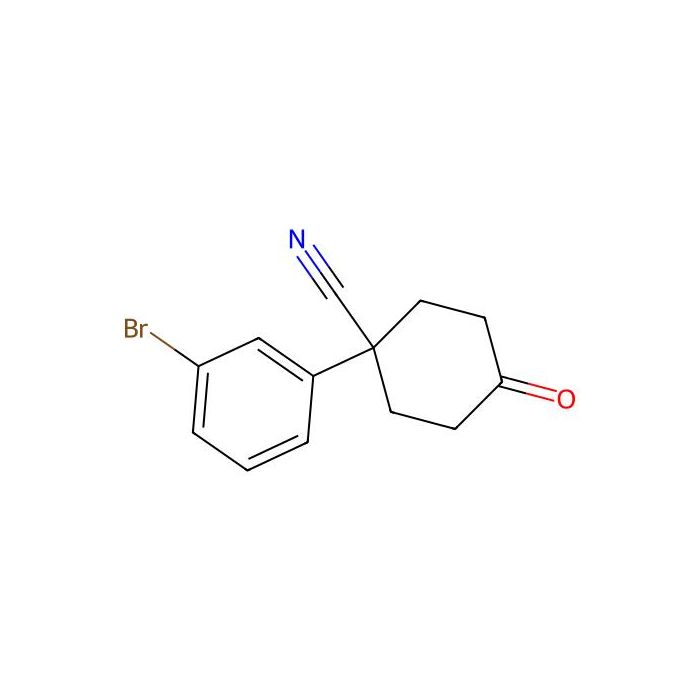
This compound belongs to the class of organic compounds known as bromobenzenes. These are organic compounds containing a bromine atom attached to a benzene ring.
External Descriptors
Not available
1. Djoumbou Feunang Y, Eisner R, Knox C, Chepelev L, Hastings J, Owen G, Fahy E, Steinbeck C, Subramanian S, Bolton E, Greiner R, and Wishart DS. ClassyFire: Automated Chemical Classification With A Comprehensive, Computable Taxonomy. Journal of Cheminformatics, 2016, 8:61.
Certificados (CoA, COO, BSE/TSE y tabla de análisis)
C of A & Other Certificates(BSE/TSE, COO):
Analytical Chart:
Propiedades químicas y físicas
Peso molecular
278.140 g/mol
XLogP3
2.300
Hydrogen Bond Donor Count
0
Hydrogen Bond Acceptor Count
2
Rotatable Bond Count
1
Exact Mass
277.01 Da
Monoisotopic Mass
277.01 Da
Topological Polar Surface Area
40.900 Ų
Heavy Atom Count
16
Formal Charge
0
Complexity
320.000
Isotope Atom Count
0
Defined Atom Stereocenter Count
0
Undefined Atom Stereocenter Count
0
Defined Bond Stereocenter Count
0
Undefined Bond Stereocenter Count
0
The total count of all stereochemical bonds
0
Covalently-Bonded Unit Count
1
Calculadoras de soluciones
Molarity Calculator
Determine the necessary mass, volume, or concentration for preparing a solution.
Dilution Calculator
Determine the dilution needed to prepare a stock solution.
Reconstitution Calculator
Reseñas
Reseñas de cliente
Application Protocols
Item-specific tested applications and dilutions: Not specified for this item; refer to CoA/Spec Sheet.
General laboratory usage examples (non-spec)
Stock solution preparation: Dissolve in DMSO to 10–50 mg/mL; vortex and, if needed, gently warm (≤40 °C). Filter through 0.22 μm PTFE for analytical use.
Cross-coupling setup: Charge aryl bromide (1.0 equiv), boronic acid (1.2–1.5 equiv), base (2–3 equiv), Pd catalyst (1–2 mol%), 1,4-dioxane/H2O. Heat 70–90 °C under N2 until completion by LC–MS. Work up with EtOAc/water, charcoal polish, and silica purification.
Reductive amination: Combine ketone, amine (1.5 equiv), AcOH (catalytic), and NaBH(OAc)3 in DCE/MeOH at rt, 2–6 h. Quench with NaHCO3, extract, and purify.
Note: These are illustrative protocols for analogous chemotypes and are not lot-specific recommendations. Validate conditions on small scale.
Biological Roles
This product is a synthetic small-molecule intermediate (aryl bromide–bearing cyclohexanone nitrile) and is not a known endogenous metabolite or biochemical cofactor.
General notes for chemists (non-clinical, non-therapeutic)
Functional groups such as nitriles and aryl ketones are common motifs in medicinal chemistry scaffolds due to their metabolic stability and vector space for diversification; however, any biological activity of this specific compound would be context-dependent and is not characterized here.
The nitrile can serve as a weak hydrogen-bond acceptor and polarity modulator, while the aryl bromide provides a handle for rapid analogue synthesis (e.g., exchange to other aryl/heteroaryl groups) to explore structure–property relationships.
If this scaffold is advanced into biochemical assays, standard DMSO stock preparations (e.g., 10–50 mM) and serial dilutions in assay buffer are typical, but solubility/aggregation must be verified empirically.
Compliance reminder
Per Product Data: For research use only. No medical, diagnostic, or therapeutic applications are claimed or supported for this material.
Buffer Applications
Not typically applicable. 1-(3-Bromophenyl)-4-oxocyclohexanecarbonitrile is a neutral organic intermediate, not a buffering agent.
Practical note
If preparing assay solutions, dissolve first in a water-miscible organic co-solvent (e.g., DMSO or acetonitrile), then dilute into the desired buffer while monitoring for precipitation. Keep final organic content low (commonly ≤1–2% v/v) to preserve biological assay conditions.
Green Alternatives
Greener choices focus on solvent and reagent selection; the substrate itself is a halogenated aromatic, so process improvements can significantly reduce environmental footprint.
2-MeTHF or CPME for extractions and as reaction media in many nucleophilic additions and reductive steps.
Ethyl acetate or propyl acetate for workups and chromatography eluents instead of DCM.
Replace DMF/NMP with:
Acetonitrile or propylene carbonate (when compatible), or green amide solvents (e.g., Cyrene in some cases) for coupling steps.
Cross-coupling improvements
Use aqueous micellar catalysis (e.g., TPGS-750-M systems) enabling Suzuki–Miyaura of aryl bromides in water or water-rich media at lower catalyst loadings (ppm levels reported in literature), reducing organic solvent use.
Choose ligand/catalyst systems enabling room-temperature couplings (BrettPhos/SPhos or Ni-bipyridyl variants) to cut energy use.
Reducing/derivatization steps
Prefer catalytic hydrogenation over stoichiometric metal hydrides for nitrile reduction when chemoselectivity permits.
Employ electrochemical or photoredox alternatives to harsh reagents for certain functionalizations (e.g., oxidative couplings).
Comparison snapshot (typical trade-offs)
2-MeTHF vs THF: higher boiling point and bio-based origin; slightly lower polarity can impact solubility—confirm dissolution.
EtOAc vs DCM: safer profile, but less dense; phase separations differ—adjust extraction strategy.
Aqueous micellar vs organic media: greener, but substrate solubility and base choice need optimization.
Always benchmark yield/selectivity against conventional conditions to ensure green choices meet project KPIs.
Pharmaceutical Uses
Not specified for this item; refer to CoA/Spec Sheet. This product is offered for research use only and is not supplied with compendial (USP/EP) certification.
General formulation/context (non-therapeutic)
Role in drug discovery: This type of scaffold serves as a versatile intermediate for SAR exploration. The aryl bromide enables rapid diversification via cross-coupling, and the ketone/nitrile can be transformed into diverse functionalities (amines, alcohols, amides, acids) suitable for lead optimization.
Pre-formulation considerations: If evaluating in vitro, typical solvent vehicles are DMSO or PEG-containing cosolvent systems. Determine solubility, stability (e.g., in PBS, pH 7.4), and potential for adsorption to plastics. Filtration through 0.22 μm PTFE/nylon is recommended for clarity.
Impurity control: For any studies sensitive to trace metals or residual halogenated solvents, consider scavenging (e.g., silica-supported thiourea for Pd) and re-drying to consistent water content.
No claims are made regarding therapeutic efficacy, safety in humans/animals, or GMP suitability.
Physical Properties
Item-specific (from Product Data)
Appearance: Not specified for this item; refer to CoA/Spec Sheet.
Physical constants (mp, bp, density, refractive index, UV cutoff, water/peroxide/metal content): Not specified for this item; refer to CoA/Spec Sheet.
Literature/general expectations for this scaffold (non-spec; for planning only)
Phase/solid state: Aryl–bromide-bearing cyclic ketone–nitriles of comparable size are commonly crystalline or low-melting solids; solubility favored in polar aprotic organics.
Solubility profile: Typically soluble in DMSO, DMF, DMAc, acetonitrile, dichloromethane, chloroform, ethyl acetate, and THF; sparingly soluble to insoluble in water; moderate solubility in hot alcohols. Actual solubility should be verified empirically for this item/lot.
Lipophilicity: Presence of aryl bromide and cyclohexanone ring generally confers moderate to high logP; the nitrile increases polarity modestly without hydrogen-bond donation.
Thermal behavior: Aromatic bromides and aliphatic nitriles are usually thermally robust; the cyclohexanone carbonyl may undergo typical enolization under base. Avoid prolonged heating with strong base or acid which can induce hydrolysis or rearrangement.
Practical tips
Dissolution: Start with DMSO (10–50 mg/mL stock), DMF, or CH2Cl2 for reaction use; for analytical work, acetonitrile/methanol may be suitable depending on method.
Hygroscopicity/volatility: Such compounds are generally non-volatile and non-hygroscopic; nonetheless, cap containers promptly and protect from moisture to preserve purity.
Always rely on the specific CoA/SDS for definitive physical data and handling limits.
Quality and Grades
Item-specific (from Product Data)
Grade/Purity: Not specified for this item; refer to CoA/Spec Sheet.
Research Use Note: For research use only.
Guidance on grades and implications (general)
Research grade organic intermediates are typically suitable for synthesis, SAR, and method development. If a chromatographic or bioassay requires higher purity or lower UV background, request HPLC-grade solvents for sample prep and consider additional purification (flash, recrystallization).
If “analytical” or “≥98%” purity is required by your protocol, verify by CoA and consider in-house QC (1H/13C NMR, HRMS, HPLC/UPLC purity, water by Karl Fischer if moisture-sensitive steps are planned).
Stabilizers: None indicated. In absence of inhibitors, the compound should be stable under ambient conditions; nonetheless, protect from prolonged light/heat to minimize degradation (e.g., slow hydrolysis or oxidation). If your workflow demands inhibitor-free material, confirm on the CoA.
Lot-specific documentation
CoA/Spec Sheet typically includes: identity confirmation (NMR/HRMS), purity assay, appearance, and sometimes residual solvents and inorganic residue. For any unlisted parameter in this catalog page, treat as “Not specified for this item; refer to CoA/Spec Sheet.”
Fit-for-purpose tips
For cross-coupling and downstream medicinal chemistry, trace metal content can matter; if catalytic ppm sensitivity is critical, perform a brief metal scavenging step post-coupling and confirm by ICP as needed.
Reaction and Applications
Reactivity profile (general, literature-based for this scaffold)
Aryl bromide handle enables Pd- or Ni-catalyzed cross-couplings:
Suzuki–Miyaura (to diversify aryl substituent), Heck (olefination), Sonogashira (alkynylation), Negishi/Kumada (organometallic cross-coupling), and Buchwald–Hartwig (after aryl–Br activation to form C–N).
Cyclohexanone moiety participates in:
Nucleophilic additions (e.g., Grignard, organolithium) at C=O.
Enolate chemistry: α-alkylation/arylation, aldol condensations, Michael additions after enone formation.
Nitrile functionality:
Hydrolysis to amide or acid (acidic or basic conditions), Pinner-type transformations to imidates, reduction to primary amine (e.g., catalytic hydrogenation or hydride reagents), or conversion to tetrazoles (via azide/organolithium pathways) as carboxylate bioisosteres.
Applications in synthesis
Scaffold diversification: Rapid library generation via cross-coupling at the aryl bromide, followed by orthogonal editing at the ketone (reductive amination, oxime formation) and nitrile (hydrolysis/reduction) provides three independent vectors for SAR.
Late-stage elaboration: The robust nitrile tolerates many coupling conditions; perform sensitive ketone or enolate chemistry either before or under carefully buffered conditions after aryl diversification.
Practical tips
Order of operations: Many workflows first perform the Pd-catalyzed coupling (tolerates CN/ketone), then reduce/derivatize the ketone, and finally address the nitrile if needed.
Protecting strategies: If enolization is problematic under basic coupling conditions, employ milder bases (K3PO4, Cs2CO3) and buffered solvents (dioxane/H2O) or use preformed boronates with reduced basicity.
Workup: For halogenated aromatics, charcoal polish can lower Pd/Ni residues; silica with 1–2% triethylamine can minimize tailing of basic derivatives.
Reaction Conditions
General literature conditions for analogous substrates (non-spec; optimize per project)
Solvent: 1,4-dioxane/H2O (4:1) or THF/H2O at 60–90 °C, 2–12 h.
Notes: CN and ketone typically tolerated; avoid strong bases that drive enolization.
Sonogashira coupling (Ar–Br → Ar–C≡C–R):
Catalyst: Pd(PPh3)2Cl2 (1–2 mol%) + CuI (5–10 mol%).
Base: Et3N or i-Pr2NH.
Solvent: THF or DMF, rt–60 °C, 2–8 h.
Copper-free variants with Pd/XPhos mitigate Glaser byproducts.
Heck reaction (Ar–Br + alkene):
Catalyst: Pd(OAc)2 (1–2 mol%) + P(o-tol)3 or P(t-Bu)3.
Base: Et3N, DIPEA, or K2CO3.
Solvent: DMF, NMP, or toluene, 100–130 °C, 6–16 h.
Reductive amination of the cyclohexanone:
Reagents: Amine (1.2–2.0 equiv) + NaBH(OAc)3 in DCE/MeOH at rt; or H2/Pd-C under mild acid catalysis.
Notes: Aryl bromide usually stable; nitrile remains intact under these conditions.
Nitrile hydrolysis (to amide/acid):
Acidic: aq. H2SO4 or HCl, reflux in MeOH/H2O; Basic: NaOH/KOH in EtOH/H2O, reflux → acid after acidic workup.
Expected outcomes
Yields vary (50–90%) depending on coupling partner and conditions; monitor by LC–MS/UPLC. Employ degassing (Ar/N2) and dry solvents to enhance reproducibility.
Safety and Handling
Item-specific (from Product Data)
GHS classification, signal word, H-statements, pictograms: Not specified for this item; refer to SDS.
Storage conditions: Room temperature (per Product Data).
General safety guidance for aryl bromide/cyclohexanone–nitriles (non-spec; consult SDS)
Likely hazards: Organic nitriles can be harmful if swallowed or inhaled; aryl bromides and ketones may cause skin/eye irritation. This scaffold is combustible; keep away from ignition sources.
PPE: Lab coat, safety glasses/goggles, and chemically resistant gloves (e.g., nitrile). Work in a fume hood to minimize inhalation exposure during weighing and transfers.
First aid (overview):
Inhalation: Move to fresh air; seek medical attention if symptoms persist.
Skin contact: Wash with soap/water; remove contaminated clothing.
Eye contact: Rinse cautiously with water for several minutes; obtain medical advice if irritation continues.
Ingestion: Rinse mouth; do not induce vomiting; seek medical advice.
Incompatibilities: Strong oxidizers; strong acids/bases under heating (risk of hydrolysis of the nitrile to amide/acid or aldol/self-condensation at the ketone under strong base). Avoid sodium/alkali metals and reduce in presence of air if using reactive hydrides.
Thermal/processing notes: Avoid aerosol formation and dust. During high-temperature reactions, ensure adequate ventilation. When performing cross-couplings, control exotherms and manage Pd/Ni catalysts and bases per best practices.
Waste: Collect halogenated organic waste separately. Follow institutional and local regulations.
Authoritative source: Always defer to the product’s SDS for definitive hazard classification and emergency measures.
Solvent Selection
Compound type and polarity (general)
Functional motif: aryl bromide + cyclohexanone + nitrile; overall moderately lipophilic with polar functions (C=O, C≡N) that improve solubility in polar aprotic media.
Poor solubility: Water; alkanes (hexanes, heptane) unless used as antisolvents.
Selection by use-case
Reaction medium:
Cross-coupling (Suzuki/Heck/Sonogashira): 1,4-dioxane, THF, toluene, MeCN, or mixed aqueous-organic (dioxane/H2O) with suitable base.
Nucleophilic additions to the ketone or reductive transformations: THF, 2-MeTHF, Et2O, toluene, or MeOH/EtOH when compatible with reagents.
Nitrile modifications (hydrolysis/reduction): MeOH/EtOH (acid/base hydrolysis), THF/MeOH mixtures for reductions.
Purification: Normal-phase flash chromatography using EtOAc/hexanes or DCM/MeOH gradients; reverse-phase prep HPLC with acetonitrile/water + 0.1% acid if needed for challenging separations.
Comparison notes
For base-sensitive steps, prefer less protic media (THF, toluene, dioxane) to limit ketone enolization.
For greener profiles, 2-MeTHF or CPME can replace THF/DCM in many transformations, balancing solvency and safety. Validate solubility first.
Analytical compatibility
LC–MS: Acetonitrile/water with formic acid or ammonium buffers; ESI or APCI typically affords [M+H]+/[M+Na]+ for similar scaffolds.
Storage and Reconstitution
Item-specific (from Product Data)
Storage conditions: Room temperature.
Shipped in: Not specified for this item; refer to CoA/Spec Sheet.
General guidance
Container: Store tightly closed in an inert, clean glass container (amber recommended) to limit light exposure. Include desiccant if frequent cap openings are expected.
Stability: Compounds of this class are typically stable at ambient temperature when dry. Avoid prolonged exposure to strong light, heat, or moisture. Record the date of opening and re-check purity by NMR/LC–MS periodically for long-running projects.
Reconstitution
If supplied as a solid, prepare concentrated stocks in dry DMSO, DMF, acetonitrile, THF, or dichloromethane depending on downstream use. For biological assays, prefer DMSO stocks and dilute into buffer immediately before use to minimize precipitation.
If supplied as a solution, store as received and minimize freeze–thaw cycles; aliquot if necessary.
Handling tips
Bring to room temperature before opening to avoid condensation. Cap promptly after use. Purge headspace with inert gas if long-term storage is planned.
Always consult the CoA/SDS for any lot-specific storage or stability notes beyond the general guidance above.
SMILES: Not specified for this item; refer to CoA/Spec Sheet.
Molecular formula: Not specified for this item; refer to CoA/Spec Sheet.
Molecular weight: Not specified for this item; refer to CoA/Spec Sheet.
Literature/structure description (inference from name; non-spec)
Core scaffold: a cyclohexanone ring bearing (i) a cyano substituent (–C≡N) on the ring carbon designated C1 and (ii) a 3-bromophenyl substituent also at C1 (geminal to the nitrile), with an oxo (ketone) at C4 relative to C1. The aryl substituent is meta-brominated.
Functional groups: aryl bromide (on a benzene ring), aliphatic ketone (cyclohexanone), and a nitrile (–C≡N). No stereocenters expected in the named structure as given.
Typical 2D depiction in words: a six-membered cyclohexanone ring (C4=O) with the C1 carbon bearing both a nitrile substituent projecting exocyclic and a 3-bromophenyl ring; the phenyl ring carries bromine at the meta position relative to the ring junction carbon.
Notes
Identity fields left blank in Product Data (SMILES, exact MF/MW) should be confirmed from the CoA/Spec Sheet for this specific lot. Any computed identifiers here are provided only as general structural context for professional users.
Synthetic Utility
Transformational handles present
Aryl bromide: Platform for Pd/Ni-catalyzed C–C, C–N, C–O, and C–S bond formation (Suzuki, Sonogashira, Heck, Negishi, Kumada, Buchwald–Hartwig). Oxidative addition is generally facile for aryl bromides, allowing lower catalyst loadings than aryl chlorides.
Cyclohexanone: Amenable to oxime/hydrazone formation, reductive amination (to secondary/tertiary amines), NaBH4/L-Selectride reductions to secondary alcohols, and enolate-mediated α-functionalization.
Nitrile: Orthogonal vector convertible to amide/acid (hydrolysis), amine (reductions: Raney Ni/H2, Pd/C/H2, BH3·THF, DIBAL in select cases), or heterocycles (tetrazoles via [3+2] with azide after activation).
Retrosynthetic leverage
Backward disconnections often target: (i) an aryl bromide cross-coupling step to install the 3-substituted phenyl ring on a preformed sp2 or sp3 center; (ii) construction of the geminal CN/aryl at C1 via arylation of a nitrile-stabilized carbanion; (iii) oxidation to set the 4-oxo functionality late in the sequence to minimize base sensitivity.
Selectivity and sequencing
Because enolization can compete under basic cross-coupling conditions, choose bases like K3PO4 or Cs2CO3 and buffered solvents (dioxane/H2O). If α-functionalization is planned, perform coupling first, then generate enolates under controlled temperatures (−78 to 0 °C) using LDA/LHMDS.
Purification and characterization
Normal-phase silica with EtOAc/hexanes or DCM/EtOAc typically resolves this class well. Characterize by 1H/13C NMR (diagnostic CN carbon ~115–120 ppm; carbonyl ~200–210 ppm, literature), IR (vC≡N ~2220–2260 cm−1; vC=O ~1710–1730 cm−1, literature), and HRMS.
Target Specificity
Not applicable. This product is a small-molecule chemical intermediate, not a biological targeting reagent (no antigen/epitope/isotype attributes). No target specificity data are provided in the Product Data.
We use cookies to ensure the website functions properly and, where permitted, to improve your experience. You can manage your preferences at any time in Settings. Learn more in our Cookie Policy.
Shall we send you a message when we have discounts available?
Remind me later
Thank you! Please check your email inbox to confirm.
Products are supplied to verified businesses, institutions, and qualified professionals for research and development use only. Not for use in humans, animals, diagnosis, or therapy.