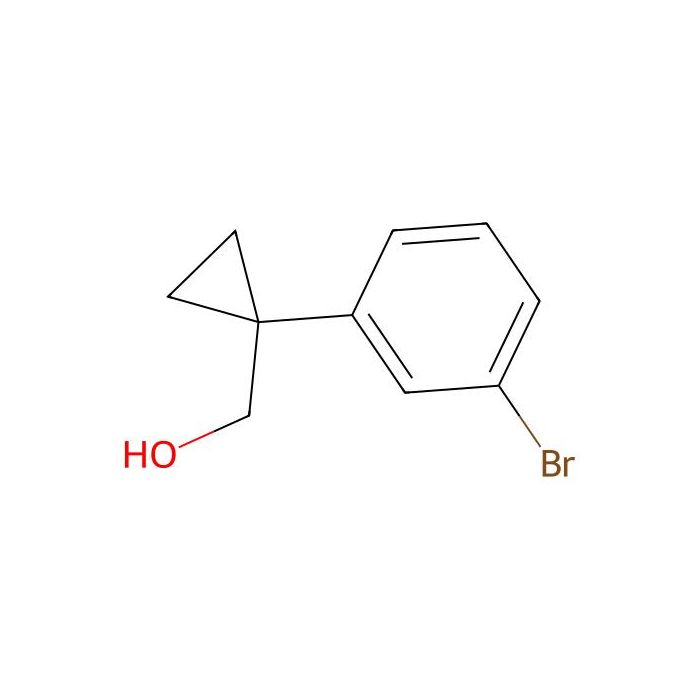
This compound belongs to the class of organic compounds known as bromobenzenes. These are organic compounds containing a bromine atom attached to a benzene ring.
External Descriptors
Not available
1. Djoumbou Feunang Y, Eisner R, Knox C, Chepelev L, Hastings J, Owen G, Fahy E, Steinbeck C, Subramanian S, Bolton E, Greiner R, and Wishart DS. ClassyFire: Automated Chemical Classification With A Comprehensive, Computable Taxonomy. Journal of Cheminformatics, 2016, 8:61.
Certificados (CoA, COO, BSE/TSE y tabla de análisis)
C of A & Other Certificates(BSE/TSE, COO):
Analytical Chart:
Propiedades químicas y físicas
Peso molecular
227.100 g/mol
XLogP3
2.500
Hydrogen Bond Donor Count
1
Hydrogen Bond Acceptor Count
1
Rotatable Bond Count
2
Exact Mass
225.999 Da
Monoisotopic Mass
225.999 Da
Topological Polar Surface Area
20.200 Ų
Heavy Atom Count
12
Formal Charge
0
Complexity
165.000
Isotope Atom Count
0
Defined Atom Stereocenter Count
0
Undefined Atom Stereocenter Count
0
Defined Bond Stereocenter Count
0
Undefined Bond Stereocenter Count
0
The total count of all stereochemical bonds
0
Covalently-Bonded Unit Count
1
Calculadoras de soluciones
Molarity Calculator
Determine the necessary mass, volume, or concentration for preparing a solution.
Dilution Calculator
Determine the dilution needed to prepare a stock solution.
Reconstitution Calculator
Reseñas
Reseñas de cliente
Application Protocols
Not applicable.
No validated bioassay protocols (e.g., WB, IHC, IF, FC) pertain to this small-molecule building block. For synthetic applications, refer to the Reaction Conditions and Synthetic Utility sections for general laboratory guidance.
If using derivatized products in biological assays, develop and validate protocols specific to the final compound and assay format.
Biological Roles
Item-specific
No biological function or role is provided for this product. For research use only.
General/Contextual information
1-(3-Bromophenyl)cyclopropanemethanol is a small, hydrophobic organic building block with an aryl bromide and a primary alcohol. Compounds bearing cyclopropyl groups are frequently explored in medicinal chemistry because the cyclopropyl motif can modulate metabolic stability, conformational restriction, and pKa/LogP of nearby functionalities (literature/general observation). However, such structure–property effects are highly context-dependent and not intrinsic biological activities of this specific compound.
The aryl bromide primarily serves as a synthetic handle for diversification (e.g., Pd-catalyzed couplings) rather than conferring a known biological role. The primary alcohol can be further elaborated to ethers, esters, or oxidized derivatives that may act as probes or intermediates.
Notes
Any biological testing or use in living systems must be designed, controlled, and interpreted by qualified professionals. This product is not intended for diagnostic, therapeutic, or clinical use.
Buffer Applications
Not typically applicable.
This compound is a neutral, hydrophobic organic building block and is not used as a buffering agent. It does not provide a conjugate acid/base pair in the physiological pH range suitable for buffering.
For work in aqueous systems (e.g., bioconjugation after derivatization), choose an appropriate external buffer (e.g., phosphate, HEPES) based on the reactivity of the functional group installed downstream.
Green Alternatives
Context
The product itself is a specialty building block; “greenness” focuses on solvents, reagents, and process choices in downstream transformations.
Greener choices for common transformations (literature/general)
Cross-coupling: Replace dioxane/DMF with 2-MeTHF or ethanol/water mixtures when compatible with catalyst/base. Employ aqueous micellar catalysis (e.g., TPGS-750-M) to reduce organic solvent usage.
Alcohol esterification/activation: Use greener solvents (EtOAc, 2-MeTHF, CPME) instead of DCM. Employ catalytic DMAP with anhydrides rather than stoichiometric acid chlorides when feasible.
Oxidations: Prefer catalytic TEMPO/bleach (pH-controlled, biphasic) or Oxone systems over chromium(VI) reagents. Dess–Martin provides cleaner waste than Cr(VI), but attention to iodinated waste is still required.
Halogen replacements: Where aryl–Br is simply a synthetic handle, consider coupling then debromination-free routes; if possible, start from non-halogenated precursors and introduce diversity via C–H activation in greener media.
Compact comparison (illustrative)
THF vs 2-MeTHF: Similar polarity/solvation; 2-MeTHF is bio-derived, higher boiling, less peroxide-prone than THF, and better phase separation from water.
DCM vs EtOAc/CPME: EtOAc/CPME reduce halogenated solvent waste and often match reactivity in esterifications and Appel alternatives (e.g., PPh3/CBr4 replaced by PPh3/NBS in EtOAc in some cases).
Implementation tips
Screen catalysts that operate at room temperature or under air to decrease energy and inert-gas demand.
No pharmacopeial grade or excipient status is provided. For research use only.
General/Contextual information
Role in drug discovery: This molecule is best viewed as an intermediate/building block for discovery chemistry. The aryl–Br enables rapid diversification via cross-coupling to create structure–activity relationship (SAR) series. The cyclopropyl and primary alcohol motifs are common in leads to fine-tune potency, selectivity, and ADME properties (general literature perspective).
Formulation/excipient status: Not known or intended as an excipient. If incorporated into test articles, standard practice is to formulate finished compounds in acceptable vehicles (e.g., PEG400, Captisol, aqueous co-solvent systems) rather than using this building block directly.
Process considerations: If a route to a development candidate uses this intermediate, attention should be paid to halogen balance (bromide waste), potential genotoxic impurities from coupling reagents, and robust impurity fate-and-purge strategies.
Regulatory note
No pharmacopeial monograph is known for this compound. For any work beyond discovery research, additional qualification, impurity profiling, and stability studies must be conducted according to institutional and regulatory standards.
Physical Properties
Item-specific (from Product Data)
Appearance: Not specified for this item; refer to CoA/Spec Sheet.
Grade/Purity: Not specified for this item; refer to CoA/Spec Sheet.
Molecular formula: Not specified for this item; refer to CoA/Spec Sheet.
Molecular weight: Not specified for this item; refer to CoA/Spec Sheet.
Computed/Literature values (for reference only; not item specifications)
Empirical formula (literature): C10H11BrO
Formula weight (literature): ~226.90 g/mol
Physical state: Typically an organic solid or high-boiling liquid depending on exact purity and polymorphism (literature/general expectation for similar aryl–cyclopropyl alcohols).
Solubility (general): Expected to be sparingly soluble in water; soluble in common organic solvents (e.g., dichloromethane, THF, ethyl acetate, toluene, acetonitrile, alcohols).
Acid–base: Neutral primary alcohol (no formal pKa in water pertinent to neutral conditions; –OH pKa typically ~15–16 for aliphatic alcohols, literature/general).
Partitioning: Presence of aryl–Br and cycloalkyl increases hydrophobicity; logP expected in moderately high range (general qualitative statement based on structure).
Notes for practitioners
Refractive index, melting/boiling points, density, and UV cutoff: Not widely reported for this specific structure in standard handbooks; verify experimentally or consult CoA/SDS if available for a specific lot.
Quality and Grades
Item-specific (from Product Data)
Grade/Purity: Not specified for this item; refer to CoA/Spec Sheet.
Appearance: Not specified for this item; refer to CoA/Spec Sheet.
General guidance on quality for this compound type
Typical research grades: “Research grade” or “95%+” organic intermediate quality is common for building blocks. If HPLC or LC–MS suitability is important (e.g., in SAR campaigns), consider lots accompanied by chromatographic purity data and low residual solvent/metals.
Stabilizers/inhibitors: None are typically required for aryl–cyclopropyl alcohols; absence/presence of stabilizers should be confirmed on the CoA. If present, they may affect certain reactions (e.g., radical chemistry).
Trace impurities to watch: Debrominated aryls, overbrominated isomers, ring-opened species, and dehydration/esterification byproducts from handling. For cross-coupling, trace transition metals or halide exchange (to chloride/iodide) may impact performance; preassay as needed.
Recommended characterization set: 1H/13C NMR (diagnostic cyclopropyl resonances and benzylic CH2OH), HRMS, IR (broad OH ~3300 cm−1), HPLC/GC for purity. If stereochemical integrity of adjacent centers is relevant in downstream chemistry, report clearly (this compound lacks a stereocenter at the quaternary carbon).
Fit-for-use: Define acceptance specs (purity, water by KF, residual solvents, isomer content) appropriate to your application. For chromatography-sensitive uses, low UV background and absence of strongly absorbing impurities are beneficial.
Reaction and Applications
This molecule integrates three useful motifs—aryl bromide, primary alcohol, and a strained cyclopropane—making it a versatile building block for medicinal and materials chemistry.
Cross-coupling at Ar–Br: Suzuki–Miyaura (to install aryl/heteroaryl), Sonogashira (alkynylation), Heck (alkenylation), Negishi/Kumada (alkyl/aryl transfer). The meta-bromide allows diversification without perturbing para/ortho positions.
Alcohol derivatization: Esterifications (acyl chlorides/anhydrides, Steglich), Mitsunobu to invert/functionalize the benzylic-like CH2OH, conversion to sulfonates (Ms/Ts/Tr) then SN2 substitution, halogenation (Appel/Deoxo-Fluor/TCT/py), and oxidations (Swern, Dess–Martin, PCC) to the corresponding aldehyde/acid.
Cyclopropyl chemistry: Under Lewis/Brønsted acids or transition-metal catalysis, selective ring-opening can yield homoallylic/allylic alcohols or rearranged skeletons—useful in complexity generation.
Protection strategies: Acid-stable carbamates/urethanes are irrelevant; for the alcohol, employ TBDMS/TBS, TIPS, or benzyl protection as needed to tolerate coupling or lithiation conditions.
Late-stage diversification: Orthogonal reactivity of Ar–Br and –CH2OH enables sequential functionalization—e.g., (1) Suzuki at Ar–Br, (2) oxidation of –CH2OH, (3) reductive amination to furnish cyclopropylmethyl amines.
Practical tips
For cross-couplings, ensure removal or masking of the free alcohol if it coordinates/poisons catalysts in specific systems; though primary alcohols typically tolerate Pd catalysis.
The cyclopropane’s strain can sensitize the substrate to strongly acidic conditions—validate stability during scale-up and extended heating.
Reaction Conditions
General literature guidance (representative, not item-specific specifications)
Suzuki–Miyaura coupling (Ar–Br): Pd(PPh3)4 (1–2 mol%) or Pd-precatalysts with biaryl phosphines (0.1–1 mol%); base K2CO3/K3PO4/Cs2CO3; solvent 1,4-dioxane/H2O, THF/H2O, toluene/H2O, or 2-MeTHF/H2O; 50–100 °C; 2–16 h. Aryl/heteroaryl boronic acids/esters as partners. The free alcohol generally tolerated; consider silyl protection if base-sensitive steps follow.
Buchwald–Hartwig amination: Pd2(dba)3 or Pd-precatalyst (0.5–2 mol%), ligands (XPhos, BrettPhos, RuPhos), NaOtBu or Cs2CO3, toluene/dioxane/DME, 80–110 °C, 6–24 h. If amination competes with alcohol side reactions, protect or adjust base.
Sonogashira coupling: Pd(PPh3)2Cl2 (1–2 mol%), CuI (2–5 mol%), Et3N or iPr2NH, THF/DMF, rt–60 °C, 2–12 h. Copper-free protocols (Pd + bulky phosphines) reduce Glaser coupling.
Heck reaction: Pd(OAc)2 (1–2 mol%) with PPh3 or modern ligands; NEt3 or Et3N; DMF/NEt3 or 1,4-dioxane; 80–130 °C; 6–24 h.
Alcohol oxidations: Dess–Martin periodinane (DMP) in CH2Cl2, 0–25 °C, 0.5–2 h to aldehyde; Swern (oxalyl chloride/DMSO) −78 to 0 °C; TEMPO/bleach in biphasic H2O/CH2Cl2 or MeCN/H2O with NaHCO3 buffer, 0–25 °C.
Alcohol activation and substitution: MsCl/TsCl, Et3N, DMAP (cat.), CH2Cl2, 0–25 °C; then SN2 with nucleophiles in DMF/DMSO, 25–80 °C.
Cyclopropane ring-opening (if desired): Lewis acids (BF3·Et2O, AlCl3) or Brønsted acids can induce rearrangements; conditions must be tuned to avoid overreaction and to control regioselectivity. Conduct small-scale screens first.
Notes
Catalyst/ligand/base choices should be tailored to the partner’s electronics and the tolerance of the –CH2OH group.
Always verify stability of the cyclopropyl core under planned thermal/acidic/basic conditions.
Safety and Handling
Item-specific (from Product Data)
GHS classification, signal word, pictograms, H-statements: Not specified for this item; refer to SDS.
Storage conditions: Room temperature.
General safety guidance (consult SDS for authoritative information)
Likely hazards: As an aryl bromide containing an organic alcohol, expect eye/skin irritation potential and harmful if swallowed/inhaled as general risks. Avoid generating aerosols or dust.
PPE: Use lab coat, safety glasses or face shield, and appropriate chemically resistant gloves (e.g., nitrile). Work in a fume hood to avoid inhalation of vapors or mists during handling and reactions.
Incompatibilities: Strong oxidizers (may oxidize the alcohol), strong bases with reactive halides (may induce substitution/elimination on the aryl bromide under special conditions), and strong acids or Lewis acids that could promote cyclopropane ring-opening. Avoid prolonged exposure to light/heat.
Handling tips: Keep container tightly closed. Minimize moisture ingress if material will be used in water-sensitive transformations (e.g., organometallic chemistry after alcohol protection/activation). Ground/bond if transferring flammable solvents.
First aid (overview): If on skin/eyes, rinse with plenty of water for ≥15 min. If inhaled, move to fresh air. If ingested, rinse mouth; do not induce vomiting unless directed by medical personnel. Seek medical attention in all cases of exposure. Refer to SDS for detailed measures.
Fire safety: Combustible organic; use CO2, dry chemical, or foam. Thermal decomposition may release HBr/Br-containing fumes—firefighters should wear SCBA.
Solvent Selection
Applicability
This product is a neutral, moderately hydrophobic aromatic building block with a primary alcohol and an aryl bromide. Solvent choice is driven by the intended transformation (e.g., cross-coupling, protection/activation of the alcohol) and analytical needs.
General miscibility/solubility (literature/general)
Water: Expected to be sparingly soluble.
Organic solvents: Typically soluble in dichloromethane, chloroform, ethyl acetate, MTBE/Et2O (moderate), toluene, THF/2-MeTHF, acetonitrile, DMF/DMAc/NMP, alcohols (MeOH/EtOH, moderate to good depending on temperature).
Selection guidance by task
Cross-coupling at the aryl–Br: Polar aprotic or mixed systems (e.g., 1,4-dioxane/H2O, toluene/H2O, THF/H2O, or DMAc/H2O) are commonly effective with Pd catalysis; base solubility in the aqueous phase can be advantageous.
Alcohol transformations (esterification, Mitsunobu, sulfonylation): Use dichloromethane, THF, or acetonitrile for reactivity and workup simplicity; for greener profiles, use 2-MeTHF or CPME as alternatives to DCM/THF.
Oxidations to aldehyde/acid: Acetonitrile, EtOAc, or acetone often compatible with TEMPO/bleach or Dess–Martin protocols; avoid strongly acidic media that could open the cyclopropane ring unless desired.
NMR: CDCl3 typically provides well-resolved spectra for aromatic/cyclopropyl/benzylic regions; DMSO-d6 or acetone-d6 if hydrogen bonding of –OH complicates integration.
Notes
Avoid strongly protic/acidic media at elevated temperatures if preservation of the cyclopropane ring is required.
For base-promoted substitutions after alcohol activation (e.g., tosylates), polar aprotics (DMF/DMSO) can enhance SN2 rates but monitor for possible ring-opening under harsh conditions.
Storage and Reconstitution
Item-specific (from Product Data)
Storage conditions: Room temperature.
Shipped in: Not specified for this item; refer to CoA/Spec Sheet.
General handling and stability guidance
Container: Store in a tightly closed container, under dry, inert atmosphere if long-term storage is anticipated, to protect the primary alcohol from slow oxidative changes. Amber glass recommended if extended light exposure is expected.
Moisture: While the compound is not inherently hygroscopic, keeping desiccated conditions minimizes hydrolytic or oxidative side processes during prolonged storage.
Stability: Aromatic bromides and primary alcohols are typically stable at room temperature. Avoid strong acids/bases and elevated temperatures that could open the cyclopropane ring or promote dehydration/oxidation.
Reconstitution: Not applicable; this is a neat organic compound. For solution preparation, dissolve in a compatible dry solvent (e.g., CH2Cl2, THF, EtOAc, toluene, MeCN) to the desired concentration. For sensitive transformations, prepare solutions immediately before use and, if needed, degas/inert.
Freeze–thaw: Not generally relevant unless stored as a solution. If preparing stock solutions, aliquot and store at low temperature (e.g., 2–8 °C or −20 °C) in airtight vials to minimize solvent loss and oxidation; allow to equilibrate to room temperature before opening to avoid condensation.
Always refer to the product’s SDS and lot-specific CoA for definitive storage and stability information.
Computed/Literature (structure description; not item-specific specs)
Molecular formula (literature): C10H11BrO
Molecular weight (literature): ~226.90 g/mol
2D structural features: A cyclopropane ring whose C-1 is disubstituted by (i) a 3-bromophenyl group (bromine at the meta position on the aryl) and (ii) a hydroxymethyl (–CH2OH) group. The C-1 carbon of the cyclopropane is quaternary (bonded to two ring carbons plus the aryl carbon and the methylene of –CH2OH). Functional groups: aryl bromide (Ar–Br), primary alcohol (–CH2OH), and a strained cyclopropane ring.
Stereochemistry: None specified; as named, the carbon bearing the two substituents is not stereogenic.
SMILES: Not specified for this item; refer to CoA/Spec Sheet.
General notes
Key reactive handles: aryl–Br suitable for Pd/Ni-catalyzed cross-couplings; primary alcohol amenable to protection, oxidation, activation (e.g., as sulfonate), or substitution; strain in cyclopropane can enable selective ring-opening under appropriate conditions.
Synthetic Utility
Functional handles and their reactivity (literature/general)
Aryl bromide (meta-bromo): Readily participates in Pd/Ni-catalyzed cross-couplings (Suzuki–Miyaura, Buchwald–Hartwig amination after conversion to amine partners, Sonogashira, Heck). Meta-selectivity preserves ortho/para positions for subsequent functionalization.
Primary alcohol (–CH2OH): Enables protection (TBDMS/TIPS/benzyl), oxidation to aldehyde/acid (Swern, DMP, TEMPO), Mitsunobu inversion/functionalization, activation to sulfonates (MsCl/TsCl) for SN2 substitution or intramolecular cyclizations (to ethers/aziridines after appropriate setup).
Cyclopropane ring: Strain-release strategies allow ring opening to homoallylic frameworks under acidic, radical, or metal-catalyzed conditions. The quaternary carbon anchor adjacent to –CH2OH offers routes to densely substituted motifs.
Retrosynthetic value
As a convergent node, it allows late-stage aryl diversification on a pre-installed cyclopropylmethyl alcohol scaffold. Alternatively, after coupling at Ar–Br, transforming the alcohol unlocks rapid access to matched aldehydes, acids, or amines.
Orthogonality and sequencing
Typical sequence: (1) Cross-coupling at Ar–Br in alcohol-tolerant conditions; (2) Chemoselective oxidation or activation of –CH2OH; (3) Optional strain-enabled rearrangement for scaffold hopping.
Protecting group strategy: If acidic or Lewis acidic steps are anticipated, protect –CH2OH with a robust silyl ether (TBDPS/TIPS) to safeguard against dehydration or undesired ring opening.
Scalability
Cross-couplings scale well with modern Pd catalysts and ppm loadings; monitor for debromination. Alcohol operations are robust under standard conditions with straightforward workups.
Target Specificity
Not applicable.
This product is a small-molecule building block and is not an antibody, enzyme, or biological reagent with a defined biological target. No antigen/epitope, species reactivity, clone, or isotype information applies.
Utilizamos cookies para garantizar el correcto funcionamiento del sitio web y, cuando esté permitido, para mejorar su experiencia. Puede gestionar sus preferencias en cualquier momento en Configuración. Más información en nuestra Política de Cookies.
¿Quieres que te enviemos un mensaje cuando tengamos descuentos disponibles?
Recordármelo más tarde
¡Gracias! Por favor, revisa tu bandeja de entrada de correo electrónico para confirmar.
Products are supplied to verified businesses, institutions, and qualified professionals for research and development use only. Not for use in humans, animals, diagnosis, or therapy.