Determine the necessary mass, volume, or concentration for preparing a solution.
Grade4, Single metal impurity≤ 100ppt Grade4(G4) for sensitive chromatographic and analytical workflows requiring minimal baseline interference.
Protected from light,Room temperature,Argon charged Ships Normal Check lot-specific COA for exact specifications.
SDS, COA, datasheet, and spec sheet available for download. Lot-specific COA accessible via lot number lookup.
Cited in 42 peer-reviewed publications across chromatography, organic synthesis, and cross-coupling reactions.
Comprehensive hazard, handling, storage, and regulatory compliance document.
Download SDS →Lot-specific quality data. Enter your lot number to retrieve the exact COA.
Look up COA →Full quality attributes and acceptance criteria for this grade.
View spec sheet →Taxonomy Tree
| Kingdom | Organic compounds |
|---|---|
| Superclass | Organic oxygen compounds |
| Clase | Organooxygen compounds |
| Subclass | Alcohols and polyols |
| Intermediate Tree Nodes | Not available |
| Direct Parent | Secondary alcohols |
| Alternative Parents | Dialkyl ethers Hydrocarbon derivatives |
| Molecular Framework | Aliphatic acyclic compounds |
| Substituents | Secondary alcohol - Ether - Dialkyl ether - Hydrocarbon derivative - Aliphatic acyclic compound |
| Descripción | This compound belongs to the class of organic compounds known as secondary alcohols. These are compounds containing a secondary alcohol functional group, with the general structure HOC(R)(R') (R,R'=alkyl, aryl). |
| External Descriptors | Not available |
| Solubilidad | Strong solubility, low toxicity, and can be miscible with water and various organic solvents; Strong coupling properties; Low surface tension; Low viscosity; High evaporation rate. |
|---|---|
| Sensibilidad | Hygroscopic;Sensitive to light;Air sensitive |
| Índice de refracción | 1.4 |
| Punto de inflamación (°C) | 34 °C |
| Punto de ebullición (°C) | 118-120 °C(lit.) |
| Punto de fusión (°C) | -97℃ |
| Peso molecular | 90.120 g/mol |
| XLogP3 | -0.200 |
| Hydrogen Bond Donor Count | 1 |
| Hydrogen Bond Acceptor Count | 2 |
| Rotatable Bond Count | 2 |
| Exact Mass | 90.0681 Da |
| Monoisotopic Mass | 90.0681 Da |
| Topological Polar Surface Area | 29.500 Ų |
| Heavy Atom Count | 6 |
| Formal Charge | 0 |
| Complexity | 28.700 |
| Isotope Atom Count | 0 |
| Defined Atom Stereocenter Count | 0 |
| Undefined Atom Stereocenter Count | 1 |
| Defined Bond Stereocenter Count | 0 |
| Undefined Bond Stereocenter Count | 0 |
| The total count of all stereochemical bonds | 0 |
| Covalently-Bonded Unit Count | 1 |
Not applicable. No tested biological assay protocols (e.g., WB, IHC, IF, FC) are provided for this chemical solvent. For laboratory use, follow general solvent-handling protocols appropriate to your application (reaction setup, drying, purification), and consult the SDS and CoA for item-specific guidance.
This product is a laboratory/industrial solvent rather than a biochemical reagent. It does not have a defined physiological “role” in cells or organisms. Any discussion below is general literature context, not specific to this item and not for clinical use.
For life-science workflows requiring biocompatibility, consider well-characterized aqueous buffers or biocompatible co-solvents (e.g., ethanol, glycerol) and verify cytotoxicity independently.
PGME is not a buffering agent and does not form conventional biological buffer systems. It can be used as a co-solvent to adjust solvent polarity in aqueous buffers for certain analytical or preparative procedures (e.g., extraction, solubilization), but it does not provide pH control.
For true buffering capacity, select established systems (e.g., phosphate, HEPES, Tris) based on the pH range needed.
Context: PGME is widely used as a “safer glycol ether” relative to older ethylene glycol ethers (e.g., EGME) due to a more favorable toxicological profile (literature). From a green chemistry standpoint, solvent selection balances safety, renewability, energy use (bp/evaporation), and process efficiency.
Comparison (literature, qualitative):
| Solvent | Key attributes | Pros | Trade-offs | | --- | --- | --- | --- | | PGME (this product) | Protic, water-miscible, bp ~120 °C | Good solvency for polar substrates; water miscible; moderate evaporation | Flammable; peroxide risk (ether); protic –OH incompatible with strong bases | | 2-MeTHF | Bio-derived option; aprotic, bp ~80 °C | Greener sourcing; lower peroxide tendency than THF; good for organometallics | Lower water miscibility; different polarity; odor | | CPME | Aprotic, bp ~106 °C | Broad reaction compatibility; low peroxide formation; easy phase-separation | Less hydrophilic; solvency differs; cost | | Water/Alcohol blends | Aqueous ethanol/isopropanol | Low toxicity, easy disposal (context-dependent) | Limited solvency for hydrophobes; azeotrope management |
Greener-use strategies with PGME:
Note: Ultimate selection should use a solvent selection guide (e.g., CHEM21/ACS GCI) and process-specific EHS data.
No pharmacopeial or formulation grade information is provided for this item. PGME (as a chemical class: glycol ether) may function as a process solvent in pharmaceutical manufacturing under validated conditions, but such use requires strict control of residuals and compliance with regulatory guidance.
Always confirm grade, impurity profile, and regulatory acceptability for pharmaceutical manufacturing separately; these aspects are Not specified for this item and must be verified on the CoA/Spec Sheet.
Item-specific specifications are not provided in the Product Data; consult the CoA/Spec Sheet for release specifications. The following are typical literature values for 1-methoxy-2-propanol (PGME) and are provided for general guidance only.
Practical notes (general):
Context and implications:
Recommendation: Match the solvent grade to the application’s tolerance for water, nonvolatile residue, and UV/metal background; consult the Aladdin CoA to confirm suitability.
PGME’s combination of an ether oxygen and a secondary alcohol makes it a versatile solvent and process aid in synthesis and materials processing.
Representative uses (general/literature):
Practical tips:
General, literature-based guidance when using PGME as a reaction medium (not item-specific; adjust per substrate and catalyst):
Solvent role: Protic, polar solvent; miscible with water. Useful temperatures from 0 °C up to near its bp (~120 °C). Reflux at ~120 °C enables moderately high-temperature transformations without pressure.
Typical applications and conditions:
Drying/inerting:
Workup notes:
Expected yields are substrate- and catalyst-dependent; consult reaction-specific literature.
Safety information specific to this item (grade-specific hazards, exact classifications) is not provided in the Product Data. Always consult the Aladdin SDS for authoritative information. The following are general, literature-based cautions for 1-methoxy-2-propanol (PGME):
Handling and PPE:
Storage and incompatibilities:
Special risks and first aid (general):
PGME is a mid-polar, water-miscible ether–alcohol solvent with both hydrogen-bond donor (–OH) and acceptor sites, offering a balance between protic solvation and organic compatibility.
Comparison snapshot (literature, qualitative):
Practical tips:
Storage conditions (from Product Data):
Container and headspace:
Shelf life and monitoring:
Reconstitution:
Compatibility and segregation:
Always consult the Aladdin SDS and CoA for item-specific handling and quality details. For research use only (as stated in Product Data).
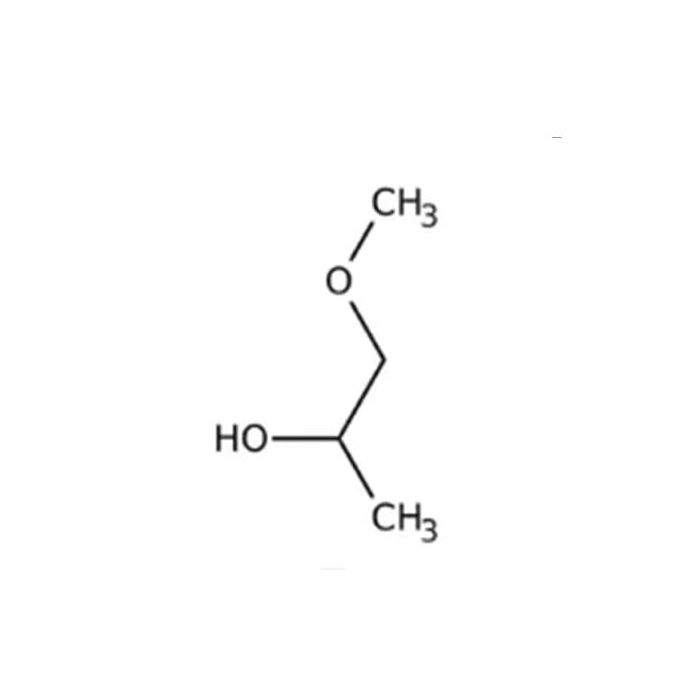
Brief description: 1-Methoxy-2-propanol (PGME, also known as propylene glycol monomethyl ether, “PM”) is a secondary alcohol bearing a methoxy ether substituent on the adjacent carbon. It is a polar, hydrogen-bonding, ether–alcohol solvent.
Note: Structural/literature values are provided for context; for item-specific identity parameters, consult the Aladdin CoA/Spec Sheet.
Functional-group perspective:
Utility as solvent/co-solvent (literature):
Operational advantages:
Caveats:
Not applicable. This product is a chemical solvent (1-methoxy-2-propanol), not a biological targeting reagent (e.g., antibody, enzyme inhibitor, ligand). No antigen/epitope specificity applies.
Our grade selection guide covers purity, stabilizer status, and application suitability for all variants in our catalog.
View Grade4(G4) grade guide →