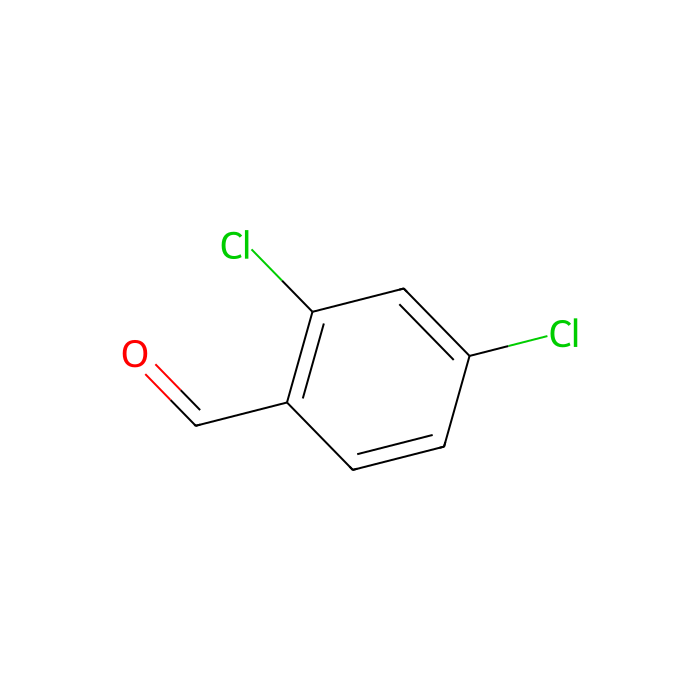
2,4-Dichlorobenzaldehyde - ≥98% , CAS No.874-42-0

CAS: 874-42-0 Cat. No.: D100690 Fórmula: C7H4Cl2O Peso molecular: 175.01 Beilstein Registry Number: 471601 Número EC: 212-861-1
Disponible para pedir
CALIDAD & PUREZA ≥98%
Synonyms
DICHLOROBENZALDEHYDE, 2,4- | PS-6004 | D71088 | DTXCID302130 | AMY39072 | A842216 | EN300-18374 | UNII-Z08QL2124R | AC-11246 | MFCD00003305 | NSC 8762 | NSC8762 | SCHEMBL95435 | EINECS 212-861-1 | CAS-874-42-0 | Tox21_201217 | FT-0610037 | CCRIS 6013 | (2
Storage
Protected from light,Room temperature,Argon charged
Shipped In
Normal
★
Talla
Alemania (EU)
USA*
Precio
Cantidad
25g
D100690-25g
—
2 Disponible

16,40€

25,08€
Guardar 8,68 € (34.60%)
100g
D100690-100g
—
3 Disponible

20,74€

31,15€
Guardar 10,41 € (33.43%)
500g
D100690-500g
1 Disponible
1 Disponible

57,18€

85,82€
Guardar 28,64 € (33.37%)
Enter a quantity for the sizes you want to add.
🧪
Por qué esta calidad

≥98% para flujos de trabajo cromatográficos y analíticos sensibles que requieren una interferencia mínima de la línea base.

🌡

Almacenamiento y envío

Protected from light,Room temperature,Argon charged Envío Normal. Consulte el COA específico del lote para conocer las especificaciones exactas.

📋

Documentos de calidad

SDS, COA, ficha técnica y hoja de especificaciones disponibles para descargar. COA específico del lote accesible mediante búsqueda por número de lote.

📚

Prueba documental

Citado en 3 publicaciones revisadas por pares sobre cromatografía, síntesis orgánica y reacciones de acoplamiento cruzado.

Descripción general

2,4-Dichlorobenzaldehyde on condensation with 4-amino-5-mercapto-3-methyl/ethyl-1,2,4-triazole yields bidentate Schiff base ligands and their metal complexes are potential antimicrobial agents

Especificaciones

Sinónimos
DICHLOROBENZALDEHYDE, 2,4- | PS-6004 | D71088 | DTXCID302130 | AMY39072 | A842216 | EN300-18374 | UNII-Z08QL2124R | AC-11246 | MFCD00003305 | NSC 8762 | NSC8762 | SCHEMBL95435 | EINECS 212-861-1 | CAS-874-42-0 | Tox21_201217 | FT-0610037 | CCRIS 6013 | (2
Especificaciones y pureza
≥98%
Condiciones de almacenamiento de almacenamiento
Protected from light,Room temperature,Argon charged
Enviado en
Normal
Pureza
≥98%
Nombres e identificadores
Pubchem Sid
Pubchem Sid Url
https://pubchem.ncbi.nlm.nih.gov/substance/488181849
Sonrisas canónicas
C1=CC(=C(C=C1Cl)Cl)C=O
IUPAC Name
2,4-dichlorobenzaldehyde
InChIKey
YSFBEAASFUWWHU-UHFFFAOYSA-N
INCHI
1S/C7H4Cl2O/c8-6-2-1-5(4-10)7(9)3-6/h1-4H
Isómeros SMILES
C1=CC(=C(C=C1Cl)Cl)C=O
WGK Alemania
2
Número ONU
3261
Grupo de embalaje
I
Peso molecular
175.01
Beilstein
471601
Reaxy-Rn
471601
Reaxys-RN_link_address
https://www.reaxys.com/reaxys/secured/hopinto.do?context=S&query=IDE.XRN=471601&ln=

Documentación

📋 Hoja de datos de seguridad (SDS)

Documento completo sobre peligros, manipulación, almacenamiento y cumplimiento normativo.

<<<<<<< HEAD Descargar SDS → ======= Descargar SDS → >>>>>>> release248-p3

✅ Certificado de análisis (COA)

Datos de calidad específicos del lote. Introduzca su número de lote para obtener el COA exacto.

Buscar COA →

📊 Ficha técnica

Resumen de referencia rápida de las especificaciones y aplicaciones del producto.

Ver ficha técnica →

🔬 Hoja de especificaciones

Atributos de calidad completos y criterios de aceptación para esta calidad.

Ver hoja de especificaciones →

Datos avanzados

Taxonomic Classification

Taxonomy Tree

KingdomOrganic compounds
SuperclassBenzenoids
ClaseBenzene and substituted derivatives
SubclassHalobenzenes
Intermediate Tree Nodes Chlorobenzenes
Direct ParentDichlorobenzenes
Alternative Parents Benzoyl derivatives  Benzaldehydes  Aryl chlorides  Vinylogous halides  Organochlorides  Organic oxides  Hydrocarbon derivatives  
Molecular FrameworkAromatic homomonocyclic compounds
Substituents 1,3-dichlorobenzene - Benzoyl - Benzaldehyde - Aryl-aldehyde - Aryl halide - Aryl chloride - Vinylogous halide - Organic oxygen compound - Organic oxide - Hydrocarbon derivative - Organooxygen compound - Organochloride - Organohalogen compound - Aldehyde - Aromatic homomonocyclic compound
DescripciónThis compound belongs to the class of organic compounds known as dichlorobenzenes. These are compounds containing a benzene with exactly two chlorine atoms attached to it.
External Descriptors Not available
Estructura 3D
Modelo de Estructura Química Interactiva


Objetivos asociados (humanos)
NR3C1 Tclin Glucocorticoid receptor (14987 Activities)
Activity TypeRelationActivity valueUnitsAction TypeJournalPubMed IddoiAssay Aladdin ID
CXCL8 Tchem Interleukin-8 (642 Activities)
Activity TypeRelationActivity valueUnitsAction TypeJournalPubMed IddoiAssay Aladdin ID
Lymphoblastoid cell (5959 Activities)
Activity TypeRelationActivity valueUnitsAction TypeJournalPubMed IddoiAssay Aladdin ID
Objetivos asociados (no humanos)
B16-F10 (4610 Activities)
Activity TypeRelationActivity valueUnitsAction TypeJournalPubMed IddoiAssay Aladdin ID
Mecanismos de acción
Certificados (CoA, COO, BSE/TSE y tabla de análisis)
C of A & Other Certificates(BSE/TSE, COO):
Analytical Chart:

Find and download the COA for your product by matching the lot number on the packaging.

13 results found

Lot NumberCertificate TypeFechaArticulo
L2417430L2417430Certificate of AnalysisSep 07, 2026 D100690
L2417428L2417428Certificate of AnalysisSep 07, 2026 D100690
B2315193B2315193Certificate of AnalysisJul 30, 2026 D100690
F23061537F23061537Certificate of AnalysisMar 04, 2025 D100690
I2118130I2118130Certificate of AnalysisMar 04, 2025 D100690
I2118131I2118131Certificate of AnalysisMar 04, 2025 D100690
I2118132I2118132Certificate of AnalysisMar 04, 2025 D100690
G1523012G1523012Certificate of AnalysisSep 04, 2024 D100690
D1903116D1903116Certificate of AnalysisAug 08, 2024 D100690
H2522677H2522677Certificate of AnalysisJul 10, 2024 D100690
H2522678H2522678Certificate of AnalysisJul 10, 2024 D100690
D2003017D2003017Certificate of AnalysisNov 03, 2023 D100690
F23061532F23061532Certificate of AnalysisJun 15, 2023 D100690
Propiedades químicas y físicas
SolubilidadSolubility in water: Practically insoluble; Very soluble in Alcohol,Ether,Toluene
SensibilidadLight and Air sensitive
Punto de inflamación (°F)275 °F
Punto de inflamación (°C)135 °C
Punto de ebullición (°C)233°C
Punto de fusión (°C)74.5°C
Peso molecular175.010 g/mol
XLogP33.000
Hydrogen Bond Donor Count0
Hydrogen Bond Acceptor Count1
Rotatable Bond Count1
Exact Mass173.964 Da
Monoisotopic Mass173.964 Da
Topological Polar Surface Area17.100 Ų
Heavy Atom Count10
Formal Charge0
Complexity127.000
Isotope Atom Count0
Defined Atom Stereocenter Count0
Undefined Atom Stereocenter Count0
Defined Bond Stereocenter Count0
Undefined Bond Stereocenter Count0
The total count of all stereochemical bonds0
Covalently-Bonded Unit Count1
Citations of This Product
Calculadoras de soluciones
Reseñas

Reseñas de cliente

Application Protocols

No vendor-validated bioassay or analytical “application protocols” are specified for this item. However, below are general, literature-based procedural outlines for common uses of aryl aldehydes. These are not product specifications; adjust to your system.

Example 1: Schiff base formation (general)

  • Dissolve 2,4-dichlorobenzaldehyde (1.0 eq) and a primary amine (1.1 eq) in toluene (0.1–0.3 M).
  • Add p-TsOH (10 mol%) and a trace of BHT if needed to deter oxidation; fit a Dean–Stark trap and reflux 2–6 h.
  • Cool, wash with saturated NaHCO3, dry (Na2SO4), concentrate, and crystallize or purify by column.

Example 2: Oxime formation (general)

  • Combine the aldehyde (1.0 eq) with NH2OH·HCl (1.2 eq) and NaOAc (1.5 eq) in EtOH/H2O (4:1, 0.2 M).
  • Stir at 40–60 °C for 3–6 h; cool, filter the precipitated oxime, and wash with cold EtOH.

Example 3: Wittig olefination (general)

  • Generate ylide in THF at 0 °C; add aldehyde dropwise under argon; warm to rt and stir 2–4 h.
  • Quench with aqueous NH4Cl, extract with EtOAc, dry, concentrate, and purify.

Quality control tips:

  • Confirm identity by 1H NMR (aldehyde proton ~10 ppm, literature) and IR (C=O ~1700 cm⁻¹, literature).
  • Monitor reactions by TLC/UPLC; aldehyde often shows strong UV at 254 nm.

Always tailor stoichiometry, solvent, and temperature to your substrate set and scale.

Biological Roles

Item is intended for research use only; no clinical/therapeutic claims.

General biochemical context (literature/general knowledge):

  • Aromatic aldehydes can act as electrophiles toward nucleophilic biomolecules (e.g., primary amines) forming imines/Schiff bases. This reactivity underlies their use in bioconjugation models and analytical derivatization of amines.
  • The 2,4-dichloro substitution increases hydrophobicity and decreases aqueous reactivity relative to benzaldehyde, potentially lowering rates of hydration and imine exchange in purely aqueous environments.
  • Certain aryl aldehydes are used as haptens to raise antibodies against aryl-aldehyde functionalities in immunochemical studies; 2,4-dichlorobenzaldehyde can serve as a small-molecule hapten or as a derivatizing agent in assay development, though such uses require validation.
  • The aldehyde can form oximes/hydrazones with aminooxy/hydrazide probes, a strategy sometimes used to tag or immobilize amine-containing biomolecules after pre-functionalization steps. Reactions are typically carried out in mixed aqueous–organic media with careful pH control.

Caveats:

  • Reactivity toward biological nucleophiles correlates with potential irritancy/sensitization, necessitating containment and PPE.
  • Stability in buffered aqueous systems is limited; hydrolysis and side reactions can occur. For bioassays or derivatizations, maintain controlled pH (often pH 4.5–6.5 for oxime formation using anilinium catalysts) and consider using cosolvents (EtOH, DMSO) to solubilize the aldehyde.
Buffer Applications

This compound is not a buffering agent and is not typically used to prepare biological or analytical buffers.

Practical notes:

  • If used in derivatization reactions that occur in buffered media (e.g., oxime or hydrazone formation), select buffers that do not possess free primary amines (to avoid competing imine formation). Suitable systems include acetate, citrate, or phosphate buffers depending on pH requirements.
  • Maintain a compatible pH range (often mildly acidic, pH ~4.5–6.0, for oxime formation with anilinium catalysis; literature guidance) and include a water-miscible organic cosolvent (EtOH, MeCN, or DMSO) to aid solubility.

For direct buffer recipes, pKa data and buffer capacity are irrelevant to this substrate; please consult the sections on Reaction & Applications and Reaction Conditions for guidance on using it within buffered or mixed-solvent systems.

Green Alternatives

Context: 2,4-Dichlorobenzaldehyde is itself a halogenated aromatic building block; there is no direct “green” substitute for its unique substitution pattern when it is the required target. However, greener choices can be made in solvents, reagents, and processing when using it.

Greener solvent choices (literature guidance):

  • Replace DCM with ethyl acetate or dimethyl carbonate for extractions and some reactions if solubility/reactivity allows.
  • Use 2-MeTHF in place of THF for organometallic and Wittig reactions; it is biorenewable and has a higher boiling point.
  • Favor ethanol over isopropanol/methanol where feasible due to lower toxicity and bio-based sourcing.

Reagent/process improvements:

  • Aqueous micellar catalysis or flow chemistry to reduce solvent volumes and improve heat/mass transfer.
  • Catalytic hydrogenation (for imine reductions) instead of stoichiometric hydrides where tolerated.
  • Modern Pd/Ni catalysts enabling cross-coupling of aryl chlorides under milder conditions, minimizing energy input and avoiding aryl bromide/iodide precursors.

Trade-offs (balanced view):

  • Greener solvents may alter solubility/crystallization behavior; process optimization is needed.
  • 2-MeTHF can retain water; stringent drying may be required for water-sensitive steps.

Example comparison (literature):

  • THF vs 2-MeTHF: similar performance in Grignard/Wittig, with 2-MeTHF offering improved safety and sustainability metrics.
  • DCM vs EtOAc: EtOAc is less toxic and non-halogenated but may have lower solvating power for highly lipophilic substrates.

Note: Selection should be guided by LCA metrics, PMI minimization, and solvent selection guides (e.g., GSK/CHEM21).

Pharmaceutical Uses

No excipient or pharmacopeial status is specified for this item; refer to CoA/Spec Sheet. For research use only.

General formulation/manufacturing context (literature):

  • 2,4-Dichlorobenzaldehyde is primarily a synthetic intermediate in medicinal chemistry campaigns rather than a finished excipient. Its aldehyde functionality enables rapid SAR exploration via formation of imines, alcohols (after reduction), or olefins (via olefination), facilitating access to halogenated aromatic scaffolds.
  • The aryl chloride positions allow late-stage diversification through cross-coupling (e.g., Suzuki, Buchwald–Hartwig) from a common aldehyde hub, supporting library synthesis workflows.
  • When handled in a pharmaceutical environment, control of impurities (unreacted aldehyde, over-oxidized acids, residual solvents) is critical. Analytical methods typically include HPLC/UPLC with UV detection and confirmation by LC–MS and NMR.
  • Due to the reactive aldehyde group, it is not suited as an excipient. However, transient Schiff base formation with amines can be leveraged synthetically en route to candidate APIs that are subsequently reduced or otherwise elaborated.

Process considerations:

  • Ensure oxygen/light control to limit oxidation; monitor for corresponding benzoic acid derivative.
  • Establish cleaning validation targets because aldehydes can bind to amine-containing surfaces or residues; use appropriate oxidizing or nucleophilic cleaning agents with verification.
Physical Properties

Item-specific properties: Not specified for this item; refer to CoA/Spec Sheet.

Literature/general reference values (typical for 2,4-dichlorobenzaldehyde; not product specifications):

  • Appearance (literature): Off-white to pale-yellow crystalline solid
  • Melting point: ~46–50 °C (literature)
  • Boiling point: ~254–256 °C at 760 mmHg (literature)
  • Density: ~1.40–1.45 g/mL at 25 °C (if molten/liquid; literature)
  • Solubility: Low in water; readily soluble in common organic solvents (e.g., ethanol, methanol, dichloromethane, ethyl acetate, THF) (literature)
  • LogP (octanol/water): ~2.6–3.0 (estimated, literature)
  • Vapor pressure: Low at ambient temperature (literature)
  • pKa: Not applicable (no ionizable proton under neutral conditions); aldehyde hydration is minimal (literature)
  • Refractive index: Not typically reported for this solid; if molten, nD ~1.58–1.60 (approximate literature range)

Structural/physical implications (general knowledge):

  • The combination of an aryl aldehyde with two chloro substituents increases lipophilicity and reduces water solubility relative to benzaldehyde.
  • The aldehyde can form Schiff bases with amines and oximes/hydrazones with hydroxylamine/hydrazines; these derivatizations are often used for characterization or protection.
  • Being a solid near room temperature, it may soften above ~45 °C; handle under temperature-controlled conditions to maintain physical consistency.

Note: For exact specifications for this catalog item (e.g., assay, UV cutoff, residual solvents), consult the item’s CoA/Spec Sheet.

Quality and Grades

Item-specific grade/purity: Not specified for this item; refer to CoA/Spec Sheet.

Interpretive guidance (general):

  • In the absence of a stated grade (e.g., AR, ACS Reagent, HPLC, Anhydrous, Synthesis), users should consult the CoA/Spec Sheet for the exact assay, impurity profile, and any stabilizers or residual solvents.
  • For applications sensitive to trace chromophores (e.g., photochemistry or analytical baselines), an HPLC-grade or high-purity material is often preferred; however, UV cutoff and absorbance specifications are product-specific and must be confirmed on the CoA.
  • For moisture/air-sensitive transformations (e.g., base-catalyzed condensations, organometallic additions), verify water content and peroxide levels if relevant. If not listed, consider in-house KF titration to assess moisture.
  • If a stabilizer is present (not indicated here), understand potential impacts on downstream chemistry (e.g., scavenging before metal-catalyzed coupling). No stabilizer is specified for this item.
  • Batch-to-batch consistency should be confirmed by NMR/GC/LC assay and identity tests (e.g., IR aldehyde C=O stretch ~1690–1710 cm⁻¹, literature) as appropriate for your process.

Summary: Without an explicit grade on this listing, treat this as a general research-grade reagent and align acceptance criteria with your application requirements by reviewing the CoA and performing fit-for-use testing.

Reaction and Applications

This aldehyde serves as a versatile electrophile and aryl platform. The 2,4-dichloro substitution withdraws electron density, modulating both carbonyl and ring reactivity.

Key transformations (literature):

  • Imine/Schiff base formation: Condensation with primary amines to give imines; useful for ligand and intermediate synthesis. Water removal (molecular sieves or Dean–Stark) accelerates.
  • Oxime/hydrazone/semicarbazone: For derivatization, purification handles, or protection of the carbonyl.
  • Wittig/Horner–Wadsworth–Emmons: Olefination to styrenes and cinnamates; E/Z control via reagent choice and base.
  • Aldol-type condensations: Under basic conditions with activated methylenes (e.g., malonates) to access chalcones and related motifs.
  • Nucleophilic additions: Grignard/organolithium reagents to furnish benzylic alcohols; cyanohydrin formation with cyanide sources.
  • Reductive amination: One-pot amine incorporation via imine/imine–borohydride sequences.
  • Oxidation/reduction: Oxidation to the corresponding benzoic acid derivative; reduction to 2,4-dichlorobenzyl alcohol.
  • Cross-coupling on aryl chloride sites: With modern Pd/Ni catalysts (e.g., Buchwald–Hartwig amination, Suzuki–Miyaura, Negishi), enabling diversification at the 2- and 4-positions.

Practical notes:

  • Inert atmosphere handling is recommended (item indicates argon charge) to limit slow oxidation/polymerization.
  • Dry conditions benefit moisture-sensitive steps (organometallics, PPh3 ylides).
  • Ortho chlorine can induce non-covalent interactions influencing conformation and crystallinity, sometimes aiding purification by recrystallization.
  • The electron-poor ring shows decreased reactivity toward electrophilic aromatic substitution but is amenable to directed metalation under strong bases.

Applications include synthesis of halogenated aromatic scaffolds, ligands, and intermediates in agrochemical/materials research.

Reaction Conditions

General literature guidance (not product specifications):

  • Imine formation: 2,4-dichlorobenzaldehyde (1.0 eq) with primary amine (1.0–1.2 eq) in toluene or EtOH, catalytic acid (acetic acid or p-TsOH, 0.1 eq). Reflux with Dean–Stark (toluene) 2–6 h, or room temp to 50 °C in EtOH with 3 Å molecular sieves. Typical isolated yields: 75–95% (substrate-dependent).

  • Oxime formation: Hydroxylamine hydrochloride (1.2–1.5 eq), base (pyridine or NaOAc), solvent EtOH/MeOH or MeCN/H2O, 25–60 °C, 2–8 h. Typical yields: 80–95%.

  • Wittig (non-stabilized ylide): THF, 0–25 °C to rt, 1–4 h under argon. For stabilized ylides/HWE (NaH/DBU base), THF/MeCN, 0–25 °C to reflux, 2–12 h. E/Z ratios depend on reagent class.

  • Grignard addition: RMgX (1.2–2.0 eq) in anhydrous THF/Et2O at −78 to 0 °C then warm to rt, 1–3 h; quench with NH4Cl. Yields: 70–95% for benzylic alcohols, sensitive to sterics and RMgX.

  • Reductive amination: Amine (1.1–2.0 eq), NaBH3CN (1.2–1.5 eq) or NaBH(OAc)3 in MeOH/EtOH/MeCN with AcOH (pH ~5–6), rt to 50 °C, 2–16 h. Alternative: H2 (1–5 bar), Pd/C in EtOH at rt–40 °C.

  • Suzuki–Miyaura on aryl chloride: Pd(II) precatalyst (e.g., Pd(dppf)Cl2 or Pd/XPhos system 1–3 mol%), base (K3PO4, Cs2CO3), solvent toluene/dioxane/H2O or DMF, 80–110 °C, 6–24 h. Protect aldehyde as acetal if needed to avoid side reactions.

  • Buchwald–Hartwig amination: Pd2(dba)3 (1–2 mol%) + BrettPhos/XPhos (3–6 mol%), NaOtBu or K3PO4, toluene/dioxane, 90–110 °C, 8–24 h.

Notes:

  • Maintain inert atmosphere (argon) consistent with item storage guidance.
  • Monitor for over-oxidation to the corresponding benzoic acid; include antioxidants/exclusion of air if prolonged heating.
Safety and Handling

Item-specific hazard data (GHS, pictograms, H-statements): Not specified for this item; refer to SDS.

General safety considerations for aryl aldehydes (literature/guidance):

  • Hazard profile: Aromatic aldehydes are typically irritating to skin, eyes, and respiratory tract; some may cause skin sensitization. Avoid inhalation of dust/vapors and contact with skin/eyes.
  • PPE: Wear lab coat, safety glasses or splash goggles, and appropriate chemically resistant gloves (e.g., nitrile). Use in a fume hood to control vapor/odor and potential sensitization risks.
  • Incompatibilities: Strong oxidizers (risk of over-oxidation to the corresponding benzoic acid derivative), strong bases (can promote aldol-type condensations/polymerization), and strong reducing agents (may reduce to benzyl alcohol). Avoid prolonged exposure to air and light to minimize gradual oxidation.
  • Special risks: Aldehydes can undergo autoxidation; the product is shipped/maintained under argon and protected from light per item-specific storage guidance, which helps minimize degradation.
  • First aid (overview; consult SDS):
    • Eyes: Rinse cautiously with water for several minutes; remove contact lenses if present and easy; continue rinsing; seek medical attention.
    • Skin: Wash with soap and water; remove contaminated clothing; seek medical advice if irritation persists.
    • Inhalation: Move to fresh air; monitor breathing; seek medical attention if symptoms occur.
    • Ingestion: Rinse mouth; do not induce vomiting unless directed; seek medical attention.
  • Spill/cleanup: Avoid dust formation; collect solids with non-sparking tools; absorb residues with inert material; ventilate area; dispose per regulations.

Always consult the product’s SDS for authoritative hazard classification and response guidance.

Solvent Selection

Applicability: As a solid aromatic aldehyde, solvent selection pertains to its use as a substrate/reagent in synthesis and purification rather than as a solvent itself.

General solubility/polarity considerations (literature):

  • Miscibility: Sparingly soluble in water; soluble in many organic solvents.
  • Good solvents: Ethanol, methanol, acetonitrile, dichloromethane (DCM), tetrahydrofuran (THF), toluene, ethyl acetate, dimethylformamide (DMF), dimethyl sulfoxide (DMSO).
  • Polarity needs: For nucleophilic additions (e.g., Grignard, cyanohydrin), use ethers (THF/Et2O) or polar aprotic solvents (MeCN) as appropriate; for imine formation, alcoholic or toluene with azeotropic water removal is common.

Selection guidance by application:

  • Imine/Schiff base formation: Toluene with Dean–Stark to remove water; or MeOH with molecular sieves for milder conditions.
  • Oxime/hydrazone formation: EtOH/MeOH, or pyridine-free buffered MeCN for analytical derivatization.
  • Wittig/Olefination: THF or toluene under dry, inert atmosphere.
  • Grignard/organolithium additions: Strictly anhydrous THF/Et2O; avoid protic solvents.
  • Cross-coupling on aryl chloride positions: Toluene/dioxane or polar aprotics (DMF/MeCN) with tailored catalyst–ligand systems.

Small comparison (literature trends):

  • THF vs 2-MeTHF: Similar solvation for organometallics; 2-MeTHF offers greener profile and higher boiling point for elevated-temperature reactions.
  • DCM vs EtOAc: DCM dissolves well and is non-protic but is halogenated; EtOAc is a greener alternative for extractions/crystallizations when feasible.
Storage and Reconstitution

Item-specific storage (from Product Data):

  • Storage conditions: Protected from light; room temperature; argon charged.
  • Shipped in: Normal.

Best practices (general guidance for aryl aldehydes):

  • Store in a tightly sealed container under inert gas (as supplied) to minimize exposure to oxygen and moisture, which can lead to slow oxidation to the corresponding benzoic acid.
  • Keep away from light; use amber glass or secondary light-protective packaging as indicated.
  • Avoid prolonged exposure to elevated temperature; while many literature sources note a melting range near 46–50 °C, room temperature storage is appropriate unless otherwise specified on the CoA.
  • If repeated access is expected, consider aliquoting under inert atmosphere to reduce headspace oxygen and freeze–thaw-like cycling of solids.

Reconstitution/handling:

  • For solution preparation, dissolve the solid in a suitable dry solvent such as THF, DCM, EtOAc, MeCN, or EtOH depending on application; degas/dry solvents for moisture- or air-sensitive transformations.
  • Filter if necessary to remove any insoluble oxidized particulates; if discoloration or off-odor suggests degradation, verify purity by NMR/LC before use.

Disposal:

  • Collect unused material and waste solutions as halogenated organic waste per institutional and regulatory guidelines.

Always refer to the product’s CoA and SDS for definitive storage limitations and handling instructions.

Structure and Identity

Brief overview: 2,4-Dichlorobenzaldehyde is an aromatic aldehyde bearing chloro substituents at the 2- and 4-positions, useful as an electrophilic building block in synthesis.

Item-specific (from Product Data):

  • Product Name: 2,4-Dichlorobenzaldehyde (SKU: D100690)
  • CAS: 874-42-0
  • CID: 13404
  • InChIKey (as listed): 445503
  • Storage conditions: Protected from light; room temperature; argon charged
  • Shipped in: Normal

Literature/computed identifiers and features (for reference; not item specifications):

  • Molecular formula (literature): C7H4Cl2O
  • Molecular weight (literature): ~179.01 g/mol
  • Canonical SMILES (literature): O= Cc1ccc(Cl)cc1Cl
  • InChIKey (literature): WJFXPZHVDHTKAC-UHFFFAOYSA-N
  • Functional groups: Aromatic ring, aldehyde (–CHO), two aryl chlorides
  • Substitution pattern: Aldehyde at C1; chlorine at C2 (ortho) and C4 (para) relative to the formyl group

2D structural description (general):

  • A benzene ring substituted with an aldehyde at one vertex. The ring bears chloro substituents at the ortho and para positions relative to the aldehyde, generating an electron-withdrawing environment. The formyl carbon is sp2-hybridized, conjugated with the aromatic ring, conferring typical aryl aldehyde reactivity (electrophilic carbonyl, potential for imine formation, nucleophilic additions). The aryl chlorides are deactivating/ortho–para directors that influence subsequent electrophilic aromatic substitution and can participate in cross-coupling with suitable catalysts.
Synthetic Utility

Functional group leverage (literature):

  • Aldehyde (–CHO): Electrophilic center for imine formation, nucleophilic addition, and olefination. Protection as acetals (e.g., ethylene acetal) enables orthogonal transformations on the aryl ring.
  • Aryl chlorides (2,4-positions): Deactivating yet cross-couplable with modern catalysts; enable construction of biaryl, aryl–alkyl, or aryl–heteroatom bonds.

Named/typical reactions:

  • Wittig/Horner–Wadsworth–Emmons to install alkenes; E/Z tuning via ylide/stabilized phosphonate selection.
  • Buchwald–Hartwig amination and Suzuki–Miyaura coupling on the aryl chloride(s), often after temporary aldehyde protection to prevent side reactions.
  • Grignard/organolithium addition yielding secondary/tertiary benzylic alcohols; subsequent oxidation or functional group interconversions expand diversity.
  • Reductive amination to access benzylamines via imine intermediates; chemoselectivity achievable in presence of other reducible groups using NaBH3CN or catalytic hydrogenation.
  • Electrophilic aromatic substitution is diminished due to deactivation by –CHO and –Cl; however, directed metalation at positions activated by ortho chlorine can be pursued with strong bases (e.g., s-BuLi/TMEDA), followed by electrophile quench.

Strategic value:

  • The combination of formyl handle plus two cross-coupling handles supports divergent synthesis: protect –CHO, couple one or both C–Cl positions, then deprotect and elaborate the aldehyde for rapid scaffold diversification.
  • The ortho chlorine can influence conformation and facilitate crystallization, aiding purification in library workflows.
Target Specificity

Not applicable. This product is a small-molecule chemical reagent, not a biological targeting agent (e.g., antibody, enzyme inhibitor with defined biological target). No antigen/epitope, clone, isotype, or species reactivity applies.

For application-specific selectivity in synthesis (general):

  • Chemoselectivity arises from the aldehyde electrophilicity and the presence of aryl chlorides as cross-coupling handles; selectivity is governed by reagent/catalyst choice rather than biological targeting.

Preguntas frecuentes

What is the purity of this product?
This product is supplied at ≥98% purity (chemical assay). Lot-specific values are stated on the Certificate of Analysis.
How should this product be stored?
Store at room temperature, protected from light, under argon. It is supplied under an argon blanket; reseal under inert gas after each use.
How is this product shipped?
This product ships under standard ambient conditions. No temperature-controlled packaging is required.
What are the CAS number, molecular formula and molecular weight?
The CAS Number is 874-42-0, the molecular formula is C7H4Cl2O, and the molecular weight is 175.01 g/mol. InChIKey YSFBEAASFUWWHU-UHFFFAOYSA-N.
What documentation is provided?
Available product documentation, including Certificates of Analysis (COA), Safety Data Sheets (SDS), and specification sheets, is shown in the product document area. Document availability and access follow the current site policy.

¿Quieres que te enviemos un mensaje cuando tengamos descuentos disponibles?

Recordármelo más tarde

¡Gracias! Por favor, revisa tu bandeja de entrada de correo electrónico para confirmar.

¡Vaya! Las notificaciones están desactivadas.