GRADE & PURITYfor Synthesis?Synthesis grade — practical purity for chemical synthesis and preparative work. Use as a cost-effective reagent when analytical purity isn't required.stabilized with hydroquinone monomethyl ether
for synthesis, stabilized with hydroquinone monomethyl ether para «Síntesis» for sensitive chromatographic and analytical workflows requiring minimal baseline interference.
🌡
Storage & shipping
Room temperature Ships Normal Check lot-specific COA for exact specifications.
📋
Quality documents
SDS, COA, datasheet, and spec sheet available for download. Lot-specific COA accessible via lot number lookup.
📚
Literature proof
Cited in 382 peer-reviewed publications across chromatography, organic synthesis, and cross-coupling reactions.
This compound belongs to the class of organic compounds known as enoate esters. These are an alpha,beta-unsaturated carboxylic ester of general formula R1C(R2)=C(R3)C(=O)OR4 (R4= organyl compound) in which the ester C=O function is conjugated to a C=C double bond at the alpha,beta position.
External Descriptors
enoate ester
1. Djoumbou Feunang Y, Eisner R, Knox C, Chepelev L, Hastings J, Owen G, Fahy E, Steinbeck C, Subramanian S, Bolton E, Greiner R, and Wishart DS. ClassyFire: Automated Chemical Classification With A Comprehensive, Computable Taxonomy. Journal of Cheminformatics, 2016, 8:61.
Determine the necessary mass, volume, or concentration for preparing a solution.
Dilution Calculator
Determine the dilution needed to prepare a stock solution.
Reconstitution Calculator
Reseñas
Reseñas de cliente
Application Protocols
No antibody- or assay-specific protocols are associated with this monomer.
General laboratory protocols (literature/general) that may involve HEMA:
Inhibitor removal: Pass through a short plug of basic alumina immediately before polymerization; keep cold and inert to prevent premature reaction.
UV-curing film preparation: Blend HEMA with comonomers/crosslinkers and 1–3 wt% photoinitiator; drawdown on substrate; irradiate under N2 to target conversion; post-cure if necessary.
Hydrogel synthesis: Copolymerize HEMA with a multifunctional crosslinker (e.g., EGDMA 0.1–2 mol%) in water/ethanol with a water-soluble initiator; purge oxygen; cure at 50–60 °C.
These are general examples for research use; adjust to your system and consult primary literature.
Biological Roles
This compound is a synthetic monomer with no known natural metabolic role.
General notes (literature):
Unreacted methacrylate monomers can exhibit cytotoxicity and sensitization in vitro; finished polymers often display vastly different properties than the monomer. Any biocompatibility depends on formulation, degree of conversion, extractables, and purification.
pHEMA-based hydrogels are widely studied in biomaterials research for water uptake, permeability, and surface characteristics; such properties arise from the polymer network rather than the monomer itself.
Enzymatic/biochemical interactions:
No specific enzymatic cofactors or signaling roles are associated with HEMA. Hydrolysis (chemical, not enzymatic in typical lab settings) can yield methacrylic acid and 2-hydroxyethanol under harsh conditions (literature).
All uses are for research and laboratory investigation only; not for use in humans or animals.
Buffer Applications
Not typically used as a buffering agent. 2-Hydroxyethyl methacrylate is a reactive monomer rather than an acid/base pair suitable for pH control.
Practical guidance:
For aqueous work involving HEMA (e.g., hydrogel formation), choose an appropriate buffer system (e.g., phosphate, HEPES) based on the reactivity of your initiators/catalysts and compatibility with radical processes. Avoid amine-containing buffers when they might participate in Michael addition.
Maintain dissolved oxygen control if performing radical polymerizations in buffered media, as oxygen inhibits free-radical reactions.
Green Alternatives
Context: 2-Hydroxyethyl methacrylate is a petrochemical-derived, reactive monomer. Greener choices center on safer processing, lower VOCs, and bio-based feedstocks (literature/general).
Process/solvent considerations:
Favor waterborne or high-solids UV/EB-curable formulations to minimize solvent use and energy demand.
Use ethanol, isopropanol, or water as processing media when feasible; avoid chlorinated solvents.
Alternative monomers (literature; trade-offs apply):
Bio-based hydroxyacrylates/methacrylates (e.g., from lactic acid or itaconic acid): Renewable content; availability and specification consistency may vary.
Poly(ethylene glycol) diacrylate/methacrylate (PEGDA/PEGMA): Enables solventless UV-curing and hydrogels; higher viscosity and potential migration of unreacted species.
Comparison snapshot (literature):
HEMA vs HEA: HEMA offers higher Tg in copolymers and improved storage stability; HEA offers faster kinetics but may require stricter inhibition and handling.
Adopt closed-loop inhibitor removal/recovery, implement inerting to reduce waste from premature gelation, and monitor conversion to minimize residual monomer.
Pharmaceutical Uses
No direct pharmaceutical or clinical use is claimed for this item.
Acrylic and methacrylic monomers, including HEMA, are investigated in research settings for coatings, adhesives, and prototype controlled-release matrices. Such applications depend on regulatory qualification, impurity controls, and extractables/leachables assessments.
As a reactive diluent, HEMA can reduce VOCs in energy-curable coating trials relative to nonreactive solvents, but residual monomer must be minimized by adequate curing and post-cure treatments.
Any application must remain within research and development contexts only.
Physical Properties
Item-specific (from Product Data):
Appearance: Not specified for this item; refer to CoA/Spec Sheet.
Literature values (typical; for reference only, not item specifications):
Physical state: Colorless to pale yellow liquid (literature)
Boiling point: ~213–215 °C at 1 atm (literature; polymerization possible on heating)
Melting point: < −50 °C (literature; remains liquid well below 0 °C)
Density: ~1.07 g/mL at 20 °C (literature)
Refractive index (nD20): ~1.453–1.455 (literature)
Viscosity (20–25 °C): ~6–15 mPa·s depending on inhibitor content and water level (literature)
Vapor pressure: very low at 20–25 °C (literature)
Water solubility: Miscible; hygroscopic tendencies reported (literature)
pKa: Not applicable (neutral ester); hydroxyl pKa ~15–16 (literature, non-ionizing in water)
Practical notes (general):
May contain a polymerization inhibitor (e.g., MEHQ) in commerce to ensure stability (literature). Specific inhibitor content: Not specified for this item; refer to CoA/Spec Sheet.
Moisture uptake and trace acids/bases can alter reactivity and cure profiles; dry handling improves reproducibility.
Quality and Grades
Item-specific (from Product Data):
Grade: for Synthesis
What “for Synthesis” implies (general):
Intended for general laboratory and synthetic use where ultra-trace impurity control (e.g., LC-MS solvents, semiconductor grade) is not critical.
Typical focus is on suitability for chemical reactions rather than analytical baselines. Trace inhibitor content, water, and stabilizers may be present to ensure safe handling and shelf stability.
Stabilizers/inhibitors:
Methacrylate monomers are often supplied with polymerization inhibitors (e.g., MEHQ, BHT) to control storage stability (literature). Specific inhibitor identity and level for this item: Not specified for this item; refer to CoA/Spec Sheet.
Practical quality guidance:
For polymerization studies (ATRP/RAFT/FRP), users often remove inhibitors by passing through basic alumina and then work under inert atmosphere with added custom inhibitor/oxygen control to tune kinetics (literature practice).
For highly sensitive syntheses (e.g., living/controlled radical polymerization, quantitative Michael additions), verify water content, acid value, and inhibitor level on the CoA; adjust purification/drying steps accordingly.
Reaction and Applications
Polymerization and materials (literature/general):
Free-radical polymerization (FRP), ATRP, RAFT, and anionic methods to form pHEMA or copolymers with MMA, BA, styrene, PEG-diacrylates, etc.
UV/EB curing with photoinitiators (e.g., acylphosphine oxides, benzoin ethers) to produce coatings, adhesives, and inks with enhanced adhesion to polar substrates.
Hydrogel formation: Copolymerization or crosslinking (e.g., with EGDMA) yields water-swellable networks with tunable modulus and water uptake.
Michael addition: The methacrylate double bond undergoes conjugate addition with thiols and, under suitable conditions, amines or malonates; useful for thiol–Michael click reactions.
Urethane formation: The primary –OH reacts with isocyanates to introduce pendant carbamates in step-growth or post-polymerization modification.
Esterification/etherification: Alcohol can be derivatized to introduce spacers or crosslinkers while retaining the methacrylate functionality for subsequent cure.
Surface modification and adhesion (literature):
Grafting-from or grafting-to strategies to functionalize oxide, polymer, or metal surfaces; improves wettability and primer performance.
Practical tips (general):
Remove inhibitors with basic alumina immediately before polymerization when rapid cure is desired; work under nitrogen and limit light exposure.
Control moisture to avoid unwanted side reactions (hydrolysis) and to maintain cure kinetics.
Oxygen inhibition can be mitigated by inerting, using higher-activity initiators, or adding amine synergists in UV systems.
Solvents: Bulk, or polar solvents such as ethanol, 2-propanol, ethyl acetate, dioxane, DMF, or water (with surfactant for emulsion).
Initiators: AIBN (0.2–1 wt%), BPO (0.2–1 wt%), redox pairs (e.g., ammonium persulfate/TEMED in water), or photoinitiators (Irgacure-type).
Temperature/time: 50–80 °C for thermal FRP; UV curing from seconds to minutes depending on light intensity, photoinitiator, and film thickness.
Notes: Remove inhibitors immediately prior to polymerization (basic alumina). Inert with N2/Ar to mitigate oxygen inhibition.
Thiol–Michael addition (literature):
Base catalysts: Tertiary amines (e.g., DBU, TEA), phosphines, or photobase generators; 0.1–5 mol% typical.
Solvents: Acetonitrile, ethanol, THF, or neat. Ambient to 60 °C. Reactions often reach high conversion within 0.5–4 h.
Urethane formation from –OH (literature):
Reagents: Di-/polyisocyanates with 0.01–0.1 wt% organocatalyst (e.g., DBTDL alternatives like bismuth/zinc carboxylates).
Conditions: 25–80 °C, dry conditions; monitor to avoid premature cure of methacrylate (use inhibitor carryover or add trace MEHQ if necessary).
Hydrolysis/transesterification (literature):
Base-catalyzed hydrolysis in aqueous NaOH or acid-catalyzed in H2SO4/MeOH for transesterification; control temperature to limit polymerization side reactions.
Values above are typical literature guidance and should be optimized for specific systems.
Safety and Handling
Item-specific hazard data from Product Data:
Signal Word: Not specified for this item; refer to SDS.
H-Statements: Not specified for this item; refer to SDS.
GHS Classification: Not specified for this item; refer to SDS.
Pictograms: Not specified for this item; refer to SDS.
General safety information (literature/good practice; not a substitute for SDS):
Likely hazards: May cause skin and eye irritation and skin sensitization; harmful if swallowed; vapors may irritate respiratory tract. Methacrylates can polymerize exothermically.
Major risks: Uninhibited material can undergo runaway polymerization, especially when heated, contaminated with peroxides/free-radical initiators, or exposed to UV light.
PPE: Chemical-resistant gloves (e.g., nitrile), lab coat, splash goggles; use in a fume hood to minimize inhalation exposure.
First aid (overview):
Skin: Remove contaminated clothing; wash with soap and water.
Eyes: Rinse cautiously with water for several minutes; remove contact lenses if present and easy; seek medical attention.
Inhalation: Move to fresh air; seek medical advice if symptoms persist.
Ingestion: Rinse mouth; do not induce vomiting; seek medical attention.
Incompatibilities: Strong oxidizers; strong acids/bases; peroxides; free-radical initiators; copper and other redox-active metals can catalyze polymerization.
Handling/storage precautions: Keep container tightly closed. Protect from heat, sunlight, and sources of initiation (UV, peroxides). Ground/bond when transferring bulk liquids. Segregate from incompatible materials.
Always consult the product-specific SDS for authoritative hazard and response information.
Solvent Selection
This product is a reactive monomer rather than a general-purpose solvent. However, its polarity and functional groups influence its miscibility and use in formulations.
Polarity/miscibility (literature):
Polar protic character due to terminal –OH, with an ester group contributing to polarity.
Miscible with water, alcohols, ketones, esters, and many polar aprotic solvents; soluble in many aromatics; limited solubility in aliphatic hydrocarbons.
Dielectric behavior and viscosity (literature):
Moderate dielectric constant typical of methacrylates; viscosity low enough for solution processing but higher than simple acrylates due to H-bonding via –OH.
Selection guidance for formulations (general):
As a monomer/reactive diluent in UV/thermal cure systems, blend with co-monomers (e.g., MMA, BA, PEGDA) to tune Tg, crosslink density, hydrophilicity, and modulus.
Waterborne systems: HEMA can enhance water dispersibility and adhesion; pre-neutralization or use of surfactants may be needed for latex formulations.
Comparison (literature):
Versus hydroxyethyl acrylate (HEA): HEMA cures somewhat slower in free-radical systems and is less prone to oxygen inhibition than HEA; HEMA confers higher Tg when copolymerized with the same comonomers due to the α-methyl group on the methacrylate.
For solvent choice in reactions using HEMA as substrate/monomer, see Reaction Conditions.
Storage and Reconstitution
Item-specific (from Product Data):
Storage Conditions: Room temperature
Shipped In: Normal
General storage guidance (literature/best practice):
Keep container tightly closed in a cool, well-ventilated place. Protect from heat, direct sunlight, and sources of free radicals or UV light to prevent polymerization.
Store away from oxidizers, acids/bases, and metal salts that catalyze polymerization. If supplied with inhibitor, minimize inhibitor loss by avoiding prolonged contact with basic adsorbents.
For long-term stability, many labs retain a small amount of inhibitor in storage stock and perform inhibitor removal only immediately prior to use (literature practice). Specific inhibitor content for this item: Not specified for this item; refer to CoA/Spec Sheet.
Reconstitution:
Not applicable; the product is typically supplied and used as a neat liquid. If dilution is required, use dry, oxygen-free solvent compatible with the intended reaction or formulation.
Always verify container integrity before use; if viscosity increases or gel particles appear, suspect partial polymerization and check suitability before critical experiments.
Structure and Identity
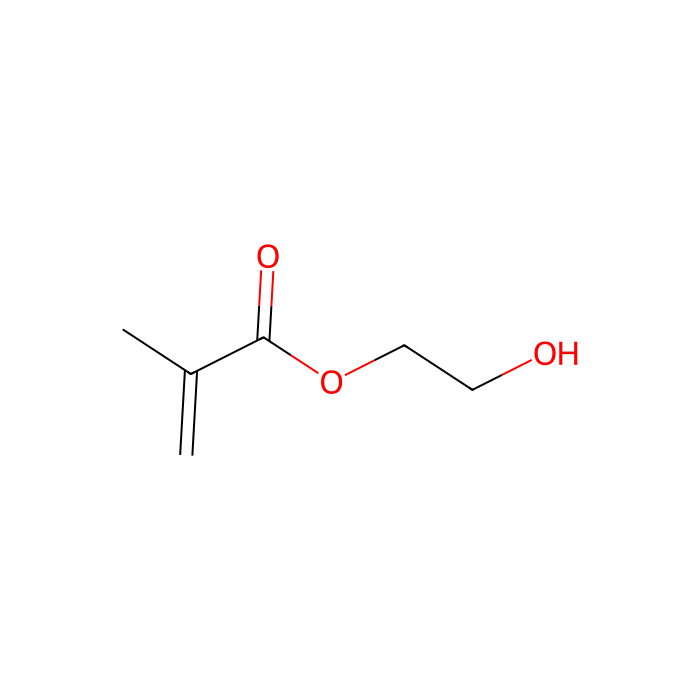
A hydroxy-functional methacrylate monomer featuring a terminal α,β-unsaturated ester and a pendant primary alcohol.
Item-specific (from Product Data):
SKU: H434293
Product Name: 2-Hydroxyethyl methacrylate
CAS: 868-77-9
Grade/Purity: for Synthesis
Storage Conditions: Room temperature
Shipped In: Normal
Research Use Note: For research use only
Literature/computed identifiers (for reference; not item-specific specs):
InChIKey: Not specified for this item; refer to CoA/Spec Sheet.
Structural features (general description):
Contains an electron-deficient C=C of a methacrylate (Michael acceptor)
Contains an ester linkage and a terminal primary alcohol (–CH2–CH2–OH)
2D description: CH2=C(CH3)–C(=O)–O–CH2–CH2–OH; no stereocenters; planar alkene with sp2 carbons conjugated to carbonyl; polar tail due to hydroxyl group.
Synthetic Utility
2-Hydroxyethyl methacrylate provides orthogonal functionality: a conjugated methacrylate (Michael acceptor) and a primary alcohol, enabling diverse transformations.
Key functional groups and reactivity (literature):
α,β-Unsaturated ester: Undergoes radical polymerization; supports Michael additions with thiols, active methylenes, and, under basic/organocatalytic conditions, secondary amines.
Primary alcohol: Forms carbonates/urethanes with chloroformates/isocyanates; can be esterified or converted to tosylates/mesylates for further substitution or crosslinking.
Ester linkage: Generally stable but susceptible to hydrolysis or transesterification under acidic/basic conditions, enabling post-polymer modification on pendant groups.
Retrosynthetic value (general):
Platform to install hydroxy functionality within methacrylate polymers, improving adhesion and hydrophilicity.
Useful handle for preparing macromonomers: convert –OH to acrylate/methacrylate end groups or attach RAFT/ATRP initiator moieties for controlled polymerizations.
Named/typical transformations:
Thiol–Michael click to form β-thioether esters under base or photobase catalysis.
Urethane formation with diisocyanates (DBTDL or organotin-free catalysts) to yield crosslinkable urethane–methacrylate oligomers.
ATRP/RAFT of HEMA to generate well-defined pHEMA blocks for amphiphilic block copolymers.
Target Specificity
Not applicable. This product is a small-molecule monomer, not a biological targeting reagent. No antigen/epitope specificity, clone, or isotype applies.
We use cookies to ensure the website functions properly and, where permitted, to improve your experience. You can manage your preferences at any time in Settings. Learn more in our Cookie Policy.
Shall we send you a message when we have discounts available?
Remind me later
Thank you! Please check your email inbox to confirm.
Products are supplied to verified businesses, institutions, and qualified professionals for research and development use only. Not for use in humans, animals, diagnosis, or therapy.

 I2629488