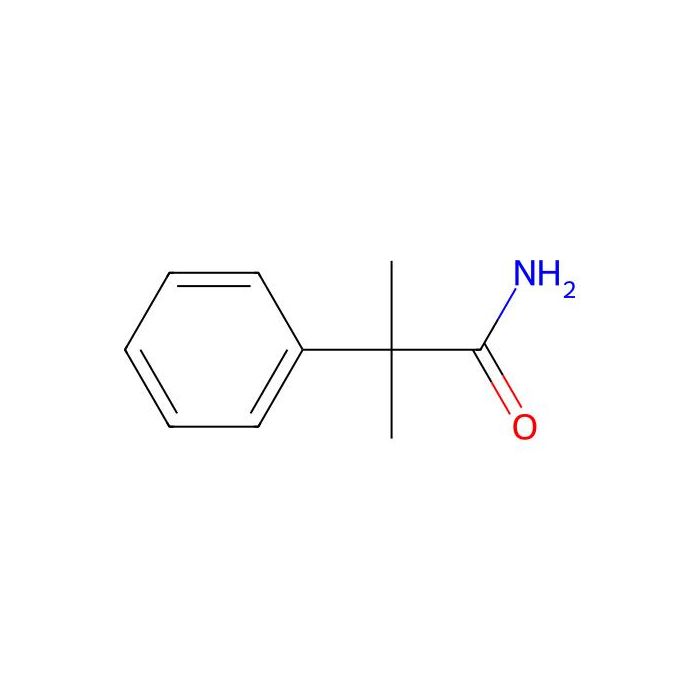
This compound belongs to the class of organic compounds known as phenylacetamides. These are amide derivatives of phenylacetic acids.
External Descriptors
Not available
1. Djoumbou Feunang Y, Eisner R, Knox C, Chepelev L, Hastings J, Owen G, Fahy E, Steinbeck C, Subramanian S, Bolton E, Greiner R, and Wishart DS. ClassyFire: Automated Chemical Classification With A Comprehensive, Computable Taxonomy. Journal of Cheminformatics, 2016, 8:61.
Certificados (CoA, COO, BSE/TSE y tabla de análisis)
C of A & Other Certificates(BSE/TSE, COO):
Analytical Chart:
Propiedades químicas y físicas
Peso molecular
163.220 g/mol
XLogP3
1.700
Hydrogen Bond Donor Count
1
Hydrogen Bond Acceptor Count
1
Rotatable Bond Count
2
Exact Mass
163.1 Da
Monoisotopic Mass
163.1 Da
Topological Polar Surface Area
43.100 Ų
Heavy Atom Count
12
Formal Charge
0
Complexity
169.000
Isotope Atom Count
0
Defined Atom Stereocenter Count
0
Undefined Atom Stereocenter Count
0
Defined Bond Stereocenter Count
0
Undefined Bond Stereocenter Count
0
The total count of all stereochemical bonds
0
Covalently-Bonded Unit Count
1
Calculadoras de soluciones
Molarity Calculator
Determine the necessary mass, volume, or concentration for preparing a solution.
Dilution Calculator
Determine the dilution needed to prepare a stock solution.
Reconstitution Calculator
Reseñas
Reseñas de cliente
Application Protocols
Not applicable for bioassays.
No validated protocols (e.g., WB, IHC, IF, FC) or dilution guidelines are provided for this small-molecule building block.
General laboratory handling (chemistry)
For solution preparation: weigh accurately, dissolve in an appropriate dry organic solvent (e.g., DMSO, DMF, MeCN) to prepare a stock solution; filter if needed.
For purification: employ recrystallization or silica gel chromatography with modifier (0.1–1% Et3N or AcOH) to reduce amide tailing.
For analytical confirmation: record 1H/13C NMR, IR, HRMS/ESI; optional melting point if solid.
Refer to the Reaction & Applications and Reaction Conditions sections for synthetic use guidance.
Biological Roles
Applicability
2-Methyl-2-phenylpropanamide is a synthetic, aryl-substituted primary amide. It is not known as an endogenous metabolite or biochemical cofactor.
General biochemical considerations (literature/general)
Primary amides can participate in hydrogen bonding as both donors (N–H) and acceptors (C=O), which influences protein–ligand interactions in medicinal chemistry; however, this compound is intended for research and synthetic use rather than biological assays.
The hydrophobic aryl–tert-alkyl substituents suggest limited aqueous solubility and potential for membrane partitioning, but no specific biological transport or metabolic roles are documented.
Metabolic fate (general for primary amides): Amide hydrolysis by amidases/peptidases can yield the corresponding carboxylic acid and ammonia/amine, but enzyme compatibility and rates are substrate-dependent and not established for this structure.
Compliance note
For research use only. No claims are made or implied regarding biological efficacy, safety, or clinical utility.
If you plan to use this compound in biochemical experiments
Verify DMSO stock solubility and assay tolerance.
Assess possible assay interference from aromatic hydrophobes (e.g., fluorescence quenching or aggregation) as part of routine control experiments.
Buffer Applications
Not typically applicable.
2-Methyl-2-phenylpropanamide is not a buffering reagent and does not constitute a defined acid–base pair suitable for maintaining pH over a narrow range.
Practical notes if aqueous handling is required
To dissolve or suspend the compound for aqueous work, prepare concentrated stocks in DMSO, DMF, or ethanol and dilute into a compatible biological buffer (e.g., PBS) while monitoring for precipitation.
Maintain pH with an appropriate buffer system (e.g., phosphate, HEPES, Tris) selected for your target pH range. This compound does not substitute for standard buffers.
Green Alternatives
Context
This product is a solid building block rather than a solvent. Greener considerations therefore focus on reagents and media used to transform it, workup choices, and purification.
Greener choices for common transformations (literature/general)
Dehydration to nitrile:
Conventional: SOCl2, POCl3, P2O5 (effective but corrosive/hazardous, generate HCl/POx byproducts).
Greener options: T3P (propylphosphonic anhydride) in EtOAc or 2-MeTHF with a base (i-Pr2NEt); cyanuric chloride in MeCN/aqueous buffer (with phase-transfer) has been reported; catalytic tosyl chloride with base in green solvents in some cases.
Hydrolysis to acid:
Prefer aqueous ethanol or water-rich media at moderate temperatures; avoid chlorinated solvents. Microwave-assisted hydrolysis in water/MeOH can reduce energy/time.
Rearrangements to amine:
Avoid bromine/chlorine where possible. Consider catalytic hypohalite generated in situ under phase-transfer in water; or Curtius sequence using safer azide sources (e.g., DPPA alternatives) under continuous-flow containment.
Solvent selection
Favor bio-based or low-toxicity solvents where compatible: 2-MeTHF (over THF), CPME (over diethyl ether), EtOAc (over DCM), MeCN with proper recovery. Employ solvent recycling when possible.
Purification/work-up
Prefer crystallization over silica chromatography to minimize silica waste and solvent use. Aqueous biphasic extractions with salt minimization and solvent-recovery plans improve E-factor.
Summary table (qualitative)
SOCl2/DCM: high hazard, high waste; very effective.
T3P/EtOAc or 2-MeTHF: improved safety/profile; good efficacy.
Aqueous hydrolysis: benign media; energy may be higher but low hazard.
Consult your safety and sustainability office for site-specific greener process options.
Pharmaceutical Uses
Scope
No excipient or pharmacopeial status is specified for this item; refer to CoA/Spec Sheet if compendial compliance is required.
Context (general, non-clinical)
Aryl-substituted primary amides such as 2-methyl-2-phenylpropanamide are commonly encountered as intermediates in multi-step syntheses en route to active pharmaceutical ingredient (API) candidates, fine chemicals, and agrochemical agents. They can serve as protected/carrier forms of the corresponding acid or as precursors to amines/nitriles via rearrangement or dehydration.
Formulation role: None typical for this compound; not used as a standard excipient. If introduced into screening libraries, it may be handled as a research-grade small molecule for structure–activity exploration.
Quality considerations
For GMP or GLP environments, additional qualification (impurity profile, residual solvents, identity confirmation) would be required. This listing is intended for research use only.
Regulatory note
No therapeutic claims are made. Any use in drug manufacturing would require independent qualification and compliance with applicable regulations (ICH Q7/Q3, pharmacopoeias) and is outside the scope of this catalog entry.
Physical Properties
Item-specific specifications
Appearance: Not specified for this item; refer to CoA/Spec Sheet.
Grade/Purity: Not specified for this item; refer to CoA/Spec Sheet.
Water/peroxide/trace metals/UV cutoff: Not specified for this item; refer to CoA/Spec Sheet.
Literature/typical properties (for reference only; not item-specific)
Phase at ambient conditions: typically a low-volatility organic solid or high-melting solid due to intermolecular hydrogen bonding of the –CONH2 group.
Melting/boiling behavior: primary amides of comparable molecular weight often exhibit relatively sharp melting points and very high (often decompositional) boiling points under atmospheric pressure owing to strong H-bonding networks. Vacuum sublimation or melting followed by decomposition can occur.
Density: organic amides of this size generally fall near 1.0–1.1 g/mL (solids report as g/cm3); specific value not cited.
Solubility profile: moderate to high solubility in polar aprotic solvents (DMF, DMSO, NMP, acetone, acetonitrile); moderate in lower alcohols; limited in water due to the hydrophobic phenyl and gem-dimethyl-like environment; sparingly soluble in nonpolar hydrocarbons (hexanes, heptane).
Acid/base behavior: very weakly basic at the carbonyl oxygen and weakly acidic at the –NH2 (primary amide); pKa (of conjugate acid) typically ~ −0.5 to −1 (literature, generic for amides); amide N–H pKa in DMSO usually > 20 (literature, generic), indicating minimal deprotonation under neutral conditions.
Partitioning: aryl tert-alkyl amides typically show moderate lipophilicity (logP expected to be >1; literature trend), balanced by H-bonding capacity.
Note: For exact numerical values applicable to this lot/item, consult the CoA/Spec Sheet and SDS.
Quality and Grades
Item-specific information
Grade/Purity: Not specified for this item; refer to CoA/Spec Sheet.
Stabilizers/Inhibitors: Not specified for this item; refer to CoA/Spec Sheet.
Guidance on grades and implications (general)
Research grade: Suitable for most organic synthesis and method development. If chromatographic or trace-level applications are planned (e.g., impurity reference standards, quantitative assays), request an HPLC or GC assay and impurity profile on the CoA.
Low-UV or HPLC grade (if applicable): Such grades minimize baseline noise in UV detection and limit non-volatile residues—useful when the compound is employed as a mobile-phase modifier or chromatographic additive. Not specified for this listing.
Trace metal content: For catalysis-sensitive chemistry (e.g., organometallics), specify low-ppm metal content when ordering. Not specified for this item; refer to CoA/Spec Sheet.
Water content: Karl Fischer moisture can significantly influence amide-transforming reactions (e.g., dehydrations to nitriles, acid chloride formations). If your application is moisture-sensitive, request current KF data. Not specified for this item; refer to CoA/Spec Sheet.
Recommendations
Verify identity with NMR/IR/MS upon receipt for critical applications. Amides show characteristic IR bands: strong C=O stretch typically near 1630–1690 cm−1 and N–H stretches near 3200–3400 cm−1 (literature, general).
If particle size/flowability matters for automation, request sieved material specifications.
Reaction and Applications
Use profile
2-Methyl-2-phenylpropanamide is a sterically hindered primary amide useful as a building block for diversification at the carbonyl (activation/dehydration) and for nitrogen-to-carbonyl rearrangements. The adjacent quaternary carbon bearing phenyl and methyl groups biases reactivity and can suppress enolization.
Dehydration to nitrile: Converts to 2-methyl-2-phenylpropanenitrile using SOCl2, POCl3, P2O5, T3P/Et3N, or Burgess reagent in aprotic solvents (CH2Cl2, MeCN, toluene). Catalytic DMF can accelerate SOCl2-mediated dehydration.
Hofmann (or Curtius via acid chloride/azide) rearrangement: Primary amide → amine (loss of carbonyl). Hofmann uses halogen (Br2/Cl2) and strong base; Curtius proceeds via acyl azide from the acid chloride and yields the isocyanate/amine after hydrolysis. Product would be 2-methyl-2-phenylpropylamine (literature expectation).
Hydrolysis: Acidic or basic hydrolysis affords the corresponding acid (2-methyl-2-phenylpropanoic acid). Base-catalyzed routes (NaOH, refluxing aqueous alcohol) are common.
Activation to acid chloride/anhydride/activated esters: Though an amide is less reactive, conversion typically proceeds via the acid (two-step: hydrolysis to acid, then SOCl2/Oxalyl chloride to acid chloride) or via direct amide activation strategies (e.g., Tf2O/2-fluoropyridine, CDI under forcing conditions) when feasible.
N–functionalization: Limited due to primary amide; N-acylation or N-sulfonylation can generate imide/sulfonamide derivatives. Strong bases (NaH) in DMF/THF may deprotonate the amide N–H for subsequent electrophile capture.
Applications context
Precursor to sterically congested nitriles/amines used in agrochemical and medicinal intermediate synthesis.
Model substrate to study effects of α,α-disubstitution on amide reactivity, H-bonding, and conformational preferences.
Reaction Conditions
General guidance (literature; adapt to your substrate and scale)
Dehydration to nitrile
Reagents: SOCl2 (3–5 equiv) with catalytic DMF; or POCl3 (2–3 equiv) with base; or T3P (50 wt% in EtOAc) with i-Pr2NEt.
Solvent: CH2Cl2 or MeCN (SOCl2/POCl3); EtOAc, 2-MeTHF, or MeCN (T3P).
Temperature/time: 0–25 °C to control exotherm, then 40–80 °C for 1–6 h depending on reagent; monitor by TLC/LC-MS.
Workup: Quench cautiously into ice-water, basify/acidity as required, extract with EtOAc, wash, dry, concentrate, and purify by crystallization or chromatography.
Hydrolysis to acid
Basic: NaOH or KOH (2–5 equiv) in EtOH/H2O (1:1 to 3:1), reflux 2–12 h. Acidify to pH ~2 (HCl) to precipitate the acid.
Acidic: 6 M HCl or 3 M H2SO4 in dioxane/H2O or neat aqueous; 60–100 °C, 2–8 h. Neutralize and isolate.
Hofmann rearrangement to amine
Conditions: Br2/NaOH or generated hypobromite at 0–25 °C then warm to 40–70 °C for 1–4 h. Two-phase systems (toluene/H2O) can aid extraction of the hydrophobic product. Exercise appropriate halogen safety.
N–acylation/sulfonylation
Base: NaH or K2CO3 in DMF/THF, 0–25 °C; electrophile: acyl chlorides, acid anhydrides, or sulfonyl chlorides; times 0.5–4 h.
Notes
The steric bulk at the α-carbon can slow reactions requiring approach to the carbonyl carbon; adjust temperature/reagent excess accordingly.
Always validate on small scale and consult SDS/CoA for compatibility and hazards.
Safety and Handling
Item-specific hazard designations
Signal word: Not specified for this item; refer to SDS.
H-statements / GHS classification / pictograms: Not specified for this item; refer to SDS.
General safety guidance for primary amides (literature/precautionary)
Likely hazards: May cause skin and eye irritation and respiratory tract irritation as a dust or aerosol. Low volatility reduces inhalation exposure risk under ambient conditions, but nuisance dust precautions apply.
PPE: Wear safety glasses with side shields, lab coat, and appropriate chemical-resistant gloves (e.g., nitrile). Handle solids in a fume hood to minimize dust exposure. Avoid skin contact and ingestion.
Handling: Avoid breathing dust. Prevent contact with strong oxidizers and strong bases/acids that can promote hydrolysis or degradation. Use clean, dry tools; prevent contamination with reactive dehydrating agents (e.g., SOCl2, POCl3) unless intended.
First aid (overview; defer to SDS): Eye contact—rinse cautiously with water for several minutes; remove contact lenses if present and easy to do; seek medical attention if irritation persists. Skin—wash with plenty of soap and water; remove contaminated clothing. Inhalation—move to fresh air; seek medical advice if symptoms occur. Ingestion—rinse mouth; do not induce vomiting; obtain medical attention.
Fire safety: Combustible organic solid. Use CO2, dry chemical, or foam for small fires. Combustion may produce CO/CO2 and nitrogen oxides.
Storage incompatibilities: Keep away from strong oxidizing agents and strong dehydrating chlorinating reagents (e.g., oxalyl chloride) unless used deliberately in synthesis.
Disposal: Dispose of contents/container in accordance with local regulations for organic laboratory chemicals.
Always consult the product SDS for authoritative hazard and response information.
Solvent Selection
Applicability
This product is a small-molecule amide building block, not a solvent. Solvent choice pertains to dissolving, transforming, or purifying this compound.
Polarity and miscibility considerations (general trends)
Polarity class: polar, hydrogen-bond donor and acceptor (primary amide). However, the phenyl and tert-alkyl environment increase hydrophobic character.
Expected solubility profile: high in DMSO, DMF, NMP; moderate in MeOH/EtOH/i-PrOH and MeCN; low in water; poor in aliphatic hydrocarbons (hexanes) and low in toluene/EtOAc unless warmed.
Practical selection by use case
Reaction medium (amide-to-nitrile dehydration; acyl activation): choose aprotic polar solvents (CH2Cl2, MeCN, DMF) compatible with dehydrating/chlorinating reagents (SOCl2, POCl3, PCl5, T3P). Control moisture stringently.
Hydrolysis to the parent acid: aqueous ethanol, dioxane–water, or THF–water mixtures under acidic or basic conditions. Ensure adequate stirring for heterogeneous slurries.
Recrystallization: mixed solvents such as EtOAc/hexanes, toluene/hexanes, or EtOH/water can be explored to exploit differential solubility (optimize empirically).
Chromatography: normal-phase silica with EtOAc/hexanes or DCM/MeOH gradients. The –CONH2 can tail; add 0.1–1% Et3N or AcOH to the eluent to sharpen bands (literature practice).
Comparison notes
Relative to more hydrophilic amides (e.g., acetamide), the aryl–tert-alkyl substitution reduces water solubility and increases affinity for moderately polar organic media.
For NMR, DMSO-d6 or CD3OD provide clean spectra; CDCl3 may give limited solubility and broadened NH due to H-bonding.
Storage and Reconstitution
Item-specific storage
Storage conditions: Room temperature (per Product Data). Store tightly closed in a dry, well-ventilated place.
Shipped in: Not specified for this item; refer to CoA/Spec Sheet.
Appearance: Not specified for this item; refer to CoA/Spec Sheet.
General handling and stability (literature/typical)
Stability: Primary amides are generally stable solids under ambient laboratory conditions. Avoid prolonged exposure to moisture if subsequent moisture-sensitive reactions are planned.
Container: Use amber glass if long-term storage in lighted areas is expected, although amides are not typically light-sensitive. Include a desiccant in secondary containment for hygroscopicity control if needed.
Reconstitution and solution preparation
Solubility: Readily soluble in polar aprotic solvents (DMSO, DMF, NMP); moderate in MeOH/EtOH; limited in water.
Stock solutions: Prepare at 10–200 mM in dry DMSO or DMF for synthetic use; store aliquots to minimize freeze–thaw. For short-term bencheside use, solutions in MeCN or EtOAc are convenient.
Storage of solutions: For maximum stability, store under inert gas at 2–8 °C, protected from moisture. Discard if precipitation, discoloration, or significant degradation is observed by TLC/LC-MS.
Note
For any lot-specific stability, assay, or impurity data, consult the CoA/Spec Sheet and SDS. This product is for research use only.
Structure and Identity
Item-specific facts (from Product Data)
SKU: M1068549
Product name: 2-Methyl-2-phenylpropanamide
CAS: 826-54-0
PubChem CID: 94713
Storage conditions: Room temperature
Research use: For research use only
InChIKey (as provided): Not specified for this item; refer to CoA/Spec Sheet.
SMILES (as provided): Not specified for this item; refer to CoA/Spec Sheet.
Molecular formula / Molecular weight (as provided): Not specified for this item; refer to CoA/Spec Sheet.
Literature/typical structural identity (for reference; not item-specific specifications)
Preferred IUPAC name (literature): 2-methyl-2-phenylpropanamide (primary amide of 2-methyl-2-phenylpropanoic acid)
Molecular formula (literature): C10H13NO
Molecular weight (literature): ~163.22 g/mol
SMILES (literature): NC(=O)C(C)(C)c1ccccc1
InChIKey (literature): Not specified here; consult authoritative databases (e.g., PubChem) for the canonical identifier.
Structural features (general description)
Functional groups: primary amide (–CONH2) adjacent to a quaternary α-carbon bearing a phenyl ring and two methyl groups.
Ring systems: one benzene ring (phenyl substituent) attached to the α-carbon of the amide carbonyl (i.e., an aryl–substituted, t-butyl-like center next to C=O).
Stereochemistry: None (α-carbon is quaternary and achiral in this substitution pattern).
2D description: an amide carbonyl (C=O) with –NH2; the carbonyl carbon is bonded to a neopentyl-like carbon that also bears a phenyl group and two methyl groups, giving a highly hindered, non-enolizable amide backbone.
Synthetic Utility
Strategic features
Functional handle: primary amide (–CONH2) adjacent to a sterically congested α-carbon bearing phenyl and methyl substituents. The quaternary-like environment suppresses typical α-enolization, guiding transformations toward carbonyl activation, N-based chemistry, or skeletal rearrangements.
Key transformations (literature/general)
Carbonyl activation/dehydration: Convert –CONH2 to nitrile (SOCl2, POCl3, P2O5, T3P) or to imidoyl halides under forcing conditions; these can then be elaborated via nucleophilic additions.
Hydrolysis: Access 2-methyl-2-phenylpropanoic acid under acidic (HCl, reflux) or basic (NaOH, reflux) conditions; subsequent coupling or halide formation (SOCl2) broadens downstream chemistry.
Hofmann/Curtius rearrangements: Net one-carbon contraction to the corresponding amine, enabling introduction of ureas/carbamates after isocyanate capture.
N–modification: Deprotonation and electrophile trapping (acylation, sulfonylation) to form N-acyl/sulfonyl derivatives useful as directing groups or masks.
Reductive routes: Amide reductions are generally challenging; strong hydride sources (e.g., LiAlH4) can convert to the amine, though steric hindrance may demand elevated temperature or stepwise activation.
Retrosynthetic value
Serves as a robust surrogate for the acid in sequences sensitive to carboxylate basicity or solubility, allowing late-stage unveiling (hydrolysis) or contraction (rearrangement) to install a 2-methyl-2-phenylpropyl motif.
Analytical notes
IR: Amide I and II bands diagnostic; 1H NMR: broadened exchangeable NH2; 13C NMR: carbonyl near 170–175 ppm; aromatic carbons 125–145 ppm; quaternary α-carbon deshielded relative to aliphatic methyls (literature, general).
Target Specificity
Not applicable.
This product is a small organic amide, not a biological targeting reagent (e.g., antibody, inhibitor with validated target panel, or probe with defined selectivity metrics).
No antigen, epitope, clone, isotype, or species reactivity is associated with this listing.
Preguntas frecuentes
What is the purity of this product?
This product is supplied at ≥97% purity (chemical assay). Lot-specific values are stated on the Certificate of Analysis.
How should this product be stored?
Store at room temperature.
What are the CAS number, molecular formula and molecular weight?
The CAS Number is 826-54-0, the molecular formula is C10H13NO, and the molecular weight is 163.220 g/mol. InChIKey VKLQYTLWERZJEP-UHFFFAOYSA-N.
What documentation is provided?
Available product documentation, including Certificates of Analysis (COA), Safety Data Sheets (SDS), and specification sheets, is shown in the product document area. Document availability and access follow the current site policy.
We use cookies to ensure the website functions properly and, where permitted, to improve your experience. You can manage your preferences at any time in Settings. Learn more in our Cookie Policy.
Shall we send you a message when we have discounts available?
Remind me later
Thank you! Please check your email inbox to confirm.
Products are supplied to verified businesses, institutions, and qualified professionals for research and development use only. Not for use in humans, animals, diagnosis, or therapy.