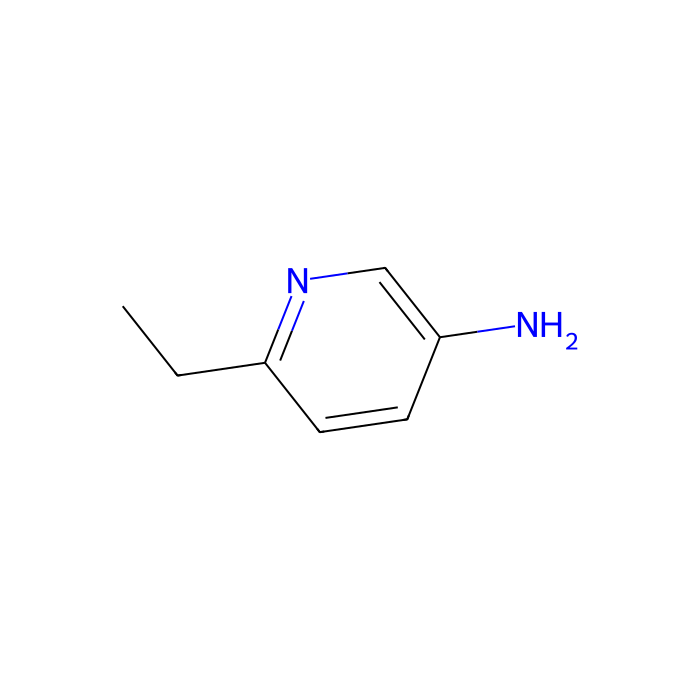
This compound belongs to the class of organic compounds known as aminopyridines and derivatives. These are organic heterocyclic compounds containing an amino group attached to a pyridine ring.
External Descriptors
Not available
1. Djoumbou Feunang Y, Eisner R, Knox C, Chepelev L, Hastings J, Owen G, Fahy E, Steinbeck C, Subramanian S, Bolton E, Greiner R, and Wishart DS. ClassyFire: Automated Chemical Classification With A Comprehensive, Computable Taxonomy. Journal of Cheminformatics, 2016, 8:61.
Certificados (CoA, COO, BSE/TSE y tabla de análisis)
C of A & Other Certificates(BSE/TSE, COO):
Analytical Chart:
Propiedades químicas y físicas
Punto de inflamación (°C)
125°C
Peso molecular
122.170 g/mol
XLogP3
1.000
Hydrogen Bond Donor Count
1
Hydrogen Bond Acceptor Count
2
Rotatable Bond Count
1
Exact Mass
122.084 Da
Monoisotopic Mass
122.084 Da
Topological Polar Surface Area
38.900 Ų
Heavy Atom Count
9
Formal Charge
0
Complexity
83.000
Isotope Atom Count
0
Defined Atom Stereocenter Count
0
Undefined Atom Stereocenter Count
0
Defined Bond Stereocenter Count
0
Undefined Bond Stereocenter Count
0
The total count of all stereochemical bonds
0
Covalently-Bonded Unit Count
1
Calculadoras de soluciones
Molarity Calculator
Determine the necessary mass, volume, or concentration for preparing a solution.
Dilution Calculator
Determine the dilution needed to prepare a stock solution.
Reconstitution Calculator
Reseñas
Reseñas de cliente
Application Protocols
Not applicable. There are no immunoassay or bioanalytical “tested applications” (e.g., WB, IHC, IF, FC) for this small-molecule building block. For synthetic usage, refer to the Reaction Conditions and Synthetic Utility sections for practical guidance.
Biological Roles
No inherent biological role is assigned to 6-ethylpyridin-3-amine. As a small heteroaromatic amine, it is primarily a synthetic intermediate.
Biochemistry context (general): Aminopyridines occur in cofactors and ligands, but 6-ethyl substitution is a synthetic modification rather than a natural motif. The molecule can engage in hydrogen bonding (donor via –NH2; acceptor via ring N) and cation–π/π–π interactions when protonated, which is relevant when designing ligands for protein targets in structure–activity studies.
Ionization/transport (literature trends): The ring nitrogen typically protonates around mildly acidic pH, improving aqueous solubility and enabling uptake studies in model systems; the aniline-like nitrogen is much less basic.
Use in biological research: Commonly serves as a fragment or building block to construct libraries for SAR, probe development, and labeling once derivatized (e.g., acylated, sulfonylated, or coupled to reporter groups). Any biological testing would employ derivatives; this catalog item itself is supplied strictly for research use.
Note: No clinical/therapeutic claims are made. Handle exclusively for research and laboratory applications, per the Research Use Only notice.
Buffer Applications
This compound is not a conventional buffering agent. While protonation of the pyridine nitrogen can confer limited pH-dependent ionization, 6-ethylpyridin-3-amine is not used to prepare standard laboratory buffers.
Recommendation: Use established buffers (e.g., phosphate, acetate, Tris, HEPES) for pH control. This aminopyridine may be dissolved in buffered media as a reactant or ligand, but should not be relied upon to maintain pH.
Practical note: If aqueous handling is required, prepare acid salts (e.g., hydrochloride) to enhance water solubility; adjust pH with a proper buffering system.
Green Alternatives
Greener choices relate mainly to solvent and coupling reagent selection when using 6-ethylpyridin-3-amine in synthesis. The molecule itself is a small heteroaromatic building block and does not have a direct “green” substitute; instead, optimize the process around it.
Prefer greener solvents when feasible:
Replace DMF/DMSO with MeCN, EtOAc, 2-MeTHF, CPME, or propylene carbonate where solubility permits.
Substitute toluene with 2-MeTHF or CPME in Buchwald–Hartwig couplings.
Reagent choices:
For amide formation, T3P (in EtOAc/2-MeTHF) or CDI can be alternatives to HATU/HBTU to reduce hazard profiles.
Use aqueous micellar catalysis (e.g., TPGS-750-M systems) for some couplings to minimize organic solvent volumes (literature).
Workup/waste minimization:
Precipitate amine salts for isolation instead of chromatography where possible (e.g., HCl salt in IPA/MTBE), then free-base regeneration.
Apply solvent recycling and lower-boiling media to reduce energy use in distillation.
Illustrative comparison (general):
Traditional: DMF or dioxane with Pd catalysts; chlorinated solvents for acylations.
Greener: 2-MeTHF/CPME or EtOAc with modern ligands/bases; aqueous ethanol for reductive amination.
Tradeoffs: Greener solvents may reduce solubility or alter catalyst activity; small pilot screens are recommended to balance EHS with yield/selectivity.
Pharmaceutical Uses
No pharmacopeial status or excipient role is indicated for this item.
Typical role (general): 6-Ethylpyridin-3-amine is a heteroaromatic building block used in the research synthesis of drug-like molecules, intermediates, and screening libraries. It can be elaborated via acylation, sulfonylation, reductive amination, or cross-coupling (as the amine partner) to access candidate compounds.
Formulation context: If used in process development as an intermediate, isolation as a crystalline salt (e.g., HCl) can aid handling, purity, and stability; however, such uses remain within R&D and are not therapeutic applications.
This product is supplied strictly for research use only; no clinical or diagnostic applications are intended or supported.
Physical Properties
Item-specific physico-chemical specifications are not provided in the Product Data. The following are literature/computed descriptions to aid method development; do not treat as product specifications.
Appearance: Not specified for this item; refer to CoA/Spec Sheet.
Melting/boiling point: Not specified for this item; consult literature for 6-ethylpyridin-3-amine or verify experimentally.
Density/refractive index: Not specified for this item.
Solubility (general, literature-based):
Expected to be miscible/soluble in polar organic solvents (e.g., ethanol, methanol, acetonitrile, DMSO, DMF) due to the basic heteroatoms.
Protonated salts are typically water-soluble; the free base has moderate aqueous solubility that increases in acidic media (formation of pyridinium/ammonium salts).
Acid–base behavior (literature trends for 3-aminopyridines):
The ring nitrogen is weakly basic (pKb relatively high); conjugate acid pKa typically ~5–6 for 3-aminopyridine analogs; an electron-donating ethyl at C-6 may slightly increase basicity.
The aniline-like –NH2 is significantly less basic than aliphatic amines; its conjugate acid pKa is often ~2–3 for pyridinyl anilines.
LogP/logD: Expected to be low-to-moderate (literature trend for small aminopyridines, logP roughly 0–1), increasing upon N-acylation or protection.
All numeric values above are general literature expectations for aminopyridines; verify with experimental data for this exact item when critical.
Quality and Grades
Grade/purity: Not specified for this item; refer to CoA/Spec Sheet for assay, related substances, and residual solvent limits.
Implications of stabilizers: No stabilizer information provided for this item. Many aromatic amines require no stabilizer but benefit from inert atmosphere/light protection to minimize oxidation or color change; follow Product Data storage guidance.
Typical quality considerations for aminopyridine building blocks (general):
Assay by qNMR or GC/LC; identity confirmed by 1H/13C NMR and HRMS.
Control of residual water and volatile amines/solvents is important for coupling chemistry (e.g., acylations, Buchwald–Hartwig, reductive amination).
For chromatographic uses, low UV background and absence of fluorescent impurities are desired; HPLC trace may be provided on CoA.
Selecting a grade: If you require low UV absorbance for analytical work or LC-MS compatibility, specify HPLC or LC-MS grade material; if performing air/moisture-sensitive coupling, request freshly packaged, argon-charged lots.
Always consult the lot-specific CoA/Spec Sheet for definitive specifications.
Reaction and Applications
This compound is a versatile heteroaromatic amine building block. Typical research uses leverage both the pyridine nitrogen and the aniline-like amino group.
As a nucleophile (–NH2):
Amide and carbamate formation with acyl chlorides/anhydrides or via peptide-coupling reagents (EDC/HATU/T3P). Protecting groups (Boc, Cbz) can be introduced routinely.
Sulfonamide formation with sulfonyl chlorides (e.g., tosylation) under basic conditions.
Reductive amination with aldehydes/ketones to furnish secondary/tertiary amines; NaBH3CN, NaBH(OAc)3, or catalytic hydrogenation are typical.
Buchwald–Hartwig C–N cross-coupling as the amine partner to aryl/heteroaryl halides or pseudohalides; ligands such as XPhos/BrettPhos and bases like NaOtBu/K3PO4 are common (literature).
On the heteroaromatic core:
N-oxidation (pyridine N-oxide formation) with peracids (mCPBA) to modulate directing effects and enable subsequent transformations (e.g., O-to-C rearrangements, Chichibabin-type chemistry in related systems).
Electrophilic substitutions on the ring are generally deactivated by the ring nitrogen; however, the –NH2 can direct metalation or engage in intramolecular H-bonding affecting regiochemistry.
Diazotization of the aniline-like nitrogen (literature) is possible under strongly acidic conditions but pyridyl diazonium species are less stable; use with caution.
Coordination/ligand chemistry: Aminopyridines can chelate metals (e.g., bidentate N,N donors upon derivatization), offering entry to catalysts or functional materials.
Applications (research): fragment growth in medicinal chemistry SAR, heteroaryl amide libraries, and as an intermediate toward more elaborated pyridine scaffolds. For research use only.
Reaction Conditions
General, literature-based guidance for common transformations of 6-ethylpyridin-3-amine (verify and optimize for your system):
Amide formation:
Reagents: Acyl chloride (1.1–1.5 eq) or coupling system (e.g., HATU/EDC/T3P) with base (DIPEA/Et3N, 2–3 eq).
Solvent: DCM, DMF, MeCN, or 2-MeTHF.
Temperature/time: 0–25 C, 1–16 h. Monitor by TLC/LC-MS.
Sulfonamide formation:
Reagents: Sulfonyl chloride (1.05–1.2 eq), base (NaHCO3/DIPEA).
Solvent: DCM, THF, or MeCN; 0–25 C.
Reductive amination:
Formation of imine/imine salt in MeOH/EtOH/MeCN with carbonyl (1.1–1.5 eq) and acid catalyst (AcOH); reduce with NaBH3CN or NaBH(OAc)3 at 0–25 C.
Buchwald–Hartwig amination (as amine partner):
Catalyst/ligand: Pd2(dba)3 or Pd(OAc)2 (1–2 mol%), XPhos/BrettPhos-type ligands (2–4 mol%).
Base: NaOtBu, Cs2CO3, or K3PO4 (2–3 eq).
Solvent: Toluene, dioxane, CPME, or tBuOH; 80–110 C, 4–20 h (closed vessel).
Protection/deprotection:
Boc: Boc2O, base in THF/DCM; deprotect with TFA in DCM at 0–25 C.
Carbamates/ureas: CDI or triphosgene routes in aprotic solvents.
N-oxidation (pyridine N-oxide): mCPBA (1.1–1.5 eq) in DCM/CH2Cl2 at 0–25 C; quench and purify promptly.
Yields and exact parameters vary with substrates and substitution; small-scale screens (solvent/ligand/base) are recommended. Avoid strong acids at elevated temperature for prolonged periods to prevent decomposition of pyridinyl diazonium intermediates.
Safety and Handling
GHS classification, signal word, hazard and precautionary statements: Not specified for this item; refer to the current SDS for authoritative information.
General hazards (literature/analog-based): Aromatic amines and aminopyridines may cause skin/eye irritation and can be harmful if inhaled or ingested. Avoid aerosol formation. Some aminopyridines may discolor on air/light exposure due to slow oxidation.
Storage (from Product Data):
Store at room temperature
Protect from light
Keep under inert gas (argon charged)
Incompatibilities (general): Strong oxidizers; strong acids/bases can lead to salt formation or degradation under forcing conditions. Avoid prolonged exposure to air and light to minimize oxidative discoloration.
PPE: Lab coat, safety glasses or face shield, and suitable chemically resistant gloves (e.g., nitrile). Handle in a fume hood to avoid inhalation of vapors or dust.
First aid (general guidance; defer to SDS):
Inhalation: Move to fresh air; seek medical advice if symptoms persist.
Skin/eye contact: Rinse with plenty of water for several minutes; remove contaminated clothing; obtain medical attention if irritation continues.
Ingestion: Rinse mouth; do not induce vomiting; seek medical attention.
Fire safety: Use CO2, dry chemical, or foam. Combustion may produce NOx. Ensure proper grounding if transferring flammable liquids.
Waste: Collect in halogen-free organic waste or amine-containing organic waste stream per institutional and local regulations.
Solvent Selection
As a small heteroaromatic amine, 6-ethylpyridin-3-amine generally dissolves well in polar organics and can be handled as the free base or as an acid salt.
Polarity/miscibility (general):
Good solubility in DMSO, DMF, MeOH, EtOH, MeCN; variable in EtOAc, THF, and toluene depending on temperature and concentration.
Aqueous solubility increases markedly upon acidification (formation of water-soluble salts with HCl, H2SO4, etc.).
Choosing a medium by operation:
Amide/sulfonamide formation: Use dichloromethane, THF, MeCN, or DMF with base (e.g., DIPEA) and coupling reagents; or acyl chloride in DCM with base.
Buchwald–Hartwig amination (as the amine partner): Toluene, dioxane, CPME, or tBuOH often used with strong bases; DMF/DMSO can increase solubility but may complicate workup.
Reductive amination: Alcoholic solvents (MeOH/EtOH/iPrOH) or MeCN; aqueous cosolvent acceptable when forming salts.
Salt formation/purification: IPA/Et2O or MTBE for precipitation of mineral-acid salts.
Comparison (general):
DMSO/DMF: maximal solubility but higher boiling; harder removal.
MeCN/EtOAc/THF: better volatility; ensure adequate solubility at reaction concentration.
Greener options: 2-MeTHF or CPME can substitute for THF/toluene in many couplings and extractions.
Storage and Reconstitution
Storage conditions (from Product Data):
Store at room temperature
Protect from light
Maintain under inert gas (argon charged)
Shipped: Normal conditions
Container/handling tips:
Keep tightly closed in an amber vial to limit light exposure; purge headspace with argon or nitrogen after each use.
Minimize repeated air exposure to reduce risk of oxidative discoloration common to aromatic amines.
Reconstitution/dissolution (general guidance):
Dissolves readily in polar organics such as DMSO, DMF, methanol, ethanol, and acetonitrile. Gentle warming and sonication can assist dissolution.
For aqueous work, prepare an acid salt in situ (e.g., add a stoichiometric amount of HCl in ethanol, then dilute into water/buffer) to enhance solubility.
Filter through a PTFE or PES syringe filter (0.22–0.45 µm) for solution-phase applications to remove particulates.
Stability:
Long-term stability is improved under inert gas and light protection. Avoid prolonged exposure to strong oxidants or UV.
For any specific limits (assay, water, residual solvents), and recommended shelf life, consult the lot-specific CoA/Spec Sheet. Research use only.
Structure and Identity
A heteroaromatic amine building block: a pyridine ring bearing an amino group at the 3-position and an ethyl substituent at the 6-position (meta to the ring nitrogen, ortho to the amino group). The molecule contains one pyridine ring (sp2 N) and one primary aniline-like amino functionality (–NH2) attached to the ring.
Product name: 6-Ethylpyridin-3-amine
CAS: 126553-00-2
CID: 13860729
InChIKey (from Product Data): 459572 (note: truncated; refer to CoA/SDS for full identifier)
SMILES: Not specified for this item; refer to CoA/Spec Sheet.
Molecular formula: C7H10N2 (literature/computed based on structure)
One aromatic pyridine ring with the ring nitrogen at position 1
Primary amine at C-3 (pyridin-3-amine motif)
Ethyl substituent at C-6 (2-position relative to ring N)
No stereocenters; planar heteroaromatic core
2D description: a six-membered aromatic ring with N at position 1; –NH2 at position 3; –CH2CH3 at position 6.
Note: Where not given in Product Data, identifiers and formula are provided as literature/computed values and should be confirmed against the item’s CoA.
Synthetic Utility
Key functional elements driving utility:
Primary aniline-like amine at C-3: readily transformed into amides, carbamates, ureas, and sulfonamides. Protecting groups (Boc, Cbz, Fmoc) allow orthogonal manipulations.
Pyridine ring with ring nitrogen: modulates electronics, coordinates to metals, and can be selectively oxidized (N-oxide) to enable further diversification.
6-Ethyl substituent: adds lipophilicity and steric bias, influencing regioselectivity and physicochemical properties of derivatives without introducing additional heteroatoms.
Representative transformations (literature):
Buchwald–Hartwig amination (as nucleophilic amine partner) to construct diaryl/heteroaryl amines.
Reductive amination with aldehydes/ketones to access secondary/tertiary aminopyridines.
Acylations and sulfonylations to fine-tune basicity and permeability.
N-oxide chemistry: pyridine N-oxide formation followed by directed C–H activation or rearrangement.
Metalation strategies (e.g., directed ortho-metalation adjacent to –NH2 in related systems) are moderated by the pyridine N; using temporary protection or N-oxide can improve outcomes.
Retrosynthetic value: Serves as a convergent point to introduce aminopyridine polarity and a lipophilic ethyl handle late in synthesis, aiding property balancing in medicinal chemistry campaigns.
Target Specificity
Not applicable. This product is a small-molecule chemical building block, not a biological macromolecule or affinity reagent. No antigen/epitope, species reactivity, clone, or isotype information applies.
Preguntas frecuentes
What is the purity of this product?
This product is supplied at ≥98% purity (chemical assay). Lot-specific values are stated on the Certificate of Analysis.
How should this product be stored?
Store at room temperature, protected from light, under argon. It is supplied under an argon blanket; reseal under inert gas after each use.
How is this product shipped?
This product ships under standard ambient conditions. No temperature-controlled packaging is required.
What are the CAS number, molecular formula and molecular weight?
The CAS Number is 126553-00-2, the molecular formula is C7H10N2, and the molecular weight is 122.17 g/mol. InChIKey ZKPKEODUAJQPCV-UHFFFAOYSA-N.
What documentation is provided?
Available product documentation, including Certificates of Analysis (COA), Safety Data Sheets (SDS), and specification sheets, is shown in the product document area. Document availability and access follow the current site policy.
Utilizamos cookies para garantizar el correcto funcionamiento del sitio web y, cuando esté permitido, para mejorar su experiencia. Puede gestionar sus preferencias en cualquier momento en Configuración. Más información en nuestra Política de Cookies.
¿Quieres que te enviemos un mensaje cuando tengamos descuentos disponibles?
Recordármelo más tarde
¡Gracias! Por favor, revisa tu bandeja de entrada de correo electrónico para confirmar.
Products are supplied to verified businesses, institutions, and qualified professionals for research and development use only. Not for use in humans, animals, diagnosis, or therapy.