GRADE & PURITYMoligand™?Moligand™ — Aladdin's line of ligands and bioactive small molecules. Use for receptor, pathway, and binding studies needing defined small-molecule tools.10 mM in DMSO
Certificados (CoA, COO, BSE/TSE y tabla de análisis)
C of A & Other Certificates(BSE/TSE, COO):
Analytical Chart:
Calculadoras de soluciones
Molarity Calculator
Determine the necessary mass, volume, or concentration for preparing a solution.
Dilution Calculator
Determine the dilution needed to prepare a stock solution.
Reconstitution Calculator
Reseñas
Reseñas de cliente
Application Protocols
Item-specific tested applications, dilutions, and positive controls are not provided for this product.
General/literature-based protocol outline for in vitro use (adjust to your system):
Stock preparation:
Dissolve Aftin-4 in anhydrous DMSO to 10–20 mM. Vortex and, if needed, briefly sonicate. Prepare small aliquots to avoid repeated freeze–thaw.
Working solution:
Dilute stock into pre-warmed culture medium or assay buffer to achieve desired final concentration. Add slowly with mixing to minimize precipitation. Keep final DMSO consistent across all wells (e.g., 0.1–0.5% v/v).
Titration:
Start with a range such as 0.3, 1, 3, 10 µM and include vehicle control. Adjust based on assay sensitivity and observed responses. Include cell-viability assessment in parallel.
Incubation and readout:
Incubation times vary (e.g., 4–48 h) depending on the biological endpoint. Follow with your chosen readout (e.g., ELISA/LC–MS peptide quantification, reporter assay, immunoblot), ensuring validation controls are in place.
Data quality:
Randomize well positions, include technical/biological replicates, and predefine exclusion criteria. Confirm reproducibility across independent experiments.
Important: All steps above are general guidance from typical small-molecule probe handling and literature practices. They are not item-specific validated protocols. Verify compatibility with your assay system.
Biological Roles
Scope: The following describes literature/general roles of Aftin-4 as a research probe. No therapeutic or clinical claims are made.
Literature/general:
Functional role: Reported as a small-molecule modulator employed to study amyloid precursor protein (APP) processing pathways. It is used to interrogate biochemical mechanisms that influence the relative production of peptide fragments in cellular and membrane systems.
Use case: Serves as a tool compound to perturb specific proteolytic processing steps, enabling mapping of pathway dependencies, temporal dynamics, and the influence of cofactors or genetic perturbations.
Assay contexts: Applied in cultured cells, membrane fractions, or reconstituted systems to generate measurable changes in readouts (e.g., relative peptide ratios or reporter signals), facilitating structure–activity and mechanism-of-action investigations.
Selectivity/Off-target considerations: Like many bioactive probes, Aftin-4 may engage multiple targets at higher concentrations; careful titration, time-course experiments, and orthogonal assays are recommended to ascribe mechanism. Include appropriate counterscreens to deconvolute general cytotoxic or stress responses from pathway-specific effects.
Experimental guidance (general):
Start with low micromolar ranges and increase stepwise while monitoring cell viability and nonspecific signals.
Use minimal DMSO vehicle fractions and include matched vehicle controls.
Confirm reproducibility across biological replicates and, where possible, complement with genetic or biochemical validation.
Item-specific biological data (target, EC50, KD, etc.) are not specified for this product page; consult the literature and your CoA for additional references.
Buffer Applications
Not typically applicable. Aftin-4 is a hydrophobic bioactive probe rather than a buffering agent.
General practical notes (if buffers are involved in assays):
When diluting from DMSO stocks into aqueous buffers or cell culture media, add the organic stock slowly with vortexing to minimize local supersaturation and precipitation.
Maintain consistent final DMSO content across controls and treated samples (commonly ≤0.1–0.5% v/v, literature/general) to avoid solvent-induced artifacts.
If precipitation is observed, consider adding a small amount of serum, compatible nonionic surfactant, or cyclodextrin, and re-validate assay performance.
No buffer pKa ranges, recipes, or electrophoresis applications are relevant for this product.
Green Alternatives
Scope: Green chemistry alternatives are generally discussed for solvents and routine reagents. Aftin-4 is a specialized bioactive probe; substitution is driven by biological mechanism rather than green metrics.
Considerations:
Functional alternative vs green alternative: If your objective is to modulate the same biological pathway, consider literature-documented tool compounds with similar mechanistic outcomes but improved handling, stability, or safety profiles. “Greenness” here relates more to lifecycle, hazard, and waste than to solvency.
Solvent system optimization: The largest green impact in using Aftin-4 often comes from solvent choice. Where feasible:
Use anhydrous DMSO efficiently (small-volume stocks) and minimize DMF/CH2Cl2 in any analytical prep.
For chromatographic purification (if applicable), prefer ethanol/ethyl acetate/heptane over halogenated solvents when separation performance permits.
Alternative probes reported in literature may differ in potency, selectivity, or cytotoxicity profiles. Selecting a probe with higher potency can reduce mass of chemical used and waste generated, indirectly improving green metrics. Confirm via peer-reviewed sources.
Operational green tips:
Scale down assays (microplate formats) to reduce solvent and consumable use.
Consolidate analytical runs and use shorter gradients where possible.
Implement proper segregated waste collection to enable safer disposal and potential solvent recovery.
Note: No item-specific greener “drop-in” replacement is provided; choice of probe is determined by experimental biology.
Pharmaceutical Uses
Not applicable to this catalog item. Aftin-4 is supplied strictly for research use as a chemical probe (Research Use Only).
General information (non-clinical):
This compound is not presented as an excipient or as a pharmacopoeial substance. No compendial monographs (USP/EP/JP) are cited for this item.
It is not intended for use in humans or animals, and no formulation-for-administration guidance is provided.
Laboratory formulation context only:
For in vitro studies, researchers typically prepare DMSO stock solutions and dilute into assay media. For any in vivo research in authorized settings, users must consult institutional governance and primary literature; Aladdin does not provide dosing/formulation guidance for this item.
Please refer to the CoA/Spec Sheet and SDS for all available product-specific details. No therapeutic, diagnostic, or clinical manufacturing uses are supported.
Physical Properties
Item-specific (from Product Data):
Appearance: Not specified for this item; refer to CoA/Spec Sheet.
Literature/general properties (for reference; confirm experimentally for your lot):
Physical state: Reported as a small-molecule organic solid supplied for screening use (literature/general for this probe class). Actual form for this SKU is not specified.
Solubility: Frequently handled as concentrated DMSO stock solutions due to hydrophobicity (literature). A common practice is to prepare 10–20 mM in anhydrous DMSO, then dilute into assay media with final DMSO ≤0.1–0.5% v/v. Verify solubility for your application.
Aqueous solubility: Typically low without co-solvent or surfactant; may benefit from serum-containing media or minimal cyclodextrin/surfactant (literature/general).
LogP/logD, pKa, melting/boiling points, density, refractive index: Not specified for this item; consult primary literature or determine experimentally for method development.
Practical notes (general):
Sonication and gentle warming (≤37 °C) may aid dissolution in DMSO; avoid prolonged heating or light if stability is unknown.
For LC–MS method setup, begin with reversed-phase C18 gradients and a high-organic eluent window suitable for hydrophobic probes; determine UV–vis absorption empirically if UV detection is planned.
Critical reminder:
Any property not explicitly listed as item-specific above should be treated as non-specification guidance. For release criteria and definitive values, rely on the item’s CoA/Spec Sheet.
Quality and Grades
Item-specific:
Grade: Moligand™ (Aladdin). This denotes a screening-grade small-molecule ligand/probe intended for research use in chemical biology, target discovery, and assay development.
What Moligand™ typically implies (general explanation):
Intended use: Discovery and mechanistic studies, including cell-based assays and biochemical screening. Not for human or veterinary use.
Emphasis: Identity confirmation (e.g., NMR/HRMS where applicable), and suitability for preparing DMSO stock solutions. UV background and trace impurity profiles are not controlled to the stringent levels of HPLC or LC–MS grade solvents/reagents but are appropriate for small-molecule screening contexts.
Documentation: Detailed release specifications, including identity and purity metrics, are provided on the item’s CoA/Spec Sheet for each lot.
What is NOT specified on this page:
Exact purity percentage, residual solvents, water/peroxide ppm, metal limits, and UV cutoff are not listed for this item; refer to CoA/Spec Sheet.
Practical quality notes:
For quantitative biology or SAR, verify lot-specific purity and identity via the CoA before use. If your assay is UV-sensitive or mass-spec–based, consider a quick in-house check (HPLC/LC–MS) upon receipt to benchmark baseline cleanliness.
If formulating at low micromolar levels, ensure diluent quality (cell-culture–grade water/buffers and high-purity DMSO) to minimize background variability relative to the probe’s intrinsic activity.
Reaction and Applications
This product is supplied as a bioactive screening probe rather than a synthetic reagent. As such, it is not typically employed as a stoichiometric substrate, ligand for catalysis, or solvent in preparative organic synthesis.
Aftin-4 has been described in the literature as a chemical tool compound used to modulate amyloid precursor protein (APP) processing pathways in cellular systems, often to study mechanisms that alter peptide product distributions. Use in such studies is strictly for research and mechanistic understanding.
Assay-focused applications:
Cell-based assays: Employed at micromolar concentrations from DMSO stocks to probe pathway responses. Typical assay windows and exposure times are experiment-specific; begin with small pilot titrations.
Biochemical assays: May be used to interrogate processing enzymes or complexes in membrane preparations; ensure detergent and lipid compositions are compatible with the compound’s hydrophobicity.
Practical handling:
Prepare fresh working dilutions immediately before use to minimize nonspecific adsorption and degradation.
Include vehicle controls (matching DMSO %) and, where applicable, positive/negative control compounds from the literature to benchmark assays.
Note: If you intend to derivatize or immobilize Aftin-4 for chemical biology (e.g., pull-downs), confirm structural handles and stability from the CoA and primary literature; no item-specific functionalization guidance is provided here.
Reaction Conditions
Not typically applicable. Aftin-4 is not supplied for use as a reagent or catalyst in chemical synthesis.
Stock solutions: Prepare 10–20 mM in anhydrous DMSO, protect from light if the compound is chromophoric, and store aliquots at ≤−20 °C to minimize freeze–thaw. For this item, long-term storage guidance is −80 °C (see Storage tab). Use freshly thawed aliquots for critical experiments.
Working concentrations: Begin exploratory studies in the low micromolar range (e.g., 0.3–10 µM) and expand as needed while monitoring viability and off-target responses. Optimize exposure time empirically.
Vehicle controls: Match final DMSO across conditions (e.g., ≤0.1–0.5% v/v). Include orthogonal controls where possible.
Compatibility: Confirm that serum, detergents, or plasticware do not cause adsorption losses. Pre-rinse tips and tubes with diluted working solution to reduce binding for very hydrophobic compounds.
Analytical conditions (general suggestions):
LC–MS: Start with C18, water/acetonitrile + 0.1% formic acid gradient; adjust organic window for retention. Verify ionization mode (ESI±) empirically.
Stability checks: Run time-course HPLC of working solutions at room temperature to evaluate degradation/precipitation over assay duration.
No item-specific catalytic or synthetic reaction parameters are provided.
Safety and Handling
Item-specific hazard data:
Signal Word: Not specified for this item; refer to SDS.
H-Statements: Not specified for this item; refer to SDS.
GHS Classification/Pictograms: Not specified for this item; refer to SDS.
General laboratory safety guidance (not a substitute for SDS):
PPE: Wear lab coat, chemical-resistant gloves (e.g., nitrile), and safety eyewear. Handle powders and DMSO solutions in a fume hood to minimize inhalation/dermal exposure.
Avoid: Inhalation of dust/aerosols; contact with skin/eyes. For hydrophobic bioactive probes, avoid accidental exposure and environmental release.
Incompatibilities (general): Strong oxidizers and strong acids/bases may cause degradation or hazardous reactions for many organic probes. Keep away from ignition sources and reactive reagents until compatibility is confirmed.
First aid (overview):
Skin/eye contact: Rinse with water for ≥15 min. Remove contaminated clothing. Seek medical attention if irritation persists.
Inhalation: Move to fresh air. Seek medical attention if symptoms occur.
Ingestion: Rinse mouth; do not induce vomiting; obtain medical assistance.
Spill response: For small spills, absorb with inert material, collect in compatible waste. Prevent release to drains. Decontaminate area per institutional SOP.
Waste disposal: Collect as hazardous organic chemical waste; follow local regulations and institutional guidelines.
Peroxide formation/air sensitivity:
No item-specific information is provided. As a precaution, minimize repeated freeze–thaw and exposure to air/light until stability is established. Always defer to the SDS for authoritative safety information.
Solvent Selection
Applicability: Aftin-4 is used as a bioactive small-molecule probe; solvent selection is primarily about preparing stable, homogeneous stock solutions for screening and assays.
General/literature-based guidance (verify with small-scale tests):
Primary solvent: Anhydrous DMSO is commonly used to prepare concentrated stocks (e.g., 10–20 mM). DMSO provides high solvency for hydrophobic ligands and excellent miscibility with aqueous media at low percentages.
Secondary options: DMF and ethanol can sometimes dissolve hydrophobic probes but may be less desirable for cell assays. If aqueous formulation is necessary, co-solvent systems (DMSO + aqueous buffer) or inclusion complexes (e.g., 2-hydroxypropyl-β-cyclodextrin) may help, pending compatibility.
Polarity profile: Aftin-4 is generally described as hydrophobic/lipophilic (literature/general), favoring nonpolar or polar aprotic organic media.
Comparison (general):
DMSO: High solvency, biologically tolerated at ≤0.1–0.5% v/v in many cell systems; hygroscopic—use anhydrous grades.
DMF: Good solvency but more cytotoxic and moisture-sensitive; typically avoided in live-cell contexts.
Ethanol: Moderate solvency; volatility can complicate dosing accuracy; max tolerated % varies by assay.
Practical tips:
Filter sterilize final working solutions through low-protein-binding 0.22 µm filters if sterility is required.
Pre-warm media (room temperature) and add stock slowly with vortexing to avoid local supersaturation/precipitation.
Confirm absence of precipitate by visual inspection and, if critical, by light scattering or quick analytical HPLC.
Storage and Reconstitution
Item-specific storage and shipping (from Product Data):
Storage Conditions: Store at −80 °C.
Shipped In: Dry ice packs + Cold packs.
General handling recommendations:
Upon receipt: Keep container closed and cold. If material arrives partially thawed, inspect integrity and consult CoA/SDS before use.
Aliquoting: If the product is a solid, store as provided at −80 °C in a desiccated, inert environment if possible. If supplied in solution, avoid repeated freeze–thaw by aliquoting into single-use vials.
Solvent: Anhydrous DMSO is commonly used for hydrophobic probes.
Procedure: Allow vial to equilibrate to room temperature in a desiccator before opening to prevent moisture condensation. Add calculated volume of DMSO to reach desired stock concentration (e.g., 10–20 mM), vortex/sonicate briefly until fully dissolved.
Sterility: If needed for cell culture, pass the final working solution through a 0.22 µm low-protein-binding filter. Avoid filtering the highly concentrated DMSO stock unless compatible.
Stability considerations:
Protect from light and moisture during handling. Work quickly at room temperature and return to −80 °C storage promptly.
Track freeze–thaw cycles and discard aliquots showing precipitation, discoloration, or performance drift in assays.
Research Use Note:
For research use only. Not for human or veterinary use.
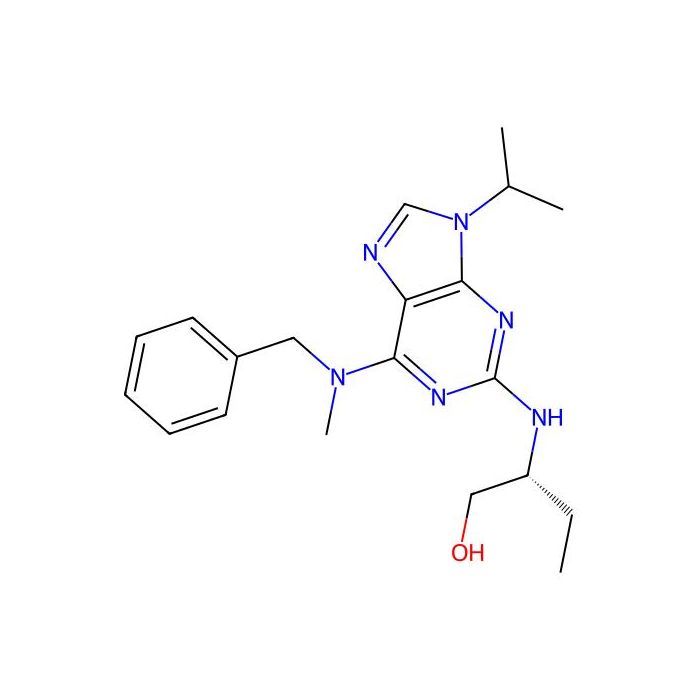
Structure and Identity
Brief overview: Aftin-4 is a small-molecule research probe supplied under Aladdin’s Moligand™ grade for screening and mechanistic studies.
Item-specific (from Product Data):
Product Name: Aftin-4
SKU: A1494470
CAS: 866893-90-5
Grade: Moligand™
InChIKey: Not specified for this item; refer to CoA/Spec Sheet.
SMILES: Not specified for this item; refer to CoA/Spec Sheet.
Molecular Formula: Not specified for this item; refer to CoA/Spec Sheet.
Molecular Weight: Not specified for this item; refer to CoA/Spec Sheet.
Literature/general identifiers (for reference only; verify against CoA before use):
Common description: Aftin-4 is reported in the literature as a small hydrophobic modulator used as a chemical probe in APP-processing research. Exact structural identifiers should be confirmed via authoritative databases or the product CoA prior to method development.
Structural features (general discussion):
Functional class: bioactive small-molecule probe (non-polymeric, non-ionic surfactant, not a peptide).
Expected features: typically contains aromatic and heteroatom-bearing motifs consistent with membrane-permeable ligands (literature, general). Exact rings/functional groups are not provided in this listing.
2D description in words (general):
Without a confirmed structure on record for this item page, a textual 2D description cannot be provided. Please consult the CoA/Spec Sheet for the definitive structure representation before building analytical or purification methods.
Synthetic Utility
Scope: Aftin-4 is sold as a bioactive probe, not as a general synthetic intermediate. Consequently, its use as a building block or reagent in organic synthesis is uncommon.
General commentary (if considering derivatization for chemical biology):
Functional handles: Without an item-specific structure on this page, the presence/location of modifiable functional groups (e.g., amide, aniline, halogen, nitrile) is not confirmed. Consult the CoA and primary literature to identify positions amenable to tagging (e.g., biotin, fluorophores) without abolishing activity.
Protecting-group strategy: If synthetic elaboration is planned, evaluate stability toward standard conditions (acid/base, oxidative, reductive, metal-catalyzed couplings). Run micro-scale tests to confirm the compound’s integrity.
Immobilization: For affinity capture, linkers are typically attached via a position shown to tolerate substitution in SAR. Establish binding/activity retention with comparative assays.
What is not provided:
No named-reaction compatibility, reagent role (e.g., ligand for cross-coupling), or standardized synthetic transformations are specified for this product.
Recommendation:
Treat Aftin-4 as a finished probe. If synthetic modifications are required, source or design analogs based on peer-reviewed SAR and confirm activity post-modification using orthogonal biochemical and cell-based assays.
Target Specificity
Item-specific target information is not provided on this page.
Literature/general context:
Aftin-4 is described as a pathway-modulating probe used to study proteolytic processing of amyloid precursor protein (APP) and related biochemical machinery. However, definitive target identity, binding constants, and selectivity panels vary by source and experimental system.
Guidance for researchers:
Establish target engagement with orthogonal methods (e.g., biochemical assays, cellular reporter assays, chemoproteomics, or genetic interaction profiling).
Perform concentration–response experiments and include structurally distinct comparator probes to confirm on-target effects.
Validate with temporal control (washout/recovery) and counterscreens to control for general cytotoxicity or stress responses.
Note: For authoritative target details, consult peer-reviewed literature and your internal validation data. This catalog entry does not specify antigen/clone/isotype (not applicable; this is not an antibody product).
Need help choosing the grade?
Our grade selection guide covers purity, stabilizer status, and application suitability for all variants in our catalog.
We use cookies to ensure the website functions properly and, where permitted, to improve your experience. You can manage your preferences at any time in Settings. Learn more in our Cookie Policy.
Shall we send you a message when we have discounts available?
Remind me later
Thank you! Please check your email inbox to confirm.
Products are supplied to verified businesses, institutions, and qualified professionals for research and development use only. Not for use in humans, animals, diagnosis, or therapy.