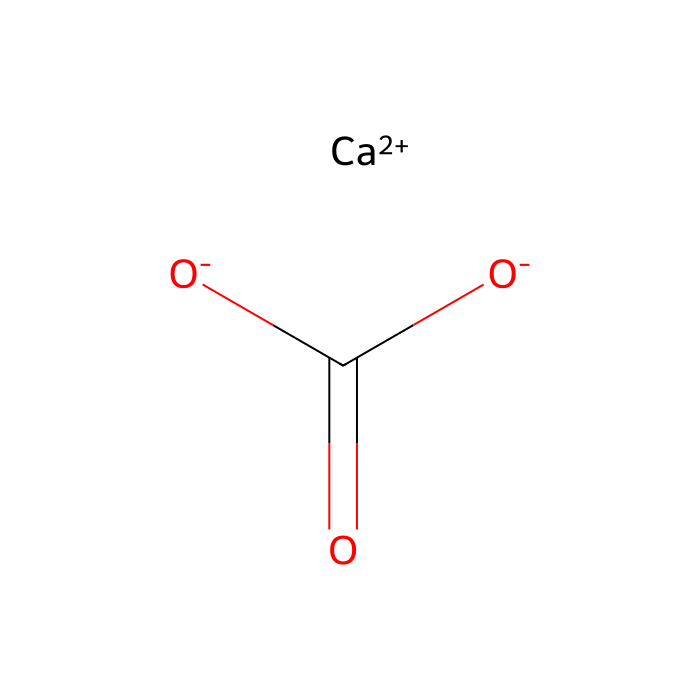
Calcium carbonate - anhydrous, ACS, ≥99% , CAS No.471-34-1

CAS: 471-34-1 Cat. No.: C432744 Fórmula: CaCO3 Peso molecular: 100.09 Beilstein Registry Number: 8008338 Número EC: 207-439-9
Disponible para pedir
CALIDAD & PUREZA Anhydrous Grade ? Anhydrous grade — water removed and packaged dry for moisture-sensitive chemistry. Use in reactions where even trace water would interfere or quench. ACS ? ACS grade — meets American Chemical Society specifications, the analytical benchmark in the US. Use for analytical and QC work needing ACS-defined purity. ≥99%
Synonyms
Garolite SA | BS 32 | Camel-wite | Calcium carbonate (USP) | Chemcarb | INS NO.170(I) | Levigated chalk | Albacar | Calcicoll | Calofort S | carbonato de calcio | EPA Pesticide Chemical Code 073502 | Caltec | CI 77220 | Kotamite | Microcarb | Multiflex SC
Storage
Room temperature
Shipped In
Normal
★
Talla
Alemania (EU)
USA*
Precio
Cantidad
100g
C432744-100g
—
3 Disponible

118,79€

139,62€
Guardar 20,83 € (14.92%)
500g
C432744-500g
1 Disponible
1 Disponible

261,10€

305,36€
Guardar 44,25 € (14.49%)
Enter a quantity for the sizes you want to add.
🧪
Por qué esta calidad

anhydrous, ACS, ≥99% ACS,Anhydrous Grade para flujos de trabajo cromatográficos y analíticos sensibles que requieren una interferencia mínima de la línea base.

🌡

Almacenamiento y envío

Room temperature Envío Normal. Consulte el COA específico del lote para conocer las especificaciones exactas.

📋

Documentos de calidad

SDS, COA, ficha técnica y hoja de especificaciones disponibles para descargar. COA específico del lote accesible mediante búsqueda por número de lote.

📚

Prueba documental

Citado en 790 publicaciones revisadas por pares sobre cromatografía, síntesis orgánica y reacciones de acoplamiento cruzado.

Especificaciones

Sinónimos
Garolite SA | BS 32 | Camel-wite | Calcium carbonate (USP) | Chemcarb | INS NO.170(I) | Levigated chalk | Albacar | Calcicoll | Calofort S | carbonato de calcio | EPA Pesticide Chemical Code 073502 | Caltec | CI 77220 | Kotamite | Microcarb | Multiflex SC
Especificaciones y pureza
anhydrous, ACS, ≥99%
Condiciones de almacenamiento de almacenamiento
Room temperature
Enviado en
Normal
Grado
ACS, Anhydrous Grade
Pureza
≥99%
Nombres e identificadores
Pubchem Sid
Pubchem Sid Url
https://pubchem.ncbi.nlm.nih.gov/substance/504751903
Sonrisas canónicas
C(=O)([O-])[O-].[Ca+2]
IUPAC Name
calcium;carbonate
InChIKey
VTYYLEPIZMXCLO-UHFFFAOYSA-L
INCHI
1S/CH2O3.Ca/c2-1(3)4;/h(H2,2,3,4);/q;+2/p-2
Isómeros SMILES
C(=O)([O-])[O-].[Ca+2]
RTECS
FF9335000
Peso molecular
100.09
Beilstein
8008338
Reaxy-Rn
8008338
Reaxys-RN_link_address
https://www.reaxys.com/reaxys/secured/hopinto.do?context=S&query=IDE.XRN=8008338&ln=

Documentación

📋 Hoja de datos de seguridad (SDS)

Documento completo sobre peligros, manipulación, almacenamiento y cumplimiento normativo.

<<<<<<< HEAD Descargar SDS → ======= Descargar SDS → >>>>>>> release248-p3

✅ Certificado de análisis (COA)

Datos de calidad específicos del lote. Introduzca su número de lote para obtener el COA exacto.

Buscar COA →

📊 Ficha técnica

Resumen de referencia rápida de las especificaciones y aplicaciones del producto.

Ver ficha técnica →

🔬 Hoja de especificaciones

Atributos de calidad completos y criterios de aceptación para esta calidad.

Ver hoja de especificaciones →

Datos avanzados

Taxonomic Classification

Taxonomy Tree

KingdomOrganic compounds
SuperclassOrganic acids and derivatives
ClaseOrganic carbonic acids and derivatives
SubclassOrganic carbonic acids
Intermediate Tree Nodes Not available
Direct ParentOrganic carbonic acids
Alternative Parents Carbonate salts  Organic calcium salts  Organic oxides  Hydrocarbon derivatives  Carbonyl compounds  
Molecular FrameworkAliphatic acyclic compounds
Substituents Carbonate salt - Carbonic acid - Organic calcium salt - Organic oxygen compound - Organic oxide - Hydrocarbon derivative - Organic salt - Organooxygen compound - Carbonyl group - Aliphatic acyclic compound
DescripciónThis compound belongs to the class of organic compounds known as organic carbonic acids. These are compounds comprising the carbonic acid functional group.
External Descriptors calcium salt - one-carbon compound - carbonate salt
Estructura 3D
Modelo de Estructura Química Interactiva


Certificados (CoA, COO, BSE/TSE y tabla de análisis)
C of A & Other Certificates(BSE/TSE, COO):
Analytical Chart:

Find and download the COA for your product by matching the lot number on the packaging.

7 results found

Lot NumberCertificate TypeFechaArticulo
G2628110G2628110Certificate of AnalysisAug 01, 2026 C432744
C2520970C2520970Certificate of AnalysisJul 14, 2023 C432744
H23071063H23071063Certificate of AnalysisJul 14, 2023 C432744
H23071064H23071064Certificate of AnalysisJul 14, 2023 C432744
H23071143H23071143Certificate of AnalysisJul 14, 2023 C432744
H23071148H23071148Certificate of AnalysisJul 14, 2023 C432744
H23071162H23071162Certificate of AnalysisJul 14, 2023 C432744
Propiedades químicas y físicas
SolubilidadH2O: insoluble
Sensibilidadmoisture sensitive
Punto de fusión (°C)800°C
Peso molecular100.090 g/mol
XLogP3
Hydrogen Bond Donor Count0
Hydrogen Bond Acceptor Count3
Rotatable Bond Count0
Exact Mass99.9473 Da
Monoisotopic Mass99.9473 Da
Topological Polar Surface Area63.200 Ų
Heavy Atom Count5
Formal Charge0
Complexity18.800
Isotope Atom Count0
Defined Atom Stereocenter Count0
Undefined Atom Stereocenter Count0
Defined Bond Stereocenter Count0
Undefined Bond Stereocenter Count0
The total count of all stereochemical bonds0
Covalently-Bonded Unit Count2
Preguntas frecuentes y artículos
The Guide to Anhydrous Grade for Reagents
Selection of Common Research Salts: A Task Map for Alkali Metal Salts & Alkaline Earth Metal Salts (with Product Tables 1–6)
Alginate : An Overview of Extraction and Purification Processes, Quality Identification, and Multidomain Applications
Titanate Coupling Agents: Structural Features, Classification, Typical Applications, and Differences from Silane Coupling Agents
Experimental Selection and Outcome Assessment of Heterogeneous Metal Catalysts in Organic Synthesis
Perovskite Oxides for Energy and Environmental Catalysis: How Oxygen Vacancies, B-Site Metals, and the Metal–Oxygen Bond Network Regulate Reaction Performance
From Barium Titanate Dielectrics to Multilayer Ceramic Capacitors: Dielectric Properties and Experimental Evaluation of Barium Titanate-Based Ceramics
How Matting Agents in Coatings Build Low-Gloss Coating Surfaces: Mechanisms, Formulation Trade-Offs, and Product Selection
Application and Selection Guide for Alkyd Resin Coatings: Advantages, Limitations, Formulation Control, and Modification Directions
Guide to Epoxy Resin Performance Design: System Composition, Key Properties, Process Control, and Application Selection
Silicone Resin Coating Formulation Design: From Application Conditions to Matching Resins, Pigments and Fillers, Curing, and Substrates
Applications and Selection of Acrylic Resins in Coatings: Analysis of Architectural, Industrial, and Supporting Materials
Capable of Swelling, Adsorption, and Cation Exchange: What Makes Montmorillonite Clay Different?
Vinyl Acetate-Acrylic Emulsion (Vinyl Acrylic Emulsion): A Cost-Performance Balance Solution for Architectural Coatings
Vinyl Ester Resin Systems: Structural Features, Curing Mechanism, and Key Application Considerations
PVAc, VAE, and Vinyl Acetate-Based Emulsions: Film-Forming Logic and Performance Boundaries in Architectural Coatings
Application Positioning, Scenario Selection, and Key Use Considerations for Chlorinated Rubber Resin in Coatings
Formulation Design of Chlorinated Rubber Coatings: Component Synergy and Performance Control
Applications and Selection of Polyester Resins in Industrial Coatings: Powder, Coil, Baking, Packaging, and Metal Coating Scenarios
How to Select Vinyl-Related Resins: Building Formulation Judgment Based on Substrate, Performance Targets, and Failure Risks
Waterborne Resin Application Guide: Formulation Synergy, Troubleshooting, and Technology Development Trends
Mechanisms and Control of Coating Yellowing: From Chromophoric Structure Formation to Source Diagnosis and Formulation Optimization
Resin Polarity in Coating Formulations: From Molecular Structure to Dissolution, Compatibility, Interfacial Interactions, and Formulation Design
Why Do Daily Chemical Products Become Opaque? Formation Mechanisms of Milky Turbidity, Pearlescence, and Coverage, and How to Select the Right Ingredients
Color-Development Mechanisms, Formulation Forms, and Selection/Application Logic of Colorants in Personal Care Products
Analysis of the Production Process of Hydroxypropyl Methylcellulose (HPMC) for Putty: Understanding Differences in Substitution Structure and Gelation Temperature from High-Ratio and Low-Ratio Formulations
Types, Mechanisms of Action, Key Quality Indicators, and Selection and Application of Common Cellulose Ethers in Wall Putty
Influencing Factors and Control Strategies for Blistering in Neutral Wall Putty: An Experimental Analysis Based on HPMC Dosage, Viscosity, and Ground Calcium Carbonate Fineness
How to Select Binding/Gel Materials for Neutral Wall Putty? A Comparison of Pregelatinized Starch, PVA, and Redispersible Polymer Powder Based on Four Application Trials
Causes and Mechanism Analysis of Delamination During Sanding of Water-Resistant Putty
What Are the Differences Between Polyvinyl Alcohol 1788, 2488, and 2699? Understanding Workability, Bonding Strength, and Relative Water Resistance from the Perspective of Degree of Polymerization and Degree of Hydrolysis
Why Do Rust Spots Appear on Neutral Wall Putty? Iron Sources, Moisture Migration, Oxidative Color Development, and Prevention Measures
Common Problems and Formulation Adjustment Strategies for Neutral Putty Under High Summer Temperatures
Differences and Application Selection of Cassava- and Corn-Based Pregelatinized Starch in Neutral Putty Formulations
The Role, Selection, Cracking Risk Analysis, and Dosage Control of Bentonite in Neutral Putty
Analysis of Hydrolyzed Pearl as a Cosmetic Raw Material: Preparation Process, Active Components, and Skincare Formulation Applications
What Is Direct Compression? Process Characteristics, Suitability Criteria, and Excipient Selection
Citations of This Product
Calculadoras de soluciones
Reseñas

Reseñas de cliente

¿Necesita ayuda para elegir la calidad?

Nuestra guía de selección de calidades cubre la pureza, el estado del estabilizador y la idoneidad de la aplicación para todas las variantes de nuestro catálogo.

Ver la guía de calidades Anhydrous Grade → Ver la guía de calidades ACS →

Artículos relacionados

Calcium carbonate - for insect cell culture, ≥99% , CAS No.471-34-1
Calcium carbonate - ACS , CAS No.471-34-1
Carbonato cálcico - ≥99,5% metales base, ≤30μm , CAS No.471-34-1
Carbonato cálcico - PrimorTrace™, ≥99,999% base metales , CAS No.471-34-1
Carbonato cálcico - AR, ≥99% , CAS No.471-34-1
Carbonato cálcico - PrimorTrace™, ≥99,99% base metales , CAS No.471-34-1
Palladium on calcium carbonate - moistened with water, 5% Pd basis (based on dry substance),unreduced , CAS No.7440-05-3
Palladium on calcium carbonate - 10% Pd basis,unreduced
Palladium on calcium carbonate - 5% Pd basis,poisoned with lead , CAS No.7440-05-3
Calcium carbonate - ≥99.89% , CAS No.471-34-1
Calcium carbonate-¹³C - ≥99 atom%,≥98% , CAS No.287389-46-2
Calcium carbonate - Ph.Eur., Premium pure, Precipitated calcium carbonate , CAS No.471-34-1
Palladium on calcium carbonate - ~10% Pd basis
Palladium on calcium carbonate - extent of labeling: 5wt. % loading, poisoned with lead
Palladium on calcium carbonate - Evonik Noblyst® P8059 5% Pd
Palladium on calcium carbonate - Evonik Noblyst® P1152 5% Pd
Palladium on calcium carbonate - extent of labeling: 5wt. % loading, unreduced
Palladium on calcium carbonate moistened with water, 5% Pd,unreduced - moistened with water, 5% Pd,unreduced , CAS No.1257650-74-0
Calcium carbonate - high-purity, Reagent grade , CAS No.471-34-1
Calcium carbonate - ≥99.95% metals basis , CAS No.471-34-1
Calcium carbonate - Premium pure, precipitated for analysis of silicates , CAS No.471-34-1
Calcium carbonate - ≥98%, powder,≤50μm , CAS No.471-34-1
Calcium carbonate - ≥99.995% metals basis , CAS No.471-34-1
Calcium carbonate-¹³C - ≥99 atom% 13C , CAS No.287389-46-2

¿Quieres que te enviemos un mensaje cuando tengamos descuentos disponibles?

Recordármelo más tarde

¡Gracias! Por favor, revisa tu bandeja de entrada de correo electrónico para confirmar.

¡Vaya! Las notificaciones están desactivadas.