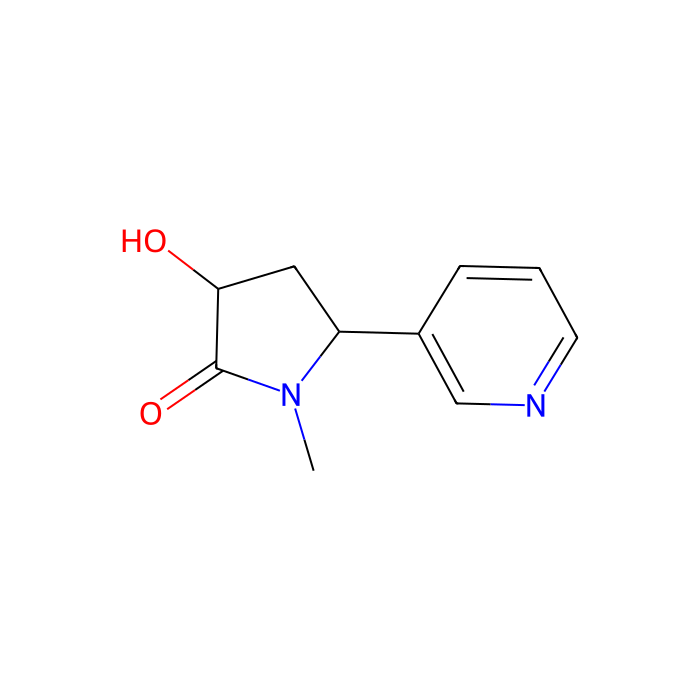
This compound belongs to the class of organic compounds known as pyrrolidinylpyridines. These are compounds containing a pyrrolidinylpyridine ring system, which consists of a pyrrolidine ring linked to a pyridine ring.
External Descriptors
Not available
1. Djoumbou Feunang Y, Eisner R, Knox C, Chepelev L, Hastings J, Owen G, Fahy E, Steinbeck C, Subramanian S, Bolton E, Greiner R, and Wishart DS. ClassyFire: Automated Chemical Classification With A Comprehensive, Computable Taxonomy. Journal of Cheminformatics, 2016, 8:61.
Vortex, incubate on ice 10 min, centrifuge at ≥14,000 g for 10 min.
Transfer supernatant, dilute with water + 0.1% formic acid, and inject into LC–MS.
Stability assessment
Evaluate bench-top (4 h), autosampler (24–48 h at 4–10°C), and three freeze–thaw cycles.
Compare peak area ratios to freshly prepared controls; acceptance criteria per internal SOP.
Adjust concentrations, volumes, and chromatographic settings to your instrumentation and regulatory context.
Biological Roles
General biochemistry (no clinical claims):
cis-3′-Hydroxycotinine is a hydroxylated metabolite in the nicotine→cotinine→3′-hydroxycotinine pathway. Hydroxylation is mediated by hepatic cytochrome P450 enzymes, followed by phase II conjugation (e.g., glucuronidation) for excretion.
The compound exists as diastereomers (cis/trans), reflecting stereochemical outcomes during metabolic oxidation on the cotinine scaffold.
As a polar metabolite with lactam and hydroxyl functionalities, it exhibits enhanced aqueous compatibility and is more readily excreted compared with nicotine.
Research relevance:
Used as a biomarker standard to investigate nicotine metabolism, enzymatic activity, and interindividual variability in xenobiotic processing.
Facilitates studies on metabolic ratios and pathway fluxes when quantified alongside cotinine, nicotine, and trans-3′-hydroxycotinine.
Note: The above describes literature-based biological context for the molecule’s role in metabolism. It does not constitute medical guidance and is intended solely to inform laboratory research planning and analytical method development.
Buffer Applications
This compound itself is not a buffering agent. However, buffer selection affects its analytical performance and stability.
General guidance for analytical buffers (literature/general):
LC–MS mobile phases: water with 0.1% formic acid or 2–10 mM ammonium formate/acetate (pH ~3–4) paired with methanol or acetonitrile. Mild acidity promotes positive ESI response and limits base-catalyzed hydrolysis.
Sample prep diluents: aqueous buffer at pH 3–6 to maintain integrity of the lactam and hydroxyl functionality; avoid strong base that may induce ring-opening or isomerization.
SPE conditioning/wash/elution: match buffer ionic strength and pH to the sorbent mode (e.g., mixed-mode cation exchange for pyridine-containing analytes); elute with acidified MeOH/ACN.
Recipes (general examples, not item specifications):
10 mM ammonium formate, pH 3.5 (adjust with formic acid), water:ACN 95:5 for A; ACN with 0.1% formic acid for B in gradient LC.
Always optimize buffer composition for the specific instrumentation and matrix; verify recovery and ion suppression empirically.
Green Alternatives
Although cis-3′-hydroxycotinine is an analyte/standard rather than a process solvent, greener practices can be incorporated into its handling and analysis.
Solvent choice (general):
Prefer water-rich mobile phases with minimal organic content when chromatographic performance allows.
When organic is required, ethanol can sometimes substitute for methanol in extraction steps; however, LC–MS methods typically favor acetonitrile or methanol for robustness and ionization.
Sample preparation:
Use microscale preparations and miniaturized SPE to reduce solvent usage.
Consider protein precipitation with ACN over multi-solvent LLE to lower total solvent volumes and hazardous waste.
Concise comparison (general guidance):
Methanol vs Ethanol: Ethanol is greener (lower toxicity, renewable routes) but may alter retention/ionization; validate before substitution.
Acetonitrile vs MeOH: ACN offers superior peak shape and lower backpressure; MeOH is less toxic but more viscous. Selection should balance performance vs EHS profile.
Operational tips:
Consolidate runs using multiplexed methods to quantify nicotine and metabolites in one injection, reducing total solvent and energy footprint.
Employ room-temperature extractions where feasible to minimize energy consumption.
Pharmaceutical Uses
No excipient or therapeutic use is specified for this catalog item. This product is offered for research use only.
General formulation/QC context (literature/general):
Small-molecule metabolite standards like cis-3′-hydroxycotinine are used in analytical method development and quality control workflows to support research related to nicotine exposure assessment, metabolism studies, and reference material preparation.
In pharmaceutical or toxicology laboratories, such standards can assist in system suitability tests, calibration curves, and stability-indicating methods for related-substance profiling of nicotine/cotinine panels.
Regulatory note:
If used in GxP or regulated environments, procure and archive CoA, lot traceability, and characterization data; confirm suitability against internal specifications. No pharmacopeial monograph is cited for this specific metabolite.
Physical Properties
Item-specific specs for this catalog entry are not provided.
Melting point, boiling point, density, refractive index, solubility, logP, pKa: Not specified for this item; refer to CoA/Spec Sheet.
Hydroxylated cotinine derivatives are typically highly polar, with good solubility in water and polar organic solvents (e.g., methanol, acetonitrile) used in LC-based analyses.
The presence of a lactam and phenolic/benzylic-type hydroxyl functionality generally results in low volatility and moderate to high aqueous solubility relative to cotinine.
pKa values for cotinine-related lactams and pyridine nitrogens typically fall outside physiological pH for strong protonation of the amide nitrogen; however, the pyridine can accept a proton in sufficiently acidic media. Exact values for this isomer should be taken from primary literature or calculated specifically for cis-3′-hydroxycotinine.
Quality and Grades
Grade/Purity: Not specified for this item; refer to CoA/Spec Sheet.
Appearance: Not specified for this item; refer to CoA/Spec Sheet.
Guidance on grade context (general):
Reference standards for small-molecule metabolites are typically offered at analytical or research grade. Analytical-grade material emphasizes identity and purity suitable for calibration and quantitation (e.g., LC–MS, GC–MS), with tight controls on impurities and well-documented characterization (NMR, HRMS, HPLC/UPLC). Research grade focuses on suitability for exploratory work where trace-level impurity control may be less stringent.
For metabolite standards, the diastereomeric purity (cis vs trans) and the positional isomeric purity (3′-hydroxy vs other hydroxylation sites) are often critical. Confirm via the item’s CoA: chromatographic purity, residual solvents, water content, and isomeric composition.
Documentation:
For regulated or quantitative workflows, request and retain the CoA/Spec Sheet and any available spectral data (1H/13C NMR, MS, HPLC traces) to ensure method suitability and traceability.
Reaction and Applications
Primary use-case (manufacturer context expanded): this analyte is widely used as a reference standard for nicotine metabolism studies, exposure assessment, and method development/validation in bioanalytical chemistry.
Typical applications (general):
LC–MS/MS calibration and QC for quantifying cis-3′-hydroxycotinine in biological matrices (urine, plasma, saliva) alongside cotinine, trans-3′-hydroxycotinine, and nicotine.
Metabolic pathway studies: characterizing CYP-mediated oxidation of nicotine→cotinine→3′-hydroxycotinine; determination of metabolic ratios.
Isomeric resolution: chromatographic separation of cis vs trans diastereomers to assess stereoselective metabolism.
Analytical chemistry tips (general):
Use stable isotope-labeled internal standards where available to correct for matrix effects and recovery.
Maintain mildly acidic mobile phases (e.g., 0.1% formic acid or ammonium formate pH ~3–4) to enhance ionization in positive ESI while maintaining compound stability.
Validate linearity, LOD/LOQ, carryover, matrix effect, extraction recovery, and stability (bench-top, autosampler, freeze–thaw) in line with accepted bioanalytical guidance.
Synthetic/derivatization notes (general):
For GC–MS workflows, phenolic/secondary alcohol and lactam functionalities may require derivatization (e.g., silylation) to improve volatility and peak shape; conditions should be optimized to avoid isomerization.
Reaction Conditions
This product is generally employed in analytical workflows rather than synthetic transformations. When chemical modification is performed for analysis, the following general conditions are reported in literature for related cotinine metabolites (not specifications for this item):
Derivatization for GC–MS: Silylation of hydroxyl functionality using reagents like BSTFA or MSTFA (often with 1% TMCS) at 60–80°C for 20–60 min to improve volatility. Water must be excluded for efficient derivatization.
LC–MS conditions: Positive ESI with mildly acidic mobile phases (e.g., water + 0.1% formic acid / ACN or MeOH). Gradients from 5–40% organic over 5–10 min are common for small polar analytes; column chemistries include C18, HILIC, or polar-embedded C18.
Solid-phase extraction: Mixed-mode cation exchange or reversed-phase sorbents with aqueous loading (pH ~3–6), aqueous wash, and elution with acidified ACN/MeOH.
Stability considerations:
Avoid strong base and prolonged elevated temperatures which may promote lactam hydrolysis or isomerization of stereocenters. Protect from light and oxygen during extended sample storage.
These conditions are offered as general literature guidance and require method-specific optimization.
Safety and Handling
GHS classification, signal word, H-statements, and pictograms: Not specified for this item; refer to SDS.
Research Use: For research use only (not for human or veterinary use).
General laboratory safety (defer to SDS for authoritative guidance):
PPE: wear lab coat, safety glasses, and appropriate chemical-resistant gloves. Handle powders/solids and stock solutions in a fume hood to minimize inhalation exposure.
Avoid contact with strong oxidizers and strong acids/bases that could lead to degradation or undesired side reactions (e.g., N-oxide formation on pyridine, amide hydrolysis under strongly basic/acidic conditions).
Spill/first aid (general): in case of skin/eye contact, rinse with water for several minutes; if inhaled, move to fresh air; if ingested, rinse mouth. Seek medical attention according to institutional policy and SDS.
Waste: collect in halogen-free organic or aqueous pharmaceutical/analytical waste compatible with your matrix; dispose per local regulations.
Transport/storage cautions:
Store at the temperature indicated below; minimize freeze–thaw and protect from prolonged exposure to light and air to limit oxidative changes. Shipments are provided with cold packs to maintain low temperature during transit.
Solvent Selection
This compound is a small, polar heteroaromatic lactam bearing an additional hydroxyl group; solvent choice is typically driven by analytical method and stability rather than reaction chemistry.
Water: typically moderate to high solubility for hydroxy-cotinine isomers.
Methanol/Acetonitrile: excellent solubility; common for LC–MS sample prep and mobile phases.
DMSO: excellent solvent for preparing concentrated stock solutions for bioanalytical assays.
Polarity/dielectric context (general): polar protic (water, MeOH) and polar aprotic (ACN, DMSO) solvents are preferred for dissolution and chromatography.
Practical selection tips:
For LC–MS calibration solutions, prepare stocks in MeOH or ACN at known concentration; dilute with water + 0.1% formic acid or ammonium formate/acetate buffers as method requires.
For stability, avoid prolonged exposure in strong base or strong acid; choose neutral to mildly acidic diluents when possible.
When analyzing cis/trans ratios, use solvent systems that maintain diastereomeric stability and avoid epimerization (keep mild pH, ambient temperatures).
Comparison (general):
Methanol vs ACN: MeOH can offer improved solubility; ACN often yields sharper LC peaks and lower viscosity. DMSO is ideal for concentrated stocks but is typically diluted out before injection.
Storage and Reconstitution
Storage conditions (from Product Data): Store at −20°C.
Shipping (from Product Data): Ice chest + Ice pads to maintain low temperature during transit.
General guidance:
Protect from light and moisture. Keep container tightly closed. Purge headspace with inert gas (e.g., nitrogen) after opening if long-term storage is anticipated.
To minimize degradation and isomerization, store as single-use aliquots at −20°C or below. Avoid repeated freeze–thaw cycles.
Reconstitution: If supplied as a solid, dissolve in high-purity methanol, acetonitrile, water, or DMSO to prepare a concentrated stock appropriate for your assay. If supplied as a solution, verify solvent and concentration on the label/CoA before dilution.
Working solutions: Prepare fresh daily or store short-term at 2–8°C in amber vials; confirm stability under your method conditions (autosampler, bench-top) prior to routine use.
Specifications such as exact solubility, appearance, and concentration (if solution) are not provided here; please consult the CoA/Spec Sheet for lot-specific details.
Molecular formula: Not specified for this item; refer to CoA/Spec Sheet.
Molecular weight: Not specified for this item; refer to CoA/Spec Sheet.
SMILES: Not specified for this item; refer to CoA/Spec Sheet.
Structural features (general chemistry/literature):
cis-3′-Hydroxy cotinine is a hydroxylated derivative of cotinine (the primary oxidative metabolite of nicotine), forming one of two diastereomers (cis/trans) due to established stereochemistry on the cotinine scaffold.
The core scaffold of cotinine comprises a pyridinyl-substituted 2-pyrrolidinone (lactam); the “3′-hydroxy” descriptor denotes an additional hydroxyl functionality relative to cotinine on the nicotine/cotinine framework. The “cis” descriptor indicates the relative configuration of substituents at the relevant stereogenic centers.
Functional groups expected from the cotinine scaffold include: an amide (lactam) carbonyl, a tertiary amide nitrogen, an aromatic pyridine ring, and an additional alcohol (–OH) functionality compared with cotinine.
2D description (general): a six-membered aromatic pyridine ring tethered to a five-membered lactam ring; the hydroxyl substituent and ring junction substituent exhibit cis relationship in this isomer.
Synthetic Utility
As a specific hydroxylated metabolite, cis-3′-hydroxycotinine is not commonly used as a general synthetic building block. Its primary value is as a reference standard. Nevertheless, some synthetic considerations (general) include:
Functional groups: a lactam (amide), an aromatic pyridine, and an alcohol provide handles for derivatization (e.g., O-acylation/O-silylation, N-oxidation of pyridine, or temporary protection for analytical derivatization).
Diastereoselectivity: maintaining the cis configuration is critical; harsh conditions can promote epimerization at stereogenic centers on the cotinine scaffold.
Protective strategies: transient silyl ethers for the hydroxyl and mild amide-compatible reagents are favored when derivatization is required for analytical purposes (e.g., GC–MS volatility enhancement).
Because of its specialized structure and stereochemical requirement, laboratories typically obtain this molecule by targeted synthesis or isolation rather than employing it as a synthon in multistep routes.
Target Specificity
Not applicable. This product is a small-molecule metabolite standard, not an antibody or affinity reagent.
Antigen/epitope, species reactivity, clone, isotype: Not applicable.
For assays involving this analyte, “specificity” pertains to chromatographic and mass-spectrometric selectivity rather than biological binding. Ensure adequate separation from isobaric or isomeric species (e.g., trans-3′-hydroxycotinine) and monitor multiple reaction monitoring (MRM) transitions where applicable.
Utilizamos cookies para garantizar el correcto funcionamiento del sitio web y, cuando esté permitido, para mejorar su experiencia. Puede gestionar sus preferencias en cualquier momento en Configuración. Más información en nuestra Política de Cookies.
¿Quieres que te enviemos un mensaje cuando tengamos descuentos disponibles?
Recordármelo más tarde
¡Gracias! Por favor, revisa tu bandeja de entrada de correo electrónico para confirmar.
Products are supplied to verified businesses, institutions, and qualified professionals for research and development use only. Not for use in humans, animals, diagnosis, or therapy.