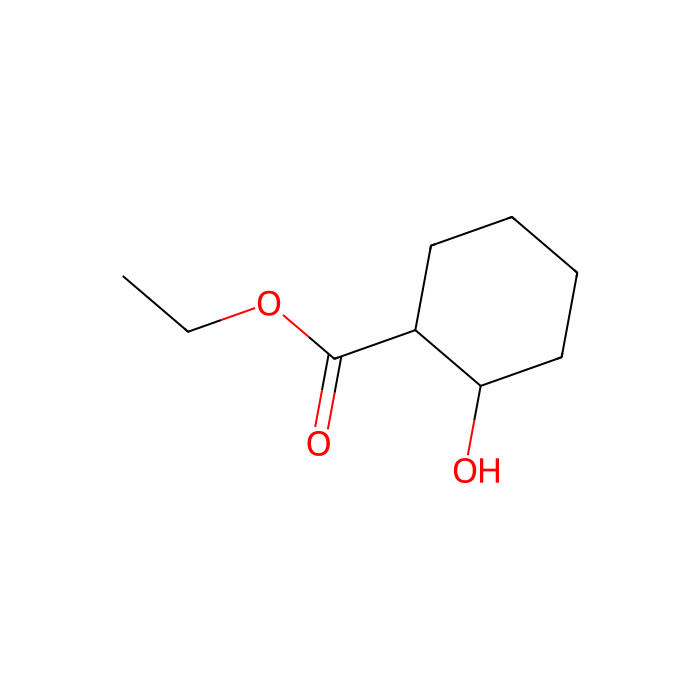
This compound belongs to the class of organic compounds known as cyclohexanols. These are compounds containing an alcohol group attached to a cyclohexane ring.
External Descriptors
Not available
1. Djoumbou Feunang Y, Eisner R, Knox C, Chepelev L, Hastings J, Owen G, Fahy E, Steinbeck C, Subramanian S, Bolton E, Greiner R, and Wishart DS. ClassyFire: Automated Chemical Classification With A Comprehensive, Computable Taxonomy. Journal of Cheminformatics, 2016, 8:61.
Determine the necessary mass, volume, or concentration for preparing a solution.
Dilution Calculator
Determine the dilution needed to prepare a stock solution.
Reconstitution Calculator
Reseñas
Reseñas de cliente
Application Protocols
No assay-specific, vendor-validated protocols are provided for this item. As a small-molecule building block, usage depends on the intended synthetic transformation.
General laboratory guidance:
Identity/purity check: Verify by NMR (1H/13C), IR (ester C=O ~1735 cm−1; broad –OH), and MS (M+ or [M+Na]+ ~172/195 m/z). Diastereomeric purity may be assessable by chiral HPLC or NOE in NMR.
Handling: Use dry glassware and anhydrous solvents for moisture-sensitive steps (protection, acylation, Mitsunobu). If solid, warm gently to dissolve; if liquid, dispense by weight for accuracy.
Workup/purification: Hydroxy esters often show streaking on silica; add a few percent of Et3N or AcOH to eluents if needed to sharpen bands. Gradient elution between hexanes/EtOAc or DCM/MeOH is typical.
For any biological testing, prepare concentrated stock in a suitable co-solvent (e.g., DMSO) and perform serial dilutions to minimize organic content in the final assay medium.
Biological Roles
This product is a small synthetic hydroxy ester and is not known as a native metabolite or cofactor.
Intrinsic biological function: None established. Aliphatic hydroxy esters of this type are generally exogenous to biological systems.
Potential biochemical relevance (general):
Can serve as a model substrate in enzyme-catalyzed transformations (e.g., lipase-mediated kinetic resolution or transesterification) to study stereochemical preferences in alicyclic systems.
Useful as a building block for preparing more complex cyclohexanoid frameworks found in natural products; the cis-1,2 relationship can inform conformational/energetic analyses relevant to ligand design or structure–activity studies in medicinal chemistry (research context only).
Hydrogen-bond donor/acceptor functionality (one HBD; multiple HBAs) may enable specific interactions with proteins or catalysts in vitro.
Moderate lipophilicity is expected; solubility in aqueous buffers is likely limited without co-solvent.
No clinical/therapeutic roles are claimed or implied. For any biological testing, ensure compound identity and purity are appropriate for the intended in vitro application and consider enantiomeric/diastereomeric composition if stereochemical outcomes are relevant.
Buffer Applications
This compound is not a buffering agent and is not typically used to prepare biological buffers.
Aqueous buffer use: Not applicable. The compound is an organic hydroxy ester with limited water solubility; it does not establish a useful acid–base equilibrium in the physiological pH range for buffering.
Practical note: If used in biochemical assays, dissolve first in a water-miscible organic co-solvent (e.g., DMSO, MeCN, or ethanol) and then dilute into buffer, maintaining low final organic content (typically ≤1–2% v/v) to avoid perturbing biological systems.
For buffer preparation guidance, refer instead to standard buffers (phosphate, Tris, HEPES, MOPS).
Green Alternatives
Greener choices pertain primarily to solvent and reagent selection when working with this hydroxy ester.
Replace hexanes/heptane with cyclohexane or heptane isomers with improved safety profiles where appropriate.
Reagent choices:
Oxidations: Prefer catalytic TEMPO/bleach or O2/NOx systems over stoichiometric Cr(VI) where compatible with the ester functionality.
Ester manipulations: Use organocatalytic or enzyme-catalyzed transesterifications (lipases) in green solvents or solvent-free conditions where feasible.
Protection chemistry: Carbonate protections using dimethyl/diethyl carbonate under mild base can offer safer profiles than acid chlorides.
Comparison highlights (general):
DCM vs EtOAc: EtOAc offers lower toxicity and environmental impact, but may co-elute polar impurities; adjust chromatography accordingly.
THF vs 2-MeTHF: 2-MeTHF is less miscible with water and aids phase separation; both may form peroxides, but 2-MeTHF typically accumulates less.
Waste minimization:
Favor catalytic protocols (e.g., Mitsunobu alternatives like PPh3/ADDP or catalytic redox esterifications) and telescoped sequences to reduce solvent consumption and workups.
Pharmaceutical Uses
No pharmacopeial or excipient status is indicated for this item.
Role in pharma R&D (general):
Synthetic intermediate: The cis-1,2 hydroxy–ester motif is a versatile handle for constructing cyclic scaffolds, lactones, and bicyclic acetals that can appear in small-molecule leads.
Chiral pool/auxiliary element: The secondary alcohol may be engaged in diastereocontrolled transformations to introduce additional stereocenters during API intermediate synthesis.
Formulation/excipients: Not typically employed as an excipient, solubilizer, or vehicle.
Process chemistry considerations:
Stability: Esters can hydrolyze under strong acidic or basic process conditions; control pH and water activity during workups and crystallizations.
Residual solvents/impurities: If used as an intermediate, ensure compliance with ICH Q3C/Q3A/Q3B for carryover into downstream steps; control stereochemical purity if it affects later stage selectivity.
No therapeutic or clinical claims are made. For any cGMP use, obtain full specifications, impurity profiles, and validated analytical methods via a CoA/quality agreement.
Physical Properties
Item-specific specifications are limited in the Product Data. The following are computed or general literature descriptors; do not treat them as item specifications.
Appearance (item-specific): Not specified for this item; refer to CoA/Spec Sheet.
Molecular formula (computed/literature): C9H16O3
Molecular weight (computed): 172.22 g/mol
Boiling point: Not specified for this item; refer to CoA/Spec Sheet. (Esters of similar size typically distill >200 °C under atmospheric pressure; literature values vary by isomer.)
Melting point: Not specified for this item; refer to CoA/Spec Sheet. (Related isomers are often liquids or low-melting solids.)
Density: Not specified for this item; refer to CoA/Spec Sheet. (Aliphatic hydroxy esters of comparable MW often fall near 1.00–1.10 g/mL at 20 °C; literature ranges only.)
Refractive index: Not specified for this item; refer to CoA/Spec Sheet.
pKa: Not applicable to ester (no acidic proton on carbonyl); secondary alcohol pKa in water typically ~15–17 (literature, generic for secondary alcohols).
LogP/logD: Not specified for this item; refer to CoA/Spec Sheet. (Balancing one –OH and an ester, moderate hydrophobicity is expected in literature trends.)
Miscible or highly soluble in common organic solvents (EtOAc, DCM, THF, MeOH).
Low solubility in water; can form H-bonds due to –OH and carbonyl oxygens.
Note: For exact constants controlling purification (bp, nD, density) and chromatography (UV cutoff), consult the item’s CoA/SDS or request a specification sheet.
Quality and Grades
Grade/Purity: Not specified for this item; refer to CoA/Spec Sheet.
Appearance: Not specified for this item; refer to CoA/Spec Sheet.
Interpretation and guidance (general):
Hydroxy esters are sensitive to base and prolonged exposure to moisture, which can influence assay by hydrolysis or transesterification during storage/handling. When a purity/grade is provided (e.g., ≥95%, ≥98%), the assay typically reflects GC or HPLC area percent; minor impurities often include regio-/stereoisomers, residual alcohols/acids, and traces of solvent.
If an inhibitor/stabilizer is present (e.g., traces of acid to suppress transesterification), it will be stated explicitly on the CoA. No stabilizer is indicated in the Product Data for this item.
For stereodefined materials, “cis” designation refers to the relative configuration. If enantiomeric purity (er/ee) or diastereomeric ratio (dr) is controlled, it should be specified on the CoA; otherwise, assume material may be a racemate of the cis pair unless noted.
UV-Vis background for chromatographic use (HPLC/UV): hydroxy esters have weak UV absorption above 220–230 nm; if HPLC grade is needed for UV detection, request low-UV-absorbing solvent residues and impurity profiles.
Recommendation: Request a current CoA for your lot to confirm assay, dr/er (if applicable), residual solvent limits, water content (KF), and any special impurity controls relevant to your application.
Reaction and Applications
As a cis-1,2-disubstituted cyclohexyl hydroxy ester, this intermediate is valuable in stereocontrolled synthesis and functional group interconversions.
Silylation (TBS/TIPS), acylation (Ac2O, benzoylation), or carbonate formation to direct subsequent chemistry.
Mitsunobu inversion (DEAD/DIAD, PPh3) can access the trans-2-alkoxy ester or introduce diverse nucleophiles with inversion at C2.
Oxidation/reduction:
Oxidize –OH to ketone (e.g., Dess–Martin periodinane, PCC), giving an α-oxo ester; reduce ester to diol (DIBAL-H to aldehyde, LiAlH4 to primary alcohol) with ring- and stereochemistry retained at C2.
Lactonization and ring contractions/expansions:
Intramolecular esterification under acidic activation can afford δ-lactones from hydroxy acid derivatives after deprotection/hydrolysis.
Transesterification and acyl substitution:
Exchange the ethyl group under acid/base catalysis to tailor protecting-group stability or introduce isotopic labels.
C–C bond formation adjacent to carbonyl:
Enolate chemistry at the α-position of the ester (if the C1 α-proton is accessible in a given derivative) enables alkylation or aldol coupling; protecting the –OH is advised to avoid side reactions.
Chiral pool or diastereocontrol:
The cis relationship can direct neighboring group participation, hydrogen bonding, and reagent approach for diastereoselective elaborations.
Use cases:
Building block for cyclohexanoid natural product fragments
Precursor to bicyclic acetals/ketals and to substituted ε-/δ-lactones after selective transformations
Note: Optimize drying (molecular sieves, inert atmosphere) to suppress unintended transesterification/hydrolysis during reactions.
Reaction Conditions
General literature guidance for common operations on aliphatic hydroxy esters. Adjust to your substrate and consult primary literature.
Solvent: THF or toluene; 0 °C → rt; 2–12 h; 60–90% depending on nucleophile; produces trans product at C2.
Oxidation of secondary alcohol:
DMP (1.3 equiv) in DCM; 0–25 °C; 1–2 h; 80–95% to ketone without affecting the ester (literature).
Ester reduction:
DIBAL-H (1.1–1.5 equiv) in toluene/hexanes at −78 to −20 °C; 1–3 h to aldehyde (work up carefully to avoid over-reduction).
LAH (1.5–2.0 equiv) in THF; 0–25 °C; 1–4 h to primary alcohol; quench cautiously.
Hydrolysis/transesterification:
Base-catalyzed (NaOMe/MeOH, 0.1–0.5 M) at 0–25 °C; minutes to hours.
Acid-catalyzed (p-TsOH, catalytic) in ROH solvent under reflux for exchange of ethyl group.
Notes:
Protect –OH for strong-base enolate chemistry (LDA, NaHMDS) at −78 to −40 °C in THF/2-MeTHF.
Stereochemical outcomes can be chair-conformation dependent; consider computational or model studies when planning diastereoselective steps.
Values above are general literature ranges, not specifications for this item.
Safety and Handling
Hazard classifications are not provided in the Product Data for this SKU. Always review the SDS for authoritative information before use.
GHS classification, signal word, pictograms, H-statements: Not specified for this item; refer to SDS.
Likely hazards (general for aliphatic hydroxy esters, literature): May cause eye/skin irritation; harmful if swallowed in large amounts. Not volatile, but avoid inhalation of aerosols or mists.
Recommended PPE (good laboratory practice):
Safety glasses or chemical splash goggles
Nitrile gloves; change regularly
Lab coat; handle in a fume hood when heating, distilling, or using volatile solvents
Handling guidance:
Avoid contact with strong oxidizers and strong bases during storage; under strong base the ester can undergo saponification/transesterification.
Keep containers tightly closed to avoid moisture ingress (can affect downstream reactions) and contamination.
If distilling or heating, consider the potential for thermal decomposition; use appropriate temperature control and inert atmosphere when relevant.
First-aid overview (general):
Skin/eye contact: Rinse with water for several minutes; remove contaminated clothing; seek medical attention if irritation persists.
Ingestion: Rinse mouth; do not induce vomiting; obtain medical advice.
Inhalation of mist/vapor: Move to fresh air; seek medical attention if symptoms occur.
Spill/cleanup: Absorb with inert material (vermiculite, sand), collect for disposal. Prevent entry into drains.
Fire safety: Use CO2, dry chemical, or foam. Combustible organic liquid/solid (general), though low volatility may reduce vapor hazard.
Defer to the SDS and institutional EHS policies for all risk assessments and exposure limits.
Solvent Selection
This compound is a moderately polar aliphatic hydroxy ester.
Polarity/miscibility (general expectations):
Good solubility in polar aprotic organics (EtOAc, THF, acetonitrile) and chlorinated solvents (DCM, chloroform).
Usually soluble in lower alcohols (MeOH, EtOH, i-PrOH); limited solubility in nonpolar alkanes unless warmed.
Low water solubility; co-solvent may be required for aqueous systems.
Dielectric considerations: Solvents with ε ≈ 4–40 (e.g., toluene to MeCN) are typically effective depending on reaction pathway (esterification/transesterification vs. protection, oxidation, etc.).
Selection by operation:
Synthesis/derivatization: THF, DCM, or EtOAc commonly used; for greener options consider 2-MeTHF or CPME.
Crystallization: Ethanol/ethyl acetate/hexanes combinations can enable dr-enrichment or purification if the product is a low-melting solid; empirical screening recommended.
Chromatography: Start with 10–50% EtOAc in hexanes or 2–20% MeOH in DCM for silica; adjust based on TLC Rf.
Acid/base compatibility:
Avoid strong base in protic solvents if ester stability is critical (saponification risk).
For acylation or protection of the –OH, use dry, aprotic media and base scavengers.
Short comparison (general):
DCM: excellent solvating power, easy removal; not green.
EtOAc: greener, good solubility, supports H-bonding interactions.
THF/2-MeTHF: versatile for both nucleophilic and coordination chemistry; peroxide formation risk (see SDS for THF).
Storage and Reconstitution
Storage temperature (from Product Data): Room temperature.
Shipped in: Normal conditions (from Product Data).
Container: Store in a tightly closed, chemically compatible container. For moisture-sensitive applications, consider storing under inert gas (N2/Ar) with a desiccant.
Light/air sensitivity: Hydroxy esters are generally stable, but prolonged exposure to moisture and strong light/heat can promote hydrolysis or oxidation. Keep away from strong acids/bases during storage.
Freeze–thaw: Not applicable; no reconstitution required. If supplied as a solid that tends to supercool or as a viscous liquid, gentle warming (e.g., 30–40 °C water bath) may aid dispensing.
Reconstitution: Not applicable. If a solution is desired for convenience, prepare single-use aliquots in dry solvent (e.g., EtOAc, THF, or DCM) under inert atmosphere and store at low temperature (e.g., 2–8 °C) for short periods; verify stability before use.
Stability: Item-specific stability/shelf life is not provided; refer to CoA/SDS. As a general practice, minimize headspace and moisture to preserve assay and stereochemical integrity.
Research use note: For research use only. Not for human or veterinary use.
Structure and Identity
cis-Ethyl 2-hydroxycyclohexanecarboxylate is a bicyclic-like, conformationally flexible alicyclic ester bearing a secondary alcohol and an ethyl carboxylate in a cis-1,2 relationship on a cyclohexane ring.
Molecular weight (computed from formula): 172.22 g/mol
InChIKey (as provided in Product Data): 403677
SMILES: Not specified for this item; refer to CoA/Spec Sheet.
Structural features (general description):
Core ring: saturated six-membered cyclohexane capable of chair conformations.
Functional groups: one secondary alcohol (–CHOH–) at C2 and one ethyl ester (–C(=O)OCH2CH3) at C1.
Stereochemistry: cis-1,2-disubstitution on the ring (both substituents oriented on the same face in the lowest-energy chair), creating defined relative configuration at C1 and C2 (absolute configuration not specified).
Polarity elements: one hydrogen-bond donor (–OH) and three oxygen atoms total, enabling H-bonding and moderate polarity compared with simple cyclohexyl esters.
2D description in words: a cyclohexane ring bearing adjacent substituents at positions 1 and 2; position 1 carries a carboxylate carbonyl linked to an ethyl group (ethyl ester), and position 2 carries a hydroxyl group. The two substituents are cis to each other on the ring face.
Synthetic Utility
Key functional groups and reactivity features:
Secondary alcohol (C2): amenable to inversion (Mitsunobu), protection (silyl, acyl, carbonate), oxidation (to ketone), or substitution via activation (e.g., mesylate/tosylate then SN2 at C2 with inversion, mindful of cyclohexyl stereoelectronics).
Ethyl ester (C1): participates in transesterification, reduction (DIBAL-H → aldehyde, LAH → primary alcohol), amidation (via activation to acid chloride or via direct coupling after hydrolysis to acid).
cis-1,2 Relationship: offers predictable conformational bias in chair conformers that can guide diastereoselective additions or neighboring-group participation.
Typical transformations (literature/general):
Hydrolysis → 2-hydroxycyclohexanecarboxylic acid (cis) followed by lactonization to δ-lactone derivatives.
Carbon–carbon bond construction via enolate chemistry at the α-position of the ester (after protecting the –OH): Claisen condensations, Michael additions with appropriate partners.
Oxidative manipulations: Swern/DMP oxidation of the secondary alcohol to a ketone permits further elaboration (e.g., reductive amination, Wittig/olefination on derived carbonyls).
Formation of bicyclic acetals/ketals after carbonyl introduction; the proximal –OH enables intramolecular cyclizations.
Retrosynthetic value:
Serves as a convergent node offering orthogonal handles (nucleophilic at O, electrophilic at C=O) for rapid diversification toward cyclohexanoid targets. The ethyl group is a traceless protecting element that can be exchanged or removed late-stage.
Target Specificity
Not applicable. This product is a small-molecule reagent, not a biological targeting agent (e.g., antibody, ligand, or probe) with defined target specificity. No antigen/epitope, species reactivity, clone, or isotype data apply.
Utilizamos cookies para garantizar el correcto funcionamiento del sitio web y, cuando esté permitido, para mejorar su experiencia. Puede gestionar sus preferencias en cualquier momento en Configuración. Más información en nuestra Política de Cookies.
¿Quieres que te enviemos un mensaje cuando tengamos descuentos disponibles?
Recordármelo más tarde
¡Gracias! Por favor, revisa tu bandeja de entrada de correo electrónico para confirmar.
Products are supplied to verified businesses, institutions, and qualified professionals for research and development use only. Not for use in humans, animals, diagnosis, or therapy.