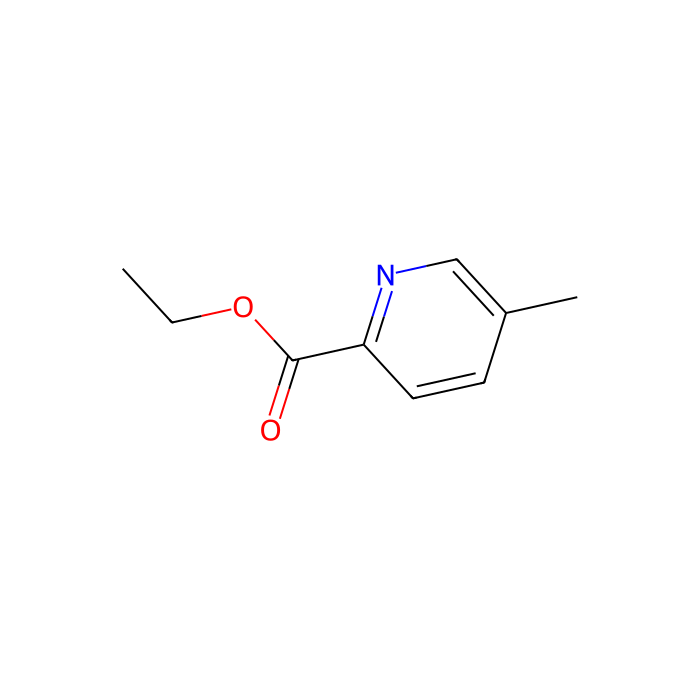
This compound belongs to the class of organic compounds known as 5-alkyl-2-carboxypyrimidines. These are pyrimidine-2-carboxylic acids that carry an alkyl group at the 5-position of the pyridine ring.
External Descriptors
Not available
1. Djoumbou Feunang Y, Eisner R, Knox C, Chepelev L, Hastings J, Owen G, Fahy E, Steinbeck C, Subramanian S, Bolton E, Greiner R, and Wishart DS. ClassyFire: Automated Chemical Classification With A Comprehensive, Computable Taxonomy. Journal of Cheminformatics, 2016, 8:61.
Determine the necessary mass, volume, or concentration for preparing a solution.
Dilution Calculator
Determine the dilution needed to prepare a stock solution.
Reconstitution Calculator
Reseñas
Reseñas de cliente
Application Protocols
No application protocols (e.g., WB, IHC, IF, FC) are applicable to this small-molecule building block. For synthetic use, see Reaction Conditions and Synthetic Utility. For analytical handling:
NMR sample prep: 10–30 mg in 0.6 mL CDCl3 or DMSO-d6; add a drop of base (e.g., NEt3) if peak broadening from pyridinium formation occurs.
LC/MS: Dissolve at 0.1–1.0 mg/mL in acetonitrile or methanol; add 0.1% formic acid for positive ESI if needed.
For any assay-specific procedures, develop and validate conditions appropriate to your laboratory and instrumentation.
Biological Roles
Item-specific biological data are not provided for this product. The compound is intended for research use as a synthetic building block.
General context (literature)
Picolinic acid (the conjugate acid of picolinate) is a known bidentate ligand and a metabolite in the tryptophan–kynurenine pathway in biology. However, the ethyl ester is not an endogenous metabolite and primarily serves as a synthetic intermediate.
Heteroaromatic esters such as ethyl picolinates can permeate biological membranes more readily than the corresponding acids due to reduced polarity; such esters are sometimes used as masked acids in pro-moieties for research probes, but hydrolysis rates are context-dependent and enzyme/medium specific.
The pyridine nitrogen can participate in hydrogen bonding and metal coordination in vitro; this property is useful in the design of coordination complexes or supramolecular assemblies for biochemical research.
Implications for laboratory studies
If used in biological assays, be aware that non-specific binding to proteins or membranes may occur due to aromaticity and moderate lipophilicity; include appropriate controls.
Hydrolysis to the acid may occur under physiological or esterase-rich conditions; verify stability profiles in the intended matrix before use.
No medical, diagnostic, or therapeutic uses are claimed or implied; for research use only.
Buffer Applications
This compound is not a conventional buffering agent. As a neutral heteroaromatic ester, it does not provide useful acid/base capacity in aqueous media.
Guidance
For aqueous work, hydrolysis to 5-methylpicolinic acid would introduce a weakly acidic function, but typical biological buffer systems (e.g., phosphate, HEPES, MOPS, Tris) are more appropriate.
If solubilizing the ester in buffer for assays, consider co-solvents (e.g., ≤1–5% DMSO or ethanol) and confirm that the buffer pH does not promote unwanted hydrolysis.
Refer to sections on Solvent Selection and Storage & Reconstitution for handling in mixed aqueous/organic systems.
Green Alternatives
While Ethyl 5-methylpicolinate is itself a target/building block rather than a solvent, greener choices can be made in its synthesis, use, and workup.
Greener solvent choices (general guidance)
Replace chlorinated solvents (DCM, CHCl3) with ethyl acetate, 2-MeTHF, CPME, or toluene where feasible.
Use water or water/alcohol mixtures for hydrolysis or enzymatic transesterifications to reduce solvent burden.
Process considerations
Catalysis: Enzymatic esterifications/transesterifications (lipases) in green solvents or solvent-free can form or modify the ester under mild conditions.
Reductions: Prefer DIBAL-H over LAH when compatible, reducing hazard and waste; alternatively, catalytic hydrogenation of suitable intermediates can be explored.
Oxidations: Employ oxygen or H2O2-based systems with catalysts in place of stoichiometric Cr(VI)/Mn(VII) where substrate compatibility allows.
Comparison (illustrative, literature-based)
DCM vs EtOAc: EtOAc is biodegradable, lower toxicity; often extracts/purifies pyridine esters effectively.
THF vs 2-MeTHF: 2-MeTHF is bio-based, less miscible with water (easier separations), forms peroxides more slowly than THF; similar performance for organometallic steps.
Waste minimization
Reduce silica usage by optimizing crystallization or using reverse-phase purification where appropriate.
Telescoping steps (e.g., in situ hydrolysis then coupling) can avoid intermediate isolations and solvent exchanges.
Pharmaceutical Uses
No pharmacopeial status, excipient role, or formulation grade is specified for this item; refer to CoA/Spec Sheet.
General research/manufacturing context (non-clinical, literature)
Ethyl picolinate derivatives are common intermediates in the synthesis of heteroaromatic carboxamides, acids, and alcohols used during small-molecule discovery and process development.
The ester can act as a protecting/activating group for the carboxyl function during multi-step routes, facilitating purification and selective transformations.
Conversion to 5-methylpicolinamide motifs yields ligands frequently encountered in catalysis or as directing groups in C–H activation methodologies, valuable for route scouting.
Practical considerations
For GMP or regulatory contexts, define impurity profiles (residual solvents, genotoxic impurities, nitrosamines screening if relevant to route), and qualify starting materials per ICH Q7/Q11 where applicable.
No therapeutic claims are made for this product; it is supplied strictly for research and development use.
Physical Properties
Item-specific specifications (exact numeric properties) are not provided for this catalog entry. Where useful, general literature expectations for closely related compounds are summarized for orientation only.
Item-specific specs
Appearance: Not specified for this item; refer to CoA/Spec Sheet.
Grade/Purity: Not specified for this item; refer to CoA/Spec Sheet.
General/literature expectations for ethyl picolinate derivatives
Physical state: Typically a colorless to pale yellow liquid (literature, for related ethyl pyridinecarboxylates).
Boiling point: Ethyl pyridine-2/3-carboxylates often boil in the ~230–260 °C range at ambient pressure (literature). A 5-methyl substituent may modestly raise bp.
Melting point: Generally do not crystallize at room temperature (literature).
Density: Aromatic nitrogen esters are often around 1.05–1.15 g/mL at 20–25 °C (literature; indicative only).
Refractive index: Frequently in the nD 1.50–1.54 range for similar heteroaromatic esters (literature).
Solubility: Low in water; miscible with common organic solvents (e.g., dichloromethane, ethyl acetate, toluene, THF, acetonitrile) (literature/general).
Volatility: Lower than ethyl benzoate analogs due to ring nitrogen polarity; reduced vapor pressure at room temperature (general).
Note: Do not treat the above literature ranges as product specifications. For assay results and exact physical constants applicable to this lot, consult the product’s CoA/Spec Sheet.
Quality and Grades
Item-specific grade/purity: Not specified for this item; refer to CoA/Spec Sheet.
Understanding grade terminology (general)
Research/Biochemical grade: Typically indicates suitability for synthetic and analytical work; impurity profiles prioritize organic and inorganic contaminants relevant to research workflows.
Assay reporting: For building blocks, suppliers typically report GC or HPLC area % assay, with residual solvents, moisture (Karl Fischer), and inorganics as applicable. Exact thresholds are lot-specific and reported on the CoA.
UV profile: For chromatography or photochemical use, low-UV-absorbing grades may be specified; absent a stated grade, assume standard research grade, and verify by your own method requirements.
Stabilizers/inhibitors
Not specified for this item; refer to CoA/Spec Sheet. Esters of this class generally do not require added stabilizers, but confirm no additives if your synthesis is sensitive.
Practical guidance
If you require defined metal content, residual solvents, or water limits for catalysis or moisture-sensitive steps, specify these at PO and request the current CoA. Batch-to-batch reproducibility can be improved by in-house pre-qualification (e.g., GC purity, 1H NMR, water by KF).
Reaction and Applications
Ethyl 5-methylpicolinate serves as a versatile heteroaromatic ester building block useful in heterocycle functionalization, carbonyl chemistry, and ligand precursor synthesis.
Transformations at the ester
Hydrolysis (saponification or acid hydrolysis) to 5-methylpicolinic acid; basis for subsequent amide coupling to generate 5-methylpicolinamides (common chelating motifs).
Aminolysis/transesterification to access diverse esters/amides; catalyzed by base, acid, or enzymes (literature).
Reductions: DIBAL-H (−78 to 0 °C) can afford the corresponding aldehyde; stronger hydrides (LiAlH4) reduce to 2-(hydroxymethyl)-5-methylpyridine.
Organometallic additions: Grignard or organolithium reagents can add twice to the ester carbonyl to give tertiary alcohols (after workup); control stoichiometry and temperature to access aldehydes via Weinreb amide after conversion.
Ring/benzylic modifications
Benzylic (picolyl) oxidation of the 5-methyl group to aldehyde/acid (e.g., SeO2 for aldehyde; KMnO4 or RuO4 for acid) provides 5-formyl/5-carboxy picolinate motifs (literature).
N-oxidation to the pyridine N-oxide (m-CPBA, H2O2 systems) can be used as a directing group for further C–H functionalization.
Applications
Ligand precursor: After hydrolysis/coupling, picolinamide and picolinic acid derivatives chelate transition metals (e.g., Ni, Cu, Zn) in catalysis and materials research.
Building block for medicinal chemistry SAR around picolinates, enabling modulation of lipophilicity via ester/amide interconversions.
Practical tips
Avoid prolonged exposure to strong base or acid in protic media to limit hydrolysis.
For silica chromatography, add a drop of base (e.g., NEt3) to prevent streaking due to pyridine protonation.
Reaction Conditions
The following literature-style conditions are typical for pyridine-2-carboxylate esters and should be adapted/verified for Ethyl 5-methylpicolinate by small-scale trials.
Hydrolysis (saponification)
Conditions: K2CO3 or NaOH (1–3 equiv) in MeOH/H2O or THF/H2O (rt to 50 °C, 1–6 h) to give 5-methylpicolinic acid after acidification. Acidic hydrolysis with HCl(aq)/dioxane (reflux) is an alternative.
Aminolysis/amide coupling
Direct aminolysis: Amine (3–5 equiv), catalytic DMAP, heating in toluene or neat (80–120 °C). For milder conditions, first hydrolyze to acid, then couple (EDC/HOBt or HATU/DIPEA in DMF/MeCN, 0–25 °C).
Reduction to aldehyde/alcohol
DIBAL-H (1.1–1.5 equiv) in toluene or THF at −78 to −20 °C affords the aldehyde; quench carefully at low temperature to avoid over-reduction.
LiAlH4 (2–3 equiv) in THF, 0 °C to reflux, 1–3 h provides the primary alcohol; quench cautiously.
SeO2 (0.5–1.0 equiv) in toluene or dioxane (reflux) for aldehyde formation (allylic/benzylic oxidation, literature).
KMnO4 or Na2Cr2O7 under controlled conditions for full oxidation to the acid; consider greener alternatives (e.g., catalytic TEMPO/bleach for related substrates).
N-oxidation
m-CPBA (1.1–1.5 equiv) in DCM at 0–25 °C affords the N-oxide in good yields; wash with Na2S2O3 to remove peracid by-products.
Yields and exact parameters vary with scale and substrate; consult primary literature and verify experimentally.
Safety and Handling
Item-specific hazard information
Signal Word: Not specified for this item; refer to SDS.
GHS Classification: Not specified for this item; refer to SDS.
H-Statements / Pictograms: Not specified for this item; refer to SDS.
General safety considerations for heteroaromatic esters (guidance only)
Likely hazards: May cause skin/eye irritation and respiratory tract irritation if vapors/aerosols are formed. Treat as combustible organic liquid.
PPE: Use lab coat, safety goggles, and appropriate chemically resistant gloves (e.g., nitrile). Employ splash protection when handling larger quantities.
Engineering controls: Handle in a chemical fume hood to avoid inhalation of vapors/mists; ensure adequate ventilation.
Storage incompatibilities: Avoid strong bases (risk of saponification), strong acids (hydrolysis), and strong oxidizers (oxidation). Keep away from ignition sources.
Spill/cleanup: Absorb small spills with inert material (vermiculite, sand). For liquids, contain to prevent entry into drains. Dispose according to local regulations.
First aid (overview): If inhaled, move to fresh air; if on skin, wash with soap/water; if in eyes, rinse cautiously with water for several minutes; if swallowed, rinse mouth—obtain medical attention in all cases of concern. Refer to SDS for detailed instructions.
Stability notes: Esters can hydrolyze slowly in the presence of moisture and base/acid; keep containers tightly closed to minimize hydrolysis.
Always consult the product SDS for authoritative, item-specific safety information.
Solvent Selection
This product is a heteroaromatic ester building block, not a solvent. The following guidance addresses its solubility and solvent compatibility for use in synthesis and analysis.
Polarity/miscibility (literature/general)
Moderately polar organic compound (pyridine nitrogen and ester carbonyl) with low expected water solubility.
Typically miscible with common organic solvents: dichloromethane, chloroform, THF, ethyl acetate, acetone, acetonitrile, toluene, and alcohols.
Selection tips by application
Reaction medium: For nucleophilic substitutions on the side chain or hydrolysis/aminolysis, polar aprotic solvents (THF, MeCN, DMF/DMAc) often accelerate rates; protic solvents (MeOH/EtOH) favor transesterification.
Organometallic additions (to the ester carbonyl): Use rigorously anhydrous ethereal solvents (THF, Et2O) or toluene under inert atmosphere; temperature control is critical to manage over-addition.
Purification: Normal-phase silica chromatography typically uses hexanes/EtOAc or toluene/EtOAc gradients; basic additives (0.1–1% NEt3) can suppress pyridinium-silica interactions and reduce tailing.
Analytical: Good solubility in CDCl3 and DMSO-d6 for NMR; acetonitrile or methanol for LC; adjust mobile phase pH to avoid on-column hydrolysis.
Comparison with alternatives (general)
Versus more polar pyridinecarboxamides, the ester is more soluble in nonpolar media and less hydrogen-bonding, often improving chromatographic behavior but reducing aqueous compatibility.
Storage and Reconstitution
Storage (item-specific from Product Data)
Store at room temperature. Ship under normal conditions.
General stability/handling
Keep container tightly closed in a dry, well-ventilated place. Moisture and strong acid/base catalyze ester hydrolysis over time; minimize exposure to humid air.
Protect from strong oxidizers and prolonged light/heat. For long-term storage, consider amber bottles and desiccation.
Solution preparation (general)
This compound is typically readily soluble in organic solvents such as dichloromethane, acetonitrile, THF, ethyl acetate, toluene, methanol, and DMSO (literature). Prepare stock solutions fresh when possible.
Working concentrations: 1–100 mM solutions are common for synthetic/analytical work; filter through PTFE (0.2 µm) if particulate is present.
Aqueous use: Low water solubility; use co-solvents (e.g., 1–5% DMSO, ethanol) as required and verify stability against hydrolysis at the working pH.
Freeze–thaw guidance
Typically not required for neat liquid storage. If storing solutions, keep in sealed, dry vials at 2–8 °C and avoid repeated freeze–thaw by aliquoting.
Research use note
For research use only. Refer to the product’s CoA and SDS for lot-specific quality attributes and safety information.
Structure and Identity
Ethyl 5-methylpicolinate is an ethyl ester of 5-methylpyridine-2-carboxylic acid (a picolinic acid derivative), featuring a pyridine ring bearing an ethoxycarbonyl group at the 2-position and a methyl substituent at the 5-position.
Item-specific identifiers (from Product Data)
SKU: E193934
CAS: 55876-82-9
CID: 12243769
InChIKey: 307005 (as provided)
Storage Conditions: Room temperature; Shipped: Normal
Category: 全部 / 可售 / 化学和生化试剂
Structure description (general/literature)
Core: 6-membered aromatic heteroaromatic ring (pyridine, one ring nitrogen)
Substituents: 2-ethoxycarbonyl (ethyl ester of picolinic acid) and 5-methyl
The pyridine nitrogen (position 1) is para to the methyl (position 5) and ortho to the ester carbonyl (position 2). The carbonyl is conjugated to the ring; the ethoxy group extends from the carbonyl forming the ethyl ester tail.
Synthetic Utility
Ethyl 5-methylpicolinate integrates three strategically useful elements: a pyridine heteroaromatic core, a benzylic-type methyl substituent, and a transformable ester.
Ester chemistry
Platform for interconversion: hydrolysis to acid, amidation (via acid chloride or coupling reagents), alcohols (LiAlH4), and aldehydes (DIBAL-H).
Enables Weinreb amide route: convert ester → acid → Weinreb amide to achieve controlled mono-addition of organometallics to the carbonyl (avoid over-addition typical for esters).
Heteroaromatic modulation
N-oxidation to pyridine N-oxide enables directed C–H functionalization (e.g., ortho to N). Subsequent deoxygenation regenerates the pyridine.
Quaternization (N-alkylation) produces pyridinium salts, enabling phase-transfer features or serving as intermediates for Chichibabin-like substitutions.
Benzylic (picolyl) handle at C-5
Oxidation to formyl or carboxyl derivatives furnishes handles for further diversification (e.g., reductive amination from the aldehyde; cross-coupling after conversion to halides).
Retrosynthetic value
Serves as a masked 5-methylpicolinic acid that is more lipophilic and often easier to purify by silica chromatography than the free acid.
Orthogonal reactivity of N, ester, and benzylic positions allows sequential, chemoselective transformations in route design.
Purification/analysis tips
1H NMR typically shows an ethyl quartet/triplet, benzylic methyl singlet, and distinct pyridine aromatic pattern; pyridine N protonation shifts aromatic signals downfield—use a drop of base in CDCl3 if needed.
Target Specificity
Not applicable. This product is a small-molecule heteroaromatic ester and is not an antibody, enzyme, or biological binding reagent. No target, epitope, or species reactivity information applies.
Utilizamos cookies para garantizar el correcto funcionamiento del sitio web y, cuando esté permitido, para mejorar su experiencia. Puede gestionar sus preferencias en cualquier momento en Configuración. Más información en nuestra Política de Cookies.
¿Quieres que te enviemos un mensaje cuando tengamos descuentos disponibles?
Recordármelo más tarde
¡Gracias! Por favor, revisa tu bandeja de entrada de correo electrónico para confirmar.
Products are supplied to verified businesses, institutions, and qualified professionals for research and development use only. Not for use in humans, animals, diagnosis, or therapy.