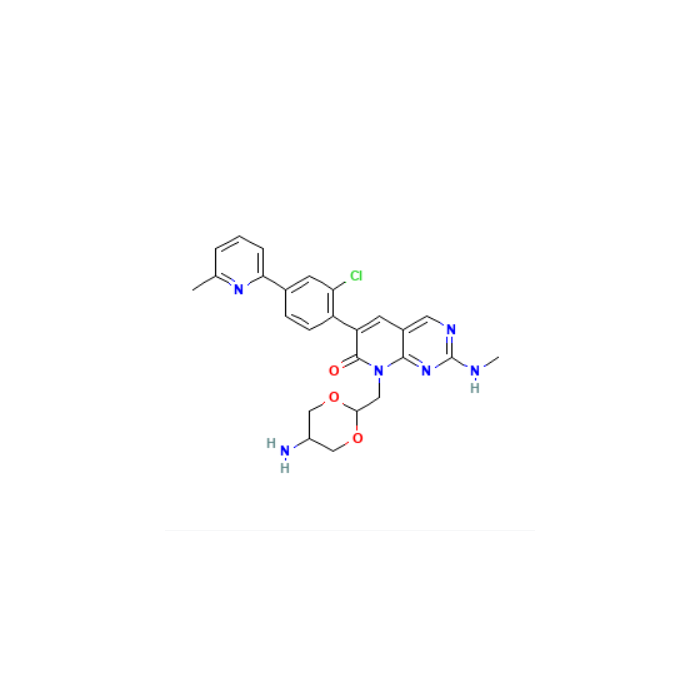
G 5555 - ≥98%(HPLC) , CAS No.1648863-90-4

CAS: 1648863-90-4 Cat. No.: G288842 Fórmula: C₂₅H₂₅ClN₆O₃ Peso molecular: 492.96
Disponible para pedir
GRADE & PURITY ≥98%(HPLC)
Synonyms
8-[(trans-5-Amino-1,3-dioxan-2-yl)methyl]-6-[2-chloro-4-(6-methyl-2-pyridinyl)phenyl]-2-(methylamino)-pyrido[2,3-d]pyrimidin-7(8H)-one
Storage
Store at -20°C
Shipped In
Ice chest + Ice pads
★
Size
Alemania (EU)
USA*
Price
Qty
1mg
G288842-1mg
Fabricado bajo pedido · 8–12 semanas

17,27€

25,95€
Guardar 8,68 € (33.44%)
5mg
G288842-5mg
Fabricado bajo pedido · 8–12 semanas

64,13€

96,23€
Guardar 32,11 € (33.36%)
10mg
G288842-10mg
Fabricado bajo pedido · 8–12 semanas

114,45€

171,73€
Guardar 57,27 € (33.35%)
25mg
G288842-25mg
Fabricado bajo pedido · 8–12 semanas

229,00€

343,54€
Guardar 114,54 € (33.34%)
50mg
G288842-50mg
Fabricado bajo pedido · 8–12 semanas

389,53€

584,77€
Guardar 195,24 € (33.39%)
100mg
G288842-100mg
Fabricado bajo pedido · 8–12 semanas

662,87€

994,34€
Guardar 331,48 € (33.34%)
Enter a quantity for the sizes you want to add.
🧪
Why this grade

≥98%(HPLC) for sensitive chromatographic and analytical workflows requiring minimal baseline interference.

🌡

Storage & shipping

Store at -20°C Ships Ice chest + Ice pads Check lot-specific COA for exact specifications.

📋

Quality documents

SDS, COA, datasheet, and spec sheet available for download. Lot-specific COA accessible via lot number lookup.

📚

Literature proof

Cited in 0 peer-reviewed publications across chromatography, organic synthesis, and cross-coupling reactions.

Specifications

Sinónimos
8-[(trans-5-Amino-1,3-dioxan-2-yl)methyl]-6-[2-chloro-4-(6-methyl-2-pyridinyl)phenyl]-2-(methylamino)-pyrido[2,3-d]pyrimidin-7(8H)-one
Especificaciones y pureza
≥98%(HPLC)
Mecanismos bioquímicos y fisiológicos
High affinity group 1 PAK (pan-PAK1, 2 and 3) inhibitor (Ki= 3.7 nM; pMEK IC50= 69 nM). Of 235 kinases tested, other than PAK1, eight (PAK2, PAK3, KHS1, Lck, MST3, MST4, SIK2, and YSK1) were inhibited >70%. Exhibits low hERG channel activity (<50% inhibit
Condiciones de almacenamiento de almacenamiento
Store at -20°C
Enviado en
Ice chest + Ice pads
Este producto requiere envío en cadena de frío. Los servicios terrestres y otros servicios económicos no están disponibles.
Tipo de acción
INHIBITOR
Pureza
≥98%(HPLC)
Nombres e identificadores
Sonrisas canónicas
CC1=NC(=CC=C1)C2=CC(=C(C=C2)C3=CC4=CN=C(N=C4N(C3=O)CC5OCC(CO5)N)NC)Cl
IUPAC Name
8-[(5-amino-1,3-dioxan-2-yl)methyl]-6-[2-chloro-4-(6-methylpyridin-2-yl)phenyl]-2-(methylamino)pyrido[2,3-d]pyrimidin-7-one
InChIKey
ZBCMHWUFWQFPLV-UHFFFAOYSA-N
INCHI
1S/C25H25ClN6O3/c1-14-4-3-5-21(30-14)15-6-7-18(20(26)9-15)19-8-16-10-29-25(28-2)31-23(16)32(24(19)33)11-22-34-12-17(27)13-35-22/h3-10,17,22H,11-13,27H2,1-2H3,(H,28,29,31)
Isómeros SMILES
CC1=NC(=CC=C1)C2=CC(=C(C=C2)C3=CC4=CN=C(N=C4N(C3=O)CC5OCC(CO5)N)NC)Cl
Peso molecular
492.96
Reaxy-Rn
27752402
Reaxys-RN_link_address
https://www.reaxys.com/reaxys/secured/hopinto.do?context=S&query=IDE.XRN=27752402&ln=

Documentation

📋 Safety Data Sheet (SDS)

Comprehensive hazard, handling, storage, and regulatory compliance document.

Download SDS →

✅ Certificate of Analysis (COA)

Lot-specific quality data. Enter your lot number to retrieve the exact COA.

Look up COA →

📊 Datasheet

Quick-reference summary of product specifications and applications.

View datasheet →

🔬 Specification Sheet

Full quality attributes and acceptance criteria for this grade.

View spec sheet →

Advanced Data

Taxonomic Classification

Taxonomy Tree

KingdomOrganic compounds
SuperclassOrganoheterocyclic compounds
ClasePyridines and derivatives
SubclassPhenylpyridines
Intermediate Tree Nodes Not available
Direct ParentPhenylpyridines
Alternative Parents Pyrido[2,3-d]pyrimidines  Secondary alkylarylamines  Pyridinones  Aminopyrimidines and derivatives  Chlorobenzenes  Methylpyridines  1,3-dioxanes  Aryl chlorides  Heteroaromatic compounds  Lactams  Oxacyclic compounds  Acetals  Azacyclic compounds  Organopnictogen compounds  Organochlorides  Organic oxides  Monoalkylamines  Hydrocarbon derivatives  
Molecular FrameworkAromatic heteropolycyclic compounds
Substituents 2-phenylpyridine - 3-phenylpyridine - Pyridopyrimidine - Pyrido[2,3-d]pyrimidine - Aminopyrimidine - Chlorobenzene - Halobenzene - Pyridinone - Secondary aliphatic/aromatic amine - Methylpyridine - Benzenoid - Aryl chloride - Pyrimidine - Meta-dioxane - Aryl halide - Monocyclic benzene moiety - Heteroaromatic compound - Lactam - Oxacycle - Azacycle - Acetal - Organic oxide - Organohalogen compound - Primary aliphatic amine - Organochloride - Amine - Organonitrogen compound - Organooxygen compound - Organic nitrogen compound - Organic oxygen compound - Primary amine - Organopnictogen compound - Hydrocarbon derivative - Aromatic heteropolycyclic compound
DescripciónThis compound belongs to the class of organic compounds known as phenylpyridines. These are polycyclic aromatic compounds containing a benzene ring linked to a pyridine ring through a CC or CN bond.
External Descriptors Not available
Estructura 3D
Modelo de Estructura Química Interactiva


Objetivos asociados (humanos)
CACNA1H Tclin Voltage-gated T-type calcium channel alpha-1H subunit (1913 Activities)
Activity TypeRelationActivity valueUnitsAction TypeJournalPubMed IddoiAssay Aladdin ID
ABL1 Tclin Tyrosine-protein kinase ABL (18331 Activities)
Activity TypeRelationActivity valueUnitsAction TypeJournalPubMed IddoiAssay Aladdin ID
HTR1A Tclin Serotonin 1a (5-HT1a) receptor (14969 Activities)
Activity TypeRelationActivity valueUnitsAction TypeJournalPubMed IddoiAssay Aladdin ID
HTR1B Tclin Serotonin 1b (5-HT1b) receptor (2801 Activities)
Activity TypeRelationActivity valueUnitsAction TypeJournalPubMed IddoiAssay Aladdin ID
HTR2A Tclin Serotonin 2a (5-HT2a) receptor (14758 Activities)
Activity TypeRelationActivity valueUnitsAction TypeJournalPubMed IddoiAssay Aladdin ID
SCN1A Tclin Sodium channel protein type I alpha subunit (483 Activities)
Activity TypeRelationActivity valueUnitsAction TypeJournalPubMed IddoiAssay Aladdin ID
KCNH2 Tclin HERG (29587 Activities)
Activity TypeRelationActivity valueUnitsAction TypeJournalPubMed IddoiAssay Aladdin ID
HTR4 Tclin Serotonin 4 (5-HT4) receptor (2068 Activities)
Activity TypeRelationActivity valueUnitsAction TypeJournalPubMed IddoiAssay Aladdin ID
HTR2B Tclin Serotonin 2b (5-HT2b) receptor (10323 Activities)
Activity TypeRelationActivity valueUnitsAction TypeJournalPubMed IddoiAssay Aladdin ID
LCK Tclin Tyrosine-protein kinase LCK (9212 Activities)
Activity TypeRelationActivity valueUnitsAction TypeJournalPubMed IddoiAssay Aladdin ID
GSK3B Tclin Glycogen synthase kinase-3 beta (11785 Activities)
Activity TypeRelationActivity valueUnitsAction TypeJournalPubMed IddoiAssay Aladdin ID
STK3 Tchem Serine/threonine-protein kinase MST2 (3069 Activities)
Activity TypeRelationActivity valueUnitsAction TypeJournalPubMed IddoiAssay Aladdin ID
CSNK1D Tchem Casein kinase I delta (4546 Activities)
Activity TypeRelationActivity valueUnitsAction TypeJournalPubMed IddoiAssay Aladdin ID
SCN5A Tclin Sodium channel protein type V alpha subunit (3462 Activities)
Activity TypeRelationActivity valueUnitsAction TypeJournalPubMed IddoiAssay Aladdin ID
CDK2 Tchem Cyclin-dependent kinase 2 (9050 Activities)
Activity TypeRelationActivity valueUnitsAction TypeJournalPubMed IddoiAssay Aladdin ID
PAK3 Tchem Serine/threonine-protein kinase PAK 3 (1514 Activities)
Activity TypeRelationActivity valueUnitsAction TypeJournalPubMed IddoiAssay Aladdin ID
AURKA Tchem Serine/threonine-protein kinase Aurora-A (10240 Activities)
Activity TypeRelationActivity valueUnitsAction TypeJournalPubMed IddoiAssay Aladdin ID
STK4 Tchem Serine/threonine-protein kinase MST1 (2643 Activities)
Activity TypeRelationActivity valueUnitsAction TypeJournalPubMed IddoiAssay Aladdin ID
PAK1 Tchem Serine/threonine-protein kinase PAK 1 (2601 Activities)
Activity TypeRelationActivity valueUnitsAction TypeJournalPubMed IddoiAssay Aladdin ID
MAP4K5 Tchem Mitogen-activated protein kinase kinase kinase kinase 5 (1523 Activities)
Activity TypeRelationActivity valueUnitsAction TypeJournalPubMed IddoiAssay Aladdin ID
U2OS (164939 Activities)
Activity TypeRelationActivity valueUnitsAction TypeJournalPubMed IddoiAssay Aladdin ID
A549 (127892 Activities)
Activity TypeRelationActivity valueUnitsAction TypeJournalPubMed IddoiAssay Aladdin ID
NCI-H292 (733 Activities)
Activity TypeRelationActivity valueUnitsAction TypeJournalPubMed IddoiAssay Aladdin ID
HepG2 (196354 Activities)
Activity TypeRelationActivity valueUnitsAction TypeJournalPubMed IddoiAssay Aladdin ID
PAK2 Tchem Serine/threonine-protein kinase PAK 2 (1925 Activities)
Activity TypeRelationActivity valueUnitsAction TypeJournalPubMed IddoiAssay Aladdin ID
STK24 Tchem Serine/threonine-protein kinase 24 (980 Activities)
Activity TypeRelationActivity valueUnitsAction TypeJournalPubMed IddoiAssay Aladdin ID
STK25 Tchem Serine/threonine-protein kinase 25 (577 Activities)
Activity TypeRelationActivity valueUnitsAction TypeJournalPubMed IddoiAssay Aladdin ID
SIK2 Tchem Serine/threonine-protein kinase SIK2 (1467 Activities)
Activity TypeRelationActivity valueUnitsAction TypeJournalPubMed IddoiAssay Aladdin ID
STK26 Tchem Serine/threonine-protein kinase MST4 (1915 Activities)
Activity TypeRelationActivity valueUnitsAction TypeJournalPubMed IddoiAssay Aladdin ID
SIK3 Tchem Serine/threonine-protein kinase SIK3 (566 Activities)
Activity TypeRelationActivity valueUnitsAction TypeJournalPubMed IddoiAssay Aladdin ID
BRD4 Tchem Bromodomain-containing protein 4 (13122 Activities)
Activity TypeRelationActivity valueUnitsAction TypeJournalPubMed IddoiAssay Aladdin ID
ATP1A1 Tclin Sodium/potassium-transporting ATPase (386 Activities)
Activity TypeRelationActivity valueUnitsAction TypeJournalPubMed IddoiAssay Aladdin ID
TRIM24 Tchem Transcription intermediary factor 1-alpha (2087 Activities)
Activity TypeRelationActivity valueUnitsAction TypeJournalPubMed IddoiAssay Aladdin ID
BRPF1 Tchem Peregrin (2217 Activities)
Activity TypeRelationActivity valueUnitsAction TypeJournalPubMed IddoiAssay Aladdin ID
HEK-293T (167025 Activities)
Activity TypeRelationActivity valueUnitsAction TypeJournalPubMed IddoiAssay Aladdin ID
PAK2 Tchem Serine/threonine-protein kinase PAK 1/PAK 2 (18 Activities)
Activity TypeRelationActivity valueUnitsAction TypeJournalPubMed IddoiAssay Aladdin ID
Objetivos asociados (no humanos)
Mapk1 MAP kinase ERK2 (650 Activities)
Activity TypeRelationActivity valueUnitsAction TypeJournalPubMed IddoiAssay Aladdin ID
Fgfr3 Fibroblast growth factor receptor 3 (21 Activities)
Activity TypeRelationActivity valueUnitsAction TypeJournalPubMed IddoiAssay Aladdin ID
Schistosoma mansoni (6170 Activities)
Activity TypeRelationActivity valueUnitsAction TypeJournalPubMed IddoiAssay Aladdin ID
Mus musculus (284745 Activities)
Activity TypeRelationActivity valueUnitsAction TypeJournalPubMed IddoiAssay Aladdin ID
MDCK (10148 Activities)
Activity TypeRelationActivity valueUnitsAction TypeJournalPubMed IddoiAssay Aladdin ID
Cynomolgus monkey (4946 Activities)
Activity TypeRelationActivity valueUnitsAction TypeJournalPubMed IddoiAssay Aladdin ID
rep Replicase polyprotein 1ab (378 Activities)
Activity TypeRelationActivity valueUnitsAction TypeJournalPubMed IddoiAssay Aladdin ID
Heart (171 Activities)
Activity TypeRelationActivity valueUnitsAction TypeJournalPubMed IddoiAssay Aladdin ID
Liver microsome (341 Activities)
Activity TypeRelationActivity valueUnitsAction TypeJournalPubMed IddoiAssay Aladdin ID
Mecanismos de acción
Certificados (CoA, COO, BSE/TSE y tabla de análisis)
C of A & Other Certificates(BSE/TSE, COO):
Analytical Chart:
Propiedades químicas y físicas
SolubilidadSolvent:1eq. HCl, Max Conc. mg/mL: 49.3, Max Conc. mM: 100; Solvent:DMSO, Max Conc. mg/mL: 9.86, Max Conc. mM: 20 with gentle warming
SensibilidadMoisture sensitive
Peso molecular493.000 g/mol
XLogP32.500
Hydrogen Bond Donor Count2
Hydrogen Bond Acceptor Count8
Rotatable Bond Count5
Exact Mass492.168 Da
Monoisotopic Mass492.168 Da
Topological Polar Surface Area115.000 Ų
Heavy Atom Count35
Formal Charge0
Complexity778.000
Isotope Atom Count0
Defined Atom Stereocenter Count0
Undefined Atom Stereocenter Count0
Defined Bond Stereocenter Count0
Undefined Bond Stereocenter Count0
The total count of all stereochemical bonds0
Covalently-Bonded Unit Count1
Calculadoras de soluciones
Reseñas

Reseñas de cliente

Application Protocols

Tested applications, recommended dilutions, and positive controls are not provided for this item. Only use-case guidance explicitly supplied by the manufacturer should be considered validated.

  • What is known for this SKU

    • Manufacturer Applications: Not provided in the catalog entry.
  • Guidance

    • If employing this protein in assays (e.g., ELISA, WB, SPR, enzymatic assays), perform small-scale pilot titrations to determine optimal concentrations, incubation times, and buffer conditions.
    • Validate specificity, activity, and matrix compatibility using appropriate positive/negative controls before committing to large-scale experiments.

For item-specific protocols, refer to the CoA/Spec Sheet or request technical documentation.

Biological Roles

Item-specific biological function/target is not provided. The following summarizes protein roles in general biochemical contexts (literature, not product-specific):

  • Functional diversity

    • Enzymes catalyze metabolic reactions with high specificity and rate enhancement; kinetics are sensitive to pH, ionic strength, and cofactors.
    • Receptors and ligands mediate signaling, often requiring correct folding and post-translational modifications for activity.
    • Structural proteins provide mechanical integrity; binding proteins transport metabolites or ions.
  • Biochemical parameters

    • Activity depends on conformational stability; stabilizing salts/osmolytes and correct redox conditions are often essential.
    • Protein–protein and protein–ligand interactions are governed by complementary surfaces, electrostatics, and hydrophobic effects.
  • Experimental considerations

    • For cell-based assays, endotoxin content can confound readouts via innate immune activation; verify EU levels where relevant.
    • Glycosylation/state heterogeneity from expression systems (bacterial vs. mammalian) can impact binding, immunogenicity, and stability.

Because this product (G 5555) lacks a disclosed identity, no specific biological pathway, cofactor dependence, or cellular localization can be stated here. Consult the CoA/specification or contact technical support for item-specific biological context.

Buffer Applications

As a protein reagent, performance is closely tied to buffer composition. No item-specific buffer system is provided; the following are general, lab-tested approaches.

  • Common buffer systems (general guidance)

    • PBS: 10–50 mM phosphate, 100–150 mM NaCl, pH 7.2–7.4; isotonic, broadly compatible with immunoassays.
    • Tris: 20–50 mM, pH 7.5–8.0; good for amine-coupling workflows; note temperature-dependent pKa.
    • HEPES: 10–50 mM, pH 7.2–7.6; excellent pH stability, CO2-independent.
    • Acetate/Citrate: 10–50 mM, pH 4.5–6.0; useful for acidic proteins or elution conditions.
  • Additives and conditions

    • Salt: 150–300 mM NaCl to suppress nonspecific interactions and aggregation.
    • Stabilizers: 5–10% glycerol or 0.2–0.5 M L-arginine to mitigate aggregation; sugars (trehalose) for lyophilization.
    • Preservatives: 0.02–0.05% sodium azide for storage of non-cell applications; avoid if peroxidase assays or click chemistry planned.
    • Reducing agents: 0.5–2 mM TCEP to maintain free thiols; omit when disulfides are essential.
  • Practical tips

    • Filter buffers (0.22 µm) and degas when coupling to resins or running SEC.
    • Titrate pH at working temperature; validate stability by DSF, SEC, or activity assay after buffer exchange.

Item-specific buffer recipes, if any, are not specified; refer to the CoA or formulate empirically starting from the above baselines.

Green Alternatives

For protein reagents, environmental impact often centers on buffer systems, preservatives, and cold-chain logistics rather than solvent choice.

  • Greener practice options (general)

    • Buffer selection: Prefer HEPES or phosphate over Good’s buffers that are not readily biodegradable where feasible; employ minimal effective buffer concentration to reduce chemical load.
    • Preservatives: Consider low-toxicity biocides (e.g., ProClin variants at minimal levels) instead of sodium azide if downstream copper catalysis or environmental toxicity is a concern; validate stability.
    • Cold chain optimization: Consolidate shipments and use high-efficiency insulation to limit ice-pack mass; select -20 °C stability over -80 °C when validated.
    • Packaging: Use recyclable plastics where compatible; avoid over-aliquoting to minimize consumable waste.
    • Volatile/benign additives: Replace high % glycerol with trehalose/sucrose for lyophilized formats to reduce viscosity and shipping mass when stability permits.
  • Tradeoffs

    • Removing azide may increase microbial risk; compensate with sterile technique and single-use aliquots.
    • Lower buffer concentration can reduce pH control near protein pI; monitor stability by DSF or activity assay.
    • Lyophilization reduces cold-chain intensity but may require dedicated reconstitution protocols and can affect activity of sensitive proteins.

Note: No item-specific formulation details are available; implement greener substitutions only after confirming that they do not compromise the protein’s performance.

Pharmaceutical Uses

No pharmaceutical or excipient role is specified for this item. This product is labeled For research use only and is not intended for human or veterinary use.

  • General context (not item-specific)
    • Research-grade proteins may be used in preclinical discovery workflows (e.g., assay development, screening, mechanism studies) but are not qualified for therapeutic manufacturing.
    • Excipient-grade proteins (e.g., recombinant human serum albumin) have specific pharmacopeial requirements (identity, purity, bioburden, endotoxin); such status is not stated for this product.
    • Formulation learnings from research proteins (stability vs. pH/ionic strength, aggregation control) can inform later process development with GMP-grade materials.

Absent explicit pharmacopeial grade declarations, this product should not be used as an excipient or in clinical manufacturing. Consult Aladdin Scientific for availability of higher regulatory grades if required.

Physical Properties
  • Item-specific values

    • Appearance: Not specified for this item; refer to CoA/Spec Sheet.
    • Molecular Weight: Not specified for this item; refer to CoA/Spec Sheet.
    • Solubility: Not specified for this item; refer to CoA/Spec Sheet.
    • pI (isoelectric point): Not specified for this item; refer to CoA/Spec Sheet.
    • Extinction coefficient (ε280): Not specified for this item; refer to CoA/Spec Sheet.
    • BP/MP/Density/RI/LogP: Not applicable to proteins as macromolecular solids/lyophilizates; not typically defined.
  • General/literature guidance for proteins (not item-specific)

    • Physical form: Frequently supplied lyophilized or in buffered aqueous solution (e.g., PBS, Tris) with optional stabilizers (e.g., glycerol, sugars, BSA) depending on intended use.
    • Solubility: Highly sequence- and pH-dependent; enhanced near high ionic strength or with compatible osmolytes (e.g., 5–10% glycerol, 0.1–0.5 M NaCl). Avoid pH at or near the pI to minimize aggregation.
    • pH stability window: Many proteins are most stable between pH 6.5–8.5; extremes can denature or hydrolyze peptide bonds (literature).
    • Temperature stability: Denaturation rates increase with temperature; cold handling (on ice/4 °C) is generally recommended during manipulation (literature).
    • Aggregation sensitivity: Influenced by concentration, ionic strength, and oxidation; low millimolar reducing agents (e.g., TCEP) may preserve free thiols if native disulfides are not required.

Note: For exact, product-specific properties (concentration, ε280, formulation), please review the CoA or specification sheet for SKU G288842.

Quality and Grades
  • Item-specific quality

    • Grade/Purity: Not specified for this item; refer to CoA/Spec Sheet.
    • Appearance/Formulation: Not specified for this item; refer to CoA/Spec Sheet.
  • Interpreting typical protein product quality (general guidance)

    • Purity metrics: Frequently reported by SDS-PAGE densitometry (e.g., % purity by Coomassie/silver stain), HPLC/SEC profiles (monomer content, aggregate %), and MS for mass accuracy.
    • Activity/identity: May be demonstrated via functional assays (enzymatic turnover, binding kinetics by SPR/BLI), immunoreactivity (ELISA/Western), or peptide mapping.
    • Host cell protein/DNA/endotoxin: Critical for cell-based work. Endotoxin is typically quantified by LAL assay (EU/mg or EU/mL). Values are item-specific and must be taken from the CoA.
    • Additives: Stabilizers such as glycerol, trehalose, or carrier proteins impact downstream compatibility (e.g., glycerol affects lyophilization; BSA interferes with MS/labeling). Confirm presence/absence on the spec sheet before sensitive applications.
    • Lot-to-lot consistency: For quantitative studies, request the CoA and, if needed, reserve a lot. Track protein concentration determination method (A280 vs. BCA) and extinction coefficient.

Note: Without disclosed grade, users should verify fit-for-purpose with the supplier’s CoA and perform small-scale pilot tests in critical assays.

Reaction and Applications

Item-specific manufacturer applications were not provided. The following are general use-cases for protein reagents; confirm applicability to this item via the CoA/spec sheet.

  • Typical laboratory applications (general)

    • Analytical standards and controls for SDS-PAGE/Western blot, ELISA calibration, or enzymatic activity benchmarking.
    • Binding/interaction studies using SPR, BLI, ITC, MST, or pull-down assays to quantify affinity and kinetics.
    • Structural biology: sample for SEC-MALS, circular dichroism, differential scanning fluorimetry (DSF), cryo-EM/X-ray crystallography screening.
    • Bioconjugation: NHS-ester labeling of Lys, maleimide coupling to Cys, enzymatic tagging (Sortase, Transglutaminase), and click chemistry after azido/alkyne introduction.
    • Cell biology: ligand stimulation or capture reagents in flow cytometry/IF, provided the protein is biologically active and endotoxin-controlled.
  • Practical tips (general)

    • Pre-clear buffers through 0.22 µm to reduce particulates; use low-protein-binding consumables.
    • Assess monodispersity by SEC or DLS before sensitive assays; filter or polish by SEC if aggregates are present.
    • Determine concentration accurately (A280 with correct ε and MW; or BCA) and record buffer composition for reproducibility.
    • If immobilizing, optimize coupling pH (NHS chemistry ~pH 7.2–7.5; maleimide ~pH 6.5–7.0) and quench unreacted sites.

Note: Specific activity, binding targets, or assay suitability for G 5555 (SKU G288842) are not specified; verify fit-for-purpose experimentally.

Reaction Conditions

No item-specific reaction conditions are provided. Below are general conditions for common protein conjugation/handling workflows (literature guidance; not product-specific):

  • NHS-ester labeling (Lys)

    • Buffer: 50 mM PBS or sodium bicarbonate, pH 7.5–8.5 (amine-free; avoid Tris).
    • Protein concentration: 0.5–5 mg/mL.
    • Reagent equivalents: 2–10× molar per accessible Lys; time 15–60 min at RT.
    • Quench: 50 mM Tris or ethanolamine; purify by SEC/desalting.
  • Maleimide–thiol coupling (Cys)

    • Buffer: 50 mM phosphate or HEPES, pH 6.5–7.0 (amine-containing buffers acceptable).
    • Reduce selectively if needed (1–2 mM TCEP, brief); exclude excess reductant before coupling.
    • Equivalents: 1.2–3×; time 30–90 min at RT; avoid >pH 7.5 to limit hydrolysis.
  • EDC/NHS carboxyl coupling

    • Buffer: 50 mM MES, pH 5.0–6.0 (amine-free); activate 5–10 min, then react with amine-bearing partner at pH 7.0–7.5.
  • Click chemistry (SPAAC)

    • Buffer: PBS/HEPES, pH 7.0–7.5; copper-free to preserve protein integrity; typical times 0.5–2 h at RT.
  • Stability assessments

    • Monitor by SDS-PAGE, SEC, and DSF; confirm labeling degree by UV/Vis or MS.

These ranges are starting points; optimize for your specific protein and application.

Safety and Handling
  • GHS information (from Product Data)

    • Signal Word: Not specified for this item; refer to SDS.
    • H-Statements: Not specified for this item; refer to SDS.
    • GHS Classification: Not specified for this item; refer to SDS.
    • Pictograms: Not specified for this item; refer to SDS.
  • General laboratory safety for protein reagents (not item-specific; follow institutional SOPs)

    • PPE: Lab coat, gloves (nitrile), and safety glasses as baseline. Change gloves frequently to avoid protease contamination.
    • Handling: Keep on ice during preparation; minimize time at ambient temperature to reduce proteolysis/denaturation. Use sterile, low-protein-binding plastics when purity/activity is critical.
    • Incompatibilities: Avoid strong oxidants (can modify Met/Cys), extreme pH, and organic solvents that denature proteins. Azide-containing buffers are incompatible with copper-catalyzed click reactions and certain peroxidase assays.
    • Engineering controls: Work in a clean area or biosafety cabinet if sterility is required. Use protease-free water and reagents to prevent degradation.
    • First aid (general): In case of contact, rinse with water. If inhaled as aerosol/powder, move to fresh air. Seek medical attention per SDS guidance.
    • Spill response: Absorb aqueous solutions with inert material; clean with appropriate disinfectant if biological contamination risk exists. For lyophilizates, avoid dust generation.

Always defer to the product’s SDS for authoritative hazard, toxicological, and disposal information.

Solvent Selection

This product is a protein reagent; selection centers on aqueous buffer systems rather than organic solvents.

  • Buffer selection (general best practices)

    • Common systems: PBS (pH 7.2–7.4), Tris (pH 7.5–8.0), HEPES (pH 7.2–7.6), or acetate (pH 4.5–5.5) depending on stability and intended assays.
    • Ionic strength: 100–300 mM NaCl often reduces nonspecific interactions and aggregation; optimize empirically.
    • Additives: 5–10% glycerol or 0.2–0.5 M arginine can mitigate aggregation; 0.05–0.1% nonionic detergents (Tween-20, Triton X-100) can stabilize some proteins but may interfere with MS/labeling.
    • Redox: TCEP (0.5–2 mM) maintains free thiols without metal chelation issues of DTT; avoid if disulfides are critical for activity.
    • Metals/chelators: EDTA (0.5–2 mM) protects against metalloprotease activity but will inhibit metalloenzymes and interfere with His-tag purification.
  • When to choose vs alternatives

    • Choose phosphate buffers for compatibility with many biochemical assays and stability near neutral pH.
    • Favor HEPES for superior pH buffering in CO2-independent cell-free systems and minimal temperature-dependent pKa shift.
    • Use volatile buffers (ammonium bicarbonate, formate) for MS workflows to facilitate desalting and lyophilization.

Note: Organic solvents are generally avoided; if required (e.g., for hydrophobic peptide segments), keep below denaturation thresholds and validate activity post-exposure.

Storage and Reconstitution
  • Item-specific instructions (from Product Data)

    • Storage Conditions: Store at -20°C.
    • Shipping: Ice chest + Ice pads (cold chain maintained).
  • General reconstitution and handling for protein reagents (not item-specific)

    • Reconstitution: If supplied lyophilized, dissolve gently in an appropriate cold buffer (e.g., PBS, HEPES) to the desired concentration. Avoid vigorous vortexing; mix by gentle pipetting or slow inversion.
    • Aliquoting: Immediately aliquot into single-use portions to avoid repeated freeze–thaw cycles. Use low-protein-binding tubes.
    • Stabilizers: If compatible with downstream use, consider 5–10% glycerol or 0.1–0.5 M trehalose for frozen or lyophilized stability, respectively. Avoid sodium azide for peroxidase-based assays or copper-catalyzed click reactions.
    • Freeze–thaw: Minimize cycles; if unavoidable, maintain at ≤2 cycles and assess activity post-thaw. Snap-freeze aliquots in dry-ice/ethanol or liquid nitrogen for best retention.
    • Short-term storage: Keep on ice during use; 4 °C storage for hours to a few days may be acceptable depending on preservative and stability (verify experimentally).
  • Documentation

    • Record the final buffer composition, pH, concentration, and lot number in your ELN. Consult the CoA/spec sheet for any item-specific reconstitution volume, stabilizers, or concentration data that supersede the above general guidance.
Structure and Identity

Brief overview: This listing is categorized under proteins; no sequence or protein family is provided. Small‑molecule identifiers (CAS/CID) are present in the listing but core structural descriptors are not supplied.

  • Item-specific identifiers (from Product Data)
    • CAS: 1648863-90-4
    • CID: 91664373
    • InChIKey: 452238 (as provided)
    • Molecular Formula: Not specified for this item; refer to CoA/Spec Sheet.
    • Molecular Weight: Not specified for this item; refer to CoA/Spec Sheet.
    • SMILES: Not specified for this item; refer to CoA/Spec Sheet.
  • Identity context and structural features (general for proteins; literature)
    • Proteins are macromolecules composed of amino acid polymers linked by peptide bonds, displaying defined primary sequence, higher-order structure (secondary, tertiary, ± quaternary), and post-translational modifications (e.g., disulfides, glycosylation) depending on expression system.
    • Typical functional groups: backbone amide, side-chain acids/bases (Asp/Glu, Lys/Arg/His), nucleophiles (Cys/Ser/Thr), aromatics (Phe/Tyr/Trp), and potential conjugation handles (N-terminus, Lys ε-NH2, Cys thiols).
    • 2D depiction (general): linear polypeptide chain with repeating –NH–CH(R)–CO– units; sidechains project alternately; termini are NH3+/NH2 (N-term) and COO−/COOH (C-term), buffer-dependent.
  • Notes
    • As this product lacks a disclosed sequence or domain annotation, precise isoelectric point, extinction coefficient, and stoichiometry of modifiable residues cannot be stated here. Please consult the Certificate of Analysis (CoA) if available.
Synthetic Utility

Although proteins are not “synthetic reagents” in the small-molecule sense, they serve as valuable scaffolds and targets in chemical biology. No item-specific functional groups or tags are disclosed; the following outlines general utility.

  • Functional handles for conjugation (general)

    • Lysine ε-amines and N-termini: React with NHS-esters, isothiocyanates, or aldehydes (via reductive amination) to install fluorophores, biotin, or affinity tags.
    • Cysteine thiols: React with maleimides, haloacetamides, or disulfide exchange for site-selective labeling; maintain pH 6.5–7.0 to limit maleimide hydrolysis.
    • Carboxylates (Asp/Glu/C-terminus): Activated via carbodiimide chemistry (EDC/NHS) for amide bond formation.
    • Glycans (if present): Periodate oxidation enables oxime/hydrazone ligation to introduced aldehydes.
  • Higher-order applications

    • Immobilization on solid supports (NHS-activated resins, Ni-NTA for His-tags, streptavidin–biotin) for affinity chromatography or biosensors.
    • Crosslinking (homobifunctional or heterobifunctional reagents) to probe protein–protein interactions or stabilize complexes.
    • Bio-orthogonal chemistry: SPAAC/IEDDA after metabolic or enzymatic installation of azide/alkene/alkyne handles.
  • Practical considerations

    • Control stoichiometry to avoid over-labeling and activity loss; characterize by intact MS/peptide mapping.
    • Desalt/remove excess reagents rapidly (spin columns, SEC) to preserve activity.

Without item-specific sequence or tag information, selection of chemistry and sites must be determined empirically.

Target Specificity
  • Item-specific target information
    • Antigen/Target: Not specified for this item; refer to CoA/Spec Sheet.
    • Species reactivity: Not specified for this item; refer to CoA/Spec Sheet.
    • Isotype/Clone/Tag: Not specified for this item; refer to CoA/Spec Sheet.

Note: This product is categorized as a protein, but no target, sequence, or affinity data are disclosed. For application planning, obtain the lot-specific CoA or contact technical support.

Shall we send you a message when we have discounts available?

Remind me later

Thank you! Please check your email inbox to confirm.

Oops! Notifications are disabled.