Certificados (CoA, COO, BSE/TSE y tabla de análisis)
C of A & Other Certificates(BSE/TSE, COO):
Analytical Chart:
Calculadoras de soluciones
Molarity Calculator
Determine the necessary mass, volume, or concentration for preparing a solution.
Dilution Calculator
Determine the dilution needed to prepare a stock solution.
Reconstitution Calculator
Reseñas
Reseñas de cliente
Application Protocols
Not specified for this item; refer to CoA/Spec Sheet.
General usage outline for screening compounds
Stock preparation: Dissolve in anhydrous DMSO to 10–50 mM. Vortex and sonicate briefly if needed. Filter through 0.22 µm PTFE if particulate persists.
Assay dilution: Add stock to assay buffer to the desired final concentration, maintaining constant final DMSO across wells (commonly 0.1–1% v/v). Include solvent controls and, if available, positive/negative control compounds.
Storage of working stocks: Aliquot and store at -20 to -80°C depending on your internal policy; avoid repeated freeze–thaw. Discard if precipitation, discoloration, or activity drift is observed.
Documentation: Record lot, concentration, solvent, and thaw history in the ELN for reproducibility.
Biological Roles
Item-specific facts (from Product Data)
No target, pathway, or mode-of-action information is provided for GI-568595.
General guidance
As a member of a small-molecule library, GI-568595 may be used to probe biological systems in vitro. Any biological role is unknown a priori and must be determined experimentally.
When a structure becomes available (via CoA), use cheminformatics to predict potential liabilities (e.g., PAINS substructures, reactive alerts) and to suggest possible target classes via similarity searches (SEA, chemogenomic profiling).
Standard orthogonal profiling can include: cytotoxicity panels, broad-spectrum enzyme counterscreens, microsomal stability, and permeability assessments to contextualize any observed phenotypes.
Important note
No medical, diagnostic, or therapeutic claims are made or implied. This product is for research use only and is not intended for use in humans or animals.
Cite results precisely by CAS (853695-88-2), SKU (G426335), lot number, solvent conditions, and final DMSO percentage to ensure reproducibility.
Buffer Applications
Not typically applicable.
GI-568595 is a small-molecule screening compound, not a buffering reagent. It does not constitute a buffer system, and no pKa or buffering range is provided for this item.
For assay use, prepare a concentrated stock (commonly in DMSO) and dilute into your chosen buffer (e.g., HEPES, PBS, Tris) while monitoring final co-solvent content. Optimize buffer composition to the biology of interest, not to the compound itself.
Green Alternatives
Context
GI-568595 is a screening compound; the primary sustainability levers are solvent choice, energy use, and waste minimization during dissolution, assay preparation, and any follow-up chemistry. No compound-specific green hazards are provided.
Greener solvent considerations (general)
Prefer water as a primary medium when feasible, using minimal DMSO (≤0.5–1% v/v) for delivery to biological assays.
For chemical handling, consider greener solvents where compatible: ethanol, isopropanol, 2-methyltetrahydrofuran (2-MeTHF), cyclopentyl methyl ether (CPME), or propylene carbonate over chlorinated or high-toxicity amide solvents.
Comparison (general guidance)
DMSO vs DMF: DMSO has a better EH&S profile and is widely accepted in bioassays; DMF offers higher solvency but is reprotoxic and less preferred.
Ethanol vs acetonitrile: Ethanol is renewable and safer but may not dissolve highly lipophilic or highly polar analytes; acetonitrile offers superior chromatographic performance but higher environmental burden.
Operational practices
Use small-volume, high-concentration stocks to minimize solvent consumption; aliquot to avoid freeze–thaw waste.
Implement microscale assays (384-/1536-well) and automated liquid handling to reduce material and solvent use.
Capture and segregate solvent waste for appropriate recycling or disposal. Validate greener substitutes empirically to avoid unintended impacts on assay performance.
Pharmaceutical Uses
Not applicable for this listing.
GI-568595 is supplied strictly for research use only and is not intended for GMP manufacturing, clinical, or diagnostic applications.
No pharmacopeial monograph, excipient role, or formulation specification is provided for this item. If formulation-like studies are conducted for research, document excipient compatibility and stability separately and do not extrapolate to clinical use.
Physical Properties
Item-specific facts (from Product Data)
Appearance: Not specified for this item; refer to CoA/Spec Sheet.
Molecular weight: Not specified for this item; refer to CoA/Spec Sheet.
Computed/literature values
Without a disclosed structure or formula, literature or computed values such as melting point, boiling point, density, logP, pKa, refractive index, or solubility cannot be provided. Please consult the CoA or primary references for this CAS.
General chemistry notes
Screening library solids are commonly delivered as off-white to light-colored powders or as DMSO solutions; however, the exact state for GI-568595 is not specified for this item.
Solubility guidance (generic): many heteroatom-containing small molecules dissolve well in DMSO and DMF; solubility in water often requires co-solvent (5–50% DMSO) or pH adjustment if ionizable groups are present. Verify on a small scale first.
Hygroscopicity and polymorphism may affect observed melting point and handling; in absence of specifications, treat as potentially hygroscopic and store tightly sealed under inert atmosphere when feasible.
Quality and Grades
Item-specific facts (from Product Data)
Grade/Purity: Not specified for this item; refer to CoA/Spec Sheet.
How to interpret unspecified grade (general guidance)
Screening-library small molecules are typically supplied at high chemical purity (often ≥95% by HPLC/LC–MS), with identity confirmed by NMR/HRMS. However, for GI-568595, exact purity, assay conditions, and analytical methods are not specified here—please refer to the CoA for definitive specifications and acceptance criteria.
UV cutoff, residual solvents, water content (KF), inorganic impurities, and stabilizers are not specified for this item; refer to CoA/Spec Sheet.
Implications for use
For biochemical assays, even minor impurities can confound results. We recommend verifying purity in your lab via orthogonal methods (e.g., LC–UV and LC–MS) and confirming identity by HRMS/NMR before hit declaration.
If using for cell-based assays, monitor endotoxin or microbial contamination when solutions are prepared in aqueous media (not part of the supplied item unless specified on the CoA).
If you require particular grades (e.g., salt form, isomeric purity, metal content), contact Aladdin Scientific technical support with your SKU and lot requirements prior to ordering.
Reaction and Applications
Item-specific facts (from Product Data)
Manufacturer Applications: Not specified beyond inclusion in a small-molecule/compound library; for research use only.
General applications for screening compounds
Assay development and screening: Use GI-568595 as an individual library member in biochemical, biophysical, or cell-based screening to identify phenotypic or target-associated activity. Employ orthogonal readouts (e.g., enzymatic rate, binding by DSF/ITC, or cellular reporter assays) to mitigate assay interference.
Hit triage: Validate activity across counterscreens (aggregation, redox cycling, PAINS filters). Confirm dose–response, establish preliminary SAR via close analogs (search by CAS once structure is obtained) and assess stability in assay media.
Analytical profiling: Determine solubility limits, lipophilicity (shake-flask logD at pH 7.4), permeability (PAMPA/MDCK), and chemical stability (pH 2/7.4/10, 37°C) to contextualize assay outcomes.
Chemistry workflow considerations
If GI-568595 becomes a hit, procure structural data and consider re-synthesis for supply chain security and impurity control. Develop robust analytical methods (LC–MS compatible). If solid-state issues arise, evaluate salt forms or co-crystals after elucidating ionizable centers.
Caveats
Without disclosed structure, avoid mechanism claims. Treat as a test article for exploratory research pending structural and property confirmation from the CoA.
Reaction Conditions
Not specifically applicable.
No structure or reactive functionality is provided for GI-568595; therefore, no specific synthetic reaction conditions can be recommended for this item.
General notes (if chemical modification is contemplated)
Start with mild conditions and orthogonal chemistries (amide couplings, SNAr/cross-couplings where justified by structure) once the scaffold is known.
Solvent choice: DMSO/DMF/NMP for polar reactions; 2-MeTHF/EtOAc/IPA for greener alternatives, pending compatibility. Employ inert atmosphere if air/moisture sensitivity is suspected from the structural motif.
Monitor by LC–MS and quench to minimize degradation of potentially sensitive pharmacophores.
Safety and Handling
Item-specific facts (from Product Data)
GHS Classification: Not specified for this item; refer to SDS.
Signal word / H-statements / Pictograms: Not specified for this item; refer to SDS.
Research Use: For research use only.
Storage: Store at -80°C. Shipped on dry ice packs + cold packs.
General safety guidance (not a substitute for the SDS)
Handle in a chemical fume hood, avoiding inhalation of dusts/aerosols and skin/eye contact. Wear appropriate PPE: lab coat, safety glasses, and chemical-resistant gloves (e.g., nitrile). Consider double-gloving for DMSO-handled stocks.
Avoid ingestion and injection; do not use in humans or animals. Decontaminate work areas after use. Dispose of waste according to institutional and local regulations.
Unknown hazard profile: When hazard data are limited, treat as acutely toxic, irritant, and potentially environmentally harmful by default. Prevent release to the environment.
Incompatibilities: Absent structural details, avoid strong oxidizers/reducers and extremes of pH until compatibility is confirmed. Protect from moisture and light unless data indicate otherwise.
First aid overview: Skin/eye contact—immediately flush with water for ≥15 minutes; remove contaminated clothing. Inhalation—move to fresh air. Ingestion—rinse mouth; seek medical attention. Always consult the SDS for authoritative guidance.
Solvent Selection
Item-specific facts (from Product Data)
No solvent or solubility specifications are provided for this item.
General guidance for small-molecule library compounds
Primary solvents for stock solutions: DMSO (analytical grade, anhydrous) is the default due to broad solubilizing power and biological compatibility at low percentages. DMF is an alternative for recalcitrant solids in chemistry workflows (not recommended for bioassays).
Aqueous work: Prepare concentrated DMSO stocks (e.g., 10–50 mM) and dilute into assay buffer keeping final DMSO typically ≤0.5–1% v/v to minimize biological artifacts.
Co-solvent strategies: If precipitation occurs upon dilution, add co-solvent stepwise (e.g., 5–10% DMSO), warm gently (≤37°C), or adjust pH if an ionizable handle is known. Sonication can aid dissolution; avoid prolonged heating that risks degradation.
Nonpolar media: For very lipophilic entities, consider EtOH, isopropanol, or 2-methyltetrahydrofuran for chemical handling; validate stability.
Comparison (general)
DMSO vs DMF: DMSO is preferred for bioassays; DMF offers higher solvating ability but greater toxicity and reactivity. Ethanol is greener but lower solvency for highly polar/charged scaffolds.
Practical tips
Filter-sterilize assay stocks (0.22 µm PTFE/nylon) if sterility is required. Record final solvent percentage in your protocol and controls.
Storage and Reconstitution
Item-specific facts (from Product Data)
Storage conditions: Store at -80°C.
Shipped in: Dry ice packs + Cold packs.
Appearance, solvent, stabilizer: Not specified for this item; refer to CoA/Spec Sheet.
General best practices for small-molecule library items
Upon receipt: Keep frozen. Allow the insulated shipper to equilibrate briefly before opening to reduce condensation. Transfer vials immediately to -80°C storage.
Aliquoting: If supplied as a solid, equilibrate vial to room temperature in a desiccator before opening to prevent moisture uptake. If supplied as a DMSO solution, pre-chill racks, spin down condensate, and aliquot into low-bind, airtight vials.
Reconstitution: Preferred solvent is anhydrous DMSO unless CoA specifies otherwise. Typical stock concentrations: 10–50 mM. Vortex to homogeneity; brief sonication can help with stubborn solids. Avoid heating above 37°C unless stability is confirmed.
Handling precautions: Minimize freeze–thaw cycles by preparing single-use aliquots. Protect from light as a precaution when structural photolability is unknown. Work under dry nitrogen/argon if hygroscopicity is suspected.
Stability monitoring: Track storage time, temperature excursions, and appearance. Reassess purity/activity periodically by LC–MS or assay performance. Discard solutions showing precipitation, discoloration, or significant potency drift.
For authoritative guidance on stability and any special instructions unique to this lot, consult the CoA and SDS.
Structure and Identity
Item-specific facts (from Product Data)
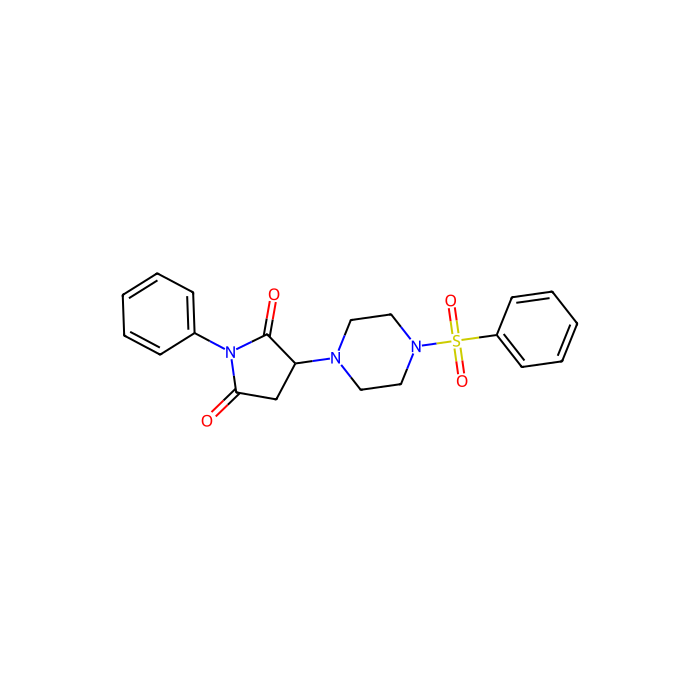
CAS: 853695-88-2
Product Name / SKU: GI-568595 (G426335)
Category: Small molecules and compound libraries (screening compound)
Molecular formula: Not specified for this item; refer to CoA/Spec Sheet.
Molecular weight: Not specified for this item; refer to CoA/Spec Sheet.
SMILES: Not specified for this item; refer to CoA/Spec Sheet.
InChIKey: Not specified for this item; refer to CoA/Spec Sheet.
Computed/literature values
No publicly sourced structural identifiers can be provided here. Consult primary literature or the CoA for definitive structure.
General chemistry notes
Structural features (functional groups, ring systems, stereochemistry) cannot be described without the structure. For screening compounds, common motifs include heteroaromatic cores, amide/urea linkers, and heteroatom-rich pharmacophores; however, do not assume these for this item without the CoA.
2D structure description: Not available for this specific SKU. If you are planning analytical confirmation, we recommend obtaining the structural file (SDF/MOL or SMILES) from the CoA and verifying via 1H/13C NMR, HRMS, and, where necessary, 2D NMR (HSQC/HMBC).
Synthetic Utility
Item-specific facts (from Product Data)
The compound is offered as a screening library member; no functional group or scaffold information is provided.
General considerations
Without a disclosed structure, GI-568595 should not be presumed to function as a general-purpose building block or reagent. Its primary value is as a test article for biological screening.
If structural information becomes available and the scaffold aligns with your synthetic goals (e.g., contains a handle such as aryl halide, boronate, amine, acid), standard cross-coupling, amide coupling, or N-functionalization chemistry may be feasible. However, such use would be case-dependent and outside the intended purpose of this SKU.
Practical advice
Prior to any derivatization, confirm identity and purity (NMR, HRMS, LC–MS) and assess stability to the planned reaction conditions. Some screening compounds incorporate protecting groups or labile motifs that are incompatible with strong acid/base, oxidants, or reductants.
For IP-sensitive programs, verify freedom-to-operate if you intend to use the scaffold beyond internal research screening.
Target Specificity
Not specified for this item; refer to CoA/Spec Sheet.
No target, enzyme, receptor, or pathway specificity data are provided for GI-568595. Any claims of selectivity must be supported by your own experimental results or authoritative literature tied to CAS 853695-88-2 and the exact lot used.
We use cookies to ensure the website functions properly and, where permitted, to improve your experience. You can manage your preferences at any time in Settings. Learn more in our Cookie Policy.
Shall we send you a message when we have discounts available?
Remind me later
Thank you! Please check your email inbox to confirm.
Products are supplied to verified businesses, institutions, and qualified professionals for research and development use only. Not for use in humans, animals, diagnosis, or therapy.