≥98% para flujos de trabajo cromatográficos y analíticos sensibles que requieren una interferencia mínima de la línea base.
🌡
Almacenamiento y envío
Store at -20°C Envío Ice chest + Ice pads. Consulte el COA específico del lote para conocer las especificaciones exactas.
📋
Documentos de calidad
SDS, COA, ficha técnica y hoja de especificaciones disponibles para descargar. COA específico del lote accesible mediante búsqueda por número de lote.
📚
Prueba documental
Citado en 0 publicaciones revisadas por pares sobre cromatografía, síntesis orgánica y reacciones de acoplamiento cruzado.
Descripción general
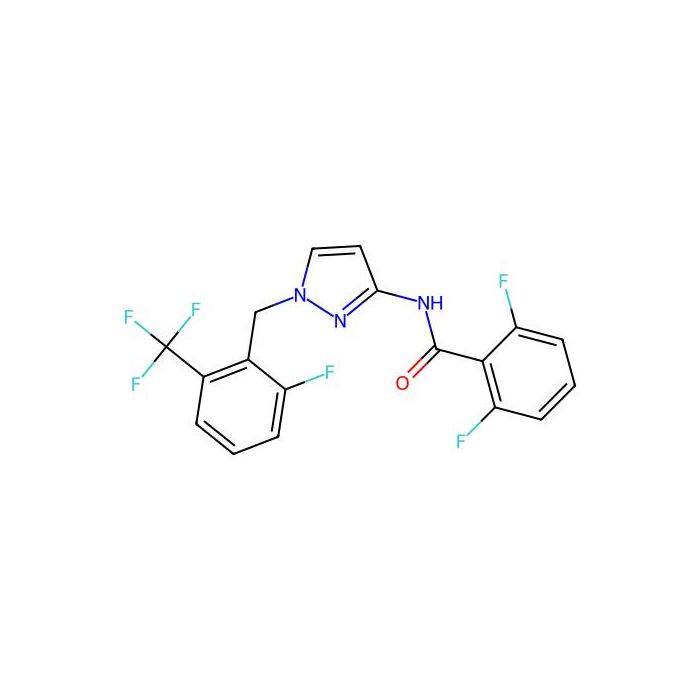
GSK-5498A is a selective CARC channel inhibitor ( IC 50 : 1 μM). GSK-5498A inhibits mediators release from mast cells and pro-inflammatory cytokines release from T cells. GSK-5498A can be used in the research of inflammatory disorders
In Vitro
GSK-5498A (1 and 10 μM) inhibits calcium influx through CRAC channels in human embryonic kidney cells. GSK-5498A (1 nM-10 μM) inhibits the thapsigargin-evoked fluorescence signal (pIC 50 : 6.3) in Jurkat cells, measured using the calcium sensitive dye: Fluo4-AM. GSK-5498A (1 nM-10 μM) evokes concentration-dependent inhibition of Cytostim-evoked interferon-γ and IL-5 production in PBMCs. GSK-5498A (1 μM-10 μM) inhibits degranulation of rat tissue-resident mast cells. GSK-5498A (10 nM-10 μM) inhibits mouse and rat T-cell cytokine (IL-2) release. GSK-5498A (0-10 μM) shows high selectivity for CRAC channels over other ion channels, enzymes and G-protein coupled receptors. MCE has not independently confirmed the accuracy of these methods. They are for reference only.
Form:Solid
IC50& Target:CRAC channel
Especificaciones
Especificaciones y pureza
≥98%
Mecanismos bioquímicos y fisiológicos
GSK-5498A is a selective CARC channel inhibitor ( IC 50 : 1 μM). GSK-5498A inhibits mediators release from mast cells and pro-inflammatory cytokines release from T cells. GSK-5498A can be used in the research of inflammatory disorders.
Condiciones de almacenamiento de almacenamiento
Store at -20°C
Enviado en
Ice chest + Ice pads
Este producto requiere envío en cadena de frío. Los servicios terrestres y otros servicios económicos no están disponibles.
This compound belongs to the class of organic compounds known as trifluoromethylbenzenes. These are organofluorine compounds that contain a benzene ring substituted with one or more trifluoromethyl groups.
External Descriptors
Not available
1. Djoumbou Feunang Y, Eisner R, Knox C, Chepelev L, Hastings J, Owen G, Fahy E, Steinbeck C, Subramanian S, Bolton E, Greiner R, and Wishart DS. ClassyFire: Automated Chemical Classification With A Comprehensive, Computable Taxonomy. Journal of Cheminformatics, 2016, 8:61.
Certificados (CoA, COO, BSE/TSE y tabla de análisis)
C of A & Other Certificates(BSE/TSE, COO):
Analytical Chart:
Propiedades químicas y físicas
Solubilidad
DMSO : ≥ 100 mg/mL (250.44 mM)
Peso molecular
399.300 g/mol
XLogP3
4.200
Hydrogen Bond Donor Count
1
Hydrogen Bond Acceptor Count
8
Rotatable Bond Count
4
Exact Mass
399.081 Da
Monoisotopic Mass
399.081 Da
Topological Polar Surface Area
46.900 Ų
Heavy Atom Count
28
Formal Charge
0
Complexity
538.000
Isotope Atom Count
0
Defined Atom Stereocenter Count
0
Undefined Atom Stereocenter Count
0
Defined Bond Stereocenter Count
0
Undefined Bond Stereocenter Count
0
The total count of all stereochemical bonds
0
Covalently-Bonded Unit Count
1
Calculadoras de soluciones
Molarity Calculator
Determine the necessary mass, volume, or concentration for preparing a solution.
Dilution Calculator
Determine the dilution needed to prepare a stock solution.
Reconstitution Calculator
Reseñas
Reseñas de cliente
Application Protocols
No item-specific, vendor-tested application protocols are provided in the Product Data. The following is general guidance for handling small-molecule research compounds in biochemical or cellular assays.
General stock preparation and dosing (guidance):
Stock solution: Attempt 10 mM in anhydrous DMSO; if undissolved, step down (5, 2, 1 mM) with vortex/sonication. Filter through 0.22 μm PTFE if particulate persists. Item-specific solubility is not specified.
Storage of stocks: Aliquot into low-bind tubes (10–50 μL) to avoid freeze–thaw cycles. Protect from light until sensitivity is known.
Working solutions: Pre-dilute stocks 1:100–1:1000 into assay buffer to keep final DMSO ≤0.1–0.5% v/v. Match vehicle controls.
Assay execution tips:
Generate 8–12 point dose–response curves (half-log dilutions) to ensure accurate EC50/IC50 estimation.
Include orthogonal and counter-assays to identify assay artifacts (detergent sensitivity, fluorescence quenchers/enhancers, redox cycling).
For cell assays, confirm compound compatibility with serum and plasticware; consider 0.1–0.5% BSA to minimize adsorption.
Analytical verification:
Verify concentration by UV or quantitative NMR when critical; confirm integrity by LC–MS before and after key experiments.
All guidance above is general and not specific to this item; consult the SDS and CoA for batch-specific instructions.
Biological Roles
Item-specific biological targets, pathways, and mechanisms for GSK-5498A are not provided in the Product Data. The notes below outline general best practices when evaluating a discovery-stage small molecule whose annotated target may be limited or evolving.
Putative role: Research small molecules are commonly explored as pathway modulators (enzyme inhibitors, receptor ligands, transporters, or protein–protein interaction disruptors). Without item-specific data, assume unknown/undisclosed target until verified in your lab.
Profiling strategy (general):
Begin with unbiased phenotypic readouts (cell viability, reporter assays, phospho-protein panels) alongside cytotoxicity counterscreens to define a therapeutic window in vitro.
If biochemical targets are hypothesized, use orthogonal assay formats (fluorescence vs luminescence vs MS-based readouts) to mitigate assay-artifact risk.
Apply thermal shift (CETSA) or proteome-wide stability profiling (TPP) to detect direct binding in cells/lysates.
Employ chemoproteomic pulldown or photoaffinity analogs for target deconvolution when feasible.
Selectivity and liability assessment:
Broad-panel screening (kinases, GPCRs, ion channels) can identify off-target interactions early.
Run aggregator/PAINS filters and detergent-sensitivity tests; confirm activity in the presence of albumin to assess nonspecific binding.
ADME in vitro (discovery scope): Evaluate metabolic stability (liver microsomes/S9), permeability (PAMPA/MDCK), and solubility across pH to inform exposure in cellular systems.
All points above are general guidance and not specific to this item; consult literature and the CoA/SDS for any updates on the compound’s annotated biology.
Buffer Applications
This item is not a buffering agent and has no specified acid/base properties in the Product Data. Consequently, there are no item-specific buffer recipes or pH ranges to report.
General assay-buffer guidance for hydrophobic small molecules:
Vehicle control: Maintain identical DMSO (or other solvent) percentage in control and treated samples to avoid solvent-driven effects.
Pre-dilution: Pre-dilute DMSO stock 1:10–1:100 in assay buffer containing 0.01–0.1% nonionic surfactant (e.g., Tween 20/80 or Pluronic F-127) to mitigate precipitation and adsorption.
Protein carriers: 0.1–0.5% fatty-acid–free BSA can improve apparent solubility and reduce nonspecific binding, but verify it does not interfere with the assay readout.
pH and ionic strength: Use a robust buffer (e.g., 25 mM HEPES or PBS) aligned with the biology of interest; screen pH 6.8–7.6 if activity appears pH-sensitive.
Low-bind plastics and glass: Choose materials that minimize compound loss by adsorption, especially at low nanomolar dosing.
If buffer-related precipitation or drift is observed, perform a small solubility screen varying buffer composition (salt, surfactant, protein) and temperature, and confirm by analytical LC or DLS.
Green Alternatives
While this product itself is a discrete bioactive small molecule (not subject to “green alternative” substitution), the surrounding workflow (dissolution, assay preparation, purification) can often be made greener.
Greener choices in handling (general guidance):
Reduce DMSO volume by establishing the highest workable aqueous compatibility (e.g., 0.1% vs 1% DMSO). Use microvolume dispensing to minimize solvent waste.
Consider ethanol or water + solubilizers (e.g., HPβCD) where biocompatible, recognizing tradeoffs in solubility and assay interference.
Prefer aqueous mobile phases and shorter gradients for analytical LC when feasible; employ high-efficiency columns to cut solvent consumption.
Illustrative comparison (general, not item-specific):
DMSO: excellent solvency; moderate EHS concerns; not readily biodegradable; minimize use and segregate waste.
Ethanol: renewable feedstocks available; higher biocompatibility; lower solvency for some scaffolds.
2‑MeTHF vs THF (for synthetic steps around analogs): 2‑MeTHF derived from biomass, lower peroxide risk, better separations; however, not directly applicable to routine assay dissolution.
Operational practices:
Consolidate compound handling sessions to reduce repeated freeze–thaw and waste.
Use sealed, low-dead-volume vials to reduce evaporative losses and emissions.
Implement solvent recycling for preparative work when scale justifies it.
Pharmaceutical Uses
No pharmacopeial status, excipient role, or clinical use is specified for this item. This product is supplied strictly for research use only (as stated in the Product Data) and is not intended for human or veterinary applications.
Research/formulation context (general guidance):
Reference material: May be used as an internal research reference in discovery bioassays, analytical method development (LC–MS/UPLC), or stability studies—subject to availability of identity/purity documentation on the CoA.
Preformulation experiments (in vitro): Solubility profiling across cosolvents (DMSO, ethanol), pH (with biocompatible buffers), and enabling excipients (HPβCD, surfactants) to support in vitro exposure.
Stability studies: Forced-degradation screens (oxidative, thermal, photolytic, hydrolytic) to define degradation pathways and inform handling. Any such data are general to workflow development and not item-specific.
Salt/solid-form work: If structure and ionization are known (not provided here), exploratory salt screening and polymorph assessment can be performed to improve physical properties; none of this is specified for this item.
Compliance note:
Do not use in humans or for diagnostic procedures. Follow institutional controls for handling investigational small molecules and retain batch-level CoA/SDS for documentation.
Physical Properties
Item-specific physicochemical specifications (melting point, boiling point, density, purity, water content, metal limits, stabilizers, UV cutoff) are not provided in the Product Data.
Physical form/appearance: Not specified for this item; refer to CoA/Spec Sheet.
Molecular weight: Not specified for this item; refer to CoA/Spec Sheet.
Solubility (general, literature/practice for screening compounds):
Many drug-like small molecules exhibit high solubility in DMSO (≥10–50 mM) and lower solubility in aqueous buffers; actual solubility for this item is not specified.
Recommended practice is to assess solubility by incremental DMSO addition and visual inspection, followed by nephelometry or HPLC to confirm. (General guidance.)
LogP, pKa, refractive index, density: Not specified for this item; refer to CoA/Spec Sheet.
Hygroscopicity/photolability: Not specified. If sensitivity is suspected, handle under low light and minimize atmospheric exposure as a precaution (general lab practice).
Notes for method development (general guidance):
LC method scouting often starts with 5–95% acetonitrile/water (0.1% formic acid or ammonium acetate) on C18 to profile retention; add MeOH scouting if peak shape is poor.
For UV detection, perform a spectral scan (200–400 nm) on a dilute DMSO solution to locate absorption maxima; do not assume a low UV cutoff without data.
Quality and Grades
Grade/Purity: Not specified for this item; refer to CoA/Spec Sheet.
Appearance: Not specified for this item; refer to CoA/Spec Sheet.
Context and expectations (general guidance for research small molecules):
Research-grade library compounds are typically qualified by one or more of the following: LC/UPLC purity, HRMS/ESI-MS identity confirmation, and optional 1H NMR verification. If your application requires a specific threshold (e.g., ≥95% LC purity by UV at 220/254 nm), please request the current batch CoA.
UV profile and residual solvent content are not specified for this item. If low-UV absorbance or ultra-low residual solvent levels are critical (e.g., for bioanalytical assays), request targeted testing.
Stabilizers/inhibitors: None are listed in the Product Data. If present in any batch, they will be disclosed on the CoA.
Trace metals/peroxides/water: Not specified for this item; refer to CoA/Spec Sheet.
How to choose the right grade (general guidance):
Discovery screening and SAR: standard research grade with LC purity documentation.
Bioanalytical/reference standard work: request additional identity confirmation (HRMS, NMR) and quantitative purity (qNMR) if needed.
Impurity-sensitive biology (e.g., ion channel, nuclease assays): consider additional screening for reactive impurities (aldehydes, peroxides) on request.
Reaction and Applications
This product is supplied as a research small molecule for screening and mechanistic studies. It is not primarily intended as a synthetic reagent. Accordingly, no item-specific reaction chemistry is provided in the Product Data.
Research applications (general guidance for small-molecule tool compounds):
Target validation: dose–response profiling in biochemical or cell-based assays to establish potency and pathway modulation. Use appropriate vehicle controls and counter-screens to assess assay interference.
Phenotypic screening: evaluate activity across cellular models, then apply target deconvolution (chemoproteomics, CRISPR-rescue, CETSA/TPP) if a phenotype is observed.
Selectivity profiling: run orthogonal assays and broad panels (e.g., safety panel enzymes/receptors) to identify off-targets at relevant exposure.
ADME characterization (discovery-stage): aqueous stability, microsomal stability, permeability (PAMPA/MDCK), and plasma protein binding to understand exposure in vitro. All such data are general considerations and not specific to this item.
Assay setup tips (general):
Prepare 10 mM DMSO stocks (if solubility permits) and generate 10-point half-log dilutions to map full sigmoidal curves.
Keep final DMSO ≤0.1–0.5% v/v for sensitive enzyme or primary cell assays; match vehicle across all wells.
Include redox-activity and detergent-sensitivity counterscreens to rule out colloidal aggregation (e.g., ±0.01% Triton X-100) and PAINS-type artifacts.
Reaction Conditions
Not applicable in the typical sense: GSK-5498A is provided as a research small molecule for biological testing, not as a reagent for performing chemical reactions. The Product Data include no item-specific reaction conditions.
General notes (if engaging in ancillary chemistry around the scaffold, once structure is confirmed via CoA/literature):
Solvents: Polar aprotics (DMF/DMAc, DMSO, MeCN) and standard organometallic conditions may be applicable depending on the scaffold; choose based on functional groups present.
Temperatures: Follow literature-typical ranges for the transformation class (e.g., 60–120°C for many cross-couplings; 0–25°C for sensitive acylations). These are general, non-item-specific suggestions.
Catalysts/bases: Select according to the functional handles available (e.g., Pd catalysts and phosphines for aryl halide couplings; organic bases for amide formations).
Workup/purification: Reverse-phase flash/prep LC or normal-phase chromatography depending on polarity; finalize by lyophilization if isolated as TFA or HCl salts (if applicable—no salt form is specified here).
For experimental planning, obtain the verified structure and any available prior art before setting conditions.
Safety and Handling
Safety information specific to this item is not provided in the Product Data. Always consult the SDS for authoritative guidance.
GHS classification, pictograms, H-statements: Not specified for this item; refer to SDS.
Signal word: Not specified for this item; refer to SDS.
General laboratory precautions (good practice for bioactive small molecules):
Wear appropriate PPE: lab coat, safety glasses, and suitable gloves (e.g., nitrile). Work in a fume hood to avoid inhalation of dust/aerosols.
Avoid ingestion, inhalation, and skin contact. Prevent environmental release; dispose of waste according to institutional and local regulations.
Handling notes:
Prepare concentrated stocks in DMSO to minimize airborne particulate handling.
If solid, minimize headspace opening time; re-cap promptly and purge with inert gas if long-term storage is anticipated (general precaution).
First aid (summary; refer to SDS):
Inhalation: Move to fresh air; seek medical attention if symptoms persist.
Skin/eye contact: Rinse with water for at least 15 minutes; remove contaminated clothing; obtain medical advice as needed.
Ingestion: Rinse mouth; seek medical attention.
Incompatibilities: Not specified for this item. As a general rule, segregate from strong oxidizers and acids/bases until compatibility is known.
Environmental health and safety: Treat as potentially hazardous bioactive; avoid drain disposal. Use closed containers for transport within the lab.
Solvent Selection
Specific solubility data are not provided for this item. The guidance below reflects common practice for hydrophobic bioactive small molecules; verify experimentally for your system.
Primary stock solvent (general): DMSO is the default due to broad solvency for drug-like chemotypes and compatibility with most biochemical assays at ≤0.1–1% v/v final.
Secondary solvents/co-solvents (general): DMF, ethanol, or PEG400/propylene glycol may be used for difficult cases, with subsequent dilution into aqueous buffers containing surfactant (e.g., 0.01–0.05% Tween 80) to prevent precipitation.
Aqueous media: Many small molecules show limited aqueous solubility; include a brief solubility check (visual + LC) at intended assay concentrations.
Comparison (general guidance):
DMSO: highest solvency; miscible with water; possible assay interference at >1% v/v in some enzyme/cell assays.
DMF: strong polar aprotic; higher cytotoxicity risk; use sparingly in biology.
Ethanol: widely tolerated up to ~0.5–1% v/v; lower solvency for some heteroaromatics.
2‑Hydroxypropyl‑β‑cyclodextrin (HPβCD, as vehicle): can improve apparent solubility; validate for target compatibility.
Practical tips:
Warm to room temperature and vortex/sonicate to fully dissolve before dilution.
Pre-dilute DMSO stocks 1:10 into buffer containing BSA (0.1–0.5%) or surfactant to mitigate adsorption to plastics and precipitation.
Use low-bind polypropylene plates/tubes to reduce nonspecific binding.
Storage and Reconstitution
Storage conditions (from Product Data): Store at −20°C.
Shipping conditions (from Product Data): Shipped in ice chest with ice pads.
Item-specific notes:
Appearance, stabilizers, and hydration state: Not specified for this item; refer to CoA/Spec Sheet.
General reconstitution guidance for discovery small molecules (not item-specific):
Allow the container to equilibrate to room temperature in a desiccated environment before opening to minimize moisture condensation.
Prepare concentrated stocks in anhydrous DMSO whenever possible. If aqueous use is required, consider co-solvent strategies (DMSO→buffer with gentle vortexing) and confirm absence of precipitation by visual check and LC.
Aliquot stock solutions into single-use portions (e.g., 10–50 μL) to avoid repeated freeze–thaw. Store aliquots at −20°C or below in amber vials if light sensitivity is suspected.
Stability monitoring: Periodically assess by LC–MS/UPLC for degradation, especially after multiple weeks/months of storage.
Disposal: Collect unused solutions and rinses as organic chemical waste according to institutional and local regulations.
For batch-specific handling recommendations (e.g., solubility, hygroscopicity, light sensitivity), consult the current CoA and SDS, referencing SKU G649231.
Structure and Identity
Brief overview: GSK-5498A is listed as a research small molecule in our compound library. The detailed structural identity is not included in the provided Product Data.
CAS: 1253186-49-0 (as provided)
PubChem CID: 46945384 (as provided)
InChIKey: 14957 (as provided; truncated/incomplete format in Product Data)
SMILES: Not specified for this item; refer to CoA/Spec Sheet.
Molecular formula: Not specified for this item; refer to CoA/Spec Sheet.
Molecular weight: Not specified for this item; refer to CoA/Spec Sheet.
Synonyms/Code names: GSK-5498A (code name as provided)
Structural features (general note):
Item-specific functional groups, ring systems, and stereochemistry are not disclosed in the Product Data. For precise structural descriptors (2D depiction, heterocycles, stereocenters), please consult the Certificate of Analysis (CoA), Spec Sheet, or authoritative databases linked to the CAS/CID above.
2D structure description (general guidance):
As the explicit structure is not supplied here, a text description of ring systems and substituents cannot be provided without risk of error. If you require a structure-verified description for method development, contact Technical Support with the SKU (G649231) to obtain the current CoA and structural file (SDF/MOL).
Synthetic Utility
This product is offered as a finished small-molecule research compound rather than a synthetic building block. The Product Data do not disclose functional groups or reactive handles; thus, item-specific reactivity or derivatization strategies cannot be provided.
General considerations (if analog work is planned, contingent on known structure):
Functional group mapping: Once the structure is confirmed from CoA/literature, map potential diversification vectors (e.g., aryl halides for cross-coupling, amines for amide coupling, heteroatoms for SNAr) and protected functionalities.
Library expansion: Employ parallel synthesis (amide couplings, Buchwald–Hartwig/Suzuki couplings, sulfonylations) to explore SAR around the parent scaffold while preserving putative pharmacophores.
Late-stage diversification: If C–H activation handles exist, consider Minisci, borylation, or photoredox-mediated transformations to access analogs rapidly.
Analytical support: Use UPLC–MS for rapid reaction profiling and purity checks; confirm structures by HRMS and NMR.
If you require a derivative-ready intermediate rather than the parent compound, contact us with the SKU (G649231) to discuss custom synthesis or to obtain structural documentation enabling rational route design.
Target Specificity
No target, pathway, or binding specificity information is provided in the Product Data for GSK-5498A.
Antigen/epitope/clone/isotype: Not applicable—this is a small molecule, not an antibody or protein reagent.
Target class and selectivity: Not specified for this item; refer to CoA/Spec Sheet and primary literature associated with the CAS/CID for any curated annotations.
Guidance for users (general):
If a target is hypothesized, evaluate potency and selectivity across close homologs and common off-target panels using orthogonal assay formats.
Employ control compounds with known selectivity profiles and run vehicle-matched controls.
Use counter-screens to detect redox cycling, fluorescence interference, and colloidal aggregation, which can masquerade as apparent target engagement.
Preguntas frecuentes
What is the purity of this product?
This product is supplied at ≥98% purity (chemical assay). Lot-specific values are stated on the Certificate of Analysis.
How should this product be stored?
Store at ?20 °C. Freezer storage is required to maintain the specified shelf life.
How is this product shipped?
This product ships in an insulated container with ice pads. Unpack on arrival and transfer it to the storage condition stated above.
What are the CAS number, molecular formula and molecular weight?
The CAS Number is 1253186-49-0, the molecular formula is C18H11F6N3O, and the molecular weight is 399.29 g/mol. InChIKey AUBGZAJDHUHMAE-UHFFFAOYSA-N.
What documentation is provided?
Available product documentation, including Certificates of Analysis (COA), Safety Data Sheets (SDS), and specification sheets, is shown in the product document area. Document availability and access follow the current site policy.
Utilizamos cookies para garantizar el correcto funcionamiento del sitio web y, cuando esté permitido, para mejorar su experiencia. Puede gestionar sus preferencias en cualquier momento en Configuración. Más información en nuestra Política de Cookies.
¿Quieres que te enviemos un mensaje cuando tengamos descuentos disponibles?
Recordármelo más tarde
¡Gracias! Por favor, revisa tu bandeja de entrada de correo electrónico para confirmar.
Products are supplied to verified businesses, institutions, and qualified professionals for research and development use only. Not for use in humans, animals, diagnosis, or therapy.