GW 590735 - 10mM in DMSO , CAS No.343321-96-0

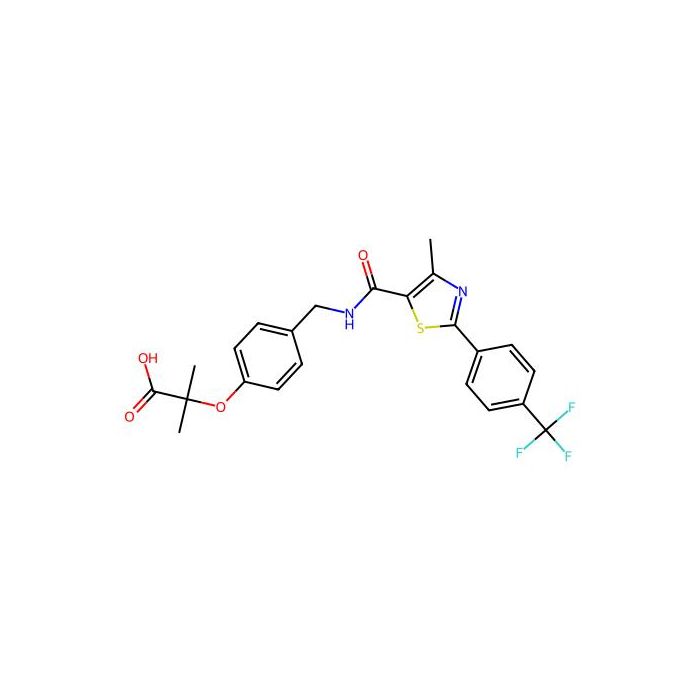
CAS: 343321-96-0 Cat. No.: G654715 Fórmula: C23H21F3N2O4S Peso molecular: 478.48 PubChem CID: 9956726
Disponible para pedir
GRADE & PURITY 10mM in DMSO
Storage
Protected from light,Store at -80°C
Shipped In
Dry ice packs + Cold packs
★
Size
Alemania (EU)
USA*
Price
Qty
1ml
G654715-1ml
Fabricado bajo pedido · 8–12 semanas
451,14€
Enter a quantity for the sizes you want to add.
🧪
Why this grade

10mM in DMSO for sensitive chromatographic and analytical workflows requiring minimal baseline interference.

🌡

Storage & shipping

Protected from light,Store at -80°C Ships Dry ice packs + Cold packs Check lot-specific COA for exact specifications.

📋

Quality documents

SDS, COA, datasheet, and spec sheet available for download. Lot-specific COA accessible via lot number lookup.

📚

Literature proof

Cited in 0 peer-reviewed publications across chromatography, organic synthesis, and cross-coupling reactions.

Descripción general

GW 590735 is a potent and selective PPARα agonist. GW 590735 shows EC 50 =4 nM on PPARα and at least 500-fold selectivity versus PPARδ and PPARγ. GW 590735 can be used for the research of dyslipidemia.

In Vivo

GW 590735 (0.5-5 mg/kg; orally twice a day for 5 days) is able to lower LDLc and triglycerides (TG) and increase HDL cholesterol in the Apo-A-I-transgenic mouse model (male C57BL/6 mice transgenic for human ApoA-I) . GW 590735 (intravenous administration; 2.7 mg/kg; rat) treatment shows Cl, Vd, T 1/2 , and F % are 5 mL/min/kg, 1 L/kg, 2.4 hours and 47%, respectively . GW 590735 (intravenous administration; 2 mg/kg; dog) treatment shows Cl, Vd, T 1/2 , and F % are 13 mL/min/kg, 2.8 L/kg, 2.6 hours and 85%, respectively . MCE has not independently confirmed the accuracy of these methods. They are for reference only.

Specifications

Especificaciones y pureza
10mM in DMSO
Mecanismos bioquímicos y fisiológicos
GW 590735 is a potent and selective PPARα agonist. GW 590735 shows EC 50 =4 nM on PPARα and at least 500-fold selectivity versus PPARδ and PPARγ . GW 590735 can be used for the research of dyslipidemia.
Condiciones de almacenamiento de almacenamiento
Protected from light,Store at -80°C
Enviado en
Dry ice packs + Cold packs
Este producto requiere envío en cadena de frío. Los servicios terrestres y otros servicios económicos no están disponibles.
Tipo de acción
AGONIST
Propiedades del producto
ALogP
5.2
Nombres e identificadores
Isómeros SMILES
CC1=C(SC(=N1)C2=CC=C(C=C2)C(F)(F)F)C(=O)NCC3=CC=C(C=C3)OC(C)(C)C(=O)O
PubChem CID
9956726
Peso molecular
478.48

Documentation

📋 Safety Data Sheet (SDS)

Comprehensive hazard, handling, storage, and regulatory compliance document.

Download SDS →

✅ Certificate of Analysis (COA)

Lot-specific quality data. Enter your lot number to retrieve the exact COA.

Look up COA →

📊 Datasheet

Quick-reference summary of product specifications and applications.

View datasheet →

🔬 Specification Sheet

Full quality attributes and acceptance criteria for this grade.

View spec sheet →

Advanced Data

Certificados (CoA, COO, BSE/TSE y tabla de análisis)
C of A & Other Certificates(BSE/TSE, COO):
Analytical Chart:
Calculadoras de soluciones
Reseñas

Reseñas de cliente

Application Protocols

No manufacturer-tested application protocols are supplied for this small-molecule item. The following general workflow applies to many screening compounds:

  • Stock preparation:
    • Weigh quickly at ambient conditions; protect from light.
    • Dissolve in anhydrous DMSO to 10–50 mM. Vortex and, if needed, sonicate briefly. Filter (0.2 µm PTFE) if particulates remain.
    • Aliquot into amber vials or plates; store at −80°C to minimize freeze–thaw.
  • Assay setup:
    • Thaw aliquots on ice, mix, and centrifuge briefly to clear bubbles/particulate.
    • Prepare serial dilutions in DMSO or assay buffer ensuring constant final solvent concentration across wells/samples.
    • Include vehicle controls and—if known for your pathway—positive/negative control compounds.
  • Data quality:
    • Monitor compound stability by LC–MS/HPLC at the beginning and end of the assay window.
    • Use replicate measurements and orthogonal assays to confirm activity.

For specialized applications (e.g., photoactivation, covalent labeling), first confirm that the structure supports such use; no such features are specified here.

Biological Roles

This catalog entry does not provide a biological target, pathway, or mode of action for GW 590735. Accordingly, no item-specific biological roles can be asserted here.

How to proceed (researcher guidance):

  • Literature retrieval: Use CAS 343321-96-0 or PubChem CID 9956726 to query peer-reviewed sources and databases for any reported biochemical targets, selectivity profiles, or phenotypic effects. Verify that literature entries match the same stereochemistry and salt form (if any) as your lot.
  • Assay context: When exploring putative activities, run orthogonal assays (e.g., biochemical potency, binding biophysics, cellular readouts) and include counter-screens to identify off-target effects.
  • Controls: Employ vehicle controls (e.g., DMSO), positive controls (validated tool compounds for the pathway of interest), and negative controls to contextualize results.
  • Concentration ranges: Start with broad concentration-response (e.g., 8–10 points, half-log spacing) to establish potency and efficacy ceilings; avoid exceeding solvent tolerances.

Caveat: Without explicit target information from the manufacturer, this product should be treated as a general research chemical. Any mechanistic or pathway claims must be supported by your own data or by primary literature tied unambiguously to this CAS/CID. This product is for research use only.

Buffer Applications

This product is a discrete small molecule and is not a buffering agent. Therefore, no standard buffer system or pH range applies.

Practical notes for assay buffers (general):

  • Prepare small-molecule stocks in DMSO (or suitable organic solvent) and dilute into assay buffer immediately prior to use, maintaining constant final solvent percentage across all wells/samples.
  • Use common biological buffers (e.g., PBS, HEPES, Tris) appropriate to your assay’s pH and ionic strength requirements; there is no evidence that this compound provides buffering capacity.

For any pH-dependent behavior (ionization, solubility), consult the structure and pKa data from the CoA or literature before designing buffer conditions.

Green Alternatives

Greenness considerations are generally applied to solvents and commodity reagents. For discrete bioactive small molecules used at milligram-to-micromole scale, substitution is typically not applicable. Nevertheless, sustainable practices can be integrated into handling and assay workflows.

  • Solvent choices: Favor water-compatible dilutions where feasible and minimize DMSO/DMF content. When preparing stocks, use the minimum volume of high-boiling polar aprotic solvents and avoid halogenated solvents where possible.
  • Waste minimization: Aliquot small volumes to reduce discard from freeze–thaw degradation. Consolidate compatible organic waste streams and employ microscale assays to cut chemical use.
  • Procurement and documentation: Maintain accurate inventory to avoid redundant orders and transport emissions.

If you require a functionally similar compound with improved environmental, health, and safety (EHS) attributes, identify the exact target/mechanism from literature via CAS 343321-96-0 or CID 9956726, then consider structure–property alternatives (e.g., lower halogen content, improved aqueous solubility). Trade-offs:

  • Potential loss of potency/specificity versus improved handling and environmental profile.
  • Modified ADME-like properties that may alter assay performance.

Conclusion: No direct “green substitute” is recommended for this discrete item; focus on greener solvents, miniaturization, and careful inventory control.

Pharmaceutical Uses

No pharmacopeial status, excipient role, or manufacturing specification is provided for this item. This product is supplied strictly for research use only and is not intended for human or veterinary use, clinical applications, or as an active pharmaceutical ingredient (API) or excipient.

Context for formulation scientists (general guidance only):

  • If used in preclinical research, prepare well-characterized DMSO or co-solvent stocks and evaluate compatibility with your intended in vitro systems. Do not extrapolate to in vivo formulation without full safety, stability, and regulatory evaluation.
  • There is no GMP documentation, stability program, or regulatory filing associated with this listing. Any move toward development would require fresh sourcing under appropriate quality systems and comprehensive CMC characterization.

Summary: No pharmaceutical-use claims are made or implied. For research workflows only.

Physical Properties

Item-specific physicochemical data are not provided in this listing. Use the lot-specific CoA/Spec Sheet and SDS as the authoritative sources.

  • Appearance: Not specified for this item; refer to CoA/Spec Sheet.
  • Molecular weight: Not specified for this item; refer to CoA/Spec Sheet.
  • Melting point: Not specified for this item; refer to CoA/Spec Sheet.
  • Boiling point: Not specified for this item; refer to CoA/Spec Sheet.
  • Density: Not specified for this item; refer to CoA/Spec Sheet.
  • Refractive index: Not specified for this item; refer to CoA/Spec Sheet.
  • Solubility: Not specified for this item; refer to CoA/Spec Sheet.
  • LogP/logD: Not specified for this item; refer to CoA/Spec Sheet.
  • pKa: Not specified for this item; refer to CoA/Spec Sheet.

Practical lab guidance (general, literature-informed best practices for library-type small molecules):

  • Initial dissolution: Start with an anhydrous DMSO stock (e.g., 10–50 mM); if insoluble, consider DMF or ethanol as co-solvents. Filter through 0.2 µm PTFE if particulate remains.
  • Aqueous use: Prepare working dilutions into buffer immediately before use to minimize precipitation; include ≤0.1–1% DMSO when compatible with assays.
  • Light/temperature sensitivity: This item is specified to be protected from light and stored at −80°C; minimize freeze–thaw by aliquoting.

Note: Any numerical property not listed above is Not specified for this item; refer to CoA/Spec Sheet.

Quality and Grades
  • Grade/Purity: Not specified for this item; refer to CoA/Spec Sheet.

Interpretation and expectations:

  • Research-grade small molecules typically include identity confirmation (e.g., 1H NMR, LC–MS/HPLC purity) on a lot-specific CoA. Verify acceptance criteria and analytical traces prior to use in critical experiments.
  • If “library-grade” or “screening-grade” is indicated on your CoA, expect suitability for biochemical/cellular screening with defined purity (often ≥95% by HPLC), but without the extended impurity profiling of GMP materials.
  • UV cutoff, residual solvents, water content, metal content, and stabilizers: Not specified for this item; refer to CoA/Spec Sheet. Absence from this listing does not imply absence in the material—confirm via the CoA.

What to check on receipt:

  • Match CAS (343321-96-0), product name, and lot number.
  • Review analytical methods used (HPLC method details, detection wavelength, LC–MS, NMR) and purity/identity criteria.
  • Confirm any stabilizers or salt forms if applicable (not specified here).

If low background absorbance or special analytical performance is required (e.g., for HPLC/UV assays), contact Technical Support for current analytical profile and recommendations.

Reaction and Applications

This product is positioned as a research small molecule for screening/assay workflows rather than as a synthetic reagent. No manufacturer application notes are supplied in this entry.

Typical research applications for library compounds (general guidance):

  • In vitro assays: Use as a test article in biochemical or cell-based assays to explore pathway modulation, binding interactions, or phenotypic responses. Maintain consistent vehicle control (e.g., DMSO ≤0.1–1%).
  • Reference/benchmarking: If a literature target is associated with the CAS or CID, the compound may serve as a comparator in SAR panels. Confirm identity and purity by CoA before quantitative use.
  • Profiling: Apply in broad panel screening (e.g., enzyme, receptor, ion channel) to generate activity fingerprints; follow with orthogonal assays.
  • Chemical biology: Employ as a probe candidate only after validating target engagement with orthogonal methods (thermal shift, CETSA, SPR, ITC), recognizing that no target specificity is provided in this listing.

Not intended as a building block: Without functional-group disclosure, this item is not recommended as a synthetic intermediate. For preparative chemistry or derivatization, first obtain full structure, reactivity, and safety data from the CoA and primary literature.

Note: Do not infer biological activity from the product name alone. Use CAS 343321-96-0 or CID 9956726 to locate peer-reviewed data where needed.

Reaction Conditions

No reaction conditions are applicable to this listing because GW 590735 is supplied as a finished research compound rather than a reagent or catalyst.

For assay deployment (general practical guidance):

  • Stock solutions: Prepare in anhydrous DMSO at 10–50 mM; vortex/sonicate as needed. Filter through 0.2 µm PTFE if particulates persist.
  • Working solutions: Dilute into assay buffer immediately before use, maintaining constant final solvent content (typically ≤0.1–1% DMSO). Mix thoroughly to prevent local supersaturation and precipitation.
  • Temperature/light: Keep samples protected from light; minimize time at ambient temperature. Use amber vials/foil and chilled racks for sensitive assays.
  • Stability checks: Run time-course HPLC or LC–MS on diluted solutions to verify stability over the assay window.

If you intend chemical transformations of this molecule, first obtain the full structure and consult primary literature for any reported synthetic steps—none are provided here.

Safety and Handling

Safety information in this catalog entry is limited. Always consult the product SDS for authoritative guidance.

  • GHS classification: Not specified for this item; refer to SDS.
  • Signal word / H-statements / pictograms: Not specified for this item; refer to SDS.

General laboratory precautions for small-molecule research compounds:

  • PPE: Wear lab coat, safety glasses, and appropriate chemically resistant gloves (e.g., nitrile). Work in a fume hood to avoid inhalation exposure.
  • Handling: Avoid dust/aerosol generation. Keep container tightly closed. Protect from light as specified. Use clean, dry tools to avoid contamination.
  • Storage incompatibilities: Until specific data are available, segregate from strong oxidizers and acids/bases. Store in light-protective secondary containment at −80°C per item instructions.
  • Hygroscopicity/volatility: Unknown for this item; open vials only at ambient humidity minimized conditions if solid, or quickly if solution. Re-cap promptly.
  • First aid (overview): If inhaled—move to fresh air. Skin/eye contact—rinse with water for several minutes; remove contaminated clothing. If ingested—rinse mouth. Seek medical attention in all exposure scenarios. Defer to SDS for detailed measures.
  • Waste: Dispose according to institutional hazardous chemical waste procedures. Do not release to drains.

Note: Without item-specific hazard designations, treat as potentially harmful and handle on a small scale following risk assessment.

Solvent Selection

No item-specific solubility profile is provided. The following guidance reflects common practice for hydrophobic/heteroaromatic small molecules used in screening assays.

  • Primary stock solvents:
    • DMSO (anhydrous): First choice for 10–50 mM stocks; broad solubilizing power and assay compatibility at ≤0.1–1% v/v.
    • DMF (anhydrous): Useful alternative when DMSO is insufficient; confirm assay compatibility.
    • Ethanol or isopropanol: Consider for less polar compounds or where DMSO is undesirable; watch for volatility and water uptake.
  • Co-solvent strategies:
    • Prepare concentrated DMSO stock, then dilute into aqueous buffers with vigorous mixing; add surfactant (e.g., 0.01–0.05% Tween 20) only if assay-tolerated.
    • For precipitation-prone systems, add solvent to buffer last and keep final organic content consistent across controls.
  • Aqueous buffers: Lacking ionizable-group data, avoid relying on pH-driven solubility. If salt formation is planned, first confirm the presence of basic/acidic functional groups from the CoA/structure.

Quick comparison (general):

  • DMSO: Highest success rate; low volatility; hygroscopic; may affect some enzymes/receptors at >1%.
  • DMF: Strong solvent; cytotoxicity risk at low concentrations; harder to remove.
  • Ethanol: Volatile; limited solubilizing power for very lipophilic scaffolds; good assay tolerance at ≤1% in many systems.

Always verify solubility and assay compatibility empirically with your specific lot.

Storage and Reconstitution

Storage conditions (item-specific):

  • Store at −80°C.
  • Protect from light.
  • Shipped on dry ice packs + cold packs to maintain low temperature during transit.

General reconstitution guidance for small-molecule solids or concentrates:

  • Upon receipt: Inspect packaging integrity. Allow the sealed container to equilibrate to room temperature in a desiccator before opening to minimize condensation if it is a solid. If supplied as a solution, keep cold and minimize exposure to ambient conditions.
  • Solvent selection: Use anhydrous DMSO as the default solvent for initial stock preparation unless your CoA specifies otherwise. If insoluble, consider DMF or ethanol; verify compatibility with intended assays.
  • Aliquoting: Prepare single-use aliquots in amber vials or plates to avoid repeated freeze–thaw cycles. Record concentration, solvent, and date on each aliquot.
  • Freeze–thaw: Avoid multiple cycles; thaw on ice, keep protected from light, and refreeze promptly any unused portion if stability allows.
  • Stability: Lot-specific stability, moisture sensitivity, and solution shelf life are Not specified for this item; refer to CoA/Spec Sheet. If unspecified, verify by periodic HPLC/LC–MS.

Research use only: Not for human or veterinary use.

Structure and Identity

Overview: GW 590735 (SKU G654715) is listed as a small-molecule research compound within our small-molecule and compound library. Item-specific structural identifiers are not disclosed in this entry.

  • CAS: 343321-96-0 (catalog reference)
  • PubChem CID: 9956726 (catalog reference)
  • InChIKey: Not specified for this item; refer to CoA/Spec Sheet.
  • SMILES: Not specified for this item; refer to CoA/Spec Sheet.
  • Molecular formula: Not specified for this item; refer to CoA/Spec Sheet.
  • Molecular weight: Not specified for this item; refer to CoA/Spec Sheet.

Structural features (general guidance):

  • No item-specific functional groups, ring systems, or stereochemical descriptors are provided here. For definitive structure, consult the CoA/Spec Sheet or authoritative databases using the CAS or CID above.

How to interpret this listing:

  • This product is supplied as a discrete, single small molecule (not a mixture), intended for research/screening use. To ensure traceability, match CAS and lot CoA before use in regulated workflows.
Synthetic Utility

This item is offered as a finished small-molecule research compound rather than a functionalized building block. As such, no item-specific functional-group reactivity or synthetic transformations are specified in this listing.

Guidance if derivatization is contemplated:

  • Obtain the exact structure (from CoA/literature via CAS 343321-96-0 or CID 9956726) to identify modifiable motifs (e.g., aryl halides for cross-coupling, amines for acylation, acids for amidation).
  • Confirm stability under planned conditions (oxidation state, photolability, acid/base sensitivity). The product requires protection from light and storage at −80°C, suggesting possible sensitivity to heat/light.
  • Establish an analytical baseline (HPLC, LC–MS, NMR) prior to modification. Track impurities and mass balance in any derivatization campaign.

If synthetic methodology development is your primary goal, consider procuring known building blocks with defined reactivity. Use this item as a reference standard or screening probe once its structure and purity are confirmed for your lot.

Target Specificity

Target specificity data are not provided for this item. No antigen/epitope/clone information applies because this is a small molecule, not an antibody or biological reagent.

  • Reported target(s): Not specified for this item; consult literature using CAS 343321-96-0 or CID 9956726.
  • Selectivity profile: Not specified for this item; refer to peer-reviewed sources if available.

Researchers should validate any presumed target engagement with orthogonal assays (e.g., binding biophysics, cellular target engagement) prior to mechanistic interpretation.

Shall we send you a message when we have discounts available?

Remind me later

Thank you! Please check your email inbox to confirm.

Oops! Notifications are disabled.