Determine the necessary mass, volume, or concentration for preparing a solution.
Information
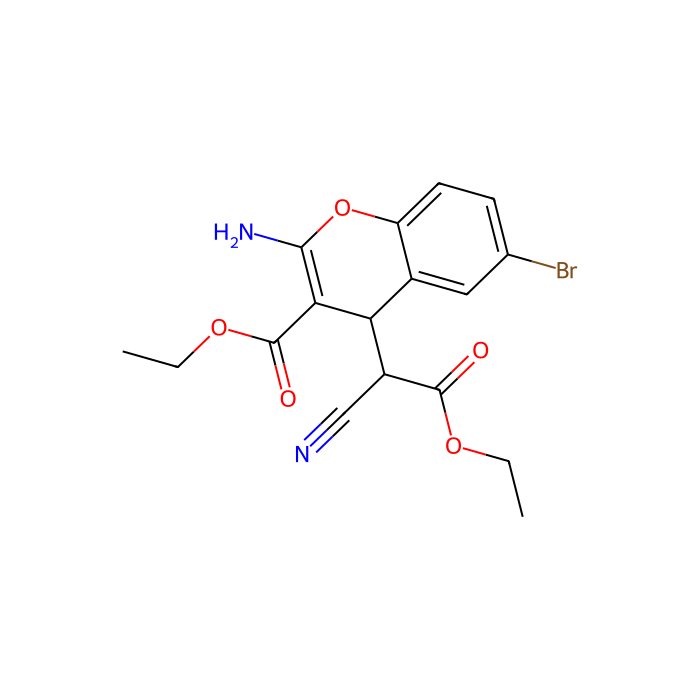
HA14-1 is a non-peptidic ligand of aBcl-2surface pocket withIC50of ~9 μM.
In vitro
HA14-1 is a small molecule and nonpeptidic ligand of a Bcl-2 surface pocket with IC50 of approximately 9 μM. HA14-1 induces the apoptosis of HL-60 cells in a dose-dependent manner via caspase activation. HA14-1 shows cytotoxic effects on HF1A3, HF4.9 and HF28RA follicular lymphoma B cell lines with LC50 of 4.5 μM, 12.6 μM and 8.1 μM respectively. HA14-1 induces apoptosis of HF1A3, HF4.9 and HF28RA cells via caspase and ROS.
In vivo
HA14-1(400 nM) treatment did not have any significant effect on the growth of glioblastoma tumors in immunodeficient mice. But HA14-1 (400 nM) increases the effect of the DNA-damaging agent etoposide (2.5 mg/Kg) on glioblastoma growth in vivo.
Cell Data
cell lines:
Concentrations:~25 μM
Incubation Time:20 h
Powder Purity:
Find and download the COA for your product by matching the lot number on the packaging.
| Lot Number | Certificate Type | Fecha | Articulo |
|---|---|---|---|
| Certificate of Analysis | Sep 01, 2026 | H408968 |
| Solubilidad | Solubility (25°C) In vitro DMSO: 32.5 mg/mL warmed with 50ºC Water: bath (100.16 mM); Water: Insoluble; Ethanol: Insoluble; |
|---|---|
| Índice de refracción | 1.57 |
| Punto de ebullición (°C) | 535.1° C at 760 mmHg |
| Punto de fusión (°C) | 105-108°C |
No tested applications or protocols are provided in the Product Data for this item.
Please refer to the primary literature for assay-specific procedures relevant to HA14-1 and validate in your laboratory. Maintain rigorous controls (vehicle-only, orthogonal probes, and inactive analogs) and confirm compound identity/purity using the lot-specific CoA before initiating critical experiments.
Item-specific biological characterization is not provided in the Product Data. The following context is from the open scientific literature and should be treated as general background only; it is not a specification of this product.
No clinical or therapeutic claims are made for this product. It is supplied strictly for research use only.
This product is not a buffering agent and is not typically used to control solution pH. Therefore, classic buffer system guidance (e.g., phosphate, HEPES, Tris recipes) does not apply.
Practical notes for using this compound in buffered systems (general):
For buffer formulation itself, consult standard biochemical references; this item does not substitute for a buffering reagent.
Because this item is a discrete small-molecule probe rather than a process solvent or reagent, “green alternatives” primarily concern solvent handling, concentration, and waste minimization rather than replacing the compound itself.
Greener handling strategies (general):
Illustrative comparison (general solvent considerations for small-molecule stocks):
For scale-up syntheses of HA14-1 (if undertaken in-house), apply green chemistry principles: choose safer solvents (e.g., 2-MeTHF over THF, EtOAc over DCM), reduce protecting-group manipulations, and assess PMI/E-factor.
No pharmacopeial status or excipient role is provided for this item, and none should be inferred. This product is for research use only; it is not intended for human or veterinary use, APIs, or cGMP manufacturing.
Relevant research/formulation contexts (general, non-clinical):
Explicitly not covered:
Item-specific physicochemical specifications are not provided in the Product Data for this SKU. Do not treat literature values as product specifications; consult the lot-specific CoA/SDS for authoritative data.
Practical notes (general guidance):
What the absence of a declared grade implies:
Lot-specific documentation:
Fit-for-purpose qualification (recommended):
This product is supplied as a research small molecule for use in discovery and assay contexts rather than as a general-purpose synthetic reagent or solvent.
Applications (research-use; general):
Not typically applicable:
Practical tips:
Not typically applicable. HA14-1 is provided as a research small molecule rather than a reagent for driving chemical reactions. No item-specific reaction conditions are provided in the Product Data.
If conducting studies involving this compound (general assay conditions rather than chemical reactions):
For chemical synthesis involving HA14-1 or analogs, consult primary literature for the specific scaffold once the exact structure is confirmed; standard conditions vary widely and are not specified for this item.
Safety data specific to this item (GHS classification, hazard statements) are not provided in the Product Data. Always consult the SDS shipped with your order for authoritative guidance.
Given its use as a research small molecule, HA14-1 is typically handled as a concentrated stock in water-miscible organic solvents, then diluted into assay buffer. Item-specific solubility is not provided; evaluate empirically.
Quick comparison (general):
Always perform a small-scale solubility screen and filter (0.2 µm PTFE) if needed before critical experiments.
Item-specific storage conditions and shipping are provided; additional notes below are general best practices for research compounds.
Best practices (general guidance):
Note: For any item-specific parameters (purity, stabilizers, exact solubility), consult the lot-specific CoA/Spec Sheet and SDS.
Brief overview: HA14-1 (SKU H408968) is supplied as a research-use small molecule in our small-molecule/compound library category. Item-specific structural identifiers beyond CAS/CID are not provided in the Product Data and should be confirmed from the CoA/SDS for your lot.
Structural features (general, literature context):
Note: Where structural parameters are critical (e.g., docking, QSAR, or analytical reference work), we recommend confirming identity by orthogonal techniques (e.g., HRMS, 1H/13C NMR) against the certificate supplied for your shipment.
This product is supplied as a defined small-molecule probe/compound and is not commonly used as a synthetic building block or reagent. Consequently, classic discussions of functional group transformations, protecting-group strategies, or named reactions centered on this compound are not typically applicable.
If synthesis or derivatization is of interest (general guidance):
Bottom line: treat this item as a finished research probe; only consider synthetic manipulation after confirming structure and ensuring that derivatization does not compromise your intended biological or analytical readout.
Not applicable. This product is not an antibody or affinity reagent, and no target-binding specification is provided in the Product Data.
Note: Any literature references that associate HA14-1 with specific protein targets (e.g., BCL-2 family proteins) are contextual background only and are not product specifications. Verify target engagement independently for your system using orthogonal biophysical and biochemical assays.