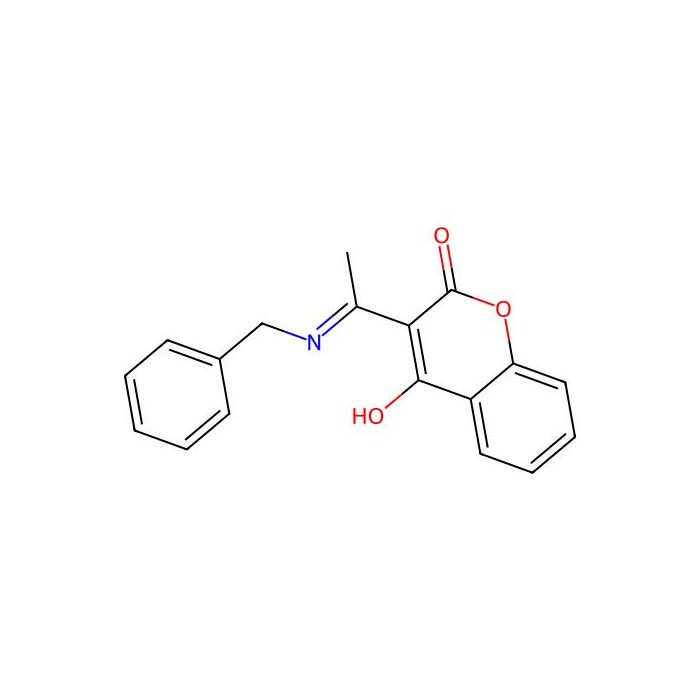
JB002 is a myosin II inhibitor, with an IC 50 of ≤10 μM. JB002 can be used for the research of muscle spasticity, chronic musculoskeletal pain, and hypertrophic cardiomyopathy
In Vitro
JB002 show promising selectivity between cardiac and skeletal myosin but have no detectible activity toward nonmuscle IIB. MCE has not independently confirmed the accuracy of these methods. They are for reference only.
Form:Solid
IC50& Target:IC50: ≤10 μM (myosin II)
Especificaciones
Especificaciones y pureza
≥99%
Mecanismos bioquímicos y fisiológicos
JB002 is a myosin II inhibitor, with an IC 50 of ≤10 μM. JB002 can be used for the research of muscle spasticity, chronic musculoskeletal pain, and hypertrophic cardiomyopathy.
Condiciones de almacenamiento de almacenamiento
Protected from light,Store at -80°C
Enviado en
Dry ice packs + Cold packs
Este producto requiere envío en cadena de frío. Los servicios terrestres y otros servicios económicos no están disponibles.
Tipo de acción
INHIBITOR
Pureza
≥99%
Nombres e identificadores
Peso molecular
293.32
Datos avanzados
Certificados (CoA, COO, BSE/TSE y tabla de análisis)
C of A & Other Certificates(BSE/TSE, COO):
Analytical Chart:
Propiedades químicas y físicas
Solubilidad
DMSO : 31.25 mg/mL (106.54 mM; ultrasonic and warming and heat to 60°C)
Calculadoras de soluciones
Molarity Calculator
Determine the necessary mass, volume, or concentration for preparing a solution.
Dilution Calculator
Determine the dilution needed to prepare a stock solution.
Reconstitution Calculator
Reseñas
Reseñas de cliente
Application Protocols
No validated application protocols are provided for this item.
Item-specific (from Product Data)
Tested applications, recommended concentrations, control conditions: Not specified for this item; refer to CoA/Spec Sheet.
General starting points (research use only; not item-specific)
Stock solution: Prepare 10–50 mM in anhydrous DMSO under low light; vortex and, if needed, sonicate briefly. Filter (0.22 µm PTFE) if particulate persists.
Biochemical assays: Typical final DMSO ≤1% v/v; perform serial dilutions to generate 8–12 point dose–response curves. Include detergent (0.01–0.05% Tween‑20/80) to mitigate aggregation artifacts where appropriate.
Cell-based assays: Begin with a broad concentration range (e.g., 0.03–30 µM), verify cytotoxicity separately, and limit DMSO to ≤0.2–0.5% v/v.
Stability checks: Reassess activity from fresh vs. aged stocks to detect degradation or adsorption losses.
These are generic recommendations; consult your assay SOPs and adjust to the physicochemical properties once the structure/specification is confirmed.
Biological Roles
Item-specific (from Product Data)
No target, pathway, or biological role is specified for this compound.
General considerations for small‑molecule library members
Compounds in discovery libraries may interact with diverse protein classes (enzymes, GPCRs, ion channels), nucleic acids, or membranes. Without a defined structure, any putative role for this CAS registry cannot be asserted.
Prior to experimental use, search primary literature and curated databases using the CAS number to determine known activities, off‑target profiles, and any assay interferences (e.g., PAINS motifs, covalent warheads, redox activity). Validate with orthogonal assays.
Employ suitable controls to distinguish on‑target effects from nonspecific cytotoxicity or assay artifacts (detergent supplementation, aggregation checks, redox/quenching controls).
Research Use Note: For research use only. Not for human or veterinary use, diagnostic procedures, or clinical applications.
Buffer Applications
This product is a small organic compound and is not presented as a buffering agent.
Applicability
Not typically used to prepare buffers or maintain pH. Any use in aqueous media would be as a solute (test article) rather than a buffer component.
Practical note
When dosing into buffered systems, confirm that the compound and its stock solvent (commonly DMSO) do not perturb buffer capacity or ionic strength at the working concentration.
If the compound is ionizable (unknown here), local pH microenvironments can influence solubility and activity; pre‑equilibrate in assay buffer to reduce precipitation.
Item-specific buffer properties (pKa, buffering range): Not specified for this item; refer to CoA/Spec Sheet if available.
Green Alternatives
Because this product is a neat small molecule (not a solvent or reagent used in bulk), “green alternatives” pertain mainly to solvent choices and handling practices during dissolution, assays, and any synthetic follow‑up.
Preferable solvent systems (general guidance)
Use lower-toxicity, biodegradable solvents where feasible for workups and analytics: ethanol and water mixtures over DMF/DMAC/NMP when solubility allows.
For chromatography, consider ethanol or ethyl acetate/hexanes with isomerized heptane in place of dichloromethane where separation performance is acceptable.
Comparison (general, not item-specific)
DMSO vs 2‑pyrrolidone/PEG‑400 for stock solutions: DMSO offers assay compatibility at low % but is less green than ethanol/water; evaluate ethanol co‑solvent systems for greener workflows when compound stability permits.
DMF/NMP replacement in synthesis: If derivatization is undertaken, consider Cyrene, propylene carbonate, or 2‑MeTHF as greener alternatives, balancing solubility and reaction rates.
Operational greening
Minimize stock concentration to the lowest that ensures solubility and assay robustness to reduce DMSO usage.
Use amber vials and low‑temperature storage to extend shelf life, reducing waste from degradation.
Consolidate shipping with other cold-chain items to reduce packaging and dry‑ice consumption.
These recommendations are general; specific solvent compatibility for this item is not specified—verify experimentally.
Pharmaceutical Uses
No pharmacopeial status or excipient role is provided for this item.
Item-specific (from Product Data)
Grade/Purity: Not specified for this item; refer to CoA/Spec Sheet.
Regulatory/compendial listings (USP/EP/JP): Not specified for this item; refer to CoA/Spec Sheet.
General context (non-clinical)
Small‑molecule library members like this product are used in preclinical research workflows (e.g., target validation, SAR exploration). They are not approved drug substances or excipients by default.
Potential roles in pharmaceutical R&D include analytical reference standards, internal controls in bioassays, and tool compounds in mechanistic studies—subject to confirmed identity and purity.
Strictly for research use only. No clinical, diagnostic, or therapeutic use is implied.
Physical Properties
Only limited item-specific data are available for this library member.
Item-specific (from Product Data)
Appearance: Not specified for this item; refer to CoA/Spec Sheet.
Molecular weight: Not specified for this item; refer to CoA/Spec Sheet.
Literature/general properties (not item-specific)
Melting point (MP), boiling point (BP), density, logP/logD, pKa, refractive index, and UV cutoff are structure-dependent and cannot be provided without the molecular structure. Typical practice for library compounds is to characterize solubility in DMSO and aqueous assay media after reconstitution.
Practical guidance (general)
If the compound is solid at –80 °C storage, allow to warm in a desiccated, dark environment before opening to prevent condensation.
Initial dissolution trials: begin with anhydrous DMSO, 10–50 mM stock; evaluate secondary solvents (DMF, ethanol, or aqueous buffers with cosolvent/surfactant) as needed.
Assess solution stability by LC–MS at 0 h and 24–72 h at room temperature and at 4 °C under low light to determine handling limits.
Note: For any numeric property requests, the correct response for this catalog entry is “Not specified for this item; refer to CoA/Spec Sheet.” until the official specification is consulted.
Quality and Grades
Item-specific (from Product Data)
Grade/Purity: Not specified for this item; refer to CoA/Spec Sheet.
Interpreting typical grades for small‑molecule libraries (general guidance)
Screening/Discovery grade: Often ≥90–95% purity by HPLC/UPLC with MS confirmation; intended for biochemical/cellular assays. Low residual solvent and defined counter‑ion/salt form are desirable.
Analytical/reference standard grade: Higher stringency on identity and purity (including water, residual solvents, and inorganic content), with traceable documentation.
Stabilizers/salt form: If a stabilizer or specific salt is present, it affects solubility and storage. None are listed here; confirm on the CoA.
Recommended QC on receipt (general)
Verify purity and identity (HPLC/UPLC‑MS) against vendor report; check for degradants if the item is light‑sensitive.
Confirm net mass and, if applicable, salt form (free base/acid vs salt) to correctly calculate molarity.
If using for SAR/HTS, create a reference aliquot and track freeze–thaw cycles; monitor potency drift in control assays.
For this specific catalog item, all definitive specifications (purity %, residual solvents, water, metal content, UV profile) are: Not specified for this item; refer to CoA/Spec Sheet.
Reaction and Applications
Item-specific (from Product Data)
Manufacturer Applications: Not provided for this entry.
General research applications for library compounds
High‑throughput screening (HTS) and hit identification in biochemical or cell‑based assays.
Chemical probe development and preliminary SAR by testing analogs or close-in chemotypes.
Positive/negative control benchmarking in mechanism‑focused panels where literature supports a target (for this CAS, consult primary sources before assigning a target).
Analytical reference: retention‑time markers or MS tuning standards if appropriate and safe.
Practical tips (general)
Implement orthogonal assay formats to identify artifacts (redox cyclers, aggregators, fluorescence quenchers). Use detergent controls and counter‑screens.
Assess stability under assay conditions (pH, light, plastic adsorption). Track activity vs time-on-bench for light‑sensitive compounds.
If chemistry follow‑up is planned, archive remaining mass under inert atmosphere and low light; document exact storage history to correlate with activity.
Note: Without a disclosed structure or mode of action, avoid presuming reactivity or named-reaction participation. Treat this item purely as a screening small molecule pending disclosure/verification.
Reaction Conditions
No reaction conditions can be recommended for this compound because its structure and functional groups are not provided.
Item-specific (from Product Data)
Structure/reactivity: Not specified for this item; refer to CoA/Spec Sheet.
General guidance (if derivatization is later pursued)
Establish solubility/stability maps across common solvents (DMSO, DMF, acetonitrile, 2‑MeTHF, toluene) and pH 2–10 aqueous buffers before selecting conditions.
Run small‑scale scouting with in situ analytics (TLC/UPLC‑MS) and light shielding if the core is photosensitive.
Use inert atmosphere (N2/Ar) by default for unknown heteroaromatics or redox‑active scaffolds.
Until the official structure is obtained, treat any literature “typical yields/temperatures” as inapplicable to this item.
Safety and Handling
Safety information is incomplete in the Product Data; handle conservatively as a bioactive small molecule.
Item-specific (from Product Data)
Storage conditions: Protect from light; Store at –80 °C.
Shipping: Dry ice packs + Cold packs.
GHS Classification / Signal Word / H‑Statements / Pictograms: Not specified for this item; refer to SDS.
General handling guidance (defer to SDS for authoritative instructions)
PPE: lab coat, safety glasses, and appropriate chemically resistant gloves (e.g., nitrile). Use in a fume hood to avoid inhalation/ingestion exposure.
Light sensitivity: Store and handle under subdued light or amber containers to minimize photodegradation, as indicated by the storage note.
Avoid: inhalation, ingestion, and skin contact; avoid strong oxidants/reductants and bases/acids until compatibility is known.
Weighing/reconstitution: Equilibrate sealed container to room temperature before opening to prevent moisture condensation. Use anhydrous solvents and inert gas blanket if the compound is moisture/oxygen sensitive (unknown—treat cautiously).
First aid (general): Eye/skin contact—rinse with water for ≥15 min; inhalation—move to fresh air; ingestion—rinse mouth. Seek medical attention; bring SDS.
Waste: Dispose as organic hazardous waste; segregate halogenated vs non‑halogenated depending on solvent system.
Always consult the lot-specific SDS and CoA for definitive hazard and handling information.
Solvent Selection
Item-specific (from Product Data)
No solvent recommendations are specified; refer to CoA/Spec Sheet.
General guidance for dissolving small‑molecule library members
Primary solvent: Anhydrous DMSO is typically preferred for preparing 10–50 mM stocks due to broad solubilizing power and assay compatibility at ≤1% v/v.
Secondary solvents: DMF or ethanol can assist when DMSO solubility is limited; co‑solvent systems (DMSO:water, DMSO:ethanol) may be used after stability checks.
Aqueous use: Transition to assay buffer by serial dilution into aqueous media containing 0.1–1% DMSO; consider solubilizers (0.01–0.05% Tween‑80/Pluronic) if precipitation occurs.
pH adjustments: If the compound is ionizable (unknown here), solubility can improve by modest pH shifts within assay tolerances; avoid extreme pH without stability data.
Practical selection tips
Test a small panel (DMSO, DMF, MeOH, EtOH, acetonitrile) for solubility at room temperature under low light; confirm by visual clarity and analytical check (UV/LPLC/LC–MS) to rule out supersaturation.
Record precise solvent composition with each aliquot to ensure reproducibility across assays.
Storage and Reconstitution
Item-specific (from Product Data)
Storage: Protect from light; Store at –80 °C.
Shipped in: Dry ice packs + Cold packs.
Reconstitution (general guidance; not item-specific)
Allow vial to equilibrate in a desiccator to room temperature before opening to prevent condensation.
Dissolve in anhydrous, oxygen‑free DMSO to prepare a concentrated stock (e.g., 10–50 mM). If solubility is limited, consider DMF or ethanol. Label with solvent, concentration, and date.
Filter through a 0.22 µm PTFE membrane if particulates are observed. Avoid prolonged sonication/heating unless stability is verified.
Aliquot into amber, low‑bind microvials under inert gas to minimize headspace oxygen and light exposure. Store aliquots at –80 °C.
Minimize freeze–thaw cycles; thaw on ice, keep protected from light during handling, and promptly return unused portions to –80 °C. Discard aliquots showing precipitation, discoloration, or activity drift.
Stability notes
Specific shelf life and solution stability: Not specified for this item; refer to CoA/Spec Sheet.
For working solutions in assay media, prepare fresh on the day of use unless stability has been established by LC–MS/UPLC.
Research Use Note: For research use only.
Structure and Identity
Concise identity summary for a small-molecule library member where only registry data are supplied.
Item-specific (from Product Data)
SKU: J647503
Product Name: JB002
CAS: 30408-07-2
Molecular formula: Not specified for this item; refer to CoA/Spec Sheet.
Molecular weight: Not specified for this item; refer to CoA/Spec Sheet.
SMILES: Not specified for this item; refer to CoA/Spec Sheet.
InChIKey: Not specified for this item; refer to CoA/Spec Sheet.
Structural features (general note)
The functional groups, ring systems, and stereochemistry cannot be described without structure. Please consult the product CoA/Spec Sheet or SDS for the definitive structural representation associated with CAS 30408-07-2.
If a structure file (SDF/Mol) is provided with the library set, verify correspondence by matching CAS, lot number, and exact mass.
Practical identity checks (general practice)
Verify identity by LC–MS (expected [M+H]+ and isotope pattern) and 1H NMR in DMSO‑d6 or CDCl3 after reconstitution.
Confirm purity/identity against the supplied analytical report (HPLC/UPLC trace and MS).
Synthetic Utility
Insufficient structural information is available to describe the compound’s reactivity or synthetic transformations.
Item-specific (from Product Data)
Structure/functional groups: Not specified for this item; refer to CoA/Spec Sheet.
General notes
If this compound is to be derivatized for SAR, first confirm the core scaffold and functional handles (e.g., aryl halides, amines, acids) from the structure file or NMR/LC–MS data.
Plan protecting group strategies and late‑stage diversification based on stability toward acids/bases, redox conditions, and light (noting the storage instruction to protect from light).
For library resynthesis, establish robust, scalable routes with orthogonal purification methods (normal‑phase, reverse‑phase, crystallization) and orthogonal analytics (HPLC‑UV/ELSD, HRMS, NMR).
Without a disclosed structure, specific named reactions, reagents, or retrosynthetic disconnections cannot be responsibly recommended for this item.
Target Specificity
Target information is not provided for this product.
Item-specific (from Product Data)
Target/epitope, selectivity panel results, and mechanism of action: Not specified for this item; refer to CoA/Spec Sheet or technical note if available.
General recommendation
If used as a tool compound, confirm target engagement with orthogonal methods (biochemical IC50/Ki vs. biophysical binding such as SPR/DSF/ITC; cellular target engagement assays). Profile selectivity across related targets to avoid misattribution of phenotype.
Preguntas frecuentes
What is the purity of this product?
This product is supplied at ≥99% purity (chemical assay). Lot-specific values are stated on the Certificate of Analysis.
How should this product be stored?
Store at ?80 °C, protected from light. The material is light-sensitive — keep it in its original opaque or amber container.
How is this product shipped?
This product ships frozen with dry ice and cold packs. Unpack on arrival and transfer it to the storage condition stated above; handle dry ice with insulated gloves in a ventilated area.
What are the CAS number, molecular formula and molecular weight?
The CAS Number is 30408-07-2, the molecular formula is C18H15NO3, and the molecular weight is 293.32 g/mol.
What documentation is provided?
Available product documentation, including Certificates of Analysis (COA), Safety Data Sheets (SDS), and specification sheets, is shown in the product document area. Document availability and access follow the current site policy.
Utilizamos cookies para garantizar el correcto funcionamiento del sitio web y, cuando esté permitido, para mejorar su experiencia. Puede gestionar sus preferencias en cualquier momento en Configuración. Más información en nuestra Política de Cookies.
¿Quieres que te enviemos un mensaje cuando tengamos descuentos disponibles?
Recordármelo más tarde
¡Gracias! Por favor, revisa tu bandeja de entrada de correo electrónico para confirmar.
Products are supplied to verified businesses, institutions, and qualified professionals for research and development use only. Not for use in humans, animals, diagnosis, or therapy.