≥99% para flujos de trabajo cromatográficos y analíticos sensibles que requieren una interferencia mínima de la línea base.
🌡
Almacenamiento y envío
Store at -20°C Envío Ice chest + Ice pads. Consulte el COA específico del lote para conocer las especificaciones exactas.
📋
Documentos de calidad
SDS, COA, ficha técnica y hoja de especificaciones disponibles para descargar. COA específico del lote accesible mediante búsqueda por número de lote.
📚
Prueba documental
Citado en 0 publicaciones revisadas por pares sobre cromatografía, síntesis orgánica y reacciones de acoplamiento cruzado.
Descripción general
Information
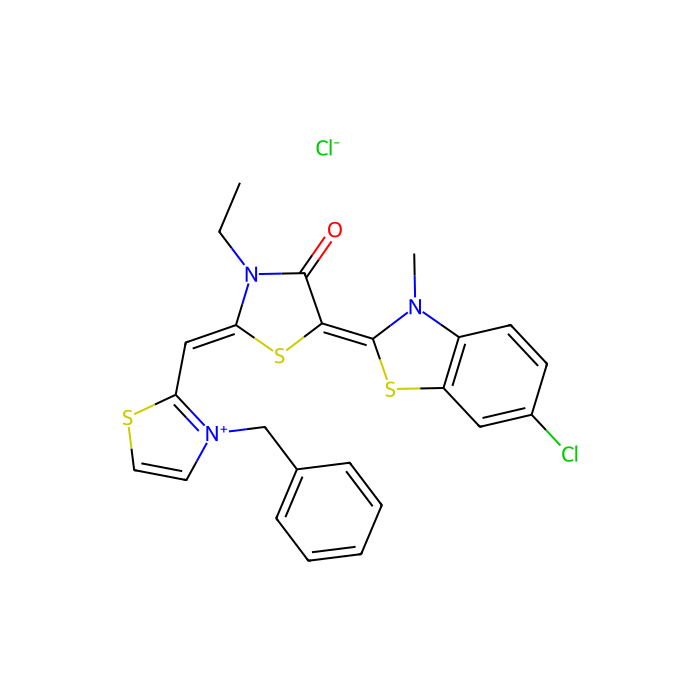
JG98 JG-98 is an allosteric inhibitor of Hsp70 that binds tightly to a deep pocket that is conserved in members of the Hsp70 family. JG-98 induces classical apoptosis features, including morphological changes consistent with programmed cell death and positive annexin staining. JG-98 exhibits anticancer activity.
JG-98 is an allosteric inhibitor of Hsp70 that binds tightly to a deep pocket that is conserved in members of the Hsp70 family. JG-98 induces classical apoptosis features, including morphological changes consistent with programmed cell death and positive
Condiciones de almacenamiento de almacenamiento
Store at -20°C
Enviado en
Ice chest + Ice pads
Este producto requiere envío en cadena de frío. Los servicios terrestres y otros servicios económicos no están disponibles.
This compound belongs to the class of organic compounds known as benzothiazoles. These are organic compounds containing a benzene fused to a thiazole ring (a five-membered ring with four carbon atoms, one nitrogen atom and one sulfur atom).
External Descriptors
Not available
1. Djoumbou Feunang Y, Eisner R, Knox C, Chepelev L, Hastings J, Owen G, Fahy E, Steinbeck C, Subramanian S, Bolton E, Greiner R, and Wishart DS. ClassyFire: Automated Chemical Classification With A Comprehensive, Computable Taxonomy. Journal of Cheminformatics, 2016, 8:61.
Determine the necessary mass, volume, or concentration for preparing a solution.
Dilution Calculator
Determine the dilution needed to prepare a stock solution.
Reconstitution Calculator
Reseñas
Reseñas de cliente
Application Protocols
No validated, item-specific protocols are provided for this product.
General research-use protocol templates (adapt to your system):
Preparation of a 10 mM stock in DMSO:
Allow vial to equilibrate to room temperature in a desiccator. 2) Weigh the required mass quickly to minimize moisture uptake. 3) Add dry DMSO to achieve 10 mM. 4) Vortex until fully dissolved. 5) Aliquot into amber screw-cap vials; store at −20 °C or −80 °C.
Biochemical assay dosing:
Prepare a 10-point 1:3 serial dilution in assay buffer while keeping DMSO constant (e.g., 0.1% v/v). Include vehicle and unrelated-probe controls. Measure readouts (e.g., thermal shift, ATPase modulation) per assay SOP.
Cell-based assay dosing:
Dilute DMSO stock into prewarmed media to desired concentrations, keeping final DMSO ≤0.1–0.5% v/v. Mix thoroughly to avoid local supersaturation. Incubate per assay design; include viability counterscreens.
Analytical verification:
Confirm working solution integrity by LC–MS or HPLC at start/end of experiment when results are sensitive to compound stability.
Note: These are general templates; validate and document any deviations for your application.
Biological Roles
Scope: The following reflects general, literature-based context for JG98-like probes; it is not item-specific and does not imply therapeutic use.
Chaperone system modulation (literature): JG98 is widely reported as a small-molecule modulator of the 70-kDa heat shock protein (Hsp70/HSPA) family, including constitutive Hsc70 (HSPA8). Studies indicate effects on co-chaperone interactions (e.g., BAG-domain proteins), enabling interrogation of client processing, folding, and degradation pathways.
Proteostasis networks: By perturbing Hsp70 function, researchers explore consequences for protein quality control, autophagic flux, and ubiquitin–proteasome system crosstalk. Such probes aid in mapping chaperone-client dependencies and stress responses.
Chemical probe best practices: Employ appropriate counterscreens (e.g., unrelated ATPases, off-target chaperones) and orthogonal readouts (thermal shift, CETSA, proximity assays) to support target engagement claims.
Assay considerations:
Time dependence: Engagement with chaperone systems can exhibit kinetics-dependent phenotypes; time-course studies help distinguish primary from secondary effects.
Concentration window: Optimize to avoid confounding cytotoxicity or aggregate formation; maintain consistent vehicle control.
Note: No clinical or therapeutic claims are made. Use is restricted to research applications. Confirm all target-specific details (affinity, selectivity) from primary literature for your assay system.
Buffer Applications
Not typically applicable. JG98 is a small-molecule research probe and not a buffering agent. It does not define or maintain pH ranges in biochemical systems.
Practical note:
When dosing JG98 into buffered assays, maintain a constant vehicle concentration (e.g., DMSO) across all wells/tubes, and verify that the chosen buffer (e.g., HEPES, PBS, Tris) does not adversely affect the intended readout or compound solubility. Add nonionic detergent (e.g., 0.01–0.05% Tween-20 or Pluronic F-127) if aggregation artifacts are suspected.
Green Alternatives
As a finished screening compound rather than a process solvent or reagent, traditional “green replacement” discussions are only tangentially relevant. Environmental impact is dominated by the choice of dissolution vehicle, assay scale, and waste handling rather than by substitution of the molecule itself.
Greener handling considerations (general):
Solvent choice for stocks:
DMSO is standard but persistent; if compatible with your assay, consider ethanol or aqueous cyclodextrin formulations to reduce DMSO use. Validate stability and potency upon switching vehicles.
Miniaturization:
Use low-volume assay formats (e.g., 384/1536-well) to reduce chemical consumption and waste.
Waste management:
Segregate halogenated vs non-halogenated organic waste streams per institutional EHS guidance; neutralize and dispose according to local regulations.
Supply chain and documentation:
Maintain accurate inventories to minimize expired chemicals and unnecessary reorders. Store at the recommended temperature to maximize shelf life and reduce wastage.
Trade-offs:
Ethanol and aqueous solubilizers may simplify waste handling but can limit achievable concentrations or alter assay outcomes. Always conduct bridging experiments to confirm equivalence of biological readouts.
Pharmaceutical Uses
Not intended for pharmaceutical formulation or clinical use. For research use only (per product data).
Research/formulation context (general):
Preclinical in vitro studies: Compounds like JG98 are commonly prepared as DMSO stocks (e.g., 10 mM), then diluted into cell culture media or biochemical assay buffers with final DMSO typically ≤0.1–0.5% v/v. Adsorption to plastics may necessitate low-binding ware and surfactant supplementation at low working concentrations.
Stability screening: For longer incubations, verify chemical integrity by LC–MS over the assay timeframe in the relevant matrix (media, serum-containing conditions), as some small molecules undergo hydrolysis or oxidation.
No pharmacopeial monograph: There is no pharmacopeial standard for JG98. Any excursion into in vivo, translational, or GMP contexts would require independent sourcing and qualification; this catalog item is not for such uses.
Physical Properties
Item-specific data:
Appearance: Not specified for this item; refer to CoA/Spec Sheet.
Melting point (MP): Not specified for this item; refer to CoA/Spec Sheet.
Boiling point (BP): Not applicable/unknown for this solid; Not specified for this item; refer to CoA/Spec Sheet.
Density: Not specified for this item; refer to CoA/Spec Sheet.
Solubility: Not specified for this item; refer to CoA/Spec Sheet.
LogP, pKa, refractive index: Not specified for this item; refer to CoA/Spec Sheet.
Probe-like small molecules of this class are typically sparingly soluble in aqueous buffers and are routinely dissolved in DMSO to prepare 10–50 mM stock solutions for screening. Aqueous working solutions are often prepared by diluting DMSO stocks into assay buffers to ≤0.1–0.5% v/v DMSO final.
Many aromatic probes are moderately lipophilic (cLogP ~2–5, literature ranges), which can drive nonspecific adsorption to plastics; low-binding labware may improve dose-response fidelity.
Light and air sensitivity vary by scaffold; protect from light until lot-specific guidance is confirmed.
Notes for users:
Where exact constants are required (e.g., for QC, formulation, or modeling), consult the CoA/Spec Sheet and SDS, or derive experimentally under your conditions.
Quality and Grades
Item-specific quality details:
Grade/Purity: Not specified for this item; refer to CoA/Spec Sheet.
Interpretation and guidance:
Compound library materials like JG98 are typically supplied at research grade, intended for in vitro and discovery workflows (e.g., target validation, mechanism-of-action studies). Purity is commonly established by HPLC/UPLC and identity by MS/NMR; exact thresholds (e.g., ≥95% area by HPLC) must be confirmed on the lot CoA.
UV-Vis background and residual solvent content can affect optical assays (e.g., fluorescence, absorbance); check the CoA/SDS for residual solvents and consider a quick spectral scan (200–800 nm) of your lot in the assay matrix to confirm compatibility.
If stabilizers or counter-ions are present, they will be listed on the CoA/Spec Sheet; none are specified here.
Batch-to-batch consistency: For screening, maintain one lot through a campaign when possible. If switching lots, re-verify EC50/IC50 in a small panel to guard against drift due to subtle impurity profiles.
Documentation: For regulated workflows or publication, cite the CAS (1456551-16-8), supplier SKU (J413598), and include a copy of the CoA in your records.
Reaction and Applications
Chemical synthesis applications: This product is supplied as a finished small molecule and is not typically used as a reagent, catalyst, or synthetic intermediate. Consequently, classic reaction-family discussions (e.g., cross-couplings, condensations) are not directly applicable here.
Research applications (general, literature-based):
Chemical biology probe: JG98 is reported in the literature as a modulator of Hsp70-family chaperone function and is employed to interrogate proteostasis pathways in cell-free and cell-based systems. Typical uses include pathway validation, chemical-genetic interactions, and structure–activity relationship (SAR) benchmarking alongside related analogs.
Assay modalities: Employed in biochemical binding/engagement assays (e.g., fluorescence polarization, thermal shift/CETSA, SPR), client protein processing assays, and phenotypic readouts aligned with chaperone dependency.
Controls and counterscreens: Include DMSO vehicle controls and orthogonal assays to distinguish on-target chaperone effects from general cytotoxicity or aggregation-based artifacts. Detergent supplementation (e.g., 0.01–0.05% nonionic surfactant) can mitigate colloidal effects where relevant.
Practical tips:
Prepare fresh dilutions immediately before use; minimize freeze–thaw of concentrated stocks by aliquoting.
Confirm activity window by conducting a small 8–12 point dose-response to establish EC50/IC50 under your specific assay conditions, as values can shift with protein source, buffer, and temperature.
Reaction Conditions
Not directly applicable to this catalog item, which is provided as a finished screening compound rather than a reagent or catalyst.
Assay setup conditions (general, for effective use as a probe):
Stock preparation: Dissolve in anhydrous DMSO to 10–50 mM; vortex and, if needed, gentle warming (<40 °C) to aid dissolution. Filter-sterilize (0.22 µm PTFE) for sterile applications.
Working solutions: Prepare fresh serial dilutions in assay buffer or media immediately prior to use to limit precipitation or degradation. Maintain constant vehicle concentration across conditions.
Temperature: Conduct biochemical assays at the temperature appropriate for the target (often 25–37 °C). For cell-based assays, equilibrate compounds and media to 37 °C and 5% CO2 as required.
Time course: Establish equilibration and exposure times empirically; chaperone-modulating effects can be time-dependent.
Performance benchmarking:
Include positive/negative controls and orthogonal assays to validate on-target activity and rule out redox cycling or aggregation artifacts.
Note: Specific kinetic/thermodynamic parameters for JG98 are not provided here; consult primary literature for your assay design.
Safety and Handling
GHS/SDS (item-specific):
Signal Word: Not specified for this item; refer to SDS.
Hazard Statements (H-Statements): Not specified for this item; refer to SDS.
GHS Classification and Pictograms: Not specified for this item; refer to SDS.
General laboratory precautions (good practice for small organic molecules):
Handle in a chemical fume hood; avoid inhalation of dust or vapors and prevent skin/eye contact.
Wear appropriate PPE: lab coat, safety glasses, and chemical-resistant gloves (e.g., nitrile). Change gloves regularly when handling DMSO stock solutions, which can enhance dermal absorption for many solutes.
Avoid aerosolization when weighing fine powders; use antistatic tools and weigh boats with covers where practical.
First aid (overview; defer to SDS): in case of skin or eye contact, rinse with plenty of water for at least 15 minutes; remove contaminated clothing. If inhaled, move to fresh air. If ingested, rinse mouth and seek medical advice.
Incompatibilities/housekeeping: Keep away from strong oxidizers and strong acids/bases unless stability is known. Segregate from foodstuffs. Use amber vials if light sensitivity is suspected. Dispose of waste according to institutional and local regulations.
DMSO handling: Prepare concentrated stocks carefully; wipe spills immediately. Confirm that the final DMSO concentration in biological assays is compatible with the system (commonly ≤0.1–0.5% v/v).
Solvent Selection
Applicability: As a hydrophobic small-molecule library member, JG98 is typically handled in organic solvents for stock preparation.
General guidance (verify with CoA and small-scale tests):
Primary solvent for stocks: DMSO (high solvating power, miscible with water; widely used for 10–50 mM stocks). Filter-sterilize if sterile work is required.
Alternative solvents: DMF or ethanol can be used where DMSO is undesirable; assess assay tolerance (e.g., EtOH ≤0.5–1% v/v final in many biochemical assays). PEG-400 or aqueous solubilizers (e.g., 10–20% HP-β-cyclodextrin) may assist in increasing apparent solubility.
Aqueous buffers: Expect low intrinsic solubility without co-solvent; prepare by serial dilution from an organic stock to the desired final concentration, maintaining a consistent vehicle percentage across controls and treatments.
Adsorption and carryover: Use low-binding polypropylene or glass vials; pre-rinse tips/vials with a small volume of working solution when working at low nM concentrations.
Quick comparison (general):
DMSO: highest solvating power; potential to affect membrane integrity at >0.5–1% v/v.
Ethanol: volatile; lower solvating power but good for rapid evaporation steps.
DMF: strong polar aprotic; consider toxicity and hygroscopicity.
Note: No item-specific solubility data are provided; perform a solubility screen in intended matrices.
Storage and Reconstitution
Item-specific instructions:
Storage Conditions: Store at −20 °C (per product data).
Reconstitution (not item-specific; general best practices):
Solvent: If no specific instructions accompany the lot, prepare concentrated stocks in anhydrous DMSO (e.g., 10–50 mM) to facilitate accurate dosing. If aqueous use is required, dilute from the DMSO stock into buffer/media immediately before use.
Aliquoting: Divide stock into single-use aliquots (amber vials or low-bind tubes) to avoid repeated freeze–thaw cycles.
Freeze–thaw: Minimize cycles; thaw on ice or at room temperature and mix gently before use. Discard aliquots showing precipitation or discoloration.
Light/moisture: Protect from light and moisture exposure. Cap tightly; consider desiccant in secondary containment for the solid.
Stability notes:
Exact shelf life, purity limits, and degradation pathways are not specified for this item; refer to the CoA/Spec Sheet and SDS. As a general rule, well-stored DMSO stocks at −20 to −80 °C are stable for weeks to a few months; verify by LC–MS/HPLC before critical experiments.
Research Use Only: For laboratory research use only; not for human or veterinary use.
Structure and Identity
Brief: JG98 is supplied as a research-use small molecule from a screening/compound library. Limited item-specific structural data are provided in the product record; key identifiers are included below.
From Product Data (item-specific):
SKU: J413598
Product Name: JG98
CAS: 1456551-16-8
PubChem CID: 72547053
InChIKey: 15360 (as provided)
SMILES: Not specified for this item; refer to CoA/Spec Sheet.
Molecular Formula: Not specified for this item; refer to CoA/Spec Sheet.
Molecular Weight: Not specified for this item; refer to CoA/Spec Sheet.
Literature/context (general, non-item-specific):
JG98 is reported in the chemical biology literature as a small-molecule modulator of the Hsp70 chaperone system. Public databases (e.g., PubChem CID 72547053) list full structure descriptors, including canonical SMILES and InChIKey, which may be consulted for cheminformatics work. Always reconcile with the item’s CoA to confirm the exact lot identity.
Structural features (general):
Small, organic, aromatic-rich scaffold typical of probe-like modulators used in proteostasis studies.
Functional groups and stereochemistry should be verified against the CoA/SDS for the supplied lot, as no specific features are provided here.
2D structural description (general):
Literature sources depict a compact, polyaromatic framework with heteroatom-containing functional groups enabling target engagement; consult primary references or PubChem for the authoritative 2D depiction for computational docking or property prediction.
Synthetic Utility
Not typically applicable. JG98 is supplied as a finished small molecule for use as a research probe rather than as a building block in multistep synthesis.
Guidance for chemists who may still consider derivatization (general):
If SAR or analoging is desired, consult the primary literature and database entry (PubChem CID 72547053) for the exact scaffold and positions historically tolerant to modification. Derivatization strategies often focus on ring substitutions or linker variations that maintain interactions with Hsp70-family targets.
Protecting-group strategy, coupling conditions, and late-stage diversification are scaffold-dependent and should be based on authenticated structural information (SMILES/InChI) from authoritative sources, reconciled with the CoA for the supplied lot.
Note: No reactive functional groups or handles are specified in the current product data. Avoid assuming reactivity without confirmed structure; misassignment can compromise both safety and outcomes.
Target Specificity
Not applicable to antibodies or biologics. No item-specific target-binding data are provided in the product data for JG98.
Context (literature, general):
JG98 is described in the literature as a small-molecule modulator of Hsp70-family chaperones (e.g., Hsc70/HSPA8) and associated co-chaperone complexes. If your work relies on target engagement claims, corroborate with orthogonal methods (e.g., CETSA, pull-down with immobilized analogs, SPR/ITC) under your exact assay conditions.
Item-specific caveat:
Do not infer affinity, selectivity, or mode of action from this listing. Refer to primary literature and confirm experimentally.
Preguntas frecuentes
What is the purity of this product?
This product is supplied at ≥99% purity (chemical assay). Lot-specific values are stated on the Certificate of Analysis.
How should this product be stored?
Store at ?20 °C. Freezer storage is required to maintain the specified shelf life.
How is this product shipped?
This product ships in an insulated container with ice pads. Unpack on arrival and transfer it to the storage condition stated above.
What are the CAS number, molecular formula and molecular weight?
The CAS Number is 1456551-16-8, the molecular formula is C24H21Cl2N3OS3, and the molecular weight is 534.54 g/mol. InChIKey AUPPGWXGMILTRB-HDPAMLMOSA-M.
What documentation is provided?
Available product documentation, including Certificates of Analysis (COA), Safety Data Sheets (SDS), and specification sheets, is shown in the product document area. Document availability and access follow the current site policy.
Utilizamos cookies para garantizar el correcto funcionamiento del sitio web y, cuando esté permitido, para mejorar su experiencia. Puede gestionar sus preferencias en cualquier momento en Configuración. Más información en nuestra Política de Cookies.
¿Quieres que te enviemos un mensaje cuando tengamos descuentos disponibles?
Recordármelo más tarde
¡Gracias! Por favor, revisa tu bandeja de entrada de correo electrónico para confirmar.
Products are supplied to verified businesses, institutions, and qualified professionals for research and development use only. Not for use in humans, animals, diagnosis, or therapy.
 G2206257
