10mM in DMSO para flujos de trabajo cromatográficos y analíticos sensibles que requieren una interferencia mínima de la línea base.
🌡
Almacenamiento y envío
Store at -80°C Envío Dry ice packs + Cold packs. Consulte el COA específico del lote para conocer las especificaciones exactas.
📋
Documentos de calidad
SDS, COA, ficha técnica y hoja de especificaciones disponibles para descargar. COA específico del lote accesible mediante búsqueda por número de lote.
📚
Prueba documental
Citado en 0 publicaciones revisadas por pares sobre cromatografía, síntesis orgánica y reacciones de acoplamiento cruzado.
Descripción general
Information
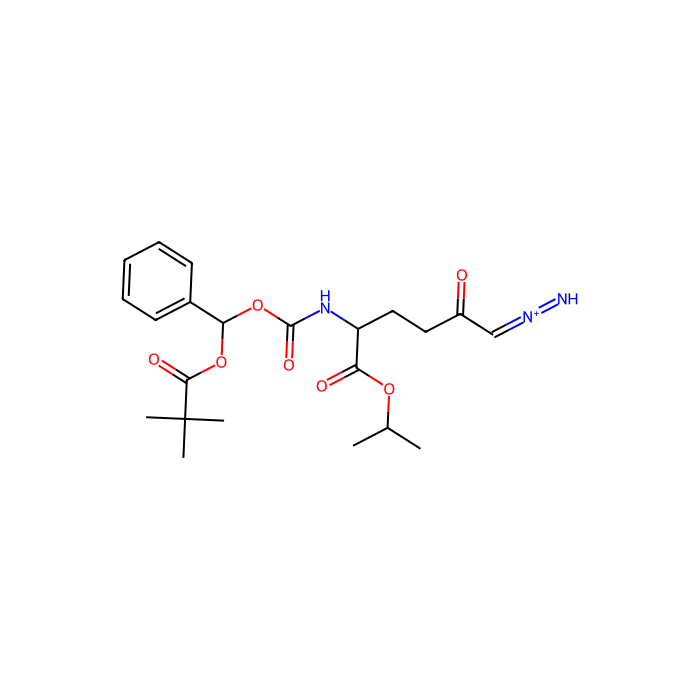
JHU395 JHU395 is a novel orally bioavailable GA (glutamine antagonists) prodrug designed to circulate inert in plasma, but permeate and release active GA within target tissues. JHU395 delivers active GA to malignant peripheral nerve sheath tumor (MPNST), and significantly inhibits tumor growth without observed toxicity.
Targets
Glutamine
In vitro
JHU395 inhibits growth of multiple biosynthetic processes by tumors (MPNST) cells, while growth of immortalized Schwann cells is minimally affected. JHU395 induces less PARP cleavage as a marker of apoptosis in human MPNST cells. JHU395 is a plasma stable lipophilic GA prodrug which delivers DON to MPNST in an in vitro plasma to tumor cell partitioning assay measurement.
In vivo
orally administered JHU395 delivers active GA to tumors with over twofold higher tumor-to-plasma exposure, and significantly inhibits tumor growth in a murine flank MPNST model without observed toxicity.
JHU395 is a novel orally bioavailable GA (glutamine antagonists) prodrug designed to circulate inert in plasma, but permeate and release active GA within target tissues. JHU395 delivers active GA to malignant peripheral nerve sheath tumor (MPNST), and sig
Condiciones de almacenamiento de almacenamiento
Store at -80°C
Enviado en
Dry ice packs + Cold packs
Este producto requiere envío en cadena de frío. Los servicios terrestres y otros servicios económicos no están disponibles.
Certificados (CoA, COO, BSE/TSE y tabla de análisis)
C of A & Other Certificates(BSE/TSE, COO):
Analytical Chart:
Calculadoras de soluciones
Molarity Calculator
Determine the necessary mass, volume, or concentration for preparing a solution.
Dilution Calculator
Determine the dilution needed to prepare a stock solution.
Reconstitution Calculator
Reseñas
Reseñas de cliente
Application Protocols
No tested applications or protocols are provided for this item.
General small-molecule handling protocols (non–item-specific)
Stock preparation: Dissolve in DMSO to a verified concentration (e.g., by UV/qNMR). Prepare single-use aliquots to avoid freeze–thaw.
Working solutions: Dilute into assay buffer or media, targeting ≤0.5–1% DMSO final. Verify absence of precipitation visually and by analytical QC.
LC–MS method development: Start with water/MeCN + 0.1% formic acid, 5–95% MeCN gradient over 5–10 min, ESI± scans. Optimize based on observed retention and ionization.
For any specialized applications (e.g., crystallography, electrophysiology, enzymology), consult the CoA/Spec Sheet or literature once the compound’s identity and properties are confirmed.
Biological Roles
Biological function, target class, and pathway engagement: Not specified for this item; refer to CoA/Spec Sheet and primary literature associated with the CAS or CID.
Mechanism of action, binding mode, and selectivity: Not specified for this item; refer to CoA/Spec Sheet.
General considerations (non–item-specific)
If used as a screening tool compound, confirm identity, purity, and salt/form to ensure reproducibility across assays.
Establish working concentration ranges empirically (e.g., half-log serial dilutions) and evaluate compound stability in assay buffers, including potential adsorption to plastics or serum proteins.
Evaluate potential interference in assay readouts (fluorescence quenching, absorbance overlap, redox activity) via appropriate counter-screens before drawing conclusions.
Research use note
For research use only. Not for human or veterinary use. No clinical or diagnostic claims are made or implied for this product.
Buffer Applications
JHU395 is a small molecule and not a buffering reagent. No acid/base parameters or pKa values are available.
Buffer roles: Not typically applicable.
pKa/pH range: Not specified for this item; refer to CoA/Spec Sheet if acid/base functionality is disclosed.
Practical note
If dissolution in aqueous media is required, adjust pH only after confirming the compound’s ionizable groups (if any). Conduct small-scale trials at different pH values and monitor for precipitation and chemical stability by LC–MS.
Green Alternatives
Because the compound’s structure, function, and solvent role are not specified, green-chemistry alternatives can only be addressed at the process level.
Process-level strategies (general)
Prefer greener solvents for dissolution and work-up where compatible: water > bio-based alcohols (EtOH, i-PrOH) > MeCN/acetone > chlorinated aromatics. Validate solubility first.
Minimize DMSO volume in bioassays and replace with ethanol or aqueous buffers where feasible, ensuring assay tolerance.
Use microscale formats and high-throughput experimentation (HTE) to reduce material and solvent consumption.
If applying the compound in synthesis (unknown), consider 2-MeTHF or CPME as alternatives to THF/Et2O, and EtOAc over DCM for extractions, pending solubility and stability.
Trade-offs
Greener choices may impact solubility, stability, or analytical baselines; prioritize data quality and safety while iterating toward lower-impact conditions.
Documentation
Capture solvent selection rationale (including unsuccessful trials) in the ELN to support future greener substitutions once the compound’s properties are known.
Pharmaceutical Uses
No pharmacopeial status, excipient role, or formulation use is provided for this item.
Regulatory status: Not specified for this item; refer to CoA/Spec Sheet. For research use only.
Potential roles (general, non–item-specific): Screening library member, analytical reference, or internal standard in discovery workflows—pending confirmation of structure and stability.
Formulation guidance (general)
If preparing DMSO stock solutions for in vitro research, validate concentration by UV or quantitative NMR when standards are available. Store as single-use aliquots at −80 °C to minimize freeze–thaw.
For any in vivo or clinical formulation considerations, do not proceed—this product is not approved for therapeutic, diagnostic, or veterinary use.
Physical Properties
Item-specific physical constants were not supplied in the product data. Do not treat generic or literature values as specifications for this lot.
Appearance: Not specified for this item; refer to CoA/Spec Sheet.
Melting point (literature/computed): Not available; structure not provided.
Boiling point (literature): Not available; structure not provided.
Density: Not specified for this item; refer to CoA/Spec Sheet.
Refractive index: Not specified for this item; refer to CoA/Spec Sheet.
Solubility: Not specified for this item; refer to CoA/Spec Sheet.
Partition coefficient (logP) / pKa: Not available; structure not provided.
Practical guidance (general, not item-specific)
Solubility scouting: For small-molecule library members, begin with DMSO (analytical-grade, anhydrous), then test aqueous buffers containing ≤1–2% DMSO, and common organics (MeOH, EtOH, MeCN) at room temperature and 37 °C. Record qualitative outcomes (clear, haze, precipitate) after 1–24 h.
Hygroscopicity and polymorphism can materially alter apparent solubility and handling; verify with CoA and by gravimetric checks after desiccation.
If needed for analytical development, determine UV–vis absorbance empirically (200–400 nm scan) to guide HPLC/UPLC detector settings, since UV cutoffs are not specified for this item.
Quality and Grades
Grade/Purity: Not specified for this item; refer to CoA/Spec Sheet.
Interpretation and guidance
For small-molecule screening compounds, suppliers typically report an HPLC purity (e.g., area % at a specified wavelength) and identity by MS/NMR. Because this information is not supplied here, please request the latest CoA/Spec Sheet if assay sensitivity or regulatory thresholds demand it.
If an inhibitor/probe is used in bioassays, residual solvents, counterions, and salt/form polymorph can influence results; verify these on the CoA.
UV suitability for analytical methods (HPLC/UPLC grade solvents vs. compound absorbance) is not applicable here; however, when qualifying this compound for LC analysis, confirm absence of interfering stabilizers or additives (none are specified for this item).
Metal content, water content (KF), and specific residual solvent limits: Not specified for this item; refer to CoA/Spec Sheet.
Recommendations
For SAR or screening campaigns, qualify the lot with orthogonal methods (HPLC-UV/ELSD, HRMS, and 1H NMR) where feasible.
If using for quantitation (e.g., as a reference standard), establish a purity-corrected assay value (mass balance or qNMR).
Reaction and Applications
Manufacturer-supplied application notes were not provided for this item.
General research contexts for small-molecule library members (non–item-specific)
Tool compound exploration: Many JHU-labeled entries are used in discovery workflows (target deconvolution, phenotypic screening, or assay development). For JHU395, specific target class and use-case are not provided—verify with primary literature or the CoA.
Analytical reference: May serve as a reference material in LC–MS method development once structure and purity are confirmed.
Derivatization: If functional handles are present (unknown here), analog synthesis or tagging (e.g., biotinylation, fluorophore coupling) may be feasible after structural confirmation.
Practical tips
Establish identity and purity with orthogonal methods before biological or materials testing.
Determine stability in intended media (buffer, cell culture medium, or organic reaction solvent) by time-course LC–MS to preclude degradation or adsorption.
If used in panel screens, prepare single-use DMSO aliquots at a validated concentration to avoid freeze–thaw and evaporation-induced concentration drift.
Reaction Conditions
No reaction conditions are specified for this product and the structure is not disclosed. The following are general, non–item-specific notes for handling small molecules in experimental workflows:
Solution preparation: Begin with DMSO stock solutions (1–50 mM) if soluble; filter through 0.2 µm membranes when compatible.
Stability checks: Assess thermal and photostability by holding aliquots at ambient light and temperature versus protected/−20 to −80 °C and monitoring by LC–MS over 24–72 h.
Aqueous compatibility: Evaluate precipitation upon dilution into buffers at different ionic strengths and pH values; include protein-containing media if applicable.
Adsorption controls: Test recovery from polypropylene vs. glass to diagnose nonspecific binding; add inert carrier (e.g., 0.1% BSA) only if assay permits.
Expected yields, catalysts, and temperatures for transformations: Not applicable without structure—consult primary literature after confirming identity.
Safety and Handling
Hazard classification was not provided for this item. Always consult the product SDS for authoritative information before use.
GHS/CLP: Not specified for this item; refer to SDS.
Signal word / H-statements / pictograms: Not specified for this item; refer to SDS.
General laboratory precautions (non–item-specific)
PPE: Lab coat, safety glasses (ANSI Z87.1), and appropriate chemically resistant gloves (e.g., nitrile). Use a certified fume hood to avoid inhalation exposure during weighing and transfers.
Avoid ingestion, inhalation, and skin/eye contact. Wash thoroughly after handling. Prevent environmental release.
Incompatibilities: Unknown for this item. Until verified, segregate from strong oxidizers, acids/bases, and reactive metals. Do not mix with reducing agents or peroxides unless compatibility is established.
Thermal/photostability: Unknown. Store as directed (see Storage tab) and minimize exposure to heat and light.
First aid (overview): In case of skin/eye contact, rinse with water for ≥15 min; remove contaminated clothing. If inhaled, move to fresh air. If ingested, do not induce vomiting—seek medical attention. Provide SDS to responders.
Spill response: Contain and absorb with inert material; collect in compatible waste container. Decontaminate area and ventilate. Dispose per institutional and local regulations.
Note: Peroxide formation, self-reactivity, and dust explosivity are not assessed for this item due to lack of data—consult SDS.
Solvent Selection
Without a disclosed structure, solvent choice must be established empirically.
Practical screening workflow (general guidance)
Start with DMSO at 10–50 mg/mL. If soluble, prepare working aliquots and dilute into aqueous buffer with ≤1–2% DMSO final.
If DMSO insoluble or limited: trial MeOH, EtOH, i-PrOH, MeCN, acetone, DMF, and 2-MeTHF at 1–10 mg/mL.
For nonpolar candidates: test ethyl acetate, dichloromethane, toluene; for highly polar/ionic candidates: test water, PBS, or buffers after basifying/acidifying if the compound is an acid/base (unknown here—titrate cautiously).
Considerations
Polarity class, dielectric constant, and miscibility profile: Not specified for this item; determine experimentally.
If the compound is sparingly soluble, consider co-solvent systems (e.g., DMSO/water, MeCN/water) or surfactant-assisted dissolution for biological assays, ensuring assay compatibility.
Filterability: Use PTFE or PVDF membranes for organic solutions; use nylon or PES for aqueous where appropriate. Confirm no adsorption losses by recovery checks.
Comparison hints (general)
DMSO provides broad solvency and stability for many library members but may not be suitable for cells above ~0.5–1% v/v; MeCN is LC-friendly but can precipitate hydrophobic analytes upon aqueous mixing.
Storage and Reconstitution
Item-specific conditions
Storage Conditions: Store at −80 °C (as provided in product data). Maintain under inert atmosphere and desiccation if feasible to limit moisture/oxygen exposure; exact requirements not specified—refer to CoA/Spec Sheet.
Packaging: Keep container tightly closed. If supplied as a solid, allow vial to equilibrate to room temperature in a desiccator before opening to avoid condensation. If supplied in solution, keep frozen and minimize time at ambient temperature.
Aliquoting: Prepare single-use aliquots (solid or solution) to avoid repeated freeze–thaw cycles. Label with compound ID, concentration (if solution), solvent, and date.
Light sensitivity: Unknown; store in amber secondary containment as a precaution.
Reconstitution: If solid, begin with anhydrous DMSO to make a concentrated stock (e.g., 10–50 mM), then dilute as needed into compatible media. Verify complete dissolution by visual inspection and, if critical, by analytical confirmation.
Stability: Long-term stability data are not specified for this item; establish an in-use stability protocol (e.g., periodic LC–MS checks) appropriate to your application.
Research use note: For research use only.
Structure and Identity
Brief overview: JHU395 (SKU J422523) is listed as a research-use-only small molecule entry in our compound library. Item-specific structural identifiers are largely not provided in the product data.
SKU: J422523
Product Name: JHU395
CAS: 2079938-92-2
PubChem CID: 126555751
InChIKey: 176683 (as provided; not a standard-length InChIKey)
SMILES: Not specified for this item; refer to CoA/Spec Sheet.
Molecular Formula: Not specified for this item; refer to CoA/Spec Sheet.
Molecular Weight: Not specified for this item; refer to CoA/Spec Sheet.
Structural features
Functional groups, ring systems, heteroatom content, and stereochemistry: Not specified for this item; refer to CoA/Spec Sheet.
2D structural description: Not available. Without a SMILES or structural diagram, functional moieties and topology cannot be summarized.
Notes
If your workflow requires definitive identifiers (canonical SMILES, InChI, exact mass), request the current CoA/Spec Sheet. Cross-checking with the listed CAS and CID is recommended to align internal databases and procurement records.
Any computed properties or cheminformatics operations (e.g., logP, TPSA, rotatable bonds) should be based on a confirmed structure from the CoA/Spec Sheet or the supplier SDS.
Synthetic Utility
Synthetic roles cannot be assigned without the disclosed structure.
Functional groups and reactivity: Not specified for this item; refer to CoA/Spec Sheet.
Named reactions and transformations: Not specified for this item.
General guidance
If JHU395 is to be elaborated synthetically (e.g., for SAR), obtain the structure and assess handles for diversification (halogens for cross-coupling, amines/acids for amide coupling, heteroatoms for SNAr, etc.).
Establish stability under standard workup conditions (aqueous acid/base, silica gel chromatography) before planning synthetic routes.
For analytical support, develop an LC–MS method with a scouting gradient (e.g., water/MeCN + 0.1% formic acid) and confirm retention and ionization behavior prior to scale-up experiments.
Target Specificity
This product is not an antibody or biological binder; target specificity data are not provided.
Antigen/epitope, clone, isotype, species reactivity: Not applicable.
If JHU395 is intended as a chemical probe, obtain target, affinity, and selectivity information from primary literature or the CoA/Spec Sheet before designing experiments.
Preguntas frecuentes
How should this product be stored?
Store at ?80 °C. Ultra-low temperature storage is required to maintain the specified shelf life.
How is this product shipped?
This product ships frozen with dry ice and cold packs. Unpack on arrival and transfer it to the storage condition stated above; handle dry ice with insulated gloves in a ventilated area.
What are the CAS number, molecular formula and molecular weight?
The CAS Number is 2079938-92-2, the molecular formula is C22H29N3O7, and the molecular weight is 447.48 g/mol. InChIKey KCTDLEPDMHFLHZ-KKFHFHRHSA-O.
What documentation is provided?
Available product documentation, including Certificates of Analysis (COA), Safety Data Sheets (SDS), and specification sheets, is shown in the product document area. Document availability and access follow the current site policy.
Utilizamos cookies para garantizar el correcto funcionamiento del sitio web y, cuando esté permitido, para mejorar su experiencia. Puede gestionar sus preferencias en cualquier momento en Configuración. Más información en nuestra Política de Cookies.
¿Quieres que te enviemos un mensaje cuando tengamos descuentos disponibles?
Recordármelo más tarde
¡Gracias! Por favor, revisa tu bandeja de entrada de correo electrónico para confirmar.
Products are supplied to verified businesses, institutions, and qualified professionals for research and development use only. Not for use in humans, animals, diagnosis, or therapy.