≥98% para flujos de trabajo cromatográficos y analíticos sensibles que requieren una interferencia mínima de la línea base.
🌡
Almacenamiento y envío
Store at 2-8°C Envío Wet ice. Consulte el COA específico del lote para conocer las especificaciones exactas.
📋
Documentos de calidad
SDS, COA, ficha técnica y hoja de especificaciones disponibles para descargar. COA específico del lote accesible mediante búsqueda por número de lote.
📚
Prueba documental
Citado en 0 publicaciones revisadas por pares sobre cromatografía, síntesis orgánica y reacciones de acoplamiento cruzado.
Descripción general
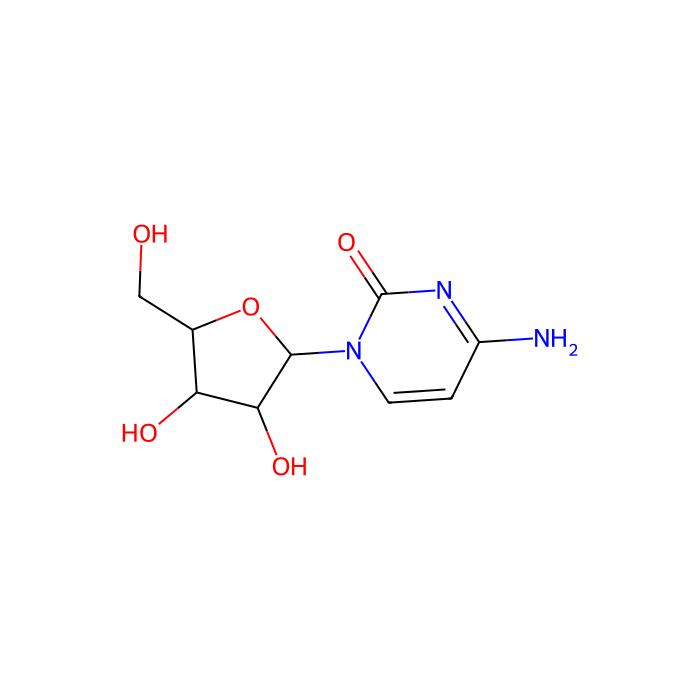
L-Cytidine is an L-configurational form of Cytidine (HY-B0158). L-Cytidine is a pyrimidine nucleoside, a component of RNA. Cytidine can control the glial glutamate cycle, affect brain phospholipid metabolism, catecholamine synthesis and mitochondrial function.
This compound belongs to the class of organic compounds known as pyrimidine nucleosides. These are compounds comprising a pyrimidine base attached to a ribosyl or deoxyribosyl moiety.
External Descriptors
Not available
1. Djoumbou Feunang Y, Eisner R, Knox C, Chepelev L, Hastings J, Owen G, Fahy E, Steinbeck C, Subramanian S, Bolton E, Greiner R, and Wishart DS. ClassyFire: Automated Chemical Classification With A Comprehensive, Computable Taxonomy. Journal of Cheminformatics, 2016, 8:61.
Determine the necessary mass, volume, or concentration for preparing a solution.
Dilution Calculator
Determine the dilution needed to prepare a stock solution.
Reconstitution Calculator
Reseñas
Reseñas de cliente
Application Protocols
Item-specific tested applications: Not specified for this item; refer to CoA/Spec Sheet.
General use protocols (research context; verify for your system)
Preparation of aqueous stock: Dissolve the desired amount of L-cytidine in nuclease-free water or buffer to 10–100 mM. Vortex to dissolve completely. Sterile filter (0.22 µm) if required. Aliquot and store as appropriate (see Storage section).
DMSO stock for screening: Dissolve to 100–500 mM in anhydrous DMSO. Mix thoroughly until clear. Dilute into assay buffer immediately before use to minimize precipitation; ensure final DMSO concentration is compatible with the assay (<1–2% v/v typically).
Chiral HPLC check: Analyze a small aliquot on a chiral stationary phase validated for D/L nucleosides to verify enantiomeric purity before critical experiments.
Solid-phase synthesis precursor: When converting to phosphoramidites, rigorously dry glassware and solvents; confirm complete protection and absence of free 2′/3′-OH by NMR before coupling.
Note: These are general literature-style procedures; adapt to your instrument, scale, and regulatory environment. For validated, item-specific protocols, consult the CoA/Spec Sheet.
Biological Roles
Item-specific
Research use only (per Product Data). No clinical or therapeutic claims.
Literature/general context
Cytidine is a canonical ribonucleoside in RNA (D-configuration). L-Cytidine is the mirror-image enantiomer and is not naturally incorporated by cellular RNA polymerases.
Enzyme recognition: Many nucleoside-processing enzymes (transporters, kinases, polymerases, deaminases) exhibit strong stereoselectivity for D-nucleosides. L-Cytidine typically shows markedly reduced binding/turnover, making it valuable for dissecting stereochemical requirements.
Stability in biological milieu: L-oligonucleotides and L-nucleotides exhibit enhanced resistance to nuclease-mediated degradation due to stereochemical mismatch, a property leveraged in fundamental research on mirror-image biopolymers.
Metabolic transformations: Deamination (cytidine → uridine) is a common transformation for D-cytidine under enzymatic or chemical conditions; for L-cytidine, endogenous enzymes show poor activity, though non-enzymatic hydrolysis can occur under harsh conditions. Such differences are used to probe enzyme active-site geometry.
Binding interactions: The base (cytosine) engages in Watson–Crick pairing with guanine in the D-world; mirror-image pairing is relevant in L-oligonucleotide systems but not in natural nucleic acids.
Use cases in biochemistry
Negative/orthogonal controls in transporter uptake assays.
Substrate stereoprobe for engineered or mirror-image enzymes.
Reference material in chiral method development for nucleosides.
Buffer Applications
Scope
L-Cytidine is not a buffering agent and does not constitute a defined buffer system.
Practical notes (general)
Aqueous solutions of L-cytidine can be prepared in common laboratory buffers (e.g., phosphate, HEPES, Tris) chosen for the target assay’s pH (typically pH 6.5–8.0). The compound itself does not strongly control pH.
Avoid extreme pH: Acidic or basic conditions can promote glycosidic bond cleavage or base modification (e.g., deamination), so near-neutral buffers are preferred for stability.
Preparation tips: Dissolve to the desired concentration in filtered buffer; adjust ionic strength/osmolality according to assay needs; sterile filter (0.22 µm) for cell-free biochemical assays as required.
If you require a buffering system, select a dedicated buffer (phosphate, HEPES, MOPS, etc.) and use L-cytidine merely as a solute.
Green Alternatives
Context
L-Cytidine is a solid reagent rather than a process solvent; “green alternatives” relate mainly to solvent and reagent choices for its use and derivatization.
Greener solvent choices (general guidance)
Prefer water or aqueous buffers for dissolution in biochemical assays whenever compatible with assay components.
For protection/derivatization, consider:
2-MeTHF instead of dichloromethane/toluene in extractions or workups where polarity allows.
Ethyl acetate/alcohol mixtures for crystallization in place of chlorinated solvents.
Acetonitrile over DMF where feasible (lower boiling point, easier recovery), while recognizing ACN’s own safety considerations.
Energy and waste minimization
Employ room-temperature or mild-temperature reactions when possible (e.g., enzymatic or catalytic processes) to reduce energy input.
Use solid-supported reagents for acylation/deprotection to simplify workup and reduce aqueous waste.
Comparison snapshot (general)
Water/buffer: Safest, lowest EHS footprint; limited by hydrolytic stability at extreme pH.
DMSO: Excellent solubilizer; persistent in wastewater—use minimal volumes.
DMF/DCM: Effective but higher health/environmental concerns; substitute with ACN or 2-MeTHF/EtOAc where practical.
Trade-offs
Green substitutions must preserve selectivity (e.g., protection patterns) and maintain chiral integrity. Validate on small scale before process adoption.
Pharmaceutical Uses
Item-specific
Research Use Note: For research use only (per Product Data). No medical or clinical uses are stated or implied.
General formulation/manufacturing context (non-therapeutic)
Reference standard: L-Cytidine may be used as a chiral reference material to qualify analytical methods that distinguish D/L nucleosides in quality control laboratories.
Excipient status: Cytidine itself is not a common excipient; L-cytidine has no established pharmacopeial excipient monograph to our knowledge (literature context). When used in development labs, it functions as a test article or synthetic intermediate rather than a formulation aid.
Process development: In nucleotide/nucleoside process chemistry, L-cytidine can serve as a benchmarking substrate to evaluate chiral stationary phases, crystallization-induced deracemization studies, or as a non-native comparator in transporter studies (in vitro, non-clinical).
Compliance note
Any use in regulated settings should be supported by a full CoA, method validation for identity/purity (including optical rotation or chiral HPLC), and appropriate stability data under intended storage conditions.
Physical Properties
Item-specific (from Product Data)
Appearance: Not specified for this item; refer to CoA/Spec Sheet.
Physical state: Typically a white to off-white crystalline solid (literature, nucleoside class).
Melting point: ~230–235 °C with decomposition (literature for cytidine). L-enantiomer is expected to display a similar decomposition range.
Solubility: Highly soluble in water (tens of mg/mL to >100 mg/mL, literature). Moderately soluble in polar organics (methanol, ethanol); sparingly soluble in nonpolar solvents. DMSO affords concentrated stocks for biochemical work.
LogP (octanol/water): Strongly negative/very hydrophilic (literature expectation for polyhydroxy nucleosides; specific value varies by method).
pKa values (base moiety, literature): Protonation/deprotonation equilibria associated with cytosine ring nitrogens; reported microscopic pKa values cluster around 4–5 (protonation) and >11 (ring nitrogen deprotonation) depending on ionic strength and measurement method.
Hygroscopicity: Low-to-moderate; prolonged exposure to humid air can lead to moisture uptake and clumping (general for nucleosides).
Optical rotation: L-enantiomer exhibits optical rotation of opposite sign to D-cytidine under identical conditions (magnitude depends on solvent and concentration; consult specific CoA).
Notes
Exact numerical values for this item are Not specified for this item; refer to CoA/Spec Sheet. Use literature values only as planning guides and verify experimentally.
Quality and Grades
Item-specific (from Product Data)
Grade/Purity: Not specified for this item; refer to CoA/Spec Sheet.
Context and guidance (general)
Typical grades for nucleosides include: research grade, bio/biochemical grade (tested for enzymatic applications), and HPLC grade/reference standard grade (with orthogonal purity characterization and low UV-absorbing impurities).
Purity considerations: For biochemical assays (e.g., enzyme stereoselectivity, nucleotide synthesis), residual inorganic salts, endotoxin, and trace metal content can affect outcomes. If the grade is unspecified, verify by HPLC/UPLC purity, water content (KF), and identity (1H/13C NMR, HRMS, optical rotation).
Optical purity: For L-cytidine, enantiomeric excess (ee) is critical. Recommended QC: chiral HPLC or enzymatic discrimination assays. Confirm the absence of D-cytidine at levels appropriate for your application (e.g., ≤0.5% for stereochemical probes). Item-specific ee is Not specified for this item; refer to CoA/Spec Sheet.
Residual solvent and water: Water can be significant due to hydrophilicity. Karl Fischer moisture and residual solvent GC are often reported for high-precision work. Not specified for this item; refer to CoA/Spec Sheet.
Stabilizers/additives: None are typically used for nucleosides; if present, they should be disclosed on the CoA. Not specified for this item.
Recommendation
Match grade to application stringency: use higher-purity, low-UV, low-ionic burden material for analytical reference or oligonucleotide synthesis; standard research grade is often sufficient for routine chemistry screens.
Reaction and Applications
Item-specific application context
Manufacturer note: Not specified beyond category placement (small molecules/compound library). For research use only.
Literature and practical applications (general for L-cytidine)
Stereochemical probes: L-nucleosides are widely used to interrogate the stereospecificity of nucleoside transporters, kinases, and polymerases. L-Cytidine can reveal enzyme discrimination against non-physiological chirality.
Building block for L-oligonucleotides: Serves as a precursor to L-cytidine phosphoramidites for solid-phase synthesis of mirror-image aptamers (Spiegelmers), prized for nuclease resistance and unique binding properties (research context).
Derivatization chemistry: The 2′,3′,5′-hydroxyls enable selective protection (e.g., TBDMS, acetyl, benzoyl), while the cytosine C4 exocyclic amine can be protected (e.g., benzoyl) or transformed (e.g., to 4-N-acyl derivatives). Halogenation at C5 of the base (after activation) allows cross-coupling to generate C5-modified analogs.
Nucleotide synthesis: Phosphorylation (e.g., Yoshikawa or Ludwig–Eckstein-type procedures) affords L-CMP, L-CDP, or L-CTP for biochemical studies with mirror-image systems.
Analytical standards: Used to benchmark chiral separation methods distinguishing D- and L-nucleosides.
Practical tips
Maintain anhydrous conditions for protection/phosphorylation steps; moisture causes hydrolysis of activated species.
Control pH (typically near neutral) during aqueous manipulations to minimize deamination to L-uridine analogs.
Use chiral HPLC to monitor enantiomeric purity throughout multistep sequences.
Reaction Conditions
General literature guidance (not item-specific specs; verify experimentally)
5′-O-Phosphorylation (Yoshikawa): POCl3 (0.9–1.2 eq) in dry trimethyl phosphate at 0–25 °C, followed by quench with aqueous buffer, to afford 5′-monophosphate. Typical times: 0.5–2 h. Moisture-sensitive.
Phosphoramidite formation: 5′-OH activation using 2-cyanoethyl N,N-diisopropylchlorophosphoramidite in dry CH2Cl2/ACN with DIPEA (4–6 eq) at 0–25 °C, 0.5–2 h; protect 2′,3′-OHs beforehand (e.g., TBDMS) and N4 (e.g., benzoyl).
Sugar protection:
TBDMS protection: TBDMS-Cl (1.2–2.0 eq per OH), imidazole (3–6 eq), DMF, 0–25 °C, 2–16 h. Regioselectivity can be tuned by stoichiometry and temperature.
Acetylation/benzoylation: Ac2O or Bz2O, pyridine or DMAP catalysis, 0–25 °C, 1–4 h.
Base modification at C5: Halogenation (e.g., NBS/NIS under controlled conditions) on a suitably protected nucleoside, followed by Suzuki coupling (Pd(PPh3)4, base such as K2CO3, dioxane/H2O, 50–90 °C) or Sonogashira (Pd/Cu, amine base, 25–60 °C).
Deamination (for reference): Chemical deamination to the corresponding uridine analog can occur under nitrosative conditions; avoid nitrite in acidic media if preservation of cytosine is desired.
Solvent/atmosphere
Use anhydrous solvents (DMF, ACN, CH2Cl2, pyridine) with molecular sieves where applicable; inert atmosphere (N2/Ar) recommended for moisture-sensitive steps.
Yields
Highly method- and substrate-dependent; nucleoside protection steps often give 70–90% isolated yields per step under optimized conditions (literature ranges).
Always optimize on small scale and confirm stereochemical integrity (L-configuration) after each key step.
Safety and Handling
Item-specific (from Product Data)
Storage conditions: Store at 2–8 °C
Shipped on: Wet ice
GHS classification, pictograms, signal word, H-statements: Not specified for this item; refer to SDS.
General safety information (literature/good laboratory practice; consult the SDS for authoritative guidance)
Hazard profile: Nucleosides such as L-cytidine are generally regarded as low acute toxicity laboratory chemicals; however, dust may cause mechanical irritation to eyes/respiratory tract. Avoid ingestion and prolonged skin contact.
Personal protective equipment (PPE): Lab coat, safety glasses, and suitable gloves (nitrile recommended). Use a dust mask or work in a fume hood if handling powders that may become airborne.
Handling: Minimize dust formation. Use clean, dry tools; avoid cross-contamination with other nucleosides if using for stereochemical selectivity assays.
Incompatibilities: Strong oxidizers and strong acids/bases may degrade the nucleobase or promote glycosidic bond cleavage. Avoid elevated temperatures and prolonged exposure to moisture to limit hydrolysis.
First aid (overview):
Inhalation: Move to fresh air; seek medical attention if symptoms persist.
Skin contact: Wash with soap and water; remove contaminated clothing.
Eye contact: Rinse cautiously with water for several minutes; seek medical attention if irritation continues.
Ingestion: Rinse mouth; seek medical advice.
Fire safety: Organic solid; may burn if involved in a fire. Use water spray, CO2, dry chemical, or foam. Combustion may produce nitrogen oxides and carbon oxides.
Always defer to the product-specific SDS for definitive hazard information and response measures.
Solvent Selection
Applicability
L-Cytidine is a polar, multi-hydrogen-bonding nucleoside; solvent selection focuses on dissolution for reaction or assay setup, not chromatographic elution as a bulk solvent.
Water: High solubility; ideal for biochemical assays and stock solutions.
Aqueous buffers (pH 6–8): Good solubility; avoid extremes of pH that may promote deamination or glycosidic cleavage.
Alcohols (MeOH, EtOH): Moderate solubility; useful for co-solvent systems and precipitation/crystallization protocols.
Polar aprotics (DMSO, DMF): DMSO dissolves L-cytidine at high concentrations for screening libraries; DMF is less commonly used in bioassays but aids in derivatization chemistry.
For biochemical work: Prepare sterile-filtered aqueous or buffer solutions (e.g., 10–100 mM) and store aliquots appropriately.
For protection/derivatization: Employ anhydrous pyridine, acetonitrile, or DMF as reaction media with appropriate catalysts (e.g., silylation or acylation workflows), often with molecular sieves.
Comparison notes
DMSO vs water: DMSO allows very high-concentration stocks for screening but may affect enzyme activity; water/buffer is preferred when compatibility permits.
MeOH/EtOH as co-solvents: Improve wetting and aid in crystallizations; adjust ratios to modulate solubility and precipitation.
Always verify solubility empirically for your exact salt/form, temperature, and buffer composition.
Storage and Reconstitution
Item-specific (from Product Data)
Storage conditions: Store at 2–8 °C.
Shipping: Shipped on wet ice.
General guidance (not item-specific specifications)
Solid stability: Keep tightly closed in the original container. Protect from excessive humidity. Allow the container to equilibrate to room temperature before opening to minimize moisture condensation.
Reconstitution solvents: Water/buffer for biochemical use; DMSO for high-concentration stocks. Use nuclease-free, sterile media if solutions are intended for sensitive assays.
Typical solution stability (literature context): Aqueous solutions near neutral pH are reasonably stable at 2–8 °C for short term (days). For longer-term storage, prepare aliquots and freeze to −20 °C or below to limit degradation and microbial growth. Avoid repeated freeze–thaw cycles.
Light and pH: Store solutions protected from light; avoid strongly acidic or basic conditions that can promote deamination or glycosidic bond cleavage.
Filtration: Sterile filter (0.22 µm) after dissolution if sterility is required. Record concentration by UV at 271–273 nm where applicable for cytidine-containing solutions (wavelength selection per literature; verify extinction coefficient experimentally).
For definitive, item-specific stability and concentration data, Not specified for this item; refer to CoA/Spec Sheet and the product SDS.
Structure and Identity
Item-specific (from Product Data)
Product name: L-Cytidine
CAS: 26524-60-7
SKU: L355049
InChIKey: 359737 (as provided)
SMILES: Not specified for this item; refer to CoA/Spec Sheet.
Molecular formula: Not specified for this item; refer to CoA/Spec Sheet.
Molecular weight: Not specified for this item; refer to CoA/Spec Sheet.
Literature/computed (reference values; not item-specific specs)
Common molecular formula (literature): C9H13N3O5 (same as cytidine, enantiomeric at ribose)
Structural class: Nucleoside (pyrimidine base + pentofuranose). The base is cytosine; the sugar is L-ribofuranose in β-configuration.
Functional groups: Heteroaromatic pyrimidin-2(1H)-one bearing an exocyclic amino (–NH2) at C4; ribofuranose bearing three secondary alcohols (2′,3′) and one primary alcohol (5′); N-glycosidic bond (N1 of cytosine to C1′ of sugar).
Stereochemistry: Mirror image of natural D-cytidine. Sugar stereocenters are inverted (L-configuration at C2′, C3′, C4′, and C5′-related chirality). No chiral center in the base.
2D description (general)
A six-membered cytosine ring with one exocyclic –NH2 and one carbonyl (C2=O) is N-linked at its N1 to the anomeric carbon of a five-membered ribofuranose ring. The sugar bears hydroxyls at 2′, 3′, and a CH2OH at 5′.
Synthetic Utility
Functional handles and reactivity (general)
Sugar hydroxyls (2′,3′,5′): Enable protection (TBDMS, TBS; acetyl/benzoyl), phosphorylation (Yoshikawa for 5′-monophosphate; phosphoramidite formation), and selective derivatization (e.g., 2′/3′-acetalization).
Nucleobase modifications: The exocyclic N4 can be acylated or protected (e.g., benzoyl) to direct reactivity. C5 of the cytosine ring can be halogenated (e.g., via electrophilic halogenation after activation) and further elaborated via cross-coupling (Suzuki, Sonogashira) to create C5-modified analogs.
Glycosidic linkage: Stable near neutral pH but susceptible to acid-catalyzed cleavage; conditions must be tuned during protection and deprotection.
Strategic roles
Precursor to L-cytidine phosphoramidites for solid-phase synthesis of L-oligonucleotides (Spiegelmers).
Access to L-CTP/L-CDP/L-CMP for biochemical systems employing mirror-image enzymes or as mechanistic probes.
Retrosynthesis: Derivable from L-ribose (or L-ribono-1,4-lactone) via Vorbrüggen-type N-glycosylation with silylated cytosine, controlling β-anomer formation and preserving L-configuration.
Practical guidance
Protect the N4 position during sugar protection steps to avoid side reactions and to improve anomeric control.
Employ anhydrous conditions and mild bases (e.g., imidazole) for silylations; monitor by TLC/HPLC.
Use chiral chromatography or optical rotation to confirm retention of L-configuration after multistep sequences.
Target Specificity
Not applicable to this product type.
This listing is a small-molecule nucleoside, not an antibody, enzyme, or targeted biological reagent. No antigen, epitope, clone, or species reactivity information applies.
For biochemical target studies (e.g., enzymes processing nucleosides), see Reaction & Applications and Biological Roles for general guidance.
Utilizamos cookies para garantizar el correcto funcionamiento del sitio web y, cuando esté permitido, para mejorar su experiencia. Puede gestionar sus preferencias en cualquier momento en Configuración. Más información en nuestra Política de Cookies.
¿Quieres que te enviemos un mensaje cuando tengamos descuentos disponibles?
Recordármelo más tarde
¡Gracias! Por favor, revisa tu bandeja de entrada de correo electrónico para confirmar.
Products are supplied to verified businesses, institutions, and qualified professionals for research and development use only. Not for use in humans, animals, diagnosis, or therapy.

 D23081001