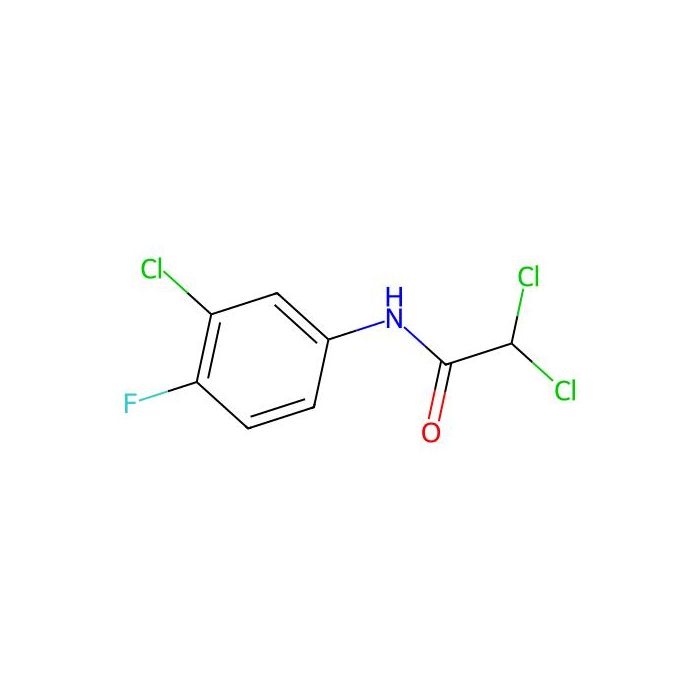
≥99% para flujos de trabajo cromatográficos y analíticos sensibles que requieren una interferencia mínima de la línea base.
🌡
Almacenamiento y envío
Store at -20°C Envío Ice chest + Ice pads. Consulte el COA específico del lote para conocer las especificaciones exactas.
📋
Documentos de calidad
SDS, COA, ficha técnica y hoja de especificaciones disponibles para descargar. COA específico del lote accesible mediante búsqueda por número de lote.
📚
Prueba documental
Citado en 0 publicaciones revisadas por pares sobre cromatografía, síntesis orgánica y reacciones de acoplamiento cruzado.
Descripción general
LDCA is a dual-hit metabolic modulator and inhibits LDH-A enzyme activity to stimulate apoptosis in the malignant population. LDCA can be used for the research of oncogenic progression.
In Vitro
LDCA (2-100 μM; 16-72 h) is used in combination with doxorubicin synergistically, enhances the growth inhibition and induces mitochondria-mediated apoptosis by recruiting the caspase cascade, restricting migration, and obviating the clonogenic outgrowth potential of melanoma cells. MCE has not independently confirmed the accuracy of these methods. They are for reference only. Cell Viability AssayCell Line: B16-F10 cells Concentration: 2-100 μM Incubation Time: 72 h Result: Arrested cell growth with a dose-dependent cytotoxic effect and had a strong synergism with LDCA. Apoptosis AnalysisCell Line: B16-F10 cells Concentration: 20 μM Incubation Time: 24 h Result: Resulted 15% death when cells exposed to LDCA and caused 40% melanoma cell death combination synergistically with doxorubicin. ImmunofluorescenceCell Line: B16-F10 cells Concentration: 20 μM Incubation Time: 16 h Result: Demonstrated that combination with doxorubicin resultantly affected cellular morphology with condensed and fragmented nuclei. Cell Migration AssayCell Line: B16-F10 cells Concentration: 20 μM Incubation Time: 16 h Result: Signicantly limited the migratory potential in the B16-F10 cells.
In Vivo
LDCA (2 mg/kg, iv., the 6th day, once) is used in combination with doxorubicin thwarts tumor growth kinetics to restrain oncogenic progression, thus accentuating survival in the model of murine melanoma . MCE has not independently confirmed the accuracy of these methods. They are for reference only. Animal Model: melanoma tumor model Dosage: 2 mg/kg Administration: 2 mg/kg, iv., the 6th day, once Result: Significantly increased mice survivability combination with doxorubicin, and relieved mice tumor necrosis phenomena.
Form:Solid
Especificaciones
Especificaciones y pureza
≥99%
Mecanismos bioquímicos y fisiológicos
LDCA is a dual-hit metabolic modulator and inhibits LDH-A enzyme activity to stimulate apoptosis in the malignant population. LDCA can be used for the research of oncogenic progression.
Condiciones de almacenamiento de almacenamiento
Store at -20°C
Enviado en
Ice chest + Ice pads
Este producto requiere envío en cadena de frío. Los servicios terrestres y otros servicios económicos no están disponibles.
Tipo de acción
INHIBITOR
Pureza
≥99%
Nombres e identificadores
Peso molecular
256.49
Documentación
📋 Hoja de datos de seguridad (SDS)
Documento completo sobre peligros, manipulación, almacenamiento y cumplimiento normativo.
Certificados (CoA, COO, BSE/TSE y tabla de análisis)
C of A & Other Certificates(BSE/TSE, COO):
Analytical Chart:
Propiedades químicas y físicas
Solubilidad
DMSO : 100 mg/mL (389.88 mM; ultrasonic and warming and heat to 60°C)
Calculadoras de soluciones
Molarity Calculator
Determine the necessary mass, volume, or concentration for preparing a solution.
Dilution Calculator
Determine the dilution needed to prepare a stock solution.
Reconstitution Calculator
Reseñas
Reseñas de cliente
Application Protocols
No tested application protocols are provided for LDCA in the Product Data.
General protocol for preparing small-molecule stocks (not item-specific):
Weighing: Allow vial to equilibrate to room temperature in a desiccator. Tare a suitable container; weigh the required mass promptly to limit moisture uptake.
Dissolution: Add an appropriate solvent (commonly DMSO) to achieve 10–50 mM. Vortex and, if needed, sonicate or gently warm (25–40°C) until fully dissolved.
Sterile filtration (if used in cell-based assays): Filter through a 0.2 µm PTFE/PES filter compatible with solvent composition.
Aliquoting: Dispense single-use aliquots into low-bind tubes or assay plates to avoid repeated freeze–thaw cycles.
Storage: Freeze aliquots at −20°C (or as specified on CoA). Protect from light if the compound is photosensitive (unknown here; apply as needed).
Thawing and dilution: Thaw rapidly at room temperature, mix, and dilute into assay buffer/medium maintaining constant vehicle concentration across samples.
Analytical QC (recommended):
Record LC–UV–MS of the working stock to confirm identity/purity and absence of particulates prior to use.
Adjust details once the structure/properties of LDCA are confirmed from the CoA/Spec Sheet.
Biological Roles
Biological roles, targets, or pathway interactions for LDCA are not provided in the Product Data and cannot be inferred without a defined structure and literature context.
Not specified for this item; refer to CoA/Spec Sheet and primary literature once the exact identity is confirmed.
General guidance (not item-specific):
If deploying a small molecule in biochemical assays, document its putative targets, binding constants (Kd, Ki), and selectivity profile from peer-reviewed sources.
Establish stability in assay buffers (pH 6–8, presence of reducing agents, metals, or serum proteins) and assess nonspecific adsorption to plastics.
Record DMSO tolerance of your biological system and maintain constant vehicle concentrations across controls and treated samples.
Compliance:
This product is for research use only. No medical, diagnostic, or therapeutic claims are made or implied.
Buffer Applications
LDCA is a small-molecule compound; it is not a buffering reagent. No item-specific buffer applications are provided.
General practical notes for using small-molecule stocks in buffered systems (not item-specific):
Vehicle control: Match DMSO or co-solvent content in control wells/tubes to the highest concentration used in treated samples.
Pre-dilution: To minimize precipitation on aqueous dilution, pre-dilute the DMSO stock 10–20× into a compatible co-solvent (e.g., MeCN, EtOH) before addition to buffer, or add slowly with vigorous mixing.
Common biological buffers: PBS (pH ~7.4), HEPES (pH 6.8–8.2), Tris (pH 7–9). Confirm compound stability; primary/secondary amines in buffers can react with activated esters and some electrophiles.
Protein binding: Serum proteins can enhance apparent solubility for lipophilic molecules; verify free fraction if necessary.
Filtration: Use 0.2 µm PES/nylon filters compatible with your solvent composition to remove particulates prior to assays.
Always verify compatibility and stability of the specific compound once structure and properties are known.
Green Alternatives
Because the structure and intended use of LDCA are not specified, green chemistry considerations focus on solvent and handling choices during dissolution, analysis, and any optional synthesis involving this material.
General greener solvent guidance (literature/principles):
Prefer water, ethanol, isopropanol, ethyl acetate, methyl tert-butyl ether (MTBE), dimethyl carbonate (DMC), propylene carbonate, 2-methyltetrahydrofuran (2-MeTHF), or cyclopentyl methyl ether (CPME) where feasible, over chlorinated hydrocarbons or benzene/toluene.
For analytical prep, MeCN and MeOH are common; consider ethanol or isopropanol when chromatographic compatibility allows.
Replace DMF/NMP/DMAc with safer polar aprotics like PC or Cyrene when reaction context permits (if LDCA were used as a building block).
Illustrative comparison (general, not item-specific):
DMSO: High solvency, low volatility; acceptable but energy-intensive to remove.
2-MeTHF/CPME: Bio-based/safer ethers for extractions and some reactions; lower peroxide risk than THF/Et2O but still monitor.
Ethanol/i-PrOH: Renewable feedstocks, low toxicity; may affect bioassays at higher %.
Practices:
Minimize DMSO % in biological assays (<1% v/v when possible).
Use microscale solubility testing to reduce solvent consumption.
Consolidate waste streams and prioritize distillable/recyclable solvents.
Pharmaceutical Uses
No pharmacopeial status, excipient role, or formulation use is specified for LDCA. This product is designated for research use only and is not manufactured under GMP for clinical applications.
General considerations (not item-specific):
Discovery-phase use: Small molecules may be used as internal controls, standards, or screening hits in preclinical research. Any translation to drug product requires comprehensive CMC, tox, and GMP manufacturing—outside the scope of this item.
Formulation screening: If evaluating solubility/permeability, use biorelevant media (FaSSIF/FeSSIF/SGF/SSGF) and characterize precipitation kinetics, but only with fully identified and qualified substances.
Regulatory: Absence of compendial monograph (USP/EP/JP) necessitates in-house specifications and validated methods for any regulated context.
Statement:
No medical or clinical claims are made. For research use only.
Physical Properties
Item-specific physical constants are not provided in the Product Data.
Not specified for this item; refer to CoA/Spec Sheet:
Appearance (solid/oil/color)
Melting point / boiling point
Density
Solubility and partition behavior (e.g., aqueous vs organic)
LogP/logD, pKa, refractive index
General guidance for small-molecule library members (literature/general):
Solubility screening: Test in DMSO (10–50 mM), MeOH, EtOH, acetonitrile, and buffered aqueous media (pH 2–9) to define handling range.
Hygroscopicity assessment: Weigh–expose–reweigh after 1–2 h at ambient RH to determine need for desiccation.
Thermal behavior: Differential scanning calorimetry (DSC) and thermogravimetric analysis (TGA) help establish melt/decomposition and residual solvent content.
Polymorphism: If crystalline, PXRD can reveal multiple solid forms affecting dissolution and stability.
Aqueous stability: Check hydrolytic stability at pH 2, 7.4, and 9 at 25–37°C by LC to guide buffer selection.
Notes:
Without the exact structure, predictive properties (e.g., cLogP, pKa) cannot be computed here. Obtain from the CoA or calculate in silico once the structure is known.
For assay use, aim for a clear, particulate-free stock; filter through 0.2 µm PTFE/nylon if compatible (general practice).
Quality and Grades
Grade/purity and appearance are not specified for LDCA in the Product Data.
Not specified for this item; refer to CoA/Spec Sheet:
Purity assay method and value (e.g., HPLC area %, GC, qNMR)
Water content (KF), residual solvents, inorganic residue/metals
General guidance on quality for small-molecule research materials (literature/practice):
Research-use only designation indicates no GMP or clinical suitability; the material is intended for R&D. Typical quality packages include analytical identity (1H NMR, LC–MS), and purity (HPLC/UPLC).
If using in bioassays: request chromatographic purity ≥95% area and verify single major peak at multiple wavelengths to minimize UV-active impurities.
For analytical reference use: consider qNMR purity and assignable residual solvent/water values.
Stabilizers: If present (not specified here), document type and level; stabilizers can interfere with certain assays and may require removal by recrystallization or preparative chromatography.
Batch traceability: Retain CoA, lot number, and any spectral files. Perform incoming QC (orthogonal ID and purity check) per your QA system.
Recommendations:
If your workflow is sensitivity-limited (e.g., HTS at low µM), confirm purity and identify any significant co-eluting impurities prior to assay to avoid false positives/negatives.
Reaction and Applications
No specific reactivity or application claims are provided for LDCA. Without structure, reaction use cases cannot be assigned to this item.
General research applications for catalog small molecules (not item-specific):
Analytical reference: Use as a QC spike or system-suitability test article once identity/purity are confirmed.
Assay development: Prepare DMSO stocks to evaluate assay robustness (e.g., tolerance to co-solvent) and to benchmark signal windows, provided the compound’s activity is known from your internal data.
Method development: Determine chromatographic retention, UV spectra, and ionization behavior (ESI+/−) to tune LC–UV–MS methods.
If LDCA is intended as a synthetic building block (verify via CoA/structure):
Map functional handles (e.g., aryl halides for cross-coupling, carboxylic acids for amide coupling, amines for alkylation/acylation) and choose orthogonal protection strategies.
Conduct small-scale test reactions to assess stability toward bases, acids, and common catalysts before scale-up.
Notes:
Do not assign biological or mechanistic activity to this item without validated structure and literature context.
For any reaction deployment, establish compatibility with chosen solvents and reagents by TLC/LC–MS screening under mild conditions first.
Reaction Conditions
No item-specific reaction conditions are available for LDCA.
General guidance when exploring reactivity of an unfamiliar small molecule (not item-specific):
Start with mild conditions: Room temperature, neutral to slightly basic media, and catalytic loadings typical for the transformation class (e.g., 1–2 mol% Pd for cross-coupling) while monitoring by LC–MS.
Solvent selection: Match polarity to solubility. For polar substrates, MeCN/DMF/DMSO; for nonpolar, toluene/EtOAc/2-MeTHF. Prefer greener options where viable.
Stability checks: Test exposure to 0.1 M acid/base and 3% H2O2 to flag hydrolytic/oxidative liabilities before committing to multi-hour reactions (performed on milligram scale with appropriate safety measures).
Workup: Use quench protocols compatible with sensitive groups (e.g., avoid strong aqueous base if saponification is undesired). Validate with a small-scale trial.
Typical timelines: Screen 0.5–4 h for catalytic reactions; extend only upon confirmed conversion.
These are general best practices and should be tailored once the exact structure and functional groups of LDCA are known.
Safety and Handling
Hazard classification details are not provided in the Product Data; therefore, treat LDCA as a laboratory chemical of unknown hazard until the SDS is reviewed.
Not specified for this item; refer to SDS/label:
GHS classification, pictograms, signal word
H/P statements
General laboratory safety guidance (not item-specific; follow your institutional SOPs):
PPE: Lab coat, safety glasses, and appropriate chemical-resistant gloves (e.g., nitrile). Use a certified chemical fume hood for weighing, dissolution, and transfers.
Avoid inhalation of dust/aerosols and skin/eye contact. Prevent environmental release.
If preparing DMSO or solvent stocks, note that many small molecules are readily skin-permeable in DMSO; avoid dermal exposure.
Incompatibilities: Until specific functional groups are known, segregate from strong oxidizers and bases/acids; avoid reactive metal hydrides and reducing/oxidizing agents unless verified safe (general precaution).
First aid (overview; defer to SDS): Rinse eyes with water for 15 minutes if contacted; wash skin with soap/water; move to fresh air if inhaled; seek medical attention if symptoms persist.
Spill response: Contain with inert absorbent, collect as hazardous waste. For solids, avoid dust generation; gently sweep or HEPA vacuum if permitted.
Waste: Dispose of according to local regulations; do not discharge to drains.
Always consult the official SDS for authoritative hazard and response information once available.
Solvent Selection
Specific solubility for LDCA is not provided. The following is a general, structure-agnostic approach suitable for most small molecules.
General solvent strategy (literature/practice):
Primary stock solvent: DMSO, targeting 10–50 mM. Warm gently (25–40°C) and vortex/sonicate to dissolve; avoid prolonged heating.
Secondary options: Acetonitrile (MeCN), methanol, ethanol, isopropanol; for very nonpolar analytes, ethyl acetate, MTBE, or toluene. For highly polar salts, water or water with 10–20% co-solvent.
Aqueous assays: Keep final DMSO ≤0.1–1% v/v when possible. Use co-solvent stacking (e.g., 5–10% MeCN) if precipitation occurs upon dilution.
pH-assisted dissolution: For basic compounds, dissolve in acidic media (e.g., 10–50 mM HCl); for acids, mild base (e.g., 10–50 mM NaOH). Back-neutralize for assays if required.
Quick reference (general):
DMSO: Broad solubility, high boiling point; can affect cells/enzymes at >1%.
MeCN: Low viscosity, miscible with water; good for HPLC compatibility.
MeOH/EtOH: Protic; may influence bioassays but useful for QC solutions.
PEG-400: For poorly soluble compounds; viscous, lower volatility.
Tips:
Perform a micro-scale solubility screen (1–2 mg across 6–8 solvents/pH conditions) and record clear/opaque outcomes.
Filter solutions through 0.2 µm PTFE/nylon if compatible to remove particulates before analytical or biological use.
Storage and Reconstitution
Item-specific conditions provided:
Storage Conditions: Store at −20°C
Shipped In: Ice chest + ice pads
Additional item-specific parameters (stabilizers, solvent content, light sensitivity) are not specified; refer to CoA/Spec Sheet.
General best practices for small-molecule solids and solutions (not item-specific):
Upon receipt: Inspect vial integrity. Allow to warm to room temperature in a desiccator before opening to prevent condensation.
Solid storage: Keep tightly closed under dry, inert atmosphere if possible (desiccant or argon/nitrogen). Protect from light until photosensitivity is known.
Aliquoting: If frequent use is anticipated, subdivide into single-use portions under dry conditions to minimize cumulative moisture/oxygen exposure and freeze–thaw cycles.
Solution stocks: Prepare concentrated stocks (e.g., 10–50 mM in DMSO) in clean, dry vials. Label with concentration, solvent, lot, and date. Store at −20°C unless the CoA indicates otherwise.
Freeze–thaw: Avoid repeated cycles; thaw quickly at room temperature, mix thoroughly, and refreeze promptly if necessary. Discard if precipitation, discoloration, or LC–MS indicates degradation.
Reconstitution guidance: Start with DMSO, then evaluate alternative solvents if needed. For aqueous use, add stock slowly into stirred buffer to prevent precipitation; maintain constant vehicle concentration across samples.
Always defer to the product’s CoA and SDS for any specific storage constraints or incompatibilities that apply uniquely to this item.
Structure and Identity
LDCA (SKU: L648429) is listed in our small-molecule/compound-library category. The specific structural identity parameters for this catalog item are not provided in the Product Data.
Item-specific data provided:
CAS: 349106-80-5
Storage: Store at −20°C
Shipping: Ice chest + ice pads
Research use: For research use only
Not specified for this item; refer to CoA/Spec Sheet:
Molecular formula
Molecular weight
SMILES
InChIKey
Stereochemistry and functional groups
General structural commentary (applies once structure is known; not item-specific):
Key identifiers typically include IUPAC name, SMILES/InChI, and stereochemical descriptors (R/S, E/Z) where applicable.
A 2D description should note core ring systems (e.g., heteroaromatic vs carbocyclic), principal functional groups (e.g., amide, sulfonamide, nitrile, halogen substituents), and substitution pattern (ortho/meta/para for aromatics, regiochemistry for heterocycles).
If chiral centers are present, document absolute configuration, enantiomeric or diastereomeric ratios, and any resolving agents used (literature/general guidance).
Recommendations:
Consult the item’s CoA/Spec Sheet for definitive identifiers (SMILES, MF, MW, InChIKey).
Verify identity upon receipt by orthogonal methods such as 1H/13C NMR, LC–MS, and HRMS where required by your QA system (general best practice).
Synthetic Utility
Specific synthetic roles for LDCA cannot be described without a known structure or functional-group profile.
General guidance for leveraging small molecules/building blocks (not item-specific):
Protecting-group strategy: If polyfunctional, select orthogonal protections (e.g., Boc vs Fmoc for amines; TBDMS/TBS for alcohols) compatible with planned steps.
Chemoselectivity mapping: Run spot tests (TLC, LC–MS) with mild base/acid and representative catalysts to identify labile motifs (e.g., benzylic oxidation, ester hydrolysis, N-oxide formation).
Purification planning: Determine chromatographic behavior (normal vs reverse phase) and crystallization propensity to streamline scale-up.
If LDCA is used only as a test article/reference standard rather than a building block, synthetic utility is not applicable. Confirm intended use from the CoA/Spec Sheet.
Target Specificity
Target specificity, if any, is not provided for LDCA and cannot be inferred without structural and biological data.
Not specified for this item; refer to CoA/Spec Sheet and relevant literature.
Statement:
No claims are made regarding interaction with biological targets, pathways, or receptors. For research use only.
Preguntas frecuentes
What is the purity of this product?
This product is supplied at ≥99% purity (chemical assay). Lot-specific values are stated on the Certificate of Analysis.
How should this product be stored?
Store at ?20 °C. Freezer storage is required to maintain the specified shelf life.
How is this product shipped?
This product ships in an insulated container with ice pads. Unpack on arrival and transfer it to the storage condition stated above.
What are the CAS number, molecular formula and molecular weight?
The CAS Number is 349106-80-5, the molecular formula is C8H5Cl3FNO, and the molecular weight is 256.49 g/mol.
What documentation is provided?
Available product documentation, including Certificates of Analysis (COA), Safety Data Sheets (SDS), and specification sheets, is shown in the product document area. Document availability and access follow the current site policy.
Utilizamos cookies para garantizar el correcto funcionamiento del sitio web y, cuando esté permitido, para mejorar su experiencia. Puede gestionar sus preferencias en cualquier momento en Configuración. Más información en nuestra Política de Cookies.
¿Quieres que te enviemos un mensaje cuando tengamos descuentos disponibles?
Recordármelo más tarde
¡Gracias! Por favor, revisa tu bandeja de entrada de correo electrónico para confirmar.
Products are supplied to verified businesses, institutions, and qualified professionals for research and development use only. Not for use in humans, animals, diagnosis, or therapy.