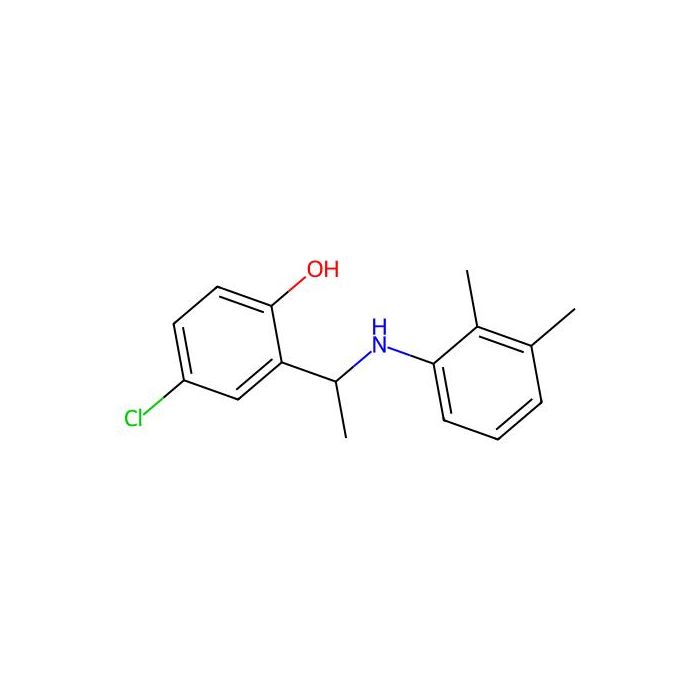
MFI8 is a small molecule inhibitor of mitochondrial
In Vitro
MFI8 (20 μM; 6 h) reduces significantly mitochondrial aspect ratio with an EC 50 of 4.8 μM, and inhibits mitochondrial function via mitofusins and subsequently promoting mitochondrial fission. MFI8 possesses functional groups that meet the criteria of the pharmacophore model to interact with mitofusins and promotes mitochondrial fission. MFI8 binds to the HR2 domain of MFN2, modulates MFN conformation and complexes, and alters mitochondrial functionality. MFI8 (0-20 μM; 6 h) concentration-responsively increases caspase-3/7 activity, induces cytochrome c release and decreases membrane potential in a mitofusin-dependent manner. MFI8 also induces DNA damage and induces cell death in combination with BV6 SMAC (second mitochondria-derived activator of caspases) mimetic. MCE has not independently confirmed the accuracy of these methods. They are for reference only.
Form:Solid
IC50& Target:Mitofusin
Especificaciones
Especificaciones y pureza
≥99%
Mecanismos bioquímicos y fisiológicos
MFI8 is a small molecule inhibitor of mitochondrial.
Condiciones de almacenamiento de almacenamiento
Protected from light,Store at -80°C
Enviado en
Dry ice packs + Cold packs
Este producto requiere envío en cadena de frío. Los servicios terrestres y otros servicios económicos no están disponibles.
Tipo de acción
INHIBITOR
Pureza
≥99%
Nombres e identificadores
Peso molecular
275.77
Datos avanzados
Certificados (CoA, COO, BSE/TSE y tabla de análisis)
C of A & Other Certificates(BSE/TSE, COO):
Analytical Chart:
Propiedades químicas y físicas
Solubilidad
DMSO : 100 mg/mL (362.62 mM; Need ultrasonic)
Calculadoras de soluciones
Molarity Calculator
Determine the necessary mass, volume, or concentration for preparing a solution.
Dilution Calculator
Determine the dilution needed to prepare a stock solution.
Reconstitution Calculator
Reseñas
Reseñas de cliente
Application Protocols
No vendor‑validated application protocols are provided for MFI8. The following is general guidance for handling small‑molecule screening compounds.
General HTS/HCS workflow (example):
Stock preparation: Make 10 mM solution in anhydrous DMSO under low light. Aliquot into amber screw‑cap vials or 384‑well source plates; seal to prevent evaporation/hygroscopic uptake.
Dispensing: Use acoustic or pin‑tool transfer to assay plates to achieve desired final concentrations (e.g., 0.1–50 µM), keeping DMSO at ≤0.5–1% v/v.
Controls: Include vehicle controls (matching DMSO %), positive/negative controls, and edge‑well controls. Run serial dilutions for potency estimation.
Readout integrity: Assess potential compound interference with detection modality (absorbance/fluorescence/luminescence) via control wells lacking biological target.
Stability checks: Re‑test purity by LC‑MS after freeze‑thaw cycling; discard aliquots showing degradation or precipitation.
Item‑specific, tested applications and recommended dilutions: Not specified for this item; refer to CoA/Spec Sheet.
Biological Roles
Biological function, pathway engagement, and target class for MFI8 are not provided in this listing.
General considerations for small‑molecule library members:
Mechanism of action: Unknown until characterized. Design screening cascades that include orthogonal assays and counterscreens to rule out non‑specific mechanisms (detergent‑sensitive aggregation, redox cycling, metal chelation, promiscuous alkylation).
Chemical liabilities: Once structure is available, screen for PAINS motifs, reactive electrophiles (e.g., Michael acceptors, aldehydes), and photolability—particularly relevant given the “protect from light” storage note.
Physicochemical profiling: Determine solubility, stability in assay media, permeability (if cell‑based), and protein binding to contextualize apparent potency.
ADME flags (exploratory, not clinical): Microsomal stability and basic permeability assays (PAMPA, Caco‑2) can inform whether observed cellular effects are transport‑limited. These are research‑stage characterizations only and not clinical claims.
Ethical and regulatory note:
For research use only. No claims are made regarding biological efficacy or therapeutic utility. Do not use in humans or animals.
Buffer Applications
This product is a small organic compound rather than a buffering reagent. No defined pKa or buffering range is available for this item.
Guidance for assay buffers (general):
Prepare compound working solutions by diluting DMSO stocks into assay buffers such as PBS, HEPES, or Tris, ensuring final DMSO ≤0.5–1% v/v unless assay‑validated otherwise.
To minimize precipitation upon dilution: add the compound solution last, mix thoroughly, and consider staged dilution (compound in DMSO → DMSO:buffer 1:3 → final buffer) or include 0.01–0.05% non‑ionic surfactant if compatible with the assay.
Maintain pH stability of the buffer independently of the compound; avoid buffers that might react with unknown functional groups (e.g., primary amines reacting with aldehydes, nucleophiles with activated esters) until structure is known.
Item‑specific buffer properties (pKa, solubility): Not specified for this item; refer to CoA/Spec Sheet.
Green Alternatives
Without item‑specific solubility/reactivity data, green chemistry guidance focuses on solvent and workflow choices common to small‑molecule screening.
Greener solvent strategies (general):
Prefer ethanol or isopropanol as co‑solvents where feasible in place of DMF/NMP; balance with solubility and assay tolerance.
Use lower DMSO percentages in final assay wells (≤0.5% v/v) to reduce solvent burden while maintaining solubility.
Explore bio‑based dipolar aprotics such as Cyrene (dihydrolevoglucosenone) for certain analytical or preparative tasks, validating compound stability/solubility first.
Comparison (general, not item‑specific):
DMSO: high solvency, established HTS compatibility; not bio‑based, but widely recyclable at scale; hygroscopic.
Ethanol: renewable, low toxicity; volatility may complicate high‑density plate formats without sealing.
DMF/NMP: strong solvency; reproductive toxicity concerns—avoid when possible or minimize exposure.
Operational green wins:
Miniaturization of assays (1536‑well) reduces solvent usage and waste.
Acoustic dispensing lowers dead volumes and plastic consumables.
Implement solvent recovery where practical; segregate halogenated vs non‑halogenated waste.
Caveat:
Any solvent substitution must be validated for the specific compound (stability, solubility, assay readout compatibility). Always prioritize data from the item’s CoA/SDS.
Pharmaceutical Uses
No pharmacopeial status, excipient role, or manufacturing use is specified for this product.
Context (general, non‑clinical):
Small‑molecule library members like MFI8 are supplied for discovery research (e.g., HTS, target identification, tool compound development). They are not approved as drug substances or excipients, and should not be used in formulation development intended for clinical or veterinary applications.
If formulation‑like studies are conducted for research (e.g., solubility enhancement screens, nanoparticle encapsulation feasibility), ensure the results are treated as exploratory and not for translational use without complete CMC and regulatory evaluation.
Item‑specific pharmaceutical/compendial data: Not specified for this item; refer to CoA/Spec Sheet.
Research Use Only: Not for human or animal administration.
Physical Properties
Item‑specific physicochemical data have not been disclosed in this listing.
Appearance: Not specified for this item; refer to CoA/Spec Sheet.
Molecular weight: Not specified for this item; refer to CoA/Spec Sheet.
Molecular formula: Not specified for this item; refer to CoA/Spec Sheet.
Melting point / Boiling point: Not specified for this item; refer to CoA/Spec Sheet.
Density: Not specified for this item; refer to CoA/Spec Sheet.
Refractive index: Not specified for this item; refer to CoA/Spec Sheet.
LogP, pKa, PSA: Not specified for this item; refer to CoA/Spec Sheet.
Solubility: Not specified for this item; refer to CoA/Spec Sheet.
General guidance (literature/practice):
Library screening compounds are commonly supplied as solids or concentrated DMSO solutions. Typical initial stock preparation is 10–50 mM in anhydrous DMSO, followed by working dilutions into assay buffers (maintaining final DMSO ≤0.5–1% v/v to minimize assay artifacts). These are general practices and not specifications for this item.
If the CoA provides pKa/logP, use these to anticipate ionization state and solubility in aqueous buffers. Neutral, lipophilic scaffolds often require co‑solvents (DMSO, DMF, EtOH) or surfactants (0.01–0.05% Tween‑20) for assay media compatibility.
If solid, assess hygroscopicity empirically: weigh quickly in a low‑humidity environment and store under inert gas if recommended by CoA.
Always defer to the CoA/SDS for item‑specific, authoritative property data.
Quality and Grades
Item‑specific grade and purity are not disclosed in this listing.
Grade/Purity: Not specified for this item; refer to CoA/Spec Sheet.
How to interpret typical quality metrics for library compounds (general guidance):
Purity (HPLC/UPLC, area %): Screening libraries often specify ≥90–95% by one or more orthogonal chromatographic methods. Verify whether purity is reported at a specific wavelength or by ELSD/UV/MS.
Identity: Commonly supported by HRMS/ESI‑MS and/or 1H NMR. Some libraries provide LC‑MS retention time and mass only; request NMR if needed for SAR or analytical method development.
Form: Solid or DMSO solution. For solutions, confirm concentration by quantitative NMR or UV if chromophore is present.
Residual solvents/water: Libraries may control residual solvents (GC) and water (KF). If your application is sensitive (e.g., biophysical assays, electrochemistry), request those data.
Stabilizers/additives: If present (antioxidants, acid scavengers, salts), these should be declared on the CoA. None are specified here.
Recommendation:
For decision‑critical use (HTS/HCS hit triage, biophysics, crystallography), request the current CoA/Spec and consider in‑house re‑purification and re‑characterization to confirm identity, purity, and concentration.
Reaction and Applications
This item is positioned as a small‑molecule library member rather than a general synthetic reagent. No specific reactivity profile or named reaction utility is provided.
Applications (general, research use):
High‑throughput screening (HTS) and hit identification: Prepare DMSO stocks at defined concentrations (e.g., 10 mM), dispense by acoustic or pin tools, and screen across biochemical or cell‑based assays with proper DMSO controls.
Hit validation and triage: Confirm activity with fresh aliquots; perform counter‑screens for assay interference (redox cycling, aggregation, fluorescence) and orthogonal readouts.
SAR exploration: If analogs are available, compare potency/efficacy trends and physicochemical properties to guide follow‑up chemistry.
Mechanistic probes: Pending structure disclosure, treat as an uncharacterized chemotype; do target deconvolution only after confirming robustness (thermal shift, CETSA, chemoproteomics where applicable).
Not typically applicable:
Because the structure and functional groups are undisclosed here, guidance for use in named organic reactions (e.g., cross‑coupling, condensations) cannot be provided for this specific item.
Good practices:
Maintain light protection per product data.
Use fresh, anhydrous solvents and pre‑screen solubility before large assay campaigns.
Track plate maps, DMSO % v/v, and edge‑well controls to mitigate evaporation and concentration drift.
Reaction Conditions
No specific chemical reactivity or transformation conditions are provided for this product. As a small‑molecule library member, it is not offered as a reagent for named synthetic transformations.
General laboratory operations relevant to screening compounds:
Stock preparation: Dissolve in anhydrous DMSO to 10–50 mM. Vortex and, if necessary, sonicate briefly at room temperature protected from light. Avoid prolonged heating.
Dilution into assay media: Add stock to buffer to achieve final DMSO ≤0.5–1% v/v, mixing thoroughly to prevent precipitation. Validate plate seal integrity to limit evaporation.
Analytical verification: Where critical, confirm concentration by qNMR or UV (if chromophore) and assess purity by LC‑MS immediately before use.
Item‑specific reaction conditions (solvent, temperature, catalysts, yields): Not applicable/Not specified for this item.
Safety and Handling
Authoritative safety classification is not provided in this listing. Handle as a laboratory chemical of unknown hazard profile and consult the SDS specific to SKU M651269 prior to use.
Item‑specific data:
GHS classification, signal word, pictograms, H‑statements: Not specified for this item; refer to SDS.
General laboratory precautions (good practice):
PPE: Lab coat, safety glasses or chemical splash goggles, appropriate chemically resistant gloves (e.g., nitrile). Use in a fume hood to avoid inhalation of vapors/aerosols and to control exposure during weighing and solution prep.
Avoid ingestion, inhalation, and skin contact. Prevent environmental release; collect waste in appropriately labeled organic waste streams.
First aid (overview; consult SDS for details): Inhalation—move to fresh air; Skin—wash with soap/water; Eyes—rinse cautiously with water for several minutes; Ingestion—rinse mouth, seek medical advice. Provide SDS to medical personnel.
Incompatibilities (general): Until the structure is known, avoid strong oxidizers/reducers, strong acids/bases, and reactive metals. Do not heat or aerosolize unless risk‑assessed.
Light sensitivity: Product data specify “Protect from light.” Minimize light exposure during handling and storage (use amber vials/foil wrap).
Waste and spill response:
Absorb small spills with inert material (vermiculite), avoid dust generation, and dispose according to institutional and local regulations.
Research Use Only: Not for human or veterinary use.
Solvent Selection
Item‑specific solubility data are not provided. The following guidance reflects common practice for small‑molecule library compounds and should be adapted once the CoA/structure is available.
Primary stock solvents (general):
DMSO (anhydrous): Default for HTS stocks (10–50 mM). Broad solubilizing power; compatible with most biochemical assays at ≤0.5–1% v/v in final wells.
DMF or NMP: Higher solvating strength for poorly soluble compounds; consider assay compatibility and cytotoxicity at low residual levels.
Ethanol (absolute) or isopropanol: Useful for less polar, aromatic scaffolds; often combined with DMSO as co‑solvent.
Aqueous buffers:
Without structure/pKa, assume limited direct aqueous solubility. If ionizable groups are later confirmed, adjust pH to favor solubilized ionic form. Use gentle heating and sonication; avoid prolonged high temperatures or light exposure.
Small comparison (general considerations):
DMSO: best overall solvency; high boiling point; hygroscopic; may affect certain enzymes/cells.
DMF: strong solvent; more toxic; handle in hood; remove carefully to avoid assay artifacts.
EtOH: greener, volatile; limited capacity for highly lipophilic material but enhances wetting.
Practical tips:
Filter sterilization (0.22 µm PTFE) for biological assays if compatible.
Record exact solvent lot, water content, and final DMSO percentage per well/assay.
If precipitation occurs upon dilution, increase DMSO carryover slightly within assay tolerance or use staged dilution with surfactant (e.g., 0.01% Tween‑20) as permitted by the assay.
Storage and Reconstitution
Follow the item‑specific storage guidance and best practices to maintain integrity.
From Product Data (item‑specific):
Storage conditions: Protect from light; Store at −80 °C.
Shipping: Dry ice packs + Cold packs.
General best practices for small‑molecule library compounds:
Upon receipt: Keep sealed and cold. Allow containers to equilibrate to room temperature before opening to prevent moisture condensation.
Reconstitution: If supplied as a solid, dissolve in anhydrous DMSO (typical 10–50 mM) under low light. If supplied in solution, verify concentration and solvent on the CoA/label before use.
Aliquoting: Dispense into small, single‑use amber vials or 96/384‑well source plates to minimize freeze–thaw cycles and headspace. Backfill with inert gas if recommended by CoA.
Freeze–thaw: Avoid repeated cycles; single‑use aliquots are preferred. If unavoidable, document number of cycles and inspect for precipitation or color change.
Light protection: Use amber containers or foil wrapping during handling and storage.
Stability: Item‑specific shelf life and retest dates are Not specified for this item; refer to CoA/Spec Sheet. Re‑evaluate purity by LC‑MS periodically, especially after room‑temperature exposure.
Labeling: Record concentration, solvent, preparation date, and responsible operator on each aliquot. Research use only.
Structure and Identity
Brief overview: MFI8 (SKU: M651269) is listed within a small‑molecule/compound library category and supplied for research use. Item‑specific structural identifiers are not disclosed in this listing.
CAS: 694488-83-0
Chemical name: Not specified for this item; refer to CoA/Spec Sheet.
Molecular formula: Not specified for this item; refer to CoA/Spec Sheet.
Molecular weight: Not specified for this item; refer to CoA/Spec Sheet.
SMILES: Not specified for this item; refer to CoA/Spec Sheet.
InChI / InChIKey: Not specified for this item; refer to CoA/Spec Sheet.
Structural features (general note):
Structural details (ring systems, heteroatoms, stereocenters, functional groups) are not provided for this specific item in the catalog entry. If your workflow requires structural alerts (PAINS, reactive moieties, redox activity), request the structure or CoA/SDS from Aladdin Scientific to perform in‑silico screening (e.g., PAINS, Brenk, Lipinski filters) and to plan solubility and stability assessments.
2D structure description (general guidance):
Without a structural diagram, describe the compound using available identifiers (CAS) in LIMS/ELN. Upon receipt of the CoA/Spec, record any chiral centers, ionizable groups (pKa), and notable functionalities (e.g., aldehydes, Michael acceptors) that may influence storage, assay interference, and reactivity.
Notes:
For any structural or identity‑critical applications (SAR, docking, analytical method development), obtain the latest CoA/Spec Sheet for definitive identifiers.
Synthetic Utility
This listing does not provide structural information or functional groups for MFI8, so no item‑specific synthetic roles can be described.
General note:
Library compounds are typically intended as screening actives or chemical probes rather than as reagents or building blocks. Unless the structure and functional handle(s) are known (e.g., halides, boronates, amines, acids), planning cross‑couplings, condensations, or derivatizations is not feasible.
If derivatization is desired after structure disclosure:
Map functional group compatibility and protection needs.
Evaluate options for tagging (e.g., alkyne/azide handles for click chemistry) or immobilization if chemoproteomic studies are planned.
Confirm stability under envisaged reaction conditions (base/acid sensitivity, redox lability, photostability—note the product’s light sensitivity).
Recommendation:
Obtain the CoA/structure before considering synthetic manipulations. For SAR expansion, source or synthesize close analogs with defined exit vectors and consistent stereochemistry.
Target Specificity
Target, binding site, and selectivity data are not provided for MFI8.
Target(s): Not specified for this item; refer to CoA/Spec Sheet or associated screening documentation if available.
Assay validation: Include counterscreens against common off‑targets and assay‑interfering modalities (fluorescence quenchers/emitters, redox cyclers, colloidal aggregators) during hit triage.
Note: No antibody/biologic information (clone, isotype, species reactivity) applies to this product class.
Preguntas frecuentes
What is the purity of this product?
This product is supplied at ≥99% purity (chemical assay). Lot-specific values are stated on the Certificate of Analysis.
How should this product be stored?
Store at ?80 °C, protected from light. The material is light-sensitive — keep it in its original opaque or amber container.
How is this product shipped?
This product ships frozen with dry ice and cold packs. Unpack on arrival and transfer it to the storage condition stated above; handle dry ice with insulated gloves in a ventilated area.
What are the CAS number, molecular formula and molecular weight?
The CAS Number is 694488-83-0, the molecular formula is C16H18ClNO, and the molecular weight is 275.77 g/mol.
What documentation is provided?
Available product documentation, including Certificates of Analysis (COA), Safety Data Sheets (SDS), and specification sheets, is shown in the product document area. Document availability and access follow the current site policy.
Utilizamos cookies para garantizar el correcto funcionamiento del sitio web y, cuando esté permitido, para mejorar su experiencia. Puede gestionar sus preferencias en cualquier momento en Configuración. Más información en nuestra Política de Cookies.
¿Quieres que te enviemos un mensaje cuando tengamos descuentos disponibles?
Recordármelo más tarde
¡Gracias! Por favor, revisa tu bandeja de entrada de correo electrónico para confirmar.
Products are supplied to verified businesses, institutions, and qualified professionals for research and development use only. Not for use in humans, animals, diagnosis, or therapy.