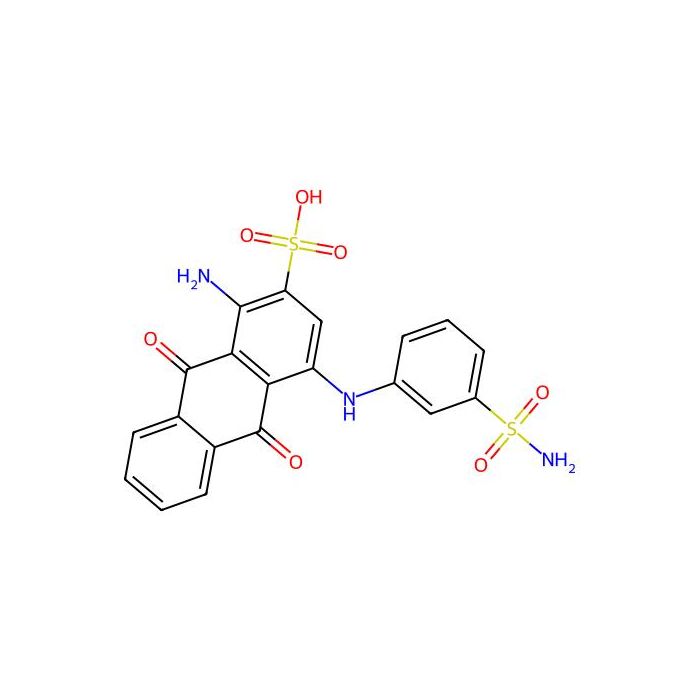
NSC117079 - 10mM in DMSO , CAS No.500363-63-3

CAS: 500363-63-3 Cat. No.: N656059 Fórmula: C20H15N3O7S2 Peso molecular: 473.48 PubChem CID: 272572
Disponible para pedir
GRADE & PURITY 10mM in DMSO
Storage
Store at -80°C
Shipped In
Dry ice packs + Cold packs
★
Size
Alemania (EU)
USA*
Price
Qty
1ml
N656059-1ml
Fabricado bajo pedido · 8–12 semanas
277,59€
Enter a quantity for the sizes you want to add.
🧪
Why this grade

10mM in DMSO for sensitive chromatographic and analytical workflows requiring minimal baseline interference.

🌡

Storage & shipping

Store at -80°C Ships Dry ice packs + Cold packs Check lot-specific COA for exact specifications.

📋

Quality documents

SDS, COA, datasheet, and spec sheet available for download. Lot-specific COA accessible via lot number lookup.

📚

Literature proof

Cited in 0 peer-reviewed publications across chromatography, organic synthesis, and cross-coupling reactions.

Descripción general

NSC117079 is a novel PHLPP inhibitor.

In Vitro

NSC-117079 at 30 μM induces neutrophil adhesion to plated fibrinogen from 9.0±2.4% to 27.0±8.0% and enhanced neutrophil adhesion caused by 50 ng/mL GM-CSF from 22.9±6.0% to 47.6±10.9%. Neutrophil adhesion is followed by neutrophil transendothelial migration. Results suggest that PHLPP inhibitor NSC-117079 is effective in preventing Akt from dephosphorylation in neutrophils, and Akt phosphatase PHLPP serves to attenuate neutrophil adhesion but not migration. MCE has not independently confirmed the accuracy of these methods. They are for reference only.

In Vivo

A single intraarticular injection of the Phlpp inhibitor NSC117079 attenuates mechanical allodynia and slows articular cartilage degradation in joints with a destabilized meniscus. Animals treated with the Phlpp inhibitor seven weeks after injury maintain normal activity levels, while those in the control group travel shorter distances and are less active three months after the joint injury. NSC117079 also increases production of cartilage extracellular matrix components (glycosaminoglycans and aggrecan) in over 90% of human articular cartilage explants from osteoarthritis patients and increased phosphorylation of Phlpp1 substrates (AKT2, ERK1/2 and PKC) in human articular chondrocytes . MCE has not independently confirmed the accuracy of these methods. They are for reference only.

IC50& Target:PHLPP

Specifications

Especificaciones y pureza
10mM in DMSO
Mecanismos bioquímicos y fisiológicos
NSC117079 is a novel PHLPP inhibitor.
Condiciones de almacenamiento de almacenamiento
Store at -80°C
Enviado en
Dry ice packs + Cold packs
Este producto requiere envío en cadena de frío. Los servicios terrestres y otros servicios económicos no están disponibles.
Nombres e identificadores
Isómeros SMILES
C1=CC=C2C(=C1)C(=O)C3=C(C2=O)C(=C(C=C3NC4=CC(=CC=C4)S(=O)(=O)N)S(=O)(=O)O)N
PubChem CID
272572
Peso molecular
473.48

Documentation

📋 Safety Data Sheet (SDS)

Comprehensive hazard, handling, storage, and regulatory compliance document.

Download SDS →

✅ Certificate of Analysis (COA)

Lot-specific quality data. Enter your lot number to retrieve the exact COA.

Look up COA →

📊 Datasheet

Quick-reference summary of product specifications and applications.

View datasheet →

🔬 Specification Sheet

Full quality attributes and acceptance criteria for this grade.

View spec sheet →

Advanced Data

Certificados (CoA, COO, BSE/TSE y tabla de análisis)
C of A & Other Certificates(BSE/TSE, COO):
Analytical Chart:
Calculadoras de soluciones
Reseñas

Reseñas de cliente

Application Protocols

No tested application protocols are provided in the Product Data for this item.

  • Item-specific

    • Assay types (e.g., WB/IHC/IF/FC), recommended dilutions, positive controls: Not specified for this item; refer to CoA/Spec Sheet.
  • General guidance for small-molecule screening (not item-specific)

    • Prepare concentrated DMSO stocks (e.g., 10–50 mM) and dispense using calibrated acoustic/automated systems.
    • Maintain consistent final DMSO content across wells/conditions (typically ≤0.5–1% v/v) and include solvent controls.
    • Use randomized plate layouts with interleaved controls to minimize positional bias; document all conditions in ELNs.
    • Verify solubility and absence of visible precipitation at working concentrations in the assay buffer.
Biological Roles
  • Item-specific biological function

    • Not specified for this item; refer to CoA/Spec Sheet and primary literature associated with PubChem CID 272572 or NCI/DTP records.
  • General context (for screening compounds; not item-specific claims)

    • NSC-numbered compounds originate from the NCI Developmental Therapeutics Program and encompass diverse chemotypes with varied physicochemical and biological properties. In modern discovery workflows, such compounds are explored as chemical probes or starting points to interrogate biochemical pathways in cell-free or cell-based assays.
    • Any inferred biological role (e.g., enzyme modulation, pathway perturbation) must be established experimentally under defined conditions, with appropriate counter-screens and orthogonal assays to exclude artifacts (e.g., aggregation, redox cycling, fluorescence interference).
    • Data quality practices include determining concentration–response curves, monitoring assay interference (e.g., PAINS filters as preliminary flags, not exclusion criteria), and confirming on-target activity via follow-up studies (e.g., target engagement assays, chemoproteomics, or genetic validation).
  • Important disclaimer

    • No medical or clinical claims are made for this product. It is supplied strictly for research use only. Any biological properties require independent verification and should not be extrapolated to therapeutic contexts.
Buffer Applications

This material is a small-molecule library compound, not a buffering agent. Specific buffer systems or pKa values are not provided.

  • Item-specific

    • Buffering capacity/pKa: Not specified for this item; refer to CoA/Spec Sheet.
  • Practical note

    • When preparing aqueous assay solutions, select buffers based on the bioassay requirements (e.g., PBS, HEPES, Tris, acetate) and the compound’s ionization properties if known. Maintain consistent ionic strength and pH across control and treatment conditions to avoid solvent/buffer artifacts.
Green Alternatives

Given the unknown structure and intended use as a screening compound, green chemistry considerations center on solvent and process choices during handling and analysis.

  • Stock and assay vehicles (general guidance)

    • Prefer DMSO over DMF/NMP where feasible due to better hazard profile and assay compatibility.
    • For analytical work, consider acetonitrile–water gradients rather than chlorinated solvents; use ethanol or isopropanol as benign co-solvents when compatible with the assay.
  • Small comparison (general; not item-specific)

    • DMSO vs DMF/NMP: DMSO typically offers lower toxicity and good biodegradability; DMF/NMP provide stronger solvation but pose greater reproductive toxicity concerns.
    • Alcohols vs chlorinated solvents: Short-chain alcohols (EtOH, i-PrOH) are generally greener than dichloromethane/chloroform for sample preparation, provided solubility allows.
  • Operational improvements

    • Minimize solvent volumes via concentrated stocks and low dead-volume dispensing.
    • Use micro-scale assays and sealed plates to limit evaporative losses.
    • Implement solvent recycling where appropriate (analytical LC eluent streams) and segregate waste to facilitate disposal.
  • Note

    • If subsequent synthetic elaboration is planned, consult solvent selection guides (e.g., CHEM21, GSK, Pfizer guides) to identify greener alternatives for each transformation class. Specific recommendations require knowledge of the compound’s functional groups and reactivity, which are not specified for this item.
Pharmaceutical Uses

No pharmacopeial status or excipient/formulation role is provided for this entry.

  • Item-specific

    • Pharmaceutical/compendial grade: Not specified for this item; refer to CoA/Spec Sheet.
    • Intended use: For research use only (per Product Data). Not for human or veterinary use, drug, or household purposes.
  • General note

    • If used in pre-formulation research, determine solubility, stability, and compatibility in relevant vehicles (e.g., PEG 400, Captisol, lipid-based systems) under GLP-like documentation. Such activities remain strictly non-clinical unless supported by appropriate regulatory filings.
Physical Properties

Given the absence of a disclosed structure for this catalog entry, item-specific physicochemical specifications are not available below.

  • Item-specific specifications

    • Appearance: Not specified for this item; refer to CoA/Spec Sheet.
    • Melting point: Not specified for this item; refer to CoA/Spec Sheet.
    • Boiling point: Not specified for this item; refer to CoA/Spec Sheet.
    • Density: Not specified for this item; refer to CoA/Spec Sheet.
    • Solubility: Not specified for this item; refer to CoA/Spec Sheet.
    • LogP/logD: Not specified for this item; refer to CoA/Spec Sheet.
    • pKa: Not specified for this item; refer to CoA/Spec Sheet.
    • Refractive index/UV cutoff: Not specified for this item; refer to CoA/Spec Sheet.
  • Practical guidance (general/literature-style)

    • Solubility screening (general): For unknown small molecules, begin with anhydrous DMSO at 10–50 mM. If insoluble, evaluate DMF, NMP, ethanol, or aqueous buffers with surfactant (e.g., 0.01–0.1% Tween 80) as appropriate for assays.
    • Aqueous handling: When transitioning from DMSO stock to aqueous systems, keep final DMSO ≤0.5–1% v/v for most biochemical assays to minimize solvent effects (general practice).
    • Hygroscopicity/polymorphism: Unknown for this item; verify by Karl Fischer or DSC/TGA if method-critical.
    • Stability: Unknown for this item. As a precaution, minimize light/oxygen exposure, use amber vials, and avoid repeated freeze–thaw by dispensing single-use aliquots.
  • Note

    • Where exact values are required (e.g., MP for ID confirmation), please consult the CoA/Spec Sheet or determine experimentally under validated methods.
Quality and Grades
  • Item-specific (from Product Data)

    • Grade/Purity: Not specified for this item; refer to CoA/Spec Sheet.
  • Interpreting unspecified grade (general guidance)

    • For screening compounds, common offerings include research-grade material typically accompanied by identity confirmation (e.g., LC–MS and/or 1H NMR). In absence of a stated assay purity, confirm by independent QC if purity is critical to your application.
    • Chromatographic suitability (HPLC/UPLC): If low UV background or specific gradient behavior is required, request chromatograms or perform in-house verification since UV cutoff/impurities are not specified for this item.
  • Documentation and traceability

    • Request the current CoA/Spec Sheet for batch-specific details (purity method, residual solvents, water content, and identity spectra). Cite CAS 500363-63-3 and NSC117079 when documenting use.
  • Stabilizers/additives

    • Not specified for this item; refer to CoA/Spec Sheet. If stabilizers are absent/unknown, prepare fresh solutions and limit exposure to air/light.
  • Practical recommendations

    • On receipt, visually inspect the container integrity, label, and shipment temperature indicators. Record lot/batch number for traceability.
    • Prior to critical assays, perform a quick check (e.g., LC–MS purity and retention time) to ensure material meets internal acceptance criteria.
Reaction and Applications

This product is positioned as a small-molecule library member (screening compound) rather than a general-purpose synthetic reagent. Consequently, its principal use is in discovery workflows rather than as a stoichiometric reactant.

  • Discovery and screening (general guidance)

    • Use cases: High-throughput screening (HTS), fragment/lead validation, phenotypic assays, chemical biology probes (hypothesis-generating), and target deconvolution workflows.
    • Stock preparation: Prepare 10–50 mM DMSO stocks under dry, inert conditions if stability is uncertain. Filter (0.2 µm PTFE) if particulate persists after dissolution.
    • Plating: Dispense to assay plates using acoustic or pin tools; standardize DMSO carryover across wells. Include solvent-only controls to quantify vehicle effects.
    • Serial dilutions: Use half-log or 3-fold series; mix thoroughly and avoid repeated freeze–thaw by using single-use aliquots.
    • Stability checks: Quickly assess by LC–MS after 24–48 h at bench/assay temperature to ensure no significant degradation in the selected vehicle.
  • Chemistry applications

    • Without a disclosed structure, specific reaction roles (e.g., nucleophile/electrophile, coupling partner) cannot be advised. If synthetic modification is intended, first establish the core scaffold and functional group compatibility via literature (e.g., PubChem CID 272572) and small-scale scouting experiments.
  • Data integrity

    • Record batch/lot, solvent, concentration, and plate maps in ELNs. Include CAS and NSC identifiers in all reports for reproducibility.
Reaction Conditions

This entry is not positioned as a reagent, and no structural information is provided; therefore, specific reaction conditions cannot be prescribed.

  • Item-specific

    • Recommended reaction partners/catalysts/temperatures: Not specified for this item; refer to CoA/Spec Sheet and literature.
  • General guidance (if chemical modification is pursued)

    • Begin with micro-scale scouting (≤10 mg) to evaluate solvent compatibility and stability under basic, acidic, and neutral conditions at ambient to 60 °C.
    • Use analytical monitoring (TLC/UPLC–MS) to detect degradation pathways before committing to larger scale.
    • Maintain inert atmosphere (N2/Ar) if the scaffold is oxygen/light sensitive; perform quick photostability checks with and without light protection.
  • Caution

    • Any reaction planning requires knowledge of the compound’s functional groups. Acquire or request structural details (e.g., from PubChem CID 272572) prior to experimentation.
Safety and Handling

Safety details specific to this item are not provided in the current data; handle as a research chemical of unknown hazard profile and consult the SDS before use.

  • Item-specific (from Product Data)

    • Storage: Store at −80 °C.
    • Shipping: Dry ice packs + Cold packs.
    • GHS classification, signal word, pictograms, H-statements: Not specified for this item; refer to SDS.
  • General safety guidance (not item-specific; follow institutional EHS)

    • PPE: Lab coat, safety goggles, and chemically resistant gloves (e.g., nitrile). Work in a certified chemical fume hood or ventilated enclosure when weighing, dissolving, or transferring powders/solutions.
    • Avoid inhalation of dust/aerosols and skin/eye contact. Use secondary containment when transporting cryo-stored vials to prevent breakage/condensation ingress.
    • Incompatibilities: Unknown for this item. As a precaution, segregate from strong oxidizers, strong acids/bases, and reducing agents until compatibility is known.
    • Cryogenic handling: When removing from −80 °C, allow the container to equilibrate in a desiccator to avoid moisture ingress. Do not open vials while still cold/condensing.
    • First aid (overview; defer to SDS): In case of skin contact, wash with soap and water; for eye contact, rinse with water for ≥15 min and seek medical attention; if inhaled, move to fresh air; if ingested, seek medical attention. Provide the SDS to responders.
  • Waste disposal

    • Dispose of unused material and solutions as organic chemical waste per local regulations. Decontaminate surfaces and tools after use.
Solvent Selection

With no disclosed structure/solubility, adopt a pragmatic solvent-screening workflow suited to small organic molecules.

  • Item-specific status

    • Solubility/miscibility: Not specified for this item; refer to CoA/Spec Sheet.
  • General solvent strategy (for screening compounds)

    • Primary stock solvent: Anhydrous DMSO is typically preferred for small molecules due to broad solvating power, low volatility, and compatibility with biological assays at ≤0.5–1% v/v final concentration.
    • Secondary options: DMF or NMP (strong polar aprotics) for stubborn solids; ethanol, isopropanol, or methanol where aqueous tolerance is required; acetone or acetonitrile for analytical injections; buffered aqueous media only if compound is sufficiently ionizable/water-soluble.
    • Stepwise approach: Test 1–2 mg in 100–200 µL of solvent at room temperature; sonicate and gently heat (≤40 °C) as needed. If insoluble, consider salt formation (for ionizable compounds) or co-solvent blends (e.g., DMSO:water, DMSO:PBS).
    • Adsorption losses: Minimize by using low-bind plasticware or silanized glass, especially at µM concentrations.
  • Choosing among alternatives (general)

    • DMSO vs DMF: DMSO is usually more assay-compatible and less noxious; DMF may solubilize exceptionally polar/flat structures but is less favored in bioassays.
    • Alcohols vs acetonitrile: Alcohols can assist dissolution of H-bonding compounds; acetonitrile is excellent for LC compatibility but can precipitate hydrophobic analytes upon aqueous dilution.
  • Note

    • Validate solvent choice against the assay/analytical method requirements and material stability (perform a short-term stability check in the intended vehicle).
Storage and Reconstitution
  • Item-specific (from Product Data)

    • Storage conditions: Store at −80 °C.
    • Shipping conditions: Dry ice packs + Cold packs.
  • Reconstitution (general guidance; not item-specific specifications)

    • Inspect vial integrity upon receipt; allow to warm in a desiccator to room temperature before opening to prevent moisture condensation.
    • Prepare stock solutions in dry, oxygen-minimized conditions. DMSO (anhydrous) is commonly used for small molecules; target 10–50 mM initial stocks unless solubility dictates otherwise.
    • Filter sterile (0.2 µm PTFE) if solutions are used in biological assays and particulates are observed.
    • Aliquot into single-use portions (e.g., 10–50 µL) to avoid repeated freeze–thaw cycles, which can accelerate degradation.
  • Stability and handling

    • Long-term stability at −80 °C is generally favorable for many small molecules; however, specific stability for this item is not established. Monitor by LC–MS/UPLC at defined intervals if material will be stored for extended periods.
    • Protect from light if chromophores are suspected; use amber vials and minimize exposure during weighing and solution prep.
  • Aqueous dilution

    • When diluting stocks into buffers/media, add stock slowly with mixing to reduce precipitation. Keep final DMSO ≤0.5–1% v/v for typical biochemical/cellular assays unless otherwise validated.
  • Documentation

    • Record lot number, stock concentration, solvent, aliquot map, and storage history for full traceability. Refer to the CoA/Spec Sheet for any batch-specific instructions.
Structure and Identity

Brief overview: NSC117079 is listed as a small-molecule library member (screening compound). The detailed chemical structure is not provided in the current product data.

  • Item-specific (from Product Data)

    • SKU: N656059
    • Product Name: NSC117079
    • CAS: 500363-63-3
    • PubChem CID: 272572
    • InChIKey: Not specified for this item; refer to CoA/Spec Sheet.
    • SMILES: Not specified for this item; refer to CoA/Spec Sheet.
    • Molecular Formula: Not specified for this item; refer to CoA/Spec Sheet.
    • Molecular Weight: Not specified for this item; refer to CoA/Spec Sheet.
  • Structural features

    • Functional groups, ring systems, stereochemistry: Not specified for this item; refer to CoA/Spec Sheet.
  • 2D description in words

    • Without the structure (SMILES/InChI) disclosed, a precise textual description of the scaffold, heteroatoms, or substitution pattern cannot be provided here. Please consult the CoA/Spec Sheet or PubChem (CID 272572) for definitive structural depiction and identifiers.
  • Cross-references

    • Common registry sources for this NSC entry include the NCI/DTP database and PubChem (CID above). When reporting results, cite both CAS and NSC identifiers to ensure unambiguous traceability.
Synthetic Utility

Without a disclosed structure or functional group information, it is not possible to recommend specific synthetic transformations for this compound.

  • Item-specific

    • Functional groups/reactivity: Not specified for this item; refer to CoA/Spec Sheet or structural databases (e.g., PubChem CID 272572).
  • General guidance

    • If derivatization or SAR exploration is intended, first confirm the core scaffold via spectral data (1H/13C NMR, HRMS, IR). Map liabilities (acid/base sensitivity, redox activity, photolability) with small-scale stress tests.
    • Develop enabling chemistry around identified handles (e.g., halogens for cross-coupling, amines for acylation/alkylation, alcohols for esterification/etherification) only after the structure is verified. Choose protecting groups and conditions compatible with the scaffold’s stability window.
  • Note

    • Consult the CoA and primary literature for any reported syntheses or analog series related to this NSC identifier before planning synthetic campaigns.
Target Specificity

Target, epitope, or biochemical specificity data are not provided for this product.

  • Item-specific

    • Target/class, mechanism, Kd/IC50: Not specified for this item; refer to CoA/Spec Sheet and primary literature.
  • General note

    • If used as a chemical probe candidate, confirm on-target activity with orthogonal assays and counter-screens to rule out assay interference and off-target effects.

¿Quieres que te enviemos un mensaje cuando tengamos descuentos disponibles?

Recordármelo más tarde

¡Gracias! Por favor, revisa tu bandeja de entrada de correo electrónico para confirmar.

¡Vaya! Las notificaciones están desactivadas.