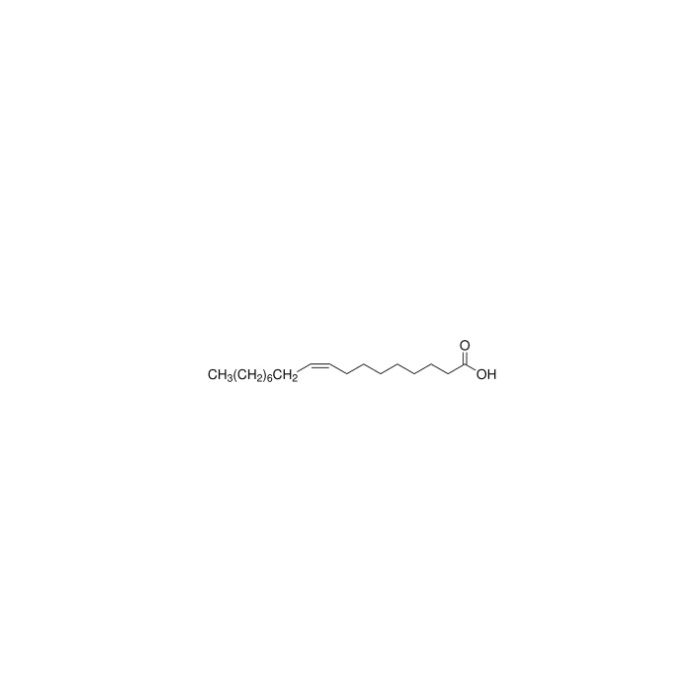
Oleic acid - Ph.Eur., ≥65% , CAS No.112-80-1

CAS: 112-80-1 Cat. No.: O1456057 Fórmula: CH3(CH2)7CH=CH(CH2)7COOH Peso molecular: 282.46 Beilstein Registry Number: 1726542 Número EC: 204-007-1
Disponible para pedir
CALIDAD & PUREZA Ph.Eur. ? European Pharmacopoeia grade — conforms to Ph.Eur. monographs across EU member states. Use for pharmaceutical work needing European compendial compliance. ≥65%
Storage
Protected from light,Store at -20°C,Argon charged
Shipped In
Ice chest + Ice pads
★
Talla
Alemania (EU)
USA*
Precio
Cantidad
25ml
O1456057-25ml
Fabricado bajo pedido · 8–12 semanas
51,98€
100ml
O1456057-100ml
Fabricado bajo pedido · 8–12 semanas
206,44€
Enter a quantity for the sizes you want to add.
🧪
Por qué esta calidad

Ph.Eur., ≥65% Ph.Eur. para flujos de trabajo cromatográficos y analíticos sensibles que requieren una interferencia mínima de la línea base.

🌡

Almacenamiento y envío

Protected from light,Store at -20°C,Argon charged Envío Ice chest + Ice pads. Consulte el COA específico del lote para conocer las especificaciones exactas.

📋

Documentos de calidad

SDS, COA, ficha técnica y hoja de especificaciones disponibles para descargar. COA específico del lote accesible mediante búsqueda por número de lote.

📚

Prueba documental

Citado en 2359 publicaciones revisadas por pares sobre cromatografía, síntesis orgánica y reacciones de acoplamiento cruzado.

Descripción general

Oleic acid (OA) is a type of fatty acid. OA, as a surfactant, is widely used for the stabilization of magnetic nanoparticles synthesized by the traditional co-precipitation method. Monodisperse magnetite nanoparticles coated with oleic acid (OA) (diameters = 7 and 19 nm) were prepared.
Application
Oleic acid can be used to prepare 10-hydroxyoctadecanoic acid and methyl 10-hydroxyoctadecanoic acid.

Especificaciones

Especificaciones y pureza
Ph.Eur., ≥65%
Condiciones de almacenamiento de almacenamiento
Protected from light,Store at -20°C,Argon charged
Enviado en
Ice chest + Ice pads
Este producto requiere envío en cadena de frío. Los servicios terrestres y otros servicios económicos no están disponibles.
Grado
Ph.Eur.
Pureza
≥65%
Nombres e identificadores
Sonrisas canónicas
CCCCCCCCC=CCCCCCCCC(=O)O
IUPAC Name
(Z)-octadec-9-enoic acid
InChIKey
ZQPPMHVWECSIRJ-KTKRTIGZSA-N
INCHI
1S/C18H34O2/c1-2-3-4-5-6-7-8-9-10-11-12-13-14-15-16-17-18(19)20/h9-10H,2-8,11-17H2,1H3,(H,19,20)/b10-9-
Isómeros SMILES
CCCCCCCC/C=C\CCCCCCCC(=O)O
WGK Alemania
1
RTECS
RG2275000
Peso molecular
282.46
Beilstein
1726542
Reaxy-Rn
1726541
Reaxys-RN_link_address
https://www.reaxys.com/reaxys/secured/hopinto.do?context=S&query=IDE.XRN=1726541&ln=

Documentación

📋 Hoja de datos de seguridad (SDS)

Documento completo sobre peligros, manipulación, almacenamiento y cumplimiento normativo.

<<<<<<< HEAD Descargar SDS → ======= Descargar SDS → >>>>>>> release248-p3

✅ Certificado de análisis (COA)

Datos de calidad específicos del lote. Introduzca su número de lote para obtener el COA exacto.

Buscar COA →

📊 Ficha técnica

Resumen de referencia rápida de las especificaciones y aplicaciones del producto.

Ver ficha técnica →

🔬 Hoja de especificaciones

Atributos de calidad completos y criterios de aceptación para esta calidad.

Ver hoja de especificaciones →

Datos avanzados

Taxonomic Classification

Taxonomy Tree

KingdomOrganic compounds
SuperclassLipids and lipid-like molecules
ClaseFatty Acyls
SubclassFatty acids and conjugates
Intermediate Tree Nodes Not available
Direct ParentLong-chain fatty acids
Alternative Parents Unsaturated fatty acids  Straight chain fatty acids  Monocarboxylic acids and derivatives  Carboxylic acids  Organic oxides  Hydrocarbon derivatives  Carbonyl compounds  
Molecular FrameworkAliphatic acyclic compounds
Substituents Long-chain fatty acid - Unsaturated fatty acid - Straight chain fatty acid - Monocarboxylic acid or derivatives - Carboxylic acid - Carboxylic acid derivative - Organic oxygen compound - Organic oxide - Hydrocarbon derivative - Organooxygen compound - Carbonyl group - Aliphatic acyclic compound
DescripciónThis compound belongs to the class of organic compounds known as long-chain fatty acids. These are fatty acids with an aliphatic tail that contains between 13 and 21 carbon atoms.
External Descriptors Unsaturated fatty acids
Estructura 3D
Modelo de Estructura Química Interactiva


Certificados (CoA, COO, BSE/TSE y tabla de análisis)
C of A & Other Certificates(BSE/TSE, COO):
Analytical Chart:

Find and download the COA for your product by matching the lot number on the packaging.

4 results found

Lot NumberCertificate TypeFechaArticulo
I2609121I2609121Certificate of AnalysisSep 16, 2026 O1456057
I2609122I2609122Certificate of AnalysisSep 16, 2026 O1456057
J2509072J2509072Certificate of AnalysisOct 14, 2025 O1456057
J2509089J2509089Certificate of AnalysisOct 14, 2025 O1456057
Propiedades químicas y físicas
SensibilidadLight sensitive;Air sensitive;Heat sensitive
Índice de refracción1.459
Punto de inflamación (°F)>235.4 °F
Punto de inflamación (°C)113 °C
Punto de ebullición (°C)194-195°C/1.2mmHg
Punto de fusión (°C)13-14°C
Preguntas frecuentes y artículos
HepG2 Cell Steatosis Model Establishment Protocol
From Spectral Mismatch to Device Gain: Key Mechanisms, Experimental Guidance, and Aladdin Material Selection for Lanthanide Upconversion and Downconversion (Quantum Cutting) in Solar Cells
Fatty Acids from Basics to Lab Practice: Structural Classification, Research Uses, and Selection Tips (with an Aladdin Representative Product Quick-Reference Table)
Lipase (Triacylglycerol Hydrolase): Interfacial Catalysis, Selectivity Classes, and Assay/Application Systems
Review of the Principles, Common Methods, and Key Application Considerations for the Determination of Glycerol and Triglyceride Contents
Review of the Structural Characteristics, Biological Functions, and Application Advances of Lycopene
DAST-Mediated Amidation at Room Temperature: Method Features, Practical Value, and Scope of Applicability
Functional Systems of Plasma Proteins in Metal Transport, Inflammatory Responses, and Tissue Injury
Central–Peripheral Signaling Networks Regulated by Neuropeptides and the Integration of Energy Metabolism
The Preparation Logic of Nearly Monodisperse Colloidal Quantum Dots: Precursor Conversion, Nucleation–Growth Control, Surface Chemistry, and Process Control in Scale-Up
Selection Strategies for Animal-Derived Serum, Functionalized Serum, and Non-Animal-Derived Culture Supplementation Systems in Cell Culture
Why Do Cancer Cells Synthesize Their Own Fatty Acids? From the De Novo Fatty Acid Synthesis Pathway to Experimental Assessment
Alkyd Resins: From Oil/Fatty-Acid-Modified Polyesters to Autoxidative Drying — Understanding Their Structure and Film-Formation Mechanism
Potassium Fatty Acid Soaps: Structure and Formulation Applications—Production Processes, Alkalinity, Foam Control, and Low-Foam Cleaning
Guide to Traditional Natural Varnish Resins: Transparency, Gloss, Film Formation, Aging, and Application Selection of Dammar, Mastic, and Copal
What Is the Difference Between Triethanolamine and Diethanolamine: Understanding Their Formulation Functions, Application Differences, and Selection Logic from a Molecular-Structure Perspective
Why Can 6501 (Cocamide DEA) Stabilize Foam and Build Viscosity? Structural Mechanism, 1:1/1:1.5 Differences, and Application Selection
Differences, Functions, and Selection Guidelines for Sodium Hydroxide Flakes, Granules, Liquid Caustic Soda, and Caustic Soda in Household and Personal Care Product Manufacturing: The Functional and Application Logic of Sodium Hydroxide
From Structure to Selection: Mechanisms and Application Assessment of Low-Foam Oil and Wax Removal with Fatty Acid Methyl Ester Ethoxylates (FMEE)
Mechanism of Action and Selection Logic of Defoamers for Daily Chemical Products: Foam Stability, Foam-Breaking Mechanisms, and Representative Raw Material Analysis
Understanding Anionic Surfactants in Household and Personal-Care Formulations from a Structural Perspective: Structural and Performance Differences among Representative Raw Materials such as LAS, AES, K12, AOS, MES, and FMES
Understanding Ceramides from the Perspective of the Stratum Corneum Lipid Barrier: Moisturizing and Barrier-Repair Mechanisms, Ingredient Selection, and Formulation Research Considerations
Establishment and Evaluation Methods of Diabetic Animal Models
β-Hydroxybutyrate Detection Methods and Metabolic Significance: Comparative Applications of Enzymatic Assays, Blood Ketone Meters, and LC-MS
Antioxidant Mechanisms of Ferulic Acid in Skincare, Vitamin C/E Synergy, and Stable Delivery Applications
Protective and Potential Reparative Mechanisms of Prinsepia utilis Seed Oil on the Skin Barrier: Fatty Acid Composition, Epidermal Lipid Metabolism, and Research Evidence
Mechanism of Action of Porous Silica in Oil-Control Loose Powder: Pore Structure, Capillary Imbibition, and Surface Modification
Structure, Stratum Corneum Distribution, and Stratum Corneum Conditioning Mechanism of Capryloyl Salicylic Acid: Barrier Effects and Safety Evaluation
Potential Mechanisms of Tea Polyphenols in Oily, Acne-Prone Skin: Effects of EGCG on Sebum Production, Lipid Peroxidation, and Inflammatory Responses
The Sebum-Regulating Potential of Zinc PCA and Its Relationship with Stratum Corneum Hydration
Moisturizing Mechanisms of Tremella fuciformis Polysaccharides: From Polysaccharide Structure and Hydration Rheology to Dynamic Film Formation on the Skin Surface
The Logic of Biomimetic Peptide Action in Skin: Sequence and Conformation, Skin Delivery, Stability, and Target Matching
How Does Collagen Tripeptide Act on the Skin: Stratum Corneum Delivery, Matrix Protection, and Regulation of Collagen Homeostasis
How Coenzyme Q10 Acts on the Skin: Mitochondrial Electron Transfer, Antioxidant Protection of Membrane Lipids, and Lipid-Carrier Delivery
Are Lipids Fats? Understanding the Multiple Functions of Lipids from Cellular Metabolism to mRNA Delivery
Structure, Emollient and Moisturizing Effects, and Source Identification of Squalane: From Complete Hydrogenation of Squalene to Stable Isotope Analysis
Oleic Acid (OA): FAQs for Research & Lab Use
Citations of This Product
Calculadoras de soluciones
Reseñas

Reseñas de cliente

Preguntas frecuentes

What is the purity of this product?
This product is supplied at ≥65% purity (chemical assay). Lot-specific values are stated on the Certificate of Analysis.
What does Ph.Eur. mean?
Ph.Eur. indicates that the material complies with the published monographs of the relevant pharmacopoeia (Ph.Eur.). Specifications include identity, assay, impurity limits, residual solvents and other tests defined in the monograph. Ph.Eur.-compliant material is suitable for pharmacopoeia-compliant pharmaceutical use, including pharmaceutical manufacturing, QC and regulatory submission.
How should this product be stored?
Store at ?20 °C, protected from light, under argon. It is supplied under an argon blanket; reseal under inert gas after each use.
How is this product shipped?
This product ships in an insulated container with ice pads. Unpack on arrival and transfer it to the storage condition stated above.
What are the CAS number, molecular formula and molecular weight?
The CAS Number is 112-80-1, the molecular formula is C18H34O2, and the molecular weight is 282.46 g/mol. InChIKey ZQPPMHVWECSIRJ-KTKRTIGZSA-N.
What documentation is provided?
Available product documentation, including Certificates of Analysis (COA), Safety Data Sheets (SDS), and specification sheets, is shown in the product document area. Document availability and access follow the current site policy.

¿Quieres que te enviemos un mensaje cuando tengamos descuentos disponibles?

Recordármelo más tarde

¡Gracias! Por favor, revisa tu bandeja de entrada de correo electrónico para confirmar.

¡Vaya! Las notificaciones están desactivadas.