CALIDAD & PUREZAMoligand™?Moligand™ — Aladdin's line of ligands and bioactive small molecules. Use for receptor, pathway, and binding studies needing defined small-molecule tools.10 mM in DMSO
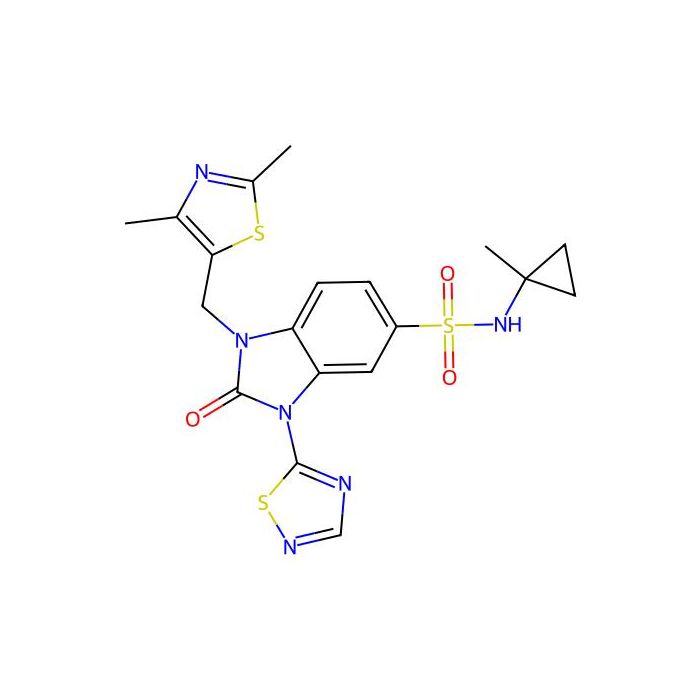
PDD00017238 is a potent inhibitor of Poly(ADP-ribose) Glycohydrolase (PARG) , with EC 50 values of 40 nM and 55 nM in biochemical assay and cell POM, respectively.
Especificaciones
Especificaciones y pureza
Moligand™, 10 mM in DMSO
Condiciones de almacenamiento de almacenamiento
Store at -80°C
Enviado en
Dry ice packs + Cold packs
Este producto requiere envío en cadena de frío. Los servicios terrestres y otros servicios económicos no están disponibles.
Grado
Moligand™
Nombres e identificadores
PubChem CID
121415983
Peso molecular
476.59
Datos avanzados
Certificados (CoA, COO, BSE/TSE y tabla de análisis)
C of A & Other Certificates(BSE/TSE, COO):
Analytical Chart:
Calculadoras de soluciones
Molarity Calculator
Determine the necessary mass, volume, or concentration for preparing a solution.
Dilution Calculator
Determine the dilution needed to prepare a stock solution.
Reconstitution Calculator
Reseñas
Reseñas de cliente
Application Protocols
No validated application protocols (e.g., assay types, recommended concentrations, or plate formats) are provided in the Product Data for this SKU.
General workflow suggestions (not item‑specific):
Stock preparation: Prepare a concentrated DMSO stock (e.g., 10 mM), vortex to clarity, and record solvent and concentration.
Plating: Use acoustic or pin‑tool dispensing for low‑volume dosing when available; verify DMSO equivalence across controls and treatments.
Assay: Establish a concentration–response range bracketing anticipated activity; include vehicle controls and an orthogonal readout to exclude artifacts.
Data integrity: Track lot numbers, freeze–thaw cycles, and plate maps. Store raw instrument files and analysis scripts for reproducibility.
Refer to your lab’s SOPs and the SDS/CoA for any handling specifics.
Biological Roles
Item‑specific biological function, targets, or pathways are not provided in the Product Data for this compound. No assertions can be made about mechanism, targets, or phenotypic effects without supporting data.
General notes for library compounds (not item‑specific):
Compounds in discovery libraries may be used to probe biochemical pathways, validate assay performance, or seed structure–activity relationship (SAR) efforts when activity is observed.
Any observed biological activity should be confirmed with orthogonal assays and counter‑screens to rule out artifacts (colloidal aggregation, redox cycling, fluorescence interference, metal chelation, etc.).
Follow best practices for reporting: include exact batch/lot, solvent composition, final DMSO percentage, and plate handling to ensure reproducibility.
Research Use Only notice:
As stated in the Product Data, this material is for research use only. It is not intended for human or veterinary use, clinical diagnostics, or as a food, cosmetic, or household chemical. No clinical or therapeutic claims are made or implied.
Buffer Applications
This SKU is a small‑molecule screening compound, not a buffering agent. No buffer capacity or pKa information is provided in the Product Data.
Practical note (general, not item‑specific):
When dosing into buffers for assays, pre‑dissolve in a compatible co‑solvent (commonly DMSO) and dilute into the target buffer with vigorous mixing to avoid precipitation. Maintain consistent final co‑solvent fractions across controls and test wells.
For buffer preparation or selection (HEPES, PBS, Tris, etc.), refer instead to dedicated buffering reagents and their specific pKa/pH ranges.
Green Alternatives
This product is a small‑molecule library compound rather than a process solvent or reagent used in bulk. Consequently, conventional “green replacement” analysis (e.g., swapping THF for 2‑MeTHF) is not typically applicable.
General considerations for greener practice with screening compounds (not item‑specific):
Use minimal DMSO volumes and prepare concentrated stocks to reduce solvent consumption.
Prefer ethanol or water‑miscible greener co‑solvents where chemically and biologically compatible, recognizing that solubility may limit these choices.
Optimize assay volumes and plate formats (e.g., 384‑ or 1536‑well) to reduce per‑data‑point material and solvent use.
Consolidate freeze–thaw cycles by aliquoting to minimize waste due to stability losses.
If you intend to use this compound in synthesis or scale‑up, evaluate greener solvent selection using tools such as solvent guides (e.g., CHEM21, GSK) once the structure and solubility are confirmed from the CoA. Without item‑specific structure and property data, more targeted recommendations are not possible.
Pharmaceutical Uses
No pharmacopeial status, excipient role, or formulation use is provided for this item in the Product Data. As a member of a research compound library, it is supplied strictly for laboratory research use only.
General guidance (not item‑specific):
If used as a reference material in preclinical research, document source, lot, and purity from the CoA. Do not use in human or veterinary applications.
If formulation studies are performed in vitro, report exact solvent/co‑solvent ratios and any surfactants used to maintain solubility. Be mindful of DMSO limits for biological systems.
No clinical, therapeutic, or diagnostic claims are made or implied for this SKU.
Physical Properties
Item‑specific physical data from Product Data:
Molecular weight: Not specified for this item; refer to CoA/Spec Sheet.
Molecular formula: Not specified for this item; refer to CoA/Spec Sheet.
Appearance: Not specified for this item; refer to CoA/Spec Sheet.
Melting/boiling point, density, refractive index, pKa/logP, UV‑Vis cutoff: Not specified for this item; refer to CoA/Spec Sheet.
General guidance for library compounds (literature/general; not item‑specific):
Aggregation/solubility: Many screening compounds are formulated as DMSO stocks (commonly 1–50 mM) due to broad solubility. Final assay DMSO content is typically kept ≤1–2% v/v to minimize biological interference.
Aqueous solubility: Highly structure‑dependent; salts (e.g., HCl, TFA) may enhance water solubility if provided. Verify counterion on CoA if relevant.
Stability: Aromatic/amide‑rich scaffolds are often air‑stable solids. Compounds bearing hydrolytically sensitive moieties (e.g., acyl chlorides, anhydrides) would be atypical for screening libraries; nonetheless, confirm on SDS/CoA before extended handling.
Hygroscopicity/photosensitivity: Not defined for this item. Protect from moisture and light as a precaution until specifications are confirmed.
Practical tips:
Prepare a small trial dissolution panel (DMSO → DMF → ethanol → buffered aqueous with co‑solvent) to establish working concentrations without wasting material.
Record exact solvent, concentration, and any visible precipitation upon dilution into assay buffers for reproducibility.
Quality and Grades
Item‑specific facts:
Grade/Collection: Moligand (as listed in Product Data)
Exact purity, stabilizers, counterions, residual solvent limits, metal content, and analytical release tests: Not specified for this item; refer to CoA/Spec Sheet.
About Moligand (general description; not item‑specific):
Moligand denotes inclusion in Aladdin’s ligand‑oriented small‑molecule collection intended for discovery and screening workflows. Such collections typically emphasize structural diversity, drug‑like physicochemical space, and reliable handling in plate‑based formats.
What the grade generally implies (without assigning specific values):
Identity confirmation: Libraries are commonly verified by orthogonal techniques (e.g., LC‑MS, NMR). The exact methods and acceptance criteria for this SKU are not specified; consult the CoA.
Format: Compounds may be supplied as neat solids or predissolved concentrates. The specific format for this item is not specified in the Product Data.
Trace impurities/stabilizers: None are disclosed for this item. If stabilizers or salt forms are present, they will be listed on the CoA/specification sheet.
Best practices for QC on receipt (practical guidance):
Record batch/lot and verify identity against the CoA. If critical, run an incoming LC‑MS purity check under your method to confirm suitability for assays.
If the compound will be used for SAR or as a reference, consider acquiring a secondary analytical confirmation (1H NMR) to document internal fit‑for‑purpose.
Reaction and Applications
This item is cataloged within a small‑molecule/compound library intended for discovery workflows. No specific synthetic or reaction application is provided in the Product Data for this SKU. The following notes address typical uses of screening compounds (general guidance; not item‑specific):
Discovery and screening uses:
Biochemical/biophysical assays: Evaluate ligandability or inhibitory/activation effects in enzyme assays, binding displacement (e.g., fluorescence polarization, SPR), or thermal‑shift assays.
Cellular assays: Probe pathway modulation or phenotypic outcomes; confirm assay tolerance to DMSO and compound concentration.
Hit triage: Use orthogonal assay formats to deconvolute artifacts (detergent sensitivity, redox cycling, PAINS alerts where applicable).
Practical tips:
Plate handling: Use low‑bind plates and tips; equilibrate frozen DMSO stocks to room temperature in desiccated conditions before opening to prevent moisture uptake and freeze–thaw stress.
Controls: Include vehicle (DMSO) and positive/negative controls relevant to the assay readout. Run concentration–response curves to assess potency and efficacy.
Aggregation/artifact checks: Add a small amount of non‑ionic detergent (e.g., 0.01% Tween‑20) in biochemical assays when appropriate; monitor for steep Hill slopes and counter‑screen in unrelated assays.
Note: If synthetic applications are intended (e.g., use as a building block), consult the CoA/SDS for functional groups, reactivity, and any protective groups before planning transformations.
Reaction Conditions
No reaction conditions or transformation guidance can be provided for this SKU without item‑specific structural information. The Product Data does not list functional groups, catalysts, or reactivity.
General note (not item‑specific):
If using this compound as a substrate or building block, select conditions based on confirmed functional groups from the CoA/SDS and small‑scale scouting experiments. Consider stability to base/acid, redox conditions, and temperature. Begin with microscale trials and analytical monitoring (LC‑MS, TLC, 1H NMR).
Safety and Handling
Item‑specific hazard information from Product Data:
Signal word: Not specified for this item; refer to SDS.
H‑statements: Not specified for this item; refer to SDS.
GHS classification/pictograms: Not specified for this item; refer to SDS.
General laboratory safety (not item‑specific; always defer to SDS):
PPE: Wear lab coat, safety glasses, and appropriate chemically resistant gloves. Handle powders/solid particulates in a fume hood to avoid inhalation.
Avoid ingestion/inhalation/skin contact. Wash thoroughly after handling. Do not pipette by mouth.
Storage compatibility: Unknown for this specific item; segregate from strong oxidizers, acids/bases, and reactive reducing agents as a precaution until the SDS confirms compatibility.
Spill response: For small spills, absorb with inert material, collect in suitable waste; ventilate area. For solids, avoid dust generation; gently sweep and transfer to waste.
Fire safety: Most organic solids are combustible; use CO2, dry chemical, or foam extinguishers. Thermal decomposition may generate irritating fumes—firefighters should wear SCBA.
First aid overview: In case of skin/eye contact, rinse with water for at least 15 minutes; remove contaminated clothing. If inhaled, move to fresh air; if not breathing, give artificial respiration and seek medical attention. If swallowed, rinse mouth; seek medical attention—do not induce vomiting unless directed by medical personnel.
Special risks and notes:
Unknown sensitization or toxicity profile; minimize exposure and create small, single‑use aliquots to limit repeated handling.
Always consult the SDS and CoA for definitive hazard, incompatibility, and exposure limit information before use.
Solvent Selection
Item‑specific solubility and solvent preferences are not provided in the Product Data. The following guidance is general for small‑molecule library compounds (not item‑specific):
Primary stock solvent: DMSO is the first‑line choice due to broad solvating power for heteroaromatic and moderately lipophilic scaffolds, compatibility with microtiter plating, and stability at low temperatures.
Secondary options: DMF or NMP (higher boiling, strong polar aprotic), ethanol or isopropanol (volatile, assay‑friendly at low %), and mixtures with water or buffer if the compound is sufficiently polar or supplied as a salt.
Aqueous work: To make aqueous working solutions, dilute concentrated DMSO stocks into buffer while vortexing to avoid local supersaturation; keep final DMSO ≤1–2% v/v when possible.
Mini comparison (general, not item‑specific):
DMSO: broad solubility; low volatility; widely used in screening. Trade‑off: can affect certain assays at higher %.
DMF: strong solvent; miscible with water; higher toxicity and less assay‑friendly than DMSO.
Ethanol: greener, volatile; limited solubility for highly lipophilic chemotypes; evaporative losses possible in plates.
Aqueous buffers: ideal for highly polar/salt forms; precipitation risk for hydrophobic cores.
Practical tips:
Start with a small test solubility panel (1–10 mg scale). Aim for a 10 mM DMSO stock as a default screening concentration, adjusting as needed.
Filter through 0.2 µm PTFE or PVDF only if necessary; avoid adsorption losses with very lipophilic compounds.
Document precipitation/clarity after dilution into assay media.
Storage and Reconstitution
Item‑specific storage and shipping (from Product Data):
Storage Conditions: Store at -80°C
Shipped In: Dry ice packs + Cold packs
Additional item‑specific details (appearance, solvent system, concentration): Not specified for this item; refer to CoA/Spec Sheet.
General reconstitution and handling guidance for small‑molecule library compounds (not item‑specific):
Thawing: Warm sealed vials to room temperature in a desiccator to prevent moisture condensation. Centrifuge briefly to collect material at the bottom of the vial before opening.
Solubilization: Start with anhydrous DMSO to prepare a concentrated stock (commonly 10 mM); adjust upward or downward based on observed solubility. Mix thoroughly (vortex/sonicate) until clear.
Aliquoting: Dispense into single‑use aliquots in low‑bind tubes or plates to minimize freeze–thaw cycles. Label with compound ID, lot, solvent, and concentration.
Storage of solutions: Store DMSO stocks tightly sealed, protected from light, preferably at -80°C as specified. Avoid repeated freeze–thaw; thaw only once if feasible.
Stability: Specific stability data are not provided; assess by periodic LC‑MS or HPLC as needed and replace stocks that show degradation or precipitation.
Disposal: Follow institutional chemical waste procedures and the SDS for disposal of organic solutions and any contaminated consumables.
Structure and Identity
Brief overview: This SKU is supplied as part of Aladdin’s Moligand small‑molecule/compound library. Detailed structural identifiers are not provided in the Product Data for this specific item.
Molecular formula: Not specified for this item; refer to CoA/Spec Sheet.
Molecular weight: Not specified for this item; refer to CoA/Spec Sheet.
SMILES: Not specified for this item; refer to CoA/Spec Sheet.
InChIKey: Not specified for this item; refer to CoA/Spec Sheet.
Structural features (general note):
The precise functional groups, ring systems, and stereochemistry for PDD00017238 are not provided in the Product Data. Consult the Certificate of Analysis (CoA) or specification sheet for definitive structure and any stereochemical annotations.
2D structure description (general guidance, not item‑specific):
Library compounds typically comprise defined organic scaffolds (e.g., heteroaromatics, fused bicycles, or sp3‑rich fragments) bearing heteroatoms (N, O, S) and may include halogens or polar handles to modulate physicochemical properties. For experimental planning, assume standard small‑molecule handling until exact structure is confirmed from the CoA/SDS.
Synthetic Utility
Item‑specific functional groups and reactivity are not provided in the Product Data; therefore, synthetic applications cannot be described without the compound’s structure.
General considerations (not item‑specific):
If the structure contains common synthetic handles (e.g., aryl halides, boronates, carboxylic acids, amines), the compound could serve as a building block for cross‑coupling, amidation, or N‑alkylation. Confirm presence of such groups on the CoA/SDS before planning.
For SAR exploration, researchers often derivatize hits or purchase close analogs rather than modify the original library vial to preserve a characterized reference sample.
Recommendation:
Obtain and review the CoA/SDS for this specific lot to identify any functional groups and protective groups, then plan transformations accordingly if synthetic use is intended.
Target Specificity
No target, epitope, or biological specificity data are provided for this small‑molecule library compound in the Product Data. Consequently, no claims regarding selectivity or target engagement can be made.
For projects requiring annotated targets, consider screening results, orthogonal assays, chemical proteomics, or computational docking, and confirm with follow‑up SAR and biophysical validation.
¿Necesita ayuda para elegir la calidad?
Nuestra guía de selección de calidades cubre la pureza, el estado del estabilizador y la idoneidad de la aplicación para todas las variantes de nuestro catálogo.
Utilizamos cookies para garantizar el correcto funcionamiento del sitio web y, cuando esté permitido, para mejorar su experiencia. Puede gestionar sus preferencias en cualquier momento en Configuración. Más información en nuestra Política de Cookies.
¿Quieres que te enviemos un mensaje cuando tengamos descuentos disponibles?
Recordármelo más tarde
¡Gracias! Por favor, revisa tu bandeja de entrada de correo electrónico para confirmar.
Products are supplied to verified businesses, institutions, and qualified professionals for research and development use only. Not for use in humans, animals, diagnosis, or therapy.