CALIDAD & PUREZAMoligand™?Moligand™ — Aladdin's line of ligands and bioactive small molecules. Use for receptor, pathway, and binding studies needing defined small-molecule tools.≥98%(HPLC)
Selective homotypic P2X3 and heterotypic P2X2/3 receptor antagonist (pIC50 7.0 and 5.9, respectively), inactive at P2X1, P2X2, P2X4, P2X5 and P2X7 receptors (IC50 > 10 μM). Attenuates nociceptive sensitivity in an animal model of pain
Condiciones de almacenamiento de almacenamiento
Store at -20°C
Enviado en
Ice chest + Ice pads
Este producto requiere envío en cadena de frío. Los servicios terrestres y otros servicios económicos no están disponibles.
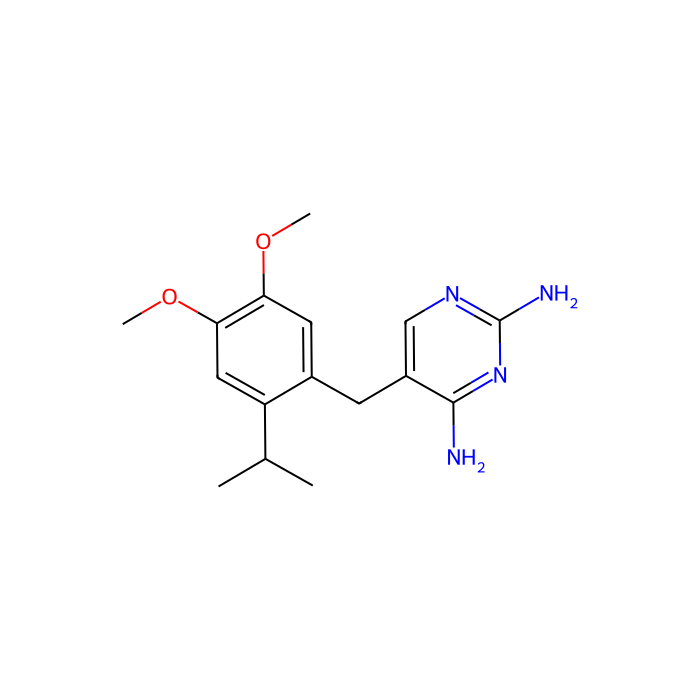
This compound belongs to the class of organic compounds known as dimethoxybenzenes. These are organic aromatic compounds containing a monocyclic benzene moiety carrying exactly two methoxy groups.
External Descriptors
Not available
1. Djoumbou Feunang Y, Eisner R, Knox C, Chepelev L, Hastings J, Owen G, Fahy E, Steinbeck C, Subramanian S, Bolton E, Greiner R, and Wishart DS. ClassyFire: Automated Chemical Classification With A Comprehensive, Computable Taxonomy. Journal of Cheminformatics, 2016, 8:61.
Solvent:DMSO, Max Conc. mg/mL: 30.24, Max Conc. mM: 100
Peso molecular
302.37
XLogP3
2.000
Hydrogen Bond Donor Count
2
Hydrogen Bond Acceptor Count
6
Rotatable Bond Count
5
Exact Mass
302.174 Da
Monoisotopic Mass
302.174 Da
Topological Polar Surface Area
96.300 Ų
Heavy Atom Count
22
Formal Charge
0
Complexity
342.000
Isotope Atom Count
0
Defined Atom Stereocenter Count
0
Undefined Atom Stereocenter Count
0
Defined Bond Stereocenter Count
0
Undefined Bond Stereocenter Count
0
The total count of all stereochemical bonds
0
Covalently-Bonded Unit Count
1
Seguridad y peligros (GHS)
Precauciones
P264:Wash hands [and …] thoroughly after handling.
Calculadoras de soluciones
Molarity Calculator
Determine the necessary mass, volume, or concentration for preparing a solution.
Dilution Calculator
Determine the dilution needed to prepare a stock solution.
Reconstitution Calculator
Reseñas
Reseñas de cliente
Application Protocols
No tested application protocols are provided for this item.
General guidance for using small-molecule screening ligands in assays (not item-specific):
Stock preparation: Dissolve in anhydrous DMSO to 10–50 mM; confirm complete dissolution; aliquot to avoid repeated freeze–thaw.
Plate handling: Equilibrate plates to ambient temperature before sealing/unsealing to prevent condensation; use matched DMSO controls.
Serial dilution: Use low-bind plates/tips to reduce adsorption; verify concentration by UV or quantitative NMR if the extinction coefficient is known (not provided here).
Assay interference controls: Include detergent-free aggregation controls, redox interference controls (if applicable), and orthogonal readouts.
For validated, target-specific protocols (e.g., enzyme IC50 determination, thermal shift conditions), request the CoA/Spec Sheet or contact Technical Support if available for this item.
Biological Roles
Item-specific biological function, targets, or pathways for RO-3 are not provided in the Product Data.
Target(s): Not specified for this item; refer to literature/SDS or request technical documentation if available.
Mode of action: Not specified for this item.
General context for Moligand™ screening ligands (not item-specific, no clinical claims):
Small molecules in screening libraries are typically designed or selected to interrogate protein function (enzymes, receptors, transporters) or to serve as chemical probes in cell-free/biophysical systems.
Physicochemical profiles often aim to be within “drug-likeness” spaces to aid permeability and solubility; however, the specific cLogP, HBD/HBA counts, and pKa of this item are not disclosed here.
When evaluating biological roles experimentally, incorporate orthogonal assays to rule out aggregation, redox cycling, or assay interference (e.g., optical artifacts, PAINS liabilities). Counter-screens and control substrates help distinguish true target engagement from nonspecific effects.
Important: For research use only. No medical, diagnostic, or therapeutic use is intended or implied.
Buffer Applications
RO-3 is a small-molecule screening ligand; it is not a buffering agent. Therefore, classical buffer formulation guidance (pKa, capacity, ionic strength) does not apply.
Practical notes for assay buffers (general, not item-specific):
Vehicle control: Maintain matched DMSO percentage across all wells/tubes (e.g., 0.1–1% v/v) to avoid vehicle artifacts.
Surfactant caution: Unless validated, avoid nonionic surfactants (e.g., Tween-20) that can modulate compound aggregation or protein stability in unpredictable ways.
Protein binding: If high nonspecific binding is suspected, include an inert protein (e.g., BSA at low µM) and verify by recovery assays. Confirm that such additives do not interfere with the readout.
For precise buffer recipes or compatibility with your target assay, perform a small design-of-experiments (DoE) screen (pH, salt, co-solvent) while monitoring compound recovery by LC–MS.
Green Alternatives
RO-3 is a discrete small-molecule screening ligand rather than a bulk solvent or commodity reagent; “green alternatives” in this context primarily concern greener handling and solvent choices for dissolution, storage, and analytical work.
Greener practice considerations (general):
Prefer aqueous-compatible stocks: Use the minimal DMSO concentration that maintains solubility; validate whether partial replacement with bio-based solvents (e.g., Cyrene, 2-MeTHF for synthetic steps) is feasible in any upstream or downstream chemistry.
Waste minimization: Dispense with acoustic/low-volume liquid handling where available to reduce DMSO waste and plate dead volumes.
Analytical methods: Use shorter UPLC methods with aqueous-rich gradients to reduce acetonitrile consumption; consider MeOH/water mobile phases when MS sensitivity permits.
DMSO (benchmark): Excellent solvency; good assay tolerance; persistence in waste streams.
Cyrene (dihydrolevoglucosenone): Bio-based; strong dipolar aprotic solvency; limited biocompatibility—use mainly for synthesis, not screening buffers.
2-MeTHF/CPME: Greener ethers for synthetic transformations; not typical as assay vehicles but useful in preparative steps if analogs are synthesized.
Bottom line: For screening use, the principal green lever is reducing DMSO volume, optimizing plate formats, and consolidating analytical runs. No greener “alternative compound” exists because RO-3 is a specific chemical entity.
Pharmaceutical Uses
No pharmacopeial status, excipient role, or manufacturing/formulation use is provided for this item.
Regulatory/compendial listing: Not specified for this item; refer to CoA/Spec Sheet.
Intended context: Research use only (as provided). Not for human or veterinary use, not for diagnostic or therapeutic applications.
General note: While screening ligands can inform medicinal chemistry projects, RO-3 as supplied here is not designated for GMP production or clinical development activities. If a GMP-compliant grade, impurity profile, or stability program is needed for later-stage work, please contact Technical Support to discuss custom manufacturing and documentation requirements.
Physical Properties
Item-specific physicochemical specifications are not provided in the Product Data for RO-3.
Appearance: Not specified for this item; refer to CoA/Spec Sheet.
Molecular weight: Not specified for this item; refer to CoA/Spec Sheet.
Molecular formula: Not specified for this item; refer to CoA/Spec Sheet.
Melting/Boiling point: Not specified for this item; refer to CoA/Spec Sheet.
Density: Not specified for this item; refer to CoA/Spec Sheet.
Refractive index: Not applicable/unknown for a likely solid; not specified for this item; refer to CoA/Spec Sheet.
Solubility: Not specified for this item; refer to CoA/Spec Sheet. Practically, Moligand™ screening ligands are commonly dissolved in anhydrous DMSO for stock solutions (literature practice), then diluted into assay buffers with careful control of final DMSO fraction (typically ≤0.1–1% v/v, literature guidance).
pKa/logP: Not specified for this item; refer to CoA/Spec Sheet.
UV-Vis characteristics: Not specified for this item; refer to CoA/Spec Sheet.
General guidance (literature/practice, not item-specific):
For unknown solids in discovery screening, prepare a 10–50 mM DMSO stock; verify complete dissolution by visual inspection and, if needed, brief sonication. Filter 0.2 µm for biophysical assays when particulate background matters.
If aqueous work is required, co-solvent systems (DMSO→buffer, or DMSO:PEG400:H2O) can improve solubility; confirm stability by LC–MS before extended storage.
Quality and Grades
Grade: Moligand™ (as provided). This denotes inclusion in Aladdin’s small-molecule/ligand library intended for research screening and medicinal chemistry workflows.
What Moligand™ typically implies (general description; not item-specific specs):
Intended use: Hit-finding, SAR exploration, and target-agnostic biochemical or cell-free profiling (research use only).
Documentation: Lot-specific CoA/Spec Sheet should be consulted for actual purity method, chromatographic trace, and identity confirmation.
Purity and analytics: Not specified for this item; refer to CoA/Spec Sheet for assay (e.g., HPLC/UPLC area%), identity (e.g., HRMS/1H NMR), and residual solvent levels.
Stabilizers/inhibitors: Not specified for this item; refer to CoA/Spec Sheet.
Water/peroxide/metal limits, UV cutoff: Not specified for this item; refer to CoA/Spec Sheet.
Practical quality notes for screening ligands (general):
Verify identity and purity in-house for critical studies (orthogonal LC–MS method, 1H NMR) especially before SAR decisions.
Assess DMSO stability (freeze–thaw, 4–8 weeks) via LC–MS to capture hydrolysis/oxidation if functional groups are unknown.
For plate-based dispensing, confirm absence of particulates and dye-like chromophores that could confound optical assays; run counter-screens when relevant.
Reaction and Applications
This product is supplied as a screening ligand (Moligand™) rather than as a preparative reagent or solvent. Consequently, classical synthetic “reaction applications” (e.g., as a catalyst, base, or coupling partner) are not typically applicable.
Research applications (general for Moligand™ items; not item-specific claims):
Chemical biology and discovery screening: Use in biochemical binding/enzymatic assays, biophysical methods (e.g., thermal shift, SPR, MST) to identify hit behavior. No target specificity is provided for this item.
Analytical characterization: Acts as a reference for LC–MS method development and retention time indexing within internal libraries.
SAR enablement: If analogs are available, comparative profiling can guide structure–activity relationships; verify identity/purity prior to SAR interpretations.
Notes:
Because the functional groups of RO-3 are not disclosed here, do not assume reactivity or stability under synthetic conditions. If derivative synthesis is planned, obtain full structure and conduct small-scale compatibility tests.
For plate-based assays, ensure compound integrity in DMSO over the study duration; re-validate by LC–MS after multiple freeze–thaw events.
If you require a reagent-grade variant (e.g., with detailed impurity profile for synthesis), contact Technical Support for availability or a custom synthesis quote.
Reaction Conditions
Classical reaction condition guidance (solvent, temperature, catalysts, yields) is not applicable here because RO-3 is offered as a screening ligand rather than as a reagent or substrate with disclosed functionality.
General lab handling conditions (applicable to stock solution preparation; not item-specific specs):
Solvent: Anhydrous DMSO for primary stocks is common. Verify solubility at 10–50 mM.
Temperature: Prepare and handle at ambient temperature; avoid prolonged warming that could accelerate degradation for sensitive chemotypes. Store at –20°C as specified.
Light/Oxygen: If the compound proves photosensitive or air-sensitive upon testing (unknown from Product Data), protect from light and minimize air exposure (amber vials, inert headspace).
Filtration: 0.2 µm PTFE filtration can reduce particulates prior to optical/biophysical assays.
If you intend to use RO-3 as a reactant in synthesis, obtain the structure and consult literature precedents for that scaffold to define appropriate conditions.
Safety and Handling
Hazard classification for this specific item is not provided in the Product Data. Always consult the SDS for authoritative, lot-specific information.
GHS classification: Not specified for this item; refer to SDS.
Signal word / H-statements / Pictograms: Not specified for this item; refer to SDS.
General laboratory precautions for small-molecule screening ligands (good practice; not item-specific):
PPE: Use lab coat, safety glasses, and appropriate chemically resistant gloves (e.g., nitrile). Avoid inhalation of dusts/aerosols; handle powders in a fume hood.
Handling: Minimize exposure; prevent cross-contamination between screening plates. Use dedicated solvent-resistant tips, and maintain DMSO hygiene to limit water uptake.
Incompatibilities: Unknown for this item. As a precaution, keep away from strong oxidizers/reductants and strong acids/bases until specific compatibility is known.
First aid (overview): In case of skin contact, wash with soap and water. For eye contact, rinse cautiously with water for several minutes; remove contact lenses if present and easy. If inhaled, move to fresh air. If swallowed, rinse mouth. Seek medical attention if symptoms persist. Follow SDS instructions.
Environmental: Prevent release to the environment unless permitted. Collect spills with inert absorbent; dispose in accordance with institutional and local regulations.
Special risks: None specifically known for this item from Product Data. Treat as potentially bioactive; avoid exposure and accidental ingestion.
Solvent Selection
Because specific solubility data are not provided for RO-3, solvent guidance is based on standard practices for small-molecule screening ligands.
Primary solvent for stocks (literature practice): Anhydrous DMSO, due to broad solvating power and assay compatibility at low percentages.
Aqueous dilution: Titrate DMSO stock into buffer while vortexing to avoid precipitation. Keep final DMSO ≤0.1–1% v/v as required by the assay.
Co-solvent systems (when needed): DMSO:water with co-solvents such as PEG400, ethanol, or minimal acetonitrile can improve solubility; validate assay tolerance.
pH effects: Unknown for this item. If ionizable functionality is suspected, evaluate solubility at bracketing pH (e.g., pH 5, 7.4, 9) using low-percentage DMSO cosolvent.
Comparison of common vehicles (general):
DMSO: Highest solvency; widely used in screening; hygroscopic (control water uptake).
DMF/Acetonitrile: Useful for method development and LC; may be less tolerated biologically; verify compatibility.
Ethanol: Bioassay-friendly at low % but limited solvency for many heteroaromatic compounds.
Tips:
Perform a quick kinetic solubility check at intended assay conditions. If turbidity appears post-dilution, consider surfactant-free approaches first (reduce concentration, adjust pH) before adding solubilizers.
Storage and Reconstitution
Storage conditions (as provided): Store at –20°C.
Shipping: Ice chest + ice pads (as provided).
Reconstitution solvent: Not specified for this item; refer to CoA/Spec Sheet. Common practice for screening ligands is dissolution in anhydrous DMSO.
Best practices (general; not item-specific specifications):
Aliquoting: Prepare small, single-use DMSO aliquots (e.g., 10–50 µL) in inert, low-bind vials or 96/384-well source plates to minimize freeze–thaw cycles.
Freeze–thaw: Limit cycles; keep on ice during handling. Thaw at room temperature, vortex to homogenize, and promptly return unused aliquots to –20°C.
Light and moisture: If sensitivity is suspected, store in amber containers with desiccant. DMSO stocks are hygroscopic; minimize exposure to ambient humidity.
Aqueous working solutions: Prepare fresh immediately before use; discard after session unless stability is demonstrated by LC–MS.
Item-specific details such as solid-state stability, hydrate/solvate form, and long-term DMSO stability are not specified for this item; refer to the CoA/Spec Sheet or request additional documentation for your lot.
Structure and Identity
Brief overview: RO-3 (SKU R288608) is supplied as a Moligand™ small-molecule screening ligand entry in Aladdin’s small-molecule and compound library category. The detailed chemical structure is not disclosed in this item’s Product Data.
CAS: 1026582-88-6 (as provided)
PubChem CID: 11289644 (as provided)
InChIKey: 290369 (as provided; note: a full 27-character InChIKey is not specified for this item)
SMILES: Not specified for this item; refer to CoA/Spec Sheet.
Molecular formula: Not specified for this item; refer to CoA/Spec Sheet.
Molecular weight: Not specified for this item; refer to CoA/Spec Sheet.
Synonyms/Identifiers: Product name RO-3; internal catalog designation under Moligand™.
Structural features: Not specified in the Product Data. Without a disclosed SMILES or depiction, ring systems, functional groups, and any stereochemical elements cannot be described.
2D structural description (general note): In the absence of a provided structure, no descriptive 2D features (e.g., aromatic core, heteroatom patterning, substituent topology) can be reliably stated. If structural information is required for computational docking, spectral assignment, or impurity profiling, please request the item-specific CoA/Spec Sheet or contact Technical Support with your lot number.
Synthetic Utility
Because the chemical structure and functional groups of RO-3 are not disclosed in the Product Data, detailed synthetic reactivity or transformation pathways cannot be described.
General considerations (for users planning analog synthesis or derivative preparation):
Obtain the full structural information (SMILES/InChI, spectral data) and assess functional group compatibility before planning modifications.
Establish a robust analytical suite (UPLC–UV–MS, 1H/13C NMR, HRMS) for route scouting and impurity profiling; include stability-indicating conditions (acid/base, oxidative, photolytic, thermal).
If heteroaromatic scaffolds are involved (common in screening ligands, literature-general), cross-coupling (Suzuki–Miyaura, Buchwald–Hartwig) and late-stage functionalization may be applicable—only after confirming the presence of the relevant handles (e.g., aryl halides, boronates, amines). This is general guidance, not specific to RO-3.
Protecting-group strategy, redox sensitivity, and salt formation should be evaluated experimentally once the structure is known.
If you require custom analogs or route development, Aladdin can support via custom synthesis services—with confidentiality and target specifications defined by your program.
Target Specificity
No target, pathway, or binding specificity information is provided in the Product Data for RO-3.
Antigen/target name: Not specified for this item.
Mechanism/epitope: Not specified for this item.
Species reactivity/selectivity profile: Not specified for this item.
This product is part of a small-molecule screening library and does not include validated biological target data in this listing. For any available target annotations or literature references associated with this CAS or CID, please contact Technical Support and provide your lot number to enable an appropriate data check.
¿Necesita ayuda para elegir la calidad?
Nuestra guía de selección de calidades cubre la pureza, el estado del estabilizador y la idoneidad de la aplicación para todas las variantes de nuestro catálogo.
Utilizamos cookies para garantizar el correcto funcionamiento del sitio web y, cuando esté permitido, para mejorar su experiencia. Puede gestionar sus preferencias en cualquier momento en Configuración. Más información en nuestra Política de Cookies.
¿Quieres que te enviemos un mensaje cuando tengamos descuentos disponibles?
Recordármelo más tarde
¡Gracias! Por favor, revisa tu bandeja de entrada de correo electrónico para confirmar.
Products are supplied to verified businesses, institutions, and qualified professionals for research and development use only. Not for use in humans, animals, diagnosis, or therapy.

 C2620093