GRADE & PURITYMoligand™?Moligand™ — Aladdin's line of ligands and bioactive small molecules. Use for receptor, pathway, and binding studies needing defined small-molecule tools.10 mM in DMSO
Certificados (CoA, COO, BSE/TSE y tabla de análisis)
C of A & Other Certificates(BSE/TSE, COO):
Analytical Chart:
Calculadoras de soluciones
Molarity Calculator
Determine the necessary mass, volume, or concentration for preparing a solution.
Dilution Calculator
Determine the dilution needed to prepare a stock solution.
Reconstitution Calculator
Reseñas
Reseñas de cliente
Application Protocols
Not specified for this item; refer to CoA/Spec Sheet.
No validated application protocols, recommended dilutions, or assay conditions are provided in the Product Data for RY785.
General recommendation:
Follow your institution’s standard assay development workflow (stock preparation, serial dilution, vehicle controls) and confirm compatibility with the product’s storage constraints (light protection, -80°C).
Biological Roles
Item-specific biological activity and targets are not provided in the Product Data.
Literature/general context (for orientation only; verify for this item):
The code name “RY785” appears in the literature as a small-molecule modulator/inhibitor of Kv2.x voltage-gated potassium channels, used to probe neuronal and endocrine cell electrophysiology. Such tools help delineate roles of Kv2 channels in membrane repolarization, excitability, and secretion coupling.
Typical experimental roles (general):
As a reference compound in patch-clamp studies to quantify channel block and gating modulation.
In membrane potential or ion flux assays to benchmark assay performance and establish dynamic range.
In structure–activity relationship (SAR) campaigns for Kv2 pharmacology.
Caveats:
Quantitative potency, selectivity against other Kv families (Kv1, Kv3, etc.), and state-dependence parameters are not specified for this catalog item and should be confirmed from the CoA or primary literature.
Off-target profiles can be context- and species-dependent; incorporate counter-screens where selectivity is important.
This product is designated “For research use only.” No clinical or diagnostic claims are made or implied.
Buffer Applications
Not typically applicable.
RY785 is a research small molecule, not a buffering agent. It does not define buffer capacity or pH ranges in laboratory practice.
Practical note for assay buffers (general):
When dosing into physiological buffers (e.g., HEPES, PBS), introduce RY785 from a DMSO stock to a low final DMSO percentage compatible with your assay. Mix thoroughly and use amberware to respect the light sensitivity indicated in the storage conditions.
Green Alternatives
Context:
For bioactive screening compounds like RY785, the “green” dimension most often concerns the choice of solvent systems and handling practices rather than replacing the active molecule itself.
Greener solvent considerations (general):
Prefer water-based buffers with minimal co-solvent whenever solubility allows.
Use DMSO efficiently (aliquoting to reduce waste; reuse amber vials when compatible) and avoid halogenated solvents.
For cleaning and sample prep, consider ethanol or isopropanol instead of acetonitrile where analytically acceptable.
Comparison (general guidance):
DMSO vs DMF: DMSO has a better EHS profile and is broadly accepted in bioassays; DMF is more regulated for worker exposure.
Ethanol vs methanol: Ethanol is less toxic; choose ethanol if solubility permits and assay background is acceptable.
Operational greener practices:
Minimize single-use plastics in plate prep; adopt multichannel reservoirs and recyclable glass where feasible.
Implement microscale assay formats to reduce solvent consumption.
Store at -80°C in aliquots to reduce material loss (and repeated shipments), aligning with the specified storage conditions.
Note: No alternative chemical substitute for RY785 is proposed here; suitability depends on the biological target and study design.
Pharmaceutical Uses
Not applicable for this catalog item.
RY785 (Moligand™ grade) is supplied for research use only. There is no information provided on pharmacopeial compliance, excipient status, or suitability for manufacturing.
General context (non-clinical):
Bioactive small molecules of this type are commonly used in discovery research as reference tool compounds or probes. Any formulation development, ADME, or preclinical studies would require additional, fit-for-purpose quality attributes not specified here.
For any regulated use, consult your QA/QC and request enhanced documentation beyond the standard CoA.
Physical Properties
Item-specific data (from Product Data):
Appearance: Not specified for this item; refer to CoA/Spec Sheet.
Molecular Weight: Not specified for this item; refer to CoA/Spec Sheet.
Common physicochemical parameters (item-specific values not provided here):
Melting point, boiling point, density, solubility, logP, pKa, refractive index: Not specified for this item; refer to CoA/Spec Sheet.
Literature/general expectations for screening small molecules (non-specific):
Many ion-channel tool compounds are supplied as off-white to yellow solids with good solubility in DMSO and limited aqueous solubility. Actual solubility and stability for RY785 must be confirmed experimentally or from the CoA.
Practical guidance:
If no solubility data are supplied, begin with a small-scale solubility screen (DMSO, DMF, ethanol, and aqueous buffers with co-solvent) under subdued light given the specified light sensitivity.
Record and control water content of DMSO solutions when long-term storage is required (Karl Fischer check), as hydrolysis or hydration can impact potency for some chemotypes.
Quality and Grades
Item-specific quality information:
Grade/Purity: Moligand™ (as stated in Product Data).
What Moligand™ typically implies (general description):
A screening-grade small molecule intended for discovery research (e.g., target validation, hit confirmation, or mechanistic studies).
Emphasis on identity confirmation and suitability for biochemical/cellular assays rather than ultra-trace impurity control required for GMP or clinical use.
Key quality considerations for this item:
Identity and Purity: Exact assay (e.g., HPLC area %, NMR identity) is not specified here. Refer to the CoA/Spec Sheet for the lot-specific purity method and acceptance criteria.
Stabilization: No stabilizers are listed in the Product Data. If present in the supplied lot (e.g., antioxidant, acid), it will be annotated on the CoA; verify compatibility with your assay readout.
UV/fluorescence background: For screening plates and spectroscopic assays, check the CoA for UV cutoff/absorbance; none is provided here.
Fit-for-purpose guidance:
Suitable for research applications, including target engagement studies and electrophysiology, where bioactivity is paramount.
Not certified for clinical, diagnostic, or GMP manufacturing use.
Documentation:
Request the CoA and, if available, an SDS and analytical package (1H NMR, LC–MS, HPLC chromatogram) for your QA review and ELN attachment.
Reaction and Applications
Applicability to synthetic chemistry:
RY785 is supplied as a research small molecule; it is not typically employed as a synthetic reagent or building block. No item-specific reactivity data are provided.
Research application context (literature/general):
Compounds labeled RY785 have been reported as modulators/inhibitors of voltage-gated potassium channels (Kv2 family) in electrophysiological studies. Such agents are commonly used to dissect ion-channel function, characterize gating kinetics, and benchmark pharmacological selectivity.
Typical experimental uses (verify for this item):
Patch-clamp electrophysiology (manual or automated platforms) to assess channel block; dosing via extracellular perfusion or pre-incubation.
Target engagement assays (e.g., fluorescence-based membrane potential assays) for throughput screening or SAR.
Mechanistic studies on state dependence, on/off rates, and recovery kinetics.
Practical notes:
Prepare concentrated DMSO stocks, protect from light, and aliquot to avoid freeze–thaw, consistent with the storage guidance.
Confirm compound integrity (LC–MS/HPLC) before critical experiments, particularly after long-term storage at -80°C.
Important: Specific potency, selectivity, and kinetics for this catalog item are not provided; consult CoA/Spec Sheet or primary literature for quantitative parameters.
Reaction Conditions
Not applicable.
No chemical reaction conditions are associated with this product in the Product Data. It is not supplied as a reagent or catalyst.
General research handling (non-reaction):
Prepare stock solutions under low light, typically in DMSO, and store aliquots at -80°C per the storage guidance. Verify solubility and stability before use in biological assays.
Safety and Handling
Item-specific safety data:
GHS Classification, Signal Word, H-Statements, Pictograms: Not specified for this item; refer to SDS.
Storage Conditions (from Product Data): Store at -80°C, protected from light.
General laboratory precautions (not a substitute for the SDS):
Wear appropriate PPE: lab coat, safety glasses, and nitrile gloves. Handle powders/lyophilized solids in a fume hood to minimize inhalation exposure.
Avoid skin/eye contact and ingestion. Prevent aerosol/dust generation.
Given light sensitivity, minimize ambient light exposure during weighing and solution prep (use amber vials/foil wrap).
For unknown hazard classes, treat as potentially harmful and avoid inhalation; use containment.
First-aid overview (general):
Eye/skin contact: Immediately flush with water for ≥15 min; remove contaminated clothing; seek medical attention.
Ingestion/inhalation: Move to fresh air; rinse mouth; obtain medical advice. Provide SDS to responders.
Incompatibilities and stability (general):
Avoid strong oxidizers and extremes of pH unless stability is documented.
Limit repeated freeze–thaw of stock solutions; aliquot upon first reconstitution to maintain chemical integrity.
Always consult the product-specific SDS for authoritative hazard, exposure limits, and response measures.
Solvent Selection
Item-specific solubility is not provided. The following guidance is general for small-molecule screening compounds and should be verified experimentally for RY785.
Primary stock solvents:
DMSO (recommended first choice): High solvency power, miscible with water; compatible with biochemical and cell-based assays at low final percentages (typically ≤0.1–0.5%). Protect from light as specified for this item.
DMF: Alternative to DMSO for poorly soluble chemotypes; confirm assay tolerance.
Ethanol or methanol: Useful for intermediate polarity compounds; evaluate cytotoxicity in cellular assays.
Aqueous vehicles:
Prepare aqueous working solutions by diluting DMSO stocks into buffer with vigorous mixing to prevent precipitation. Use amberware to mitigate light exposure.
Decision points when choosing a solvent:
Target assay tolerance to co-solvent (DMSO vs alcohols).
Chemical stability of the compound (hydrolysis/oxidation risks in water vs organic).
Reconstitution guidance (general; verify with CoA):
If supplied as a solid, dissolve in anhydrous DMSO to prepare a concentrated stock (e.g., 10–50 mM as solubility permits). Filter only if analytically justified to avoid adsorption losses.
Dispense into single-use aliquots in amber vials or foil-wrapped tubes to minimize light exposure and prevent repeated freeze–thaw.
Store aliquots at -80°C. Thaw on ice, keep protected from light, and promptly return unused material to deep-freeze.
Avoid extended exposure of solutions to ambient light and moisture. Track cumulative time at room temperature in your ELN for stability trending.
Unspecified parameters:
Exact solvent choice, maximum solubility, and solution stability: Not specified for this item; refer to CoA/Spec Sheet.
Research Use Note:
For research use only. Not for human or veterinary use, clinical diagnostics, or food applications.
Structure and Identity
Item-specific identifiers from Product Data:
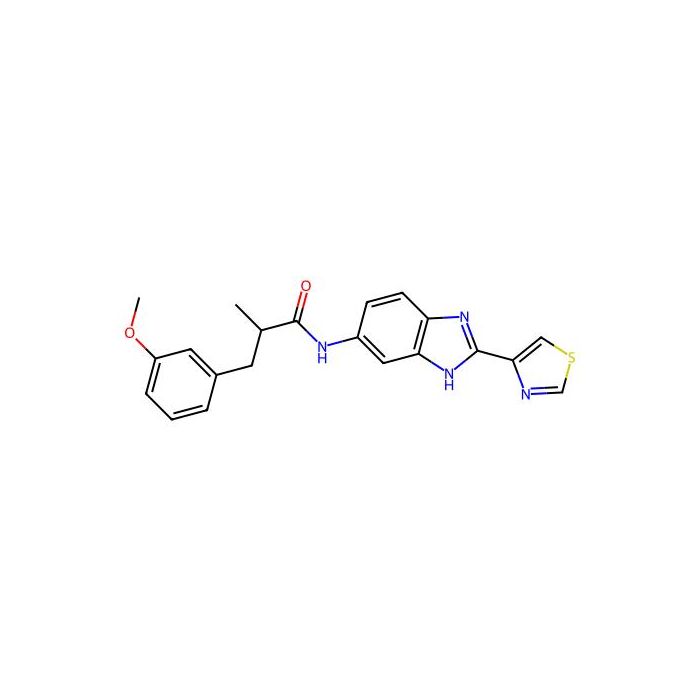
Product Name: RY785 (SKU: R1494878)
CAS: 1393748-80-5
Grade/Purity: Moligand™
InChIKey: Not specified for this item; refer to CoA/Spec Sheet.
SMILES: Not specified for this item; refer to CoA/Spec Sheet.
Molecular Formula: Not specified for this item; refer to CoA/Spec Sheet.
Molecular Weight: Not specified for this item; refer to CoA/Spec Sheet.
Structural features:
Item-specific structure is not provided in the Product Data. No functional groups, ring systems, or stereochemistry can be asserted for this specific lot.
Literature/general context (for orientation only, not item-specific):
“RY785” is cited in the literature as a small-molecule modulator of voltage-gated potassium channels (Kv2 family). Exact atom connectivity, heterocycles, and substituent patterns should be confirmed from primary references or the CoA/structure file supplied with the product.
Practical note:
For cheminformatics registration or ELN use, request the vendor structure file (SDF/MOL) or CoA prior to internal cataloging to avoid introducing mismatches with literature variants bearing the same code name.
Synthetic Utility
Not typically applicable.
RY785 is offered as a bioactive research compound rather than a synthetic building block or reagent. No reactive handles, protecting-group strategies, or named-reaction roles are provided in the Product Data.
Guidance:
If derivatization or immobilization is desired for probe development, obtain the full structure (CoA/structure file) and design chemistry accordingly (e.g., introduction of linkers at positions known to tolerate substitution based on SAR). Such modifications are outside the scope of this catalog listing.
Target Specificity
Item-specific target details are not provided in the Product Data.
Antigen/target name, family, potency, selectivity, species reactivity, and binding parameters: Not specified for this item; refer to CoA/Spec Sheet.
Literature note (for context only):
Publications using a compound termed “RY785” describe activity on Kv2-family potassium channels, but quantitative parameters and selectivity panels should not be assumed for this specific product without confirmation.
Need help choosing the grade?
Our grade selection guide covers purity, stabilizer status, and application suitability for all variants in our catalog.
We use cookies to ensure the website functions properly and, where permitted, to improve your experience. You can manage your preferences at any time in Settings. Learn more in our Cookie Policy.
Shall we send you a message when we have discounts available?
Remind me later
Thank you! Please check your email inbox to confirm.
Products are supplied to verified businesses, institutions, and qualified professionals for research and development use only. Not for use in humans, animals, diagnosis, or therapy.